















Global Cosmeceuticals Market Outlook to 2029
Region:Global
Author(s):Dev
Product Code:KROD-060
June 2025
90
About the Report
Global Cosmeceuticals Market Overview
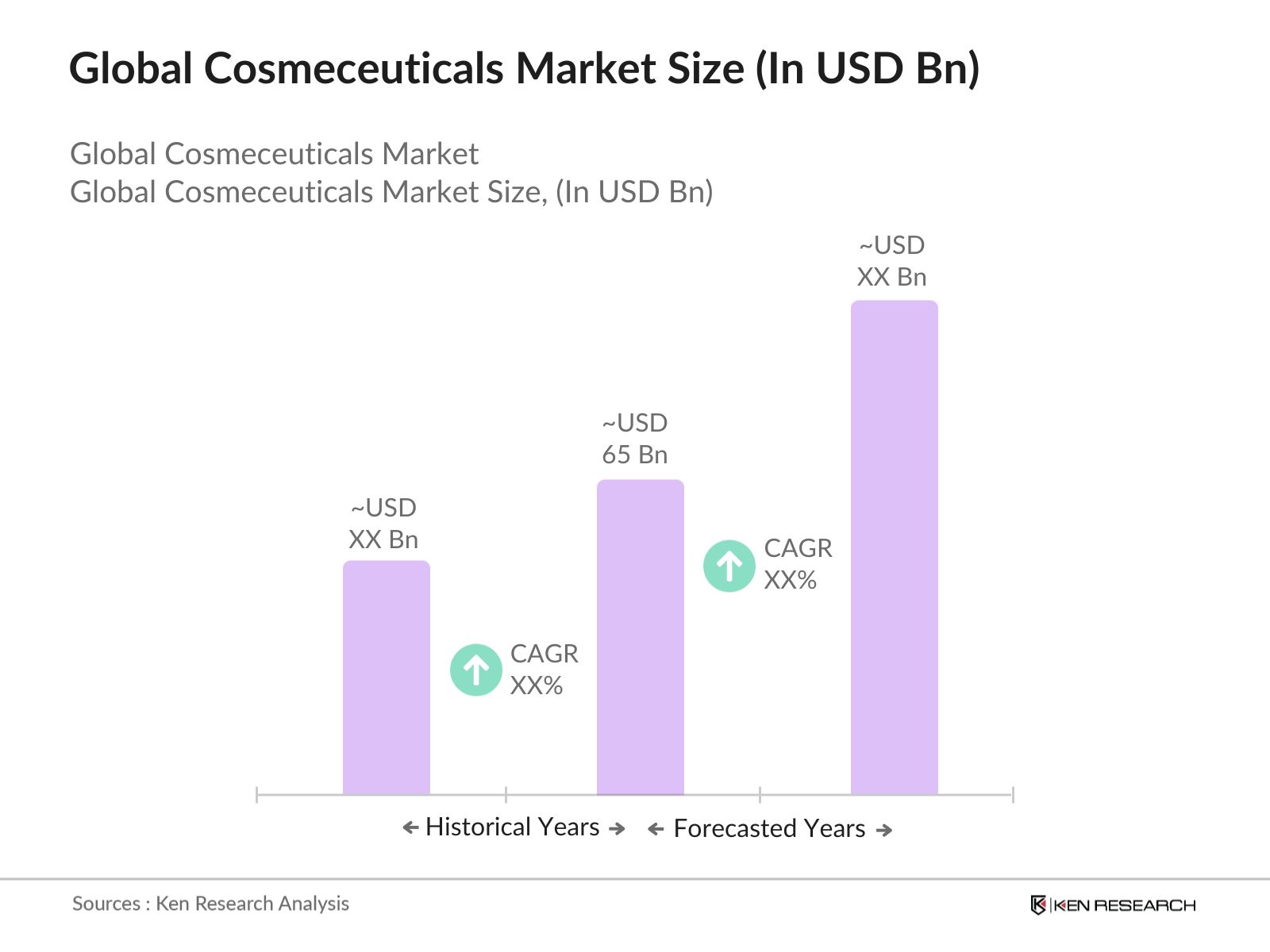
- The Global Cosmeceuticals Market is valued at USD 65 billion, based on a five-year historical analysis. This growth is primarily driven by increasing consumer awareness regarding skin health, the rising demand for anti-aging products, and the growing influence of social media on beauty standards. The market has seen a significant shift towards products that combine cosmetic and therapeutic benefits, leading to a surge in innovation and product development.
- Key players in this market include the United States, Japan, and Germany, which dominate due to their advanced research and development capabilities, strong consumer bases, and established distribution networks. The U.S. is particularly influential, with a high concentration of leading cosmeceutical brands and a culture that emphasizes skincare and beauty. Japan's focus on innovative formulations and Germany's commitment to quality and efficacy further solidify their positions in the market.
- In 2023, the EU updated its Cosmetics Regulation to enforce stricter labeling of allergens and ban harmful substances in cosmeceuticals. These amendments enhance ingredient safety, improve transparency, and strengthen consumer protection, fostering greater trust and ensuring products meet high safety standards across the market.
Global Cosmeceuticals Market Segmentation
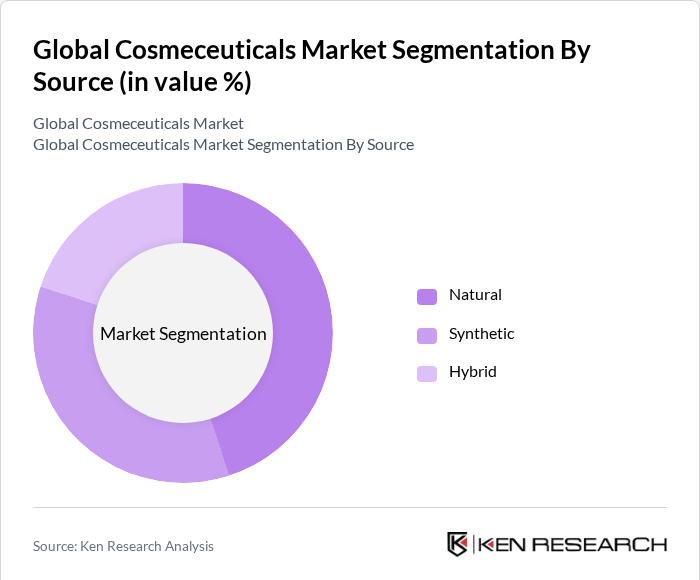
By Source: The market is segmented into natural, synthetic, and hybrid sources. The natural segment is currently dominating the market due to the increasing consumer preference for organic and plant-based ingredients, driven by a growing awareness of the potential side effects of synthetic chemicals. Consumers are increasingly seeking products that are perceived as safer and more environmentally friendly, leading to a rise in demand for natural cosmeceuticals. This trend is further supported by the rise of clean beauty movements and the influence of social media, which promote transparency and sustainability in beauty products.
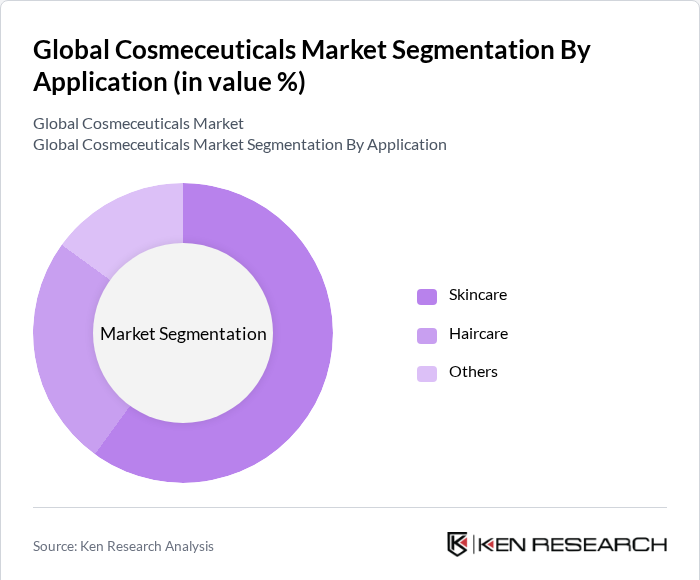
By Application: The market is segmented into skincare, haircare, and others. The skincare segment is leading the market, driven by the increasing prevalence of skin-related issues such as acne, pigmentation, and aging. Consumers are increasingly investing in skincare products that offer therapeutic benefits, such as anti-aging and moisturizing properties. The rise of social media influencers and beauty bloggers has also contributed to the popularity of skincare routines, further propelling the demand for innovative and effective skincare cosmeceuticals.
Global Cosmeceuticals Market Competitive Landscape
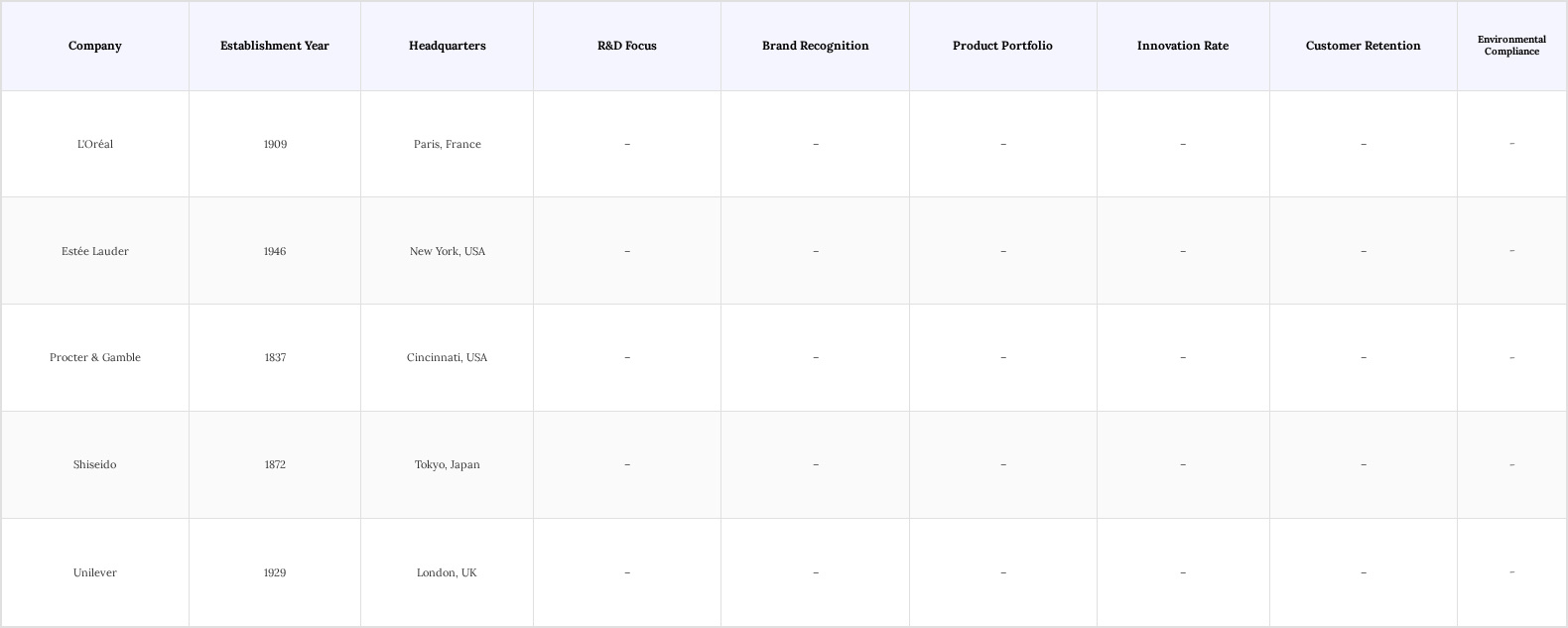
The Global Cosmeceuticals Market is characterized by intense competition among key players such as L'Oréal, Estée Lauder, and Procter & Gamble. These companies leverage their extensive research and development capabilities to innovate and expand their product offerings. The market is also witnessing the emergence of niche brands that focus on specific consumer needs, further intensifying the competitive dynamics.
Global Cosmeceuticals Market Industry Analysis
Growth Drivers
- Increasing Consumer Awareness of Skin Health: The global focus on skin health has surged, with approximately 67% of consumers prioritizing skincare in their daily routines. This trend is driven by the rising prevalence of skin-related issues, with nearly 4.9 billion new cases of skin and subcutaneous diseases reported globally in 2019, according to the World Health Organization. This significant burden highlights the need for innovative and effective cosmeceutical solutions. As consumers become more informed about ingredients and their benefits, the market for cosmeceuticals is expanding rapidly and expected to grow substantially in the coming years.
- Rising Demand for Anti-Aging Products: The anti-aging market is driven by an aging population, with over 26% aged 60+ in North America and Europe, and increasing interest from younger consumers seeking preventative care. Advances in technologies like microencapsulation and nanoscience improve product efficacy and absorption. Consumers also favor natural, organic ingredients and personalized solutions, supported by digital platforms that enhance product discovery and engagement, fueling steady growth in demand and innovation.
- Growth of E-commerce Platforms for Product Accessibility: E-commerce now dominates beauty and skincare sales, with online marketplaces like Sephora and Ulta leading due to wide product selections and convenience. Social media platforms, especially TikTok, drive discovery and live sales through engaging content and influencer marketing. Mobile shopping continues to grow, making beauty products more accessible globally. This digital shift enables cosmeceutical brands to reach diverse consumers and implement targeted marketing strategies, fueling ongoing expansion in the sector.
Market Challenges
-
Stringent Regulatory Frameworks: The cosmeceuticals industry faces significant challenges due to stringent regulations imposed by bodies such as the FDA and EMA. Compliance with these regulations can be costly and time-consuming, often requiring extensive clinical trials and documentation. These regulatory complexities increase barriers to market entry and can hinder innovation, especially for smaller players aiming to launch new products.
-
High Competition Among Established Brands: The cosmeceuticals market is characterized by intense competition, with major players like L'Oréal and Estée Lauder dominating the landscape. This competitive pressure makes it difficult for new entrants to gain visibility and market share. As a result, companies often engage in aggressive pricing and high marketing expenditures, which can reduce profit margins. To stand out in this crowded space, brands must focus on innovation and clearly defined value propositions.
Global Cosmeceuticals Market Future Outlook
The future of the cosmeceuticals market appears promising, driven by evolving consumer preferences and technological advancements. As consumers increasingly seek personalized skincare solutions, brands are expected to invest in research and development to create tailored products. Additionally, the shift towards sustainable and eco-friendly formulations will likely shape product offerings, aligning with consumer values. The integration of digital technologies in marketing and distribution will further enhance consumer engagement, ensuring that brands remain competitive in a rapidly changing landscape.
Market Opportunities
- Expansion of Product Lines Targeting Specific Skin Concerns: There is a growing opportunity for brands to develop specialized products addressing specific skin issues, such as acne, hyperpigmentation, and sensitivity. With 42% of consumers expressing interest in targeted solutions, companies can leverage this demand to create niche products that cater to diverse consumer needs, potentially increasing market share and customer loyalty.
- Innovations in Formulation and Delivery Systems: Advancements in formulation technologies present significant opportunities for differentiation. Brands that invest in innovative delivery systems, such as microencapsulation and transdermal patches, can enhance product efficacy and consumer experience. This innovation can lead to higher customer satisfaction and retention, ultimately driving sales growth in a competitive market.
Scope of the Report
| By Source |
Natural Synthetic Hybrid |
| By Application |
Skin Care Hair Care Others |
| By Distribution Channel |
Online Offline |
| By Region |
North America Europe Asia-Pacific Latin America Middle East & Africa |
| By End User |
Men Women Unisex |
Products
Key Target Audience
Investors and Venture Capitalist Firms
Government and Regulatory Bodies (e.g., FDA, EMA)
Manufacturers and Producers
Distributors and Retailers
Cosmetic and Pharmaceutical Companies
Raw Material Suppliers
Industry Associations (e.g., Personal Care Products Council)
Financial Institutions
Companies
Players Mentioned in the Report:
L'Oréal
Estée Lauder
Procter & Gamble
Shiseido
Unilever
Dermaluxe Innovations
PureSkin Solutions
BioGlow Laboratories
ReviveCosmetics Inc.
NutraDermaceuticals Ltd.
Table of Contents
1. Global Cosmeceuticals Market Overview
1.1. Definition and Scope
1.2. Market Taxonomy
1.3. Market Growth Rate
1.4. Market Segmentation Overview
2. Global Cosmeceuticals Market Size (In USD Bn)
2.1. Historical Market Size
2.2. Year-On-Year Growth Analysis
2.3. Key Market Developments and Milestones
3. Global Cosmeceuticals Market Analysis
3.1. Growth Drivers
3.1.1. Increasing Consumer Awareness of Skin Health
3.1.2. Rising Demand for Anti-Aging Products
3.1.3. Growth of E-commerce Platforms for Product Accessibility
3.2. Market Challenges
3.2.1. Stringent Regulatory Frameworks
3.2.2. High Competition Among Established Brands
3.2.3. Consumer Skepticism Towards Product Claims
3.3. Opportunities
3.3.1. Expansion of Product Lines Targeting Specific Skin Concerns
3.3.2. Innovations in Formulation and Delivery Systems
3.3.3. Growing Popularity of Organic and Natural Ingredients
3.4. Trends
3.4.1. Increasing Use of Technology in Product Development
3.4.2. Shift Towards Sustainable and Eco-Friendly Products
3.4.3. Rise of Personalized Skincare Solutions
3.5. Government Regulation
3.5.1. Overview of Regulatory Bodies Involved
3.5.2. Key Compliance Standards for Product Safety
3.5.3. Labeling and Marketing Regulations
3.5.4. Impact of Regulations on Market Entry Strategies
3.6. SWOT Analysis
3.7. Stake Ecosystem
3.8. Porter’s Five Forces
3.9. Competition Ecosystem
4. Global Cosmeceuticals Market Segmentation
4.1. By Source
4.1.1. Natural
4.1.2. Synthetic
4.1.3. Hybrid
4.2. By Application
4.2.1. Skin Care
4.2.2. Hair Care
4.2.3. Others
4.3. By Distribution Channel
4.3.1. Online
4.3.2. Offline
4.4. By Region
4.4.1. North America
4.4.2. Europe
4.4.3. Asia-Pacific
4.4.4. Latin America
4.4.5. Middle East & Africa
4.5. By End User
4.5.1. Men
4.5.2. Women
4.5.3. Unisex
5. Global Cosmeceuticals Market Competitive Analysis
5.1. Detailed Profiles of Major Companies
5.1.1. L'Oréal
5.1.2. Estée Lauder
5.1.3. Procter & Gamble
5.1.4. Shiseido
5.1.5. Unilever
5.1.6. Dermaluxe Innovations
5.1.7. PureSkin Solutions
5.1.8. BioGlow Laboratories
5.1.9. ReviveCosmetics Inc.
5.1.10. NutraDermaceuticals Ltd.
5.2. Cross Comparison Parameters
5.2.1. Market Share Analysis
5.2.2. Product Portfolio Diversity
5.2.3. Geographic Presence
5.2.4. Pricing Strategies
5.2.5. Customer Satisfaction Ratings
5.2.6. Innovation Index
5.2.7. Marketing Spend
5.2.8. Distribution Network Efficiency
6. Global Cosmeceuticals Market Regulatory Framework
6.1. Environmental Standards
6.2. Compliance Requirements
6.3. Certification Processes
7. Global Cosmeceuticals Market Future Market Size (In USD Bn)
7.1. Future Market Size Projections
7.2. Key Factors Driving Future Market Growth
8. Global Cosmeceuticals Market Future Market Segmentation
8.1. By Source
8.1.1. Natural
8.1.2. Synthetic
8.1.3. Hybrid
8.2. By Application
8.2.1. Skin Care
8.2.2. Hair Care
8.2.3. Others
8.3. By Distribution Channel
8.3.1. Online
8.3.2. Offline
8.4. By Region
8.4.1. North America
8.4.2. Europe
8.4.3. Asia-Pacific
8.4.4. Latin America
8.4.5. Middle East & Africa
8.5. By End User
8.5.1. Men
8.5.2. Women
8.5.3. Unisex
9. Global Cosmeceuticals Market Analysts’ Recommendations
9.1. TAM/SAM/SOM Analysis
9.2. Customer Cohort Analysis
9.3. Marketing Initiatives
9.4. White Space Opportunity Analysis
Research Methodology
Step 1: Identification of Key Variables
The initial phase involves mapping out the key players and stakeholders in the Global Cosmeceuticals Market. This step relies on extensive desk research, utilizing secondary data sources and proprietary databases to gather relevant industry information. The primary goal is to pinpoint and define the essential variables that drive market trends and dynamics.
Step 2: Market Analysis and Construction
In this phase, historical data related to the Global Cosmeceuticals Market will be compiled and analyzed. This includes evaluating market penetration rates, the balance between product offerings and consumer demand, and the resulting revenue streams. Additionally, an assessment of service quality metrics will be performed to ensure the accuracy of revenue projections.
Step 3: Hypothesis Validation and Expert Consultation
Market hypotheses will be formulated and validated through structured interviews with industry experts across various sectors. These consultations will yield critical operational and financial insights from practitioners, which will be essential for refining and substantiating the market data collected during earlier phases.
Step 4: Research Synthesis and Final Output
The final phase will involve direct engagement with key manufacturers to gather in-depth insights into product categories, sales performance, and consumer preferences. This interaction will help to validate and enhance the data obtained through previous methodologies, ensuring a thorough and accurate analysis of the Global Cosmeceuticals Market.
Frequently Asked Questions
01. How big is the Global Cosmeceuticals Market?
The Global Cosmeceuticals Market is valued at USD 65 billion, driven by factors such as increasing demand, technological advancements, and supportive government initiatives.
02. What are the key challenges in the Global Cosmeceuticals Market?
Key challenges in the Global Cosmeceuticals Market include intense competition, regulatory complexities, and infrastructure limitations affecting market dynamics.
03. Who are the major players in the Global Cosmeceuticals Market?
Major players in the Global Cosmeceuticals Market include L'Oréal, Estée Lauder, Procter & Gamble, Shiseido, Unilever, among others.
04. What are the growth drivers for the Global Cosmeceuticals Market?
The primary growth drivers for the Global Cosmeceuticals Market are increasing consumer demand, favorable policies, innovation, and substantial investment inflows.
Why Buy From Us?

What makes us stand out is that our consultants follows Robust, Refine and Result (RRR) methodology. i.e. Robust for clear definitions, approaches and sanity checking, Refine for differentiating respondents facts and opinions and Result for presenting data with story

We have set a benchmark in the industry by offering our clients with syndicated and customized market research reports featuring coverage of entire market as well as meticulous research and analyst insights.

While we don't replace traditional research, we flip the method upside down. Our dual approach of Top Bottom & Bottom Top ensures quality deliverable by not just verifying company fundamentals but also looking at the sector and macroeconomic factors.

With one step in the future, our research team constantly tries to show you the bigger picture. We help with some of the tough questions you may encounter along the way: How is the industry positioned? Best marketing channel? KPI's of competitors? By aligning every element, we help maximize success.

Our report gives you instant access to the answers and sources that other companies might choose to hide. We elaborate each steps of research methodology we have used and showcase you the sample size to earn your trust.

If you need any support, we are here! We pride ourselves on universe strength, data quality, and quick, friendly, and professional service.