Global Cosmetics Market Outlook to 2030

Region:Global

Author(s):Kartik Upadhyay

Product Code:KENGR041

Published On

October 2024

Total pages

89

About the Report

Global Cosmetic Market Overview

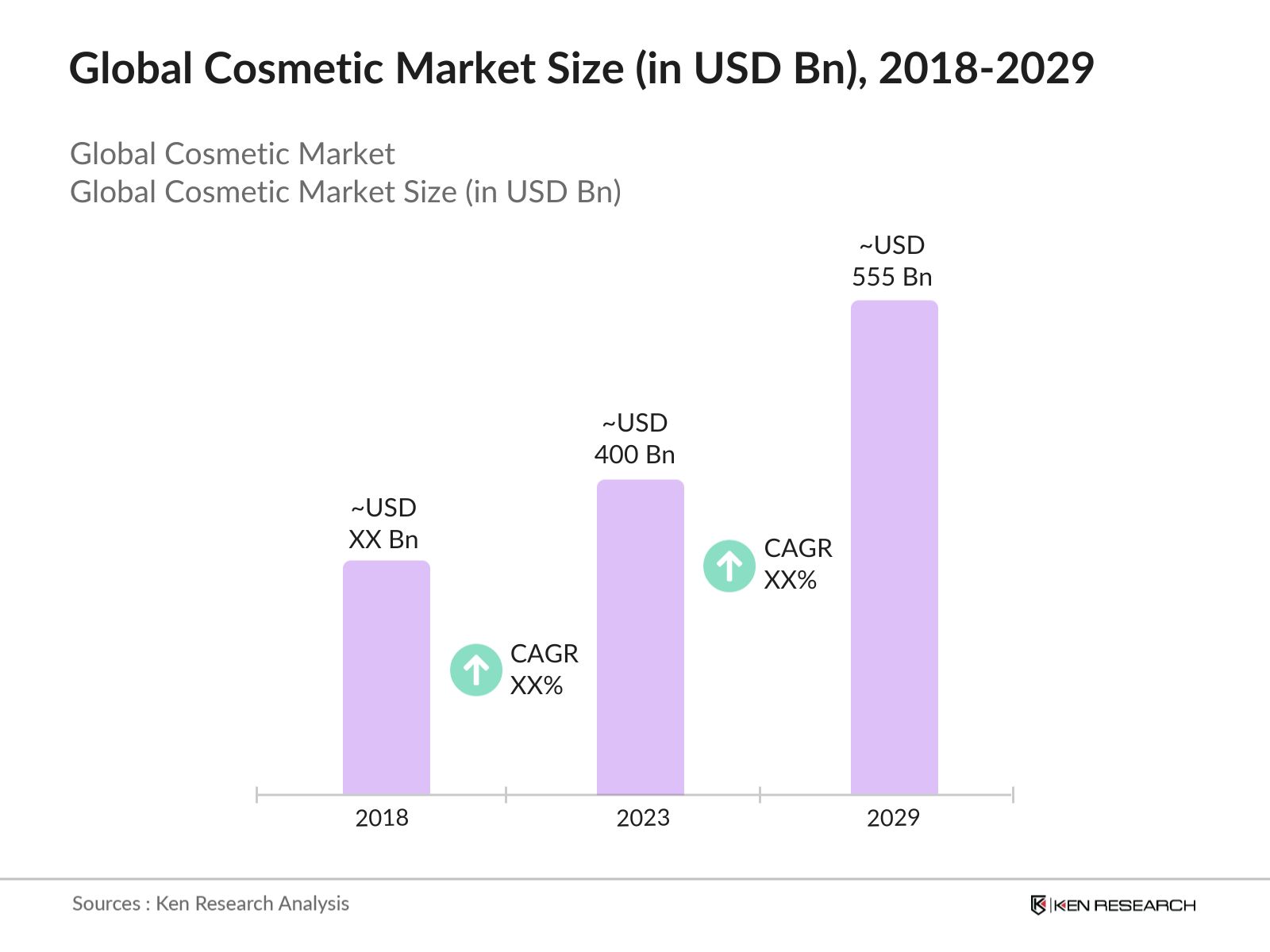
  • The global cosmetic market was valued at USD 400 Bn in 2023, is driven by increasing consumer awareness and demand for natural and organic products. Growth is also propelled by the rising influence of social media and beauty influencers, which significantly boosts product visibility and consumer interest.

market overviews

  • Key players in the market include L'Oral, Este Lauder, Procter & Gamble, Unilever, and Shiseido. These companies dominate the market due to their extensive product portfolios, strong brand recognition, and significant investments in research and development. L'Oral, for instance, reported revenues of $42 billion in 2023, reflecting its leading position in the industry.
  • L'Oral acquired Aesop in July 2023 for USD 2.5 Bn, marking a strategic expansion into the luxury skincare segment. This acquisition highlights the ongoing consolidation in the cosmetic industry as major players seek to enhance their product offerings and market reach.

Global Cosmetic Current Market Analysis

market overviews

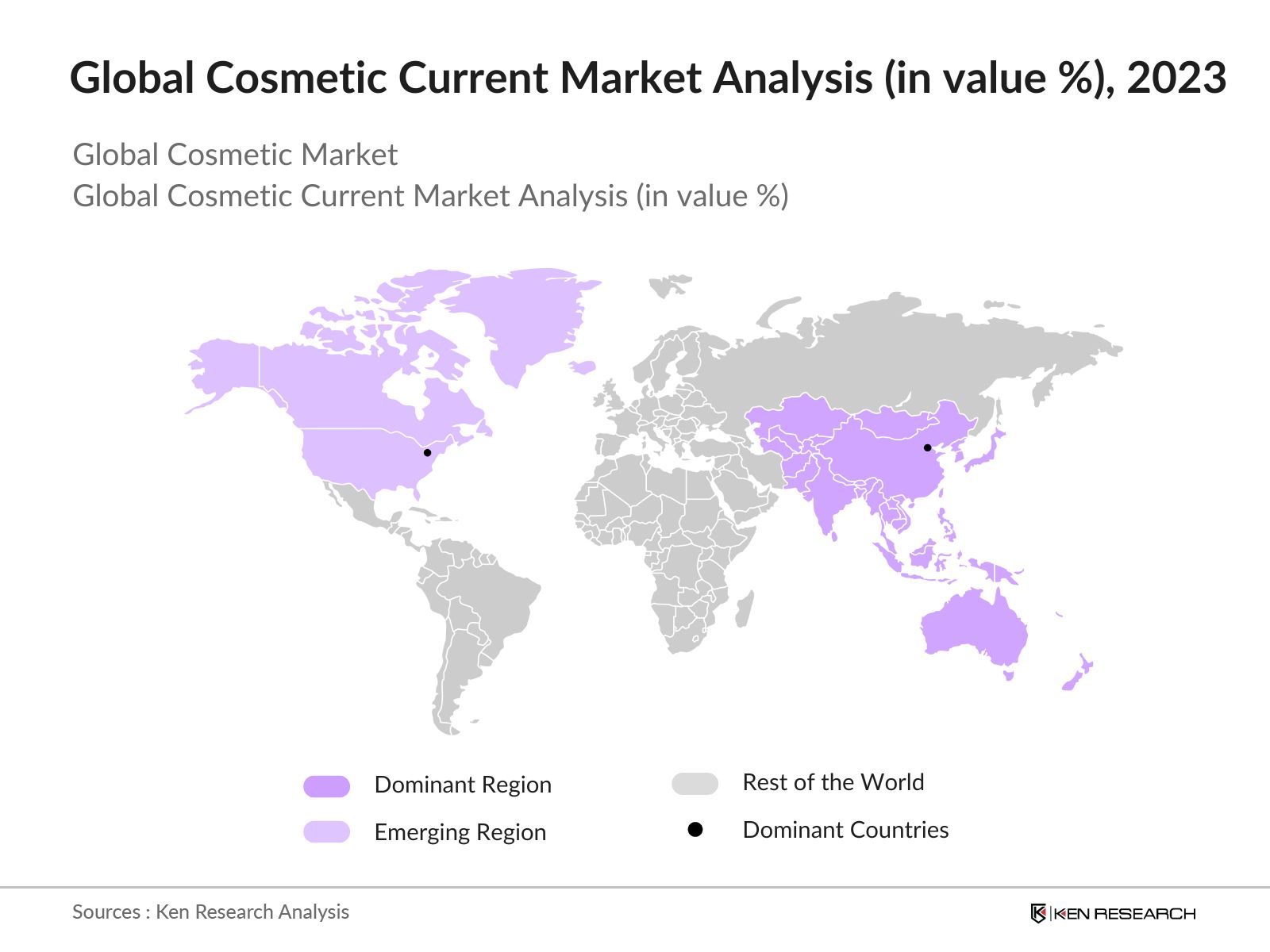
  • APAC as dominant region: The Asia-Pacific region is a leading force in the cosmetics industry, fueled by cultural trends, economic growth, and a strong focus on skincare. With over 1 billion people in China, India, and South Korea boosting disposable incomes, spending on beauty products has surged. K-beauty and J-beauty trends have set global standards, strengthening the regions market. E-commerce growth, with beauty sales reaching 30% of total sales in 2023, has increased brand accessibility. The COVID-19 pandemic has also driven men's grooming and shaving product demand. Additionally, 60% of younger consumers prefer natural products, driving market expansion. APAC's dynamic consumer base and innovation make it a pivotal hub for future cosmetics development.
  • North America as emerging region: North America is rapidly growing in the global cosmetics market due to increased consumer awareness, rising disposable incomes (with a per capita income of $60,299 in 2023), and a focus on self-care. The demand for multifunctional beauty products is rising, prompting brands like DERMA E to introduce diverse skincare lines, such as their September 2022 launch at Walmart. Celebrity endorsements, like Selena Gomezs Rare Beauty lip products launched in July 2022, also drive interest. Additionally, regulatory support for safe and sustainable products enhances consumer trust. These factors position North America as a key player in the expanding global cosmetics industry.
  • China as dominant country: China has become a major player in the global cosmetics market, driven by rapid urbanization, increasing disposable incomes, and a heightened focus on personal grooming. By the end of 2023, Chinas urbanization rate hit 66.2%, with disposable income rising to 51,821 CNY from 49,282.94 CNY in 2022. With a population of 1.4 billion and a growing middle class, there is strong demand for diverse cosmetic products. The country's robust e-commerce and online shopping popularity further boost market growth. Government support for domestic brands, expanded retail networks, and the influence of social media and beauty influencers also drive the market. Consequently, China remains crucial to the global cosmetics industry's expansion.

Global Cosmetic Market Segmentation

The Global Cosmetic Market can be segmented based on several factors:

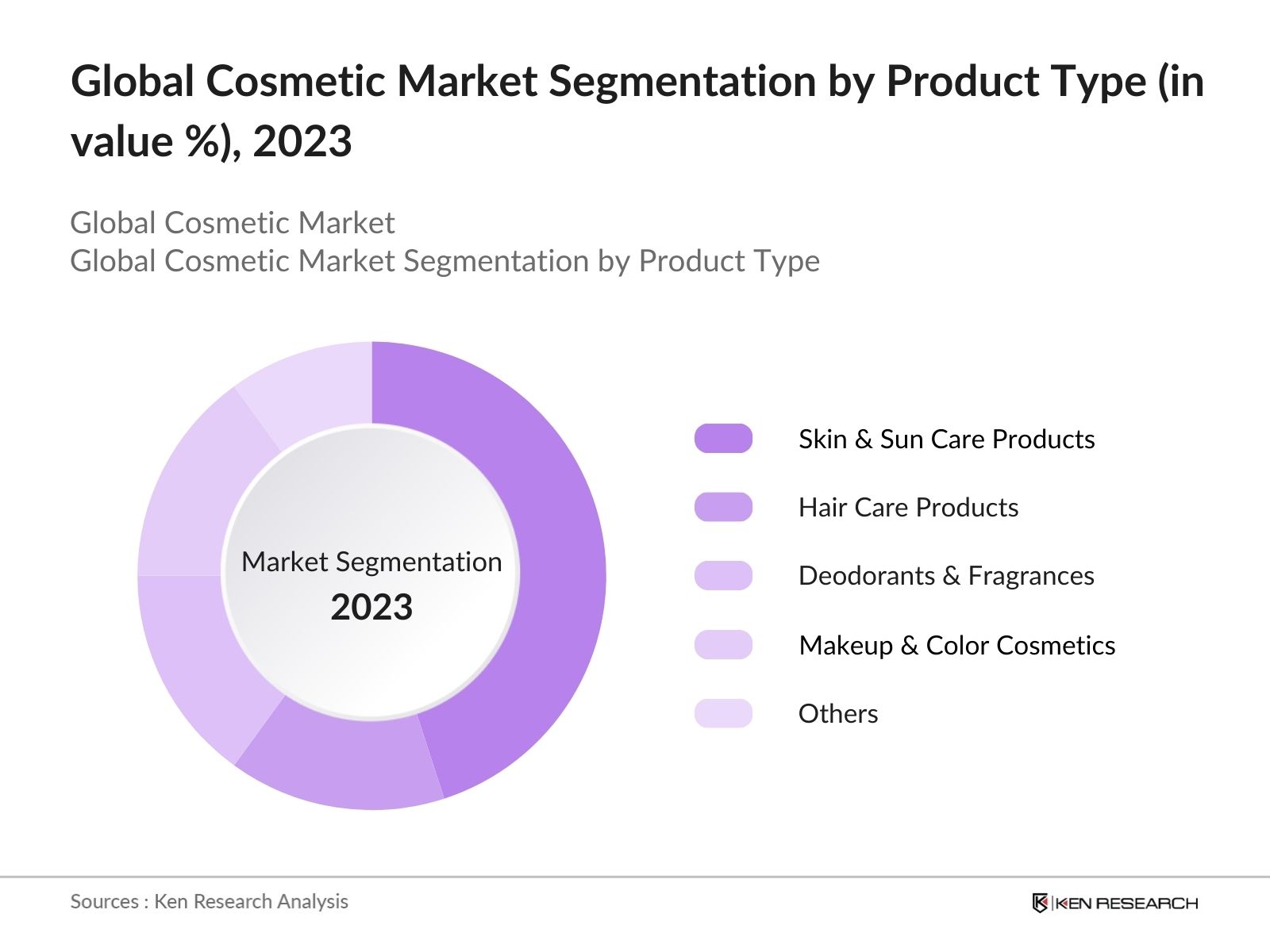
By Product Type: Global Cosmetic market segmentation by product type is divided into skin & sun care, hair care, deodorants & fragrances, makeup & color cosmetics and other products. In 2023, skin & sun care products led the market, driven by heightened consumer awareness of skincare and sun protection. Innovations in product formulations and the influence of social media also bolstered this segment's dominance.
market overviews

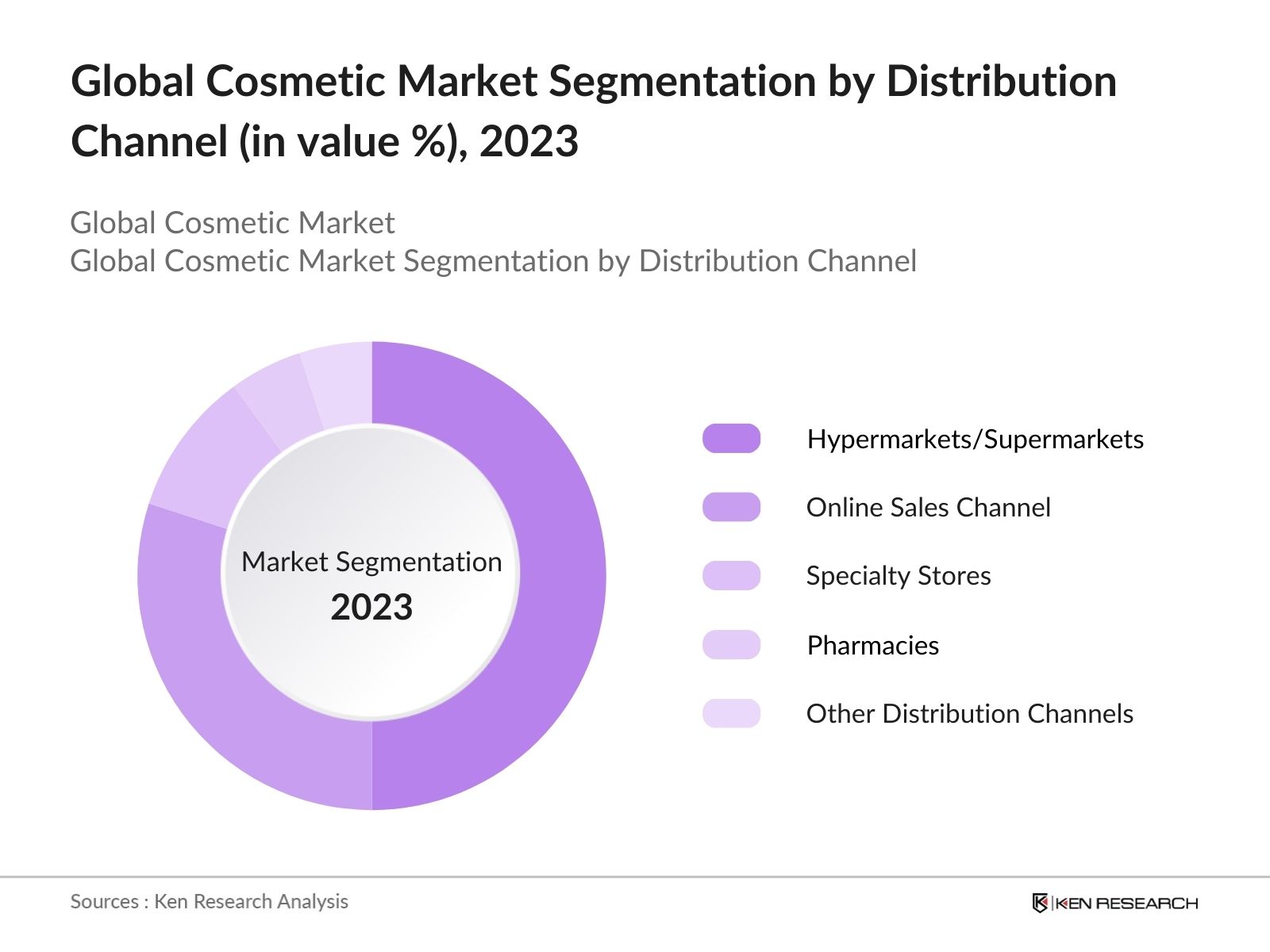
By Distribution Channel: In the Global Cosmetic market segmentation by distribution channel is divided into hypermarket/supermarket, online sales channel, specialty stores, pharmacies and other channel. In 2023, Hypermarket/Supermarket channels led the market, driven by their extensive product range, convenience, and competitive pricing. Their high foot traffic and attractive promotions also contributed to their dominant position.
market overviews

By End-User: Global cosmetic market segmentation by end user is divided into man, women and unisex. In 2023, women dominated the market, driven by higher spending on beauty products and a strong cultural focus on aesthetics. The wide range of targeted products and the influence of beauty trends and social media further reinforced this segment's leading position.

Global Cosmetic Market Competitive Landscape

Company

Headquarter

Establishment Year

L'Oral S.A.

Clichy, France

1907

Unilever plc

London, United Kingdom

1930

The Este Lauder Companies Inc.

New York, USA

1946

The Procter & Gamble Company

Cincinnati, USA

1837

Christian Dior SE

Paris, France

1946

Shiseido Company, Limited

Tokyo, Japan

1872

Beiersdorf AG

Hamburg, Germany

1882

Bath & Body Works

Columbus, Ohio, U.S.

1963

  • Unilevers Partnership: In July 2022, Unilever PLC partnered with the InterContinental Hotels Group to supply the guest bathrooms in its hotels and resorts with larger packs of personal care products such as hand wash, body wash, shampoo, conditioner and body lotion to help the hotel group cut its single use plastics.
  • Este Lauder's Strategic Acquisitions and Luxury Focus: Este Lauder has been strategically acquiring smaller, niche beauty brands to enhance its portfolio and access new customer segments. Recent additions include Dr. Jart+ and Tom Ford Beauty. The company is also concentrating on the high-growth luxury beauty market, with ongoing investments in its premium brands such as La Mer and Jo Malone London.
  • P&G's Strategic Focus on Core Personal Care: P&G is divesting from non-core beauty brands to sharpen its focus on its core personal care business. The recent sale of their Wella hair care division exemplifies this shift. Concurrently, P&G is investing heavily in research and development to introduce innovative skincare solutions, such as the new Olay serums featuring advanced ingredients.

Global Cosmetic Industry Analysis

Global Cosmetic Market Growth Drivers:

  • Impact of K-Beauty Demand on Asia and the US: The rising demand for K-Beauty is significantly impacting both the Asian and US markets, driven by the increasing need for gentle cosmetic products. Korean cosmetic companies are thriving, with South Korea ranking as the 5th largest cosmetics exporter at USD 8.5 Bn in 2021, with China as the top market. Korean skincare, known for its use of gentle ingredients like PHAs that reduce inflammation, is leading the trend, with brands such as Glow Recipe and CosRx at the forefront of this innovation.
  • Quick Recovery from the Pandemic and the Lipstick Index: The beauty industry experienced a swift recovery from the pandemic, partially attributed to the "Lipstick Index"a term describing consumers' tendency to purchase small, affordable luxury items like lipstick for joy during tough times. This index has historically predicted makeup sales during recessions, with the beauty sector generating $22 billion in 2021, a 30% increase from the previous year. However, recent research suggests that the Lipstick Index may be losing relevance as the beauty and personal care industry continues to evolve.
  • Expanding Opportunities with AI and Data Analytics in Beauty E-Commerce: The use of AI and data analytics has significantly broadened opportunities for brands and customers in the beauty e-commerce space. Technologies like Sephora's Virtual Artist app, which allows customers to virtually try products, have reduced return rates and increased shopper engagement. Additionally, the trend of hyper-personalization is transforming beauty e-commerce, as brands leverage data analytics and automation to deliver tailored messages and recommendations, thereby enhancing customer engagement and loyalty.

Global Cosmetic Market Challenges:

  • Managing Expiry and Unsold Products: The cosmetic industry experiences notable product spoilage, with inventory losses reaching 6.2%, the highest among industries. Additionally, the beauty sector struggles with a high rate of unsold products, totaling 10.2%. Implementing effective FIFO and LIFO inventory practices could help mitigate these issues.
  • Regulatory Compliance for Ingredient Safety and Testing: Another challenge is the sourcing of high-quality, ethically produced ingredients and navigating a complex regulatory landscape. The cosmetics industry is subject to a wide range of regulations covering product safety, labelling, and marketing claims. This requires manufacturers to maintain constant vigilance and ensure compliance, a process that is not only time-consuming but also a significant financial burden.

Global Cosmetic Market Government Initiatives:
  • European Green Deal: The European Green Deal, implemented in 2023, mandates sustainable practices within the cosmetic industry. It focuses on reducing environmental impacts through the use of eco-friendly ingredients and recyclable packaging. This initiative aims to make Europe the first climate-neutral continent by 2050, directly influencing cosmetic manufacturers to adopt greener production methods.
  • U.S. Safe Cosmetics and Personal Care Products Act: In 2022, the U.S. government enacted the Safe Cosmetics and Personal Care Products Act to enhance the safety standards of cosmetic products. The law requires detailed ingredient disclosures and pre-market safety testing, aiming to protect consumers from harmful substances. This regulation has pushed companies to reformulate products and ensure compliance, impacting market operations.

Global Cosmetic Future Market Outlook

market overviews

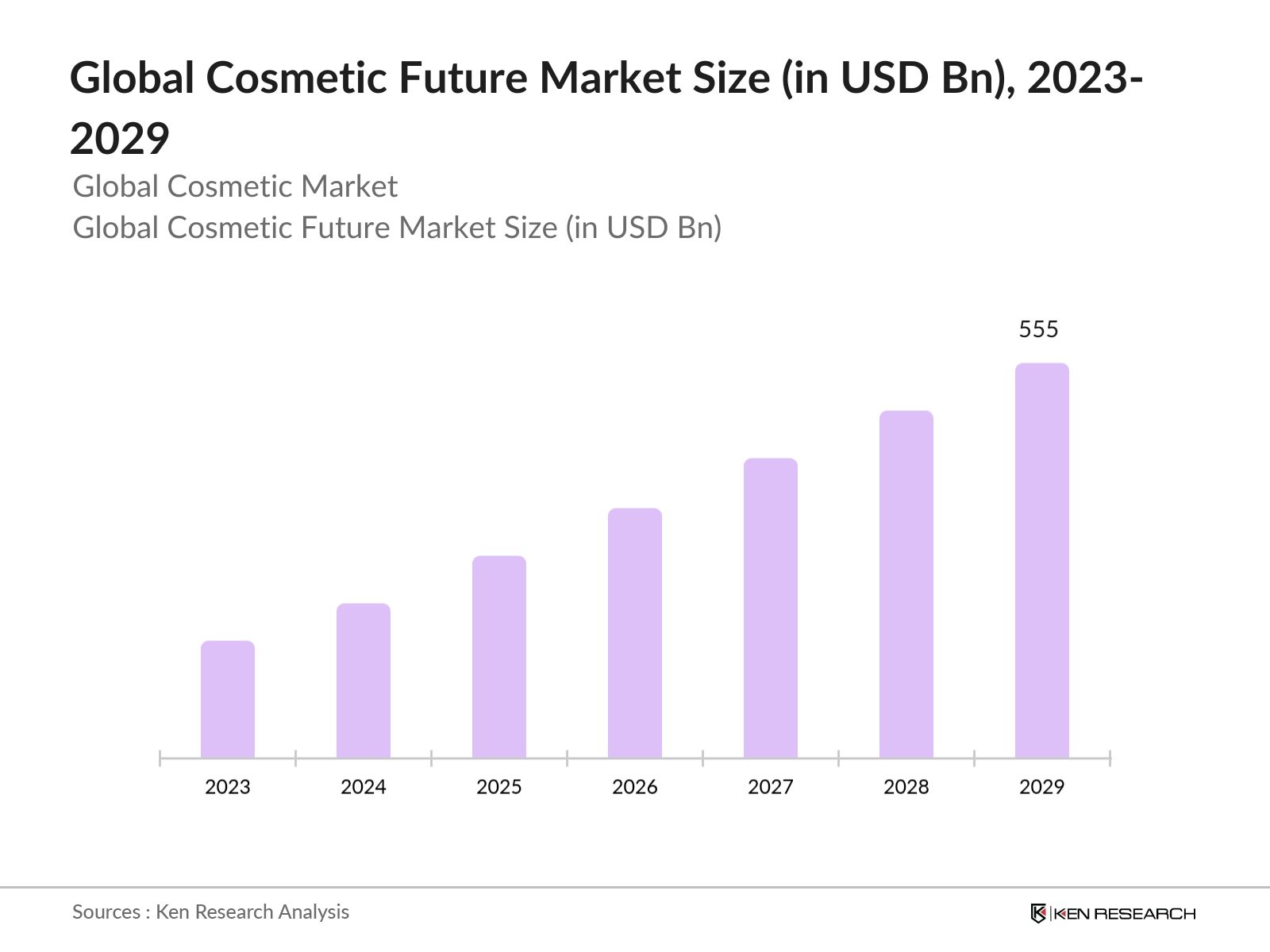
The Global Cosmetic market is expected to reach USD 555 Bn by 2029 driven by technological advancements, evolving consumer preferences, and strategic investments by key players. By 2029, the market is expected to experience robust expansion, supported by the increasing demand for personalized and sustainable beauty products. The integration of AI and AR technologies will continue to enhance product development and consumer experiences, while e-commerce platforms will remain pivotal in driving sales.

Future Market Trends

  • The Influence of Gen Z: Gen Z will increasingly scrutinize brands, with nearly half researching product ingredients and benefits before purchasing. They will demand that brands authentically support values like sustainability, diversity, and inclusion, and offer an approachable image and a compelling story. This generation will challenge traditional notions of beauty and gender, seeking products and services that align with their authentic selves rather than cultural ideals.
  • The Recalibration of M&A: M&A activity in the beauty industry will remain significant due to rising interest from various players, including strategics and private equity funds. However, megadeals may become rarer due to market turbulence and higher capital costs. The focus will shift from high-growth brands to those with innovative product pipelines and a proven ability to grow sustainably and profitably over time.

Scope of the Report

By Region

North America

Europe

APAC

Latin America

MEA

By Product Type

Skin & Sun Care Products

Hair Care Products

Deodorants & Fragrances

Makeup & Color Cosmetics

Others

By Distribution Channel

Hypermarkets/Supermarkets

Specialty Stores

Pharmacies

Online Sales Channel

Other Distribution Channels

By End User

Women

Men

Unisex

Products

Key Target Audience Organizations and Entities Who Can Benefit by Subscribing This Report:

  • Cosmetic Manufacturers

  • Retail Chains and Supermarkets

  • E-commerce Platforms

  • Beauty Salons and Spas

  • Skincare Clinics

  • Luxury Department Stores

  • Beauty and Personal Care Distributors

  • Specialty Beauty Retailers

  • Banks and Financial Institution

  • Investors and VCs

  • Government and Regulatory Bodies (European Commission, FDA)

Time Period Captured in the Report:

  • Historical Period: 2018-2023

  • Base Year: 2023

  • Forecast Period: 2023-2029

Companies

Players Mentioned in the Report:

  • L'Oral S.A.

  • Unilever plc

  • The Este Lauder Companies Inc.

  • The Procter & Gamble Company

  • Christian Dior SE

  • Shiseido Company, Limited

  • Beiersdorf AG

  • Bath & Body Works

  • Johnson & Johnson

  • Natura & Co

  • CHANEL (France)

  • JAB Cosmetics B.V. (Coty, Inc.)

  • Puig

  • Kao Corporation

  • Henkel AG & Co. KGaA (Germany)

  • AMOREPACIFIC US, INC. (South Korea)

  • Avon Cosmetics

  • KOSCorporation(Japan)

  • Oriflame Holding AG

Table of Contents

1. Executive Summary

1.1 Global Personal Care Market

1.2 Global Cosmetic Market

2. Global Overview

2.1 Overview of Global Economics

2.2 Overview of Global Personal Care Industry

2.3 Global Personal Care (Cosmetics, Skin Care, Haircare, Oral Care and Body Care) Revenue

2.4 Global Cosmetic Infrastructure

3. Global Cosmetic Market Overview

3.1 Ecosystem

3.2 Value Chain

3.3 Case Study

3.4 Demographics of Consumers

4. Global Cosmetic Market Size (in USD Bn), 2018-2023

5. Global Cosmetic Market Segmentation (in value %), 2018-2023

5.1 By Region (North America, Europe, APAC, Latin America and MEA) in value %, 2018-2023

5.2 By Product Type (Skin & Sun Care Products, Hair Care Products, Deodorants & Fragrances, Makeup & Color Cosmetics and Others) in value%, 2018-2023

5.3 By Distribution Channel (Hypermarkets/Supermarkets, Specialty Stores, Pharmacies, Online Sales Channel and Other Distribution Channels) in value %, 2018-2023

5.4 By End User (Man, Women and Unisex) in value %, 2018-2023

6. Global Cosmetic Market Competition Landscape

6.1 Market Share Analysis

6.2 Market Heat Map Analysis

6.3 Market Cross Comparison

6.4 Comparison Matrix

6.5 Investment Landscape

7. Global Cosmetic Market Dynamics

7.1 Growth Drivers

7.2 Challenges

7.3 Trends

7.4 Case Studies

7.5 Strategic Initiatives

8. Global Cosmetic Future Market Size (in USD Bn), 2023-2029

9. Global Cosmetic Future Market Segmentation (in value %), 2023-2029

9.1 By Region (North America, Europe, APAC, Latin America and MEA) in value %, 2023-2029

9.2 By Product Type (Skin & Sun Care Products, Hair Care Products, Deodorants & Fragrances, Makeup & Color Cosmetics and Others) in value%, 2023-2029

9.3 By Distribution Channel (Hypermarkets/Supermarkets, Specialty Stores, Pharmacies, Online Sales Channel and Other Distribution Channels) in value %, 2023-2029

9.4 By End User (Man, Women and Unisex) in value %, 2023-2029

10. Analyst Recommendations

Research Methodology

Step 1: Hypothesis Creation:

For the Global Cosmetics Market research, a combination of primary and secondary data sources was utilized. Primary data was gathered through interviews with industry experts, consumer surveys, and discussions with key stakeholders. Secondary data included annual reports, financial statements, broker reports, industry publications, proprietary databases, government documents, and academic journals. Data collection focused on various aspects of the market, such as market size (revenue, sales volume), trends (historical growth rates, demand patterns), market share (leading companies, brand performance), and the competitive landscape (analysis of market players, strategies, and positioning).

Step 2: Hypothesis Testing:

Comprehensive research identified major players in the Global Cosmetics Market. CATIs were conducted with company management to assess operating and financial indicators, including revenue, revenue streams, product portfolios, recent trends, and future developments. A bottom-up approach was then used to estimate the overall market revenue by aggregating data and validating it through triangulation methods. Market modeling techniques forecasted growth, segment shares, and overall performance. Additionally, feedback from industry professionals, market participants, and consumers was incorporated to verify assumptions and ensure the accuracy of insights in the report.

Frequently Asked Questions

01. How big is Global Cosmetic Market?

The global cosmetic market was valued at USD 400 Bn in 2023, is driven by increasing consumer awareness and demand for natural and organic products. Growth is also propelled by the rising influence of social media and beauty influencers, which significantly boosts product visibility and consumer interest.

02. What are the challenges in Global Cosmetic Market?

Challenges in the global cosmetic market include stringent regulatory compliance across different regions, high competition and market saturation, and ongoing supply chain disruptions that affect product availability and costs.

03. Who are the major players in Global Cosmetic Market?

Key players in the global cosmetic market include L'Oral, Este Lauder, Procter & Gamble, Unilever, and Shiseido. These companies lead the market due to their extensive product ranges, strong brand recognition, and substantial investments in innovation.

04 What are the growth drivers of the Global Cosmetic Market?

The global cosmetic market is driven by the rising demand for natural and organic products, the expansion of e-commerce platforms, and technological advancements such as AI and AR that enhance product personalization and consumer engagement.

Why Buy From Us?

RRR
Refine Robust Result (RRR) Framework

What makes us stand out is that our consultants follows Robust, Refine and Result (RRR) methodology. i.e. Robust for clear definitions, approaches and sanity checking, Refine for differentiating respondents facts and opinions and Result for presenting data with story

Our Reach Is Unmatched

We have set a benchmark in the industry by offering our clients with syndicated and customized market research reports featuring coverage of entire market as well as meticulous research and analyst insights.

Research
Shifting the Research Paradigm

While we don't replace traditional research, we flip the method upside down. Our dual approach of Top Bottom & Bottom Top ensures quality deliverable by not just verifying company fundamentals but also looking at the sector and macroeconomic factors.

Insite
More Insights-Better Decisions

With one step in the future, our research team constantly tries to show you the bigger picture. We help with some of the tough questions you may encounter along the way: How is the industry positioned? Best marketing channel? KPI's of competitors? By aligning every element, we help maximize success.

Trust
Transparency and Trust

Our report gives you instant access to the answers and sources that other companies might choose to hide. We elaborate each steps of research methodology we have used and showcase you the sample size to earn your trust.

support
Round the Clock Support

If you need any support, we are here! We pride ourselves on universe strength, data quality, and quick, friendly, and professional service.

Why Client Choose Us?

400000+ Reports in repository
150+ Consulting project a year
100+ Analysts
8000+ Client Queries in 2022