
Global CPG Market Outlook to 2030
Region:Global
Author(s):Mukul
Product Code:KROD5969
November 2024
90
About the Report
Global CPG Market Overview
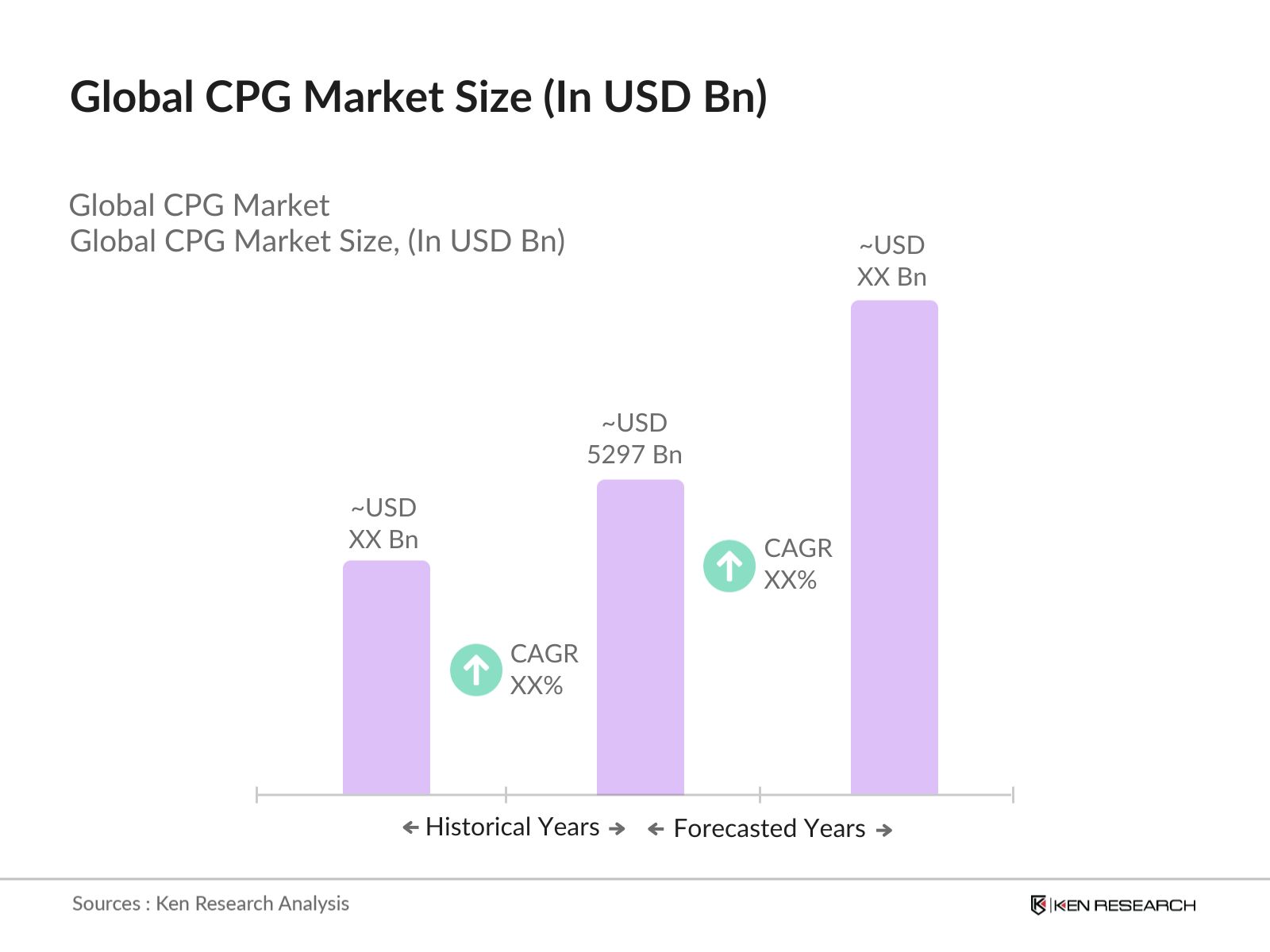
- The global Consumer Packaged Goods (CPG) market is valued at USD 5297 billion, driven by a combination of increasing consumer demand for essential and non-essential goods, particularly in the food and beverage sector. This market is bolstered by a rise in disposable incomes, urbanization, and the rapid adoption of e-commerce platforms. Major factors influencing growth include technological advancements, supply chain enhancements, and a growing emphasis on convenience-driven shopping habits. Leading multinational corporations continue to invest heavily in product innovation, focusing on health-conscious and environmentally sustainable options to cater to evolving consumer preferences.
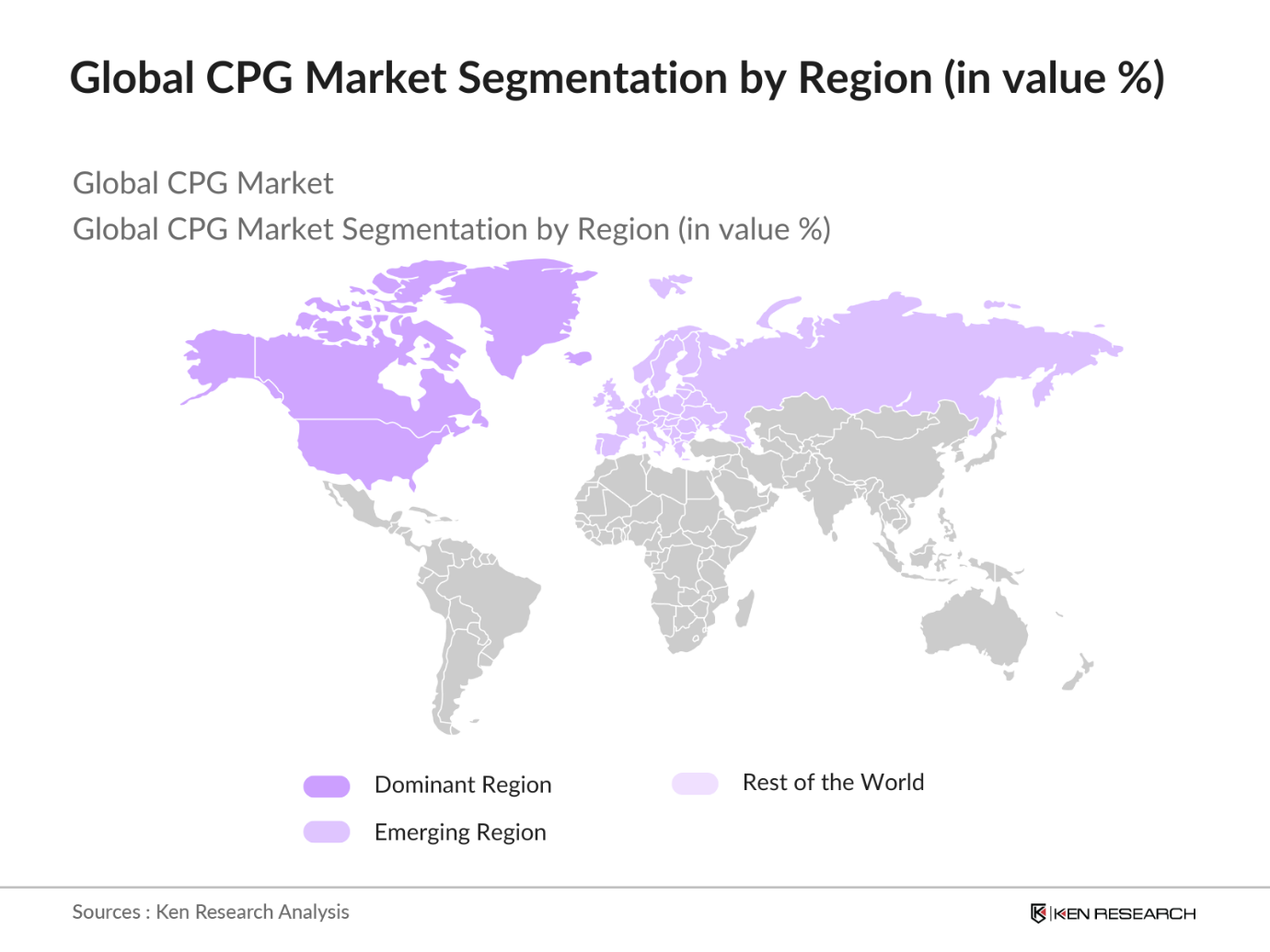
- Key regions dominating the global CPG market include North America, Europe, and Asia-Pacific, primarily due to the presence of established consumer bases and high per capita income. North America leads due to its advanced retail infrastructure and high demand for premium and health-focused products. Europe, with its focus on sustainability and organic goods, also commands a significant market share. Meanwhile, Asia-Pacific, with emerging economies such as China and India, is seeing rapid growth due to increasing urbanization, rising disposable incomes, and expanding middle-class populations.
- Trade tariffs and import/export policies have had a direct impact on the global CPG market. As of 2023, ongoing trade disputes, particularly between the U.S. and China, resulted in tariffs on key raw materials such as aluminum and plastics, which are essential for packaging. These tariffs have disrupted global supply chains, increased production costs, and prompted companies to explore alternative sourcing options. Regulatory shifts in global trade policies continue to shape the dynamics of the CPG market.
Global CPG Market Segmentation
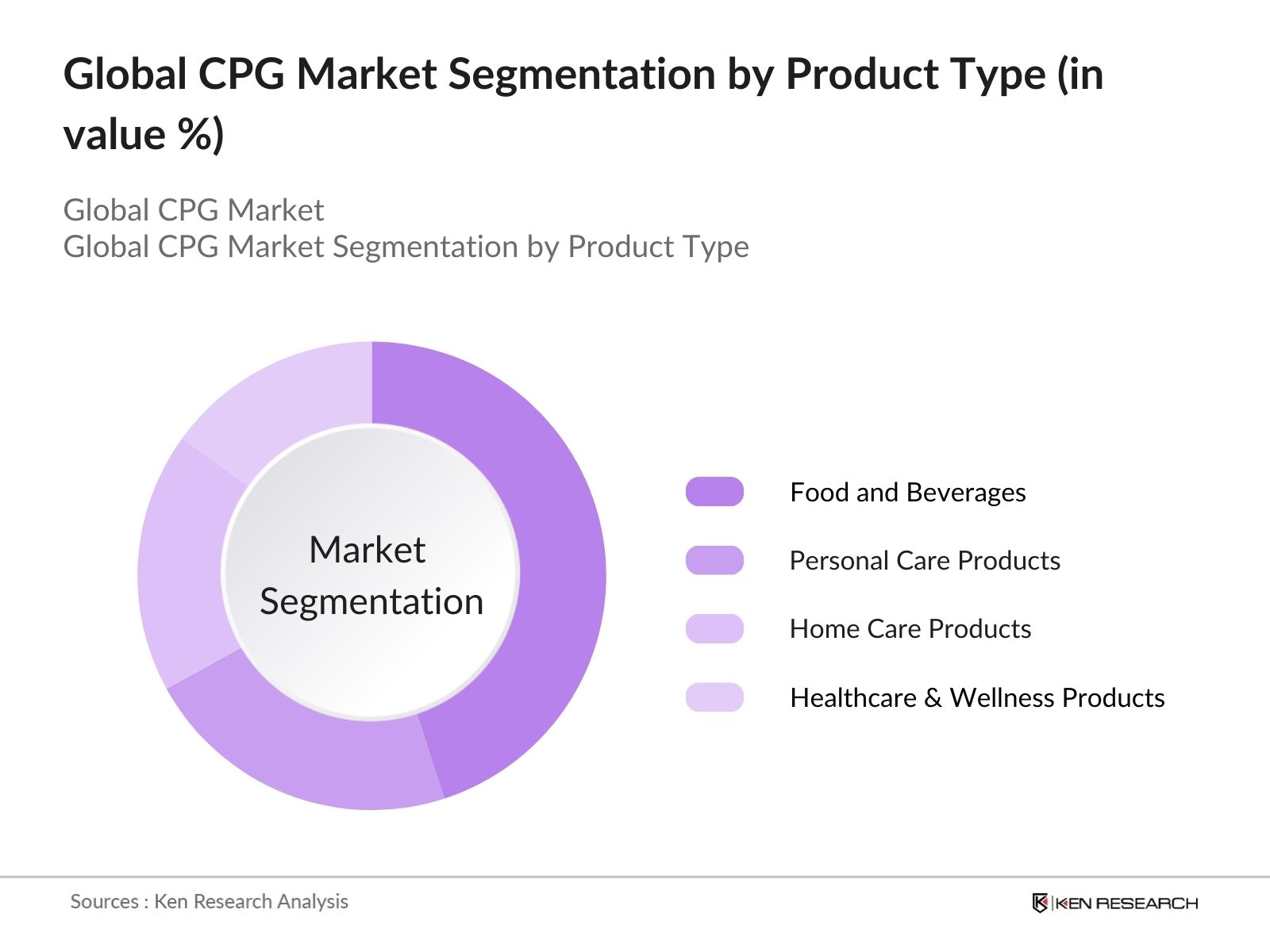
- By Product Type: The global CPG market is segmented by product type into food and beverages, personal care products, home care products, healthcare and wellness products, and pet care products. The food and beverages segment holds the largest market share in 2023, driven by strong demand for convenience foods and beverages. Consumers' preference for ready-to-eat meals, along with an increasing focus on healthy and organic options, has contributed to the dominance of this segment. Leading players like Nestl and PepsiCo are consistently innovating their product portfolios to cater to changing consumer preferences.
- By Region: The global CPG market is segmented regionally into North America, Europe, Asia-Pacific, Latin America, and Middle East & Africa. North America remains the leading region due to the mature nature of its market, strong consumer spending, and a large, diverse product portfolio. However, Asia-Pacific is rapidly catching up, with China and India being key growth drivers due to their burgeoning middle-class populations, increasing urbanization, and rising disposable incomes.
- By Distribution Channel: The global CPG market is further segmented by distribution channel into hypermarkets/supermarkets, convenience stores, e-commerce/online retail, direct-to-consumer (D2C), and specialty stores. E-commerce/online retail has witnessed the highest growth in recent years, driven by the convenience it offers consumers, along with attractive promotions and doorstep delivery services. The penetration of e-commerce giants like Amazon and Alibaba, combined with the rise of mobile commerce, has further solidified this segments dominance in 2023.
Global CPG Market Competitive Landscape
The global CPG market is dominated by both multinational conglomerates and local players. The competition is fierce due to the presence of established brands that control substantial portions of the market. Companies such as Procter & Gamble, Nestl, Unilever, and PepsiCo are leading the charge, leveraging their extensive distribution networks, innovative product portfolios, and massive marketing budgets. The market is also seeing significant consolidation, with companies acquiring smaller players to strengthen their market positions and diversify their offerings.
|
Company Name |
Establishment Year |
Headquarters |
Revenue (2023) |
Product Portfolio |
Global Reach |
R&D Expenditure |
Sustainability Initiatives |
Mergers & Acquisitions |
|
Procter & Gamble Co. |
1837 |
Cincinnati, USA |
- |
- |
- |
- |
- |
- |
|
Unilever Plc |
1929 |
London, UK |
- |
- |
- |
- |
- |
- |
|
Nestl S.A. |
1867 |
Vevey, Switzerland |
- |
- |
- |
- |
- |
- |
|
PepsiCo, Inc. |
1965 |
Purchase, USA |
- |
- |
- |
- |
- |
- |
|
LOral S.A. |
1909 |
Clichy, France |
- |
- |
- |
- |
- |
- |
Global CPG Industry Analysis
Growth Drivers
- E-commerce Expansion: The rapid expansion of e-commerce is a key growth driver for the global Consumer Packaged Goods (CPG) market. In 2022, global e-commerce sales reached $5.7 trillion, and by 2023, it accounted for 19.2% of total global retail sales, bolstered by widespread internet penetration and the growing reliance on online shopping across developed and emerging economies. CPG companies are increasingly leveraging digital platforms for direct-to-consumer (D2C) sales and streamlining supply chains through digital channels, thus accelerating growth in the sector. Governments in regions like Southeast Asia are investing in digital infrastructure, enhancing e-commerce growth.
- Increasing Consumer Demand for Convenience Products: The rising demand for convenience products continues to fuel growth in the CPG market, especially in urban areas where over 56% of the worlds population resides as of 2022. This urbanization, combined with the increasing number of dual-income households, has led to higher consumption of ready-to-eat meals, beverages, and snacks. As of 2023, global packaged food consumption has grown significantly, supported by increased working hours and changing lifestyle patterns. Countries like the United States and China have seen rapid growth in this sector due to higher disposable income.
- Health-Conscious and Sustainability Trends: The shift toward health-conscious and sustainable product options is reshaping the global CPG market. By 2023, 76% of global consumers preferred products with claims of being natural, organic, or eco-friendly. Governments have enforced stricter regulations on processed foods, prompting companies to reformulate products with cleaner labels. In 2022, the European Union's Green Deal required a reduction in chemical additives, boosting demand for plant-based and functional foods. These regulatory and consumer-driven changes have driven product innovation and repositioning within the industry.
Market Restraints
- High Competition from Local and International Brands: The CPG sector is characterized by intense competition between local and international brands. As of 2023, global retail channels are saturated, with both large multinationals and smaller local companies vying for market share. This competition has led to price wars, brand differentiation struggles, and an increased focus on advertising expenditures, especially in emerging markets like India and Brazil. Local brands often benefit from consumer loyalty and adaptability to local preferences, while global brands invest heavily in marketing to penetrate these competitive environments.
- Regulatory Hurdles: Increasing regulatory scrutiny poses significant challenges to the CPG market. Governments worldwide are enforcing stricter rules around product labeling, safety, and environmental sustainability. For example, the European Union implemented new regulations in 2023, mandating clear and detailed food ingredient labeling, which impacts the cost of compliance for manufacturers. Similarly, in the United States, the Food Safety Modernization Act (FSMA) has introduced rigorous food safety standards, complicating market entry for new brands and increasing costs for established companies.
Global CPG Market Future Outlook
Over the next five years, the global CPG market is expected to exhibit significant growth, driven by a combination of factors including technological advancements, changing consumer behavior, and increased focus on sustainability. The rapid expansion of e-commerce and direct-to-consumer channels is expected to drive further growth, as consumers increasingly turn to online platforms for convenience and variety. Additionally, companies focusing on product innovation, particularly in the fields of health and wellness, plant-based foods, and eco-friendly packaging, are expected to be the key growth drivers in the market.
Market Opportunities
- Digital Transformation in Retail: The ongoing digital transformation in retail presents significant opportunities for CPG brands. In 2023, global investments in retail technology, such as artificial intelligence (AI) and machine learning for consumer insights, reached $8 billion. CPG companies are leveraging these technologies to optimize their marketing strategies, personalize customer experiences, and streamline operations. The rise of e-commerce and data analytics in emerging markets, including Southeast Asia and Latin America, also provides a strong growth platform for CPG brands to tap into new consumer segments.
- Growing Middle-Class Population in Emerging Markets: The expansion of the middle class in emerging markets, particularly in Asia and Africa, is a significant growth driver for the global CPG market. By 2022, over 3.8 billion people were classified as middle class globally, with substantial growth in India, China, and sub-Saharan Africa. This demographic is characterized by higher disposable income and a growing appetite for premium and branded consumer goods, creating lucrative opportunities for multinational CPG companies to expand into these markets and cater to evolving consumer preferences.
Scope of the Report
|
By Product Type |
Food and Beverages Personal Care Products Home Care Products Healthcare and Wellness Products Pet Care Products |
|
By Distribution Channel |
Hypermarkets/Supermarkets Convenience Stores E-commerce/Online Retail Direct-to-Consumer (D2C) Specialty Stores |
|
By Consumer Demographics |
Age Group (Millennials, Gen Z, Baby Boomers) Income Level (Low, Middle, High) Gender (Male, Female, Non-Binary) |
|
By Region |
North America Europe Asia-Pacific Latin America Middle East & Africa |
Products
Key Target Audience
Investor and Venture Capitalist Firms
Government and Regulatory Bodies (e.g., FDA, European Commission)
Retail Chains and Supermarket Chains
FMCG Manufacturers
E-commerce Platforms
Packaging Manufacturers
Logistics and Supply Chain Providers
Sustainability Advocacy Groups
Companies
Players Mentioned in the Report:
Procter & Gamble Co.
Unilever Plc
Nestl S.A.
PepsiCo, Inc.
L'Oral S.A.
Johnson & Johnson Services, Inc.
Colgate-Palmolive Company
Reckitt Benckiser Group Plc
The Coca-Cola Company
General Mills, Inc.
The Kraft Heinz Company
Mars, Incorporated
Kimberly-Clark Corporation
Mondelez International, Inc.
Henkel AG & Co. KGaA
Table of Contents
1. Global CPG Market Overview
1.1. Definition and Scope
1.2. Market Taxonomy
1.3. Market Growth Rate
1.4. Market Segmentation Overview
2. Global CPG Market Size (In USD Mn)
2.1. Historical Market Size
2.2. Year-On-Year Growth Analysis
2.3. Key Market Developments and Milestones
3. Global CPG Market Analysis
3.1. Growth Drivers
3.1.1. E-commerce Expansion
3.1.2. Increasing Consumer Demand for Convenience Products
3.1.3. Health-Conscious and Sustainability Trends
3.1.4. Rise of Private Label Brands
3.2. Market Challenges
3.2.1. High Competition from Local and International Brands
3.2.2. Regulatory Hurdles
3.2.3. Supply Chain Disruptions (Logistics and Raw Material Shortages)
3.2.4. Fluctuating Commodity Prices (Packaging Materials, Ingredients)
3.3. Opportunities
3.3.1. Digital Transformation in Retail
3.3.2. Growing Middle-Class Population in Emerging Markets
3.3.3. Expansion in D2C Channels
3.3.4. Product Innovation (Plant-based, Functional Foods, etc.)
3.4. Trends
3.4.1. Rise of Subscription Models in CPG
3.4.2. Personalization and Customization of CPG Offerings
3.4.3. Increased Use of AI and Analytics for Consumer Insights
3.4.4. Eco-friendly and Sustainable Packaging Adoption
3.5. Government Regulations
3.5.1. Packaging Regulations (Biodegradable, Recyclable)
3.5.2. Labeling Standards (Nutritional Information, Allergen Labeling)
3.5.3. Health and Safety Certifications
3.5.4. Trade Tariffs and Import/Export Policies
3.6. SWOT Analysis
3.7. Stakeholder Ecosystem (Manufacturers, Distributors, Retailers, Consumers)
3.8. Porters Five Forces Analysis (Supplier Power, Buyer Power, Competition Intensity, etc.)
3.9. Competitive Ecosystem
4. Global CPG Market Segmentation
4.1. By Product Type (In Value %)
4.1.1. Food and Beverages
4.1.2. Personal Care Products
4.1.3. Home Care Products
4.1.4. Healthcare and Wellness Products
4.1.5. Pet Care Products
4.2. By Distribution Channel (In Value %)
4.2.1. Hypermarkets/Supermarkets
4.2.2. Convenience Stores
4.2.3. E-commerce/Online Retail
4.2.4. Direct-to-Consumer (D2C)
4.2.5. Specialty Stores
4.3. By Consumer Demographics (In Value %)
4.3.1. Age Group (Millennials, Gen Z, Baby Boomers, etc.)
4.3.2. Income Level (Low, Middle, High)
4.3.3. Gender (Male, Female, Non-Binary)
4.4. By Region (In Value %)
4.4.1. North America
4.4.2. Europe
4.4.3. Asia-Pacific
4.4.4. Latin America
4.4.5. Middle East & Africa
5. Global CPG Market Competitive Analysis
5.1 Detailed Profiles of Major Companies
5.1.1. Procter & Gamble Co.
5.1.2. Unilever Plc
5.1.3. Nestl S.A.
5.1.4. The Coca-Cola Company
5.1.5. PepsiCo, Inc.
5.1.6. Colgate-Palmolive Company
5.1.7. L'Oral S.A.
5.1.8. Johnson & Johnson Services, Inc.
5.1.9. Reckitt Benckiser Group Plc
5.1.10. Mondelez International, Inc.
5.1.11. Kimberly-Clark Corporation
5.1.12. General Mills, Inc.
5.1.13. The Kraft Heinz Company
5.1.14. Mars, Incorporated
5.1.15. Henkel AG & Co. KGaA
5.2. Cross Comparison Parameters (Revenue, Global Presence, Brand Portfolio, Market Share, Product Innovation, Sustainability Initiatives, Digital Engagement, Consumer Reach)
5.3. Market Share Analysis
5.4. Strategic Initiatives (Partnerships, New Product Launches, Geographical Expansions)
5.5. Mergers and Acquisitions
5.6. Investment Analysis
5.7. Venture Capital and Private Equity Funding
6. Global CPG Market Regulatory Framework
6.1. Food Safety and Quality Regulations
6.2. Cosmetic Product Standards and Safety Regulations
6.3. Environmental and Sustainability Regulations (Packaging, Waste Management)
6.4. Trade Policies and Import/Export Regulations
7. Global CPG Market Future Size (In USD Mn)
7.1. Future Market Size Projections
7.2. Key Factors Driving Future Market Growth
8. Global CPG Market Future Segmentation
8.1. By Product Type (In Value %)
8.2. By Distribution Channel (In Value %)
8.3. By Consumer Demographics (In Value %)
8.4. By Region (In Value %)
9. Global CPG Market Analyst Recommendations
9.1. TAM/SAM/SOM Analysis
9.2. White Space Opportunity Identification
9.3. Digital Transformation Strategy
9.4. Market Penetration and Expansion Recommendations
Disclaimer
Contact Us
Research Methodology
Step 1: Identification of Key Variables
The first step involves mapping the entire CPG market ecosystem, identifying key stakeholders, product segments, and distribution channels. Secondary research, including data from proprietary databases and publicly available sources, forms the basis for defining the critical variables influencing market trends.
Step 2: Market Analysis and Construction
Next, historical market data is analyzed to understand the market dynamics over the last five years. This includes evaluating the penetration of online sales channels, the performance of various product types, and the resulting revenue generation, ensuring an accurate representation of the current market scenario.
Step 3: Hypothesis Validation and Expert Consultation
The hypotheses generated from the initial analysis are tested through consultations with industry experts. These interviews are conducted via CATIs, allowing for the validation of data points and insights regarding market trends, competitive strategies, and consumer behavior.
Step 4: Research Synthesis and Final Output
The final step involves aggregating and validating the findings through in-depth interviews with key market players, ensuring the accuracy of product segmentation, market dynamics, and forecasts. This provides a comprehensive and validated analysis of the CPG market landscape.
Frequently Asked Questions
01. How big is the global CPG market?
The global CPG market is valued at USD 5297 billion, driven by increased consumer demand for essential products and innovations in e-commerce and retail channels.
02. What are the major challenges in the global CPG market?
The market faces challenges such as supply chain disruptions, fluctuating raw material costs, and intense competition among brands, both local and international.
03. Who are the key players in the global CPG market?
Major players include Procter & Gamble, Nestl, Unilever, PepsiCo, and LOral, which lead the market due to their strong global presence and product portfolios.
04. What are the key growth drivers in the global CPG market?
Growth is driven by increased demand for convenience, advancements in e-commerce, rising disposable incomes, and a focus on health and wellness products.
Why Buy From Us?

What makes us stand out is that our consultants follows Robust, Refine and Result (RRR) methodology. i.e. Robust for clear definitions, approaches and sanity checking, Refine for differentiating respondents facts and opinions and Result for presenting data with story

We have set a benchmark in the industry by offering our clients with syndicated and customized market research reports featuring coverage of entire market as well as meticulous research and analyst insights.

While we don't replace traditional research, we flip the method upside down. Our dual approach of Top Bottom & Bottom Top ensures quality deliverable by not just verifying company fundamentals but also looking at the sector and macroeconomic factors.

With one step in the future, our research team constantly tries to show you the bigger picture. We help with some of the tough questions you may encounter along the way: How is the industry positioned? Best marketing channel? KPI's of competitors? By aligning every element, we help maximize success.

Our report gives you instant access to the answers and sources that other companies might choose to hide. We elaborate each steps of research methodology we have used and showcase you the sample size to earn your trust.

If you need any support, we are here! We pride ourselves on universe strength, data quality, and quick, friendly, and professional service.