
Global Crisis Management Market Outlook to 2030
Region:Global
Author(s):Shubham Kashyap
Product Code:KROD5044
Region:Global
Author(s):Shubham Kashyap
Product Code:KROD5044
December 2024
86
The global crisis management market is moderately concentrated, with key players focusing on enhancing their technological capabilities to address the evolving needs of businesses. Companies are investing heavily in research and development to offer innovative solutions, such as AI-powered risk assessment tools and real-time monitoring systems. The market is witnessing a surge in demand for cloud-based solutions, which offer scalability and flexibility, making them particularly appealing to small and medium enterprises (SMEs).
|
Company Name |
Establishment Year |
Headquarters |
Product Portfolio |
Global Reach |
Sustainability Initiatives |
R&D Investment |
AI & Smart Technology Integration |
Business Continuity Solutions |
|
Everbridge |
2002 |
Burlington, USA |
||||||
|
International SOS |
1985 |
London, UK |
||||||
|
R3 Continuum |
2001 |
Minneapolis, USA |
||||||
|
Atos |
1997 |
Bezons, France |
||||||
|
BlackBerry |
1984 |
Waterloo, Canada |
Growth Drivers
Market Challenges
The global crisis management market is expected to grow steadily, driven by increasing awareness of the importance of crisis preparedness and the integration of smart technologies in risk management solutions. The market will continue to see robust demand from sectors like BFSI, healthcare, and government, as businesses and public institutions prioritize safeguarding against both physical and digital threats.
Future Market Opportunities
|
By Type of Solution |
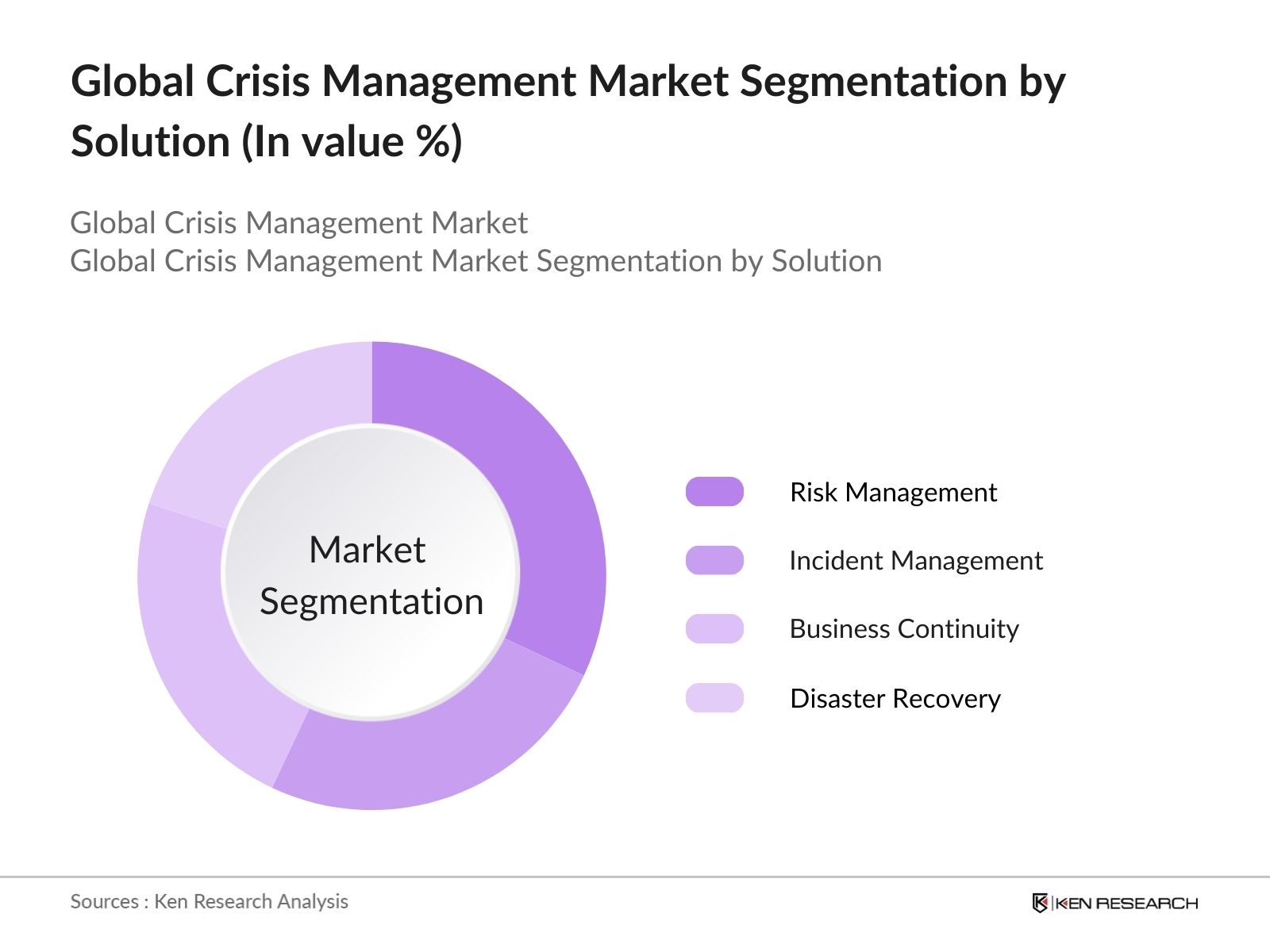
Risk Management Solutions Incident Management Solutions Business Continuity Solutions Disaster Recovery Solutions |
|
By End-Use Industry |
BFSI IT and Telecommunications Healthcare Government Others (Manufacturing, Retail) |
|
By Deployment Type |
On-Premise Solutions Cloud-Based Solutions Hybrid Solutions |
|
By Geography |
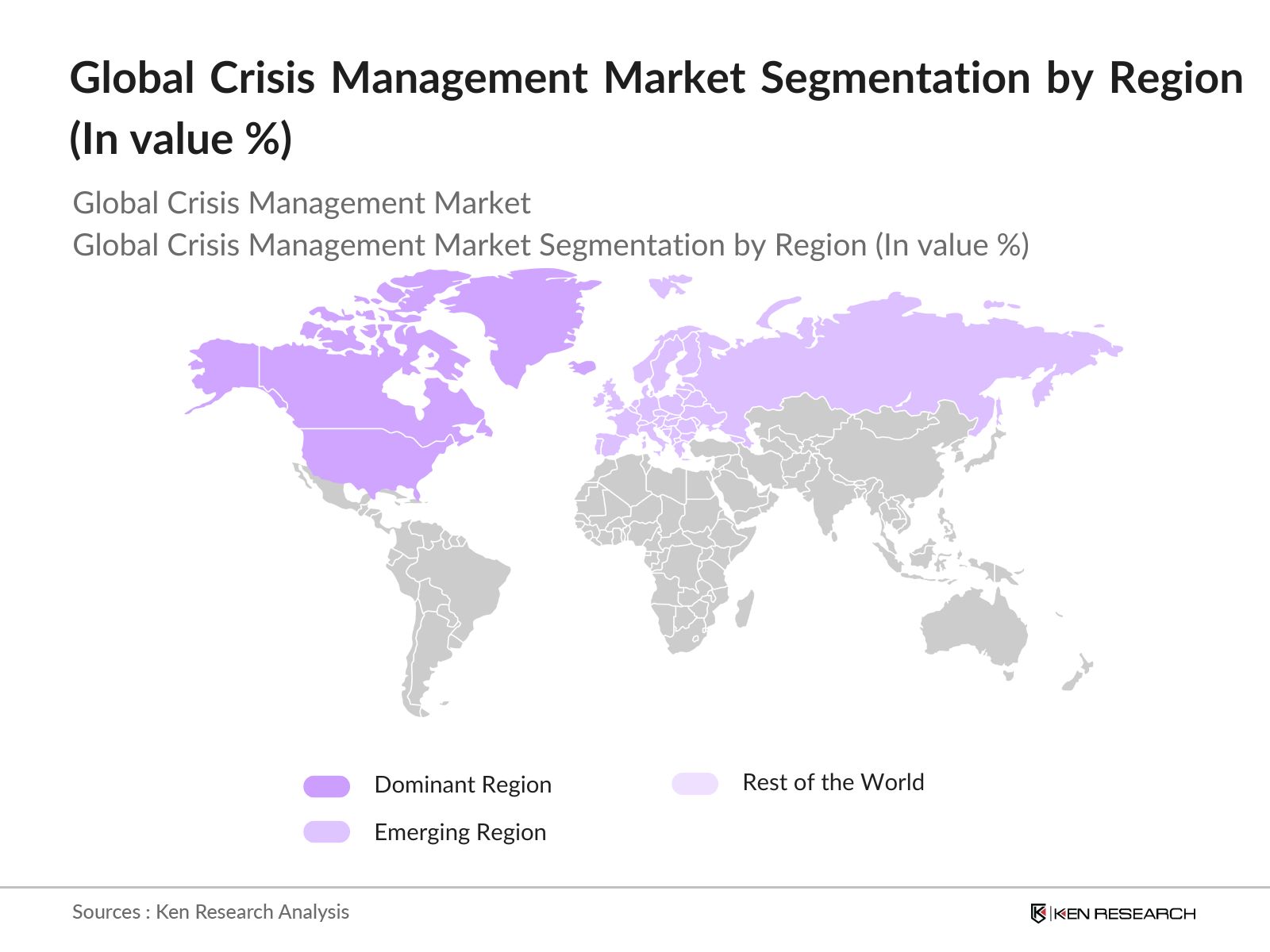
North America Europe Asia Pacific Latin America Middle East & Africa |
1.1. Definition and Scope
1.2. Market Taxonomy
1.3. Market Growth Rate (Market-specific metric: Growth driven by geopolitical risks, natural disasters, and cybersecurity threats)
1.4. Market Segmentation Overview
2.1. Historical Market Size
2.2. Year-On-Year Growth Analysis
2.3. Key Market Developments and Milestones (Market-specific metric: Impact of global risk factors on crisis management adoption)
3.1. Growth Drivers
3.1.1. Increasing Frequency of Natural Disasters
3.1.2. Rising Cybersecurity Threats (Market-specific metric: Percentage increase in cyber-attacks globally)
3.1.3. Stringent Regulatory Requirements (Market-specific metric: Compliance demands in crisis management protocols)
3.1.4. Technological Advancements in Risk Mitigation (Market-specific metric: AI and IoT adoption rates in crisis solutions)
3.2. Market Challenges
3.2.1. High Costs of Implementation
3.2.2. Limited Adoption in Emerging Markets
3.2.3. Regulatory Complexity Across Regions (Market-specific metric: Varying regional compliance and standards)
3.3. Opportunities
3.3.1. Expansion into Emerging Markets
3.3.2. Growing Demand for Mobile and Cloud-Based Solutions
3.3.3. Integration of AI and Predictive Analytics in Crisis Management
3.3.4. Increased Focus on Crisis Preparedness by SMEs
3.4. Trends
3.4.1. Adoption of Cloud-Based Crisis Management Systems
3.4.2. Real-Time Monitoring and Incident Response Tools
3.4.3. Increased Demand for AI-Powered Risk Assessment Platforms
3.4.4. Growing Role of Cybersecurity in Crisis Management
3.5. Government Regulation
3.5.1. Disaster Recovery and Business Continuity Regulations (Market-specific metric: FEMA and ISO 22301 compliance standards)
3.5.2. Cybersecurity Regulations (Market-specific metric: Impact of GDPR and CCPA on crisis management)
3.5.3. Public Sector Crisis Preparedness Initiatives
3.5.4. Mandatory Crisis Response Protocols in Critical Infrastructure
3.6. SWOT Analysis (Market-specific metric: Vulnerabilities in global crisis response strategies)
3.7. Stakeholder Ecosystem (Market-specific metric: Interactions between private crisis management firms and public authorities)
3.8. Porters Five Forces (Market-specific metric: Bargaining power of technology providers in crisis management solutions)
3.9. Competition Ecosystem
4.1. By Type of Solution (In Value %)
4.1.1. Risk Management Solutions
4.1.2. Incident Management Solutions
4.1.3. Business Continuity Solutions
4.1.4. Disaster Recovery Solutions
4.2. By End-Use Industry (In Value %)
4.2.1. BFSI
4.2.2. IT and Telecommunications
4.2.3. Healthcare
4.2.4. Government
4.2.5. Others (Manufacturing, Retail)
4.3. By Deployment Type (In Value %)
4.3.1. On-Premise Solutions
4.3.2. Cloud-Based Solutions
4.3.3. Hybrid Solutions
4.4. By Geography (In Value %)
4.4.1. North America
4.4.2. Europe
4.4.3. Asia Pacific
4.4.4. Latin America
4.4.5. Middle East & Africa
Global Crisis Management Market Competitive Analysis
5.1. Detailed Profiles of Major Companies (Market-specific metric: Competitor differentiation in service offerings)
5.1.1. Everbridge
5.1.2. International SOS
5.1.3. R3 Continuum
5.1.4. BlackBerry
5.1.5. Atos
5.1.6. Siemens AG
5.1.7. IBM Corporation
5.1.8. Sungard Availability Services
5.1.9. Firestorm Solutions LLC
5.1.10. RockDove Solutions
5.1.11. Regroup Mass Notification
5.1.12. AlertMedia Inc.
5.1.13. Konexus, Inc.
5.1.14. Fusion Risk Management
5.1.15. Crises Control
5.2. Cross Comparison Parameters (Market-specific metric: Response time, crisis recovery rate, scalability, service reliability, pricing flexibility, customer support, innovation in AI technology, compliance with global standards)
5.3. Market Share Analysis (Market-specific metric: Market share based on deployment type and end-user industry)
5.4. Strategic Initiatives
5.5. Mergers and Acquisitions
5.6. Investment Analysis (Market-specific metric: Investment in R&D for AI-driven solutions)
5.7. Venture Capital Funding
5.8. Government Grants
5.9. Private Equity Investments
6.1. Regulatory Standards for Business Continuity and Disaster Recovery (Market-specific metric: Compliance with ISO 22301)
6.2. Cybersecurity Regulations Impacting Crisis Management
6.3. Certification and Compliance Processes (Market-specific metric: Impact of certifications such as NIST and SOC2 on crisis management solutions)
7.1. Future Market Size Projections
7.2. Key Factors Driving Future Market Growth (Market-specific metric: Increase in global crisis incidents)
8.1. By Type of Solution (In Value %)
8.2. By End-Use Industry (In Value %)
8.3. By Deployment Type (In Value %)
8.4. By Geography (In Value %)
9.1. TAM/SAM/SOM Analysis (Market-specific metric: Opportunity analysis for cloud-based crisis management)
9.2. Customer Cohort Analysis
9.3. Marketing Initiatives
9.4. White Space Opportunity Analysis (Market-specific metric: Untapped sectors in crisis management solutions)
Disclaimer Contact Us
The first step involves mapping the ecosystem of the global crisis management market, focusing on the key stakeholders across industries such as BFSI, healthcare, and IT. This is conducted through in-depth desk research using industry reports, proprietary databases, and other credible sources to define the critical factors driving market growth.
In this phase, we analyze historical data to assess the penetration of crisis management solutions across various sectors. Revenue patterns and service performance statistics are evaluated to gauge the growth potential. Additionally, data on the deployment of AI and cloud-based platforms are incorporated to refine revenue and market penetration estimates.
We engage industry experts through computer-assisted telephone interviews (CATIs) to validate the market hypotheses. These interviews provide actionable insights into operational challenges, regulatory hurdles, and future trends in crisis management, which are essential for validating the markets projections.
The final phase synthesizes the gathered data with insights from multiple crisis management solution providers to ensure accuracy. This process includes reviewing their product lines, market penetration, and regional performance, ultimately leading to the final validation of market statistics and projections for the global crisis management market.
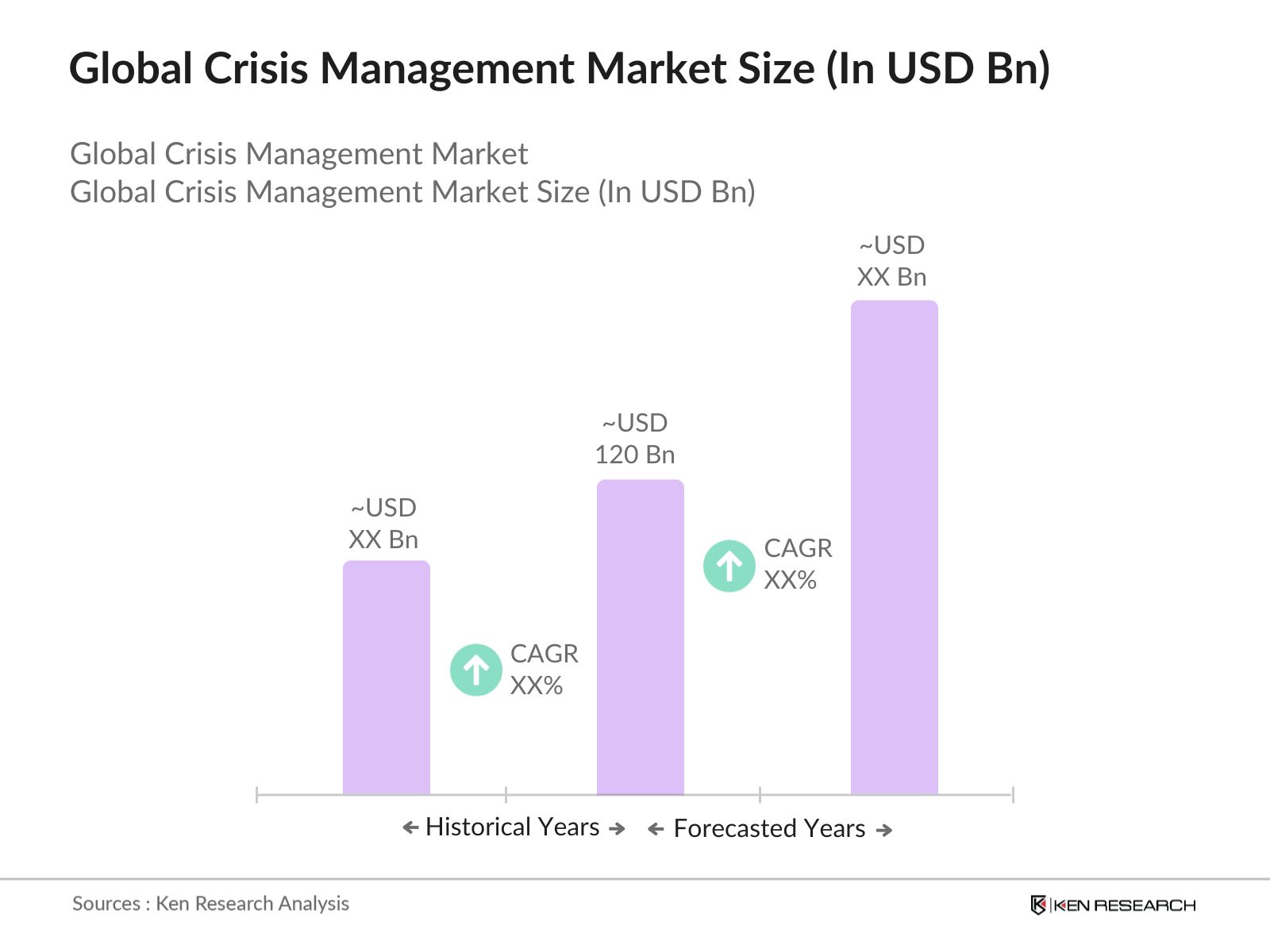
The global crisis management market is valued at USD 120 billion, driven by increasing demand for solutions that mitigate risks associated with natural disasters, cyber threats, and operational disruptions.
Challenges in the crisis management market include high implementation costs, limited adoption in emerging markets, and regulatory complexities. Companies face obstacles in customizing solutions to meet the diverse needs of different industries.
Key players in the crisis management market include Everbridge, International SOS, R3 Continuum, BlackBerry, and Atos. These companies dominate through their investments in AI-driven solutions, cloud-based platforms, and compliance-focused crisis management systems.
The growth drivers of the global crisis management market include the increasing frequency of natural disasters, rising cybersecurity threats, and advancements in AI and cloud technology, which are enabling real-time monitoring and response capabilities.

What makes us stand out is that our consultants follows Robust, Refine and Result (RRR) methodology. i.e. Robust for clear definitions, approaches and sanity checking, Refine for differentiating respondents facts and opinions and Result for presenting data with story

We have set a benchmark in the industry by offering our clients with syndicated and customized market research reports featuring coverage of entire market as well as meticulous research and analyst insights.

While we don't replace traditional research, we flip the method upside down. Our dual approach of Top Bottom & Bottom Top ensures quality deliverable by not just verifying company fundamentals but also looking at the sector and macroeconomic factors.

With one step in the future, our research team constantly tries to show you the bigger picture. We help with some of the tough questions you may encounter along the way: How is the industry positioned? Best marketing channel? KPI's of competitors? By aligning every element, we help maximize success.

Our report gives you instant access to the answers and sources that other companies might choose to hide. We elaborate each steps of research methodology we have used and showcase you the sample size to earn your trust.

If you need any support, we are here! We pride ourselves on universe strength, data quality, and quick, friendly, and professional service.