
Global Database Management System Market Outlook 2030
Region:Global
Author(s):Shivani Mehra
Product Code:KROD11300
Region:Global
Author(s):Shivani Mehra
Product Code:KROD11300
November 2024
88
The Global Database Management System Market is divided into the following segments:
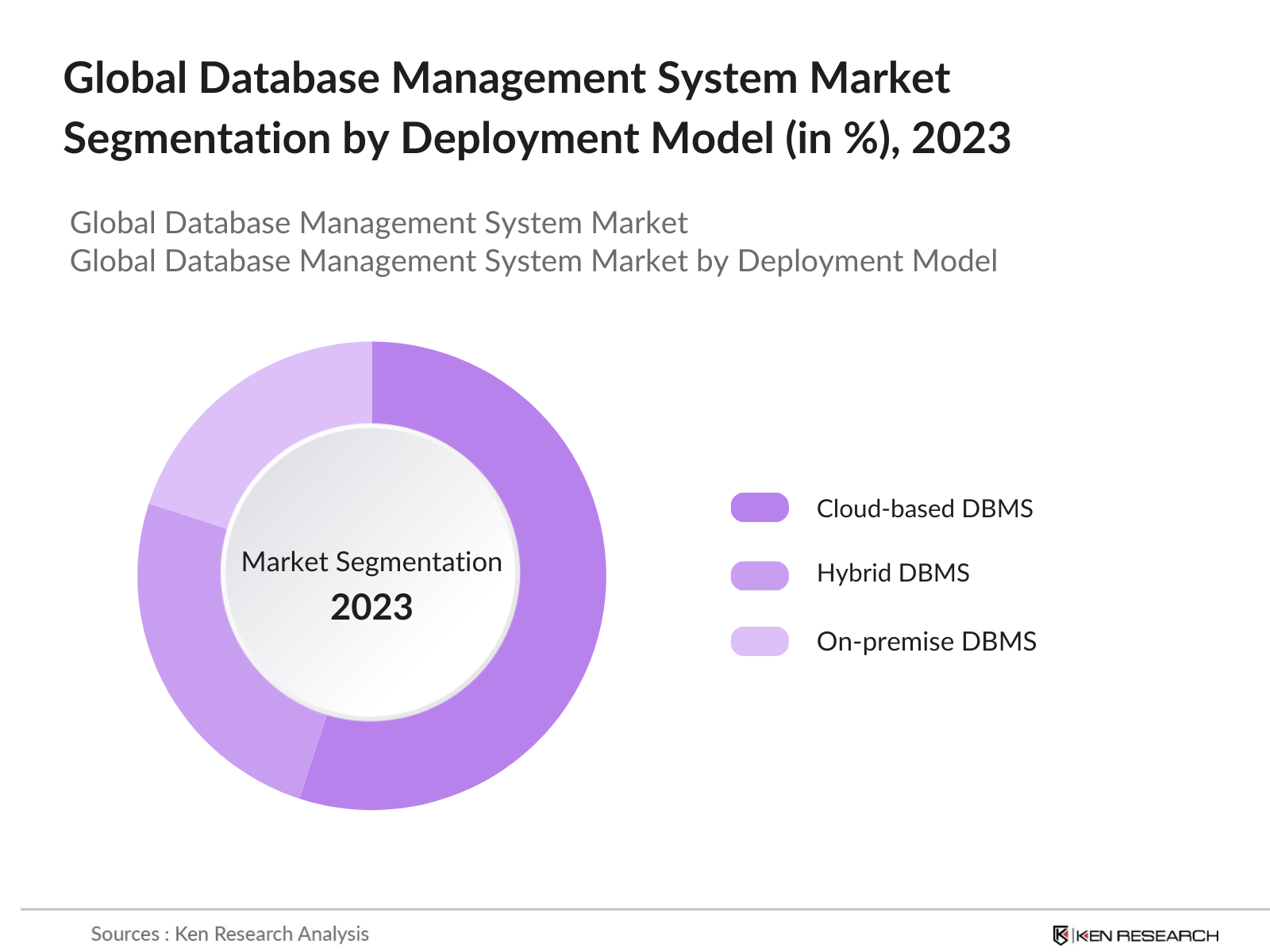
By Deployment Model: The global DBMS market is segmented by deployment models into on-premise DBMS, cloud-based DBMS, and hybrid DBMS. In 2023, cloud-based DBMS captured a dominant market share due to the rapid adoption of cloud infrastructure across industries. Cloud DBMS provides scalability, flexibility, and cost-efficiency, making it a preferred choice for both large enterprises and small businesses. Companies are moving away from traditional on-premise systems due to the high maintenance and capital costs involved, opting instead for cloud solutions that offer pay-as-you-go models and real-time data access.
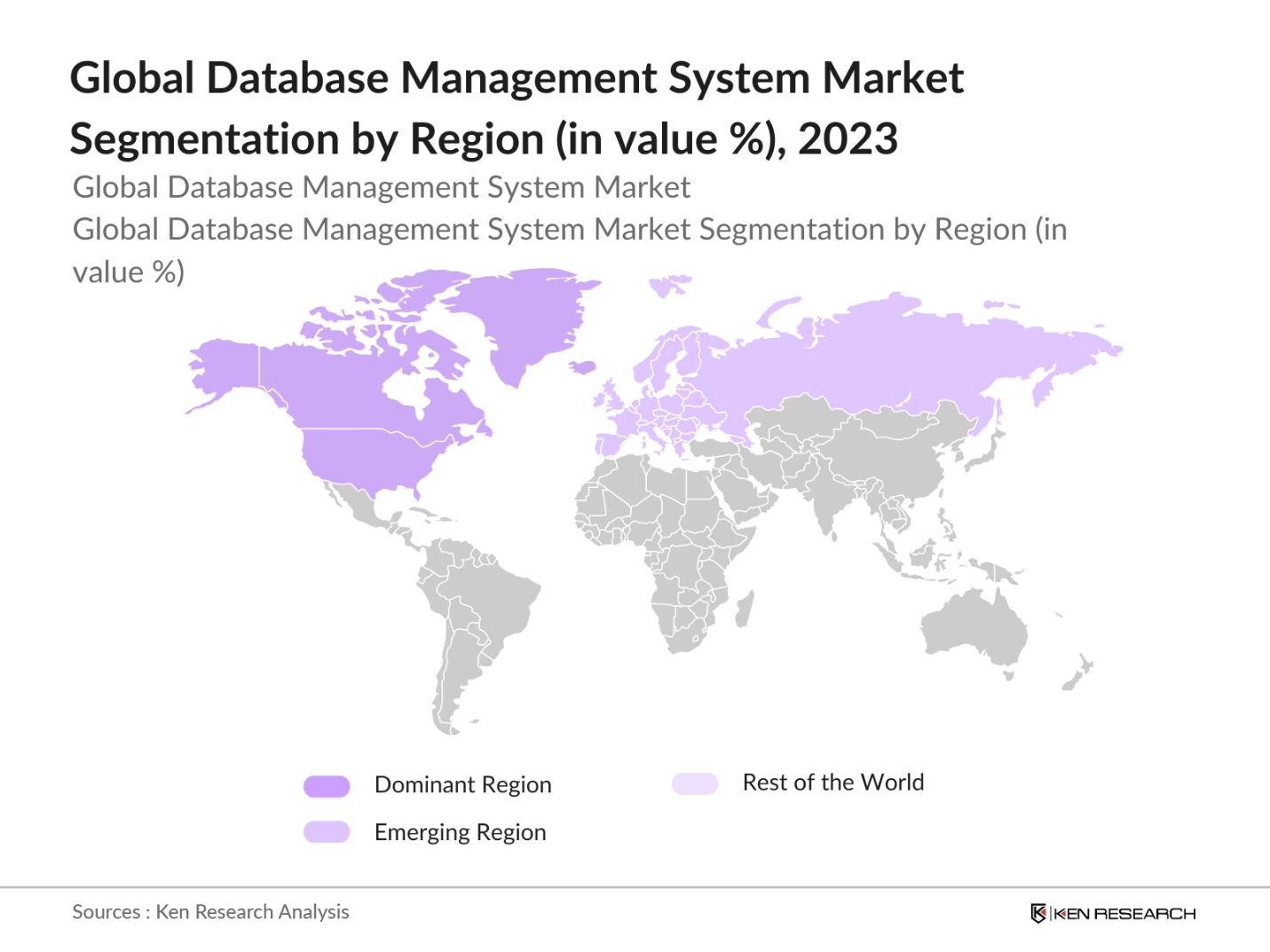
 By Region: The DBMS market is regionally segmented into North America, Europe, Asia-Pacific (APAC), Latin America, and the Middle East & Africa (MEA). In 2023, North America held the largest share due to the presence of leading database solution providers like Oracle, Microsoft, and AWS. The regions advanced IT infrastructure, high adoption of cloud services, and stringent data governance policies contribute to this dominance. Europe follows closely due to its increasing investments in data management technologies, while APAC shows rapid growth driven by digital transformation efforts in China and India.
 By Industry Vertical: The DBMS market is segmented by industry vertical into BFSI, IT & Telecom, Healthcare, Retail, and Government. In 2023, the BFSI (Banking, Financial Services, and Insurance) sector accounted for the largest market share. The BFSI sector handles massive volumes of sensitive data and requires high-performance, secure, and scalable database management systems to manage customer transactions and financial data. Regulatory compliance and data privacy regulations further drive the adoption of advanced DBMS solutions in this industry. IT & Telecom followed BFSI due to the continuous expansion of digital infrastructure.
|
Company |
Establishment Year |
Headquarters |
|
Oracle Corporation |
1977 |
Austin, Texas, USA |
|
Microsoft Corporation |
1975 |
Redmond, Washington, USA |
|
IBM |
1911 |
Armonk, New York, USA |
|
SAP SE |
1972 |
Walldorf, Germany |
|
Amazon Web Services (AWS) |
2006 |
Seattle, Washington, USA |
The Global Database Management System (DBMS) market outlook for 2028 will be shaped by the growing need for scalable, efficient, and secure data management systems as businesses increasingly rely on real-time data analytics, cloud platforms, and advanced computing technologies.
|
By Deployment Model |
On-premise DBMS Cloud-based DBMS Hybrid DBMS |
|
By Industry Vertical |
BFSI IT & Telecom Healthcare Retail Government |
|
By Region |
North America Europe Asia-Pacific (APAC) Latin America Middle East & Africa (MEA) |
|
By Database Type |
Relational DBMS NoSQL DBMS NewSQL DBMS |
1.1. Definition and Scope
1.2. Market Taxonomy
1.3. Market Growth Rate
1.4. Market Segmentation Overview
2.1. Historical Market Size
2.2. Year-on-Year Growth Analysis
2.3. Key Market Developments and Milestones
3.1. Growth Drivers
3.1.1. Increasing Data Proliferation and Big Data Analytics
3.1.2. Cloud Migration and Hybrid Infrastructure Adoption
3.1.3. Data Governance and Regulatory Compliance
3.2. Restraints
3.2.1. Data Security and Privacy Concerns
3.2.2. Complexity of Database Migration
3.2.3. Lack of Skilled Workforce
3.3. Opportunities
3.3.1. Rising Demand for AI-Powered DBMS Solutions
3.3.2. Integration of Blockchain for Secure Database Management
3.3.3. Edge Computing and Real-Time Data Processing
3.4. Trends
3.4.1. AI-Powered Database Solutions
3.4.2. Multi-Cloud Database Adoption
3.4.3. Blockchain-Based Databases for Security
3.5. Government Initiatives
3.5.1. U.S. National Data Strategy (2023)
3.5.2. Indias Digital Infrastructure Push (2024)
3.5.3. European Unions Data Governance Act (2023)
3.6. SWOT Analysis
3.7. Stakeholder Ecosystem
3.8. Competitive Ecosystem
4.1. By Deployment Model (in Value %)
4.1.1. On-premise DBMS
4.1.2. Cloud-based DBMS
4.1.3. Hybrid DBMS
4.2. By Industry Vertical (in Value %)
4.2.1. BFSI
4.2.2. IT & Telecom
4.2.3. Healthcare
4.2.4. Retail
4.2.5. Government
4.3. By Region (in Value %)
4.3.1. North America
4.3.2. Europe
4.3.3. Asia-Pacific (APAC)
4.3.4. Latin America
4.3.5. Middle East & Africa (MEA)
4.4. By Database Type (in Value %)
4.4.1. Relational DBMS
4.4.2. NoSQL DBMS
4.4.3. NewSQL DBMS
4.5. By Organization Size (in Value %)
4.5.1. Large Enterprises
4.5.2. Small and Medium Enterprises (SMEs)
4.6. By Application (in Value %)
4.6.1. Transactional DBMS
4.6.2. Analytical DBMS
4.6.3. Mixed Workload DBMS
5.1. Detailed Profiles of Major Companies
5.1.1. Oracle Corporation
5.1.2. Microsoft Corporation
5.1.3. IBM
5.1.4. SAP SE
5.1.5. Amazon Web Services (AWS)
5.1.6. Teradata Corporation
5.1.7. MongoDB, Inc.
5.1.8. Google Cloud
5.1.9. Snowflake Inc.
5.1.10. MariaDB Corporation
5.1.11. Couchbase, Inc.
5.1.12. Cloudera, Inc.
5.1.13. MarkLogic Corporation
5.1.14. Redis Labs
5.1.15. Databricks Inc.
5.2. Cross Comparison Parameters (Headquarters, Establishment Year, Revenue)
6.1. Market Share Analysis
6.2. Strategic Initiatives
6.3. Mergers and Acquisitions
6.4. Investment Analysis
6.4.1. Venture Capital Funding
6.4.2. Government Grants
6.4.3. Private Equity Investments
7.1. Data Security Standards
7.2. Compliance Requirements
7.3. Certification Processes
8.1. Future Market Size Projections
8.2. Key Factors Driving Future Market Growth
9.1. By Deployment Model (in Value %)
9.2. By Industry Vertical (in Value %)
9.3. By Region (in Value %)
9.4. By Database Type (in Value %)
9.5. By Organization Size (in Value %)
10.1. TAM/SAM/SOM Analysis
10.2. Customer Cohort Analysis
10.3. Marketing Initiatives
10.4. White Space Opportunity Analysis
Ecosystem creation for all the major entities and referring to multiple secondary and proprietary databases to perform desk research around market to collate industry level information.
Collating statistics on the Global Database Management System (DBMS) Market over the years, penetration of marketplaces and service providers ratio to compute revenue generated for Global Database Management System (DBMS) Market. We will also review service quality statistics to understand revenue generated which can ensure accuracy behind the data points shared.
Building market hypothesis and conducting CATIs with industry experts belonging to different companies to validate statistics and seek operational and financial information from company representatives.
Our team will approach multiple Database Management System (DBMS) and understand nature of product segments and sales, consumer preference and other parameters, which will support us validate statistics derived through bottom to top approach from Database Management System (DBMS).
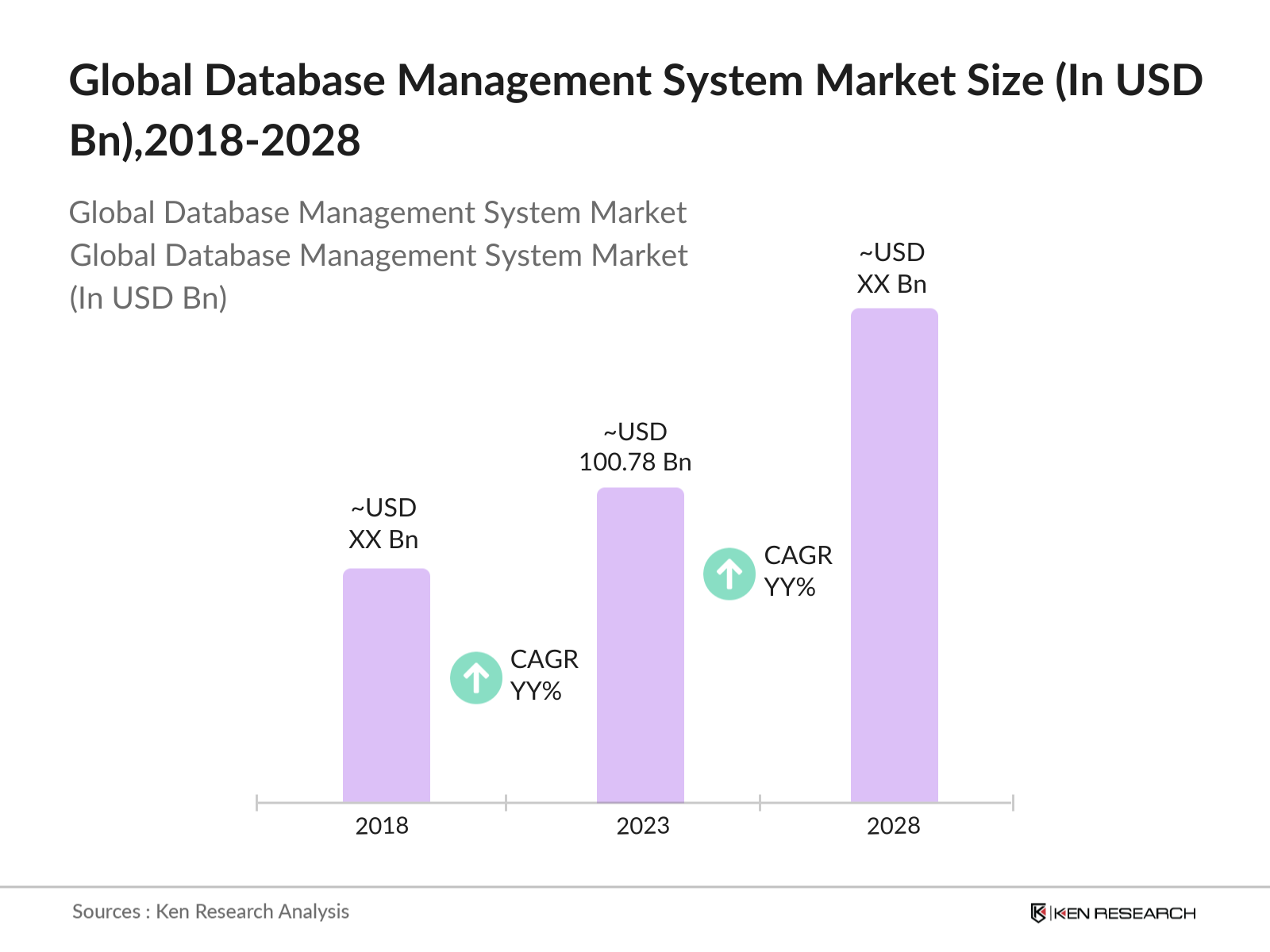
The Global Database Management System (DBMS) market was valued at USD 100.78 billion in 2023, driven by the increasing demand for real-time data processing, cloud-native database solutions, and big data analytics across multiple industries.
Challenges in the Global DBMS market include data security concerns, complex migration from legacy systems, and a shortage of skilled professionals who can manage advanced and hybrid database infrastructures, hindering smooth system transitions.
Key players in the Global DBMS market include Oracle Corporation, Microsoft Corporation, IBM, SAP SE, and Amazon Web Services (AWS). These companies dominate due to their advanced solutions, extensive cloud services, and strong global presence.
The Global DBMS market is propelled by the proliferation of big data, cloud migration, and increasing regulatory requirements for data governance. The rise of AI-powered and multi-cloud database systems also significantly drives market growth.

What makes us stand out is that our consultants follows Robust, Refine and Result (RRR) methodology. i.e. Robust for clear definitions, approaches and sanity checking, Refine for differentiating respondents facts and opinions and Result for presenting data with story

We have set a benchmark in the industry by offering our clients with syndicated and customized market research reports featuring coverage of entire market as well as meticulous research and analyst insights.

While we don't replace traditional research, we flip the method upside down. Our dual approach of Top Bottom & Bottom Top ensures quality deliverable by not just verifying company fundamentals but also looking at the sector and macroeconomic factors.

With one step in the future, our research team constantly tries to show you the bigger picture. We help with some of the tough questions you may encounter along the way: How is the industry positioned? Best marketing channel? KPI's of competitors? By aligning every element, we help maximize success.

Our report gives you instant access to the answers and sources that other companies might choose to hide. We elaborate each steps of research methodology we have used and showcase you the sample size to earn your trust.

If you need any support, we are here! We pride ourselves on universe strength, data quality, and quick, friendly, and professional service.