
Global Dietary Supplements Market Outlook to 2030
Region:Global
Author(s):Shivani Mehra
Product Code:KROD2812
November 2024
100
About the Report
Global Dairy Alternatives Market Overview
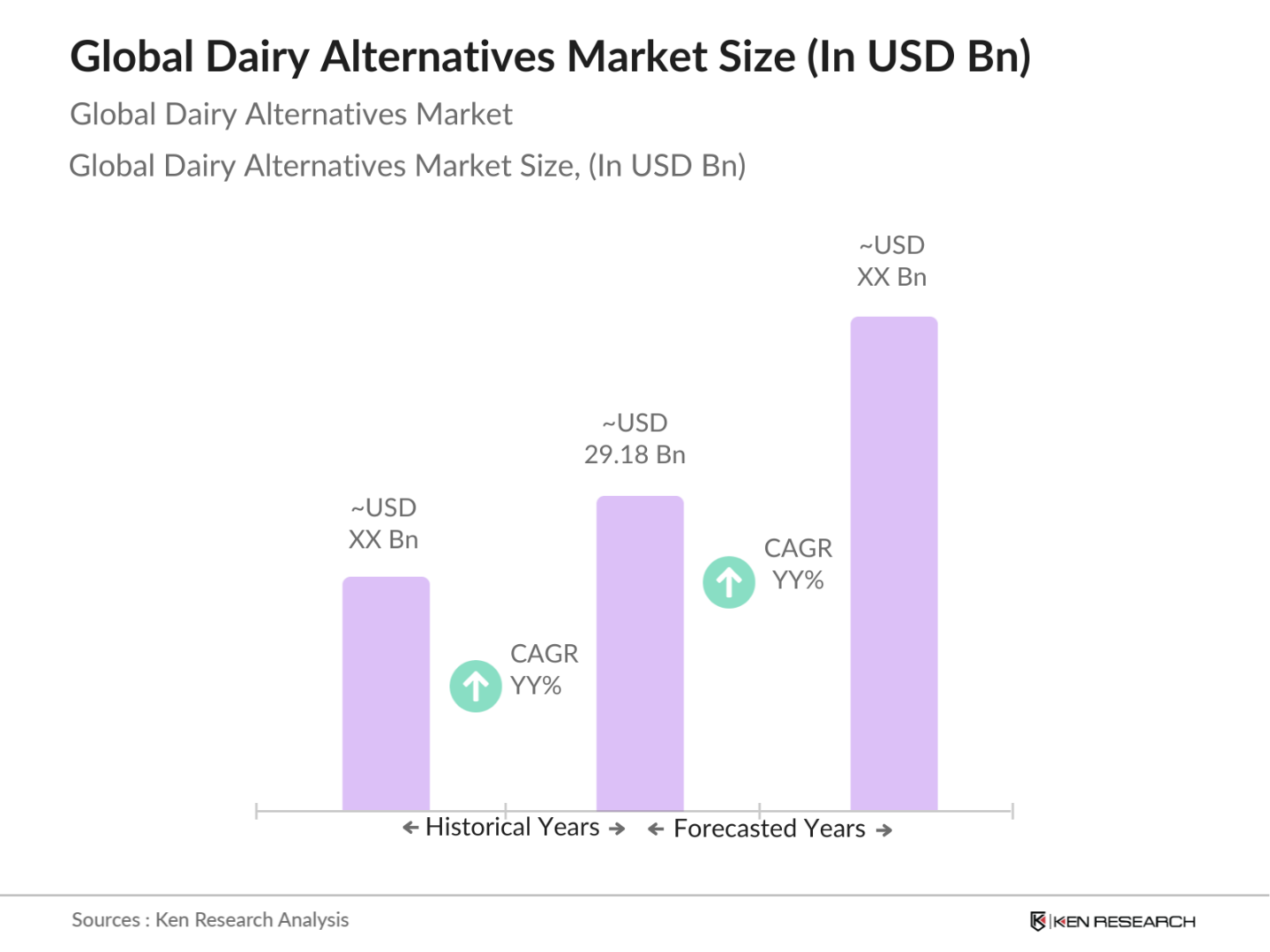
- The global dairy alternatives market is valued at USD 29.18 billion, driven by a growing consumer preference for plant-based diets and an increase in lactose intolerance awareness. The market is bolstered by innovations in product offerings and a rising demand for healthier, sustainable food options. These factors contribute to the expanding consumer base, fueling growth in the sector. In 2023, the market is expected to reach, highlighting a robust trajectory in consumer demand.
- Key markets in the global dairy alternatives landscape include the United States, Germany, and China. The U.S. dominates due to its large population and increasing health-conscious consumers. Germany's strong market presence is attributed to its significant vegan community and health trends favoring dairy-free products. Meanwhile, China is witnessing rapid growth driven by rising disposable incomes and changing dietary preferences, leading to a burgeoning demand for dairy alternatives.
- Safety standards in the dairy alternatives market are being reinforced to protect consumer health. Regulatory agencies are updating guidelines to ensure that plant-based products are produced under safe and sanitary conditions. Adhering to these safety standards is critical for manufacturers, as failure to comply can lead to recalls and damage to brand reputation.
Global Dairy Alternatives Market Segmentation
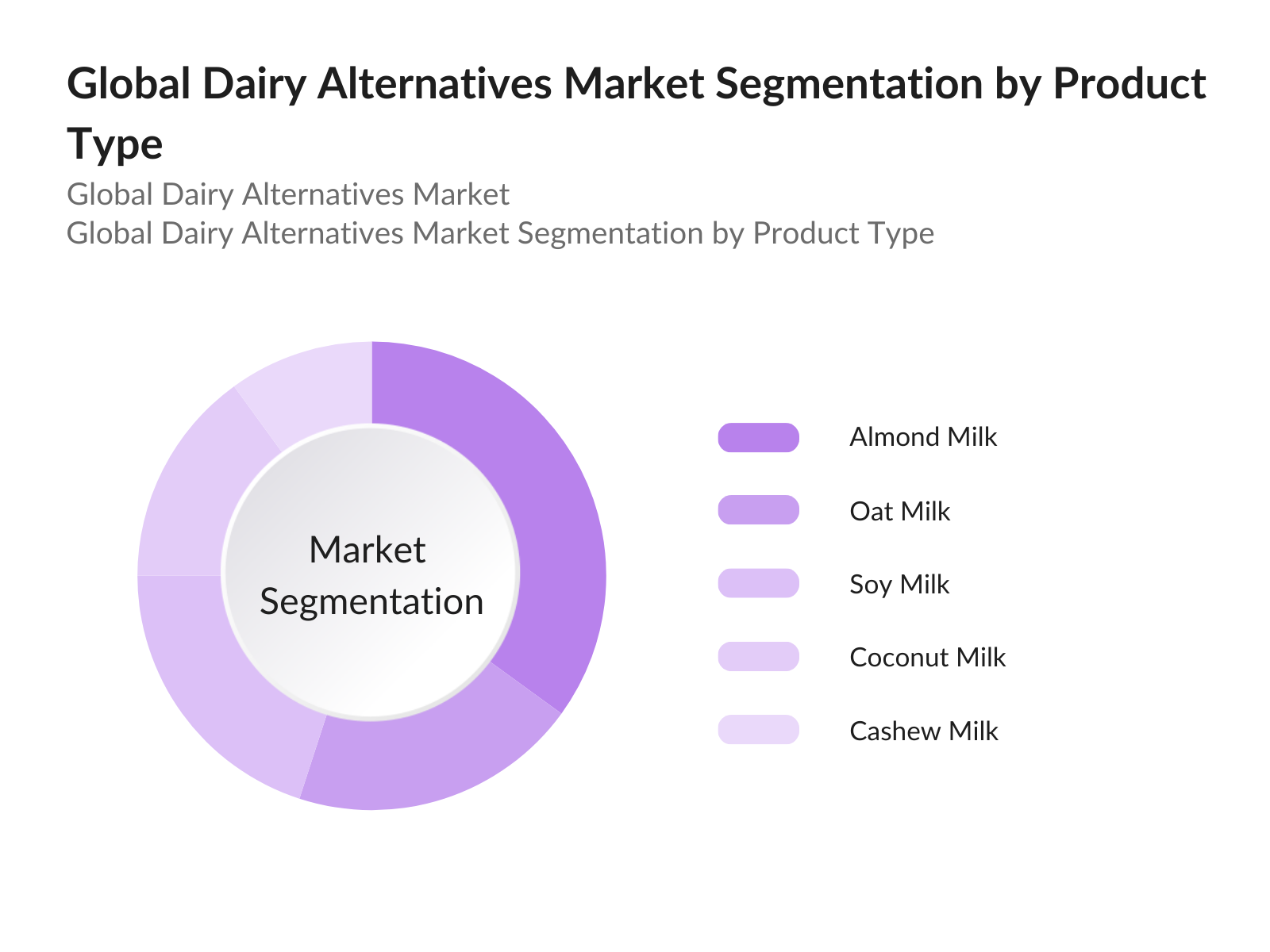
By Product Type: The global dairy alternatives market is segmented by product type into soy milk, almond milk, coconut milk, oat milk, and cashew milk. Among these, almond milk holds a dominant market share due to its versatility and broad appeal among health-conscious consumers. The increasing trend of using almond milk in various recipes, combined with its low-calorie count and high nutritional value, makes it a preferred choice among consumers seeking dairy-free options.
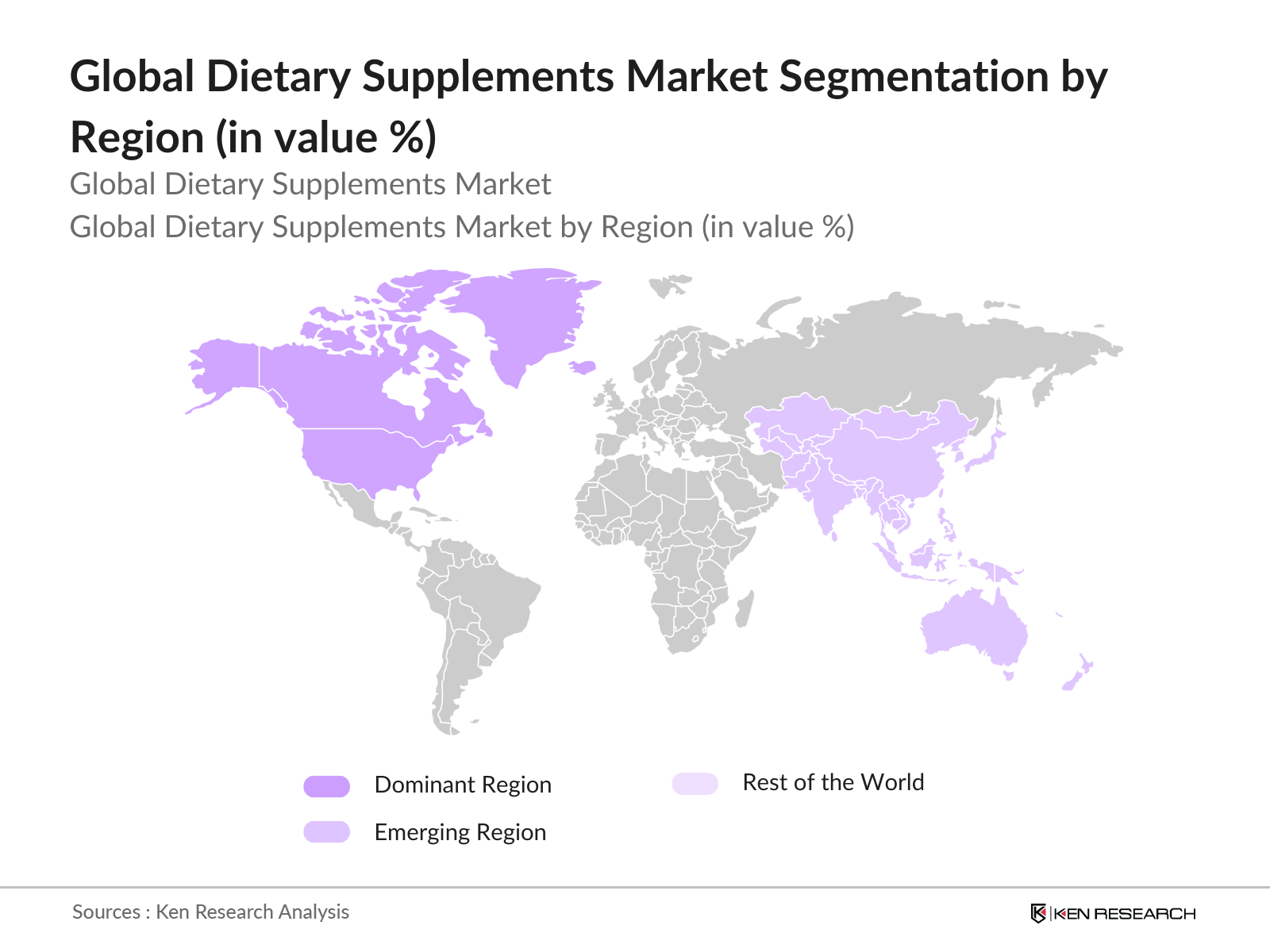
 By Region: The global dairy alternatives market is segmented by region into North America, Europe, Asia-Pacific, Latin America, and the Middle East & Africa. North America dominates the market owing to the increasing health trends and a strong consumer base favoring plant-based diets. Additionally, the presence of major manufacturers in the U.S. and Canada, along with innovative product development, contributes significantly to the region's market strength.
Global Dietary Supplements Market Competitive Landscape
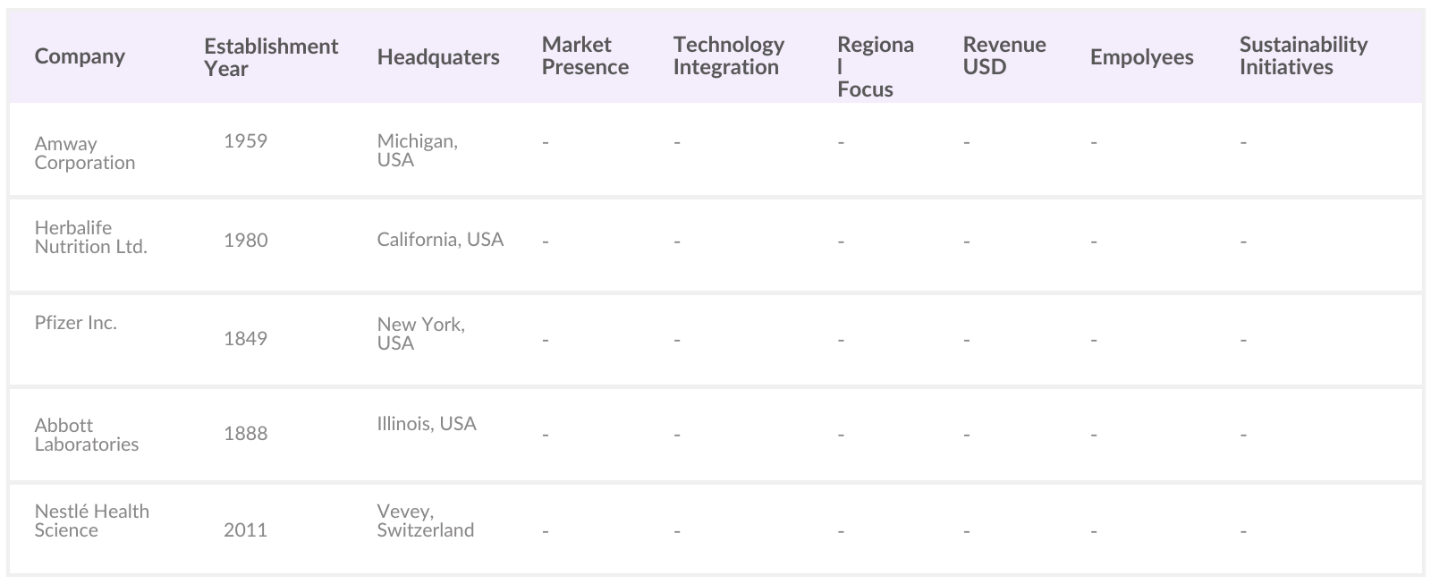
The global dietary supplements market is dominated by leading brands, both local and international, leveraging strong distribution channels and extensive R&D capabilities.
Global Dietary Supplements Market Aanlysis
Market Growth Drivers
- Rising Health Consciousness: In 2023, global health consciousness has surged, with individuals increasingly prioritizing wellness and preventive care. According to the World Health Organization (WHO), non-communicable diseases (NCDs) are the leading cause of mortality worldwide, leading to a shift towards healthier lifestyles. This trend has sparked a significant rise in the consumption of dietary supplements, as individuals seek to improve their nutritional intake and overall well-being.
- Aging Population: The aging population has driven a heightened demand for dietary supplements tailored to address age-related health concerns, such as bone density loss and cognitive decline. As the elderly demographic grows, so does the need for products that support overall health and wellness, positioning the aging population as a significant driver for the dietary supplements market.
- Increasing Prevalence of Chronic Diseases: The global rise in chronic diseases, such as diabetes and cardiovascular conditions, has led to an increased interest in dietary supplements that support disease management and overall health maintenance. As these health concerns become more prevalent, individuals are turning to supplements to help maintain their wellness and manage the impact of chronic conditions.
Market Challenges:
- Stringent Regulatory Requirements: The dietary supplements industry operates under rigorous regulatory standards to ensure product safety and efficacy. Regulatory bodies enforce strict guidelines, requiring manufacturers to comply with Good Manufacturing Practices (GMP). Adhering to these regulations can be resource-intensive, presenting challenges for companies in terms of market entry and expansion.
- Quality Concerns and Adulteration: The dietary supplements market has faced issues related to product quality and adulteration. The World Health Organization (WHO) has reported instances of substandard and falsified medical products, including supplements, which pose significant health risks. Such concerns can erode consumer trust and hinder market growth.
Global Dietary Supplements Market Future Outlook
The global dietary supplements market is poised for considerable growth over the next five years, driven by ongoing innovations in personalized nutrition, expanding consumer awareness of health and wellness, and rising investments in natural and plant-based supplements. Growing penetration of online retail and digital health platforms will further enhance accessibility and consumer engagement in this market.
Market Opportunities:
- Growth in Personalized Nutrition: Advancements in technology have enabled the development of personalized nutrition solutions. A study published in the National Library of Medicine highlights that personalized nutrition can lead to better health outcomes by tailoring dietary recommendations to individual needs. This approach presents a significant opportunity for the dietary supplements market to offer customized products that cater to specific consumer health profiles.
- Development of Plant-Based Supplements: Consumer preference for plant-based products is on the rise, with an increasing demand for plant-based dietary supplements. This trend reflects a shift toward natural and sustainable options, offering significant opportunities for product innovation within the dietary supplements market as consumers actively seek alternatives to synthetic ingredients.
Scope of the Report
|
By Product Type |
Soy Milk Almond Milk Coconut Milk Oat Milk Cashew Milk |
|
By Application |
Food Products Beverages Infant Nutrition Culinary Products |
|
By Distribution Channel |
Online Retail Supermarkets/Hypermarkets Specialty Stores |
|
By Consumer Demographics |
Age Group (Children, Adults, Seniors) Income Level (Low, Middle, High) Lifestyle Preferences (Health-Conscious, Vegan, Vegetarian) |
|
By Region |
North America Europe Asia-Pacific Latin America Middle East & Africa |
Products
Key Target Audience
Food and Beverage Manufacturers
Retail and Distribution Companies
Restaurants and Cafes
Investment and Venture Capitalist Firms
Government and Regulatory Bodies (FDA, USDA)
Health and Wellness Organizations
Food Scientists and Researchers
Nutritional and Dietary Consultants
Companies
Players Mention in the Report
WhiteWave Foods
Alpro (Danone)
Oatly
Califia Farms
Ripple Foods
Blue Diamond Growers
So Delicious (Dairy Free)
Nestl
MALK Organics
Elmhurst 1925
The Whitewave Division of Danone
Arla Foods
Hagen-Dazs (General Mills)
Aloha
Pacific Foods
Table of Contents
01. Global Dairy Alternatives Market Overview
1.1. Definition and Scope
1.2. Market Taxonomy
1.3. Market Growth Rate
1.4. Market Segmentation Overview
02. Global Dairy Alternatives Market Size (In USD Bn)
2.1. Historical Market Size
2.2. Year-On-Year Growth Analysis
2.3. Key Market Developments and Milestones
03. Global Dairy Alternatives Market Analysis
3.1. Growth Drivers
3.1.1. Rising Veganism
3.1.2. Lactose Intolerance Awareness
3.1.3. Health Benefits of Dairy Alternatives
3.1.4. Innovations in Product Offerings
3.2. Market Challenges
3.2.1. High Production Costs
3.2.2. Quality Consistency Issues
3.2.3. Limited Consumer Awareness
3.3. Opportunities
3.3.1. Expansion into Emerging Markets
3.3.2. Development of Clean Label Products
3.3.3. Strategic Partnerships and Collaborations
3.4. Trends
3.4.1. Rise of Functional Dairy Alternatives
3.4.2. Sustainability Initiatives
3.4.3. Customization and Personalization of Products
3.5. Government Regulation
3.5.1. Labeling Regulations
3.5.2. Safety Standards
3.5.3. Trade Policies
3.6. SWOT Analysis
3.7. Stake Ecosystem
3.8. Porters Five Forces
3.9. Competition Ecosystem
04. Global Dairy Alternatives Market Segmentation
4.1. By Product Type (In Value %)
4.1.1. Soy Milk
4.1.2. Almond Milk
4.1.3. Coconut Milk
4.1.4. Oat Milk
4.1.5. Cashew Milk
4.2. By Application (In Value %)
4.2.1. Food Products
4.2.2. Beverages
4.2.3. Infant Nutrition
4.2.4. Culinary Products
4.3. By Distribution Channel (In Value %)
4.3.1. Online Retail
4.3.2. Supermarkets/Hypermarkets
4.3.3. Specialty Stores
4.4. By Region (In Value %)
4.4.1. North America
4.4.2. Europe
4.4.3. Asia-Pacific
4.4.4. Latin America
4.4.5. Middle East & Africa
05. Global Dairy Alternatives Market Competitive Analysis
5.1. Detailed Profiles of Major Companies
5.1.1. WhiteWave Foods
5.1.2. Blue Diamond Growers
5.1.3. Alpro (Danone)
5.1.4. Oatly
5.1.5. Pacific Foods
5.1.6. So Delicious (Dairy Free)
5.1.7. Ripple Foods
5.1.8. Califia Farms
5.1.9. Elmhurst 1925
5.1.10. MALK Organics
5.1.11. Arla Foods
5.1.12. Nestl
5.1.13. The Whitewave Division of Danone
5.1.14. Hagen-Dazs (General Mills)
5.1.15. Aloha
5.2. Cross Comparison Parameters (Market Share, Revenue, Product Range, Distribution Network, Geographic Presence, Innovation Pipeline, Sustainability Practices, Customer Base)
5.3. Market Share Analysis
5.4. Strategic Initiatives
5.5. Mergers and Acquisitions
5.6. Investment Analysis
5.7. Venture Capital Funding
5.8. Government Grants
5.9. Private Equity Investments
06. Global Dairy Alternatives Market Regulatory Framework
6.1. Food Safety Standards
6.2. Nutritional Labeling Requirements
6.3. Import/Export Regulations
07. Global Dairy Alternatives Market Future Size (In USD Bn)
7.1. Future Market Size Projections
7.2. Key Factors Driving Future Market Growth
08. Global Dairy Alternatives Market Future Segmentation
8.1. By Product Type (In Value %)
8.2. By Application (In Value %)
8.3. By Distribution Channel (In Value %)
8.4. By Region (In Value %)
8.5. By Consumer Demographics (In Value %)
09. Global Dairy Alternatives Market Analysts Recommendations
9.1. TAM/SAM/SOM Analysis
9.2. Customer Cohort Analysis
9.3. Marketing Initiatives
9.4. White Space Opportunity Analysis
Disclaimer
Contact Us
Research Methodology
Step 1: Identification of Key Variables
The initial phase involves constructing an ecosystem map encompassing all major stakeholders within the global dairy alternatives market. This step is underpinned by extensive desk research, utilizing a combination of secondary and proprietary databases to gather comprehensive industry-level information. The primary objective is to identify and define the critical variables that influence market dynamics.
Step 2: Market Analysis and Construction
In this phase, we compile and analyze historical data pertaining to the global dairy alternatives market. This includes assessing market penetration, the ratio of marketplaces to service providers, and the resultant revenue generation. Furthermore, an evaluation of service quality statistics will be conducted to ensure the reliability and accuracy of the revenue estimates.
Step 3: Hypothesis Validation and Expert Consultation
Market hypotheses are developed and subsequently validated through computer-assisted telephone interviews (CATIs) with industry experts representing a diverse array of companies. These consultations provide valuable operational and financial insights directly from industry practitioners, which are instrumental in refining and corroborating the market data.
Step 4: Research Synthesis and Final Output
The final phase involves direct engagement with multiple dairy alternatives manufacturers to acquire detailed insights into product segments, sales performance, consumer preferences, and other pertinent factors. This interaction verifies and complements the statistics derived from the bottom-up approach, ensuring a comprehensive, accurate, and validated analysis of the global dairy alternatives market.
Frequently Asked Questions
01. How big is the global dairy alternatives market?
The global dairy alternatives market is valued at USD 29.18billion, driven by a growing consumer preference for plant-based diets and an increase in lactose intolerance awareness.
02. What are the major challenges in the global dairy alternatives market?
Challenges in the global dairy alternatives market include high production costs, quality consistency issues, and limited consumer awareness. These factors can impact the profitability and market penetration of dairy alternatives.
03. Who are the major players in the global dairy alternatives market?
Key players in the market include WhiteWave Foods, Alpro (Danone), Oatly, and Califia Farms. These companies dominate due to their extensive distribution networks, strong brand presence, and diverse product portfolios.
04. What are the growth drivers of the global dairy alternatives market?
The market is propelled by factors such as rising lactose intolerance awareness, increasing health-consciousness, and innovations in product offerings that cater to diverse dietary preferences.
Why Buy From Us?

What makes us stand out is that our consultants follows Robust, Refine and Result (RRR) methodology. i.e. Robust for clear definitions, approaches and sanity checking, Refine for differentiating respondents facts and opinions and Result for presenting data with story

We have set a benchmark in the industry by offering our clients with syndicated and customized market research reports featuring coverage of entire market as well as meticulous research and analyst insights.

While we don't replace traditional research, we flip the method upside down. Our dual approach of Top Bottom & Bottom Top ensures quality deliverable by not just verifying company fundamentals but also looking at the sector and macroeconomic factors.

With one step in the future, our research team constantly tries to show you the bigger picture. We help with some of the tough questions you may encounter along the way: How is the industry positioned? Best marketing channel? KPI's of competitors? By aligning every element, we help maximize success.

Our report gives you instant access to the answers and sources that other companies might choose to hide. We elaborate each steps of research methodology we have used and showcase you the sample size to earn your trust.

If you need any support, we are here! We pride ourselves on universe strength, data quality, and quick, friendly, and professional service.