
Global Digital Payments Market Outlook to 2030
Region:Global
Author(s):Shivani Mehra
Product Code:KROD2987
Region:Global
Author(s):Shivani Mehra
Product Code:KROD2987
November 2024
86
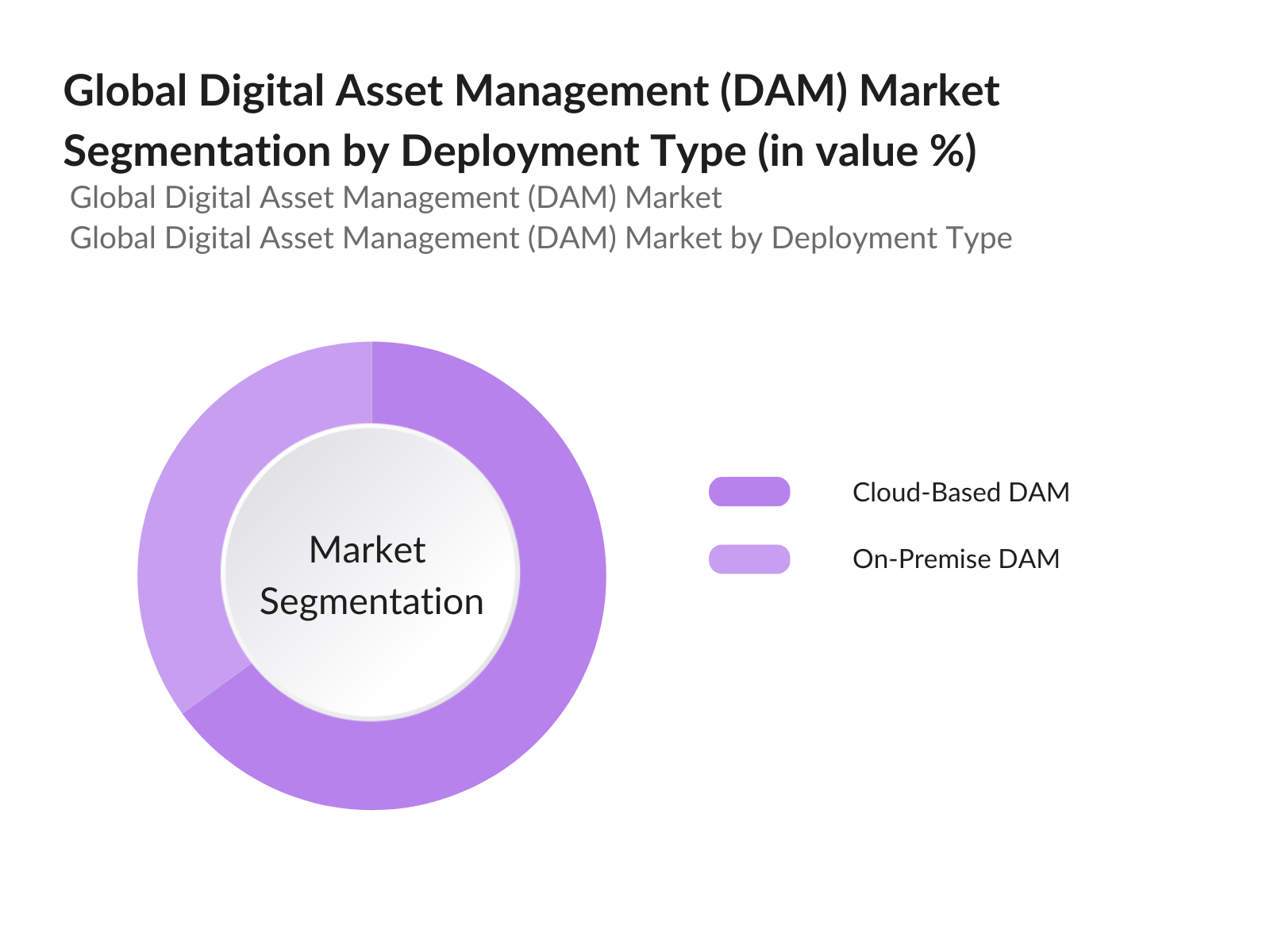
By Deployment Type: The global DAM market is segmented by deployment type into cloud-based DAM and on-premise DAM. Cloud-based DAM solutions dominate the market due to their scalability, cost-efficiency, and ease of access from any location. Enterprises are increasingly migrating to cloud solutions to support remote work, improve collaboration, and reduce infrastructure costs. Cloud-based DAM is preferred by large enterprises that require centralized content management and access to real-time updates, while on-premise solutions are more prevalent in industries where data security is paramount, such as healthcare and BFSI.
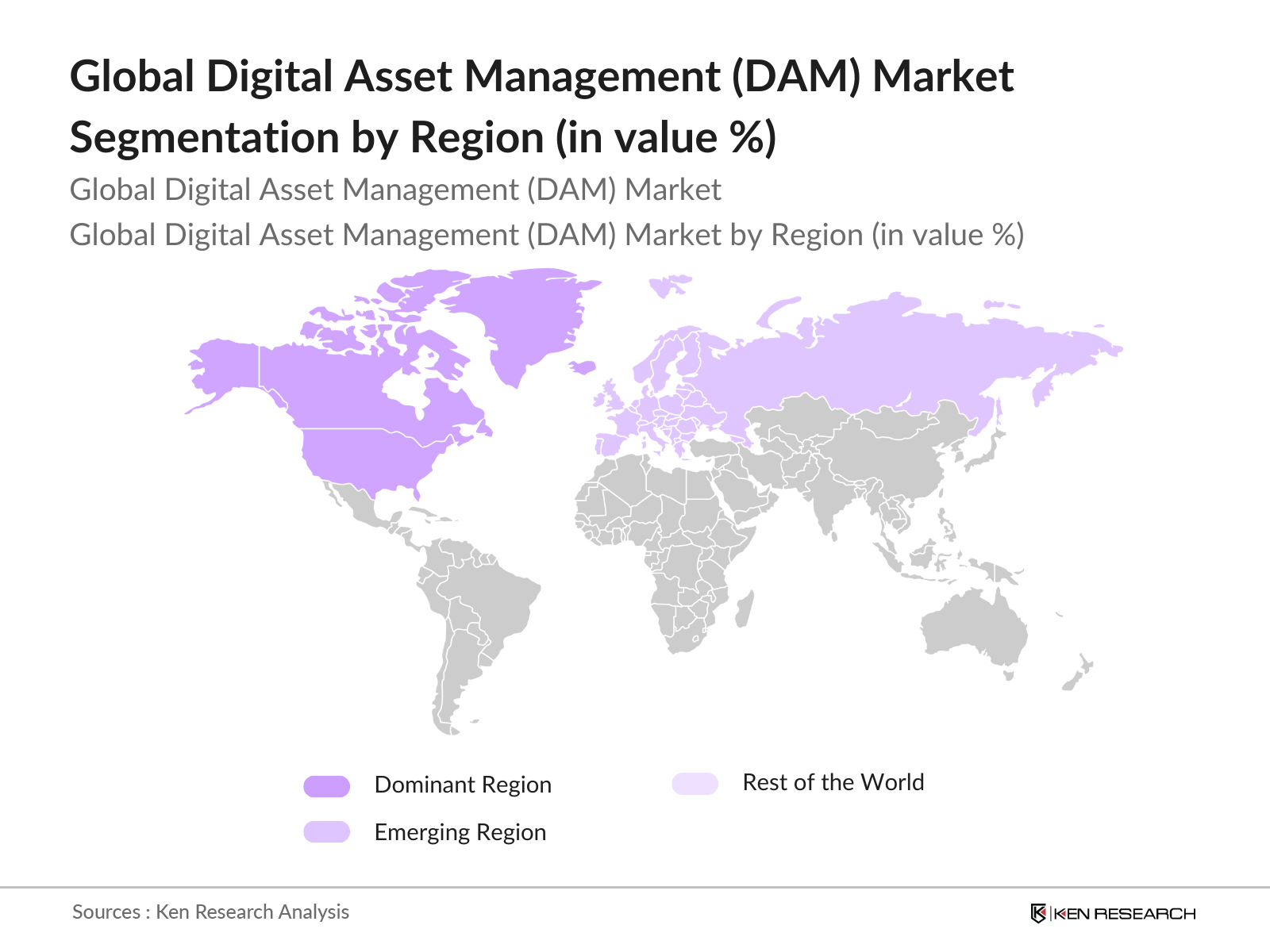
By Region: The global DAM market is segmented into North America, Europe, Asia-Pacific, Latin America, and the Middle East & Africa. North America holds the largest market share due to the high adoption rate of digital technologies across industries such as media, retail, and finance. The regions dominance is also supported by the presence of key market players and a well-established technological infrastructure. Europe follows closely, driven by stringent data privacy regulations such as GDPR, which has increased the demand for solutions that offer robust compliance and security features.
 Global Digital Asset Management (DAM) Market Competitive Landscape
The global DAM market is consolidated, with a few major players holding a significant share. Companies like Adobe, OpenText, and Bynder are recognized as industry leaders due to their comprehensive product portfolios and global reach. These players continually innovate by integrating advanced features such as AI-driven metadata tagging and automation to enhance user experience and streamline asset management.
|
Company Name |
Establishment Year |
Headquarters |
Key Parameters |
|
Adobe Systems |
1982 |
San Jose, USA |
|
|
OpenText |
1991 |
Waterloo, Canada |
|
|
Widen Enterprises |
1948 |
Wisconsin, USA |
|
|
Bynder |
2013 |
Amsterdam, Netherlands |
|
|
Aprimo |
1998 |
Chicago, USA |
Over the next five years, the global digital asset management market is expected to witness significant growth, driven by the increasing need for content management solutions across multiple industries. Factors such as advancements in AI, automation in metadata tagging, and seamless cloud integration will enhance the efficiency of DAM systems, further expanding the market. Moreover, the rise of omnichannel marketing strategies and the need for centralized digital asset management are likely to propel the demand for DAM platforms.
|
By Payment Type |
Digital Wallets Card-based Payments Real-Time Payments Cryptocurrencies, Bank Transfers |
|
By Application |
Retail and E-commerce Banking and Financial Services Transportation Healthcare, Hospitality |
|
By Deployment |
Cloud-based On-premise |
|
By End-User |
Consumer Enterprises Government |
|
By Region |
North America Europe Asia-Pacific Latin America Middle East & Africa |
1.1. Definition and Scope
1.2. Market Taxonomy
1.3. Market Dynamics Overview
1.4. Industry Value Chain
2.1. Historical Market Size
2.2. Current Market Size
2.3. Key Developments and Milestones
3.1. Growth Drivers
3.1.1. Digital Transformation Across Industries
3.1.2. Increasing Content Creation & Management Demand
3.1.3. Regulatory Compliance
3.1.4. Integration with Marketing Technology Stack
3.2. Market Challenges
3.2.1. High Initial Investments
3.2.2. Data Security Concerns
3.2.3. Limited Adoption in Small & Medium Enterprises
3.3. Opportunities
3.3.1. AI and Automation Integration
3.3.2. Cloud-Based DAM Solutions
3.3.3. Collaboration and Workflow Management
3.4. Trends
3.4.1. Adoption of Cloud-based Solutions
3.4.2. Expansion of DAM Across Media & Entertainment Industry
3.4.3. Personalization and Customer Experience Focus
3.5. Government Regulations (Data Privacy, Security)
3.5.1. GDPR
3.5.2. CCPA
3.5.3. ISO 27001 Compliance
3.6. SWOT Analysis
3.7. Porters Five Forces Analysis
3.8. Competition Ecosystem
4.1. By Deployment Type (In Value %)
4.1.1. On-Premise DAM
4.1.2. Cloud-Based DAM
4.2. By Application (In Value %)
4.2.1. Marketing & Sales
4.2.2. Publishing
4.2.3. Broadcasting
4.2.4. Photography & Graphic Designing
4.3. By Enterprise Size (In Value %)
4.3.1. Small Enterprises
4.3.2. Medium Enterprises
4.3.3. Large Enterprises
4.4. By End-Use Industry (In Value %)
4.4.1. Media & Entertainment
4.4.2. BFSI
4.4.3. Healthcare
4.4.4. Retail & Consumer Goods
4.4.5. IT & Telecommunications
4.5. By Region (In Value %)
4.5.1. North America
4.5.2. Europe
4.5.3. Asia-Pacific
4.5.4. Latin America
4.5.5. Middle East & Africa
5.1. Detailed Profiles of Major Companies
5.1.1. Adobe Systems
5.1.2. OpenText Corporation
5.1.3. Widen Enterprises
5.1.4. Cognizant
5.1.5. Canto Inc.
5.1.6. MediaBeacon Inc.
5.1.7. Bynder
5.1.8. Brandfolder
5.1.9. Aprimo
5.1.10. Nuxeo
5.1.11. Digizuite
5.1.12. Northplains Systems
5.1.13. Extensis
5.1.14. Cloudinary
5.1.15. Veeva Systems
5.2. Cross Comparison Parameters (Revenue, Headquarters, Deployment Type, Customer Base, Industry Focus, Cloud Adoption, Security Features, Global Reach)
5.3. Market Share Analysis
5.4. Strategic Initiatives
5.5. Mergers and Acquisitions
5.6. Investment Analysis
5.7. Venture Capital Funding
5.8. Government Support & Initiatives
6.1. Data Privacy Regulations (GDPR, CCPA, HIPAA)
6.2. Compliance with Digital Asset Storage Standards
6.3. Security Certifications and Audits
7.1. Future Market Size Projections
7.2. Key Factors Driving Future Growth
8.1. By Deployment Type (In Value %)
8.2. By Application (In Value %)
8.3. By Enterprise Size (In Value %)
8.4. By End-Use Industry (In Value %)
8.5. By Region (In Value %)
9.1. TAM/SAM/SOM Analysis
9.2. Customer Segmentation and Persona Development
9.3. Brand Positioning Strategy
9.4. Emerging White Space Opportunities
In the initial phase, the research team identifies and maps the key stakeholders in the digital asset management market. This process involves extensive desk research utilizing both secondary and proprietary databases to gather comprehensive industry information. The focus is on understanding critical variables such as deployment trends, application areas, and geographical adoption patterns.
Historical data from the DAM market is analyzed to assess current trends, market penetration, and key revenue contributors. This phase also includes the construction of growth models, factoring in the adoption rate of DAM technologies across different industries.
Market hypotheses are formed based on secondary data and then validated through consultations with industry experts. These consultations provide key insights into market dynamics, operational challenges, and technological advancements, which are critical for accurate forecasting.
In the final phase, data is synthesized to produce an accurate, actionable market forecast. This process includes triangulating data from multiple sources and refining insights through collaboration with DAM solution providers and end-users.
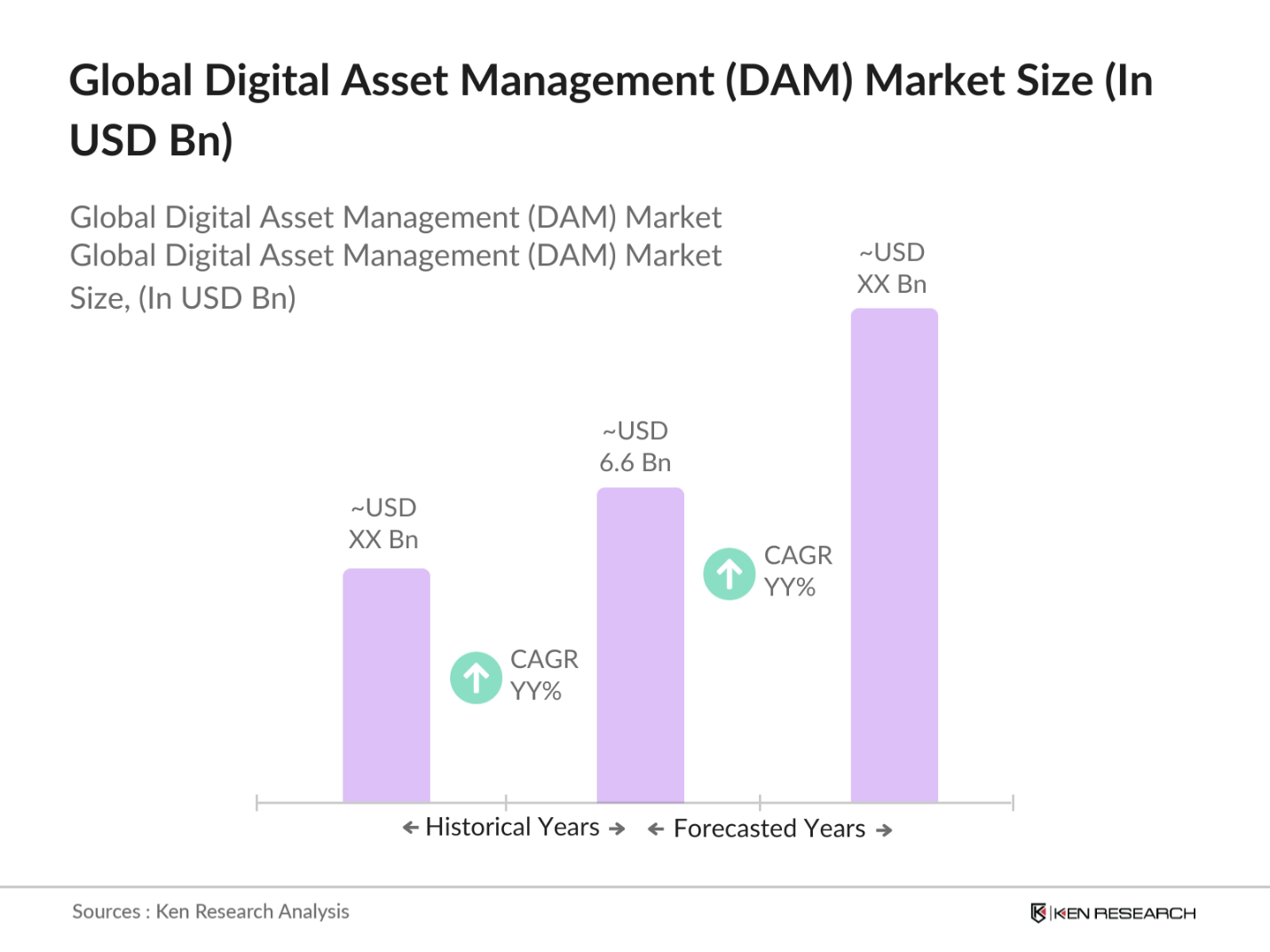
The global Digital Asset Management market is valued at USD 6.6billion, driven by the increasing demand for efficient content management solutions across industries like media, retail, and BFSI.
Key challenges in the DAM market include high initial setup costs, data security concerns, and the complexity of integrating DAM solutions with existing infrastructure in organizations.
Major players include Adobe Systems, OpenText Corporation, Widen Enterprises, Bynder, and Aprimo, which dominate the market due to their comprehensive solutions and global reach.
The market is driven by the rising demand for efficient digital asset organization, management, and distribution, especially with the increasing use of digital media in marketing, e-commerce, and broadcasting.

What makes us stand out is that our consultants follows Robust, Refine and Result (RRR) methodology. i.e. Robust for clear definitions, approaches and sanity checking, Refine for differentiating respondents facts and opinions and Result for presenting data with story

We have set a benchmark in the industry by offering our clients with syndicated and customized market research reports featuring coverage of entire market as well as meticulous research and analyst insights.

While we don't replace traditional research, we flip the method upside down. Our dual approach of Top Bottom & Bottom Top ensures quality deliverable by not just verifying company fundamentals but also looking at the sector and macroeconomic factors.

With one step in the future, our research team constantly tries to show you the bigger picture. We help with some of the tough questions you may encounter along the way: How is the industry positioned? Best marketing channel? KPI's of competitors? By aligning every element, we help maximize success.

Our report gives you instant access to the answers and sources that other companies might choose to hide. We elaborate each steps of research methodology we have used and showcase you the sample size to earn your trust.

If you need any support, we are here! We pride ourselves on universe strength, data quality, and quick, friendly, and professional service.