
Global Directed Energy Weapon (DEW) Market Outlook to 2030
Region:Global
Author(s):Shambhavi
Product Code:KROD6156
Region:Global
Author(s):Shambhavi
Product Code:KROD6156
December 2024
92
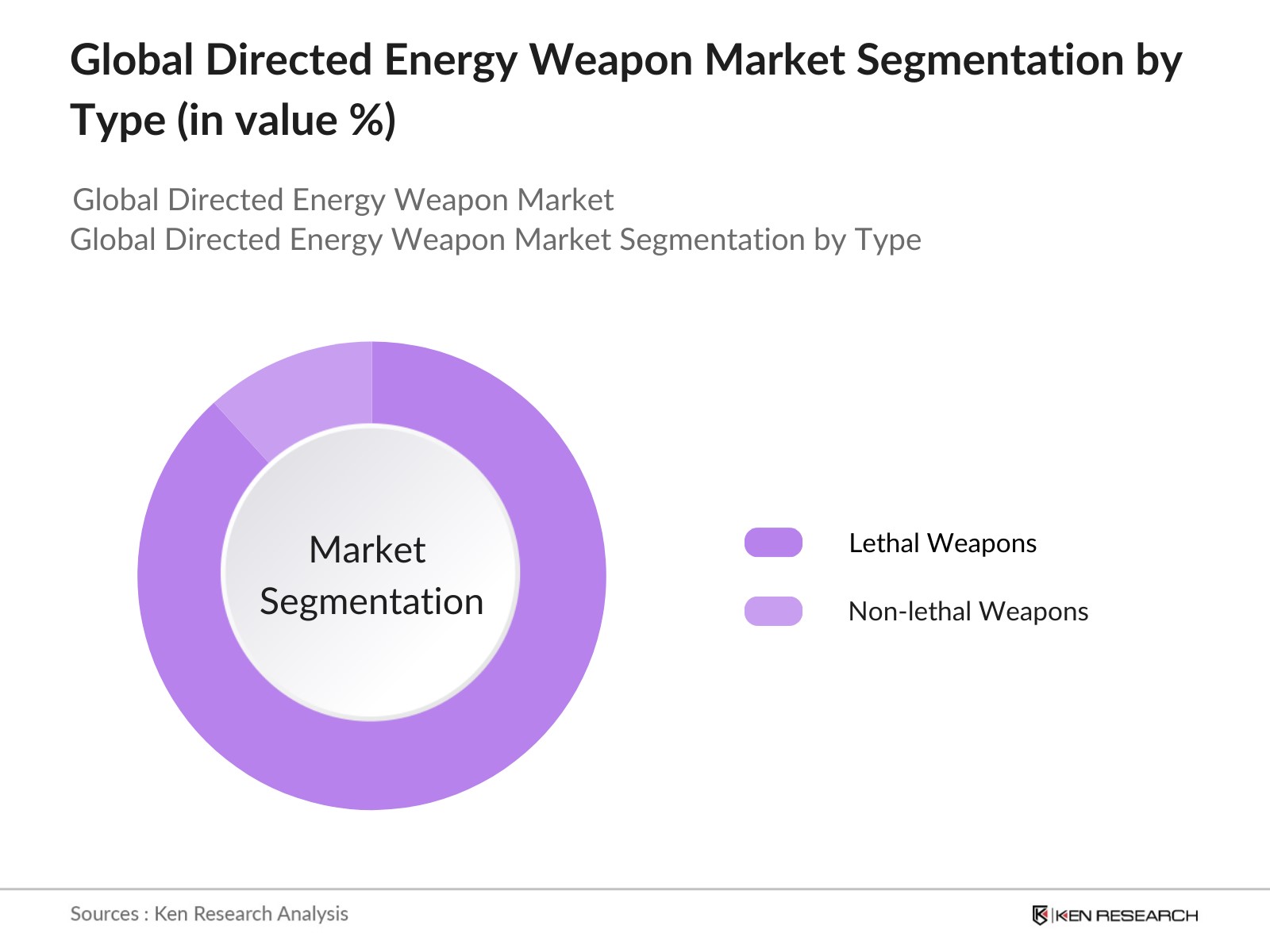
By Type: The Directed Energy Weapon market is segmented by type into lethal and non-lethal weapons. The lethal weapon segment holds a dominant share in the market, owing to the increasing deployment of high-energy lasers and microwave-based systems by military forces to neutralize threats like drones, missiles, and enemy equipment. Lethal DEWs are favored due to their capability to cause significant damage while maintaining precision in targeting.
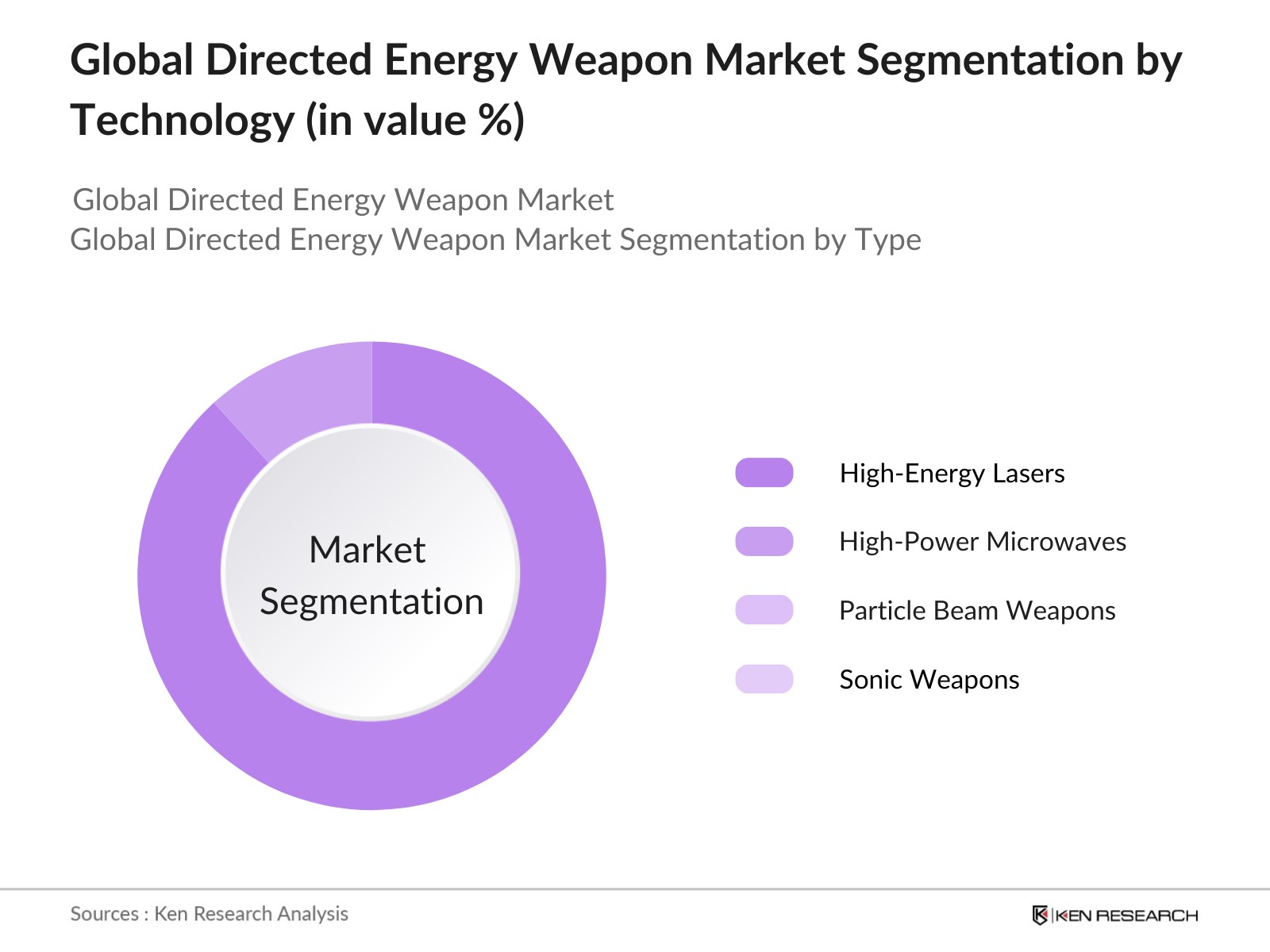
By Technology: By technology, the market is divided into high-energy lasers, high-power microwaves, particle beam weapons, and sonic weapons. Among these, high-energy lasers dominate the market due to their extensive use in missile defense, UAV neutralization, and naval applications. The ability to provide near-instantaneous engagement without the need for ammunition gives high-energy lasers a significant edge over traditional weaponry. The high-power microwave segment is also gaining traction due to its ability to disable electronic systems and its use in electronic warfare
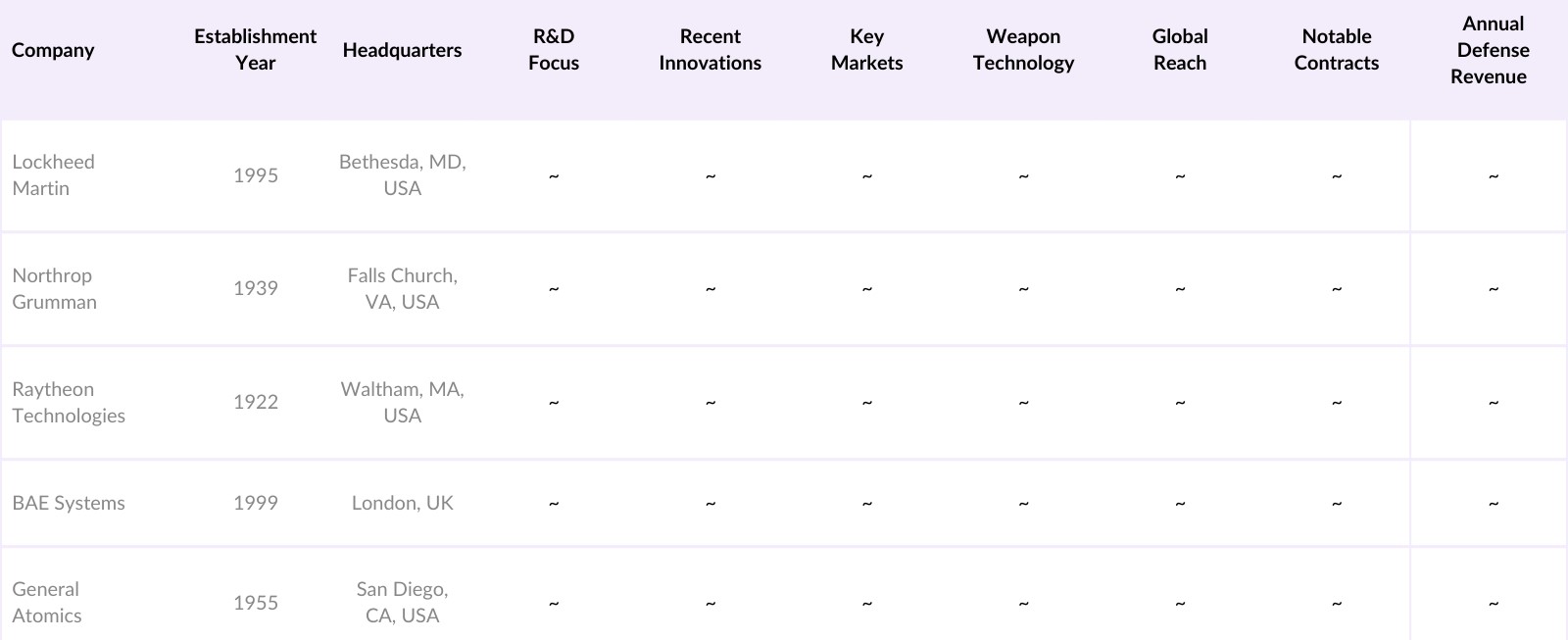
The global Directed Energy Weapon market is dominated by several key players, including defense giants and technology companies actively developing new products and expanding their portfolios. These companies are leveraging strategic partnerships and investments in research and development (R&D) to strengthen their market positions. The market is highly consolidated, with a few companies dominating, driven by substantial R&D investments and cutting-edge technology advancements.
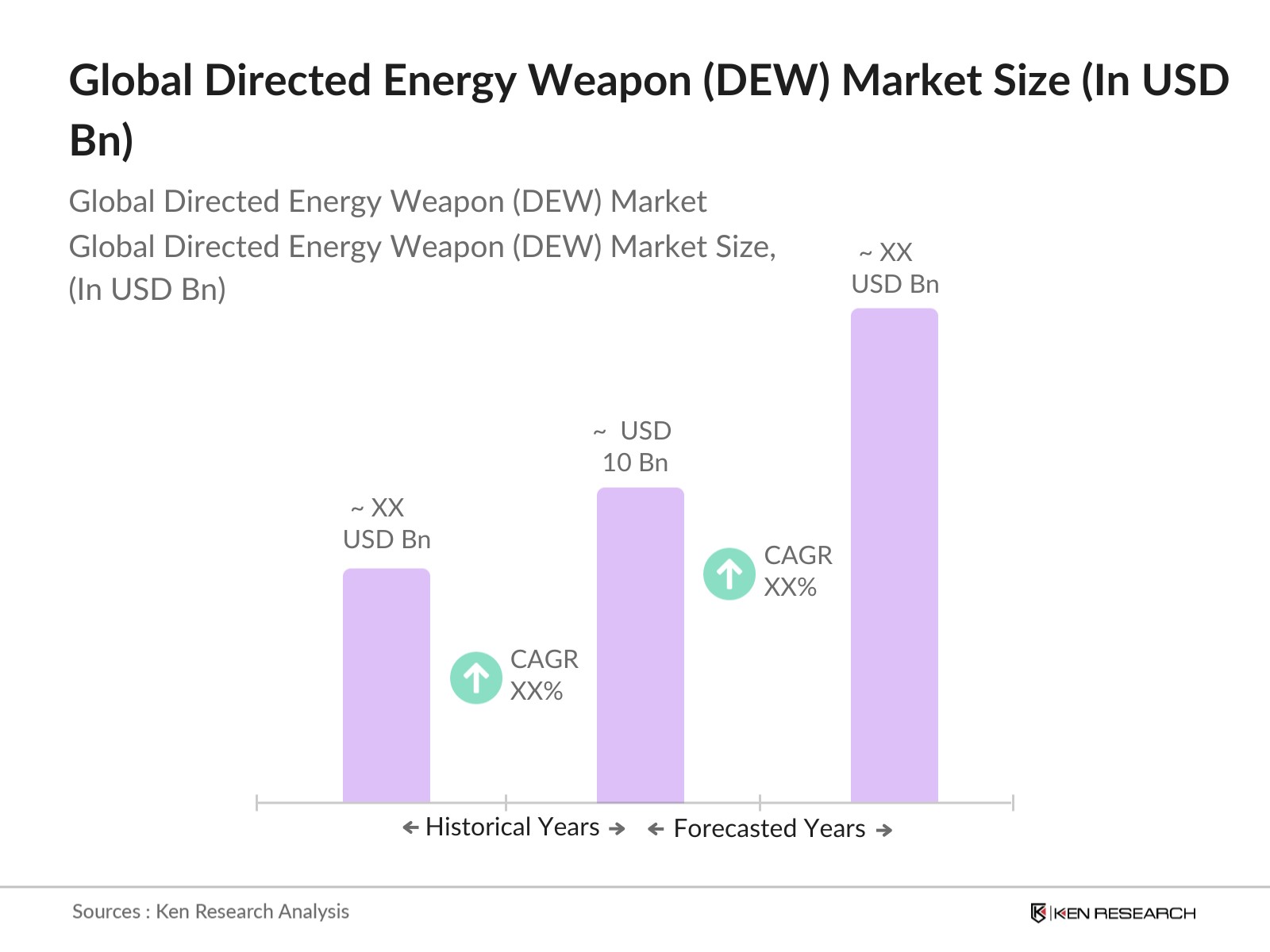
Over the next five years, the global Directed Energy Weapon market is expected to experience robust growth, driven by continuous advancements in DEW technology and increasing defense expenditures worldwide. The proliferation of unmanned systems, hypersonic threats, and growing adoption of DEWs by homeland security for non-lethal applications will significantly impact market dynamics. Key countries like the United States, China, and India will continue to lead technological innovations, while Europe will see increasing investments in defense modernization initiatives.
|
Segment |
Sub-Segments |
|
Type |
Lethal non-lethal |
|
Technology |
High-Energy Lasers High-Power Microwaves Particle Beams |
|
Application |
Military Homeland Security |
|
Platform |
Ground-Based Naval Airborne |
|
Region |
North America Europe Asia-Pacific Middle East & Africa |
1.1 Definition and Scope
1.2 Market Taxonomy
1.3 Market Growth Drivers (Defense Expenditure, Geopolitical Tensions, Demand for Precision Weaponry)
1.4 Market Segmentation Overview
2.1 Historical Market Size
2.2 Year-On-Year Growth Analysis
2.3 Key Developments and Milestones
3.1 Growth Drivers
3.1.1 Increasing Demand for Precision Targeting (Reduced Collateral Damage, Anti-UAV Applications)
3.1.2 Rising Defense Budgets
3.1.3 Homeland Security Initiatives
3.2 Market Challenges
3.2.1 Technological Barriers (Energy Requirements, Heat Dissipation)
3.2.2 High Development Costs
3.2.3 Ethical and Health Concerns
3.3 Opportunities
3.3.1 Integration with Artificial Intelligence (Smart Weapon Systems)
3.3.2 Expansion in Homeland Security and Civilian Applications
3.3.3 Partnerships and Government Initiatives (R&D Investments)
3.4 Trends
3.4.1 Advancements in High-Energy Laser and Microwave Technologies
3.4.2 Increasing Use in Naval and Aerial Platforms
3.4.3 Adoption of Fiber Laser Technology
3.5 Government Regulations
3.5.1 International Arms Control Agreements
3.5.2 Military Standards for DEW Systems
3.5.3 Homeland Security Regulations (Civilian Non-Lethal Applications)
3.6 SWOT Analysis
3.7 Stakeholder Ecosystem
3.8 Porters Five Forces
3.9 Competition Landscape
4.1 By Type (In Value %)
4.1.1 Lethal Weapons
4.1.2 Non-Lethal Weapons
4.2 By Technology (In Value %)
4.2.1 High-Energy Lasers
4.2.2 High-Power Microwaves
4.2.3 Particle Beam Weapons
4.2.4 Sonic Weapons
4.3 By Application (In Value %)
4.3.1 Military
4.3.2 Homeland Security
4.4 By Platform (In Value %)
4.4.1 Ground-Based
4.4.2 Naval
4.4.3 Airborne
4.5 By Region (In Value %)
4.5.1 North America
4.5.2 Europe
4.5.3 Asia Pacific
4.5.4 Middle East & Africa
4.5.5 Latin America
5.1 Detailed Profiles of Major Companies
5.1.1 Lockheed Martin
5.1.2 Northrop Grumman
5.1.3 Raytheon Technologies
5.1.4 Rafael Advanced Defense Systems
5.1.5 BAE Systems
5.1.6 Boeing
5.1.7 General Atomics
5.1.8 Rheinmetall AG
5.1.9 Textron
5.1.10 DRDO (India)
5.1.11 MBDA
5.1.12 Saab AB
5.1.13 L3Harris Technologies
5.1.14 Leonardo S.p.A
5.1.15 Thales Group
5.2 Cross Comparison Parameters (Product Portfolio, R&D Investments, Technology Focus, Market Share, Recent Developments, Operational Footprint, Revenue, Strategic Partnerships)
5.3 Market Share Analysis
5.4 Strategic Initiatives (Collaborations, Mergers & Acquisitions, Joint Ventures)
5.5 Investment Analysis (R&D, Private Equity, Government Grants)
6.1 Military Standards for Lethal Applications
6.2 Compliance for Non-Lethal Applications (Law Enforcement, Civilian Use)
6.3 International Arms Control Protocols
7.1 Future Market Size Projections
7.2 Key Factors Driving Future Market Growth (Technological Advancements, Increasing Adoption Across Platforms, Government Spending)
8.1 By Type (Value %)
8.1.1 Lethal Weapons
8.1.2 Non-Lethal Weapons
8.2 By Technology (Value %)
8.2.1 High-Energy Lasers
8.2.2 High-Power Microwaves
8.2.3 Particle Beam Weapons
8.2.4 Sonic Weapons
8.3 By Application (Value %)
8.3.1 Military
8.3.2 Homeland Security
8.4 By Platform (Value %)
8.4.1 Ground-Based
8.4.2 Naval
8.4.3 Airborne
8.5 By Region (Value %)
8.5.1 North America
8.5.2 Europe
8.5.3 Asia Pacific
8.5.4 Middle East & Africa
8.5.5 Latin America
9.1 TAM/SAM/SOM Analysis (Total Addressable Market, Serviceable Available Market, Serviceable Obtainable Market)
9.2 Customer Cohort Analysis (Defense Contractors, Government Agencies, Homeland Security Agencies)
9.3 Market Expansion Opportunities (Unexplored Regions, Untapped Applications)
9.4 Strategic Recommendations for Key Players
Disclaimer Contact UsThis stage involves a thorough examination of the global Directed Energy Weapon market landscape. Desk research and proprietary databases were utilized to identify the core variables influencing the market, including defense spending, technological advancements, and geopolitical trends.
A detailed analysis of historical market data was performed to evaluate the market's evolution, focusing on penetration rates, technology adoption, and defense industry dynamics. Key metrics such as the number of deployed DEWs and their impact on defense strategies were examined.
Industry experts were consulted through telephonic interviews to validate hypotheses regarding market trends, competitive dynamics, and technological innovations. Insights from these discussions were instrumental in refining market forecasts.
A combination of bottom-up and top-down approaches was used to synthesize the research, ensuring the accuracy of the final market estimates. Direct input from manufacturers and defence agencies further solidified the findings.
The global Directed Energy Weapon market was valued at USD 10 billion, driven by increasing defense expenditures and the rising demand for precision-targeting systems.
Key challenges include high development costs, technological limitations such as energy supply and heat management, and ethical concerns surrounding the use of DEWs in civilian applications.
Major players include Lockheed Martin, Northrop Grumman, Raytheon Technologies, BAE Systems, and General Atomics, all of which have significant investments in DEW technology.
The market is propelled by increasing defense budgets, the rising threat of UAVs and missiles, and advancements in high-energy laser and microwave technologies.
Key trends include the development of solid-state lasers, advancements in particle beam weapons, and the integration of AI-driven targeting systems to enhance DEW capabilities

What makes us stand out is that our consultants follows Robust, Refine and Result (RRR) methodology. i.e. Robust for clear definitions, approaches and sanity checking, Refine for differentiating respondents facts and opinions and Result for presenting data with story

We have set a benchmark in the industry by offering our clients with syndicated and customized market research reports featuring coverage of entire market as well as meticulous research and analyst insights.

While we don't replace traditional research, we flip the method upside down. Our dual approach of Top Bottom & Bottom Top ensures quality deliverable by not just verifying company fundamentals but also looking at the sector and macroeconomic factors.

With one step in the future, our research team constantly tries to show you the bigger picture. We help with some of the tough questions you may encounter along the way: How is the industry positioned? Best marketing channel? KPI's of competitors? By aligning every element, we help maximize success.

Our report gives you instant access to the answers and sources that other companies might choose to hide. We elaborate each steps of research methodology we have used and showcase you the sample size to earn your trust.

If you need any support, we are here! We pride ourselves on universe strength, data quality, and quick, friendly, and professional service.