
Global Disposable Razor Market Outlook to 2030
Region:Global
Author(s):Shubham
Product Code:KROD5615
November 2024
89
About the Report
Global Disposable Razor Market Overview
The global disposable razor market is currently valued at USD 3.4 billion, driven by increasing consumer demand for cost-effective grooming solutions, rising awareness of personal hygiene, and the convenience offered by disposable products. Technological innovations in blade efficiency and the introduction of environmentally friendly options, such as biodegradable razors, are further propelling market growth. The demand for disposable razors remains particularly strong in regions with growing disposable income, such as Asia Pacific and Latin America, and is expected to continue its upward trajectory over the forecast period. 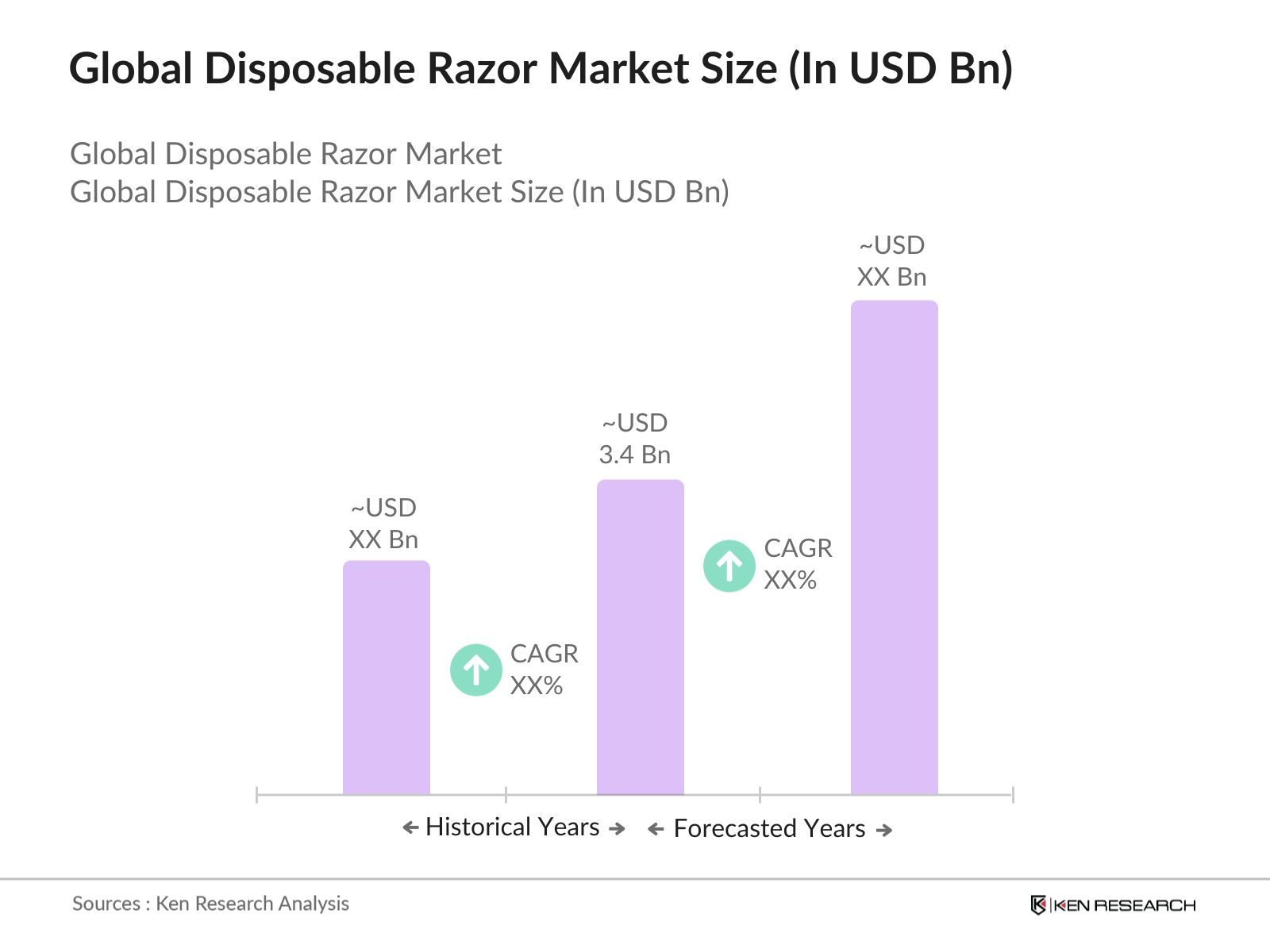
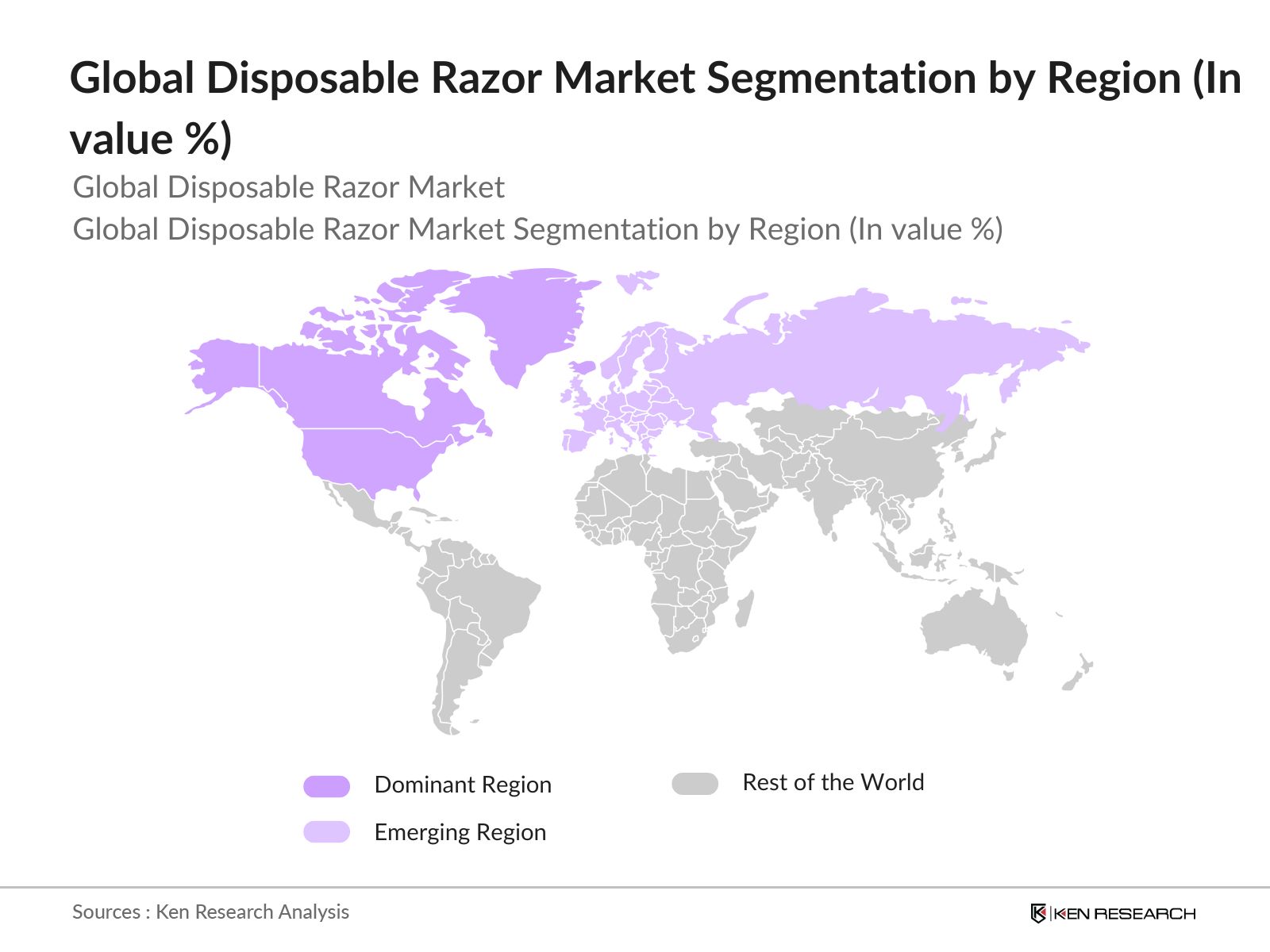
The leading regions in the global disposable razor market include North America, Europe, and Asia Pacific. North America, particularly the United States, dominates the market due to the presence of major global brands such as Gillette and Schick, which have established strong brand loyalty among consumers. Europe is also a significant market, driven by high grooming standards and the adoption of sustainable products. In Asia Pacific, countries like China and India are emerging as key markets due to the expanding middle class, increasing urbanization, and a shift towards affordable grooming products.Governments worldwide are tightening regulations on plastic use, directly impacting the disposable razor industry. In 2022, the European Union implemented new plastic reduction targets, affecting manufacturers who rely on plastic for razor handle. These regulations require companies to adopt sustainable materials or face penalties, pushing brands to innovate with eco-friendly alternatives.
Global Disposable Razor Market Segmentation
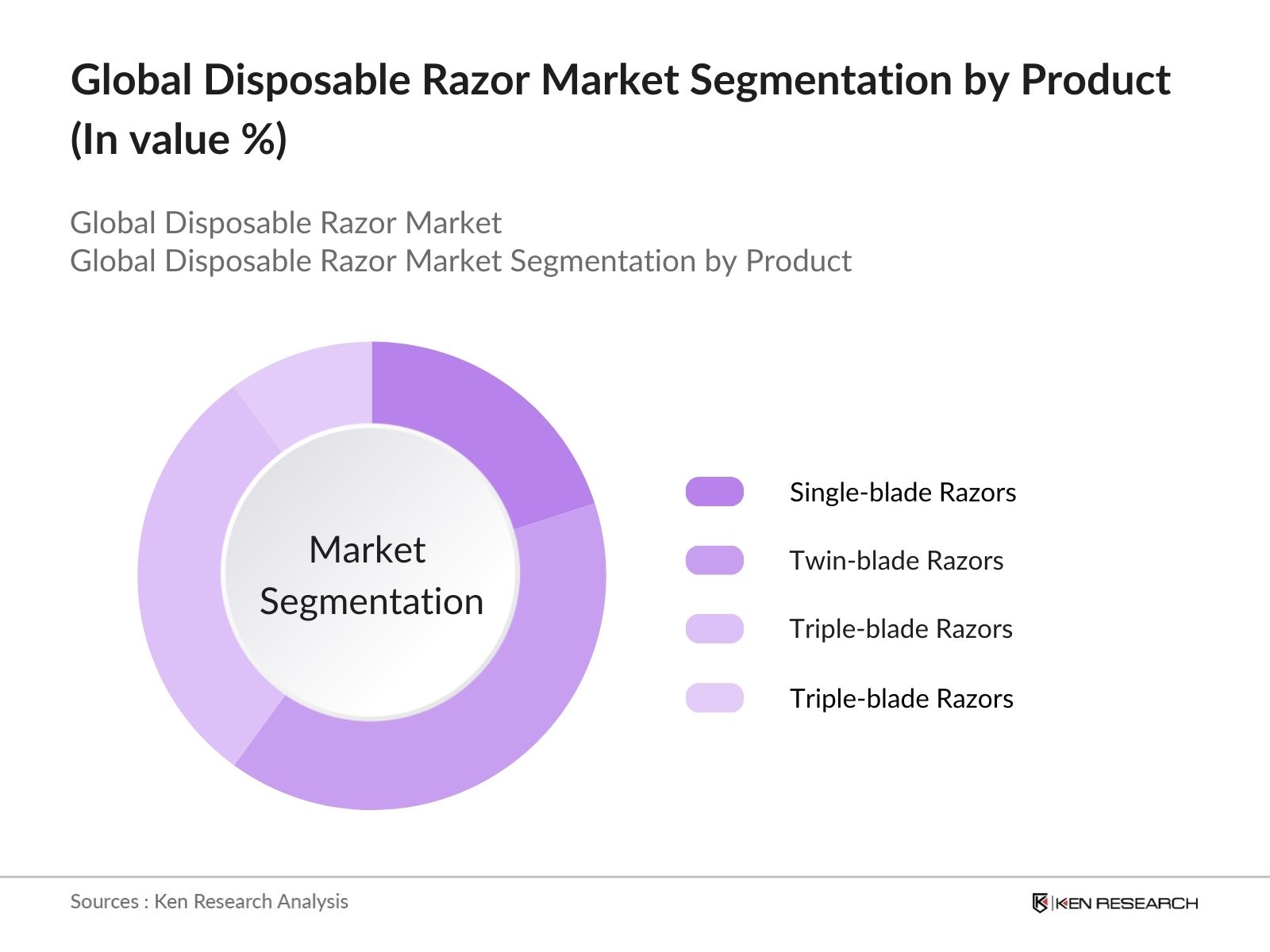
- By Product Type: The market is segmented by product type into single-blade razors, twin-blade razors, triple-blade razors, and quad-blade and higher razors. The twin-blade razors segment currently dominates the market due to its balanced offering of cost-effectiveness and efficiency. Consumers prefer twin-blade razors for their ability to provide a smooth shave at a lower price point compared to razors with more blades. Leading brands such as Gillette and BIC offer a wide range of twin-blade products, making them easily accessible to consumers across retail and online channels.
- By Distribution Channel: The market is also segmented by distribution channels into online channels, supermarkets/hypermarkets, convenience stores, and specialty stores. Supermarkets and hypermarkets hold the largest market share, as they provide consumers with convenient access to a wide variety of disposable razors. Many consumers prefer purchasing grooming products in bulk, and these outlets often offer discounts, making them the most preferred option for disposable razor purchases. The growing trend of consumers seeking out one-stop-shop solutions also contributes to the dominance of this segment.
- By Region: The Market is segmented by region into North America, Europe, Asia Pacific, Latin America, and the Middle East & Africa. North America dominates the market, driven by high consumer demand for convenient and affordable grooming products, with the U.S. being a major contributor due to its large customer base and frequent product innovations. In Europe, the market is steady, with countries like the UK, Germany, and France seeing consistent demand for disposable razors, fueled by personal grooming trends and the presence of leading manufacturers. Asia Pacific is witnessing rapid growth due to rising disposable incomes, increased awareness of personal hygiene, and a growing urban population, particularly in China and India.
Global Disposable Razor Market Competitive Landscape
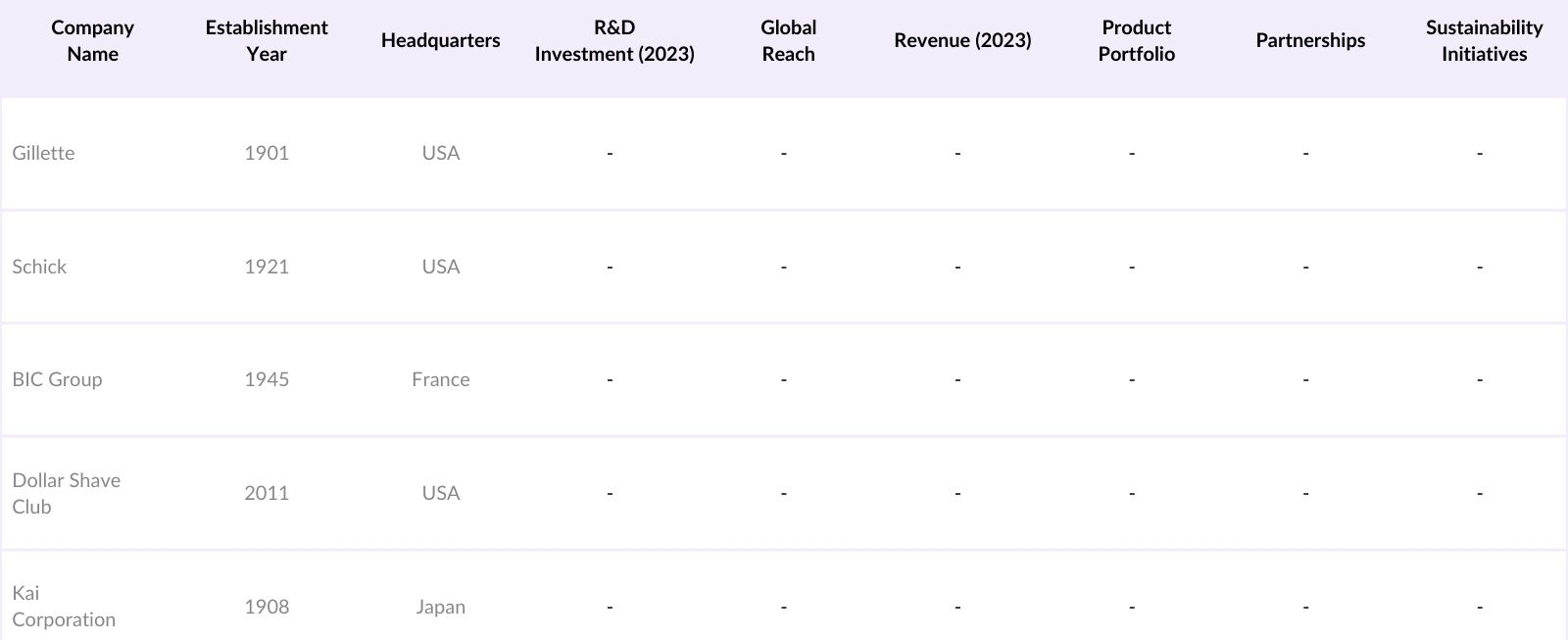
The global disposable razor market is characterized by a few dominant players that hold a significant share due to their extensive product offerings, strong brand presence, and global distribution networks. These companies are investing heavily in research and development to introduce innovative products, such as razors with improved blade efficiency and environmentally sustainable materials.
Global Disposable Razor Market Analysis
Growth Drivers:
- Rise of Affordable Grooming Solutions: Disposable razors are popular due to their affordability compared to electric shavers or premium razor systems. As of 2024, majority of male consumers in middle-income economies such as Vietnam and Indonesia are choosing disposable razors over expensive grooming alternatives. This shift is driven by the lower cost per shave, making them a preferred option for budget-conscious individuals in price-sensitive markets. Disposable razors priced between USD 1 and USD 5 dominate the market in these regions, contributing to the sectors consistent sales.
- Increased Grooming Awareness: The disposable razor market is significantly benefiting from the growing global awareness surrounding personal grooming. In 2023, disposable razor sales surged in regions where grooming trends are on the rise, particularly in urban areas across emerging economies. For instance, countries like India and Brazil have seen a notable increase in disposable razor consumption due to changing lifestyle patterns and the influence of social media grooming influencers. In India, majority of men in urban areas have started incorporating regular shaving into their daily routines, spurred by greater accessibility to grooming products.
- Disposable Razors in Emerging Markets: The expanding middle class in emerging economies is another major growth driver for disposable razors. In Africa, the working-age population increased to 640 million in 2023, and disposable razor consumption has climbed in tandem, especially in Nigeria, Kenya, and South Africa. Rising employment and urbanization in these countries are prompting an increased demand for personal grooming products, particularly affordable disposable razors, which are readily available in urban retail outlets and online platforms.
Market Challenges:
- Competition from Electric Shavers: Disposable razors face stiff competition from electric shavers, particularly in developed markets where consumers are increasingly opting for longer-lasting grooming solutions. The rising popularity of rechargeable electric shavers in regions such as the U.S. and Europe presents a challenge for disposable razor manufacturers. With features like multi-functional grooming, convenience, and long-term cost-effectiveness, electric shavers are becoming the preferred choice for many. As this trend grows, disposable razors need to offer significant innovations in design, ease of use, or enhanced affordability to remain competitive in these markets.
- Environmental Concerns Regarding Plastic Waste: The environmental impact of disposable razors is a growing concern, particularly due to the large amounts of non-recyclable plastic waste they generate. This issue is especially prevalent in regions with strict waste management regulations, where disposable consumer goods are under increasing scrutiny. Governments in countries such as Germany and France have introduced measures to reduce plastic waste, pushing for the adoption of eco-friendly alternatives. This shift in environmental policy presents a challenge for disposable razor manufacturers, who must explore sustainable materials and packaging to align with these regulatory demands and consumer preferences for greener products.
Global Disposable Razor Market Future Outlook
The global disposable razor market is expected to grow steadily through 2028, driven by the rising demand for cost-effective grooming solutions, technological innovations, and the introduction of eco-friendly razors. As consumer preferences shift towards sustainable and efficient products, the market will likely see an increase in the adoption of biodegradable and low-plastic disposable razors. Additionally, e-commerce platforms will play a key role in expanding the market by offering a wider variety of razors to consumers across different regions. The markets future growth will also be influenced by the ability of manufacturers to align their product offerings with evolving environmental standards and consumer preferences.
Future Market Opportunities
- Eco-friendly and Biodegradable Razors: The development of eco-friendly and biodegradable disposable razors presents a significant opportunity for manufacturers. With increasing pressure from governments and environmental bodies, companies are exploring biodegradable materials to replace traditional plastic. In 2023, the U.K. government launched initiatives to encourage sustainable product development, offering incentives for businesses adopting environmentally friendly practices. This trend is likely to bolster demand for sustainable disposable razors in regions where environmental awareness is rising.
- Expanding E-commerce Presence: The e-commerce boom has opened new avenues for the disposable razor market. In 2024, more than half of disposable razor purchases in the U.S. were made online, spurred by the rise of direct-to-consumer brands offering personalized subscription services. This growth is mirrored in emerging markets like India, where online grooming sales doubled in 2023, providing companies with an opportunity to reach a broader consumer base through digital channels
Scope of the Report
|
Product Type |
Single-blade Razors Twin-blade Razors Triple-blade Razors Quad-blade and Higher Razors |
|
Material Type |
Plastic Disposable Razors Metal Disposable Razors Biodegradable Razors |
|
End-user |
Mens Grooming Womens Grooming |
|
Distribution Channel |
Online Channels Supermarkets/Hypermarkets Convenience Stores Specialty Stores |
|
Region |
North America Europe Asia Pacific Latin America Middle East & Africa |
Products
Key Target Audience
Disposable Razor Manufacturers
Grooming Product Retailers
E-commerce Platforms (Amazon, Alibaba)
Investors and Venture Capitalist Firms
Banks and Financial Institutions
Government and Regulatory Bodies (FDA, EPA)
Personal Care and Cosmetic Brands
Raw Material Suppliers
Companies
Players Mentioned in the Report
Gillette (Procter & Gamble)
Schick (Edgewell Personal Care)
BIC Group
Dollar Shave Club (Unilever)
Kai Corporation
DORCO Co., Ltd.
Perio, Inc. (Barbasol)
Harrys Inc.
Super-Max Group
Feintechnik GmbH Eisfeld
Shanghai Cloud Glass Mirror Factory Co.
Razor LLC
Personna
Kaili Razor
WILKINSON Sword
Table of Contents
01. Global Disposable Razor Market Overview
1.1. Definition and Scope
1.2. Market Taxonomy
1.3. Market Growth Rate
1.4. Market Segmentation Overview
02. Global Disposable Razor Market Size (in USD Bn)
2.1. Historical Market Size
2.2. Year-on-Year Growth Analysis
2.3. Key Market Developments and Milestones
03. Global Disposable Razor Market Analysis
3.1. Growth Drivers
3.1.1. Increased Grooming Awareness
3.1.2. Rise of Affordable Grooming Solutions
3.1.3. Disposable Razors in Emerging Markets
3.1.4. Product Innovation and Brand Loyalty
3.2. Market Challenges
3.2.1. Competition from Electric Shavers
3.2.2. Environmental Concerns Regarding Plastic Waste
3.2.3. Supply Chain and Raw Material Volatility
3.2.4. Consumer Shift to Sustainable Alternatives
3.3. Opportunities
3.3.1. Eco-friendly and Biodegradable Razors
3.3.2. Expanding E-commerce Presence
3.3.3. Targeting Low-Penetration Regions
3.3.4. Collaborations with Grooming Subscription Services
3.4. Trends
3.4.1. Sustainability Initiatives by Brands
3.4.2. Rise of Gender-neutral Grooming Products
3.4.3. Premium Disposable Razor Segments
3.4.4. Customization and Personalization in Razors
3.5. Government Regulations
3.5.1. Environmental Guidelines for Plastic Use
3.5.2. Product Safety and Certification Requirements
3.5.3. Import and Export Regulations
3.5.4. Taxation Policies Impacting Disposable Razors
3.6. SWOT Analysis
3.7. Stakeholder Ecosystem
3.8. Porters Five Forces Analysis
3.9. Competitive Ecosystem
04. Global Disposable Razor Market Segmentation
4.1. By Product Type (in Value %)
4.1.1. Single-blade Razors
4.1.2. Twin-blade Razors
4.1.3. Triple-blade Razors
4.1.4. Quad-blade and Higher Razors
4.2. By Material Type (in Value %)
4.2.1. Plastic Disposable Razors
4.2.2. Metal Disposable Razors
4.2.3. Biodegradable Razors
4.3. By End-user (in Value %)
4.3.1. Mens Grooming
4.3.2. Womens Grooming
4.4. By Distribution Channel (in Value %)
4.4.1. Online Channels
4.4.2. Supermarkets/Hypermarkets
4.4.3. Convenience Stores
4.4.4. Specialty Stores
4.5. By Region (in Value %)
4.5.1. North America
4.5.2. Europe
4.5.3. Asia Pacific
4.5.4. Latin America
4.5.5. Middle East & Africa
05. Global Disposable Razor Market Competitive Analysis
5.1. Detailed Profiles of Major Companies
5.1.1. Procter & Gamble Co. (Gillette)
5.1.2. Edgewell Personal Care (Schick)
5.1.3. BIC Group
5.1.4. Unilever (Dollar Shave Club)
5.1.5. DORCO Co., Ltd.
5.1.6. Kaili Razor
5.1.7. Super-Max Group
5.1.8. Harrys Inc.
5.1.9. Perio, Inc. (Barbasol)
5.1.10. Shanghai Cloud Glass Mirror Factory Co.
5.1.11. Feintechnik GmbH Eisfeld
5.1.12. Personna
5.1.13. Razor LLC
5.1.14. WILKINSON Sword
5.1.15. Kai Corporation
5.2. Cross Comparison Parameters (Revenue, Global Footprint, Razor Technology, Sustainability Practices, Distribution Networks, Customer Base, Innovation Capabilities, Strategic Partnerships)
5.3. Market Share Analysis
5.4. Strategic Initiatives
5.5. Mergers and Acquisitions
5.6. Investment Analysis
5.7. Government Grants and Subsidies
5.8. Private Equity and Venture Capital Investments
06. Global Disposable Razor Market Regulatory Framework
6.1. Environmental Compliance Standards
6.2. Certification and Quality Standards
6.3. Plastic Ban and Recycling Regulations
6.4. Export/Import Compliance
0.7 Global Disposable Razor Future Market Size (in USD Bn)
7.1. Future Market Size Projections
7.2. Key Factors Driving Future Market Growth
08. Global Disposable Razor Future Market Segmentation
8.1. By Product Type (in Value %)
8.2. By Material Type (in Value %)
8.3. By End-user (in Value %)
8.4. By Distribution Channel (in Value %)
8.5. By Region (in Value %)
09. Global Disposable Razor Market Analysts Recommendations
9.1. TAM/SAM/SOM Analysis
9.2. Customer Cohort Analysis
9.3. Marketing Initiatives
9.4. White Space Opportunity Analysis
Disclaimer
Contact Us
Research Methodology
Step 1: Identification of Key Variables
The research begins by identifying the key variables influencing the global disposable razor market. This includes analyzing grooming trends, environmental regulations affecting disposable plastic products, and shifts in consumer preferences towards sustainable alternatives.
Step 2: Market Analysis and Construction
Historical data on the disposable razor market is compiled and analyzed to assess market penetration, distribution channels, and pricing strategies. The analysis focuses on determining the revenue impact of leading players and their influence on consumer preferences.
Step 3: Hypothesis Validation and Expert Consultation
Hypotheses about market trends and drivers are validated through consultations with industry experts from leading grooming brands. Insights are gathered from stakeholders to refine data accuracy, particularly in emerging markets.
Step 4: Research Synthesis and Final Output
The final stage involves synthesizing the data from primary and secondary sources to deliver a comprehensive report. This step ensures that the analysis is robust and offers actionable insights for stakeholders in the global disposable razor market.
Frequently Asked Questions
01. How big is the Global Disposable Razor Market?
The global disposable razor market was valued at USD 3.4 billion, driven by rising demand for affordable grooming solutions and innovations in blade technology.
02. What are the challenges in the Global Disposable Razor Market?
Challenges in the global disposable razor market include competition from electric shavers, increasing environmental concerns about plastic waste, and consumer shifts toward more sustainable grooming options.
03. Who are the major players in the Global Disposable Razor Market?
Major players in the global disposable razor market include Gillette, Schick, BIC Group, Dollar Shave Club, and Kai Corporation. These companies maintain dominance through strong product portfolios and extensive distribution networks.
04. What are the growth drivers of the Global Disposable Razor Market?
The growth of the disposable razor market is driven by increasing consumer awareness about personal grooming, the convenience offered by disposable products, and the introduction of eco-friendly alternatives.
Why Buy From Us?

What makes us stand out is that our consultants follows Robust, Refine and Result (RRR) methodology. i.e. Robust for clear definitions, approaches and sanity checking, Refine for differentiating respondents facts and opinions and Result for presenting data with story

We have set a benchmark in the industry by offering our clients with syndicated and customized market research reports featuring coverage of entire market as well as meticulous research and analyst insights.

While we don't replace traditional research, we flip the method upside down. Our dual approach of Top Bottom & Bottom Top ensures quality deliverable by not just verifying company fundamentals but also looking at the sector and macroeconomic factors.

With one step in the future, our research team constantly tries to show you the bigger picture. We help with some of the tough questions you may encounter along the way: How is the industry positioned? Best marketing channel? KPI's of competitors? By aligning every element, we help maximize success.

Our report gives you instant access to the answers and sources that other companies might choose to hide. We elaborate each steps of research methodology we have used and showcase you the sample size to earn your trust.

If you need any support, we are here! We pride ourselves on universe strength, data quality, and quick, friendly, and professional service.