















Global EA Tools Market Outlook to 2030
Region:Global
Author(s):Sanjeev
Product Code:KROD1549
November 2024
92
About the Report
Global EA Tools Market Overview
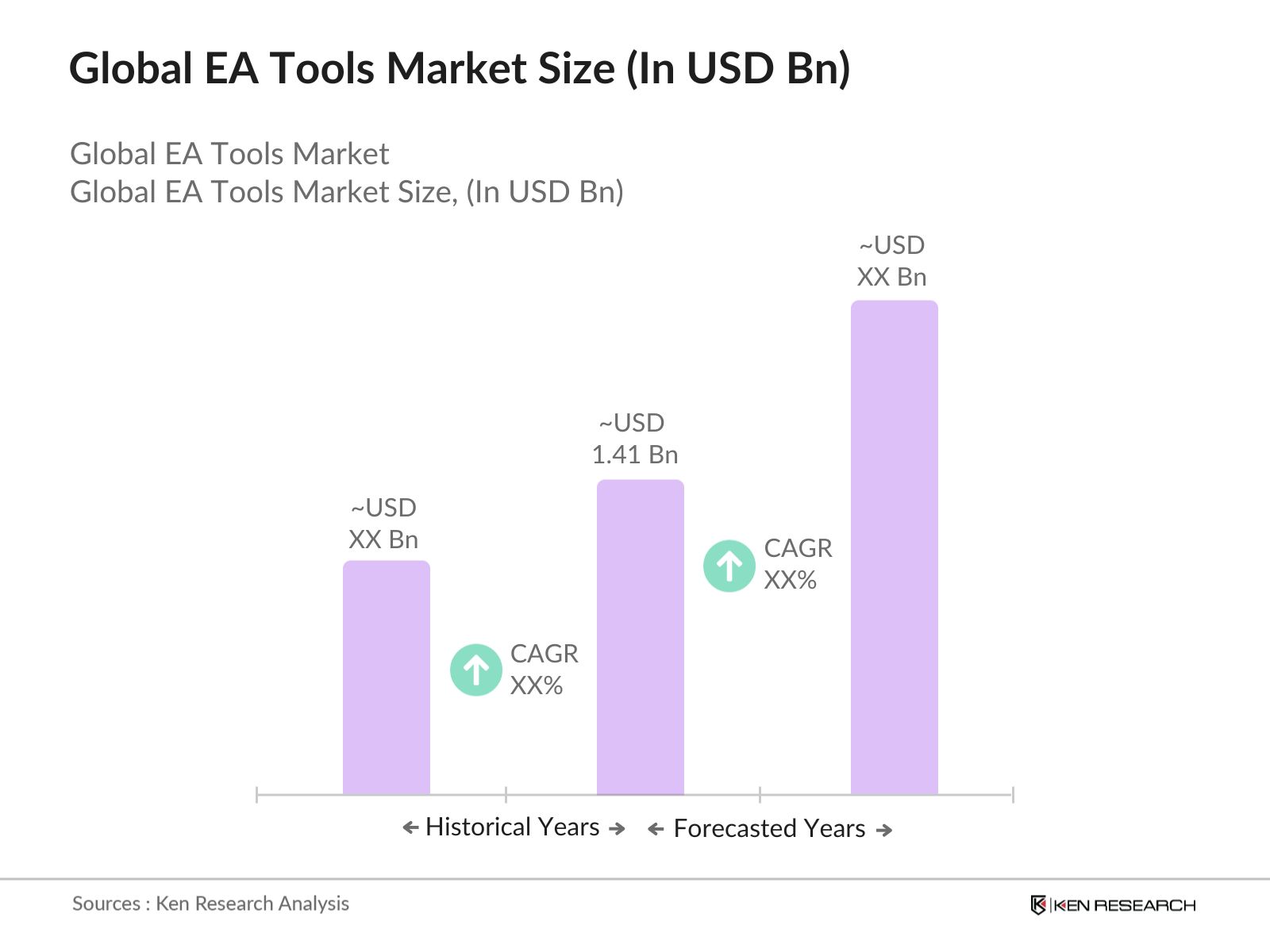
- In 2023, the Global Enterprise Architecture (EA) Tools Market was valued at USD 1.41 billion, witnessing substantial growth driven by the rising need for efficient IT infrastructure management and the integration of digital transformation initiatives across industries. The market's expansion is fueled by the increasing complexity of IT ecosystems, the need for alignment between business strategies and IT processes, and the adoption of cloud-based solutions.
- Key players in the EA Tools market include Sparx Systems, BizzDesign, Orbus Software, Mega International, and Software AG. These companies are leading the industry with comprehensive EA tools that provide robust modeling, analysis, and visualization capabilities. Sparx Systems, for instance, is recognized for its flexible and scalable EA tool, Enterprise Architect, which is widely used across various sectors.
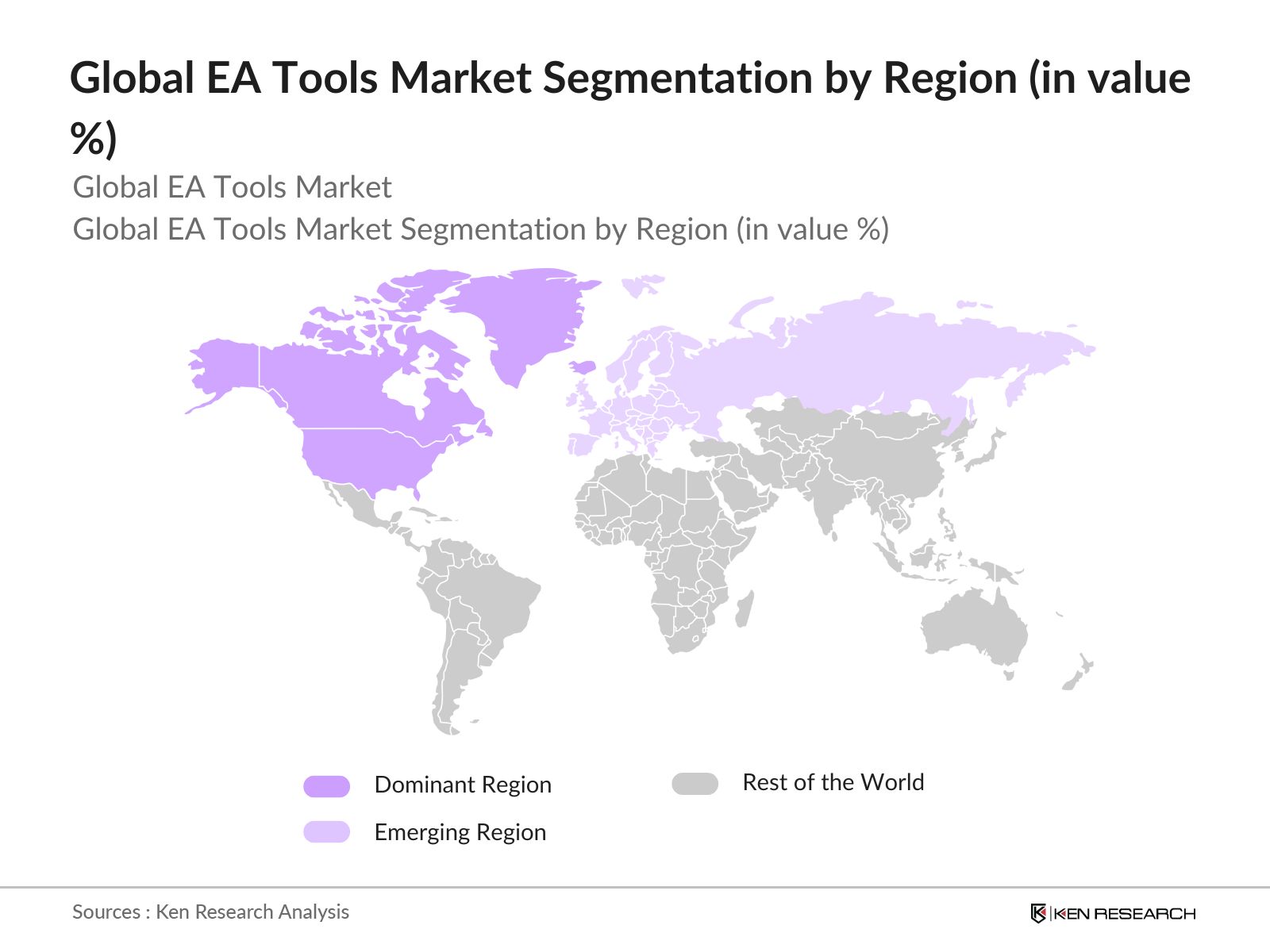
- North America is the leading region in the EA Tools market, with the United States at the forefront. This leadership is attributed to the early adoption of enterprise architecture practices, the presence of major market players, and significant investments in IT infrastructure modernization. The U.S. continues to drive substantial growth in the EA Tools market within the region.
- In 2023, BizzDesign announced the launch of its AI-powered EA tool enhancements designed to improve IT-business alignment and optimize enterprise architecture processes. This development underscores the ongoing innovations within the EA Tools market.
Global EA Tools Market Segmentation
The Global EA Tools Market can be segmented based on product, application, and region:
By Product Type: The Global EA Tools Market can be segmented into Collaboration Tools, Reporting and Analytics Tools and Modeling Tools. In 2023, Modeling Tools held the largest market share due to their essential role in visualizing and analyzing enterprise architectures. Companies like Sparx Systems and Orbus Software have capitalized on this trend by offering advanced modeling features integrated with cloud capabilities.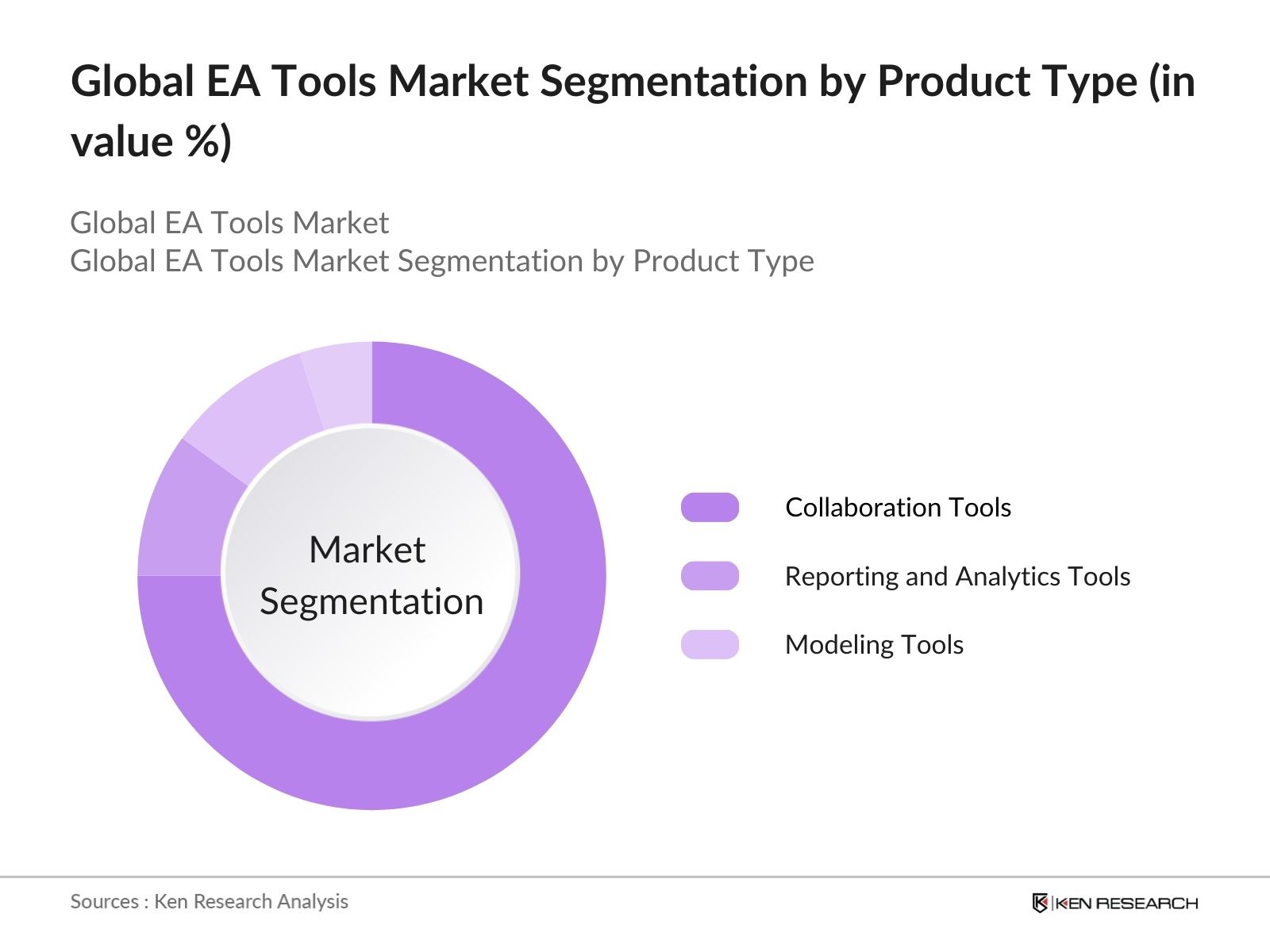
- By Application: The Global EA Tools Market can be segmented into Large Enterprises, Small & Medium Enterprises (SMEs) and Government & Public Sector. Large Enterprises segment led the market in 2023, accounting for the largest share due to the need for comprehensive EA tools to manage complex IT landscapes and ensure alignment with business objectives.
- By Region: The Global EA Tools Market can be segmented into North America, Europe, Asia-Pacific, Latin America and Middle East & Africa. North America led the global market in 2023, holding the largest share due to the widespread adoption of EA tools and the presence of key industry players.
Global EA Tools Market Competitive Landscape
|
Company Name |
Establishment Year |
Headquarters |
|
Sparx Systems |
1996 |
Creswick, Australia |
|
BizzDesign |
2000 |
Amersfoort, Netherlands |
|
Orbus Software |
2004 |
London, UK |
|
Mega International |
1991 |
Paris, France |
|
Software AG |
1969 |
Darmstadt, Germany |
- Sparx Systems: In 2023, Sparx Systems continued to dominate the EA tools market with the introduction of its cloud-based version of Enterprise Architect, offering enhanced collaboration and real-time updates. This innovation positions Sparx Systems as a key player in the evolving landscape of enterprise architecture.
- BizzDesign: In 2023, BizzDesign announced a strategic partnership with several cloud service providers, including AWS and Azure, to integrate its EA tools seamlessly into cloud environments. This collaboration aims to optimize EA processes and support the growing demand for cloud-based solutions.
Global EA Tools Market Industry Analysis
Market Growth Drivers:
- Adoption of Digital Transformation Initiatives: As of 2024, Many enterprises globally are increasingly embarking on digital transformation journeys, driving demand for EA tools that facilitate the alignment of IT and business strategies. This trend is particularly significant in industries such as finance, healthcare, and manufacturing, where digital transformation plays a crucial role in maintaining competitive advantage.
- Increased Complexity of IT Ecosystems: The growing complexity of IT environments, driven by the proliferation of applications, data, and infrastructure, is necessitating the adoption of EA tools. These tools help organizations manage and optimize their IT landscapes, ensuring efficiency and alignment with business goals.
- Rise of Agile and DevOps Practices: The adoption of Agile and DevOps methodologies is driving the need for EA tools that can support rapid development cycles, continuous integration, and deployment. EA tools enable organizations to align their architecture with agile practices, ensuring that business goals are met without compromising on speed and flexibility.
Market Challenges:
- Resistance to Change within Organizations: Organizational resistance to change is a significant barrier to the adoption of EA tools. Many stakeholders, particularly in large organizations, may be hesitant to embrace new tools and processes that require changes to established practices. This resistance can hinder the effective implementation of EA initiatives and slow down the overall transformation process.
- High Costs of Implementation and Maintenance: The costs associated with the implementation, customization, and ongoing maintenance of EA tools can be prohibitive, especially for small and medium-sized enterprises (SMEs). These costs include software licenses, training, integration with existing systems, and ongoing support, making it difficult for some organizations to justify the investment.
- Shortage of Skilled EA Professionals: There is a growing demand for skilled enterprise architects and professionals with expertise in using EA tools. However, the shortage of qualified personnel with the necessary skills and experience to effectively utilize these tools poses a significant challenge. This skills gap can lead to suboptimal use of EA tools and hinder the achievement of desired outcomes.
Global EA Tools Market Government Initiatives:
- Indias National e-Governance Plan (NeGP): The Government of India has been implementing the National e-Governance Plan (NeGP) since 2006, with a focus on enhancing public service delivery through digitalization. The NeGP has integrated 31 Mission Mode Projects (MMPs), covering critical areas such as health, education, agriculture, and land records. As of 2024, approximately 4,671 e-services have been deployed across 709 districts, significantly improving accessibility and efficiency in public services. The NeGP is a cornerstone of the broader Digital India initiative, which has seen investments totaling USD 1.8 billion (14,903 crore) allocated for the 2021-2026 period.
- Australias Digital Transformation Strategy: Australias Digital Transformation Agency (DTA) continues to drive the governments Digital Transformation Strategy, which emphasizes the adoption of enterprise architecture principles and robust cybersecurity measures. In 2023, Australia ranked 5th in the OECD Digital Government Index, scoring 75.3% overall, significantly higher than the OECD average of 60.5%. Australia scored exceptionally well in areas like "Digital by Design" (97%) and "User-Driven" (83%), reflecting its commitment to improving service delivery and data governance. The government is actively promoting cloud-based EA tools and strengthening digital public infrastructure, contributing to Australias leadership in digital government.
Global EA Tools Market Future Outlook
The Global EA Tools Market is poised for growth, driven by the increasing adoption of digital transformation initiatives, the integration of AI and machine learning, and the growing complexity of IT ecosystems.
Future Market Trends:
- Growth of Cloud-Native Architectures: As organizations continue to migrate to the cloud, there is a growing demand for cloud-native architectures that are specifically designed to operate in cloud environments. These architectures offer greater flexibility, scalability, and resilience compared to traditional IT infrastructures, enabling businesses to innovate rapidly and respond to changing market conditions more effectively
- Rise of Remote and Hybrid Work Models: The shift towards remote and hybrid work models, accelerated by the COVID-19 pandemic, is expected to continue influencing workplace dynamics. Organizations will increasingly adopt digital collaboration tools, virtual workspaces, and flexible IT infrastructures to support a distributed workforce, while also addressing the challenges of cybersecurity and employee engagement in these environments
- Growth in Demand for Cybersecurity Solutions: As cyber threats continue to evolve, there will be an increasing demand for advanced cybersecurity solutions. Organizations will invest in AI-driven security tools, threat intelligence platforms, and zero-trust security models to protect their digital assets and maintain customer trust. This trend is particularly critical for industries such as finance, healthcare, and government, where data breaches can have severe consequences.
Scope of the Report
|
By Region |
North America Europe Asia-Pacific Latin America Middle East & Africa |
|
By Product Type |
Modeling Tools Collaboration Tools Reporting and Analytics Tools Visualization Tools Integration Tools |
|
By Application Type |
Large Enterprises Small & Medium Enterprises (SMEs) Government and Public Sector Healthcare and Life Sciences Financial Services |
|
By Technology |
AI and Machine Learning Cloud-Based Solutions Blockchain Edge Computing Internet of Things (IoT) |
Products
Key Target Audience Organizations and Entities Who Can Benefit by Subscribing to This Report:
IT and Enterprise Architecture Teams
Cloud Service Providers
Venture Capitalist Firms
Technology Integrators and Consultants
Software as a Service (SaaS) Companies
Data Security and Compliance Regulators
Digital Transformation Advisors
Government and Regulation Bodies (FTC, GDPR, DTA)
Time Period Captured in the Report:
Historical Period: 2018-2023
Base Year: 2023
Forecast Period: 2023-2028
Companies
Players Mentioned in the Report:
Sparx Systems
BizzDesign
Orbus Software
Mega International
Software AG
SAP SE
Avolution
Planview
LeanIX
Casewise
Troux Technologies
iServer365
Alfabet
Table of Contents
1.Global EA Tools Market Overview
1.1. Definition and Scope
1.2. Market Taxonomy
1.3. Market Growth Rate
1.4. Market Segmentation Overview
2. Global EA Tools Market Size (in USD Bn), 2018-2023
2.1. Historical Market Size
2.2. Year-on-Year Growth Analysis
2.3. Key Market Developments and Milestones
3. Global EA Tools Market Analysis
3.1. Growth Drivers
3.1.1. Adoption of Digital Transformation Initiatives
3.1.2. Increased Complexity of IT Ecosystems
3.1.3. Rise of Agile and DevOps Practices
3.2. Restraints
3.2.1. Resistance to Change within Organizations
3.2.2. High Costs of Implementation and Maintenance
3.2.3. Shortage of Skilled EA Professionals
3.3. Opportunities
3.3.1. Integration of AI and Machine Learning
3.3.2. Growth of Cloud-Native Architectures
3.3.3. Rise of Remote and Hybrid Work Models
3.4. Trends
3.4.1. Growth of Cybersecurity Solutions
3.4.2. Increased Adoption of Cloud-Based Solutions
3.4.3. Expansion of Government Initiatives
3.5. Government Regulation
3.5.1. Indias National e-Governance Plan (NeGP)
3.5.2. Australias Digital Transformation Strategy
3.5.3. U.S. Federal Enterprise Architecture Framework (FEAF)
3.6. SWOT Analysis
3.7. Stakeholder Ecosystem
3.8. Competition Ecosystem
4. Global EA Tools Market Segmentation, 2023
4.1. By Product Type (in Value %)
4.1.1. Modeling Tools
4.1.2. Collaboration Tools
4.1.3. Reporting and Analytics Tools
4.1.4. Visualization Tools
4.1.5. Integration Tools
4.2. By Application (in Value %)
4.2.1. Large Enterprises
4.2.2. Small & Medium Enterprises (SMEs)
4.2.3. Government and Public Sector
4.2.4. Healthcare and Life Sciences
4.2.5. Financial Services
4.3. By Technology (in Value %)
4.3.1. AI and Machine Learning
4.3.2. Cloud-Based Solutions
4.3.3. Blockchain
4.3.4. Edge Computing
4.3.5. Internet of Things (IoT)
4.4. By Region (in Value %)
4.4.1. North America
4.4.2. Europe
4.4.3. Asia-Pacific
4.4.4. Latin America
4.4.5. Middle East & Africa
5. Global EA Tools Market Cross Comparison
5.1 Detailed Profiles of Major Companies
5.1.1. Sparx Systems
5.1.2. BizzDesign
5.1.3. Orbus Software
5.1.4. Mega International
5.1.5. Software AG
5.1.6. SAP SE
5.1.7. Avolution
5.1.8. Planview
5.1.9. LeanIX
5.1.10. Casewise
5.1.11. Troux Technologies
5.1.12. iServer365
5.1.13. Alfabet
5.2 Cross Comparison Parameters (No. of Employees, Headquarters, Inception Year, Revenue)
6. Global EA Tools Market Competitive Landscape
6.1. Market Share Analysis
6.2. Strategic Initiatives
6.3. Mergers and Acquisitions
6.4. Investment Analysis
6.4.1. Venture Capital Funding
6.4.2. Government Grants
6.4.3. Private Equity Investments
7. Global EA Tools Market Regulatory Framework
7.1. Data Privacy and Compliance Standards
7.2. Certification and Compliance Requirements
7.3. International Standards for EA Tools
8. Global EA Tools Market Future Size (in USD Bn), 2023-2028
8.1. Future Market Size Projections
8.2. Key Factors Driving Future Market Growth
9.Global EA Tools Market Future Segmentation, 2028
9.1. By Product Type (in Value %)
9.2. By Application (in Value %)
9.3. By Technology (in Value %)
9.4. By Region (in Value %)
10. Global EA Tools Market Analysts Recommendations
10.1. TAM/SAM/SOM Analysis
10.2. Strategic Recommendations for Key Market Players
10.3. Marketing Initiatives
10.4. White Space Opportunity Analysis
Disclaimer Contact UsResearch Methodology
Step 1: Identifying Key Variables
Creating an ecosystem for all major entities in the enterprise architecture (EA) tools market and referencing multiple secondary and proprietary databases to perform desk research. This involves gathering industry-level information on market drivers, challenges, key players, technological advancements, and regulatory impacts.
Step 2: Market Building
Collecting statistics on the global EA tools market over the years, including historical market size, growth rates, and the adoption of EA technologies. Analyzing market share, revenue generated by major players, and emerging trends to ensure the accuracy and reliability of the data presented.
Step 3: Validating and Finalizing
Formulating market hypotheses and conducting CATIs (Computer-Assisted Telephone Interviews) with industry experts from leading EA tools companies. These interviews help validate the collected statistics and provide insights into operational and financial aspects directly from company representatives.
Step 4: Research Output
Engaging with multiple EA technology providers to understand the dynamics of market segments, consumer preferences, and sales trends. This process validates the derived statistics using a bottom-up approach, ensuring that the final data accurately reflects the actual market conditions.
Frequently Asked Questions
1. How big is the Global Enterprise Architecture Tools Market?
In 2023, the Global Enterprise Architecture Tools Market was valued at USD 1.41 billion, driven by the increasing demand for efficient IT infrastructure management and the adoption of cloud-based solutions.
2. What are the challenges in the Global Enterprise Architecture Tools Market?
Challenges in the Global Enterprise Architecture Tools Market include high implementation costs, complexity in integrating new technologies, and ensuring data privacy and compliance with stringent regulations like GDPR.
3. Who are the major players in the Global Enterprise Architecture Tools Market?
Prominent players in the Global Enterprise Architecture Tools Market include Sparx Systems, BizzDesign, Orbus Software, Mega International, and Software AG. These companies lead the industry with innovative solutions and significant investments in research and development.
4. What are the growth drivers of the Global Enterprise Architecture Tools Market?
Growth drivers of the Global Enterprise Architecture Tools Market include the increasing complexity of IT environments, the rise of digital transformation initiatives, and the integration of AI and machine learning into enterprise architecture processes.
Why Buy From Us?

What makes us stand out is that our consultants follows Robust, Refine and Result (RRR) methodology. i.e. Robust for clear definitions, approaches and sanity checking, Refine for differentiating respondents facts and opinions and Result for presenting data with story

We have set a benchmark in the industry by offering our clients with syndicated and customized market research reports featuring coverage of entire market as well as meticulous research and analyst insights.

While we don't replace traditional research, we flip the method upside down. Our dual approach of Top Bottom & Bottom Top ensures quality deliverable by not just verifying company fundamentals but also looking at the sector and macroeconomic factors.

With one step in the future, our research team constantly tries to show you the bigger picture. We help with some of the tough questions you may encounter along the way: How is the industry positioned? Best marketing channel? KPI's of competitors? By aligning every element, we help maximize success.

Our report gives you instant access to the answers and sources that other companies might choose to hide. We elaborate each steps of research methodology we have used and showcase you the sample size to earn your trust.

If you need any support, we are here! We pride ourselves on universe strength, data quality, and quick, friendly, and professional service.