
Global Earl Grey Tea Market Outlook to 2030
Region:Global
Author(s):Yogita Sahu
Product Code:KROD5513
Region:Global
Author(s):Yogita Sahu
Product Code:KROD5513
November 2024
84
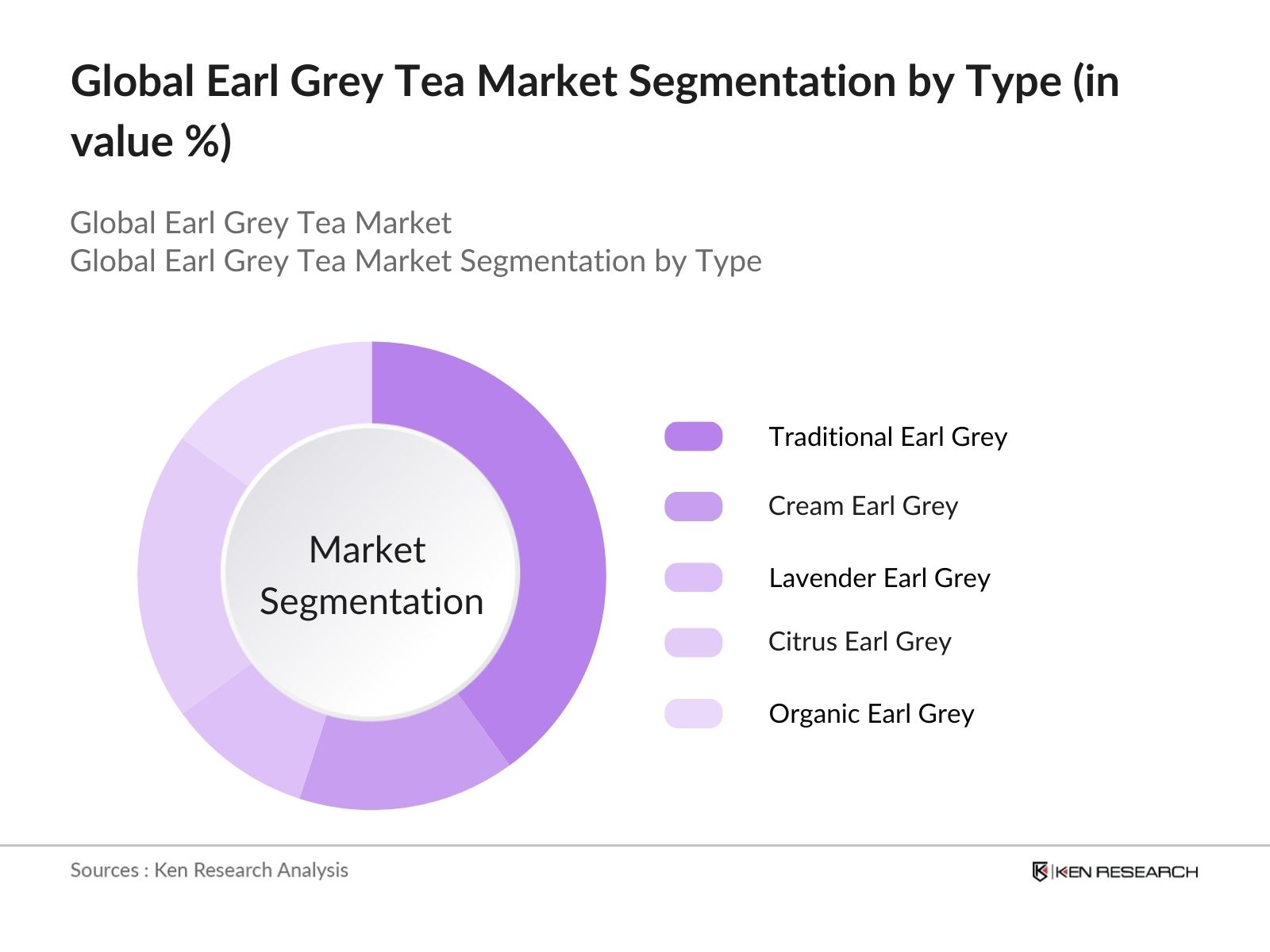
By Type: The market is segmented by type into Traditional Earl Grey, Cream Earl Grey, Lavender Earl Grey, Citrus Earl Grey, and Organic Earl Grey. Traditional Earl Grey dominates the market, accounting for 40% of the share in 2023. This dominance is attributed to its widespread consumer recognition and established presence in both retail and specialty tea outlets. Traditional Earl Grey is often seen as a standard offering, making it a staple in the tea portfolios of many brands, thereby securing its leading position.
By Form: The market is segmented by form into Loose Leaf, Tea Bags, and Powdered Tea. Tea Bags hold the largest market share of 55%, primarily due to their convenience and ease of use. Consumers in regions like North America and Europe prefer the convenience of tea bags, which fit well into their fast-paced lifestyles. Additionally, tea bags are more commonly available across both online and offline retail channels, giving them a significant advantage over other forms.
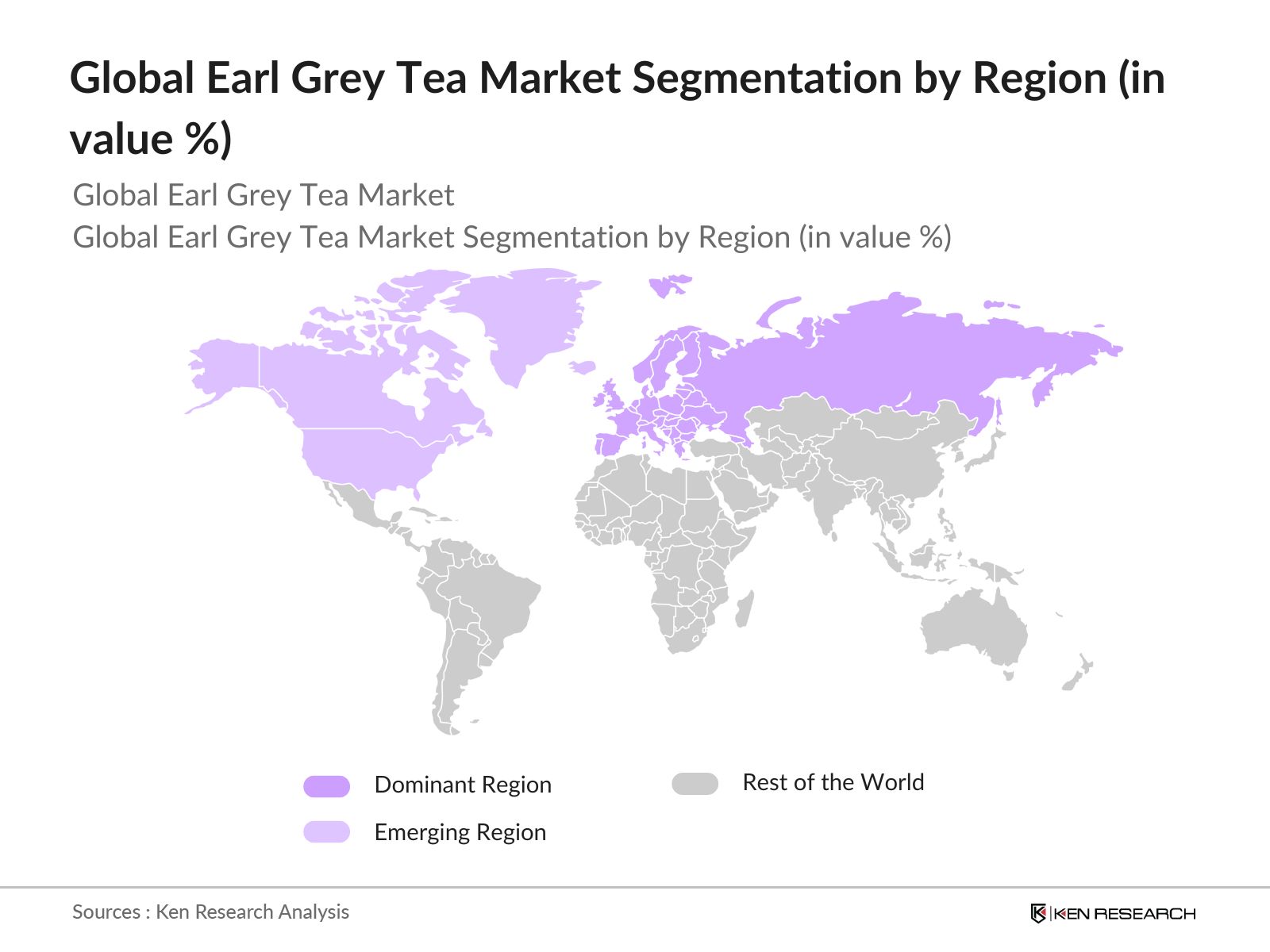
By Region: The market is segmented into North America, Europe, Asia Pacific, Middle East & Africa, and Latin America. Europe leads the market with 35% of the total market share in 2023, driven by the regions strong tea culture, particularly in the UK. The presence of well-established tea brands and growing consumer demand for organic and premium tea blends further supports Europe's dominance. The rise of specialty tea cafes and a preference for natural, health-benefiting products also contribute to the market's strength in this region.
The market is moderately consolidated, with a mix of global and regional players. Major companies focus on expanding their organic and specialty tea offerings to cater to health-conscious consumers. The market is characterized by strong brand loyalty and a steady influx of new entrants offering niche and artisanal products.
|
Company |
Year Established |
Headquarters |
Product Range |
Sustainability Initiatives |
E-commerce Presence |
Organic Certification |
Global Reach |
|
Twinings |
1706 |
UK |
|||||
|
Harney & Sons |
1983 |
USA |
|||||
|
Bigelow Tea |
1945 |
USA |
|||||
|
Stash Tea |
1972 |
USA |
|||||
|
Ahmad Tea |
1986 |
UK |
Over the next five years, the global Earl Grey Tea industry is expected to experience growth, driven by increasing consumer preference for natural and premium tea products. The rising trend of organic certification among tea producers and the expansion of specialty tea cafes across Europe and North America will further contribute to this growth.
|
By Type |
Traditional Earl Grey Cream Earl Grey Lavender Earl Grey Citrus Earl Grey Organic Earl Grey |
|
By Form |
Loose Leaf Tea Bags Powdered Tea |
|
By Packaging |
Tin Cans Paper Pouches Eco-friendly Packaging |
|
By Distribution Channel |
E-commerce Supermarkets & Hypermarkets Specialty Stores Convenience Stores |
|
By Region |
North America Europe Asia Pacific Middle East & Africa Latin America |
1.1. Definition and Scope
1.2. Market Taxonomy
1.3. Market Growth Rate
1.4. Market Segmentation Overview
2.1. Historical Market Size
2.2. Year-On-Year Growth Analysis
2.3. Key Market Developments and Milestones
3.1. Growth Drivers [Market Expansion in Specialty Tea Products, Rise in Health Awareness, Demand for Premium Teas, Expansion in E-commerce Channels]
3.2. Market Challenges [High Competition, Supply Chain Vulnerabilities, Sourcing of Natural Ingredients, Regulatory Compliance]
3.3. Opportunities [Innovation in Flavor Profiles, Growth in Organic Tea Segment, Emerging Markets in Asia-Pacific, Sustainable Packaging Initiatives]
3.4. Trends [Shift Towards Loose Leaf Teas, Increasing Demand for Organic Earl Grey, Preference for Non-Caffeinated Alternatives, Rise of Home Brewing Kits]
3.5. Government Regulations [Tea Import/Export Laws, Organic Certification, Food Safety Regulations, Environmental Packaging Mandates]
3.6. SWOT Analysis
3.7. Stakeholder Ecosystem
3.8. Porters Five Forces Analysis
3.9. Competitive Ecosystem
4.1. By Type (In Value %)
4.1.1. Traditional Earl Grey
4.1.2. Cream Earl Grey
4.1.3. Lavender Earl Grey
4.1.4. Citrus Earl Grey
4.1.5. Organic Earl Grey
4.2. By Form (In Value %)
4.2.1. Loose Leaf
4.2.2. Tea Bags
4.2.3. Powdered Tea
4.3. By Packaging (In Value %)
4.3.1. Tin Cans
4.3.2. Paper Pouches
4.3.3. Eco-friendly Packaging
4.4. By Distribution Channel (In Value %)
4.4.1. E-commerce
4.4.2. Supermarkets & Hypermarkets
4.4.3. Specialty Stores
4.4.4. Convenience Stores
4.5. By Region (In Value %)
4.5.1. North America
4.5.2. Europe
4.5.3. Asia Pacific
4.5.4. Middle East & Africa
4.5.5. Latin America
5.1. Detailed Profiles of Major Companies
5.1.1. Twinings
5.1.2. Harney & Sons
5.1.3. Bigelow Tea
5.1.4. Stash Tea
5.1.5. Tazo Tea
5.1.6. Dilmah Tea
5.1.7. Ahmad Tea
5.1.8. The Republic of Tea
5.1.9. Kusmi Tea
5.1.10. Teabox
5.1.11. Rishi Tea
5.1.12. Numi Organic Tea
5.1.13. Adagio Teas
5.1.14. Mighty Leaf Tea
5.1.15. Whittard of Chelsea
5.2. Cross Comparison Parameters [Headquarters, Inception Year, Revenue, Market Share, Product Range, Sustainability Initiatives, Organic Certifications, E-commerce Presence]
5.3. Market Share Analysis
5.4. Strategic Initiatives
5.5. Mergers and Acquisitions
5.6. Investment Analysis
5.7. Private Equity and Venture Capital Involvement
5.8. Government Grants and Subsidies
6.1. Tea Product Standards
6.2. Organic Certification Compliance
6.3. Packaging Regulations
6.4. Trade Policies
7.1. Future Market Size Projections
7.2. Key Factors Driving Future Market Growth
8.1. By Type (In Value %)
8.2. By Form (In Value %)
8.3. By Packaging (In Value %)
8.4. By Distribution Channel (In Value %)
8.5. By Region (In Value %)
9.1. TAM/SAM/SOM Analysis
9.2. Consumer Preference Analysis
9.3. White Space Opportunities
9.4. Strategic Marketing Recommendations
Disclaimer Contact UsThe initial stage involves mapping out all major stakeholders within the Global Earl Grey Tea Market. This includes extensive desk research using secondary and proprietary databases to gather comprehensive industry-level information. The goal is to define the critical variables that influence the market, such as consumer preferences, production capacity, and distribution networks.
This phase involves compiling and analyzing historical data on market penetration, product adoption rates, and revenue generation. A detailed evaluation of the product segmentation, consumer behavior, and market share analysis will also be conducted to ensure the accuracy of revenue estimates.
Market hypotheses will be validated through structured interviews with industry experts from leading Earl Grey Tea producers and distributors. These insights will provide detailed feedback on market dynamics, operational challenges, and growth opportunities.
In this phase, the data gathered will be synthesized to produce the final report, providing actionable insights. This stage will involve direct consultation with tea manufacturers to ensure the report captures all relevant trends and market drivers accurately.
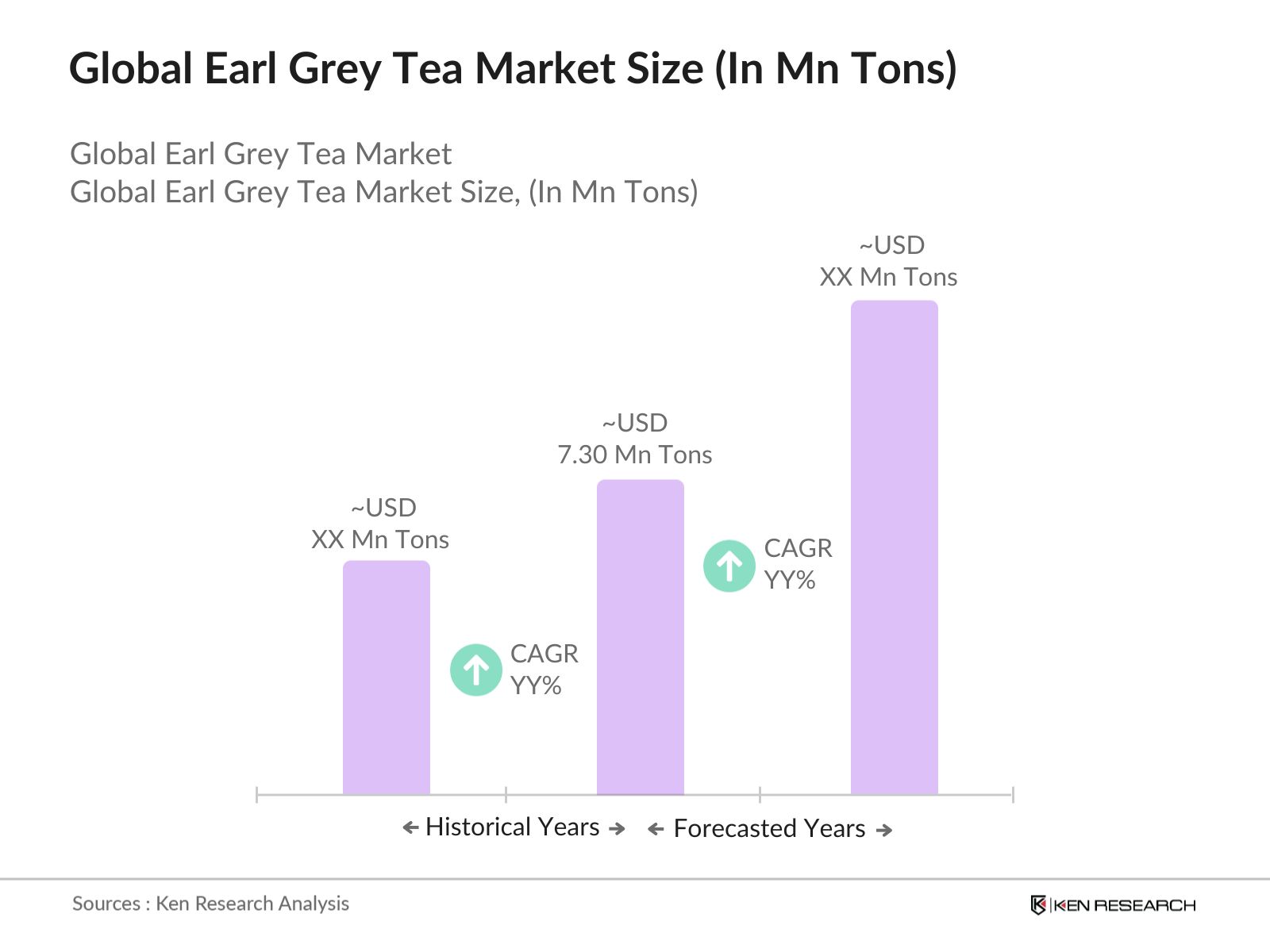
The global Earl Grey Tea market is valued at 7.30 million tons, driven by increasing demand for specialty tea products and a growing emphasis on health and wellness among consumers.
Challenges in the global Earl Grey Tea market include high competition from regional and global brands, supply chain vulnerabilities in sourcing natural ingredients, and strict regulatory compliance, particularly for organic certifications.
Major players in the global Earl Grey Tea market include Twinings, Harney & Sons, Bigelow Tea, Stash Tea, and Ahmad Tea. These companies dominate due to their strong brand loyalty, extensive distribution networks, and emphasis on sustainability.
Growth in the global Earl Grey Tea market is driven by consumer preference for premium, organic, and natural tea products. The expanding e-commerce sector and the rising popularity of specialty tea cafes also contribute to market growth.
Europe and North America dominate the global Earl Grey Tea market, with the UK and the US leading due to their strong tea cultures and high demand for premium blends. These regions are home to many established tea brands, giving them a competitive edge.

What makes us stand out is that our consultants follows Robust, Refine and Result (RRR) methodology. i.e. Robust for clear definitions, approaches and sanity checking, Refine for differentiating respondents facts and opinions and Result for presenting data with story

We have set a benchmark in the industry by offering our clients with syndicated and customized market research reports featuring coverage of entire market as well as meticulous research and analyst insights.

While we don't replace traditional research, we flip the method upside down. Our dual approach of Top Bottom & Bottom Top ensures quality deliverable by not just verifying company fundamentals but also looking at the sector and macroeconomic factors.

With one step in the future, our research team constantly tries to show you the bigger picture. We help with some of the tough questions you may encounter along the way: How is the industry positioned? Best marketing channel? KPI's of competitors? By aligning every element, we help maximize success.

Our report gives you instant access to the answers and sources that other companies might choose to hide. We elaborate each steps of research methodology we have used and showcase you the sample size to earn your trust.

If you need any support, we are here! We pride ourselves on universe strength, data quality, and quick, friendly, and professional service.