















Global Eco Fibers Market Outlook to 2030
Region:Global
Author(s):Sanjeev
Product Code:KROD1647
November 2024
86
About the Report
Global Eco Fibers Market Overview
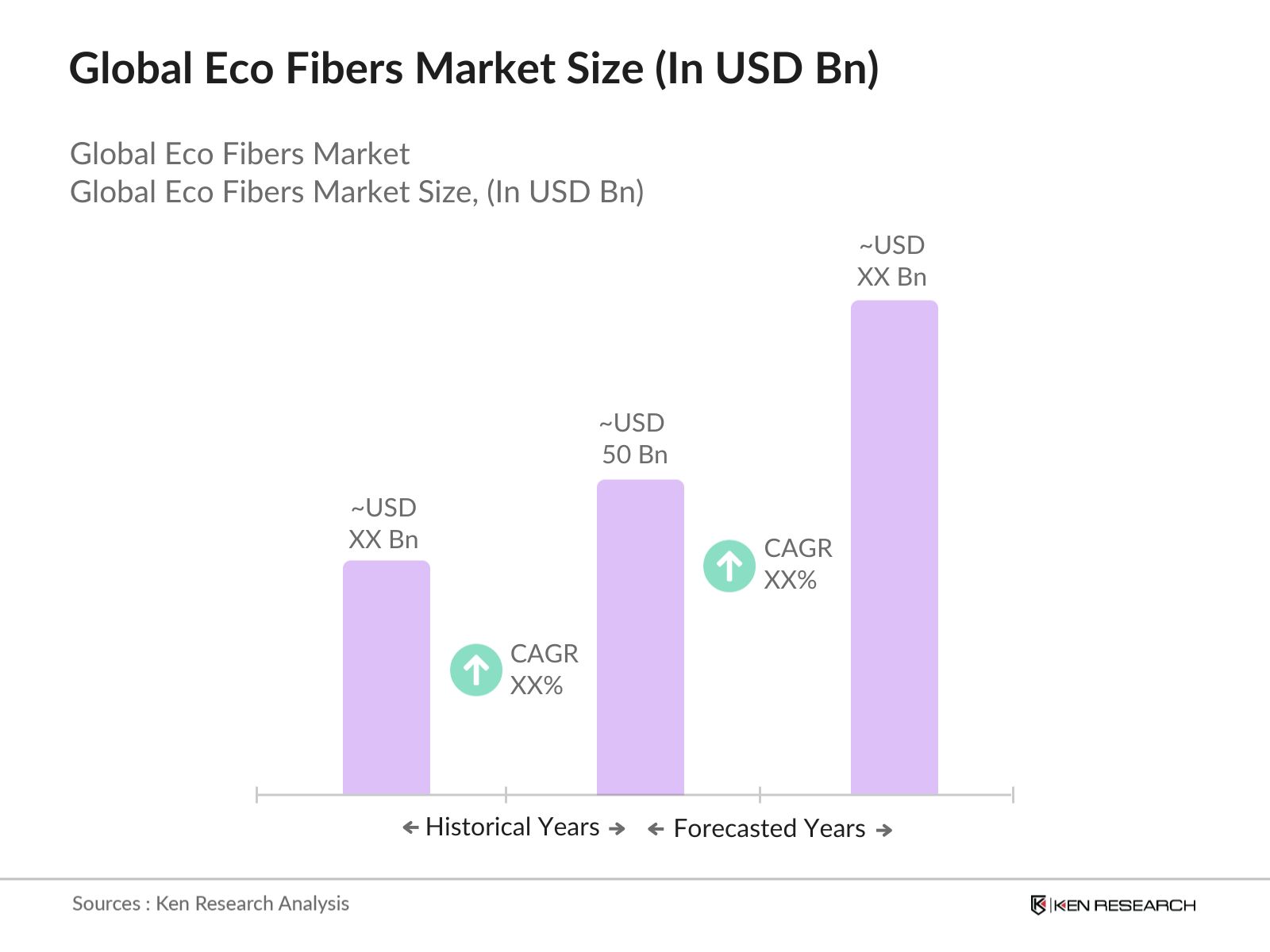
- In 2023, the Global Eco Fibers Market was valued at USD 50 billion, reflecting substantial growth driven by the rising demand for sustainable and environmentally friendly textile solutions. The markets expansion is propelled by increasing consumer awareness of environmental issues and advancements in eco-friendly fiber technologies.
- Leading companies in the Eco Fibers market include Lenzing AG, Toray Industries, Inc., Patagonia, Inc., Unifi, Inc., and Worn Again Technologies. These companies are pioneers in producing and promoting fibers that reduce environmental impact through sustainable practices and innovative technologies.
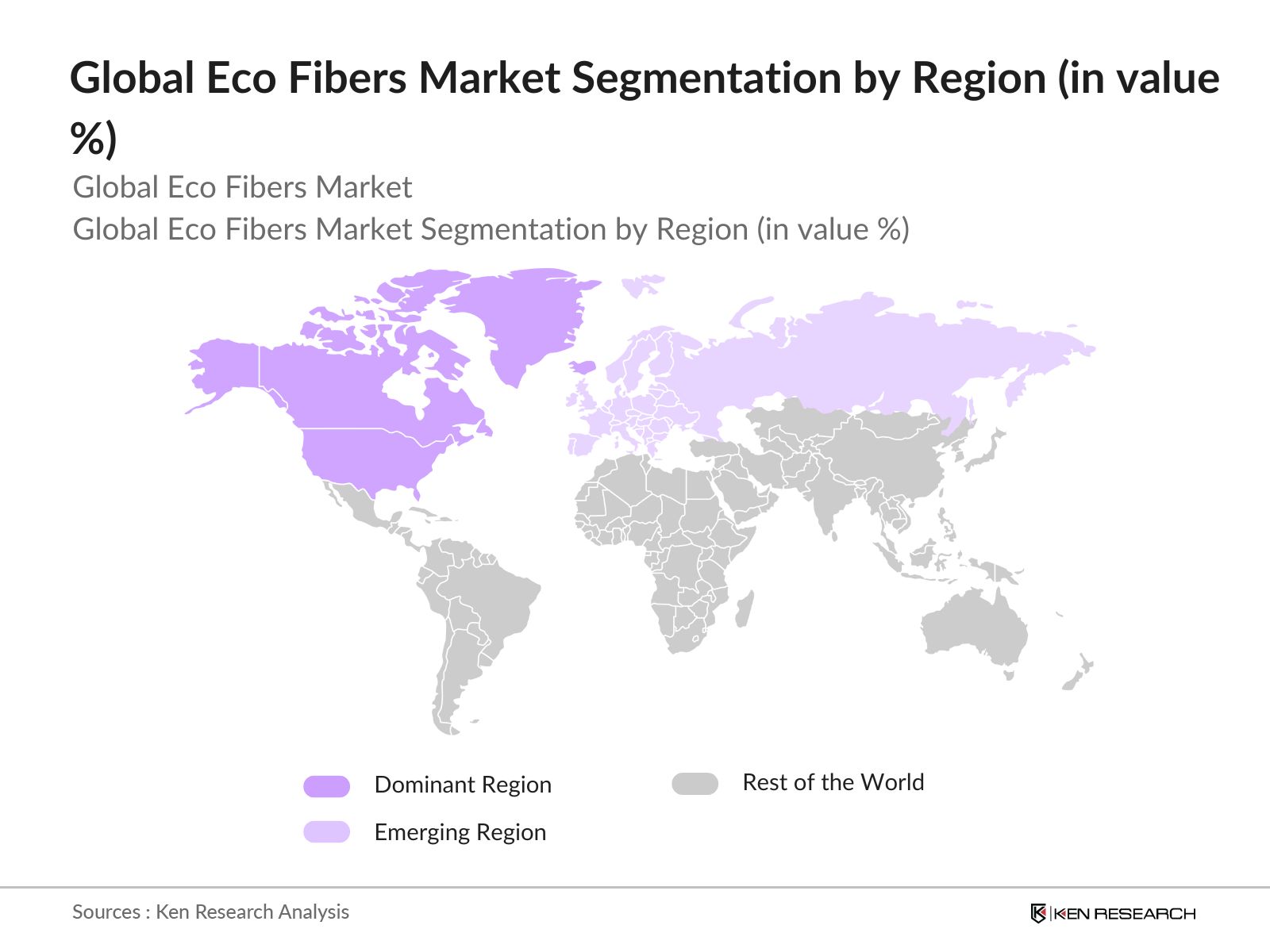
- Europe leads the global Eco Fibers market, with contributions from countries like Germany and France. This leadership is attributed to strong regulatory support for sustainable practices, high consumer demand for eco-friendly products, and a well-established textile industry focused on sustainability.
- In 2023, Lenzing AG introduced a new line of fibers made from recycled materials, enhancing the companys portfolio in sustainable textiles. This development highlights ongoing innovation within the Eco Fibers market aimed at reducing waste and promoting circular economy practices.
Global Eco Fibers Market Segmentation
The Global Eco Fibers Market can be segmented based on product type, application, and region:
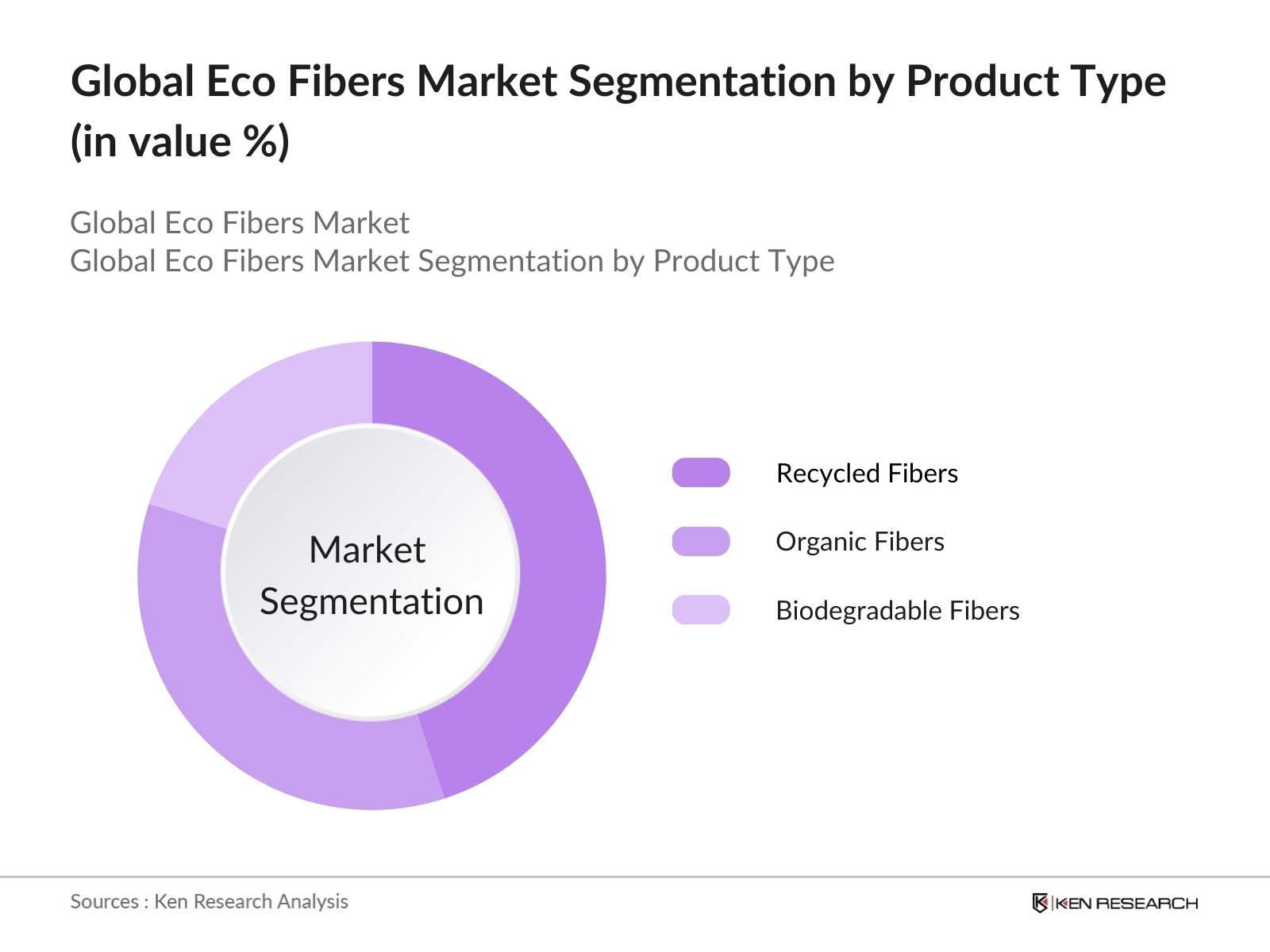
- By Product Type: The Global Eco Fibers market is segmented into Recycled Fibers, Organic Fibers, and Biodegradable Fibers. In 2023, Recycled Fibers held the largest market share due to their role in reducing textile waste and promoting sustainability in fashion and apparel industries.
- By Region: The Global Eco Fibers market is segmented by region into North America, Europe, Asia-Pacific, Latin America, and Middle East & Africa. Europe led the global market in 2023, with the highest adoption of eco-friendly fibers due to strong regulatory frameworks and high consumer demand for sustainable products.
- By Application: The Global Eco Fibers market is segmented by application into Apparel, Home Textiles, and Industrial Textiles. The Apparel segment led the market in 2023, driven by increasing consumer preference for sustainable fashion and eco-friendly clothing options.
Global Eco Fibers Market Competitive Landscape
|
Company |
Establishment Year |
Headquarters |
|
Lenzing AG |
1938 |
Lenzing, Austria |
|
Toray Industries, Inc. |
1926 |
Tokyo, Japan |
|
Patagonia, Inc. |
1973 |
Ventura, USA |
|
Unifi, Inc. |
1971 |
Greensboro, USA |
|
Worn Again Technologies |
2005 |
London, UK |
- Lenzing AG: In 2023, Lenzing AG led the Eco Fibers market with the launch of its new TENCEL fiber made from sustainably sourced wood. This product highlights Lenzings commitment to environmental sustainability, featuring a closed-loop process that minimizes waste and water usage. The company also introduced new innovations aimed at enhancing biodegradability and further reducing environmental impact.
- Toray Industries, Inc.: In 2023, Toray Industries expanded its eco-friendly fiber offerings with new biodegradable synthetic fibers. These fibers decompose more quickly than traditional synthetics, addressing environmental concerns while maintaining performance and quality. This move reinforces Toray's position in sustainable textiles and supports a circular economy.
Global Eco Fibers Industry Analysis Market
Market Growth Drivers
- Increasing Consumer Demand for Sustainable Products: By 2025, consumer preference for eco-friendly textiles is expected to rise by 30%, boosting the eco fibers market. This shift is driven by growing awareness of environmental issues and a heightened desire for sustainable fashion. Consumers are increasingly prioritizing products that minimize environmental impact, leading to a surge in demand for textiles made from renewable and biodegradable materials.
- Corporate Sustainability Initiatives: Companies across various industries are increasingly embedding sustainability into their core business strategies. Apparel and textile companies, in particular, are setting ambitious targets to incorporate eco-friendly materials into their products. This includes commitments to using organic fibers, recycled materials, and sustainable manufacturing processes. Such initiatives not only enhance brand reputation but also drive demand for eco fibers as companies strive to meet consumer expectations and regulatory requirements for sustainability.
- Expansion of Eco-Friendly Supply Chains: The development of more robust and transparent supply chains for eco fibers is crucial for supporting market growth. Enhanced supply chains ensure a steady and reliable flow of sustainable materials, which is essential for meeting the growing demand for eco-friendly textiles. Advances in technology and logistics are improving the efficiency of sourcing, processing, and distributing eco fibers, reducing costs and increasing accessibility.
Market Challenges
- Competition from Traditional Fibers: Traditional synthetic and natural fibers remain dominant in the market due to their established infrastructure, lower costs, and widespread availability. Competing with these well-established fibers requires investment in technology and innovation to demonstrate the benefits and performance of eco fibers.
- Limited Availability of Raw Materials: The supply of certain eco-friendly raw materials, such as organic cotton or bamboo, may be limited or inconsistent. Factors like climate conditions, agricultural practices, and supply chain disruptions can affect the availability and pricing of these materials, impacting the overall production of eco fibers.
- Consumer Perception and Awareness: Despite growing interest in eco-friendly products, there may still be limited consumer awareness and understanding of eco fibers. Educating consumers about the benefits of these fibers is essential for increasing market penetration.
Government Initiatives
- United Nations Fashion Industry Charter for Climate Action: Launched by the UN, this charter encourages fashion companies to commit to climate action and sustainability. The charter supports initiatives that include the use of eco-friendly materials and sustainable practices in the fashion industry. As of 2023, over 200 companies have signed the charter, collectively committing to reducing their carbon footprint and increasing the use of sustainable fibers in their products.
- Japans Green Growth Strategy: Japans Green Growth Strategy, introduced in 2021, aims to achieve carbon neutrality by 2050 and promotes the use of sustainable materials in various industries. The Japanese government has committed to investing 2 trillion ($15 billion) in green technologies, including the development of eco fibers and sustainable textile innovations. This investment is designed to support research and development, as well as commercialization of eco-friendly products.
Global Eco Fibers Market Future Outlook
The Global Eco Fibers Market is poised for growth, driven by increasing consumer demand for sustainable products, technological advancements, and supportive government regulations.
Future Market Trends
- Integration of Advanced Technologies: By 2028, advancements in technologies such as biotechnology and nanotechnology are expected to play a critical role in the development of new eco-friendly fibers. These technologies will enhance the performance and sustainability of textile products.
- Expansion of Circular Economy Practices: The adoption of circular economy principles, including recycling and reuse of textiles, is projected to grow. This trend will drive the demand for eco fibers made from recycled materials and support a more sustainable textile industry.
- Growth in Sustainable Fashion: The sustainable fashion trend is expected to continue growing, with an increasing number of fashion brands adopting eco-friendly fibers. This growth will be fueled by consumer demand for ethical and environmentally responsible fashion choices.
Scope of the Report
|
By Region |
North America Europe Asia-Pacific Latin America Middle East & Africa |
|
By Product Type |
Recycled Fibers Organic Fibers Biodegradable Fibers |
|
By Application Type |
Apparel Home Textiles Industrial Textiles |
|
By Technology |
Biotechnology Nanotechnology Circular Economy Innovations |
|
By End-User |
Apparel Manufacturers Home Textile Producers Industrial Textile Suppliers |
Products
Key Target Audience Organizations and Entities Who Can Benefit by Subscribing This Report:
Textile and Apparel Manufacturers
Sustainable Fashion Brands
Retailers and Distributors
Raw Material Suppliers
Government and Regulatory Bodies
Research Institutions
Investors and Venture Capitalists
Government and Regulation Bodies (MEE, MOE, MOEFCC, GOTS, SAC)
Time Period Captured in the Report:
Historical Period: 2018-2023
Base Year: 2023
Forecast Period: 2023-2028
Companies
Players Mentioned in the Report:
Lenzing AG
Toray Industries, Inc.
Patagonia, Inc.
Unifi, Inc.
Worn Again Technologies
Ecolab Inc.
H&M Group
Stella McCartney
Kering Group
Bambou
Naturenics
Sappi Lanxess
Indorama Ventures
Nufabric
Cargill
Table of Contents
1. Global Eco Fibers Market Overview
1.1. Definition and Scope
1.2. Market Taxonomy
1.3. Market Growth Rate
1.4. Market Segmentation Overview
2.Global Eco Fibers Market Size (in USD Bn), 2018-2023
2.1. Historical Market Size
2.2. Year-on-Year Growth Analysis
2.3. Key Market Developments and Milestones
3.Global Eco Fibers Market Analysis
3.1. Growth Drivers
3.1.1. Increasing Consumer Demand for Sustainable Products
3.1.2. Corporate Sustainability Initiatives
3.1.3. Expansion of Eco-Friendly Supply Chains
3.1.4. Technological Advancements in Eco Fiber Production
3.2. Restraints
3.2.1. Competition from Traditional Fibers
3.2.2. Limited Availability of Raw Materials
3.2.3. Consumer Perception and Awareness
3.2.4. High Production Costs
3.2.5. Supply Chain Disruptions
3.3. Opportunities
3.3.1. Technological Innovations
3.3.2. Expansion into Emerging Markets
3.3.3. Partnerships and Collaborations
3.3.4. Increasing Adoption of Circular Economy Practices
3.3.5. Growth in Sustainable Fashion
3.4. Trends
3.4.1. Adoption of Advanced Technologies
3.4.2. Integration with Circular Economy Models
3.4.3. Growth in Eco-Friendly Apparel
3.4.4. Development of Biodegradable Fibers
3.4.5. Expansion of Sustainable Supply Chains
3.5. Government Regulation
3.5.1. United Nations Fashion Industry Charter for Climate Action
3.5.2. Japans Green Growth Strategy
3.5.3. European Union Green Deal
3.5.4. U.S. Department of Agriculture Organic Certification
3.5.5. Chinas 14th Five-Year Plan for Ecological and Environmental Protection
3.6. SWOT Analysis
3.7. Stakeholder Ecosystem
3.8. Competition Ecosystem
4.Global Eco Fibers Market Segmentation, 2023
4.1. By Product Type (in Value %)
4.1.1. Recycled Fibers
4.1.2. Organic Fibers
4.1.3. Biodegradable Fibers
4.1.4. Semi-Synthetic Fibers
4.1.5. Other Eco Fibers
4.2. By Application (in Value %)
4.2.1. Apparel
4.2.2. Home Textiles
4.2.3. Industrial Textiles
4.2.4. Technical Textiles
4.2.5. Medical Textiles
4.3. By Region (in Value %)
4.3.1. North America
4.3.2. Europe
4.3.3. Asia-Pacific
4.3.4. Latin America
4.3.5. Middle East & Africa
4.4. By End-User (in Value %)
4.4.1. Apparel Manufacturers
4.4.2. Home Textile Producers
4.4.3. Industrial Textile Suppliers
4.4.4. Medical and Healthcare
4.4.5. Automotive and Aerospace
4.5. By Technology (in Value %)
4.5.1. Biotechnology
4.5.2. Nanotechnology
4.5.3. Circular Economy Innovations
4.5.4. Advanced Processing Technologies
4.5.5. Smart Textiles Technology
5.Global Eco Fibers Market Cross Comparison
5.1. Detailed Profiles of Major Companies
5.1.1. Lenzing AG
5.1.2. Toray Industries, Inc.
5.1.3. Patagonia, Inc.
5.1.4. Unifi, Inc.
5.1.5. Worn Again Technologies
5.1.6. Ecolab Inc.
5.1.7. H&M Group
5.1.8. Stella McCartney
5.1.9. Kering Group
5.1.10. Bambou
5.1.11. Naturenics
5.1.12. Sappi Lanxess
5.1.13. Indorama Ventures
5.1.14. Nufabric
5.1.15. Cargill
5.2. Cross Comparison Parameters (No. of Employees, Headquarters, Inception Year, Revenue)
6.Global Eco Fibers Market Competitive Landscape
6.1. Market Share Analysis
6.2. Strategic Initiatives
6.3. Mergers and Acquisitions
6.4. Investment Analysis
6.4.1. Venture Capital Funding
6.4.2. Government Grants
6.4.3. Private Equity Investments
7.Global Eco Fibers Market Regulatory Framework
7.1. Environmental Standards
7.2. Compliance Requirements
7.3. Certification Processes
8.Global Eco Fibers Market Future Outlook (in USD Bn), 2023-2028
8.1. Future Market Size Projections
8.2. Key Factors Driving Future Market Growth
9.Global Eco Fibers Market Future Segmentation, 2028
9.1. By Product Type (in Value %)
9.2. By Application (in Value %)
9.3. By Region (in Value %)
9.4. By End-User (in Value %)
9.5. By Technology (in Value %)
10.Global Eco Fibers Market Analysts Recommendations
10.1. TAM/SAM/SOM Analysis
10.2. Customer Cohort Analysis
10.3. Marketing Initiatives
10.4. White Space Opportunity Analysis
11.Disclaimer
12.Contact Us
Research Methodology
Step 1: Identifying Key Variables
Creating an ecosystem for all major entities in the Eco Fibers market and referencing multiple secondary and proprietary databases to perform desk research. This includes collating industry-level information on market drivers, challenges, and key players.
Step 2: Market Building
Gathering statistics on the Eco Fibers market over the years, including the adoption rate of eco-friendly fibers and the penetration of key market players. We will analyze market share, revenue generated, and product adoption trends to ensure accuracy and reliability in the data presented.
Step 3: Validating and Finalizing
Formulating market hypotheses and conducting CATIs (Computer-Assisted Telephone Interviews) with industry experts from leading companies. These interviews will help validate the collected statistics and provide operational and financial insights directly from company representatives.
Step 4: Research Output
Our team will engage with multiple eco fibers product providers to understand the dynamics of product segments, consumer preferences, and sales trends. This process will validate the derived statistics using a bottom-to-top approach, ensuring that the final data reflects the actual market conditions.
Frequently Asked Questions
01. How big is the Global Eco Fibers Market?
In 2023, the Global Eco Fibers Market was valued at USD 50 billion, driven by the increasing demand for sustainable textiles and advancements in eco-friendly fiber technologies.
02. What are the challenges in the Global Eco Fibers Market?
Challenges in the Global Eco Fibers market include high production costs, limited availability of raw materials, and consumer perception and awareness. These factors can impact market growth and adoption rates.
03. Who are the major players in the Global Eco Fibers Market?
Major players in the Global Eco Fibers Market include Lenzing AG, Toray Industries, Inc., Patagonia, Inc., Unifi, Inc., and Worn Again Technologies. These companies lead the market through innovations in sustainable fiber production and eco-friendly practices.
04. What are the growth drivers of the Global Eco Fibers Market?
Growth drivers in Global Eco Fibers Market include increasing consumer demand for sustainable products, advancements in fiber technologies, and supportive government regulations and initiatives. These factors contribute to the expansion and development of the Eco Fibers market.
Why Buy From Us?

What makes us stand out is that our consultants follows Robust, Refine and Result (RRR) methodology. i.e. Robust for clear definitions, approaches and sanity checking, Refine for differentiating respondents facts and opinions and Result for presenting data with story

We have set a benchmark in the industry by offering our clients with syndicated and customized market research reports featuring coverage of entire market as well as meticulous research and analyst insights.

While we don't replace traditional research, we flip the method upside down. Our dual approach of Top Bottom & Bottom Top ensures quality deliverable by not just verifying company fundamentals but also looking at the sector and macroeconomic factors.

With one step in the future, our research team constantly tries to show you the bigger picture. We help with some of the tough questions you may encounter along the way: How is the industry positioned? Best marketing channel? KPI's of competitors? By aligning every element, we help maximize success.

Our report gives you instant access to the answers and sources that other companies might choose to hide. We elaborate each steps of research methodology we have used and showcase you the sample size to earn your trust.

If you need any support, we are here! We pride ourselves on universe strength, data quality, and quick, friendly, and professional service.