















Global Electric Arc Furnace Market Outlook to 2030
Region:Global
Author(s):Mukul
Product Code:KROD6627
December 2024
101
About the Report
Global Electric Arc Furnace Market Overview
- The global electric arc furnace (EAF) market is valued at USD 730 million, driven primarily by the rising demand for steel production using recycled scrap, which reduces carbon emissions and energy consumption compared to traditional blast furnaces. The market growth is further fueled by the increasing focus on sustainability and the adoption of green steelmaking technologies. Governments worldwide are pushing for the reduction of carbon emissions, making electric arc furnaces a favored choice for steelmakers. Moreover, advancements in energy efficiency and process optimization are driving the market's development.
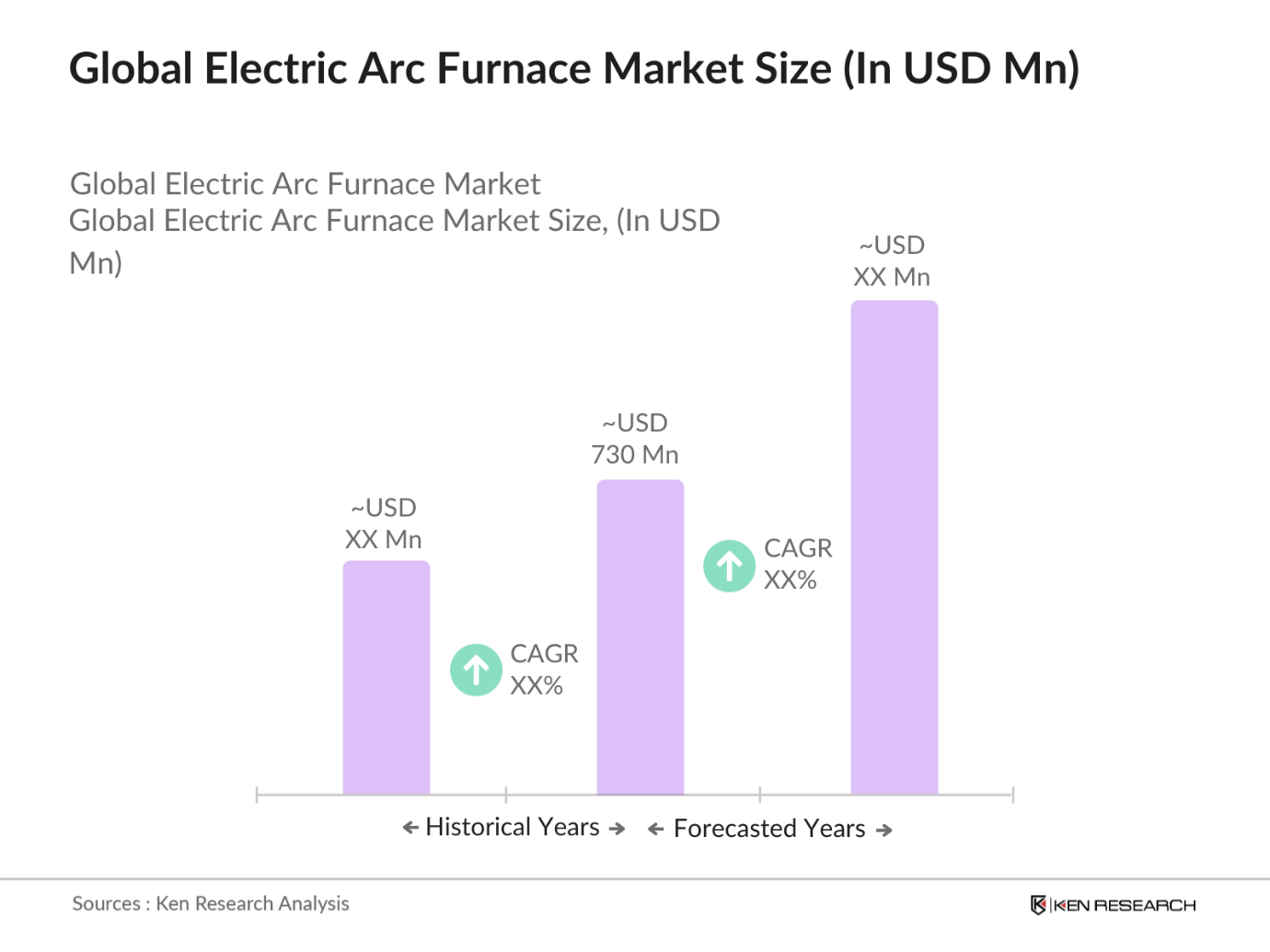
- Countries like China, the United States, and India dominate the electric arc furnace market due to their vast steel manufacturing industries and access to raw materials, such as scrap steel. China leads the market with its robust infrastructure and government policies that support sustainable steel production. The U.S. and India also hold a significant share due to their investments in modernizing steel plants, which often include the deployment of EAFs to improve energy efficiency and meet stringent environmental standards.
- Governments are providing financial support to upgrade steel manufacturing technologies. For instance, in 2023, the European Investment Bank (EIB) allocated 1.5 billion in loans to steel manufacturers to support the adoption of advanced EAF technologies that meet stringent environmental standards. The U.S. Department of Energy has also allocated $250 million for the modernization of steel plants, particularly those that incorporate automation and energy-efficient solutions.
Global Electric Arc Furnace Market Segmentation
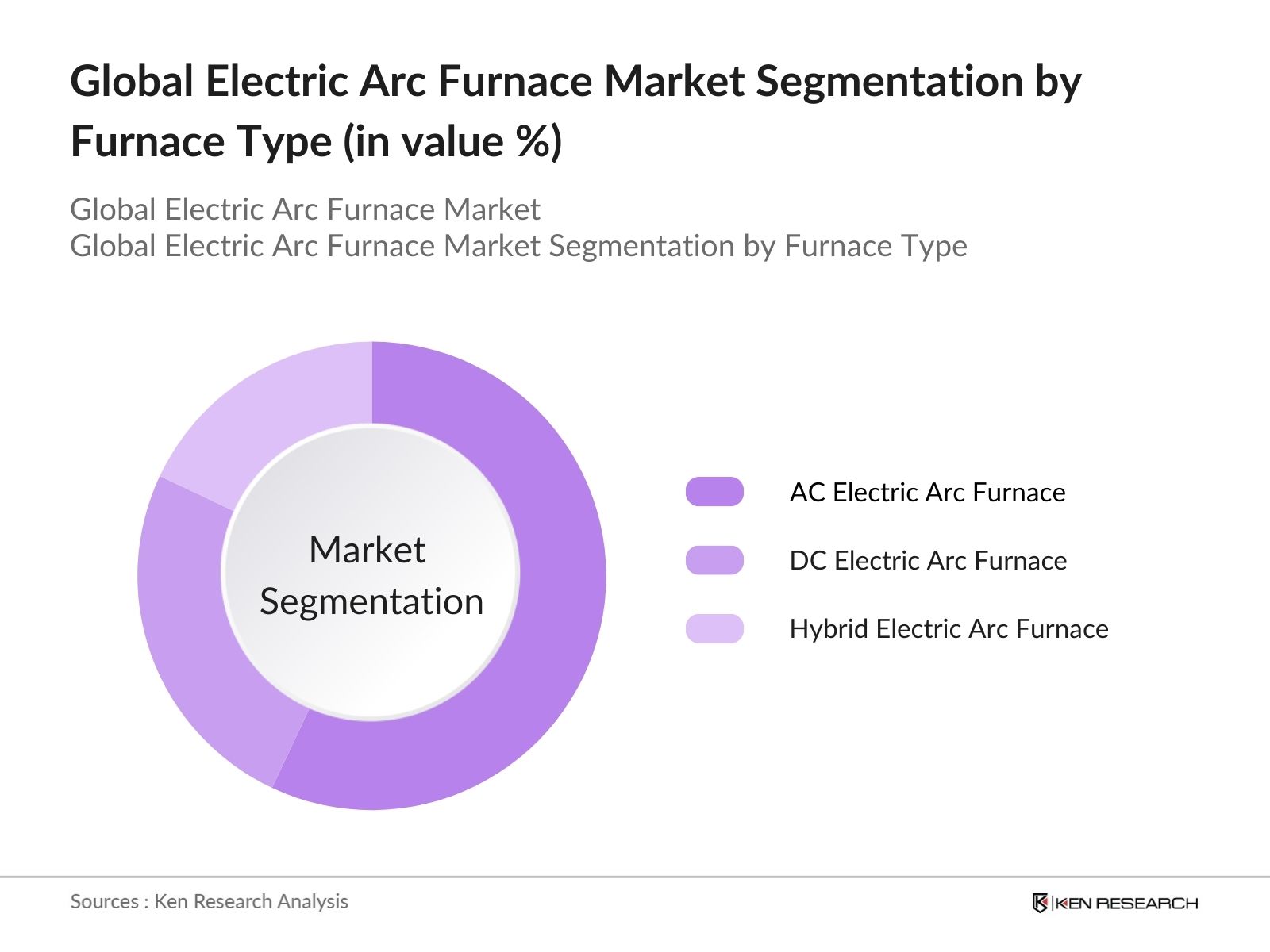
- By Furnace Type: The global electric arc furnace market is segmented by furnace type into AC Electric Arc Furnaces, DC Electric Arc Furnaces, and Hybrid Electric Arc Furnaces. AC electric arc furnaces hold the dominant market share due to their cost-effectiveness and widespread use in steel production, particularly for large-scale operations. AC furnaces offer a higher degree of flexibility in processing varying scrap qualities, making them suitable for industries needing reliable, cost-efficient production. The demand for DC and hybrid furnaces is also increasing, driven by their efficiency in reducing energy consumption and operational costs.
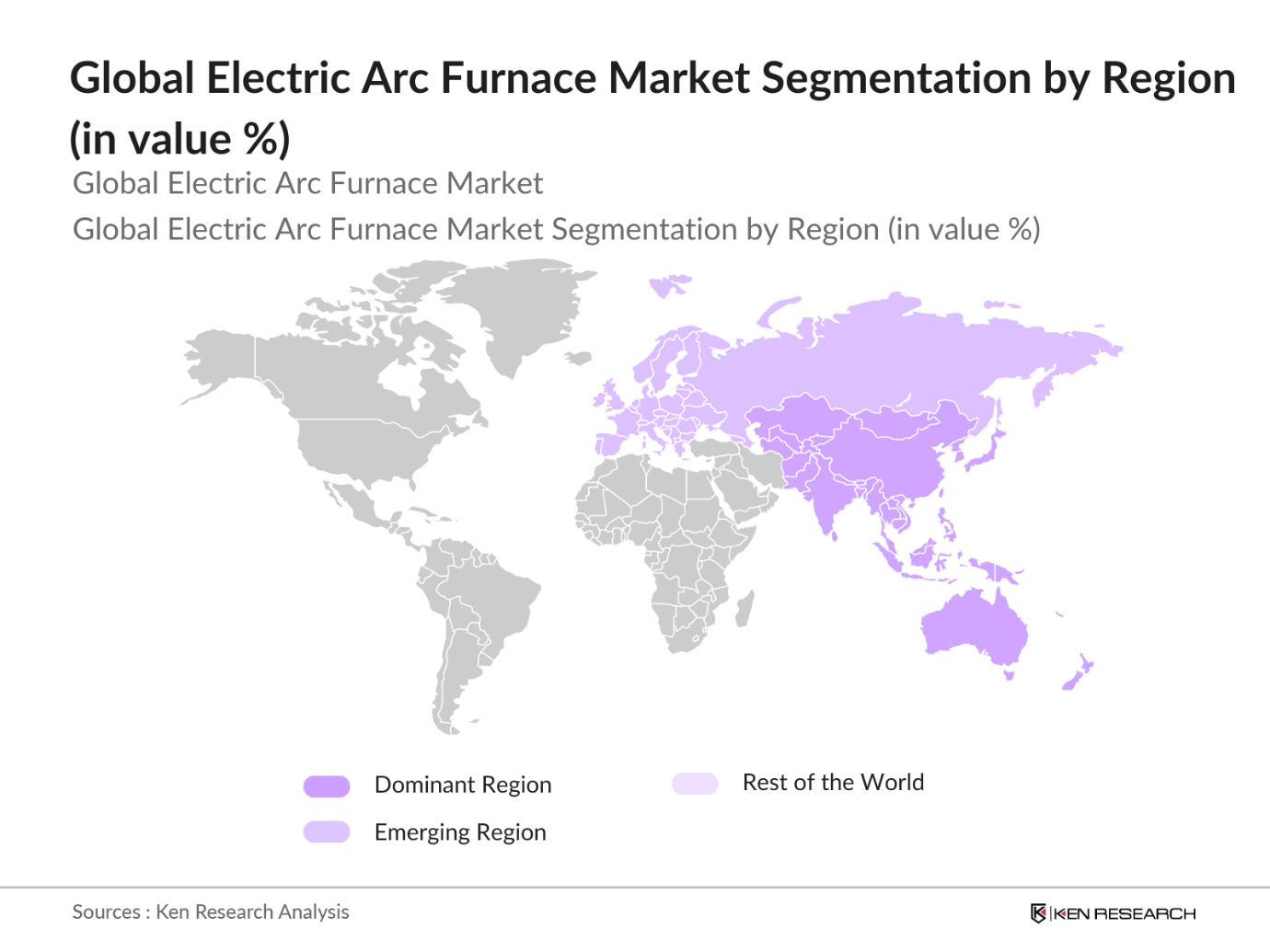
- By Region: The market is segmented regionally into North America, Europe, Asia-Pacific, Latin America, and Middle East & Africa. Asia-Pacific holds the largest share of the market, driven by Chinas extensive steel production infrastructure, which heavily relies on electric arc furnaces. Additionally, countries like India and Japan are contributing to the market due to increasing investments in sustainable steel manufacturing technologies. Europe follows closely with strong government support for reducing carbon emissions and energy-efficient technologies, especially in Germany and Italy.
- By Application: The electric arc furnace market is further segmented by application into Steel Manufacturing, Alloy Manufacturing, and Non-Ferrous Metal Processing. Steel manufacturing is the dominant application due to the widespread adoption of EAF technology in steel production, particularly for recycling scrap steel. As industries aim to minimize their environmental impact, EAFs are being increasingly used to process steel with lower carbon emissions. Alloy manufacturing is also a significant segment, driven by the growing demand for specialized steel and alloys in industries such as automotive, aerospace, and construction.
Global Electric Arc Furnace Market Competitive Landscape
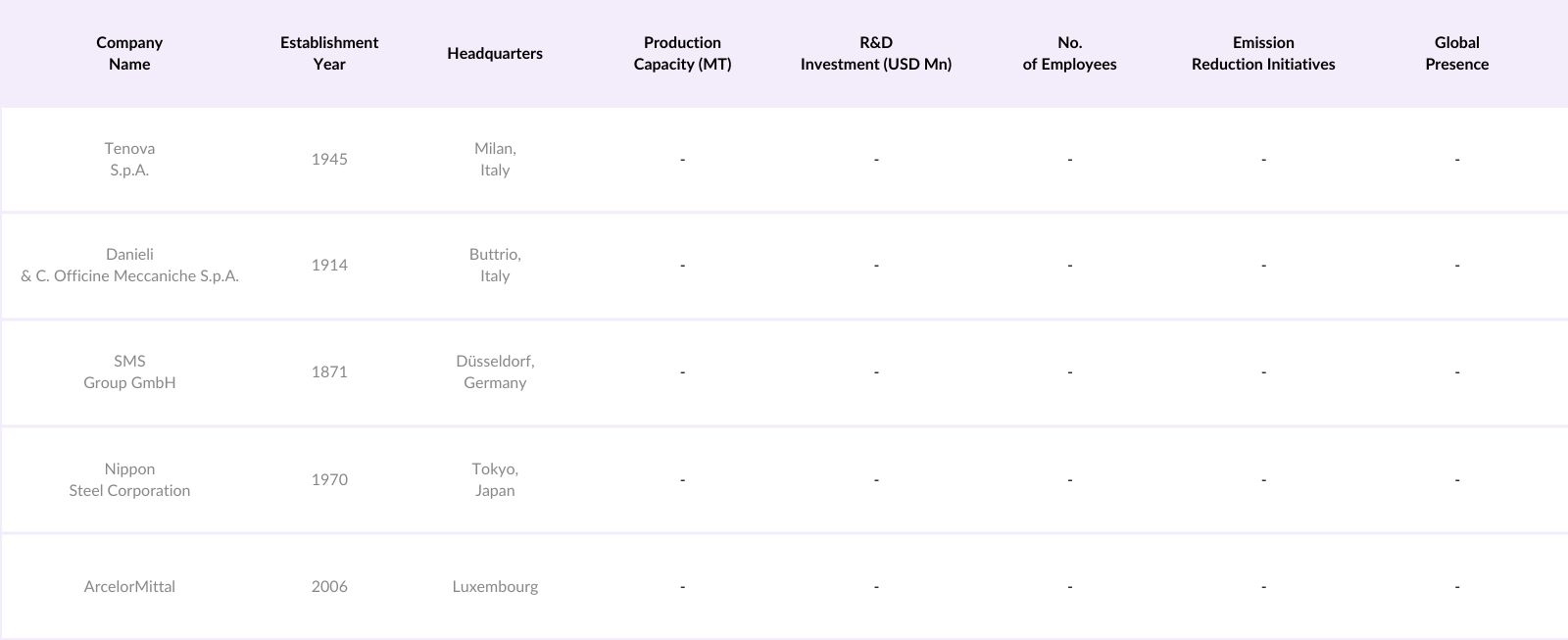
The global electric arc furnace market is characterized by the presence of several key players with a mix of global giants and regional leaders. These companies are involved in strategic initiatives such as mergers, acquisitions, and investments in R&D to gain a competitive edge. The market is highly competitive due to the demand for advanced technologies in steel manufacturing and energy efficiency improvements.
Global Electric Arc Furnace Industry Analysis
Growth Drivers
- Increasing Demand for Steel Production: The global steel industry is experiencing a rise in production capacity driven by infrastructure development and industrialization in emerging economies. In 2022, global steel production reached 1,880 million tons, supported by Electric Arc Furnaces (EAF) which now account for over 30% of global steel production. EAFs utilization rate has surged due to the growing demand for recycled steel, aligning with the industry's circular economy objectives. The International Energy Agency (IEA) noted that steel production from EAFs offers flexibility in operations, further boosting global production capacity .
- Shift Toward Green Steelmaking: The shift toward sustainability in steelmaking is driving the adoption of EAF technology. EAFs can produce steel with up to 75% fewer carbon emissions compared to traditional blast furnaces, primarily due to their ability to use recycled steel as a raw material. This is in line with the Paris Agreement's goals for reducing industrial emissions. In 2023, the European Union implemented stricter carbon regulations, incentivizing industries to adopt cleaner production methods. This shift toward "green steel" is supported by sustainability frameworks in the EU, with financial incentives for producers adhering to lower emission standards .
- Government Policies and Carbon Regulations: Governments worldwide are enforcing stringent emission regulations, boosting the adoption of EAF technology. For instance, in 2023, the U.S. introduced a carbon tax of $50 per ton of CO2 for high-emission industries, encouraging steel manufacturers to switch to lower-emission production methods like EAF. The European Unions Carbon Border Adjustment Mechanism (CBAM) imposes similar penalties on carbon-intensive steel imports. These regulatory policies are accelerating the shift to EAF, as manufacturers seek compliance and avoid costly penalties .
Market Restraints
- Raw Material Supply Fluctuations (Recycled Scrap Supply): EAFs rely heavily on a consistent supply of recycled scrap steel, and fluctuations in scrap availability can lead to operational challenges. In 2023, the global availability of steel scrap was impacted by reduced scrap collection during global economic slowdowns, notably in China and India. Steel scrap prices also surged, making it more expensive to operate EAFs. The World Steel Association noted that, in 2022, global scrap prices increased by 20%, creating further cost pressures for steel manufacturers reliant on EAF technology .
- High Capital Expenditure (Cost of EAF Equipment): The initial capital investment for setting up EAF infrastructure is high, often exceeding $300 million for large-scale operations. This capital expenditure includes costs for furnace construction, energy supply infrastructure, and automation technologies. In 2022, steel manufacturers in developing markets like India and Brazil faced difficulties securing funding for these investments, partly due to rising interest rates. The World Banks Global Economic Prospects report highlighted that borrowing costs in emerging markets increased significantly, making capital-intensive investments like EAFs less financially attractive .
Global Electric Arc Furnace Market Future Outlook
The global electric arc furnace market is expected to witness substantial growth in the coming years. The increasing demand for green steel, combined with technological advancements and government support for reducing carbon emissions, is driving the market forward. Countries worldwide are expected to invest heavily in upgrading their steel manufacturing capabilities with more energy-efficient and environmentally friendly electric arc furnaces. Additionally, rising global infrastructure demand, especially in emerging economies, will further bolster the need for steel, indirectly promoting the growth of the electric arc furnace market.
Market Opportunities
- Development of Energy-Efficient Technologies (R&D Investments): Energy-efficient technologies in EAFs present significant growth opportunities. In 2023, global R&D investment in energy-efficient steelmaking technologies exceeded $2 billion, supported by government initiatives like the EUs Horizon Europe program, which funds clean industrial technologies. New innovations, such as plasma arc furnaces, offer the potential to reduce energy consumption by up to 30%, according to a 2022 report by the International Renewable Energy Agency. These developments are crucial for lowering operational costs and improving the sustainability of EAF technology .
- Increasing Steel Demand in Emerging Markets (Regional Demand Patterns): Emerging markets are driving the demand for steel, with countries like India and Southeast Asian nations leading global growth. India, for example, became the second-largest steel producer in 2022, producing 125 million tons of steel, with EAF technology playing a critical role in meeting domestic demand. The Indian governments infrastructure investment of $1.4 trillion for 2023-2025 has fueled demand for construction-grade steel, positioning EAF technology as an essential component of the country's industrial strategy.
Scope of the Report
|
Furnace Type |
AC Electric Arc Furnace DC Electric Arc Furnace Hybrid Electric Arc Furnace |
|
Application |
Steel Manufacturing Alloy Manufacturing Non-Ferrous Metal Processing |
|
End User |
Iron & Steel Industry Aerospace Industry Automotive Industry Construction Industry |
|
Technology |
Conventional Arc Furnace Ultra High Power (UHP) Furnace Energy Optimizing Furnace (EOF) |
|
Region |
North America Europe Asia-Pacific Latin America Middle East & Africa |
Products
Key Target Audience
Steel Manufacturers
Raw Material Suppliers
Automotive and Aerospace Manufacturers
Government and Regulatory Bodies (U.S. Environmental Protection Agency, European Commission)
Venture Capital and Investment Firms
Renewable Energy and Sustainability Firms
Heavy Industry Equipment Manufacturers
Scrap Metal Suppliers
Companies
Players Mentioned in the Report
Tenova S.p.A
Danieli & C. Officine Meccaniche S.p.A
SMS Group GmbH
Nippon Steel Corporation
ArcelorMittal
Nucor Corporation
POSCO
Baosteel Group Corporation
Gerdau S.A.
Hyundai Steel Co.
U.S. Steel Corporation
Voestalpine AG
Mechel PAO
EVRAZ plc
Tata Steel Group
Table of Contents
1 Global Electric Arc Furnace Market Overview
1.1. Definition and Scope
1.2. Market Taxonomy
1.3. Market Growth Rate
1.4. Market Segmentation Overview
2 Global Electric Arc Furnace Market Size (In USD Mn)
2.1. Historical Market Size
2.2. Year-On-Year Growth Analysis
2.3. Key Market Developments and Milestones
3 Global Electric Arc Furnace Market Analysis
3.1. Growth Drivers
3.1.1. Increasing Demand for Steel Production (Capacity, Utilization)
3.1.2. Shift Toward Green Steelmaking (Sustainability Metrics)
3.1.3. Government Policies and Carbon Regulations (Emission Control, Compliance)
3.1.4. Technological Advancements in Automation and Efficiency (Productivity Metrics)
3.2. Market Challenges
3.2.1. High Energy Consumption (Energy Efficiency Standards, Electricity Consumption)
3.2.2. Raw Material Supply Fluctuations (Recycled Scrap Supply)
3.2.3. High Capital Expenditure (Cost of EAF Equipment)
3.2.4. Environmental Concerns (Dust and Gas Emissions)
3.3. Opportunities
3.3.1. Development of Energy-Efficient Technologies (R&D Investments)
3.3.2. Increasing Steel Demand in Emerging Markets (Regional Demand Patterns)
3.3.3. Integration of Digitalization and IoT (Smart Furnaces, Predictive Maintenance)
3.3.4. Government Support for Low-Emission Manufacturing (Incentives, Grants)
3.4. Trends
3.4.1. Adoption of Hydrogen-Based Steelmaking Technologies
3.4.2. Circular Economy and Recycling Initiatives (Scrap Recovery Rates)
3.4.3. Demand for Specialty Steel Grades (Product Innovation Metrics)
3.4.4. Regional Shifts in Steel Production (Production Capacity by Geography)
3.5. Government Regulation
3.5.1. Global Emission Standards for Steel Manufacturing
3.5.2. Environmental Protection Policies and Subsidies (Carbon Taxes, Penalties)
3.5.3. Trade Policies Impacting Raw Material Supply (Import/Export Duties)
3.5.4. Regional Support for Technological Upgradation (Government Grants and Loans)
3.6. SWOT Analysis
3.7. Stakeholder Ecosystem
3.8. Porters Five Forces
3.9. Competition Ecosystem
4 Global Electric Arc Furnace Market Segmentation
4.1. By Furnace Type (In Value %)
4.1.1. AC Electric Arc Furnace
4.1.2. DC Electric Arc Furnace
4.1.3. Hybrid Electric Arc Furnace
4.2. By Application (In Value %)
4.2.1. Steel Manufacturing
4.2.2. Alloy Manufacturing
4.2.3. Non-Ferrous Metal Processing
4.3. By End User (In Value %)
4.3.1. Iron & Steel Industry
4.3.2. Aerospace Industry
4.3.3. Automotive Industry
4.3.4. Construction Industry
4.4. By Technology (In Value %)
4.4.1. Conventional Arc Furnace
4.4.2. Ultra High Power (UHP) Furnace
4.4.3. Energy Optimizing Furnace (EOF)
4.5. By Region (In Value %)
4.5.1. North America
4.5.2. Europe
4.5.3. Asia-Pacific
4.5.4. Latin America
4.5.5. Middle East & Africa
5 Global Electric Arc Furnace Market Competitive Analysis
5.1. Detailed Profiles of Major Companies
5.1.1. Tenova S.p.A
5.1.2. Danieli & C. Officine Meccaniche S.p.A.
5.1.3. SMS Group GmbH
5.1.4. Nippon Steel Corporation
5.1.5. ArcelorMittal
5.1.6. POSCO
5.1.7. Nucor Corporation
5.1.8. Baosteel Group Corporation
5.1.9. Gerdau S.A.
5.1.10. Hyundai Steel Co.
5.1.11. U.S. Steel Corporation
5.1.12. Voestalpine AG
5.1.13. Mechel PAO
5.1.14. EVRAZ plc
5.1.15. Tata Steel Group
5.2. Cross Comparison Parameters (No. of Employees, Revenue, Production Capacity, Global Presence, R&D Investment, Technological Capabilities, Emission Standards Compliance, Environmental Impact)
5.3. Market Share Analysis
5.4. Strategic Initiatives
5.5. Mergers and Acquisitions
5.6. Investment Analysis
5.7. Venture Capital Funding
5.8. Government Grants
5.9. Private Equity Investments
6 Global Electric Arc Furnace Market Regulatory Framework
6.1. Industry Standards and Certifications
6.2. Environmental Regulations and Compliance (Carbon Emissions, Waste Management)
6.3. Trade and Tariff Policies Affecting Raw Materials (Import/Export Duties)
7 Global Electric Arc Furnace Future Market Size (In USD Mn)
7.1. Future Market Size Projections
7.2. Key Factors Driving Future Market Growth
8 Global Electric Arc Furnace Future Market Segmentation
8.1. By Furnace Type (In Value %)
8.2. By Application (In Value %)
8.3. By Technology (In Value %)
8.4. By End User (In Value %)
8.5. By Region (In Value %)
9 Global Electric Arc Furnace Market Analysts Recommendations
9.1. TAM/SAM/SOM Analysis
9.2. Marketing Initiatives
9.3. White Space Opportunity Analysis
Research Methodology
Step 1: Identification of Key Variables
The first step involves mapping the entire ecosystem of the electric arc furnace market. This includes extensive desk research using industry reports, proprietary databases, and publicly available information to identify the critical factors influencing the market.
Step 2: Market Analysis and Construction
In this phase, historical data from the electric arc furnace market is compiled, focusing on steel production, technological advancements, and regulatory changes. Revenue generation patterns are analyzed alongside operational costs and environmental impact assessments.
Step 3: Hypothesis Validation and Expert Consultation
Industry experts from leading companies in the steel manufacturing sector are consulted through structured interviews. Their insights help validate market trends and forecasts, ensuring accuracy in the collected data.
Step 4: Research Synthesis and Final Output
The final phase consolidates all gathered data into a comprehensive report, including key insights from primary and secondary research. Data is verified against industry benchmarks to ensure reliability.
Frequently Asked Questions
01 How big is the Global Electric Arc Furnace Market?
The global electric arc furnace market is valued at USD 730 million driven by the increasing demand for steel production and sustainability initiatives across key steel-producing countries.
02 What are the challenges in the Global Electric Arc Furnace Market?
The market faces challenges like high energy consumption, fluctuations in raw material supply, and the need for significant capital investments to deploy new technologies and meet environmental standards.
03 Who are the major players in the Global Electric Arc Furnace Market?
Key players include Tenova S.p.A, Danieli & C. Officine Meccaniche S.p.A, SMS Group GmbH, Nippon Steel Corporation, and ArcelorMittal. These companies dominate the market due to their technological advancements and global production capacities.
04 What are the growth drivers of the Global Electric Arc Furnace Market?
The market is driven by increasing demand for steel production using recycled scrap, government support for reducing carbon emissions, and advancements in energy-efficient furnace technologies.
Why Buy From Us?

What makes us stand out is that our consultants follows Robust, Refine and Result (RRR) methodology. i.e. Robust for clear definitions, approaches and sanity checking, Refine for differentiating respondents facts and opinions and Result for presenting data with story

We have set a benchmark in the industry by offering our clients with syndicated and customized market research reports featuring coverage of entire market as well as meticulous research and analyst insights.

While we don't replace traditional research, we flip the method upside down. Our dual approach of Top Bottom & Bottom Top ensures quality deliverable by not just verifying company fundamentals but also looking at the sector and macroeconomic factors.

With one step in the future, our research team constantly tries to show you the bigger picture. We help with some of the tough questions you may encounter along the way: How is the industry positioned? Best marketing channel? KPI's of competitors? By aligning every element, we help maximize success.

Our report gives you instant access to the answers and sources that other companies might choose to hide. We elaborate each steps of research methodology we have used and showcase you the sample size to earn your trust.

If you need any support, we are here! We pride ourselves on universe strength, data quality, and quick, friendly, and professional service.