















Global Electric Lawn Mower Market Outlook to 2030
Region:Global
Author(s):Mukul
Product Code:KROD10089
December 2024
94
About the Report
Global Electric Lawn Mower Market Overview
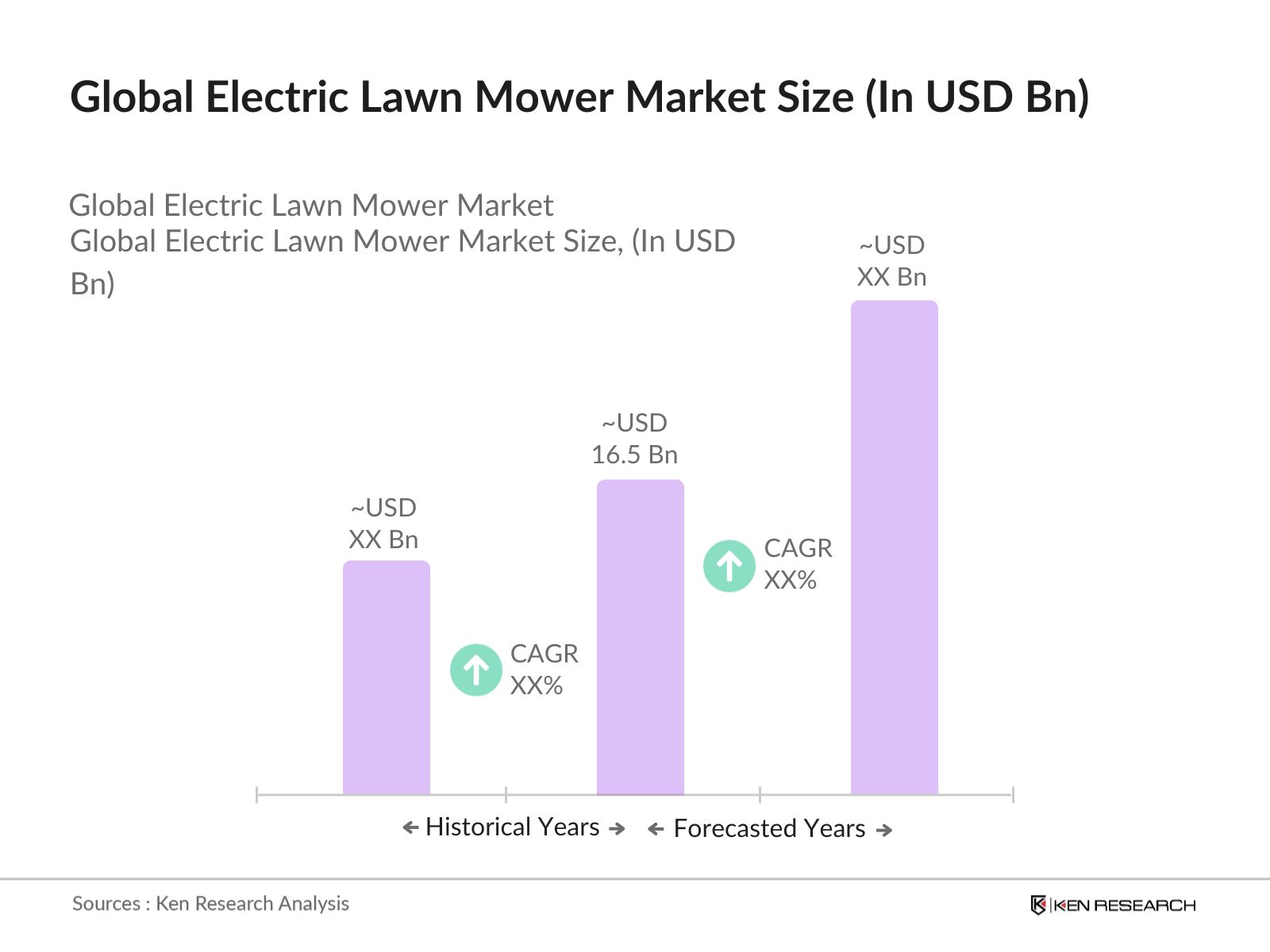
- The Global Electric Lawn Mower market is valued at USD 16.5 billion, primarily driven by the growing demand for eco-friendly and energy-efficient lawn care solutions. The shift away from traditional gasoline-powered mowers toward electric alternatives is fueled by rising environmental concerns, government regulations, and technological advancements in battery technology. Increasing consumer awareness and the desire for low-maintenance gardening equipment further amplify this demand. Continuous development in cordless and robotic lawn mowers is a key driver of market growth, offering convenience and efficiency to consumers across residential and commercial sectors.
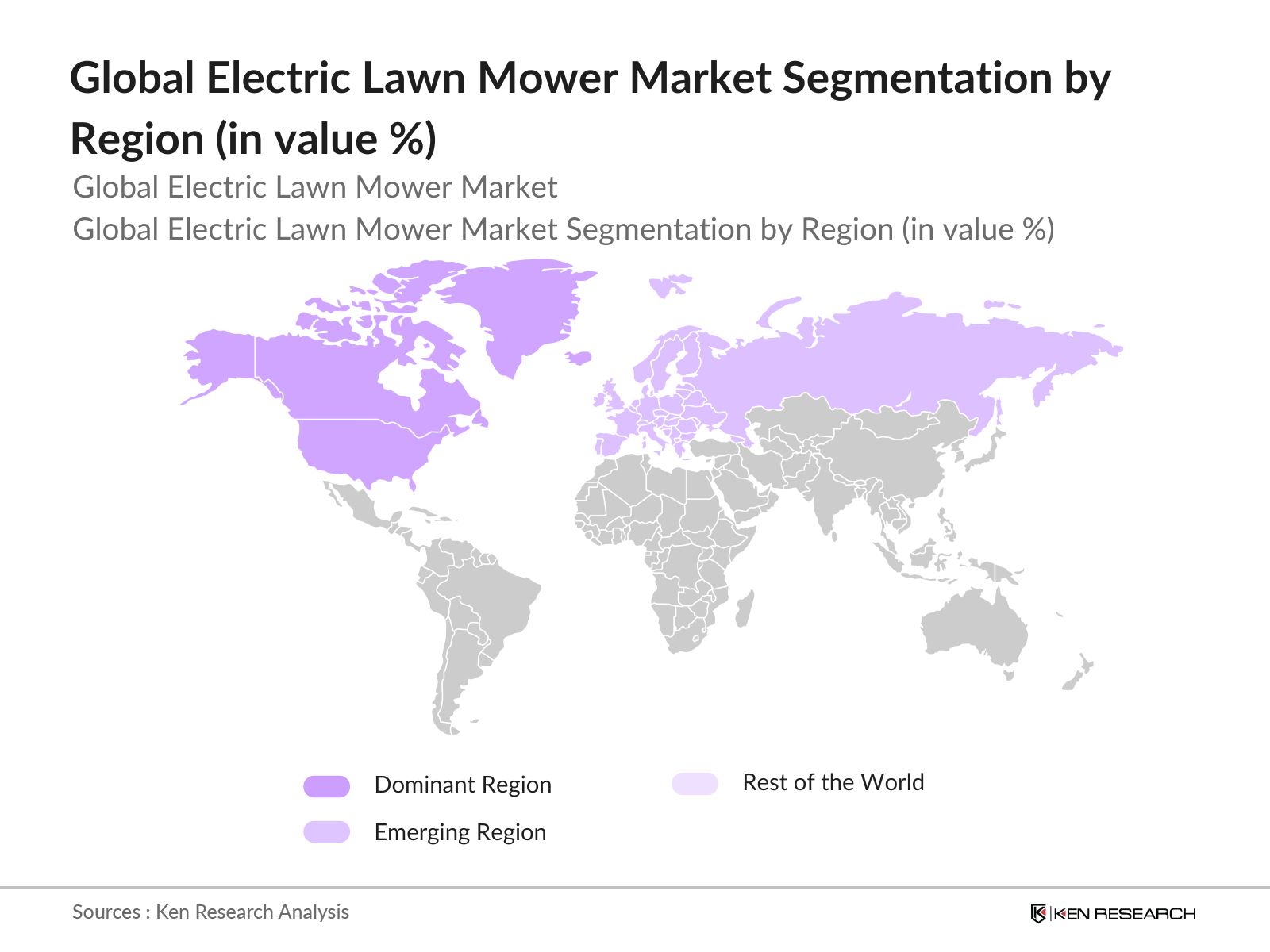
- North America and Europe dominate the Global Electric Lawn Mower market due to their advanced infrastructure, high adoption rates of smart home technologies, and a growing focus on reducing carbon emissions. The United States, in particular, benefits from stringent environmental regulations and a consumer base that is increasingly prioritizing eco-friendly gardening tools. In Europe, countries like Germany and the UK are frontrunners due to robust government incentives aimed at promoting electric lawn care equipment and widespread urbanization, which fosters the demand for efficient lawn management tools.
- Public-private collaborations are playing a vital role in advancing the adoption of green technologies such as electric lawn mowers. In 2024, government partnerships with tech companies have accelerated the development of more efficient battery technologies and smart systems. These collaborations are aimed at meeting the growing demand for sustainable lawn care solutions while complying with strict environmental regulations in regions like the EU and the U.S.
Global Electric Lawn Mower Market Segmentation
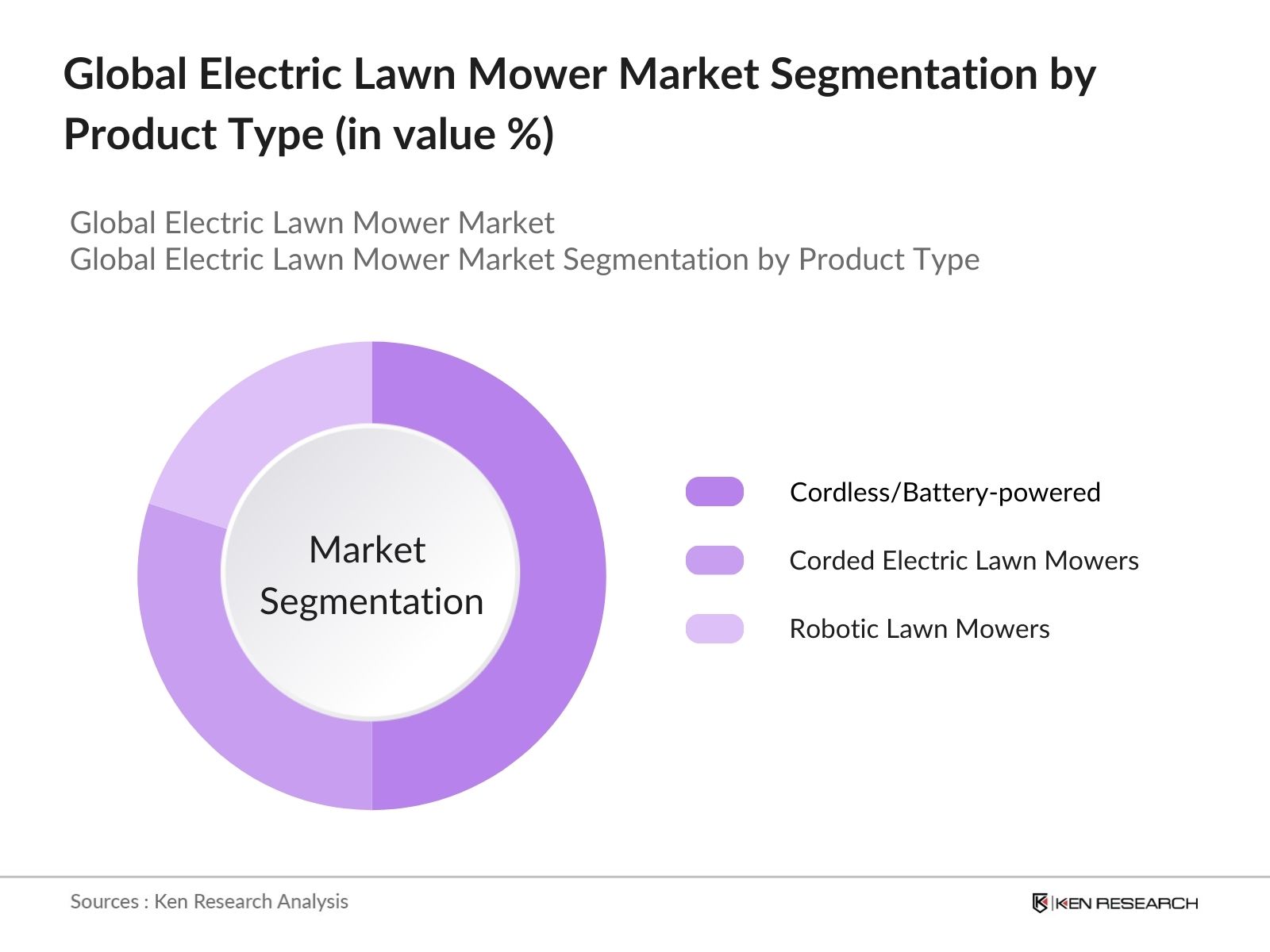
- By Product Type: The Electric Lawn Mower market is segmented into corded electric lawn mowers, cordless/battery-powered lawn mowers, and robotic lawn mowers. Among these, cordless/battery-powered lawn mowers hold a dominant market share due to their flexibility and convenience. Consumers prefer these mowers as they eliminate the hassle of cords and offer better mobility compared to corded models. Additionally, advancements in lithium-ion battery technology have significantly extended the operating time and reduced charging time, making this segment a top choice for both residential and commercial users.
- By Application: In terms of application, the market is divided into residential, commercial, and municipal sectors. The residential sector dominates the market, primarily due to the increasing trend of home gardening and the availability of compact, user-friendly electric mowers tailored to individual homeowners. The rise in suburban housing projects and home renovations further boosts the demand for electric lawn mowers in the residential segment, with homeowners increasingly opting for sustainable solutions.
- By Region: Geographically, the market is segmented into North America, Europe, Asia Pacific, Latin America, and the Middle East & Africa. North America leads the market due to high disposable income, a well-established gardening culture, and strict regulations pushing for sustainable energy usage. Additionally, the trend toward smart homes in the U.S. and Canada significantly contributes to the market's dominance. Europe follows closely, driven by government subsidies for electric tools and increased adoption of robotic lawn mowers, particularly in urban areas where space constraints necessitate precision mowing.
Global Electric Lawn Mower Market Competitive Landscape
The Global Electric Lawn Mower market is dominated by a few key players, each excelling in specific areas such as product innovation, distribution, and customer loyalty. The market is consolidated with companies like Deere & Company and Robert Bosch GmbH holding significant influence. These major players are pushing advancements in battery technology and robotic mowers, which has resulted in a competitive environment marked by continuous innovation.
|
Company Name |
Year Established |
Headquarters |
Revenue |
Employees |
Product Innovations |
Sustainability Initiatives |
Global Presence |
Market Share |
|
Deere & Company |
1837 |
Moline, IL, USA |
- |
- |
- |
- |
- |
- |
|
Robert Bosch GmbH |
1886 |
Gerlingen, Germany |
- |
- |
- |
- |
- |
- |
|
Husqvarna Group |
1689 |
Stockholm, Sweden |
- |
- |
- |
- |
- |
- |
|
The Toro Company |
1914 |
Bloomington, USA |
- |
- |
- |
- |
- |
- |
|
Makita Corporation |
1915 |
Anjo, Japan |
- |
- |
- |
- |
- |
- |
Global Electric Lawn Mower Industry Analysis
Growth Drivers
- Shift toward Eco-friendly Equipment: The shift towards eco-friendly equipment, particularly electric lawn mowers, is gaining traction as consumers seek alternatives to traditional gas-powered machines. In 2024, the global push to reduce carbon emissions is evident, with over 1.3 billion metric tons of CO2 emissions being attributed to gasoline engines, spurring the demand for cleaner solutions like electric mowers. Governments across Europe, North America, and parts of Asia are promoting electrification policies. In the U.S., zero-emission mandates have been implemented in several states, accelerating the adoption of electric equipment
- Government Incentives for Electric Lawn Equipment: Government incentives are playing a crucial role in boosting the sales of electric lawn equipment. The U.S. government has earmarked over $2 billion in subsidies in 2024 to promote the adoption of electric landscaping tools. In the European Union, there is significant funding towards zero-emission garden equipment under the Green Deal initiative, aiming for 100% electric adoption in urban landscaping. These subsidies are making electric lawn mowers more affordable for both consumers and commercial users
- Rising Consumer Preferences for Low-noise Equipment: Consumer demand for low-noise lawn equipment is driving the growth of electric mowers. In 2024, noise pollution regulations in densely populated areas have led to the rise of electric lawn mowers, which operate at a much lower decibel level compared to gas mowers. For instance, electric mowers produce around 75 decibels compared to 95 decibels for gasoline mowers, making them more suitable for urban settings and residential areas.
Market Restraints
- Limited Power Output Compared to Gas Mowers: Electric lawn mowers often have a limited power output compared to gas-powered mowers, making them less suitable for heavy-duty tasks such as large lawn areas or rugged terrains. The average power rating for electric mowers is about 1.5 to 2 horsepower, while gas-powered models can reach 4 to 6 horsepower. This gap is significant for commercial users who need more robust equipment, and it remains a challenge for manufacturers in 2024.
- Availability of Maintenance and Replacement Parts: The availability of maintenance and replacement parts for electric lawn mowers remains a challenge in 2024, especially in remote regions. Traditional gas mowers have an extensive network of repair shops and parts suppliers, whereas electric mower parts such as battery replacements and specialized electronic components are harder to find. This issue is exacerbated by supply chain disruptions, which have affected the global availability of certain high-tech components.
Global Electric Lawn Mower Market Future Outlook
Over the next five years, the Global Electric Lawn Mower market is expected to grow significantly, driven by increasing environmental regulations, advancements in battery technology, and rising consumer demand for sustainable and efficient lawn care solutions. Government initiatives encouraging the adoption of electric equipment and the expansion of smart home systems will further drive market growth. The increasing popularity of robotic lawn mowers, particularly in urban environments, will also contribute to market expansion as automation becomes a key trend in gardening and landscaping.
Market Opportunities
- Growth in Smart Lawn Care Systems Integration: The integration of smart lawn care systems with electric mowers presents significant opportunities. In 2024, the number of households using smart systems for outdoor maintenance has exceeded 50 million globally, with a growing interest in automating lawn care. These systems offer features such as scheduling, remote monitoring, and efficient energy use, which enhance the appeal of electric mowers among tech-savvy consumers and commercial landscapers.
- Expansion of Robotic Lawn Mowers: Robotic lawn mowers are experiencing rapid expansion as a sub-segment of electric mowers. In 2024, over 3 million robotic lawn mowers were sold globally, particularly in North America and Europe. These autonomous mowers offer precision cutting with minimal human intervention and are increasingly integrated with IoT systems for smart home applications. The expanding urban population and rising labor costs are key drivers behind this growth.
Scope of the Report
|
Product Type |
Corded Electric Lawn Mowers Cordless/Battery-powered Lawn Mowers Robotic Lawn Mowers |
|
Application |
Residential Commercial Municipal |
|
Distribution Channel |
Offline Retail Stores Online Channels Manufacturer Direct Sales |
|
End User |
Household Landscaping Companies Government Agencies |
|
Region |
North America Europe Asia Pacific Latin America Middle East & Africa |
Products
Key Target Audience
Investor and Venture Capitalist Firms
Government and Regulatory Bodies (Environmental Protection Agency)
Lawn Care Equipment Manufacturers
Electric Component Suppliers
Residential Landscaping Companies
Retailers and Distributors
Robotic Mower Technology Providers
Smart Home System Integrators
Companies
Players Mentioned in the Report:
Deere & Company
Robert Bosch GmbH
Husqvarna Group
The Toro Company
Makita Corporation
Stanley Black & Decker, Inc.
AL-KO Gardentech
Greenworks Tools (Globe Tools Group)
Honda Motor Co., Ltd.
MTD Products
Emak S.p.A.
AriensCo
Stiga S.p.A.
Worx (Positec Tool Corporation)
Kubota Corporation
Table of Contents
1 Global Electric Lawn Mower Market Overview
1.1. Definition and Scope
1.2. Market Taxonomy
1.3. Market Growth Rate
1.4. Market Segmentation Overview
2 Global Electric Lawn Mower Market Size (In USD Bn)
2.1. Historical Market Size
2.2. Year-On-Year Growth Analysis
2.3. Key Market Developments and Milestones
3 Global Electric Lawn Mower Market Analysis
3.1. Growth Drivers (Battery Technology Advancements, Sustainability Trends)
3.1.1. Shift toward Eco-friendly Equipment
3.1.2. Government Incentives for Electric Lawn Equipment
3.1.3. Rising Consumer Preferences for Low-noise Equipment
3.2. Market Challenges (Battery Life, Charging Infrastructure)
3.2.1. High Initial Costs of Electric Lawn Mowers
3.2.2. Limited Power Output Compared to Gas Mowers
3.2.3. Availability of Maintenance and Replacement Parts
3.3. Opportunities (Rural and Urban Adoption, Home Gardening Growth)
3.3.1. Growth in Smart Lawn Care Systems Integration
3.3.2. Expansion of Robotic Lawn Mowers
3.3.3. Adoption of Subscription-Based Lawn Care Services
3.4. Trends (Smart Lawn Systems, AI-powered Mowing)
3.4.1. Integration of Internet of Things (IoT) Technology
3.4.2. Rise in Demand for Robotic Lawn Mowers
3.4.3. Increased Focus on Energy Efficiency and Sustainability
3.5. Government Regulations (Emissions Standards, Electric Equipment Incentives)
3.5.1. Zero Emission Laws in Urban Areas
3.5.2. Environmental Regulations Supporting Electrification
3.5.3. Public-Private Collaborations in Green Tech
3.6. SWOT Analysis
3.7. Stake Ecosystem
3.8. Porters Five Forces
3.9. Competition Ecosystem
4 Global Electric Lawn Mower Market Segmentation
4.1. By Product Type (In Value %)
4.1.1. Corded Electric Lawn Mowers
4.1.2. Cordless/Battery-powered Lawn Mowers
4.1.3. Robotic Lawn Mowers
4.2. By Application (In Value %)
4.2.1. Residential
4.2.2. Commercial
4.2.3. Municipal
4.3. By Distribution Channel (In Value %)
4.3.1. Offline Retail Stores
4.3.2. Online Channels
4.3.3. Manufacturer Direct Sales
4.4. By End User (In Value %)
4.4.1. Household
4.4.2. Landscaping Companies
4.4.3. Government Agencies
4.5. By Region (In Value %)
4.5.1. North America
4.5.2. Europe
4.5.3. Asia Pacific
4.5.4. Latin America
4.5.5. Middle East & Africa
5 Global Electric Lawn Mower Market Competitive Analysis
5.1. Detailed Profiles of Major Competitors
5.1.1. Deere & Company
5.1.2. Robert Bosch GmbH
5.1.3. Husqvarna Group
5.1.4. MTD Products
5.1.5. The Toro Company
5.1.6. STIGA S.p.A.
5.1.7. Makita Corporation
5.1.8. AriensCo
5.1.9. AL-KO Gardentech
5.1.10. Stanley Black & Decker, Inc.
5.1.11. Worx (Positec Tool Corporation)
5.1.12. Emak S.p.A.
5.1.13. Honda Motor Co., Ltd.
5.1.14. Kubota Corporation
5.1.15. Greenworks Tools (Globe Tools Group)
5.2. Cross Comparison Parameters (Revenue, No. of Employees, Headquarters, Product Offerings, Market Share, Manufacturing Facilities, Product Innovations, Sustainability Initiatives)
5.3. Market Share Analysis
5.4. Strategic Initiatives
5.5. Mergers And Acquisitions
5.6. Investment Analysis
5.7. Venture Capital Funding
5.8. Government Grants
5.9. Private Equity Investments
6 Global Electric Lawn Mower Market Regulatory Framework
6.1. Environmental Standards
6.2. Compliance Requirements
6.3. Certification Processes
7 Global Electric Lawn Mower Market Future Size (In USD Bn)
7.1. Future Market Size Projections
7.2. Key Factors Driving Future Market Growth
8 Global Electric Lawn Mower Future Market Segmentation
8.1. By Product Type (In Value %)
8.2. By Application (In Value %)
8.3. By Distribution Channel (In Value %)
8.4. By End User (In Value %)
8.5. By Region (In Value %)
9 Global Electric Lawn Mower Market Analysts Recommendations
9.1. TAM/SAM/SOM Analysis
9.2. Customer Cohort Analysis
9.3. Marketing Initiatives
9.4. White Space Opportunity Analysis
Research Methodology
Step 1: Identification of Key Variables
The first phase of research involved constructing an ecosystem map of the Global Electric Lawn Mower market, identifying key stakeholders such as manufacturers, suppliers, and distributors. This was based on extensive desk research, utilizing proprietary databases and secondary sources to gather market-level information. The goal was to identify critical market drivers, challenges, and opportunities.
Step 2: Market Analysis and Construction
Historical data related to the electric lawn mower market was analyzed, focusing on trends in product sales, adoption rates, and revenue generation. Key data points were validated through detailed assessments of market growth drivers and barriers, ensuring the accuracy and relevance of the projections.
Step 3: Hypothesis Validation and Expert Consultation
Market hypotheses were developed and refined based on insights obtained from industry experts. Expert interviews, conducted via CATIS (computer-assisted telephone interviews), helped corroborate market size estimates and revenue forecasts, ensuring that the data reflects actual industry performance.
Step 4: Research Synthesis and Final Output
The final step of the research involved a comprehensive synthesis of data collected from industry stakeholders, including electric lawn mower manufacturers. The analysis was fine-tuned by comparing market segmentations and competitor strategies, resulting in a validated, complete overview of the market.
Frequently Asked Questions
01. How big is the Global Electric Lawn Mower Market?
The Global Electric Lawn Mower Market is valued at USD 16.5 billion, driven by rising environmental concerns and the need for energy-efficient lawn care solutions.
02. What are the challenges in the Global Electric Lawn Mower Market?
Challenges include high initial costs, limited battery life, and the need for more robust charging infrastructure. These factors are slowing the full-scale adoption of electric lawn mowers in certain regions.
03. Who are the major players in the Global Electric Lawn Mower Market?
Major players in the market include Deere & Company, Robert Bosch GmbH, Husqvarna Group, The Toro Company, and Makita Corporation, all of which dominate through technological innovation and extensive distribution networks.
04. What are the growth drivers of the Global Electric Lawn Mower Market?
Growth is driven by advancements in battery technology, increasing consumer demand for sustainable lawn care products, and government regulations promoting the use of eco-friendly equipment.
Why Buy From Us?

What makes us stand out is that our consultants follows Robust, Refine and Result (RRR) methodology. i.e. Robust for clear definitions, approaches and sanity checking, Refine for differentiating respondents facts and opinions and Result for presenting data with story

We have set a benchmark in the industry by offering our clients with syndicated and customized market research reports featuring coverage of entire market as well as meticulous research and analyst insights.

While we don't replace traditional research, we flip the method upside down. Our dual approach of Top Bottom & Bottom Top ensures quality deliverable by not just verifying company fundamentals but also looking at the sector and macroeconomic factors.

With one step in the future, our research team constantly tries to show you the bigger picture. We help with some of the tough questions you may encounter along the way: How is the industry positioned? Best marketing channel? KPI's of competitors? By aligning every element, we help maximize success.

Our report gives you instant access to the answers and sources that other companies might choose to hide. We elaborate each steps of research methodology we have used and showcase you the sample size to earn your trust.

If you need any support, we are here! We pride ourselves on universe strength, data quality, and quick, friendly, and professional service.