
Global Electrolyzer Market Outlook to 2030
KROD4929
Region:Global
Author(s):Sanjna Verma
Product Code:KROD5970
Region:Global
Author(s):Sanjna Verma
Product Code:KROD5970
December 2024
96
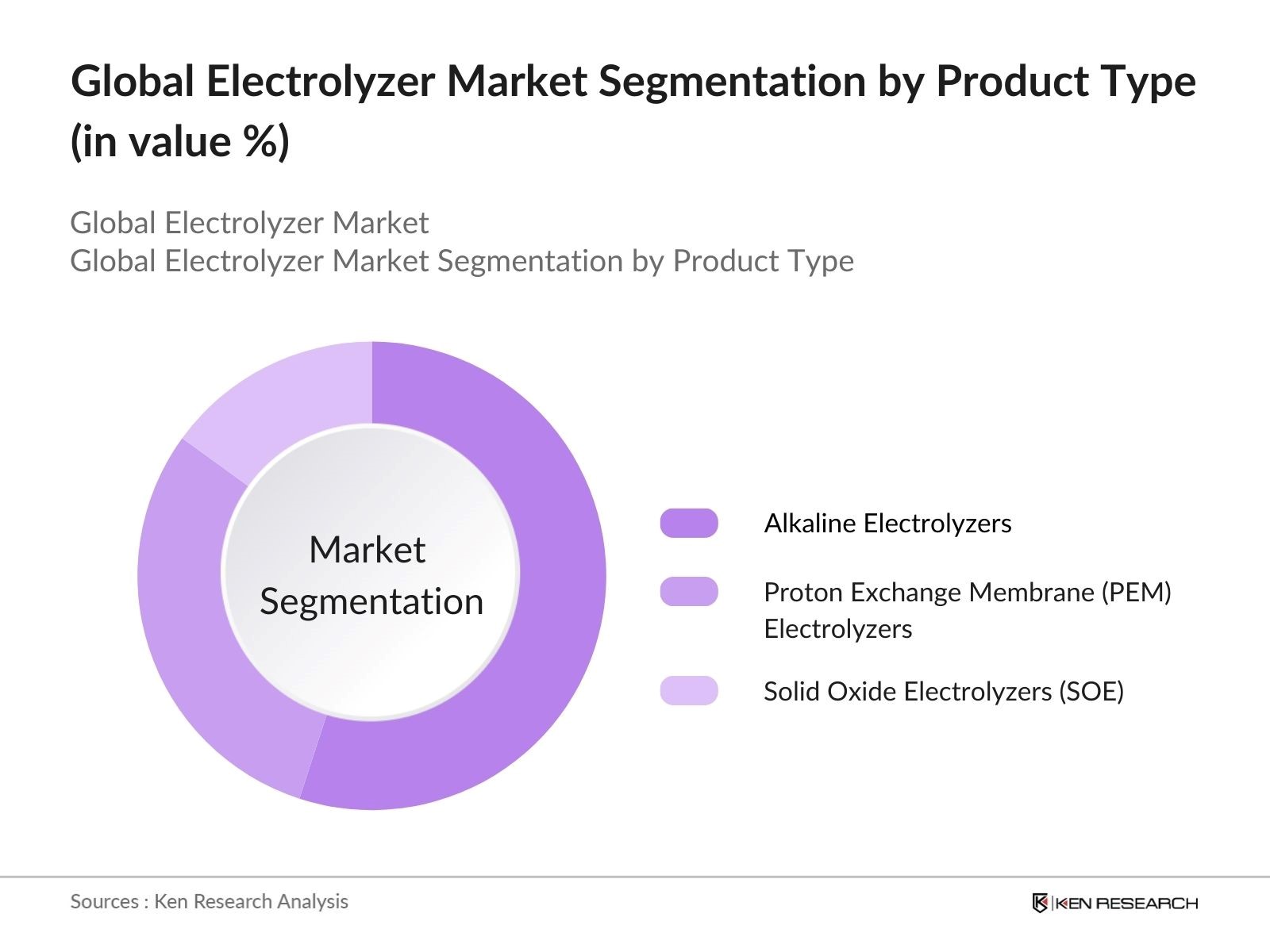
By Product Type: The global electrolyzer market is segmented by product type into Alkaline Electrolyzers, Proton Exchange Membrane (PEM) Electrolyzers, and Solid Oxide Electrolyzers (SOE). Among these, Alkaline Electrolyzers hold a dominant market share due to their long-standing use in industrial applications and cost-effectiveness. Their proven technology and low operational cost make them the most widely deployed electrolyzers in large-scale projects, especially in the chemical and fertilizer industries.
By Region: The electrolyzer market is segmented regionally into North America, Europe, Asia Pacific, Middle East & Africa, and Latin America. Europe dominates the market due to its aggressive hydrogen strategies, especially in countries like Germany, France, and the UK. The European Unions strong push for hydrogen as part of its clean energy transition, coupled with financial incentives and government support, positions Europe as the leader in global electrolyzer deployments.

By Application: The market is segmented by application into Hydrogen Refueling Stations, Ammonia Production, Methanol Production, and Energy Storage Solutions. Hydrogen refueling stations dominate the market as global efforts towards decarbonizing transportation take center stage. Many governments are rolling out policies to promote hydrogen-powered vehicles, increasing the demand for hydrogen refueling infrastructure, which boosts the need for electrolyzers.
The global electrolyzer market is consolidated with a few major players dominating the landscape, such as Siemens Energy, Nel Hydrogen, and Plug Power Inc.. These companies have significant influence due to their wide-ranging product portfolios, partnerships with key stakeholders in renewable energy, and continuous investments in technology advancements.
|
Company |
Established |
Headquarters |
Revenue (USD Mn) |
R&D Investment |
Technology Portfolio |
Global Reach |
Major Contracts |
Employee Count |
Innovation Index |
|
Siemens Energy |
2020 |
Munich, Germany |
- |
- |
- |
- |
- |
- |
- |
|
Nel Hydrogen |
1927 |
Oslo, Norway |
- |
- |
- |
- |
- |
- |
- |
|
Plug Power Inc. |
1997 |
Latham, USA |
- |
- |
- |
- |
- |
- |
- |
|
ITM Power |
2001 |
Sheffield, UK |
- |
- |
- |
- |
- |
- |
- |
|
McPhy Energy |
2008 |
La Motte, France |
- |
- |
- |
- |
- |
- |
- |
Global Electrolyzer Market is expected to experience significant growth driven by the global push for hydrogen energy, rapid advancements in electrolyzer technologies, and increasing government support. With hydrogen becoming a critical component in the global energy mix, investments in electrolyzers for both green and blue hydrogen production are anticipated to rise. Additionally, scaling electrolyzer production and innovation will likely reduce costs, making hydrogen an increasingly competitive energy source.
|
By Segment |
Sub-Segment |
|
By Product Type |
Alkaline Electrolyzers |
|
Proton Exchange Membrane (PEM) |
|
|
Solid Oxide Electrolyzers (SOE) |
|
|
By Technology |
Alkaline Electrolysis |
|
PEM Electrolysis |
|
|
Solid Oxide Electrolysis |
|
|
By Application |
Hydrogen Refueling Stations |
|
Ammonia Production |
|
|
Methanol Production |
|
|
Energy Storage Solutions |
|
|
By End-User |
Power Industry |
|
Transportation |
|
|
Chemical Industry |
|
|
Oil & Gas Sector |
|
|
Steel Manufacturing |
|
|
By Region |
North America |
|
Europe |
|
|
Asia Pacific |
|
|
Middle East & Africa |
|
|
Latin America |
1.1. Definition and Scope
1.2. Market Taxonomy
1.3. Market Growth Rate (CAGR, Revenue Growth, Capacity Expansion Rate)
1.4. Market Segmentation Overview (By Product Type, Technology, Application, End-User, Region)
2.1. Historical Market Size (Value & Volume)
2.2. Year-On-Year Growth Analysis (Revenue and Installation Capacity)
2.3. Key Market Developments and Milestones (Partnerships, Technology Innovations, Policy Changes)
3.1. Growth Drivers
3.1.1. Decarbonization and Energy Transition
3.1.2. Increasing Demand for Hydrogen in Various Industries
3.1.3. Government Support and Subsidies for Green Hydrogen Projects
3.1.4. Expansion of Renewable Energy Capacities
3.2. Market Challenges
3.2.1. High Initial Capital Costs of Electrolyzer Systems
3.2.2. Low Efficiency of Electrolysis Compared to Other Methods
3.2.3. Limited Hydrogen Infrastructure
3.2.4. Fluctuation in Renewable Energy Supply Impacting Electrolysis
3.3. Opportunities
3.3.1. Development of Low-Cost, High-Efficiency Electrolyzers
3.3.2. Expansion into Emerging Hydrogen Markets
3.3.3. Technological Advancements in Electrolyzer Design
3.3.4. Collaborations and Joint Ventures in Hydrogen Projects
3.4. Trends
3.4.1. Modular and Scalable Electrolyzer Systems
3.4.2. Integration with Offshore Wind and Solar Energy
3.4.3. Growth of Green Hydrogen Projects Globally
3.4.4. Adoption of Power-to-X Solutions
3.5. Government Regulation
3.5.1. National Hydrogen Strategies and Roadmaps
3.5.2. Carbon Pricing Policies and Impact on Hydrogen Demand
3.5.3. Incentives for Electrolyzer Manufacturing and Deployment
3.5.4. Environmental Regulations on Hydrogen Production and Use
3.6. SWOT Analysis
3.7. Stake Ecosystem (Electrolyzer Manufacturers, Hydrogen Distributors, Renewable Energy Producers)
3.8. Porters Five Forces
3.9. Competition Ecosystem
4.1. By Product Type (In Value % and Units Installed)
4.1.1. Alkaline Electrolyzers
4.1.2. Proton Exchange Membrane (PEM) Electrolyzers
4.1.3. Solid Oxide Electrolyzers (SOE)
4.2. By Technology (In Value % and Units Installed)
4.2.1. Alkaline Electrolysis
4.2.2. PEM Electrolysis
4.2.3. Solid Oxide Electrolysis
4.3. By Application (In Value % and Units Installed)
4.3.1. Hydrogen Refueling Stations
4.3.2. Ammonia Production
4.3.3. Methanol Production
4.3.4. Energy Storage Solutions
4.4. By End-User (In Value % and Units Installed)
4.4.1. Power Industry
4.4.2. Transportation
4.4.3. Chemical Industry
4.4.4. Oil & Gas Sector
4.4.5. Steel Manufacturing
4.5. By Region (In Value % and Installed Capacity)
4.5.1. North America
4.5.2. Europe
4.5.3. Asia Pacific
4.5.4. Middle East & Africa
4.5.5. Latin America
5.1 Detailed Profiles of Major Companies
5.1.1. Siemens Energy
5.1.2. Nel Hydrogen
5.1.3. Plug Power Inc.
5.1.4. ITM Power
5.1.5. Thyssenkrupp AG
5.1.6. McPhy Energy
5.1.7. Cummins Inc.
5.1.8. Linde plc
5.1.9. Hydrogenics
5.1.10. Air Liquide
5.1.11. Enapter
5.1.12. H-Tec Systems
5.1.13. Green Hydrogen Systems
5.1.14. Sunfire GmbH
5.1.15. Ohmium International
5.2 Cross Comparison Parameters (Revenue, Installed Capacity, Product Portfolio, Geographic Presence, No. of Employees, Partnerships, Market Share, Innovation in Electrolyzer Technologies)
5.3. Market Share Analysis (In Value and Installed Capacity)
5.4. Strategic Initiatives
5.5. Mergers and Acquisitions
5.6. Investment Analysis
5.7. Venture Capital Funding
5.8. Government Grants
5.9. Private Equity Investments
6.1. Hydrogen Production Standards and Certifications
6.2. Compliance with National and Regional Hydrogen Policies
6.3. Certification Processes for Green Hydrogen Production
6.4. Environmental Standards for Electrolyzer Manufacturing
7.1. Future Market Size Projections
7.2. Key Factors Driving Future Market Growth (Growth in Green Hydrogen Projects, Government Incentives, and Demand from Heavy Industries)
8.1. By Product Type
8.2. By Technology
8.3. By Application
8.4. By End-User
8.5. By Region
9.1. TAM/SAM/SOM Analysis
9.2. Customer Cohort Analysis
9.3. Market Expansion Strategies
9.4. White Space Opportunity Analysis
This initial phase involved mapping the global electrolyzer market ecosystem, identifying key stakeholders such as manufacturers, energy companies, and regulatory bodies. Comprehensive desk research was conducted to gather essential market data using both secondary and proprietary databases.
We analyzed historical data from the past five years, assessing market penetration and growth rates, product deployments, and revenue streams. This analysis included evaluating the competitiveness of the market and the technological advancements that are shaping the sector.
Market hypotheses were formulated and validated through interviews with industry experts, including key personnel from electrolyzer manufacturers and energy companies. These consultations provided firsthand insights into current market dynamics and future growth trends.
The final phase involved synthesizing all collected data and verifying findings with industry stakeholders. This bottom-up approach helped ensure that the market size, segmentation, and forecasts presented in the report were accurate and reflective of industry realities.
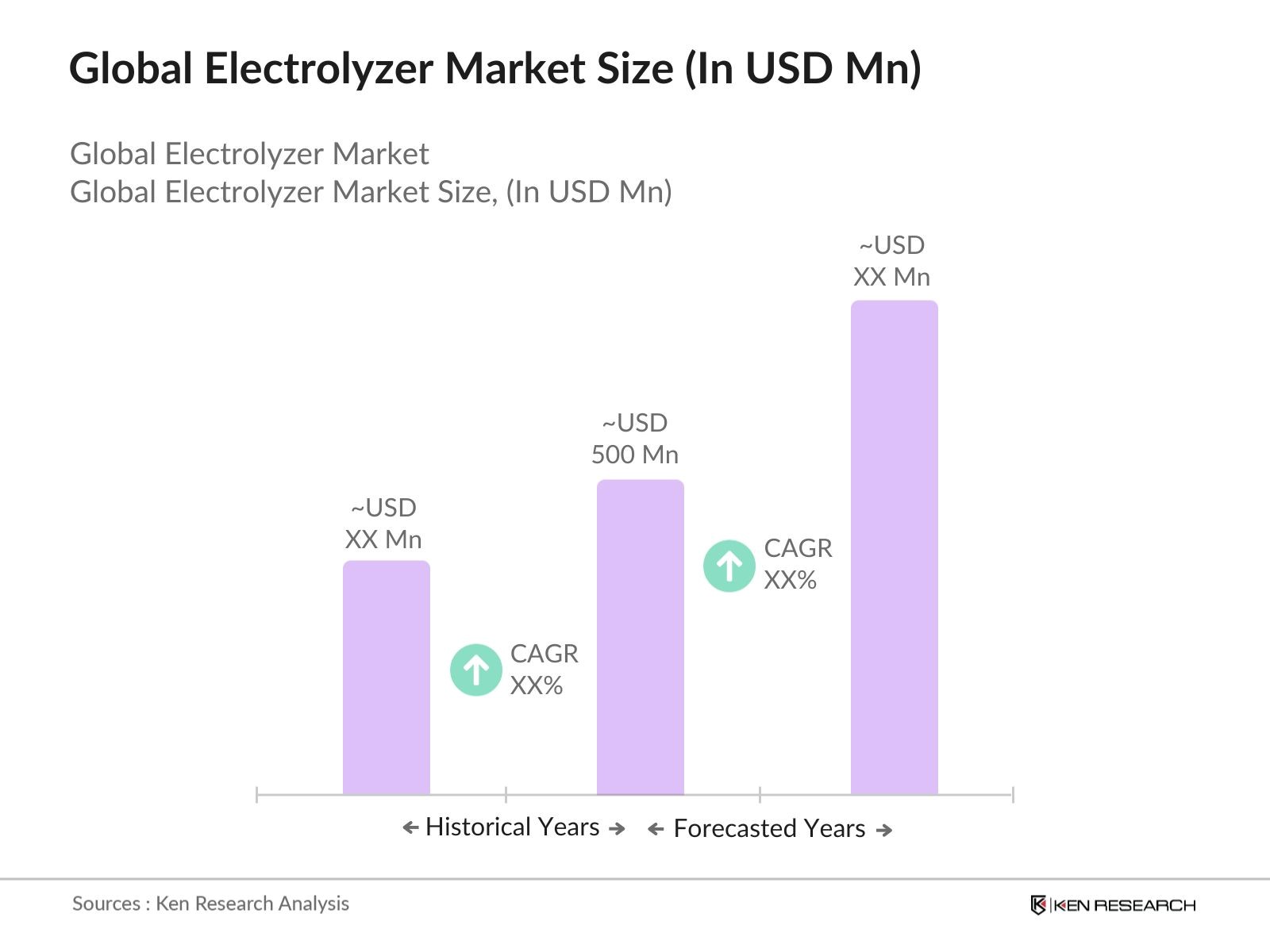
The global electrolyzer market is valued at USD 500 million, driven by the increased demand for green hydrogen and decarbonization across industrial sectors.
Challenges include high initial capital costs, the need for infrastructure development, and fluctuations in renewable energy supply that impact the efficiency of electrolyzers.
Major players include Siemens Energy, Nel Hydrogen, Plug Power Inc., ITM Power, and McPhy Energy. These companies dominate the market due to their established expertise and extensive product portfolios.
The market is driven by global decarbonization efforts, increasing renewable energy capacities, and government support for green hydrogen projects, especially in Europe and North America.

What makes us stand out is that our consultants follows Robust, Refine and Result (RRR) methodology. i.e. Robust for clear definitions, approaches and sanity checking, Refine for differentiating respondents facts and opinions and Result for presenting data with story

We have set a benchmark in the industry by offering our clients with syndicated and customized market research reports featuring coverage of entire market as well as meticulous research and analyst insights.

While we don't replace traditional research, we flip the method upside down. Our dual approach of Top Bottom & Bottom Top ensures quality deliverable by not just verifying company fundamentals but also looking at the sector and macroeconomic factors.

With one step in the future, our research team constantly tries to show you the bigger picture. We help with some of the tough questions you may encounter along the way: How is the industry positioned? Best marketing channel? KPI's of competitors? By aligning every element, we help maximize success.

Our report gives you instant access to the answers and sources that other companies might choose to hide. We elaborate each steps of research methodology we have used and showcase you the sample size to earn your trust.

If you need any support, we are here! We pride ourselves on universe strength, data quality, and quick, friendly, and professional service.