
Global Electrosurgery Market Outlook to 2030
Region:Global
Author(s):Naman Rohilla
Product Code:KROD10095
December 2024
99
About the Report
Global Electrosurgery Market Overview
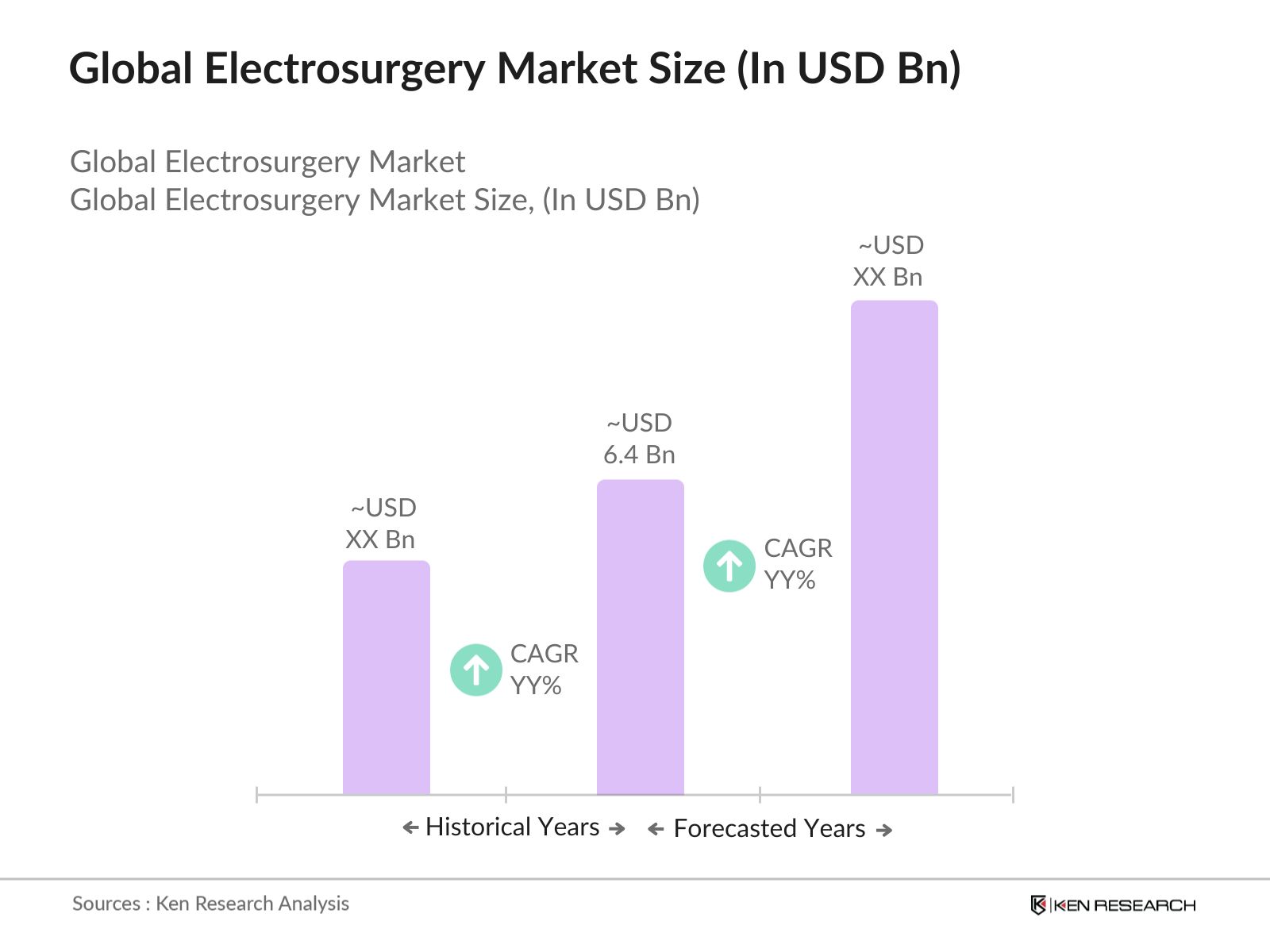
- The global electrosurgery market is valued at USD 6.4 billion, based on a five-year historical analysis. This growth is driven by the increasing prevalence of chronic diseases, advancements in surgical technologies, and a rising demand for minimally invasive procedures. These factors collectively contribute to the expanding adoption of electrosurgical devices across various medical disciplines.
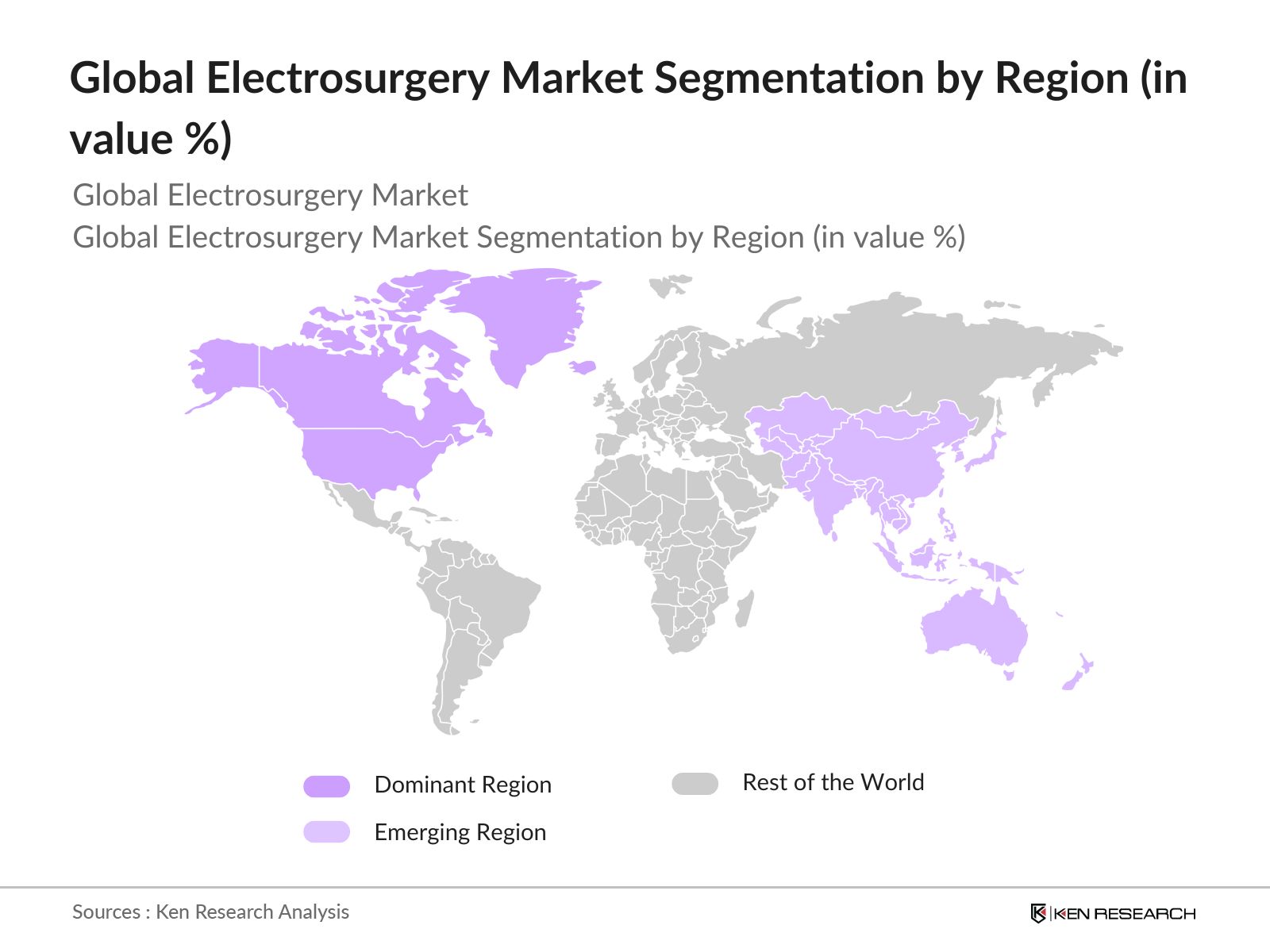
- North America and Europe dominate the electrosurgery market due to their advanced healthcare infrastructures, high adoption rates of innovative medical technologies, and substantial investments in research and development. Additionally, the presence of major medical device manufacturers in these regions further solidifies their leading positions in the global market.
- The FDA enforces strict guidelines to ensure device safety. In 2023, the FDA issued 400 device-related guidelines, reflecting its commitment to safety. These guidelines shape the development and compliance of electrosurgical devices, impacting how manufacturers approach product design. Compliance with these standards is essential for market entry in the US.
Global Electrosurgery Market Segmentation
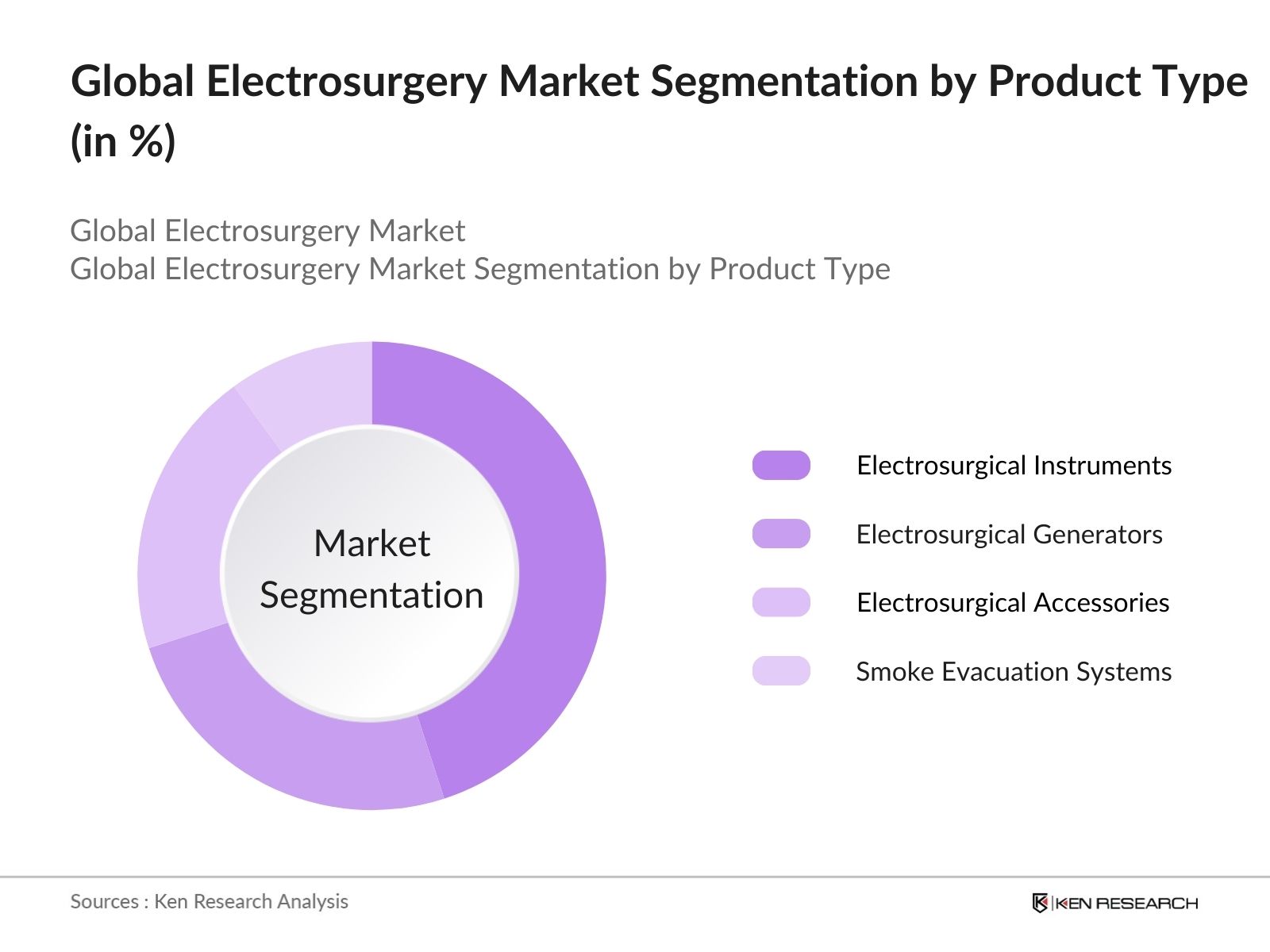
By Product Type: The market is segmented by product type into electrosurgical instruments, electrosurgical generators, electrosurgical accessories, and smoke evacuation systems. Electrosurgical instruments hold a dominant market share due to their essential role in various surgical procedures, offering precision and efficiency. The continuous development of advanced instruments tailored for specific surgeries enhances their adoption among healthcare professionals.
By Surgery Type: The market is categorized by surgery type into general surgery, gynecological surgery, urologic surgery, orthopedic surgery, cardiovascular surgery, cosmetic surgery, neurosurgery, and others. General surgery leads the market share, attributed to the high volume of procedures performed globally. The versatility of electrosurgical devices in addressing a wide range of general surgical needs contributes to their extensive utilization in this segment.
By Region: Regionally, the market is divided into North America, Europe, Asia-Pacific, Latin America, and the Middle East and Africa. North America holds the largest market share, driven by advanced healthcare systems, high adoption of cutting-edge technologies, and significant healthcare expenditure. The region's focus on minimally invasive surgeries and favorable reimbursement policies further bolster its market dominance.
Global Electrosurgery Market Competitive Landscape
The global electrosurgery market is characterized by the presence of several key players who contribute significantly to market dynamics through innovation, strategic partnerships, and extensive distribution networks.
Major Players:
|
Company Name |
Establishment Year |
Headquarters |
Product Portfolio |
Revenue (USD Billion) |
Market Share (%) |
R&D Investment (%) |
Number of Employees |
|
Medtronic Plc |
1949 |
Dublin, Ireland |
|||||
|
Johnson & Johnson |
1886 |
New Brunswick, USA |
|||||
|
Olympus Corporation |
1919 |
Tokyo, Japan |
|||||
|
Conmed Corporation |
1970 |
Utica, USA |
|||||
|
B. Braun Melsungen AG |
1839 |
Melsungen, Germany |
Global Electrosurgery Market Analysis
Market Growth Drivers
- Increasing Prevalence of Chronic Diseases: The global increase in chronic diseases, particularly cardiovascular diseases, cancers, and diabetes, has been significant. In 2023, the World Health Organization reported that over 1.4 billion people are affected by hypertension, leading to a heightened demand for surgical interventions. Electrosurgery, often preferred for precision and speed, is increasingly used in these treatments. In the United States alone, the CDC reported a rise in chronic disease-related surgical interventions by 15% from 2022, reflecting similar trends globally. Electrosurgical devices are vital for managing disease-related complications efficiently, thereby driving growth in the electrosurgery market.
- Rising Demand for Minimally Invasive Procedures: Minimally invasive procedures have shown a steady uptick globally, primarily due to shorter recovery times and reduced hospital stays. According to the OECD, in 2023, nearly 18 million minimally invasive procedures were performed in Europe, a rise of 8% compared to 2022. This shift drives demand for electrosurgical tools, as they allow precise incisions with minimal tissue damage. Countries such as Japan, with an aging population, are adopting minimally invasive electrosurgical procedures more frequently, aligning with global trends of healthcare modernization and efficiency.
- Expanding Geriatric Population: With aging populations worldwide, demand for surgeries involving electrosurgical equipment is on the rise. The United Nations estimates that by 2024, 15% of Japans population will be over 75 years old. This demographic shift increases the likelihood of chronic conditions and related surgical interventions. In China, similar aging trends are prompting healthcare providers to adopt more electrosurgical techniques to meet the growing need. With aging demographics in several countries, the market for electrosurgery is seeing steady demand.
Market Challenges
- Stringent Regulatory Approvals: Strict regulatory pathways remain a challenge in the global electrosurgery market. According to the European Medicines Agency (EMA), device approval times in Europe averaged 13-15 months in 2023, reflecting rigorous requirements that delay market entry. The U.S. FDA reported that the average review period for high-risk devices is over 15 months. These timeframes hinder rapid commercialization of new products, particularly for small and mid-sized companies in the industry.
- High Cost of Advanced Electrosurgical Devices: The cost of incorporating advanced technologies into electrosurgical devices has risen, creating a barrier for many healthcare providers. According to the World Bank, medical equipment expenditures in lower-income countries grew by 7% in 2023, underscoring the challenge of accessing high-cost devices. Additionally, the maintenance and operation of these devices require skilled professionals, adding further financial strain on healthcare facilities, especially in developing countries.
Global Electrosurgery Market Future Outlook
Over the next five years, the global electrosurgery market is expected to experience growth, driven by continuous technological advancements, increasing demand for minimally invasive procedures, and expanding healthcare infrastructure in emerging economies. The integration of robotics and artificial intelligence in electrosurgical devices is anticipated to enhance precision and outcomes, further propelling market expansion.
Market Opportunities
- Emerging Markets in Developing Regions: Developing countries are experiencing an increase in surgical procedures due to improving healthcare infrastructure. According to the IMF, healthcare spending in emerging markets rose by 5% in 2023, reflecting greater investment in medical facilities and equipment. Governments in regions like Southeast Asia are prioritizing healthcare development, creating opportunities for electrosurgical device manufacturers to expand their reach in untapped markets.
- Integration of Robotics in Electrosurgery: Robotics is transforming surgical techniques, including electrosurgery, by enhancing precision. In 2023, Japan reported that 1,800 surgeries used robotic-assisted electrosurgery systems, a 14% increase from 2022. Robotic integration enhances surgical accuracy, appealing to facilities focused on high standards of patient care. The growth in robotics adoption signals an expanding opportunity for companies producing compatible electrosurgical devices.
Scope of the Report
|
Segment |
Sub-Segments |
|
Product Type |
Electrosurgical Instruments (Bipolar, Monopolar) Electrosurgical Generators Electrosurgical Accessories Smoke Evacuation Systems |
|
Surgery Type |
General Surgery Gynecological Surgery Urologic Surgery Orthopedic Surgery Cardiovascular Surgery Cosmetic Surgery Neurosurgery Others |
|
End User |
Hospitals Clinics and Ablation Centers Ambulatory Surgical Centers Research Laboratories Academic Institutes |
|
Technology |
Radiofrequency Electrosurgery Ultrasonic Electrosurgery Argon Plasma Coagulation Others |
|
Region |
North America Europe Asia-Pacific Latin America Middle East and Africa |
Products
Key Target Audience
Medical Device Manufacturers
Healthcare Providers
Surgical Centers
Distributors and Suppliers
Research and Development Institutes
Government and Regulatory Bodies (e.g., FDA, EMA)
Investors and Venture Capitalist Firms
Academic and Training Institutions
Companies
Players Mentioned in the Report
Medtronic Plc
Johnson & Johnson
Olympus Corporation
Conmed Corporation
B. Braun Melsungen AG
Boston Scientific Corporation
Smith & Nephew Plc
Erbe Elektromedizin GmbH
Bovie Medical Corporation
BOWA-electronic GmbH & Co. KG
Table of Contents
1. Global Electrosurgery Market Overview
1.1. Definition and Scope
1.2. Market Taxonomy
1.3. Market Growth Rate
1.4. Market Segmentation Overview
2. Global Electrosurgery Market Size (In USD Billion)
2.1. Historical Market Size
2.2. Year-On-Year Growth Analysis
2.3. Key Market Developments and Milestones
3. Global Electrosurgery Market Analysis
3.1. Growth Drivers
3.1.1. Increasing Prevalence of Chronic Diseases
3.1.2. Rising Demand for Minimally Invasive Procedures
3.1.3. Technological Advancements in Electrosurgical Devices
3.1.4. Expanding Geriatric Population
3.2. Market Challenges
3.2.1. Stringent Regulatory Approvals
3.2.2. High Cost of Advanced Electrosurgical Devices
3.2.3. Risk of Complications Associated with Electrosurgical Procedures
3.3. Opportunities
3.3.1. Emerging Markets in Developing Regions
3.3.2. Integration of Robotics in Electrosurgery
3.3.3. Development of Disposable Electrosurgical Instruments
3.4. Trends
3.4.1. Adoption of Smoke Evacuation Systems
3.4.2. Shift Towards Outpatient Surgical Procedures
3.4.3. Increasing Use of Bipolar Electrosurgery Techniques
3.5. Government Regulations
3.5.1. FDA Guidelines on Electrosurgical Devices
3.5.2. European CE Marking Requirements
3.5.3. ISO Standards for Electrosurgical Equipment
3.5.4. Compliance with RoHS and WEEE Directives
3.6. SWOT Analysis
3.7. Stakeholder Ecosystem
3.8. Porters Five Forces Analysis
3.9. Competitive Landscape
4. Global Electrosurgery Market Segmentation
4.1. By Product Type (In Value %)
4.1.1. Electrosurgical Instruments
4.1.1.1. Bipolar Instruments
4.1.1.2. Monopolar Instruments
4.1.2. Electrosurgical Generators
4.1.3. Electrosurgical Accessories
4.1.3.1. Patient Return Electrodes
4.1.3.2. Cords, Cables, and Adapters
4.1.4. Smoke Evacuation Systems
4.2. By Surgery Type (In Value %)
4.2.1. General Surgery
4.2.2. Gynecological Surgery
4.2.3. Urologic Surgery
4.2.4. Orthopedic Surgery
4.2.5. Cardiovascular Surgery
4.2.6. Cosmetic Surgery
4.2.7. Neurosurgery
4.2.8. Others
4.3. By End User (In Value %)
4.3.1. Hospitals
4.3.2. Clinics and Ablation Centers
4.3.3. Ambulatory Surgical Centers
4.3.4. Research Laboratories
4.3.5. Academic Institutes
4.4. By Technology (In Value %)
4.4.1. Radiofrequency Electrosurgery
4.4.2. Ultrasonic Electrosurgery
4.4.3. Argon Plasma Coagulation
4.4.4. Others
4.5. By Region (In Value %)
4.5.1. North America
4.5.2. Europe
4.5.3. Asia-Pacific
4.5.4. Latin America
4.5.5. Middle East and Africa
5. Global Electrosurgery Market Competitive Analysis
5.1. Detailed Profiles of Major Companies
5.1.1. Medtronic Plc
5.1.2. Johnson & Johnson
5.1.3. Olympus Corporation
5.1.4. Conmed Corporation
5.1.5. B. Braun Melsungen AG
5.1.6. Boston Scientific Corporation
5.1.7. Smith & Nephew Plc
5.1.8. Erbe Elektromedizin GmbH
5.1.9. Bovie Medical Corporation
5.1.10. BOWA-electronic GmbH & Co. KG
5.1.11. KLS Martin Group
5.1.12. Stryker Corporation
5.1.13. Zimmer Biomet Holdings, Inc.
5.1.14. Applied Medical Resources Corporation
5.1.15. Utah Medical Products, Inc.
5.2. Cross Comparison Parameters (Revenue, Market Share, Product Portfolio, Geographic Presence, R&D Investment, Strategic Initiatives, Number of Employees, Year Established)
5.3. Market Share Analysis
5.4. Strategic Initiatives
5.5. Mergers and Acquisitions
5.6. Investment Analysis
5.7. Venture Capital Funding
5.8. Government Grants
5.9. Private Equity Investments
6. Global Electrosurgery Market Regulatory Framework
6.1. Environmental Standards
6.2. Compliance Requirements
6.3. Certification Processes
7. Global Electrosurgery Market Future Size (In USD Billion)
7.1. Future Market Size Projections
7.2. Key Factors Driving Future Market Growth
8. Global Electrosurgery Market Future Segmentation
8.1. By Product Type (In Value %)
8.1.1. Electrosurgical Instruments
8.1.1.1. Bipolar Instruments
8.1.1.2. Monopolar Instruments
8.1.2. Electrosurgical Generators
8.1.3. Electrosurgical Accessories
8.1.3.1. Patient Return Electrodes
8.1.3.2. Cords, Cables, and Adapters
8.1.4. Smoke Evacuation Systems
8.2. By Surgery Type (In Value %)
8.2.1. General Surgery
8.2.2. Gynecological Surgery
8.2.3. Urologic Surgery
8.2.4. Orthopedic Surgery
8.2.5. Cardiovascular Surgery
8.2.6. Cosmetic Surgery
8.2.7. Neurosurgery
8.2.8. Others
8.3. By End User (In Value %)
8.3.1. Hospitals
8.3.2. Clinics and Ablation Centers
8.3.3. Ambulatory Surgical Centers
8.3.4. Research Laboratories
8.3.5. Academic Institutes
8.4. By Technology (In Value %)
8.4.1. Radiofrequency Electrosurgery
8.4.2. Ultrasonic Electrosurgery
8.4.3. Argon Plasma Coagulation
8.4.4. Others
8.5. By Region (In Value %)
8.5.1. North America
8.5.2. Europe
8.5.3. Asia-Pacific
8.5.4. Latin America
8.5.5. Middle East and Africa
9. Global Electrosurgery Market Analysts Recommendations
9.1. TAM/SAM/SOM Analysis
9.2. Customer Cohort Analysis
9.3. Marketing Initiatives
9.4. White Space Opportunity Analysis
Disclaimer Contact UsResearch Methodology
Step 1: Identification of Key Variables
The initial phase involves constructing an ecosystem map encompassing all major stakeholders within the global electrosurgery market. This step is underpinned by extensive desk research, utilizing a combination of secondary and proprietary databases to gather comprehensive industry-level information. The primary objective is to identify and define the critical variables that influence market dynamics.
Step 2: Market Analysis and Construction
In this phase, we compile and analyze historical data pertaining to the global electrosurgery market. This includes assessing market penetration, the ratio of marketplaces to service providers, and the resultant revenue generation. Furthermore, an evaluation of service quality statistics is conducted to ensure the reliability and accuracy of the revenue estimates.
Step 3: Hypothesis Validation and Expert Consultation
Market hypotheses are developed and subsequently validated through interviews with industry experts representing a diverse array of companies. These consultations provide valuable operational and financial insights directly from industry practitioners, which are instrumental in refining and corroborating the market data.
Step 4: Research Synthesis and Final Output
The final phase involves direct engagement with multiple electrosurgery device manufacturers to acquire detailed insights into product segments, sales performance, and consumer preferences. This interaction serves to verify and complement the statistics derived from a bottom-up approach, ensuring a comprehensive, accurate, and validated analysis of the global electrosurgery market.
Frequently Asked Questions
1. How big is the global electrosurgery market?
The global electrosurgery market is valued at USD 6.4 billion, driven by technological advancements and the increasing demand for minimally invasive surgical solutions.
2. What are the primary growth drivers in the global electrosurgery market?
Growth is propelled by a rising prevalence of chronic diseases, technological innovations in surgical tools, and increased adoption of minimally invasive procedures across healthcare facilities worldwide.
3. Who are the major players in the global electrosurgery market?
Major players include Medtronic Plc, Johnson & Johnson, Olympus Corporation, Conmed Corporation, and B. Braun Melsungen AG, among others, with strong market presence due to innovation and extensive distribution networks.
4. What challenges does the global electrosurgery market face?
Key challenges include stringent regulatory requirements, high costs associated with advanced devices, and the risk of complications related to electrosurgical procedures.
Why Buy From Us?

What makes us stand out is that our consultants follows Robust, Refine and Result (RRR) methodology. i.e. Robust for clear definitions, approaches and sanity checking, Refine for differentiating respondents facts and opinions and Result for presenting data with story

We have set a benchmark in the industry by offering our clients with syndicated and customized market research reports featuring coverage of entire market as well as meticulous research and analyst insights.

While we don't replace traditional research, we flip the method upside down. Our dual approach of Top Bottom & Bottom Top ensures quality deliverable by not just verifying company fundamentals but also looking at the sector and macroeconomic factors.

With one step in the future, our research team constantly tries to show you the bigger picture. We help with some of the tough questions you may encounter along the way: How is the industry positioned? Best marketing channel? KPI's of competitors? By aligning every element, we help maximize success.

Our report gives you instant access to the answers and sources that other companies might choose to hide. We elaborate each steps of research methodology we have used and showcase you the sample size to earn your trust.

If you need any support, we are here! We pride ourselves on universe strength, data quality, and quick, friendly, and professional service.