















Global Embedded Analytics Market Outlook to 2030
Region:Global
Author(s):Naman Rohilla
Product Code:KROD6886
December 2024
97
About the Report
Global Embedded Analytics Market Overview
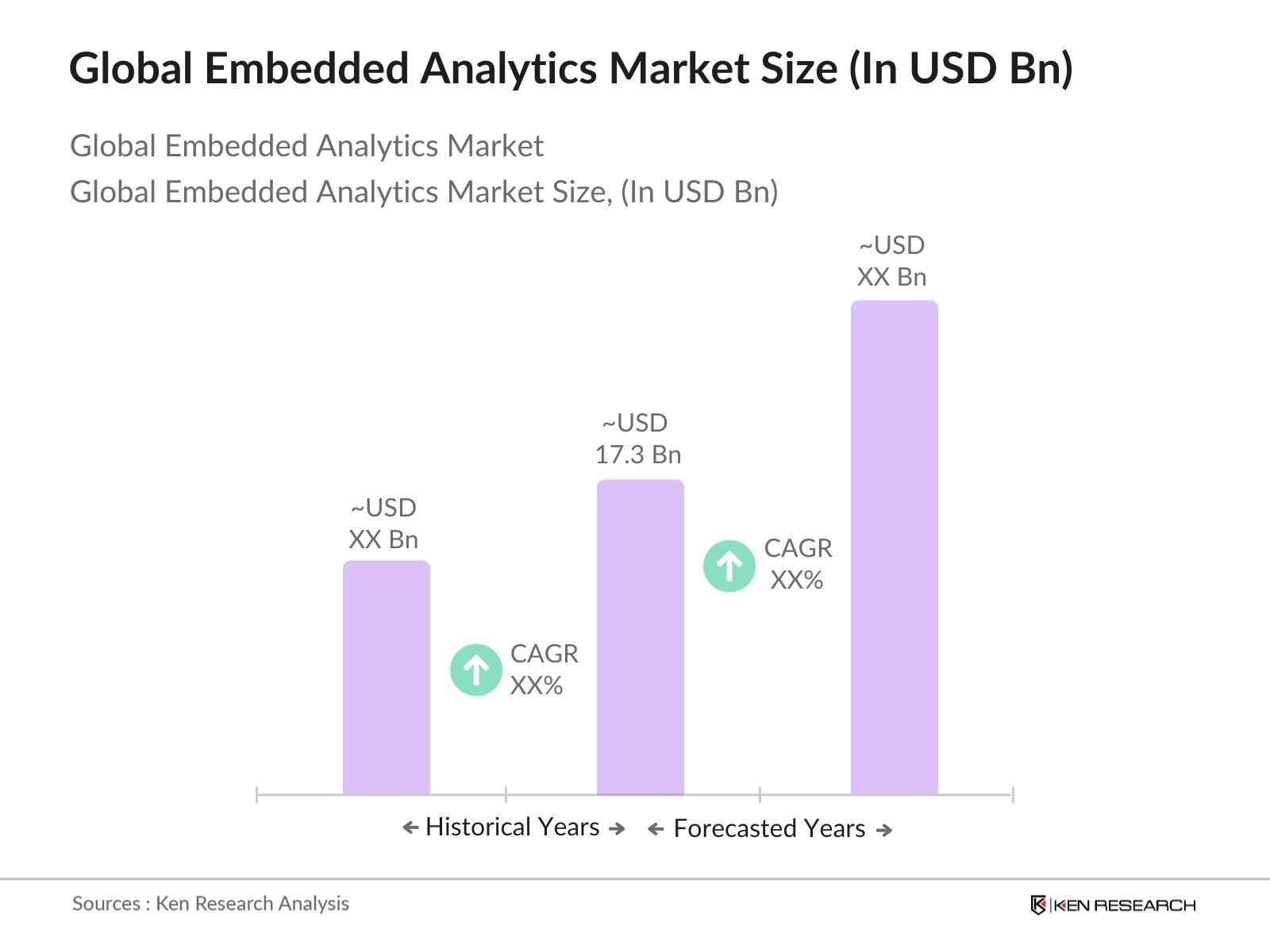
- The Global Embedded Analytics Market is valued at USD 17.3 billion, based on a five-year historical analysis. The growth of this market is driven by the increasing need for real-time data analysis, the rise in demand for business intelligence (BI) tools integrated into existing applications, and the shift towards data-driven decision-making. Major industries such as BFSI, IT & telecom, and healthcare are embedding analytics into their applications to improve efficiency and enhance customer experience, further propelling the market's expansion.
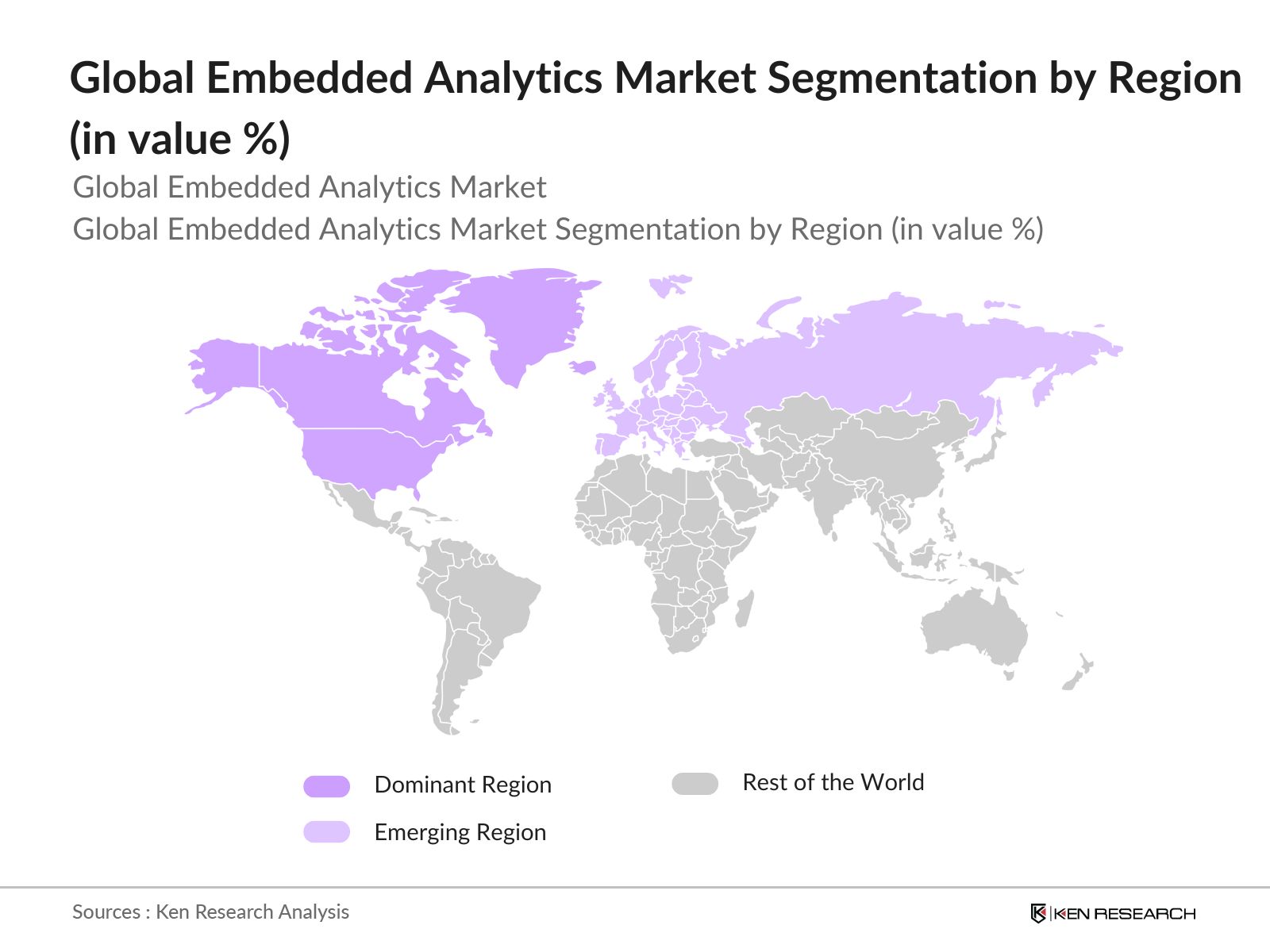
- Countries such as the United States and China dominate the market due to their advanced technological infrastructure, high adoption rates of BI tools, and substantial investments in data-driven innovation. The United States, in particular, leads the market because of its robust IT infrastructure, vast business ecosystem, and a strong presence of leading analytics software providers. In China, rapid digital transformation and government initiatives supporting the adoption of AI and machine learning are key drivers behind its dominance in the embedded analytics market.
- The increasing adoption of mobile platforms has led to the rise of embedded analytics solutions designed specifically for mobile applications. Data from the International Telecommunication Union (ITU) shows that over 70% of global internet users access services via mobile devices. As such, businesses across industries are integrating embedded analytics into mobile platforms to allow for real-time data analysis and decision-making. This trend is especially in the retail and e-commerce sectors, where mobile commerce continues to grow rapidly, particularly in Asia-Pacific and Latin America.
Global Embedded Analytics Market Segmentation
- By Component: The Global Embedded Analytics market is segmented by component into software and services. Software holds the dominant market share in this segmentation due to the extensive use of analytics tools embedded within enterprise applications, providing actionable insights directly within workflows. Software solutions like dashboards, reporting tools, and BI platforms are favoured for their ease of integration and customization to meet industry-specific needs. Services, while growing, focus on the implementation, consulting, and maintenance of these tools.
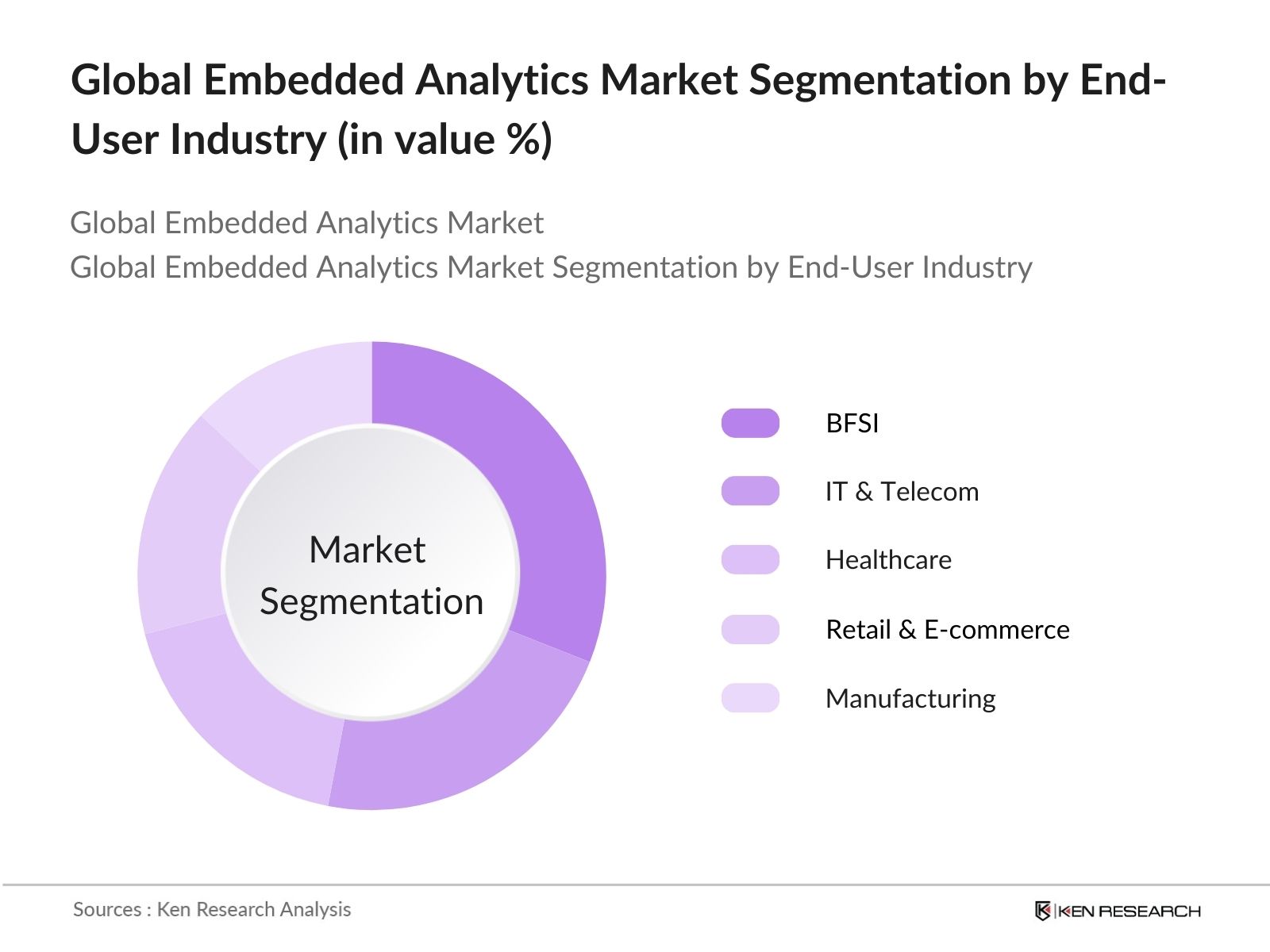
- By End-User Industry: The market is further segmented by end-user industry into BFSI, IT & telecom, healthcare, retail & e-commerce, and manufacturing. BFSI holds the largest market share under this segment, driven by the need for real-time financial data analytics, fraud detection, and regulatory compliance management. The sectors dependence on large volumes of sensitive data makes embedded analytics critical for enhancing customer experiences and ensuring data security.
- By Region: Regionally, the market is segmented into North America, Europe, Asia-Pacific, Latin America, and the Middle East & Africa. North America dominates the global embedded analytics market, primarily due to the presence of key market players, high adoption rates of advanced technologies, and investments in AI and machine learning applications. The region's well-established digital infrastructure further supports its leading position.
Global Embedded Analytics Market Competitive Landscape
The Global Embedded Analytics market is dominated by several key players, each contributing to the market's technological advancements and innovations. Major players leverage their comprehensive product portfolios and deep industry experience to maintain market leadership. Companies are focusing on AI-powered analytics, cloud-based solutions, and strategic partnerships to expand their market reach.
|
Company |
Establishment Year |
Headquarters |
Analytics Portfolio |
Cloud Readiness |
AI Integration |
Customizability |
Revenue (USD Bn) |
Employee Strength |
Strategic Partnerships |
|
Microsoft Corporation |
1975 |
Redmond, USA |
- |
- |
- |
- |
- |
- |
- |
|
IBM Corporation |
1911 |
Armonk, USA |
- |
- |
- |
- |
- |
- |
- |
|
SAP SE |
1972 |
Walldorf, Germany |
- |
- |
- |
- |
- |
- |
- |
|
Oracle Corporation |
1977 |
Austin, USA |
- |
- |
- |
- |
- |
- |
- |
|
Tableau Software (Salesforce) |
2003 |
Seattle, USA |
- |
- |
- |
- |
- |
- |
- |
Global Embedded Analytics Market Analysis
Global Embedded Analytics Market Growth Drivers
- Increased Adoption of Business Intelligence Tools: Business intelligence (BI) tools are increasingly being adopted across global enterprises to enhance operational efficiency. According to a 2023 World Bank report, businesses in high-income countries like the United States and Germany are utilizing BI tools to streamline decision-making processes. Data reveals that 70% of U.S.-based firms with annual revenues exceeding USD 500 million rely on embedded analytics to optimize performance and productivity. This trend is primarily driven by the rapid digitization of business processes and the need for data-driven insights. The widespread availability of cloud-based BI platforms has further accelerated this adoption.
- Integration with Enterprise Applications: Embedded analytics is increasingly integrated with enterprise resource planning (ERP) and customer relationship management (CRM) systems, enhancing cross-functional decision-making. As of 2024, over 65% of medium to large enterprises have integrated analytics into their core applications to improve operational transparency, according to the International Monetary Fund. In particular, companies in developed economies such as Japan, France, and Australia have accelerated this trend, embedding analytics into supply chain and financial operations to enhance real-time insights. This integration supports faster, more informed decision-making, helping businesses maintain a competitive edge.
- Rising Demand for Data-Driven Decision Making: The global economy's increasing reliance on data-driven strategies has seen widespread adoption of embedded analytics in decision-making processes. Data from the United Nations Economic Commission shows that 80% of large enterprises in countries like China, the U.K., and the U.S. have embedded analytics capabilities integrated into their core functions. This has led to better decision-making and more accurate forecasting, driving productivity improvements and financial growth. Real-time data insights are now crucial for improving operational efficiency, particularly in industries like retail, manufacturing, and financial services.
Global Embedded Analytics Market Challenges
- Data Security and Privacy Concerns: Data security and privacy issues continue to challenge the adoption of embedded analytics. The 2023 Global Cybersecurity Index reveals that over 40% of organizations in major economies such as Germany, Japan, and the U.S. have reported data breaches linked to embedded systems. Strict regulatory frameworks, including the European General Data Protection Regulation (GDPR) and similar laws in the U.S., have led to increased scrutiny on how businesses manage data through embedded analytics. In response, organizations are focusing on improving encryption standards and implementing more robust cybersecurity measures.
- Complex Integration Processes: The complexity involved in integrating embedded analytics into existing enterprise systems is a major challenge. According to the OECDs 2022 report on enterprise systems integration, over 55% of businesses in advanced economies face difficulties incorporating embedded analytics into legacy systems due to technical incompatibilities and high integration costs. These integration issues are particularly prevalent in industries with outdated IT infrastructures, such as manufacturing and government sectors, slowing down the adoption rate of analytics tools.
Global Embedded Analytics Market Future Outlook
Over the next five years, the Global Embedded Analytics market is expected to experience substantial growth, driven by the ongoing digital transformation across industries, the rising demand for actionable insights within enterprise applications, and continuous advancements in AI and machine learning technologies. Increasing investments in cloud-based analytics solutions and the growing importance of real-time data processing are projected to further boost market growth.
Global Embedded Analytics Market Opportunities
- Integration with AI and Machine Learning: Embedded analytics combined with artificial intelligence (AI) and machine learning (ML) is transforming how businesses operate. According to the World Bank, by 2024, over 50% of enterprises in developed regions such as North America and Europe have integrated AI-based embedded analytics into their operations. AI and ML integration allows organizations to automate data analysis, improve accuracy, and predict future trends more effectively. As AI becomes more accessible and embedded analytics systems become more sophisticated, this trend presents substantial growth opportunities for businesses globally.
- Growth of Self-Service Analytics: Self-service analytics tools are empowering non-technical users to access and analyze data without relying on IT departments. In 2023, a survey by the World Economic Forum found that more than 60% of medium-sized enterprises in developed economies such as Australia, Canada, and Germany adopted self-service analytics tools. This trend is driven by the increasing need for real-time decision-making and reducing the dependency on data scientists. Organizations are focusing on democratizing data access, which enhances productivity and drives innovation.
Scope of the Report
|
Component |
Software Services |
|
Deployment Model |
On-Premises Cloud |
|
End-User Industry |
BFSI IT & Telecom Healthcare Retail & E-commerce Manufacturing |
|
Analytics Type |
Descriptive Analytics Diagnostic Analytics Predictive Analytics Prescriptive Analytics |
|
Region |
North America Europe Asia-Pacific Latin America Middle East & Africa |
Products
Key Target Audience
BFSI Companies
IT & Telecom Corporations
Healthcare Providers
Retail & E-commerce Firms
Manufacturing Industries
Banks and Financial Institutions
Government and Regulatory Bodies (National Data Governance Authority, US Federal Trade Commission)
Investor and Venture Capitalist Firms
Data Analytics Service Providers
Companies
Players Mentioned in the Report
Microsoft Corporation
IBM Corporation
SAP SE
Oracle Corporation
Tableau Software (Salesforce)
Qlik Technologies Inc.
Sisense Inc.
TIBCO Software Inc.
SAS Institute Inc.
MicroStrategy Incorporated
Table of Contents
1. Global Embedded Analytics Market Overview
1.1. Definition and Scope
1.2. Market Taxonomy
1.3. Market Growth Rate
1.4. Market Segmentation Overview
2. Global Embedded Analytics Market Size (In USD Bn)
2.1. Historical Market Size
2.2. Year-On-Year Growth Analysis
2.3. Key Market Developments and Milestones
3. Global Embedded Analytics Market Analysis
3.1. Growth Drivers
3.1.1. Increased Adoption of Business Intelligence Tools
3.1.2. Integration with Enterprise Applications
3.1.3. Rising Demand for Data-Driven Decision Making
3.1.4. Cloud and SaaS-based Embedded Analytics Solutions
3.2. Market Challenges
3.2.1. Data Security and Privacy Concerns
3.2.2. Complex Integration Processes
3.2.3. High Implementation Costs
3.2.4. Lack of Skilled Workforce for Analytics Tools
3.3. Opportunities
3.3.1. Integration with AI and Machine Learning
3.3.2. Growth of Self-Service Analytics
3.3.3. Expansion into Small and Medium Enterprises
3.3.4. Customization for Industry-Specific Solutions
3.4. Trends
3.4.1. Rise of Predictive and Prescriptive Analytics
3.4.2. Growing Use of Embedded Analytics in Mobile Platforms
3.4.3. Increased Focus on Real-Time Data Processing
3.5. Regulatory Landscape
3.5.1. Data Protection Regulations
3.5.2. Compliance Requirements for Analytics Platforms
3.5.3. Regional Data Storage Guidelines
3.6. SWOT Analysis
3.7. Stakeholder Ecosystem
3.8. Porters Five Forces Analysis
3.9. Competition Ecosystem
4. Global Embedded Analytics Market Segmentation
4.1. By Component (In Value %)
4.1.1. Software
4.1.2. Services
4.2. By Deployment Model (In Value %)
4.2.1. On-Premises
4.2.2. Cloud
4.3. By End-User Industry (In Value %)
4.3.1. BFSI
4.3.2. IT & Telecom
4.3.3. Healthcare
4.3.4. Retail & E-commerce
4.3.5. Manufacturing
4.4. By Analytics Type (In Value %)
4.4.1. Descriptive Analytics
4.4.2. Diagnostic Analytics
4.4.3. Predictive Analytics
4.4.4. Prescriptive Analytics
4.5. By Region (In Value %)
4.5.1. North America
4.5.2. Europe
4.5.3. Asia-Pacific
4.5.4. Latin America
4.5.5. Middle East & Africa
5. Global Embedded Analytics Market Competitive Analysis
5.1 Detailed Profiles of Major Companies
5.1.1. Microsoft Corporation
5.1.2. IBM Corporation
5.1.3. SAP SE
5.1.4. Oracle Corporation
5.1.5. MicroStrategy Incorporated
5.1.6. Tableau Software (Salesforce)
5.1.7. Qlik Technologies Inc.
5.1.8. Sisense Inc.
5.1.9. TIBCO Software Inc.
5.1.10. SAS Institute Inc.
5.1.11. Birst (Infor)
5.1.12. Logi Analytics
5.1.13. Information Builders (ibi)
5.1.14. Yellowfin BI
5.1.15. GoodData Corporation
5.2 Cross Comparison Parameters (Analytics Tools Portfolio, Customization Capability, Cloud Readiness, Market Presence, No. of Employees, Revenue, Customer Support Services, Strategic Partnerships)
5.3. Market Share Analysis
5.4. Strategic Initiatives
5.5. Mergers And Acquisitions
5.6. Investment Analysis
5.7. Venture Capital Funding
5.8. Government Grants
5.9. Private Equity Investments
6. Global Embedded Analytics Market Regulatory Framework
6.1. Data Protection Standards
6.2. Compliance Requirements for Embedded Systems
6.3. Certification Processes
7. Global Embedded Analytics Future Market Size (In USD Bn)
7.1. Future Market Size Projections
7.2. Key Factors Driving Future Market Growth
8. Global Embedded Analytics Future Market Segmentation
8.1. By Component (In Value %)
8.2. By Deployment Model (In Value %)
8.3. By End-User Industry (In Value %)
8.4. By Analytics Type (In Value %)
8.5. By Region (In Value %)
9. Global Embedded Analytics Market Analysts Recommendations
9.1. TAM/SAM/SOM Analysis
9.2. Customer Cohort Analysis
9.3. Marketing Initiatives
9.4. White Space Opportunity Analysis
Research Methodology
Step 1: Identification of Key Variables
In the initial phase, an ecosystem map is created to identify all major stakeholders within the Global Embedded Analytics Market. This step is based on extensive desk research and the analysis of secondary and proprietary databases. The goal is to define the critical variables influencing market dynamics.
Step 2: Market Analysis and Construction
This phase involves compiling and analyzing historical market data, including the penetration of embedded analytics solutions and their integration with enterprise applications. Revenue data from different industry verticals is assessed, and market trends are analyzed to understand service quality and customer preferences.
Step 3: Hypothesis Validation and Expert Consultation
The next step involves developing market hypotheses, which are validated through telephone interviews with industry experts. These experts provide operational and financial insights, refining the initial data collection and ensuring accuracy.
Step 4: Research Synthesis and Final Output
The final phase includes engaging with major companies to collect detailed insights on product segments, user preferences, and market trends. This stage helps to verify the statistical models, ensuring a comprehensive and reliable market analysis.
Frequently Asked Questions
01. How big is the Global Embedded Analytics Market?
The Global Embedded Analytics Market is valued at USD 17.3 billion, driven by the increasing adoption of business intelligence tools and data-driven decision-making processes across industries.
02. What are the challenges in the Global Embedded Analytics Market?
Challenges in the Global Embedded Analytics Market include data security concerns, the complexity of integrating analytics into existing systems, and high implementation costs, particularly for small and medium enterprises.
03. Who are the major players in the Global Embedded Analytics Market?
Key players in the Global Embedded Analytics Market include Microsoft Corporation, IBM Corporation, SAP SE, Oracle Corporation, and Tableau Software (Salesforce), among others. These companies dominate due to their comprehensive portfolios, strong partnerships, and continuous innovation.
04. What are the growth drivers of the Global Embedded Analytics Market?
The Global Embedded Analytics Market is driven by the rising demand for real-time data analysis, advancements in AI and machine learning, and the need for better decision-making tools integrated directly into business workflows.
Why Buy From Us?

What makes us stand out is that our consultants follows Robust, Refine and Result (RRR) methodology. i.e. Robust for clear definitions, approaches and sanity checking, Refine for differentiating respondents facts and opinions and Result for presenting data with story

We have set a benchmark in the industry by offering our clients with syndicated and customized market research reports featuring coverage of entire market as well as meticulous research and analyst insights.

While we don't replace traditional research, we flip the method upside down. Our dual approach of Top Bottom & Bottom Top ensures quality deliverable by not just verifying company fundamentals but also looking at the sector and macroeconomic factors.

With one step in the future, our research team constantly tries to show you the bigger picture. We help with some of the tough questions you may encounter along the way: How is the industry positioned? Best marketing channel? KPI's of competitors? By aligning every element, we help maximize success.

Our report gives you instant access to the answers and sources that other companies might choose to hide. We elaborate each steps of research methodology we have used and showcase you the sample size to earn your trust.

If you need any support, we are here! We pride ourselves on universe strength, data quality, and quick, friendly, and professional service.