
Global Ethylene Carbonate Market Outlook to 2030
Region:Global
Author(s):Vijay Kumar
Product Code:KROD3165
December 2024
96
About the Report
Global Ethylene Carbonate Market Overview
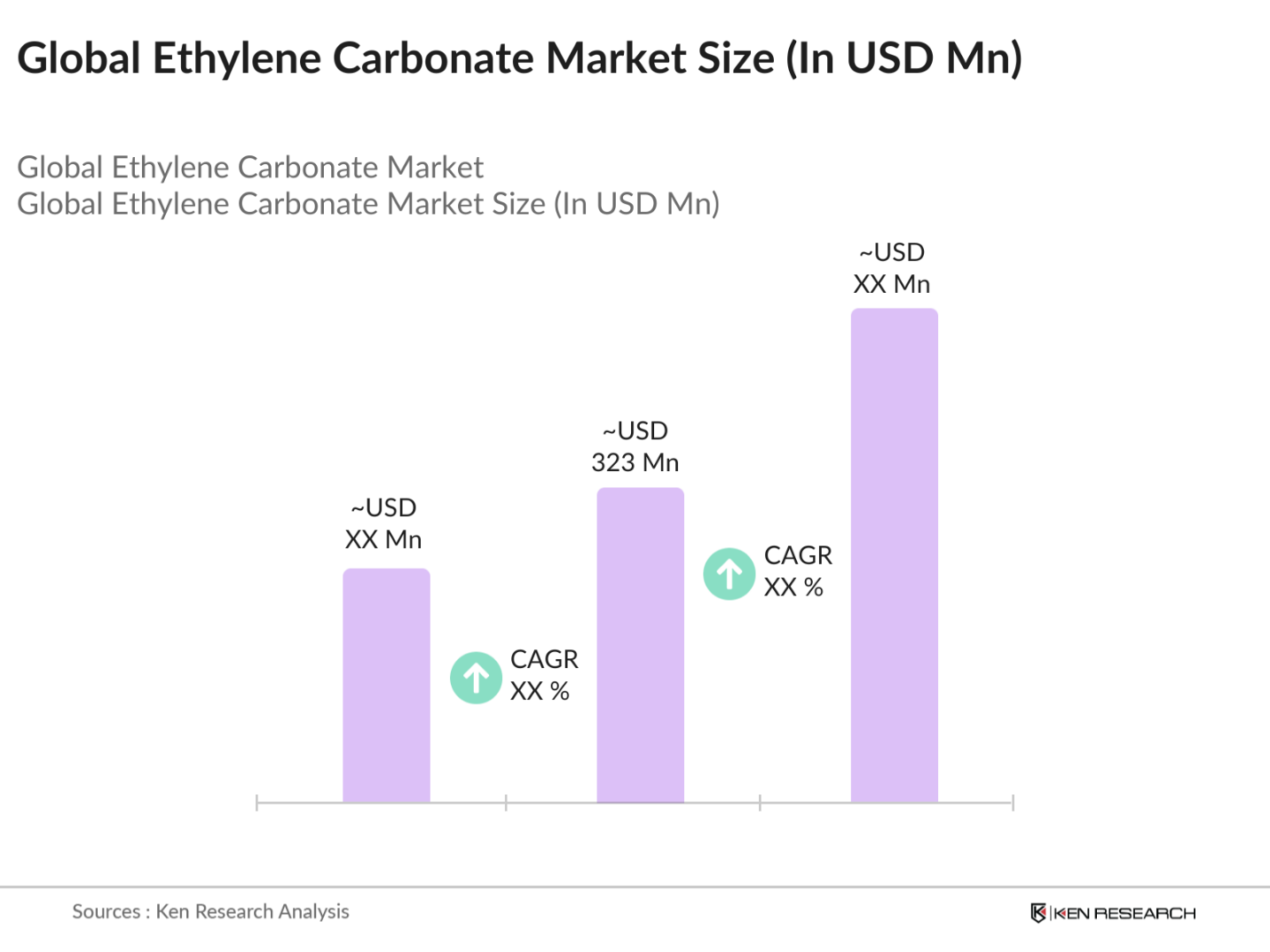
- The Global Ethylene Carbonate Market is valued at USD 323 million, driven by the increasing demand for lithium-ion batteries, particularly in electric vehicles, and its widespread use as a solvent in industrial applications. The automotive sector has been a key driver, with the rise of EVs leading to greater demand for high-performance batteries. Additionally, its applications in the oil & gas industry for lubricants and the production of cleaning agents have contributed to steady market growth.
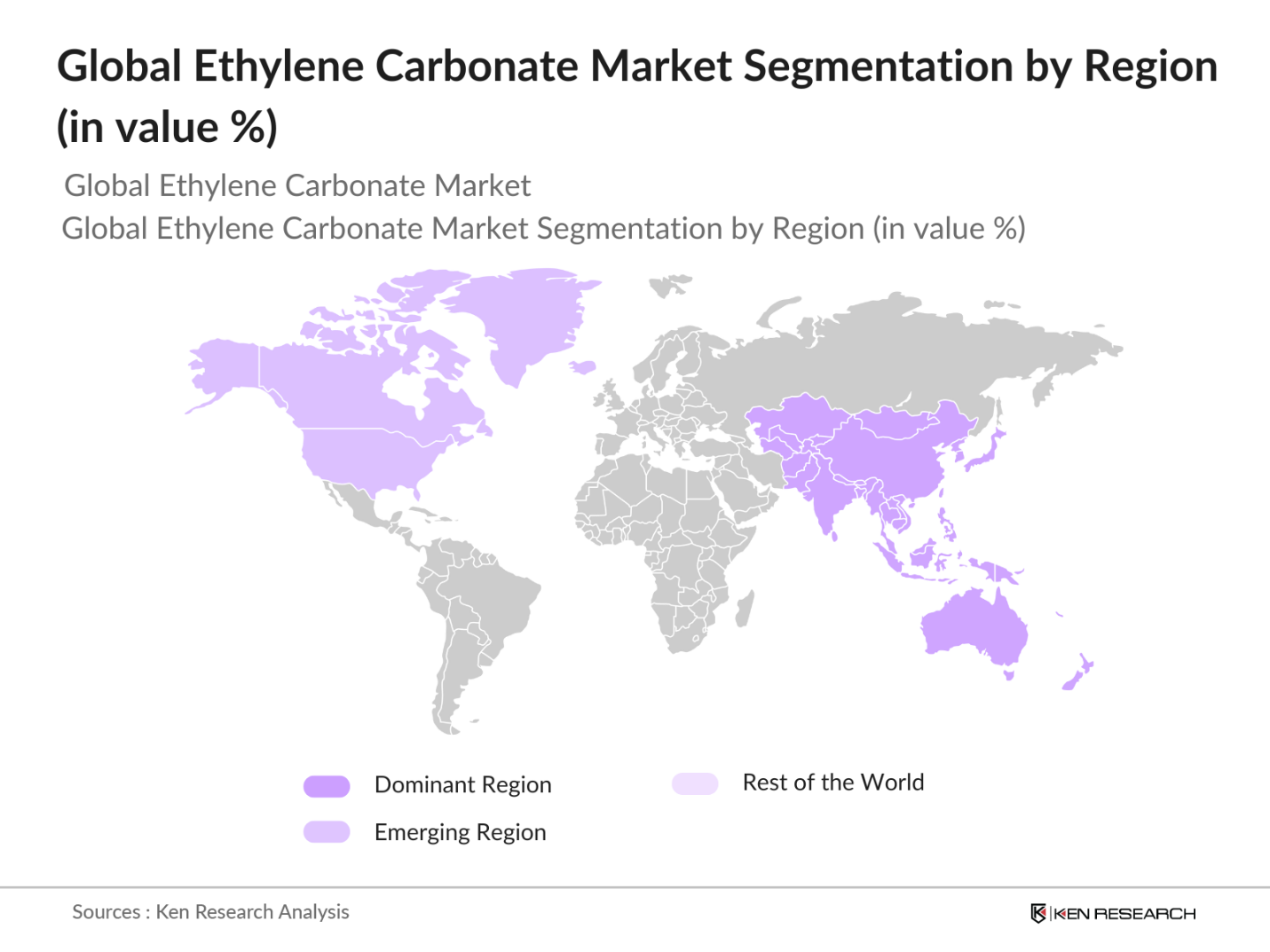
- The Asia Pacific (APAC) region dominates the global ethylene carbonate market, primarily driven by the extensive production and consumption of lithium-ion batteries in countries like China, Japan, and South Korea. APAC's leadership is attributed to the rapid industrialization, the booming electric vehicle (EV) market, and government policies encouraging green energy initiatives. China, as the largest producer of lithium-ion batteries, plays a pivotal role, while Japan and South Korea are recognized for their advanced battery manufacturing technologies.
- New regulations concerning battery recycling are driving demand for sustainable materials in battery production, including ethylene carbonate. In 2023, the European Union enacted the Battery Directive, mandating that 70% of all lithium-ion batteries be recycled by 2027. This push for recycling is expected to increase the demand for high-quality ethylene carbonate, which can be efficiently recovered during the recycling process, thus promoting a circular economy within the battery industry.
Global Ethylene Carbonate Market Segmentation
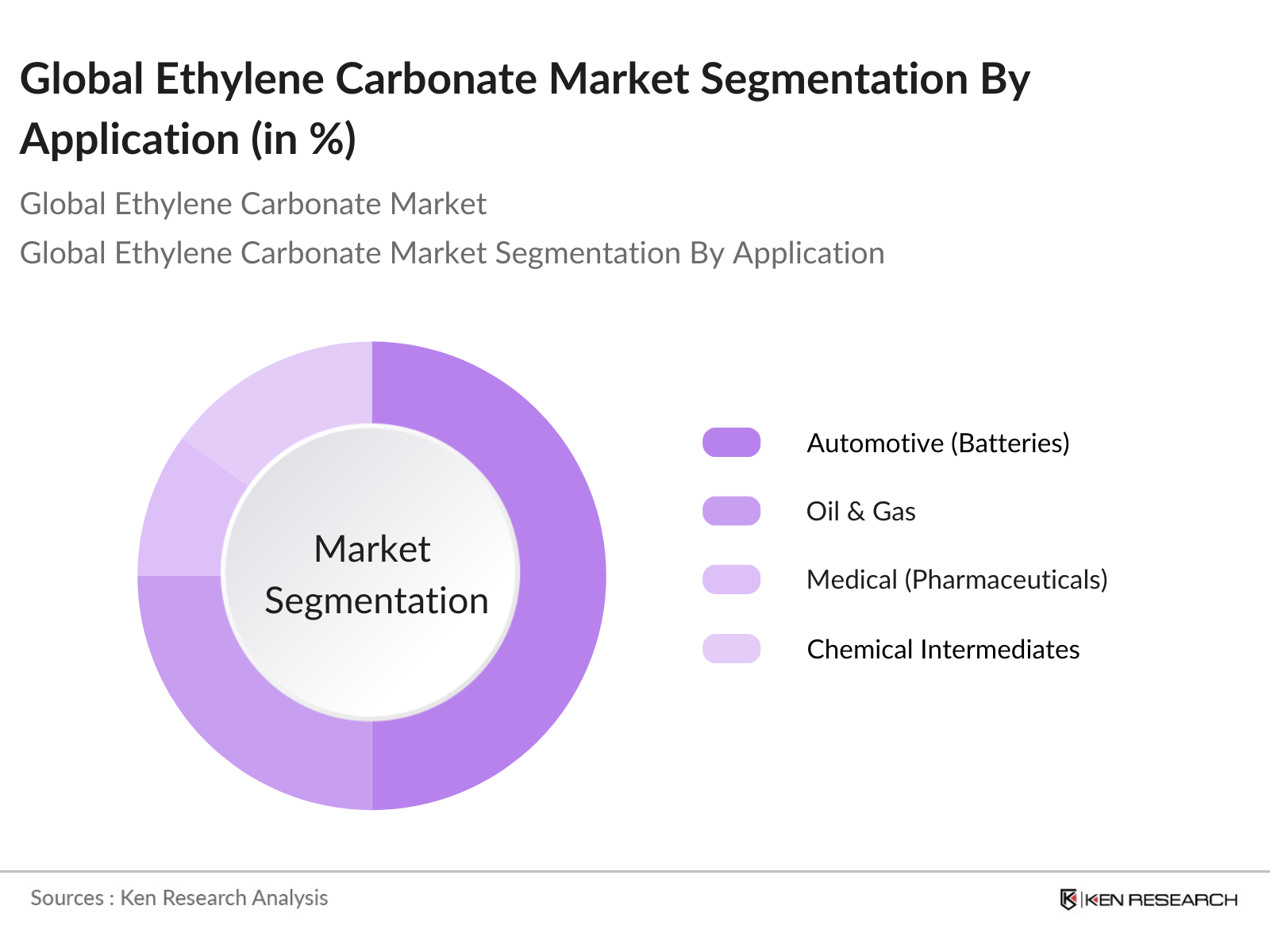
By Application: The Global Ethylene Carbonate Market is segmented by application into automotive (lithium-ion batteries), oil & gas (lubricants and cleaning agents), medical (pharmaceuticals), chemical intermediates, and textile industries. Recently, lithium-ion batteries have dominated the market share under the application segment due to their essential role in electric vehicles and energy storage systems.
By Product Type: The Global Ethylene Carbonate Market is segmented by product type into liquid ethylene carbonate and solid ethylene carbonate. Among these, liquid ethylene carbonate holds a dominant market share. Its widespread application in lithium-ion batteries, where it functions as an electrolyte, is a key reason for its high demand.
By Region: The Global Ethylene Carbonate Market is segmented by region into North America, Europe, Asia Pacific, Latin America, and the Middle East & Africa. Asia Pacific currently dominates the market due to its robust industrial base, especially in China, South Korea, and Japan, which are global leaders in the production of lithium-ion batteries. Additionally, favorable government initiatives aimed at promoting electric vehicles and energy storage solutions significantly contribute to the markets growth in this region.
Global Ethylene Carbonate Market Competitive Landscape
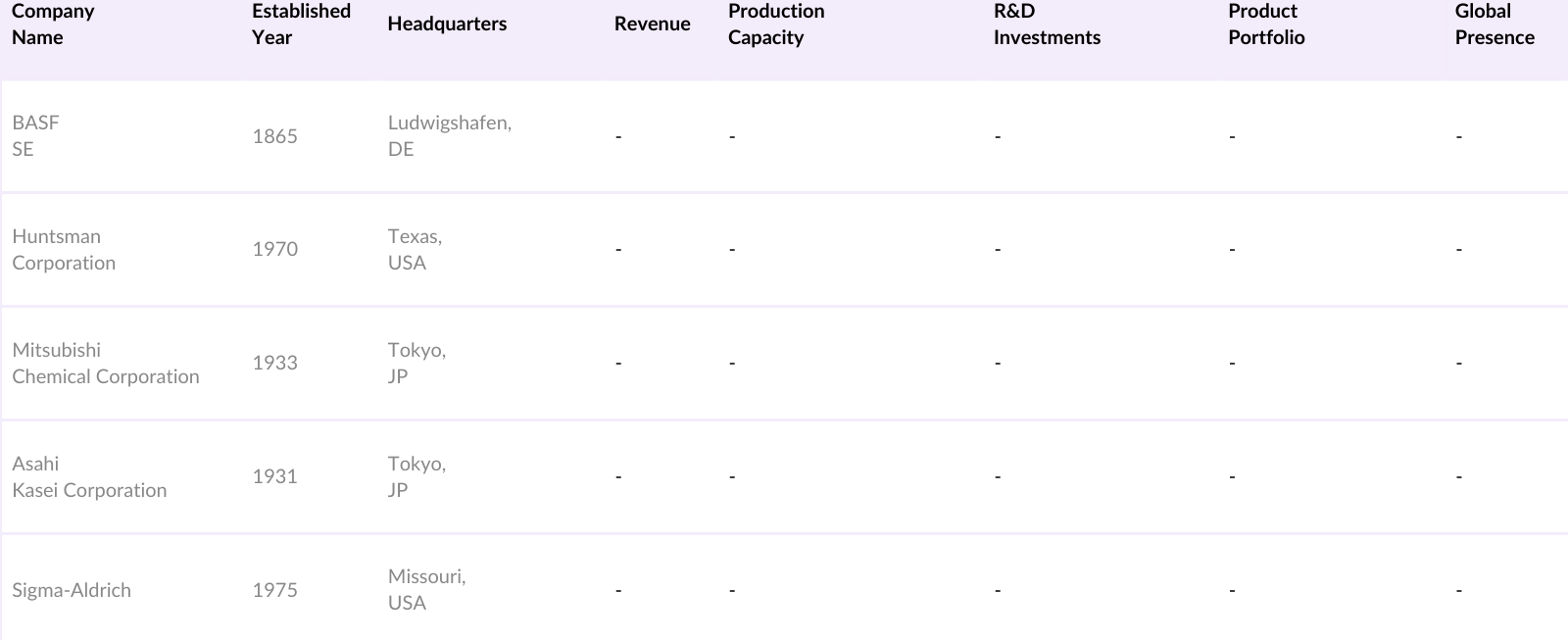
The Global Ethylene Carbonate Market is characterized by the presence of a few key players who have a strong influence on the market due to their robust production capacities, significant research & development investments, and extensive distribution networks. Companies like BASF SE, Huntsman Corporation, and Mitsubishi Chemical Corporation dominate the market due to their diversified portfolios and long-standing relationships with key industries like automotive and chemicals.
Global Ethylene Carbonate Market Analysis
Growth Drivers
- Growth in Electric Vehicle Industry: The global electric vehicle (EV) market is significantly driving demand for ethylene carbonate, an essential component in lithium-ion battery electrolytes. As of 2023, over 14 million electric cars were sold globally, up from 10 million in 2022, according to the International Energy Agency (IEA). The surge in EV demand is increasing the production of lithium-ion batteries, for which ethylene carbonate plays a crucial role in enhancing battery performance and longevity.
- Rising Energy Storage Needs: The global push towards renewable energy sources has increased the need for advanced energy storage solutions, predominantly lithium-ion batteries. Ethylene carbonate, vital in producing efficient battery electrolytes, supports the stability and longevity of these energy storage systems. According to the World Bank, global renewable energy capacity is projected to increase by 55 GW by 2025.
- Expanding Industrial Applications (Petrochemicals, Lubricants): Ethylene carbonate is widely used in the petrochemical and lubricant industries due to its excellent solvency properties. In 2023, the global industrial lubricant consumption reached 36 million barrels, with demand highest in the automotive and manufacturing sectors, according to the U.S. Energy Information Administration (EIA).
Market Challenges
- High Production Costs: Ethylene carbonate production is heavily dependent on the availability of raw materials such as ethylene oxide and carbon dioxide. The rising cost of ethylene, which averaged $1,050 per ton in 2023, according to the U.S. Department of Energy, has contributed to higher production costs for ethylene carbonate manufacturers.
- Stringent Environmental Regulations: Many countries are implementing stricter environmental standards to reduce carbon emissions and industrial pollution. In 2023, the European Union introduced new regulations under its "Green Deal" to reduce industrial emissions by 55% by 2030. These regulations impose significant compliance costs on ethylene carbonate manufacturers, who need to invest in cleaner technologies and waste management solutions.
Global Ethylene Carbonate Market Future Outlook
Over the next five years, the Global Ethylene Carbonate Market is expected to experience significant growth driven by the increasing adoption of electric vehicles, advancements in battery technology, and the rising use of renewable energy storage systems. As demand for high-performance lithium-ion batteries grows, ethylene carbonate is expected to remain a crucial component, further bolstered by ongoing R&D efforts in developing bio-based and sustainable alternatives.
Market Opportunities
- Bio-Based Ethylene Carbonate Development: As sustainability becomes a key focus across industries, the development of bio-based ethylene carbonate offers a promising opportunity. Research in 2023 by the U.S. Department of Agriculture indicated that bio-based chemicals could reduce greenhouse gas emissions by 40% compared to their petroleum-based counterparts.
- Strategic Collaborations in Lithium-ion Battery Supply Chain: Strategic partnerships between ethylene carbonate producers and lithium-ion battery manufacturers can unlock new growth avenues. In 2023, the U.S. Department of Energy announced a $2 billion investment into the domestic battery supply chain, including materials like ethylene carbonate, to reduce reliance on imports and secure local supply chains.
Scope of the Report
|
Application |
Automotive (Lithium-Ion Batteries) Oil & Gas (Lubricants, Cleaners) Medical (Pharmaceuticals) Chemical Intermediates Textile Industry |
|
End-Use Industry |
Energy Storage Industrial Manufacturing Pharmaceuticals Consumer Electronics |
|
Product Type |
Liquid Ethylene Carbonate Solid Ethylene Carbonate |
|
Grade |
Battery Grade Industrial Grade Pharmaceutical Grade |
|
Region |
North America Europe Asia Pacific Latin America Middle East & Africa |
Products
Key Target Audience
Automotive manufacturers (EV, battery producers)
Industrial chemical manufacturers
Energy storage companies
Oil & gas corporations
Pharmaceuticals & medical device companies
Government and regulatory bodies (Environmental Protection Agency, U.S. Department of Energy)
Investment and venture capitalist firms
Lubricants and cleaning agents manufacturers
Companies
Players Mentioned in the Report
BASF SE
Huntsman Corporation
Mitsubishi Chemical Corporation
Asahi Kasei Corporation
Sigma-Aldrich
Shandong Senjie Chemical Co., Ltd.
Oriental Union Chemical Corporation
Empower Materials Inc.
Fuyang Taian Chemical Co., Ltd.
Toagosei Co., Ltd.
Table of Contents
1. Global Ethylene Carbonate Market Overview
1.1. Definition and Scope
1.2. Market Taxonomy
1.3. Market Growth Rate
1.4. Market Segmentation Overview
2. Global Ethylene Carbonate Market Size (In USD Bn)
2.1. Historical Market Size
2.2. Year-on-Year Growth Analysis
2.3. Key Market Developments and Milestones
3. Global Ethylene Carbonate Market Analysis
3.1. Growth Drivers (Increasing Demand for Lithium-Ion Batteries, Adoption in Oil & Gas)
3.1.1. Growth in Electric Vehicle Industry
3.1.2. Rising Energy Storage Needs
3.1.3. Expanding Industrial Applications (Petrochemicals, Lubricants)
3.2. Market Challenges (Volatility in Raw Material Prices, Regulatory Hurdles)
3.2.1. High Production Costs
3.2.2. Stringent Environmental Regulations
3.2.3. Fluctuating Crude Oil Prices
3.3. Opportunities (Sustainability Initiatives, Green Energy)
3.3.1. Bio-Based Ethylene Carbonate Development
3.3.2. Untapped Market in Emerging Economies
3.3.3. Strategic Collaborations in Lithium-ion Battery Supply Chain
3.4. Trends (Advanced Electrolytes, Sustainability Movements)
3.4.1. Innovations in Battery Technology
3.4.2. Shift Towards Eco-Friendly Lubricants and Solvents
3.4.3. Increased Research on Alternative Raw Materials
3.5. Government Regulation (Emission Standards, Trade Policies)
3.5.1. Environmental Protection Policies in Major Economies
3.5.2. Battery Recycling Regulations
3.5.3. Global Trade Tariffs Impacting Raw Material Sourcing
3.6. SWOT Analysis
3.7. Stakeholder Ecosystem
3.8. Porters Five Forces
3.9. Competitive Ecosystem
4. Global Ethylene Carbonate Market Segmentation
4.1. By Application (In Value %)
4.1.1. Automotive (Lithium-Ion Batteries)
4.1.2. Oil & Gas (Lubricants, Cleaners)
4.1.3. Medical (Pharmaceuticals)
4.1.4. Chemical Intermediates
4.1.5. Textile Industry
4.2. By End-Use Industry (In Value %)
4.2.1. Energy Storage
4.2.2. Industrial Manufacturing
4.2.3. Pharmaceuticals
4.2.4. Consumer Electronics
4.3. By Product Type (In Value %)
4.3.1. Liquid Ethylene Carbonate
4.3.2. Solid Ethylene Carbonate
4.4. By Grade (In Value %)
4.4.1. Battery Grade
4.4.2. Industrial Grade
4.4.3. Pharmaceutical Grade
4.5. By Region (In Value %)
4.5.1. North America
4.5.2. Europe
4.5.3. Asia Pacific
4.5.4. Latin America
4.5.5. Middle East & Africa
5. Global Ethylene Carbonate Market Competitive Analysis
5.1. Detailed Profiles of Major Companies
5.1.1. BASF SE
5.1.2. Huntsman Corporation
5.1.3. Mitsubishi Chemical Corporation
5.1.4. Asahi Kasei Corporation
5.1.5. Oriental Union Chemical Corporation
5.1.6. Sigma-Aldrich
5.1.7. Shandong Senjie Chemical Co., Ltd.
5.1.8. Toagosei Co., Ltd.
5.1.9. Zibo Donghai Industries Co., Ltd.
5.1.10. Empower Materials Inc.
5.1.11. Fuyang Taian Chemical Co., Ltd.
5.1.12. Lixing Chemical
5.1.13. New Japan Chemical Co., Ltd.
5.1.14. Shandong Shida Shenghua Chemical Group
5.1.15. Huntsman Petrochemical
5.2. Cross Comparison Parameters (Revenue, Market Share, Product Portfolio, Strategic Initiatives, Regional Presence, Production Capacity, Supply Chain Integration, Innovation Capability)
5.3. Market Share Analysis
5.4. Strategic Initiatives (Partnerships, Product Launches, Mergers and Acquisitions)
5.5. Mergers and Acquisitions
5.6. Investment Analysis
5.7. Venture Capital Funding
5.8. Government Grants
5.9. Private Equity Investments
6. Global Ethylene Carbonate Market Regulatory Framework
6.1. Environmental Standards (Emissions)
6.2. Compliance Requirements (Industry Standards, ISO Certifications)
6.3. Certification Processes (Product Testing, Licensing)
7. Global Ethylene Carbonate Future Market Size (In USD Bn)
7.1. Future Market Size Projections
7.2. Key Factors Driving Future Market Growth
8. Global Ethylene Carbonate Future Market Segmentation
8.1. By Application (In Value %)
8.2. By End-Use Industry (In Value %)
8.3. By Product Type (In Value %)
8.4. By Grade (In Value %)
8.5. By Region (In Value %)
9. Global Ethylene Carbonate Market Analysts' Recommendations
9.1. TAM/SAM/SOM Analysis
9.2. Customer Cohort Analysis
9.3. Marketing Initiatives
9.4. White Space Opportunity Analysis
Disclaimer Contact UsResearch Methodology
Step 1: Identification of Key Variables
The research process begins by identifying the essential variables driving the Global Ethylene Carbonate Market. Through extensive desk research, major factors such as raw material availability, industry-specific applications, and market demand were mapped to provide a comprehensive overview of the markets landscape.
Step 2: Market Analysis and Construction
In this phase, historical market data from reputable sources, including industry reports and proprietary databases, was analyzed to understand the penetration of ethylene carbonate across various industries. This data was cross-verified with current industry trends and market performance.
Step 3: Hypothesis Validation and Expert Consultation
Industry experts, including senior executives from leading companies in the ethylene carbonate market, were consulted through interviews to validate market hypotheses. Their insights on technological advancements, market constraints, and strategic movements were incorporated to refine market forecasts.
Step 4: Research Synthesis and Final Output
The final stage involved synthesizing data from multiple sources, ensuring accuracy, and compiling a comprehensive report. Input from battery manufacturers, oil & gas industry leaders, and chemical manufacturers were integrated to produce a well-rounded market analysis.
Frequently Asked Questions
01. How big is the Global Ethylene Carbonate Market?
The global ethylene carbonate market was valued at USD 323 million in 2023, driven by its increasing use in lithium-ion batteries and industrial applications.
02. What are the challenges in the Global Ethylene Carbonate Market?
The global ethylene carbonate market key challenges include raw material price volatility, environmental regulations, and the high production costs associated with ethylene carbonate.
03. Who are the major players in the Global Ethylene Carbonate Market?
The global ethylene carbonate market key players include BASF SE, Huntsman Corporation, Mitsubishi Chemical Corporation, Asahi Kasei Corporation, and Sigma-Aldrich.
04. What drives the growth of the Global Ethylene Carbonate Market?
The global ethylene carbonate market growth is driven by increasing demand for electric vehicles, advancements in battery technology, and the expansion of industrial applications like lubricants and chemical intermediates.
Why Buy From Us?

What makes us stand out is that our consultants follows Robust, Refine and Result (RRR) methodology. i.e. Robust for clear definitions, approaches and sanity checking, Refine for differentiating respondents facts and opinions and Result for presenting data with story

We have set a benchmark in the industry by offering our clients with syndicated and customized market research reports featuring coverage of entire market as well as meticulous research and analyst insights.

While we don't replace traditional research, we flip the method upside down. Our dual approach of Top Bottom & Bottom Top ensures quality deliverable by not just verifying company fundamentals but also looking at the sector and macroeconomic factors.

With one step in the future, our research team constantly tries to show you the bigger picture. We help with some of the tough questions you may encounter along the way: How is the industry positioned? Best marketing channel? KPI's of competitors? By aligning every element, we help maximize success.

Our report gives you instant access to the answers and sources that other companies might choose to hide. We elaborate each steps of research methodology we have used and showcase you the sample size to earn your trust.

If you need any support, we are here! We pride ourselves on universe strength, data quality, and quick, friendly, and professional service.