Global EV Battery Market Outlook to 2030

Region:Global

Author(s):Rohan and Shashank

Product Code:KENGR001

Published On

October 2024

Total pages

99

About the Report

Global EV Battery Market Overview

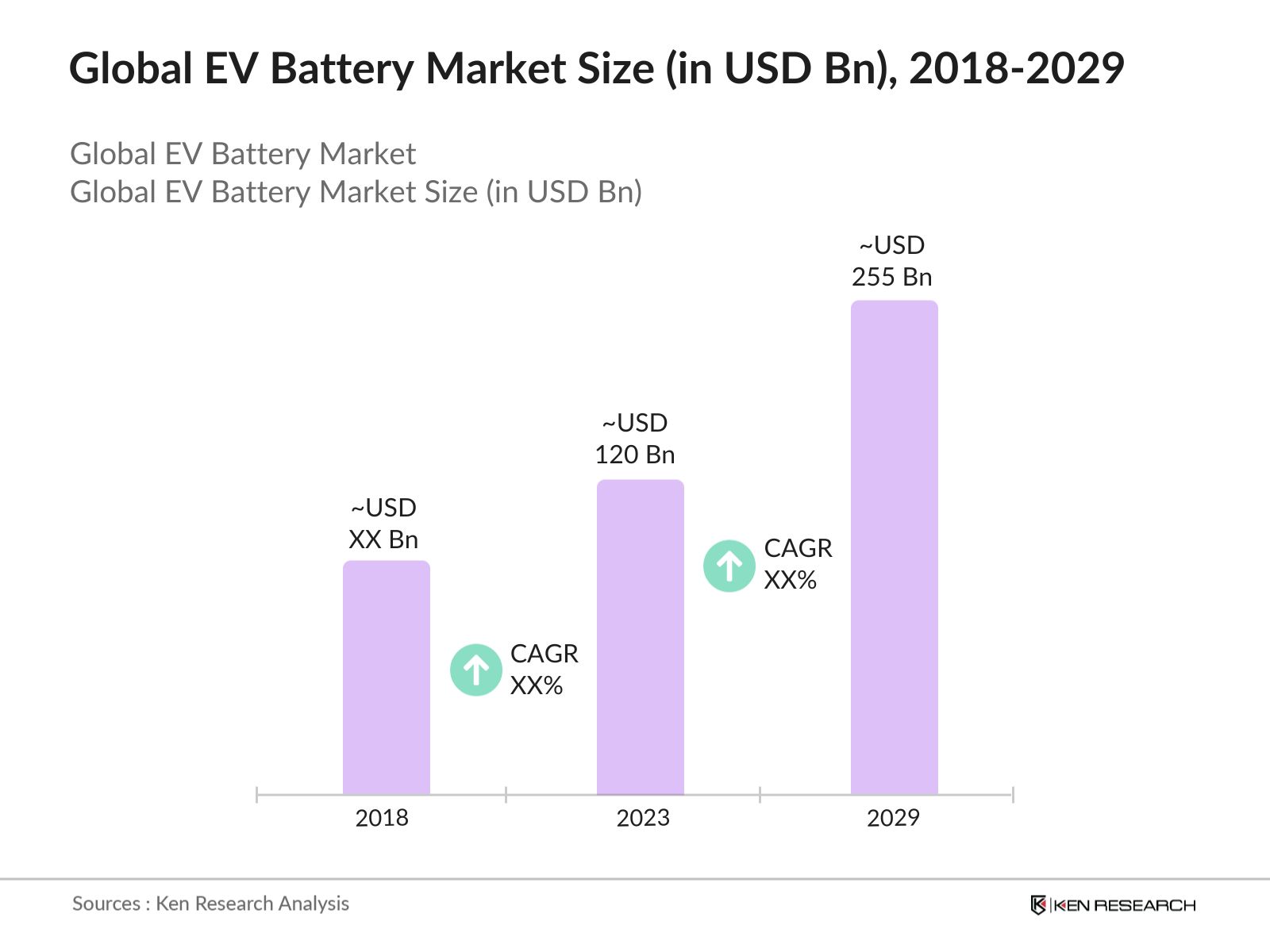
  • The global EV battery market was valued at USD 120 Bn in 2023, is driven by domestic consumption and exports to the USA, China, and Thailand, growth is fueled by rising demand for electric vehicles due to environmental concerns, government incentives, and advancements in battery technology.

market overviews

  • The market is dominated by several key players, including Panasonic Corporation, LG Chem Ltd., Samsung SDI Co., Ltd., BYD Company Ltd., and Contemporary Amperex Technology Co. Ltd. (CATL). These companies are at the forefront of battery technology innovation and supply major automakers globally.
  • BYD announced plans to expand its presence in Europe by establishing a new manufacturing facility in Hungary in 2023. The plant will focus on producing EV batteries and electric vehicles for the European market. This expansion aligns with Europes growing demand for electric vehicles and BYDs strategy to increase its market share outside of China.

Global EV Battery Current Market Analysis

market overviews

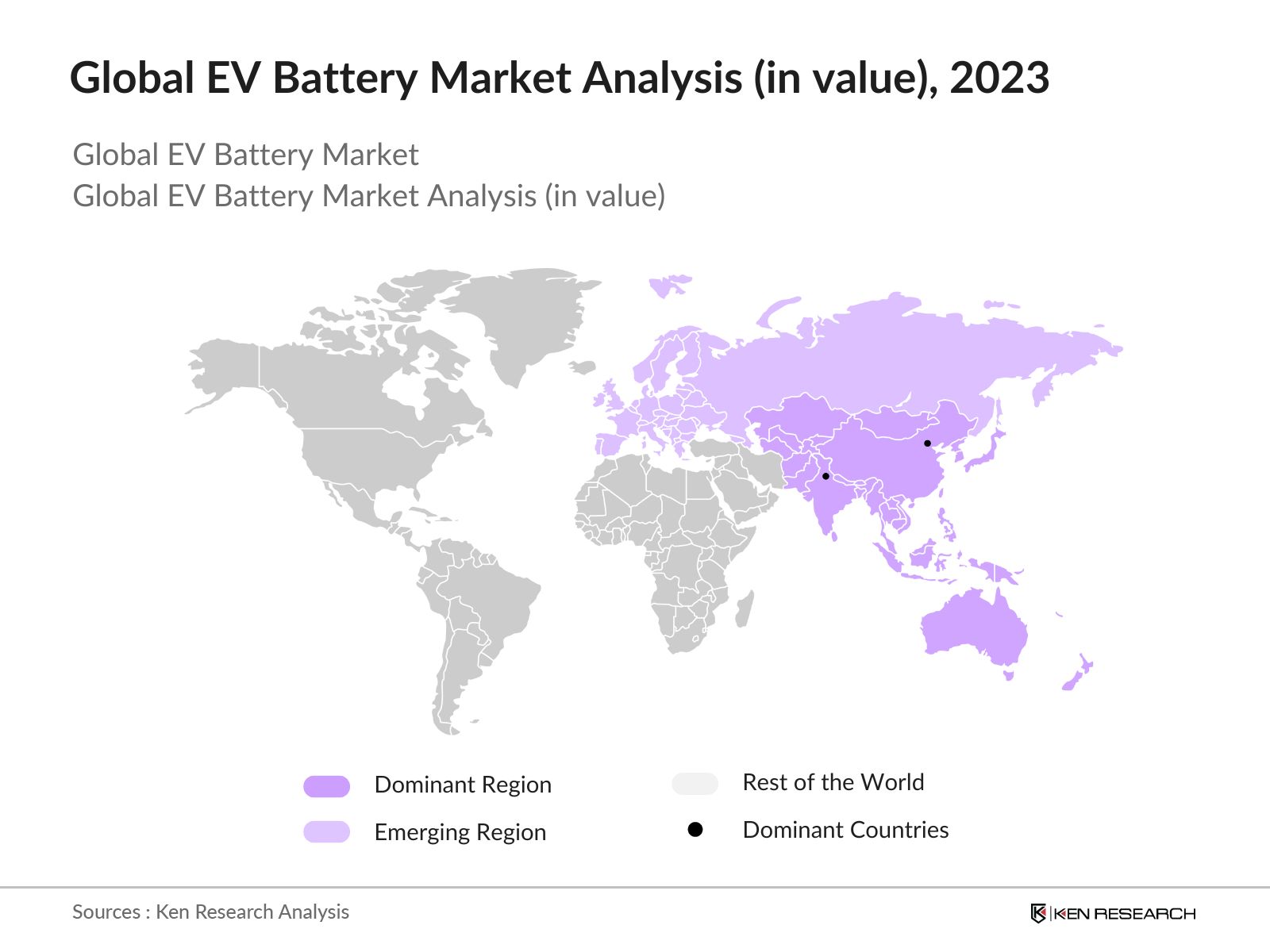
  • APAC as dominant region: The Asia-Pacific region leads the market, primarily due to substantial investments in battery manufacturing and technology. This dominance is supported by government incentives, a robust automotive sector, and rapid urbanization, which reached 51% in 2023. Japan exemplifies this strength with the production of 7.77 million passenger cars, while China solidified its position as the largest car market by sales volume in 2023. Additionally, South Korea's export of cathode materials grew by 35% year-on-year, establishing it as the top exporter to key markets like the US and Europe.
  • Europe as emerging region: Europe's growing prominence in the EV battery market is driven by stringent environmental regulations and substantial investments in infrastructure and research. The Euro 7 regulation, introduced in April 2024, enforces strict emissions standards, accelerating the shift toward electric vehicles. Germany's Charging Infrastructure Masterplan II, backed by a 6.3 billion investment, underscores the region's commitment to establishing a comprehensive EV charging network. These initiatives are designed to enhance local production, reduce dependence on imports, and strengthen Europe's standing in the global EV battery market.
  • China as dominant country: China leads the global EV battery market, driven by strong market frameworks and favorable macroeconomic policies. In June 2023, the Chinese government unveiled a $72.3 billion tax incentive package and offered $15 billion in EV purchase subsidies, greatly enhancing demand. With an urbanization rate of 66.2% in 2023, the push for cleaner energy has intensified the need for EVs. Major players like CATL and BYD dominate globally in battery technology, with CATL holding a 30% market share and BYD producing batteries for over 600,000 EVs annually.

Global EV Battery Market Segmentation

The Global EV Battery Market can be segmented based on several factors:

By Component Type: Global EV battery market segmentation by component type includes battery cells and battery packs. In 2023, the market is dominated by the battery cell sub-segment, which holds the largest share by value due to advances in cell chemistry and design, resulting in higher energy densities and longer life cycles. Significant R&D investments, particularly in lithium-ion technology, have reduced costs and improved scalability.

market overviews

By Raw Material: In the Global EV battery market, segmentation by raw material includes lithium, cobalt, nickel, and others. In 2023, lithium dominates the market segmentation by raw materials in terms of value due to its superior energy density, longer lifespan, and lighter weight, making it the preferred choice for electric vehicles.

market overviews

By Chemistry Type: In the Global EV battery market, segmentation by chemistry type includes low-nickel, high-nickel, LFP, and others. In 2023, high-nickel batteries dominate the chemistry type segmentation by value due to their superior energy density, which extends vehicle range, improved safety, longer lifespan, and cost-effectiveness from the lower price of nickel compared to cobalt.

Global EV Battery Market Competitive Landscape

Name of Company

Headquarter

Establishment Year

Battery Technology

CATL

Ningde, China

2011

LFP, NMC, NCA

LG Energy

Seoul, South Korea

2020

NMC, LFP

BYD

Shenzhen, China

1995

LFP

Panasonic

Osaka, Japan

1918

NMC, NCA, LFP

SK On

Seoul, South Korea

1962

NMC, LFP

Samsung SDI

Yongin, South Korea

1970

NMC, NCA, LFP

Calb

Ningde, China

2007

LFP, NMC

Guaxuon

Hefei, China

2006

LFP, NMC

Northvolt

Stockholm, Sweden

2016

NMC, LFP

  • CATLs New Battery Technology: In 2023, CATL introduced a groundbreaking battery with a range exceeding 1,000 kilometers and a charging time of just 15 minutes. This technological advancement is expected to significantly impact the market by addressing range anxiety and enhancing the convenience of electric vehicles. CATLs innovation sets a new benchmark for battery performance and positions the company as a leader in the EV battery market.
  • LG Chems U.S. Battery Plant: LG Chem announced a $2.5 billion investment to build a new battery manufacturing plant in the United States in 2023. The facility aims to increase the companys annual production capacity to 70 GWh by 2025. This strategic move strengthens LG Chems position in the North American market and supports the regions growing demand for electric vehicles.
  • Teslas Battery Recycling Initiative: In 2023, Tesla launched a comprehensive battery recycling program to recover valuable materials from used EV batteries. The initiative aims to recycle 100% of Tesla batteries at the end of their lifecycle, reducing environmental impact and securing a sustainable supply of raw materials. This development highlights Teslas commitment to sustainability and resource efficiency.

Global EV Battery Industry Analysis

Global EV Battery Market Growth Drivers:

  • Increasing Electric Vehicle Sales: In 2023, global electric vehicle sales surpassed 10 million units, with projections indicating a continued rise in demand. The increase in EV adoption is driven by government incentives, advancements in battery technology, and consumer awareness of environmental benefits. For example, China alone accounted for over 5 million EV sales, reflecting the country's robust support for electric mobility and significant investment in charging infrastructure.
  • Expansion of Charging Infrastructure: The expansion of EV charging infrastructure is a critical driver for market growth. In 2023, there were over 2.3 million public charging stations globally, with significant investments in fast-charging networks. For instance, Europe saw a rapid increase in charging points, reaching 1.1 million, supported by the European Green Deal's focus on sustainable transport.
  • Government Incentives and Subsidies: Governments worldwide are providing substantial incentives to boost EV adoption. In 2023, the United States introduced a $7,500 tax credit for new electric vehicle purchases, aiming to make EVs more affordable for consumers. Additionally, European countries like Germany and France offered subsidies of up to 6,000 for EV buyers, further driving market growth.

Global EV Battery Market Challenges:

  • Raw Material Supply Constraints: The EV battery industry faces significant challenges in securing a stable supply of key raw materials such as lithium, cobalt, and nickel. In 2023, the price of lithium carbonate surged by over 80% due to increased demand and limited supply, impacting battery production costs. Ensuring a reliable supply chain for these critical materials is essential for sustaining market growth and keeping battery prices competitive.
  • Recycling and Disposal of Batteries: The recycling and disposal of used EV batteries present environmental and logistical challenges. In 2023, it was estimated that over 250,000 metric tons of EV batteries reached the end of their lifecycle. Developing efficient recycling processes to recover valuable materials and reduce environmental impact is crucial. The industry must address these challenges to maintain sustainability and comply with environmental regulations.
  • High Initial Investment Costs: Despite declining battery prices, the initial investment costs for setting up EV battery manufacturing facilities remain high. Establishing a gigafactory requires investments ranging from USD 8 Bn to USD 10 Bn. These high upfront costs can be a barrier for new entrants and limit the pace of capacity expansion. Addressing these financial challenges is vital for meeting the growing demand for EV batteries.

Global EV Battery Future Market Outlook

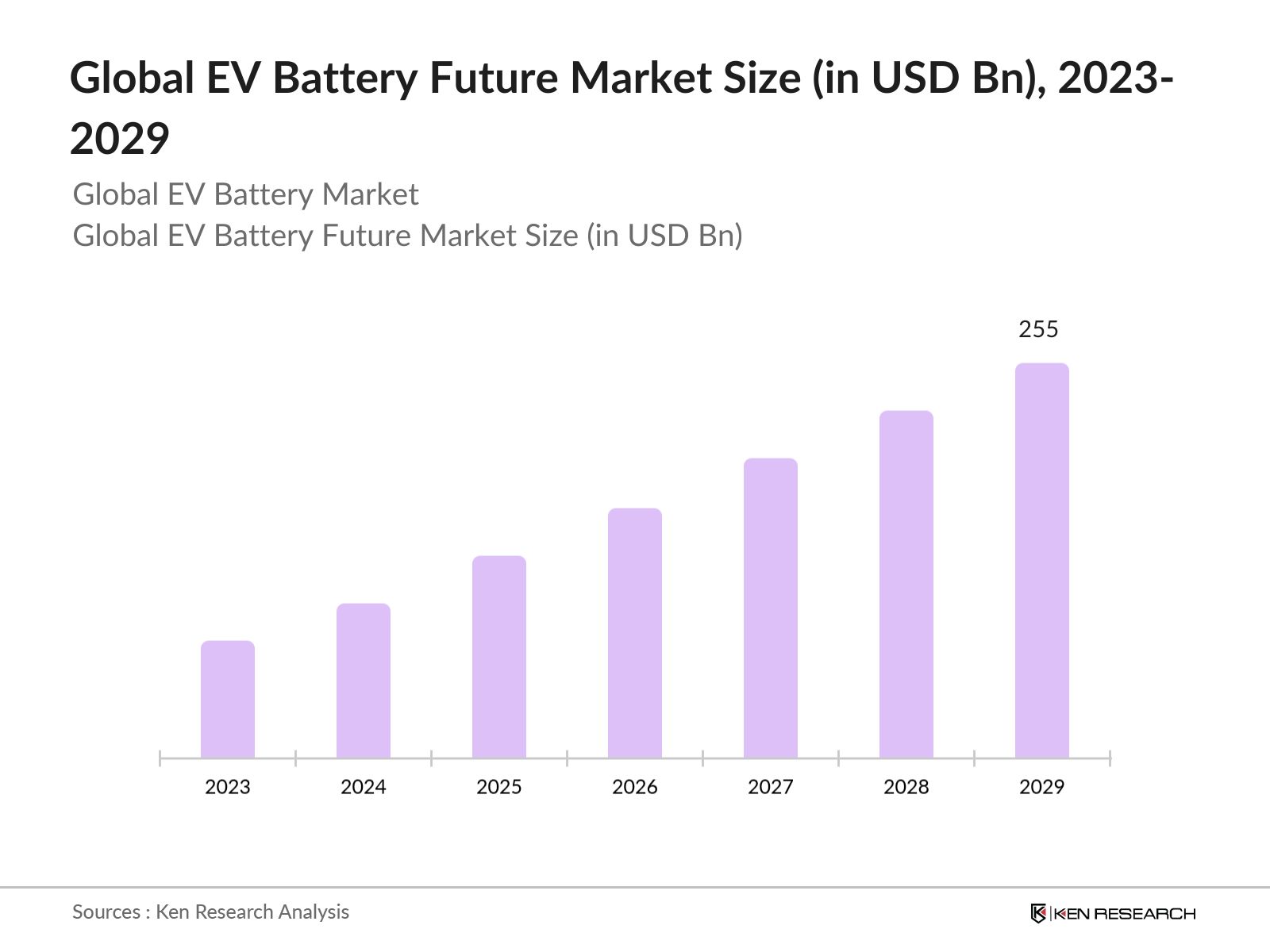
The Global EV battery market is expected to reach USD 225 Bn by 2029 driven by continued advancements in battery technology, increased production capacity, and growing adoption of electric vehicles worldwide. Government policies promoting clean energy and stricter emission regulations will further boost market growth.
market overviews

Future Market Trends

  • Increase in Battery Production Capacity: Over the next five years, the global EV battery production capacity is expected to increase significantly. By 2029, the capacity is projected to reach 5500 GWh, driven by substantial investments from leading battery manufacturers. This expansion will ensure a steady supply of batteries to meet the growing demand for electric vehicles worldwide.
  • Adoption of Solid-State Batteries: Solid-state batteries are anticipated to become mainstream in the EV market by 2029. These batteries offer higher energy density, improved safety, and faster charging times compared to traditional lithium-ion batteries. Companies like Toyota and Quantum Scape are investing heavily in solid-state battery technology, which is expected to revolutionize the EV battery industry.

Scope of the Report

By Region

North America

Europe

APAC

Latin America

MEA

By Component Type

Battery Pack

Battery Cell

By Raw Material

Lithium

Cobalt

Nickel

Others

By Chemistry Type

Low-nickel

High-nickel

LFP

Other

By Vehicle Type

Cars

Two Wheelers

Commercial light duty vehicles

Buses

Others

By Powertrain for Cars

BEV

FCEV

PHEV

By Powertrain for Trucks

BEV

FCEV

PHEV

By Powertrain for Buses

BEV

FCEV

PHEV

Products

Key Target Audience Organizations and Entities Who Can Benefit by Subscribing This Report:

  • EV Manufacturers

  • EV Battery Manufacturers

  • Automotive OEMs

  • Energy Storage Solution Providers

  • Charging Infrastructure Service Providers

  • EV and EV Battery Raw Material Suppliers

  • Financial Institutions and Banks

  • Regulatory Bodies (IEC and FAA)

Time Period Captured in the Report:

  • Historical Period: 2018-2023

  • Base Year: 2023

  • Forecast Period: 2023-2029

Companies

Players Mentioned in the Report:

  • CATL

  • LG Energy

  • BYD

  • Panasonic

  • SK On

  • Samsung SDI

  • Calb

  • Guaxuon

  • Northvolt

  • Envision AESC

  • Farasis Energy

  • Microvast

  • QuantumScape

  • Sunwoda

Table of Contents

1. Executive Summary

1.1 Global Electric Vehicle (EV) Market

1.2 Global Electric Vehicle (EV) Battery Market

2. Global Overview

2.1 Overview of Global Economics

2.2 Overview of Global Electric Vehicle Industry

2.3 Global Electric Vehicle (E2V, BEV, PHEV and HEV) Sales

3. Global EV Battery Market Overview

3.1 Global EV Battery Market Ecosystem

3.2 Global EV Battery Market Value Chain

4. Global EV Battery Market Size (in USD Bn), 2018-2023

5. Global EV Battery Market Segmentation (in value %), 2018-2023

5.1 Global EV Battery Market Segmentation by Region (in value %), 2018-2023

5.2 Global EV Battery Market Segmentation by Business Model (in value %), 2018-2023

5.3 Global EV Battery Market Segmentation by Component (in value%), 2018-2023

5.4 Global EV Battery Market Segmentation by Raw Material (in value %), 2018-2023

5.5 Global EV Battery Market Segmentation by Chemistry (in value %), 2018-2023

5.6 Global EV Battery Market Segmentation by Vehicle Type (in value %), 2018-2023

5.7 Global EV Battery Market Segmentation by Powertrain for Cars (in value %), 2018-2023

5.8 Global EV Battery Market Segmentation by Powertrain for Trucks (in value %), 2018-2023

5.9 Global EV Battery Market Segmentation by Powertrain for Buses (in value %), 2018-2023

6. Global EV Battery Market Competition Landscape

6.1 Global EV Battery Market Share Analysis

6.2 Global EV Battery Market Heat Map Analysis

6.3 Global EV Battery Market Cross Comparison

6.4 Global EV Battery Market Comparison Matrix

7. Global EV Battery Market Dynamics

7.1 Global EV Battery Market Growth Drivers

7.2 Global EV Battery Market Challenges

7.3 Global EV Battery Market Trends

7.4 Global EV Battery Market Case Studies

7.5 Global EV Battery Market Strategic Initiatives

8. Global EV Battery Future Market Size (in USD Bn), 2023-2029

9. Global EV Battery Future Market Segmentation (in value %), 2023-2029

9.1 Global EV Battery Future Market Segmentation by Region (in value %), 2023-2029

9.2 Global EV Battery Future Market Segmentation by Business Model (in value %), 2023-2029

9.3 Global EV Battery Future Market Segmentation by Component (in value%), 2023-2029

9.4 Global EV Battery Future Market Segmentation by Raw Material (in value %), 2023-2029

9.5 Global EV Battery Future Market Segmentation by Chemistry (in value %), 2023-2029

9.6 Global EV Battery Future Market Segmentation by Vehicle Type (in value %), 2023-2029

9.7 Global EV Battery Future Market Segmentation by Powertrain for Cars (in value %), 2023-2029

9.8 Global EV Battery Future Market Segmentation by Powertrain for Trucks (in value %), 2023-2029

9.9 Global EV Battery Future Market Segmentation by Powertrain for Buses (in value %), 2023-2029

10. Analyst Recommendations

Research Methodology

Step: 1 Hypothesis Creation:

The research team initially formulated a hypothesis regarding the EV battery market by analyzing prevailing industry elements sourced from company reports, magazines, journals, online articles, governmental bodies, and industry reports. We leveraged both public and proprietary databases to accurately define market segments and gather relevant data points.

Step: 2 Hypothesis Testing:

We conducted interviews with company management (including C-level executives, Directors, Country Heads, Product Heads, Heads of Sales, Business Development Executives, and Operations Supervisors) using Computer Assisted Telephonic Interviews (CATIs). These interviews were aimed at gathering insights on the market and verifying the initial hypothesis proposed by our team.

Step: 3 Market Sizing Approach:

The market size for the EV battery sector was determined through a comprehensive bottom-to-top analysis. This involved identifying major market participants, analyzing their revenue streams, sales data for various battery types, price points, and their overall contribution to the market. The compiled market size data was then cross-verified with multiple secondary sources to ensure accuracy.

Step: 4 Interpretation and Future Forecasting:

The future projections were made by identifying key macro and industry-specific factors such as technological advancements, the number of operating enterprises, small and medium-sized enterprises (SMEs), and large conglomerates. These insights were combined with expert opinions to develop forecasts for the EV battery market. The final analysis and interpretations were conducted by our team, which is proficient in utilizing modern digital communication tools for market analysis.

Frequently Asked Questions

01. How big is Global EV Battery Market?

The global EV battery market was valued USD 120 Bn in 2023, is driven by domestic consumption and exports to the USA, China, and Thailand., growth is fueled by rising demand for electric vehicles due to environmental concerns, government incentives, and advancements in battery technology.

02. What are the challenges in Global EV Battery Market?

Challenges include in global EV battery market raw material supply constraints, recycling and disposal of batteries, high initial investment costs for manufacturing facilities, and limited charging infrastructure in developing regions. These factors hinder the smooth growth and expansion of the market.

03. Who are the major players in Global EV Battery Market?

Key players in global EV battery market include Panasonic Corporation, LG Chem Ltd., Samsung SDI Co., Ltd., BYD Company Ltd., and Contemporary Amperex Technology Co. Ltd. (CATL). These companies dominate due to their advanced battery technologies, extensive production capacities, and strategic partnerships with major automakers.

04 What are the growth drivers of the Global EV Battery Market?

The global EV battery market is propelled by factors such as increasing electric vehicle sales, government incentives and subsidies, advancements in battery technology, and the expansion of charging infrastructure. These drivers are crucial for the continuous growth and adoption of electric vehicles.

Why Buy From Us?

RRR
Refine Robust Result (RRR) Framework

What makes us stand out is that our consultants follows Robust, Refine and Result (RRR) methodology. i.e. Robust for clear definitions, approaches and sanity checking, Refine for differentiating respondents facts and opinions and Result for presenting data with story

Our Reach Is Unmatched

We have set a benchmark in the industry by offering our clients with syndicated and customized market research reports featuring coverage of entire market as well as meticulous research and analyst insights.

Research
Shifting the Research Paradigm

While we don't replace traditional research, we flip the method upside down. Our dual approach of Top Bottom & Bottom Top ensures quality deliverable by not just verifying company fundamentals but also looking at the sector and macroeconomic factors.

Insite
More Insights-Better Decisions

With one step in the future, our research team constantly tries to show you the bigger picture. We help with some of the tough questions you may encounter along the way: How is the industry positioned? Best marketing channel? KPI's of competitors? By aligning every element, we help maximize success.

Trust
Transparency and Trust

Our report gives you instant access to the answers and sources that other companies might choose to hide. We elaborate each steps of research methodology we have used and showcase you the sample size to earn your trust.

support
Round the Clock Support

If you need any support, we are here! We pride ourselves on universe strength, data quality, and quick, friendly, and professional service.

Why Client Choose Us?

400000+ Reports in repository
150+ Consulting project a year
100+ Analysts
8000+ Client Queries in 2022