















Global Everything as a Service (XaaS) Market Outlook to 2030
Region:Global
Author(s):Abhinav kumar
Product Code:KROD7829
December 2024
89
About the Report
Global Everything as a Service (XaaS) Market Overview
- The Global Everything as a Service (XaaS) market, valued at USD 586 billion, has shown significant growth over the past five years. The expansion is driven by increasing cloud adoption, businesses shifting to subscription-based models, and the ability of XaaS to offer flexibility and scalability. Corporations across various industries, including IT, telecom, healthcare, and BFSI, are investing heavily in XaaS solutions to drive operational efficiency, cost reduction, and enhanced productivity.
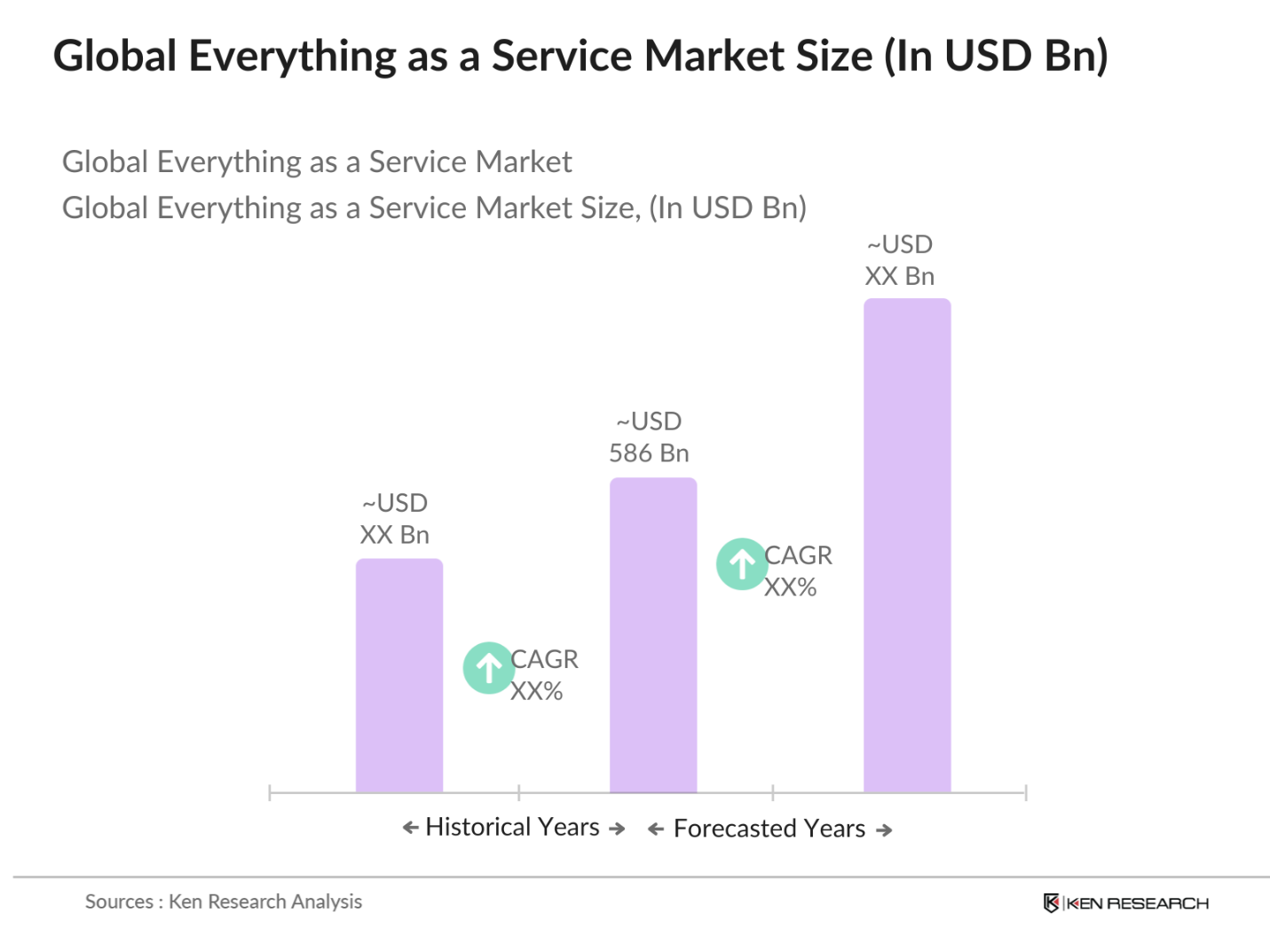
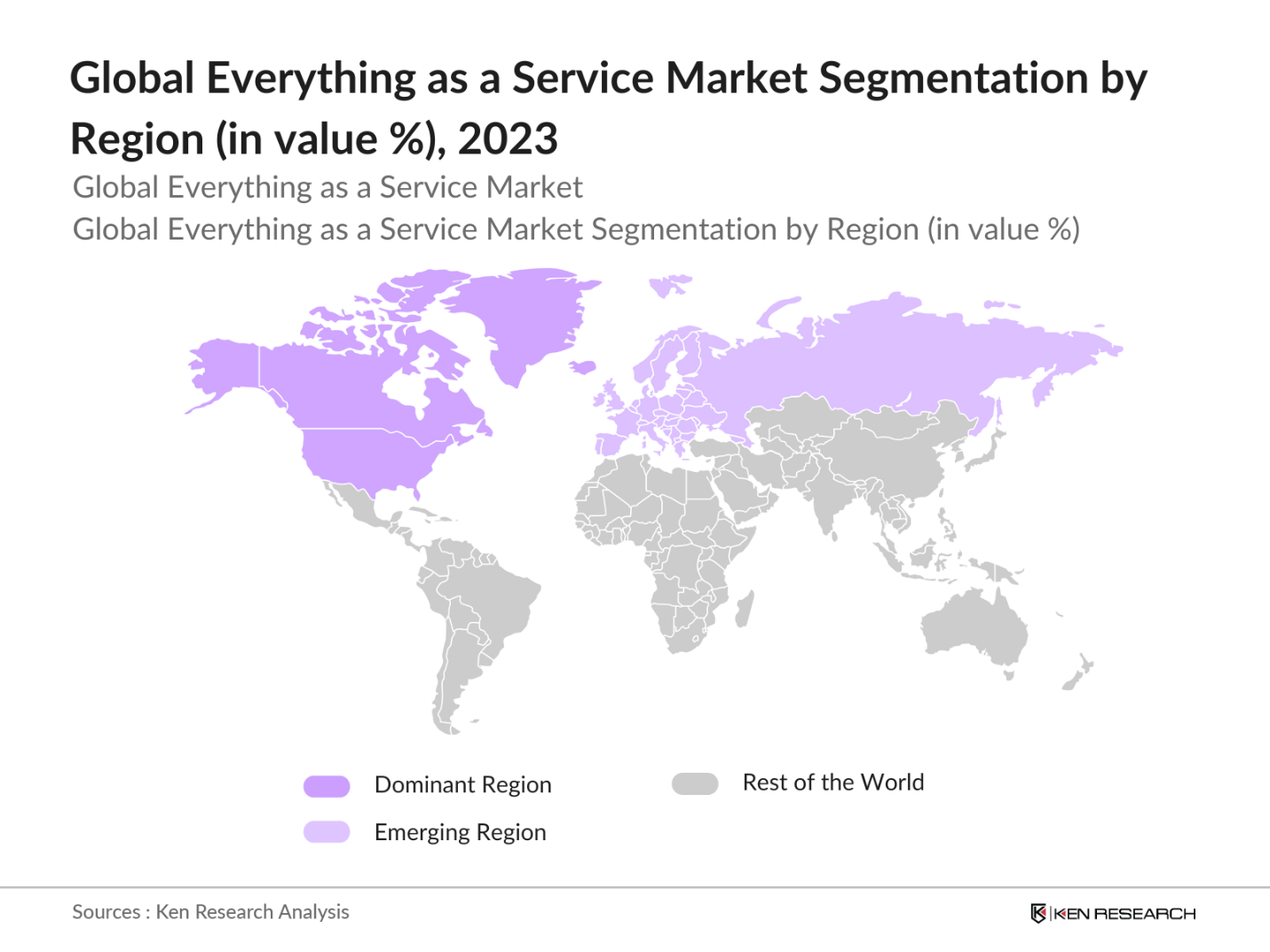
- Dominant regions in the XaaS market include North America, led by the United States, and the Asia-Pacific, spearheaded by China and India. North America's dominance is attributed to the presence of global technology giants such as Microsoft, Amazon Web Services (AWS), and Google Cloud, coupled with strong cloud infrastructure. In the Asia-Pacific, rapid digital transformation, significant IT investments, and a growing number of tech startups are fueling demand for XaaS solutions.
- AIaaS adoption has surged, particularly in industries like retail, finance, and healthcare. The global AI market contributed $100 billion to global GDP in 2023, according to the World Economic Forum, with a significant share of that growth driven by AI-as-a-service models. AIaaS allows companies to integrate AI tools like machine learning algorithms, predictive analytics, and natural language processing without building the infrastructure in-house. This trend is expected to reshape sectors that require large-scale data analysis, enhancing efficiency and productivity.
Global Everything as a Service (XaaS) Market Segmentation
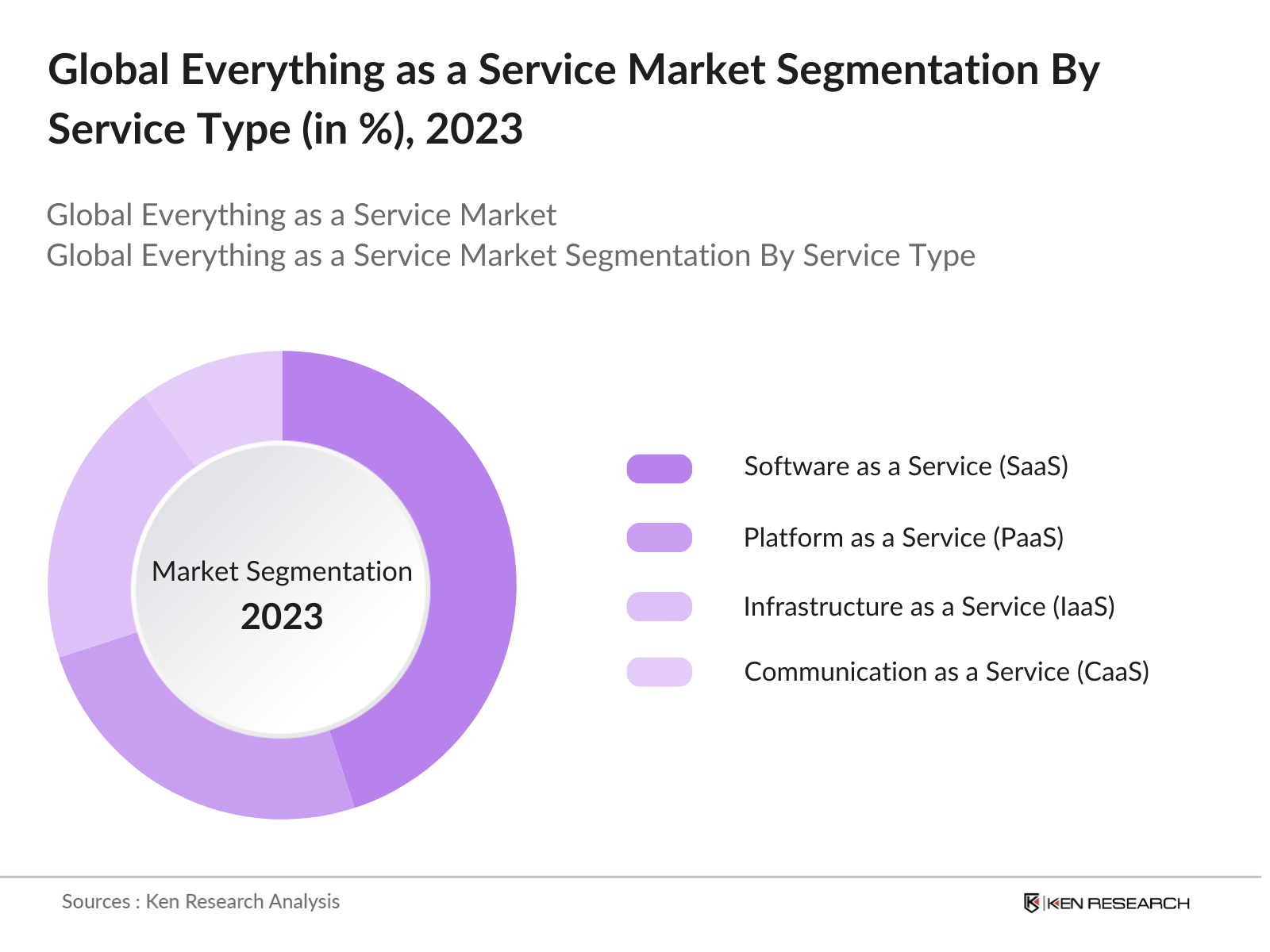
By Service Type: The XaaS market is segmented by service type into Software as a Service (SaaS), Platform as a Service (PaaS), Infrastructure as a Service (IaaS), Communication as a Service (CaaS), and Cybersecurity as a Service (CSaaS). Among these, Software as a Service (SaaS) holds the dominant market share due to its widespread adoption across industries. SaaS enables businesses to access software over the internet without the need for expensive hardware or on-premises infrastructure, making it highly attractive to companies of all sizes.
By Region: The XaaS market is divided by region into North America, Europe, Asia-Pacific, Latin America, and the Middle East & Africa. North America holds the largest market share due to the presence of major tech players, advanced cloud infrastructure, and high investment in technology innovations. The region's lead is strengthened by the high rate of cloud adoption among enterprises and government bodies, making it the key hub for XaaS services.
By Application: The XaaS market is also segmented by application into IT & Telecom, BFSI, Healthcare, Retail & E-commerce, and Manufacturing. IT & Telecom dominates this segment due to the high demand for cloud infrastructure, data storage, and network solutions in these industries. The need for scalable and flexible infrastructure to support business growth and manage large volumes of data has propelled XaaS adoption in IT and telecom sectors.
Global Everything as a Service (XaaS) Market Competitive Landscape
The Global Everything as a Service (XaaS) market is characterized by the presence of several major players, with a few dominant names leading the industry. These key players have established themselves through a combination of strong market presence, technological innovation, and strategic partnerships. For instance, Microsoft and AWS maintain their leadership through continuous innovation and expansion of cloud services, while Salesforce dominates SaaS through its customer relationship management (CRM) solutions.
|
Company |
Establishment Year |
Headquarters |
Revenue (USD Bn) |
No. of Employees |
R&D Investment |
Global Cloud Data Centers |
Partnerships |
Acquisitions |
|
Microsoft Corporation |
1975 |
Redmond, USA |
_ |
_ |
_ |
_ |
_ |
_ |
|
Amazon Web Services (AWS) |
2006 |
Seattle, USA |
_ |
_ |
_ |
_ |
_ |
_ |
|
Google Cloud |
2008 |
Mountain View, USA |
_ |
_ |
_ |
_ |
_ |
_ |
|
IBM Corporation |
1911 |
Armonk, USA |
_ |
_ |
_ |
_ |
_ |
_ |
|
Salesforce |
1999 |
San Francisco, USA |
_ |
_ |
_ |
_ |
_ |
_ |
Global Everything as a Service (XaaS) Industry Analysis
Growth Drivers
- Cloud Adoption and Digital Transformation: The global cloud adoption rate continues to rise as organizations invest in scalable, on-demand cloud services. In 2023, the number of active cloud users globally was recorded at over 6 billion, with a significant share of large enterprises transitioning to cloud-based models. According to the World Bank, global digital infrastructure investments exceeded $1 trillion in 2022, driven largely by growing enterprise needs to adopt cloud computing. As of 2024, government-backed initiatives across developing economies are fostering cloud infrastructure, enhancing both digital access and the growth of XaaS markets.
- Cost Efficiency and Scalability: Organizations are increasingly drawn to XaaS due to its cost-efficiency and scalability. Companies that adopt XaaS models report average cost savings of 30-40% annually compared to traditional infrastructure spending. The International Monetary Fund (IMF) highlighted that global IT spending, particularly in cloud services, reached $4.5 trillion in 2023. This shift is attributed to firms minimizing capital expenditures by leveraging subscription models and scalable resources on a global level. The XaaS model aligns with global economic priorities of reducing overhead and improving operational efficiency in uncertain macroeconomic conditions.
- Increased Demand for Subscription-Based Models: Subscription-based services have seen a surge in demand, with over 400 million new subscriptions added globally in 2023, primarily across the IT and telecom industries. As per the World Bank, digital subscription revenues in key sectors (healthcare, finance, IT) surpassed $200 billion in 2022, showcasing how consumers and businesses are shifting to services over ownership models. This trend is particularly notable in regions with strong internet penetration and digital ecosystems. The rise of pay-as-you-go services is set to sustain this momentum throughout 2024, further driving XaaS adoption.
Market Challenges
- Security Concerns: Security remains a paramount concern for organizations moving to XaaS models. In 2023, the global cost of cybercrime reached $10.5 trillion, underscoring the risks associated with cloud and hybrid environments. Regulatory bodies like the European Union (EU) enforced stricter privacy regulations (GDPR), with penalties for breaches amounting to $1.7 billion in fines in 2023 alone. Enterprises adopting XaaS models are mandated to comply with international data security standards to mitigate risks. These concerns slow down market adoption, particularly in highly regulated industries like finance and healthcare.
- Vendor Lock-in and Integration Issues: Vendor lock-in poses a significant hurdle in the XaaS market. A study from 2023 reported that 65% of businesses express concerns over being locked into single-provider contracts, limiting flexibility in multi-cloud environments. This lock-in leads to increased operational costs and integration issues with third-party applications. Countries with lower cloud service provider diversity, particularly in emerging economies, face greater challenges. Integration between legacy systems and new cloud platforms continues to be complex, particularly in sectors like manufacturing, where system continuity is crucial.
Global Everything as a Service (XaaS) Market Future Outlook
Over the next five years, the Global Everything as a Service (XaaS) market is expected to continue its growth trajectory, driven by advancements in cloud computing, artificial intelligence, and the increasing demand for scalable, cost-effective technology solutions. XaaS is set to transform how organizations manage IT infrastructure, reducing the need for on-premises solutions and facilitating business innovation. Additionally, the expansion of 5G networks and edge computing will provide further opportunities for XaaS adoption, particularly in the IoT and cybersecurity sectors.
Opportunities
- Growth in Emerging Markets: Emerging markets are poised for significant growth in XaaS adoption, driven by investments in digital infrastructure. In 2023, the World Bank reported a $30 billion investment in digital transformation projects across Africa and Southeast Asia. Government initiatives aimed at improving internet penetration, such as India's Digital India program, which aims to provide broadband connectivity to over 600,000 villages by 2025, present a substantial opportunity for XaaS providers. The increasing number of SMEs in these regions also presents a growing customer base for cloud services.
- Expansion of 5G and Edge Computing: The rollout of 5G networks is set to revolutionize XaaS adoption by enabling faster and more reliable connectivity. As of 2023, there were over 1.5 billion 5G subscriptions globally, according to the ITU, with a substantial number in Asia and North America. The expansion of 5G, coupled with advancements in edge computing, enables low-latency access to cloud services, which is particularly beneficial for industries like manufacturing and healthcare. The continued rollout of 5G services presents a key opportunity for XaaS providers to expand into new markets and verticals.
Scope of the Report
|
Service Type |
Software as a Service (SaaS) Platform as a Service (PaaS) Infrastructure as a Service (IaaS) Communication as a Service (CaaS) Cybersecurity as a Service (CSaaS) |
|
Application |
IT and Telecom BFSI Healthcare Retail and E-commerce Manufacturing |
|
Deployment Model |
Public Cloud Private Cloud Hybrid Cloud |
|
Enterprise Size |
Large Enterprises Small and Medium Enterprises (SMEs) |
|
Region |
North America Europe Asia-Pacific Latin America Middle East & Africa |
Products
Key Target Audience Organizations and Entities Who Can Benefit by Subscribing This Report:
Investments and Venture Capitalist Firms
Cloud Service Provider Companies
Large Enterprises and SMEs (Corporate IT Departments)
Government and Regulatory Bodies (National Telecommunications Regulatory Agencies)
Data Center Operator Companies
Telecom Industries
Healthcare Industries
Retail and E-commerce Companies
Companies
Players Mentioned in the Report
Microsoft Corporation
Amazon Web Services (AWS)
Google Cloud
IBM Corporation
Salesforce
Oracle Corporation
Alibaba Cloud
SAP SE
VMware
Cisco Systems, Inc.
Table of Contents
1. Global Everything as a Service (XaaS) Market Overview
1.1. Definition and Scope
1.2. Market Taxonomy
1.3. Market Growth Rate
1.4. Market Segmentation Overview
2. Global Everything as a Service (XaaS) Market Size (In USD Bn)
2.1. Historical Market Size
2.2. Year-On-Year Growth Analysis
2.3. Key Market Developments and Milestones
3. Global Everything as a Service (XaaS) Market Analysis
3.1. Growth Drivers
3.1.1. Cloud Adoption and Digital Transformation
3.1.2. Cost Efficiency and Scalability
3.1.3. Increased Demand for Subscription-Based Models
3.1.4. Growing Adoption Across Industries (IT, Telecom, Healthcare, BFSI, Manufacturing)
3.2. Market Challenges
3.2.1. Security Concerns (Data Security, Privacy Regulations)
3.2.2. Vendor Lock-in and Integration Issues
3.2.3. Complexity in Pricing Models
3.2.4. Limited Awareness in Emerging Economies
3.3. Opportunities
3.3.1. Growth in Emerging Markets
3.3.2. Expansion of 5G and Edge Computing
3.3.3. Technological Advancements in AI and Automation
3.4. Trends
3.4.1. Increasing Adoption of AI as a Service (AIaaS)
3.4.2. Growth of IoT as a Service (IoTaaS)
3.4.3. Hybrid and Multi-Cloud Environments
3.4.4. Integration of Blockchain as a Service (BaaS)
3.5. Government Regulations
3.5.1. Data Localization Laws
3.5.2. Industry-Specific Compliance Standards (GDPR, HIPAA, PCI DSS)
3.6. SWOT Analysis
3.7. Stake Ecosystem
3.8. Porters Five Forces Analysis
3.9. Competition Ecosystem
4. Global Everything as a Service (XaaS) Market Segmentation
4.1. By Service Type (In Value %)
4.1.1. Software as a Service (SaaS)
4.1.2. Platform as a Service (PaaS)
4.1.3. Infrastructure as a Service (IaaS)
4.1.4. Communication as a Service (CaaS)
4.1.5. Cybersecurity as a Service (CSaaS)
4.2. By Application (In Value %)
4.2.1. IT and Telecom
4.2.2. BFSI
4.2.3. Healthcare
4.2.4. Retail and E-commerce
4.2.5. Manufacturing
4.3. By Deployment Model (In Value %)
4.3.1. Public Cloud
4.3.2. Private Cloud
4.3.3. Hybrid Cloud
4.4. By Enterprise Size (In Value %)
4.4.1. Large Enterprises
4.4.2. Small and Medium Enterprises (SMEs)
4.5. By Region (In Value %)
4.5.1. North America
4.5.2. Europe
4.5.3. Asia-Pacific
4.5.4. Latin America
4.5.5. Middle East & Africa
5. Global Everything as a Service (XaaS) Market Competitive Analysis
5.1. Detailed Profiles of Major Competitors
5.1.1. Microsoft Corporation
5.1.2. Amazon Web Services (AWS)
5.1.3. Google Cloud
5.1.4. IBM Corporation
5.1.5. Salesforce
5.1.6. Oracle Corporation
5.1.7. Alibaba Cloud
5.1.8. SAP SE
5.1.9. VMware
5.1.10. Cisco Systems, Inc.
5.1.11. Hewlett Packard Enterprise (HPE)
5.1.12. Rackspace Technology
5.1.13. Adobe Inc.
5.1.14. ServiceNow
5.1.15. Workday, Inc.
5.2. Cross Comparison Parameters (Revenue, Headquarters, Employee Strength, Market Presence, Market Share, Technology Strength, Global Partnerships, Investment Trends)
5.3. Market Share Analysis
5.4. Strategic Initiatives
5.5. Mergers and Acquisitions
5.6. Investment Analysis
5.7. Venture Capital Funding
5.8. Private Equity Investments
6. Global Everything as a Service (XaaS) Market Regulatory Framework
6.1. Global Data Protection and Privacy Laws
6.2. Industry-Specific Compliance Requirements
6.3. Cloud-Specific Certifications (ISO/IEC 27001, SOC 2, CSA STAR)
7. Global Everything as a Service (XaaS) Future Market Size (In USD Bn)
7.1. Future Market Size Projections
7.2. Key Factors Driving Future Market Growth
8. Global Everything as a Service (XaaS) Future Market Segmentation
8.1. By Service Type (In Value %)
8.2. By Application (In Value %)
8.3. By Deployment Model (In Value %)
8.4. By Enterprise Size (In Value %)
8.5. By Region (In Value %)
9. Global Everything as a Service (XaaS) Market Analysts Recommendations
9.1. TAM/SAM/SOM Analysis
9.2. Customer Cohort Analysis
9.3. Market Entry Strategy Recommendations
9.4. White Space Opportunity Analysis
Research Methodology
Step 1: Identification of Key Variables
In the initial phase, we mapped out the ecosystem of the Global Everything as a Service (XaaS) market, identifying key stakeholders such as cloud service providers, enterprises, telecom operators, and regulatory bodies. This involved extensive secondary research using proprietary databases and industry reports to gather information on market size, growth drivers, and competitive dynamics.
Step 2: Market Analysis and Construction
This phase involved analyzing historical data to construct a model of market growth. We examined market penetration rates, revenue generated across key segments, and growth rates. Service quality statistics were also evaluated to ensure the accuracy of the revenue estimates.
Step 3: Hypothesis Validation and Expert Consultation
Key market hypotheses were validated through direct consultations with industry experts. Computer-assisted telephone interviews (CATIs) were conducted with executives from cloud service providers, technology firms, and other major stakeholders. Their insights helped refine the analysis and confirm market trends.
Step 4: Research Synthesis and Final Output
The final phase involved synthesizing data from cloud service providers, segment leaders, and end users to verify market figures. This included gathering sales data, adoption rates, and consumer preferences to produce a well-rounded analysis of the Global Everything as a Service (XaaS) market.
Frequently Asked Questions
01. How big is the Global Everything as a Service (XaaS) Market?
The Global Everything as a Service (XaaS) market is valued at USD 586 billion, driven by increasing cloud adoption, digital transformation initiatives, and demand for scalable technology solutions.
02. What are the challenges in the Global Everything as a Service (XaaS) Market?
Challenges in the XaaS market include concerns over data security, complex pricing models, and potential vendor lock-in. Companies must carefully manage their transition to cloud-based services to mitigate these risks.
03. Who are the major players in the Global Everything as a Service (XaaS) Market?
Key players include Microsoft Corporation, Amazon Web Services (AWS), Google Cloud, IBM Corporation, and Salesforce, all of which have a significant influence on the market due to their technological expertise and global presence.
04. What are the growth drivers of the Global Everything as a Service (XaaS) Market?
Growth is driven by advancements in cloud computing, rising demand for flexible and scalable IT infrastructure, and the increasing adoption of subscription-based service models across industries.
Why Buy From Us?

What makes us stand out is that our consultants follows Robust, Refine and Result (RRR) methodology. i.e. Robust for clear definitions, approaches and sanity checking, Refine for differentiating respondents facts and opinions and Result for presenting data with story

We have set a benchmark in the industry by offering our clients with syndicated and customized market research reports featuring coverage of entire market as well as meticulous research and analyst insights.

While we don't replace traditional research, we flip the method upside down. Our dual approach of Top Bottom & Bottom Top ensures quality deliverable by not just verifying company fundamentals but also looking at the sector and macroeconomic factors.

With one step in the future, our research team constantly tries to show you the bigger picture. We help with some of the tough questions you may encounter along the way: How is the industry positioned? Best marketing channel? KPI's of competitors? By aligning every element, we help maximize success.

Our report gives you instant access to the answers and sources that other companies might choose to hide. We elaborate each steps of research methodology we have used and showcase you the sample size to earn your trust.

If you need any support, we are here! We pride ourselves on universe strength, data quality, and quick, friendly, and professional service.