
Global Exotic Vegetable Market Outlook to 2030
Region:Global
Author(s):Shivani Mehra
Product Code:KROD5245
Region:Global
Author(s):Shivani Mehra
Product Code:KROD5245
November 2024
85
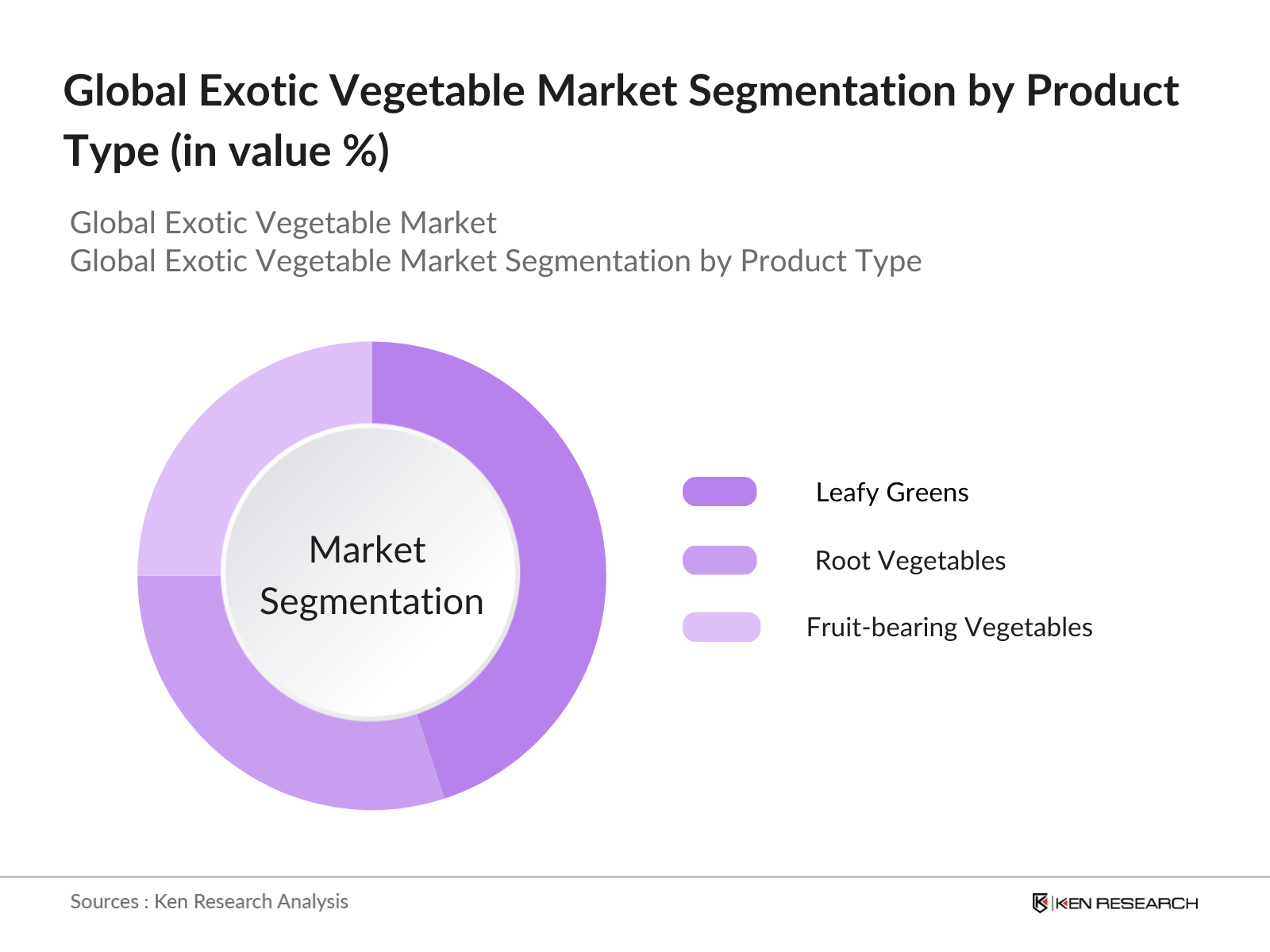
By Product Type: The global exotic vegetable market is segmented by product type into leafy greens, root vegetables, and fruit-bearing vegetables. Leafy Greens hold the largest market share at in 2023, primarily driven by the rising demand for kale, spinach, arugula, and bok choy. These vegetables are highly sought after for their high vitamin and mineral content, making them a staple in plant-based diets and wellness regimes. The growing trend of clean eating, combined with the increasing popularity of superfoods, is fueling demand for leafy greens, particularly in North America and Europe.
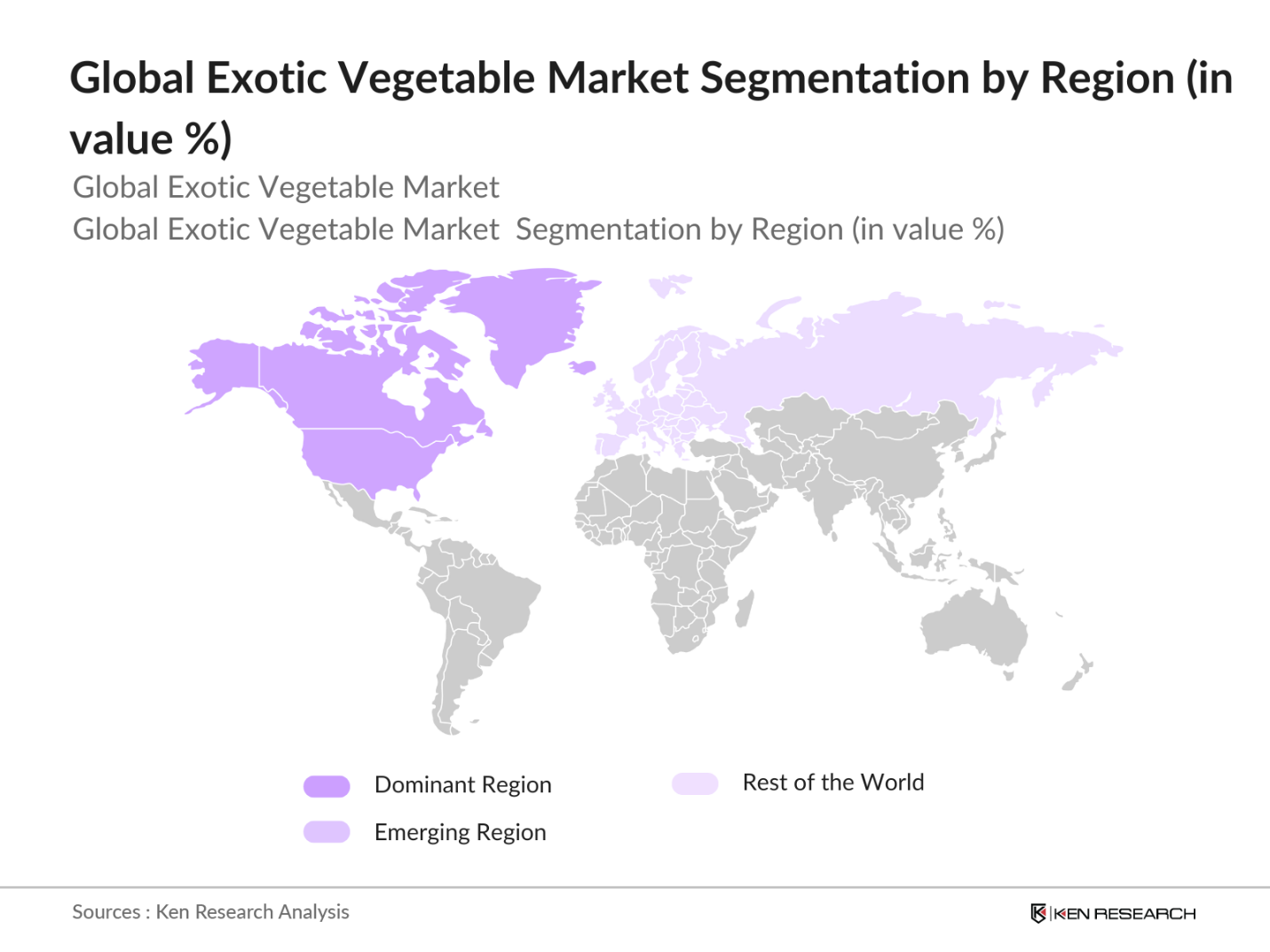
By Region: The global exotic vegetable market is further segmented by region into North America, Europe, Asia-Pacific, Latin America, and Middle East & Africa. North America holds the largest share at in 2023, driven by strong consumer demand for healthy, organic, and exotic produce. The United States is the leading market in the region, with growing health consciousness and increasing consumption of vegetables like kale, bok choy, and heirloom tomatoes.
The global exotic vegetable market is highly competitive, with both large multinational corporations and smaller local players vying for market share. Key players are investing in expanding their product portfolios, organic farming practices, and improving distribution networks to cater to growing consumer demand.
|
Company |
Establishment Year |
Headquarters |
Revenue (USD bn) |
Key Products |
R&D Investments |
Partnerships |
|
Fresh Del Monte Produce |
1886 |
Florida, USA |
- |
- |
- |
- |
|
Dole Food Company |
1851 |
California, USA |
- |
- |
- |
- |
|
Total Produce |
1850 |
Dublin, Ireland |
- |
- |
- |
- |
|
Greenyard Foods |
1982 |
Sint-Katelijne-Waver, Belgium |
- |
- |
- |
- |
|
Natures Pride |
2000 |
Maasdijk, Netherlands |
- |
- |
- |
- |
Global Exotic Vegetable Market Growth Drivers:
Global Exotic Vegetable Market Challenges
The global exotic vegetable market is expected to experience significant growth over the next five years, driven by increasing consumer demand for healthy and nutrient-rich produce. The Asia-Pacific region is poised for rapid expansion as health trends influence dietary habits and the demand for premium and organic products rises. Technological advancements in agriculture will also play a critical role in increasing production capacity and reducing costs. Sustainability will be a key focus area for producers and retailers, with an emphasis on environmentally friendly practices and organic certifications.
Market Opportunities:
|
By Product Type |
Leafy Greens root vegetables fruit-bearing vegetables |
|
By Farming Method |
Organic Farming Conventional Farming Hydroponic Farming |
|
By Distribution Channel |
Supermarkets & Hypermarkets Specialty Stores Online Retail Farmers' Markets |
|
By End-User |
Households Foodservice (Hotels, Restaurants, Cafes) Food Processing Industry |
|
By Region |
North America Europe Asia-Pacific Latin America Middle East & Africa. |
1.1. Definition and Scope
1.2. Market Taxonomy
1.3. Market Growth Drivers
1.4. Market Trends
2.1. Historical Market Size
2.2. Year-on-Year Growth Analysis
2.3. Key Developments and Milestones
3.1. Growth Drivers
3.2. Market Challenges
3.3. Opportunities
3.4. Trends
4.1. By Product Type (in Value %)
4.1.1. Leafy Greens
4.1.2. Root Vegetables
4.1.3. Fruit-bearing Vegetables
4.2. By Distribution Channel (in Value %)
4.2.1. Supermarkets/Hypermarkets
4.2.2. Specialty Stores
4.2.3. Online Retail
4.2.4. Foodservice
4.3. By Region (in Value %)
4.3.1. North America
4.3.2. Europe
4.3.3. Asia-Pacific
4.3.4. Latin America
4.3.5. Middle East & Africa
5.1. Profiles of Major Companies
5.1.1. Fresh Del Monte Produce
5.1.2. Dole Food Company
5.1.3. Total Produce
5.1.4. Greenyard Foods
5.1.5. Natures Pride
5.1.6. Bonduelle Group
5.1.7. Robinson Fresh
5.1.8. SunOpta Inc.
5.1.9. VegPro International
5.1.10. The Fresh Market
5.1.11. Agrial
5.1.12. Vegpro Group
5.1.13. Frutco AG
5.1.14. Seald Sweet International
5.1.15. Earthbound Farm
5.2. Cross-Comparison Parameters (No. of Employees, Headquarters, Revenue)
5.3. Market Share Analysis
5.4. Strategic Initiatives
6.1. Environmental Standards
6.2. Compliance Requirements
6.3. Certification Processes
7.1. Future Market Size Projections
7.2. Key Factors Driving Future Growth
8.1. TAM/SAM/SOM Analysis
8.2. Customer Cohort Analysis
8.3. Marketing Initiatives
8.4. White Space Opportunity Analysis
The first step involves identifying key variables that affect the exotic vegetable market, such as changing consumer preferences, agricultural practices, and the competitive landscape. This was done through an in-depth analysis of government policies, market dynamics, and industry reports. Data was gathered from secondary sources like FAO (Food and Agriculture Organization), USDA, European Commission, and proprietary databases to map out the key stakeholders and variables influencing the market.
Quantitative and qualitative data collection was undertaken to analyze current and historical market trends, production volumes, and consumer behaviors. This data was compiled from a combination of secondary research (government statistics, industry databases, and white papers) and primary research through interviews with industry experts, farmers, and distributors. For the exotic vegetable market, a detailed analysis was conducted on distribution channels, consumption rates, and import/export trends. Historical data was analyzed to establish baseline trends and project future growth.
To validate the collected data and confirm projections, interviews were conducted with experts in agriculture, horticulture, and food distribution. These consultations provided deeper insights into industry-specific challenges and opportunities. Industry experts from organizations such as The World Vegetable Center, Greenyard Foods, and local farming cooperatives were involved in providing their opinions on emerging trends, market drivers, and potential bottlenecks in the supply chain.
The final step involved synthesizing all collected data into a comprehensive market report. This synthesis includes quantitative data such as market size, share, and growth projections, as well as qualitative insights gathered from expert interviews. A combination of top-down and bottom-up approaches was used to ensure the accuracy of market estimates. The final report is designed to provide actionable insights for stakeholders, including farmers, distributors, and investors, interested in the exotic vegetable market.
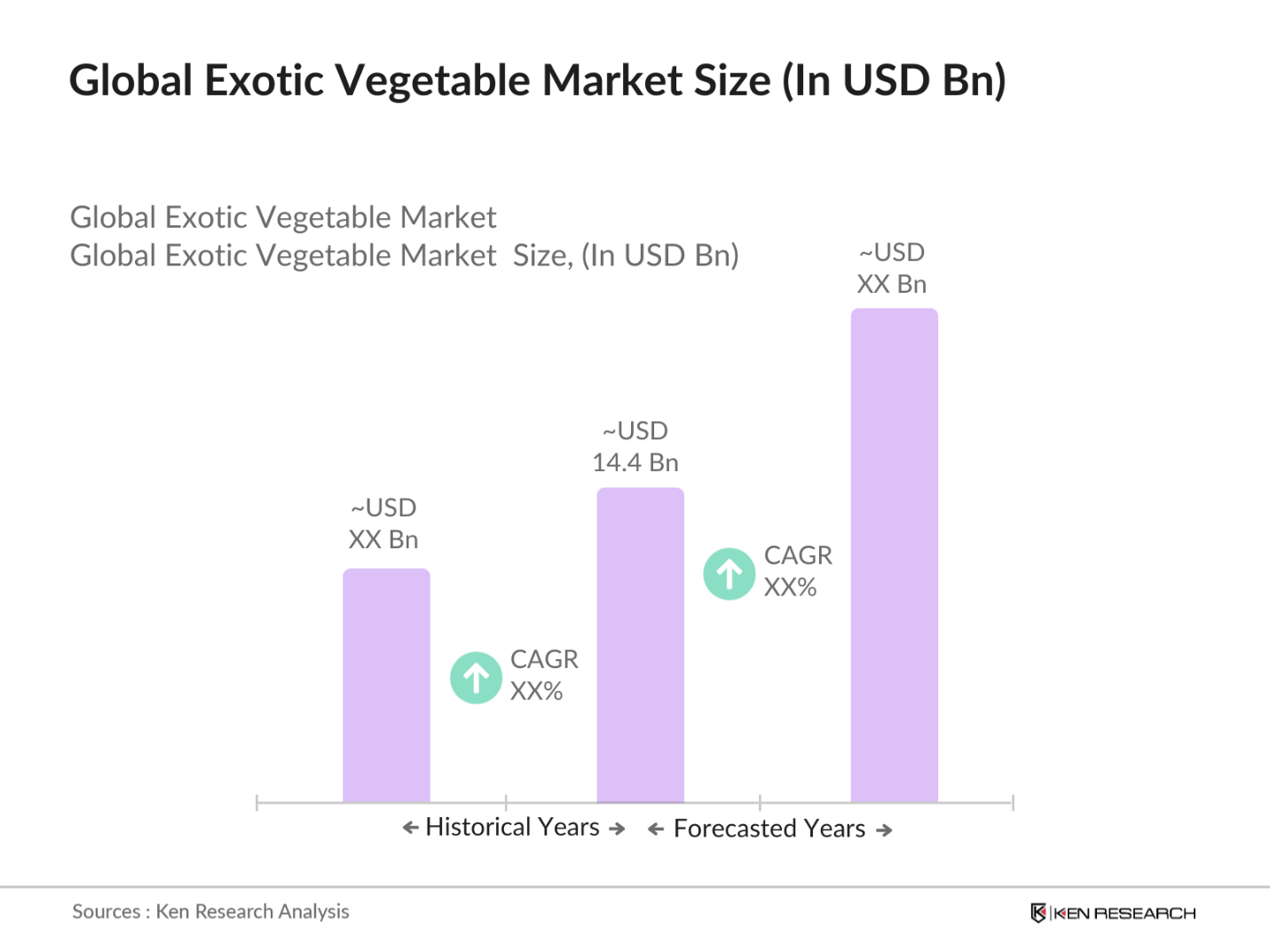
The global exotic vegetable market is valued at approximately USD 14.4 Billion. The market has seen steady growth due to increasing consumer demand for nutrient-rich and unique vegetable varieties such as kale, arugula, and heirloom tomatoes. This demand is further fueled by the global trend toward plant-based diets and clean eating.
One of the key challenges in the exotic vegetable market is the high cost of production and distribution. Growing exotic vegetables often requires specialized environments such as vertical farming or hydroponics, which can be capital-intensive. Additionally, supply chain disruptions caused by geopolitical issues or extreme weather events can affect the consistent availability of exotic vegetables. Another challenge is the limited awareness and accessibility in emerging markets, where consumer knowledge about exotic vegetables remains low.
Major players in the exotic vegetable market include companies like Fresh Del Monte Produce, Dole Food Company, Total Produce, Greenyard Foods, and Natures Pride. These companies dominate the market by leveraging advanced farming techniques, strong distribution networks, and strategic partnerships with retailers and foodservice providers.
The market growth is driven by the increasing demand for nutrient-rich vegetables such as kale, bok choy, and purple carrots, which are perceived as superfoods by health-conscious consumers. Additionally, the expansion of organic and sustainable farming practices is boosting the production and availability of exotic vegetables. Technological advancements in agriculture, such as vertical farming and controlled-environment agriculture, are also helping meet the rising demand by ensuring year-round production.

What makes us stand out is that our consultants follows Robust, Refine and Result (RRR) methodology. i.e. Robust for clear definitions, approaches and sanity checking, Refine for differentiating respondents facts and opinions and Result for presenting data with story

We have set a benchmark in the industry by offering our clients with syndicated and customized market research reports featuring coverage of entire market as well as meticulous research and analyst insights.

While we don't replace traditional research, we flip the method upside down. Our dual approach of Top Bottom & Bottom Top ensures quality deliverable by not just verifying company fundamentals but also looking at the sector and macroeconomic factors.

With one step in the future, our research team constantly tries to show you the bigger picture. We help with some of the tough questions you may encounter along the way: How is the industry positioned? Best marketing channel? KPI's of competitors? By aligning every element, we help maximize success.

Our report gives you instant access to the answers and sources that other companies might choose to hide. We elaborate each steps of research methodology we have used and showcase you the sample size to earn your trust.

If you need any support, we are here! We pride ourselves on universe strength, data quality, and quick, friendly, and professional service.