Global Fabric Market Outlook to 2029
Region:Global
Author(s):Shubham
Product Code:KROD-071
Region:Global
Author(s):Shubham
Product Code:KROD-071
June 2025
80
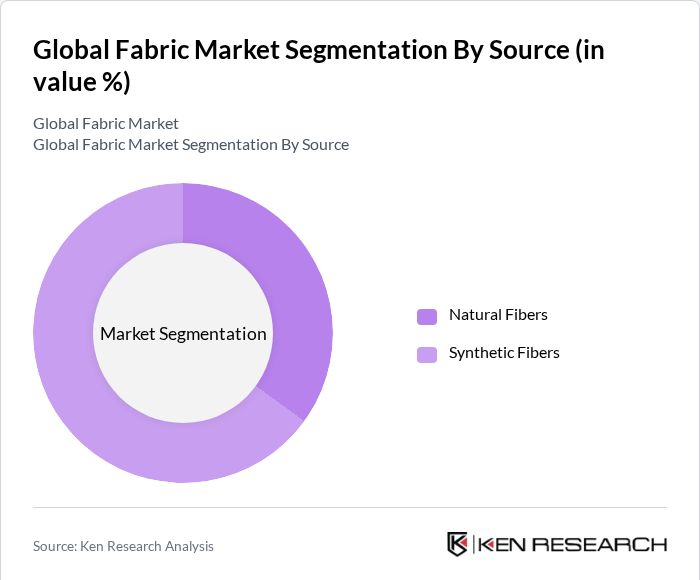
By Source: The fabric market is segmented into natural and synthetic fibers. Among these, synthetic fibers dominate the market due to their versatility, durability, and cost-effectiveness. The increasing demand for lightweight and moisture-wicking fabrics in sportswear and activewear has significantly contributed to the growth of synthetic fibers. Additionally, advancements in technology have led to the development of innovative synthetic materials that cater to specific consumer needs, further solidifying their market position.
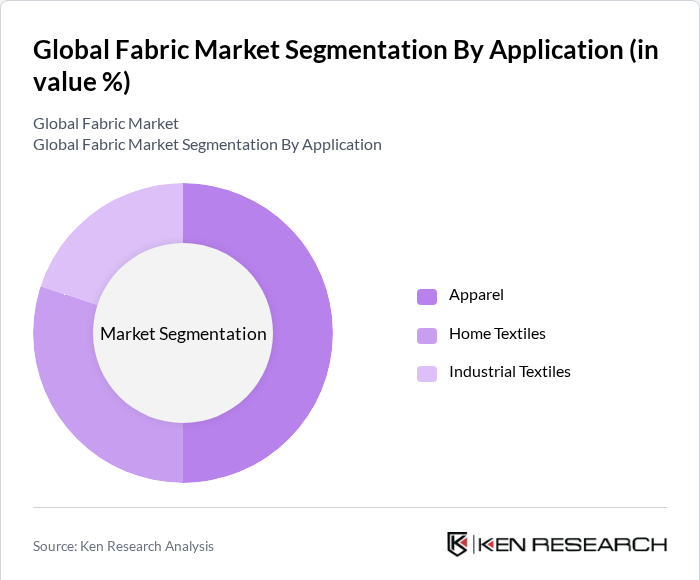
By Application: The fabric market is also segmented based on application, including apparel, home textiles, and industrial textiles. The apparel segment holds the largest share, driven by the ever-evolving fashion trends and the growing population. Consumers are increasingly seeking diverse clothing options, which has led to a surge in demand for various types of fabrics. Additionally, the rise of e-commerce has made it easier for consumers to access a wide range of apparel, further boosting this segment's growth.
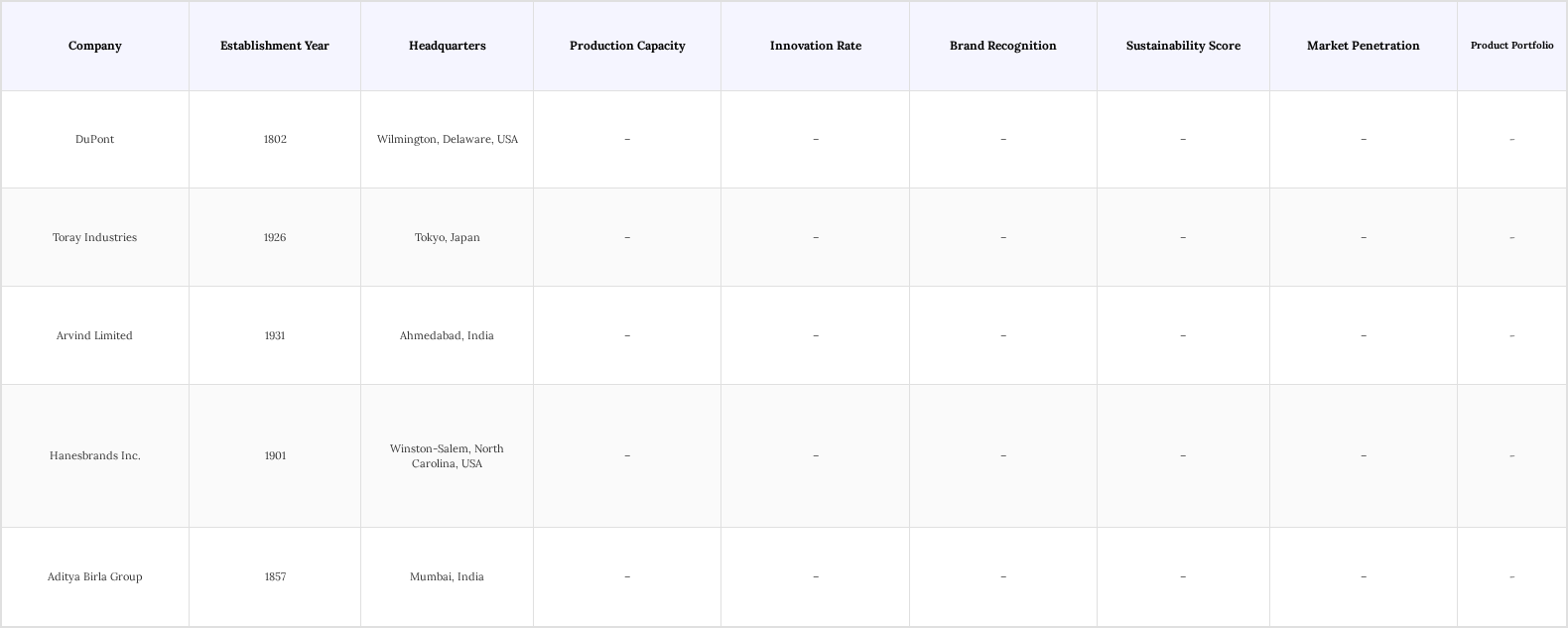
The Global Fabric Market is characterized by a competitive landscape with several key players, including companies like DuPont, Toray Industries, and Arvind Limited. These companies are known for their innovative approaches and extensive product portfolios, which cater to various consumer needs. The market is moderately concentrated, with a mix of established brands and emerging players striving to capture market share through sustainability initiatives and technological advancements.
The future of the fabric market is poised for significant transformation, driven by the increasing integration of technology and sustainability initiatives. As consumers continue to prioritize eco-friendly options, manufacturers are likely to invest in innovative production methods that reduce environmental impact. Additionally, the rise of e-commerce is expected to reshape distribution channels, providing greater access to diverse fabric options. This evolving landscape will create new opportunities for growth and collaboration within the industry, fostering a more resilient market.
| By Source |
Natural Synthetic |
| By Application |
Apparel Home Textiles Industrial Textiles |
| By Fiber Type |
Cotton Polyester Wool Silk Others |
| By Region |
North America Europe Asia-Pacific Latin America Middle East & Africa |
| By End-User |
Fashion Industry Automotive Healthcare Home Furnishing |
| By Distribution Channel |
Online Offline |
1.1. Definition and Scope
1.2. Market Taxonomy
1.3. Market Growth Rate
1.4. Market Segmentation Overview
2.1. Historical Market Size
2.2. Year-On-Year Growth Analysis
2.3. Key Market Developments and Milestones
3.1. Growth Drivers
3.1.1. Increasing Demand for Sustainable Fabrics
3.1.2. Technological Advancements in Fabric Production
3.1.3. Rising Consumer Awareness about Fabric Quality
3.2. Market Challenges
3.2.1. Fluctuating Raw Material Prices
3.2.2. Environmental Regulations Impacting Production
3.2.3. Competition from Alternative Materials
3.3. Opportunities
3.3.1. Expansion in Emerging Markets
3.3.2. Innovations in Smart Fabrics
3.3.3. Growth of E-commerce in Fabric Sales
3.4. Trends
3.4.1. Shift Towards Eco-friendly Fabrics
3.4.2. Customization and Personalization in Fabric Products
3.4.3. Integration of Technology in Fabric Manufacturing
3.5. Government Regulation
3.5.1. Compliance with Environmental Standards
3.5.2. Regulations on Chemical Use in Fabric Production
3.5.3. Trade Policies Affecting Fabric Imports and Exports
3.5.4. Labor Laws Impacting Fabric Manufacturing Processes
3.6. SWOT Analysis
3.7. Stake Ecosystem
3.8. Porter’s Five Forces
3.9. Competition Ecosystem
4.1. By Source
4.1.1. Natural
4.1.2. Synthetic
4.2. By Application
4.2.1. Apparel
4.2.2. Home Textiles
4.2.3. Industrial Textiles
4.3. By Fiber Type
4.3.1. Cotton
4.3.2. Polyester
4.3.3. Wool
4.3.4. Silk
4.3.5. Others
4.4. By Region
4.4.1. North America
4.4.2. Europe
4.4.3. Asia-Pacific
4.4.4. Latin America
4.4.5. Middle East & Africa
4.5. By End-User
4.5.1. Fashion Industry
4.5.2. Automotive
4.5.3. Healthcare
4.5.4. Home Furnishing
4.6. By Distribution Channel
4.6.1. Online
4.6.2. Offline
5.1. Detailed Profiles of Major Companies
5.1.1. DuPont
5.1.2. Toray Industries
5.1.3. Arvind Limited
5.1.4. Hanesbrands Inc.
5.1.5. Aditya Birla Group
5.1.6. Lenzing AG
5.1.7. Teijin Limited
5.1.8. Milliken & Company
5.1.9. Eastman Chemical Company
5.1.10. Unifi, Inc.
5.2. Cross Comparison Parameters
5.2.1. Market Share
5.2.2. Revenue Growth Rate
5.2.3. Product Innovation Rate
5.2.4. Geographic Presence
5.2.5. Customer Satisfaction Index
5.2.6. Supply Chain Efficiency
5.2.7. Brand Recognition
5.2.8. Sustainability Initiatives
6.1. Environmental Standards
6.2. Compliance Requirements
6.3. Certification Processes
7.1. Future Market Size Projections
7.2. Key Factors Driving Future Market Growth
8.1. By Source
8.1.1. Natural
8.1.2. Synthetic
8.2. By Application
8.2.1. Apparel
8.2.2. Home Textiles
8.2.3. Industrial Textiles
8.3. By Fiber Type
8.3.1. Cotton
8.3.2. Polyester
8.3.3. Wool
8.3.4. Silk
8.3.5. Others
8.4. By Region
8.4.1. North America
8.4.2. Europe
8.4.3. Asia-Pacific
8.4.4. Latin America
8.4.5. Middle East & Africa
8.5. By End-User
8.5.1. Fashion Industry
8.5.2. Automotive
8.5.3. Healthcare
8.5.4. Home Furnishing
8.6. By Distribution Channel
8.6.1. Online
8.6.2. Offline
9.1. TAM/SAM/SOM Analysis
9.2. Customer Cohort Analysis
9.3. Marketing Initiatives
9.4. White Space Opportunity Analysis
The initial phase involves mapping out the essential components of the Global Fabric Market, including key players, market segments, and consumer demographics. This step relies on extensive desk research, utilizing secondary data sources such as industry reports, market studies, and academic publications to identify the critical variables that drive market trends and consumer behavior.
In this phase, we will gather and analyze historical and current data related to the Global Fabric Market. This includes evaluating market size, growth rates, and trends across different fabric types and applications. The analysis will also encompass competitive landscape assessments to understand market positioning and identify potential growth opportunities.
Market hypotheses will be formulated based on preliminary findings and subsequently validated through structured interviews with industry experts and stakeholders. These consultations will provide insights into market dynamics, challenges, and opportunities, helping to refine the hypotheses and ensure they are grounded in real-world experiences and data.
The final phase involves synthesizing the collected data and insights into a cohesive report that outlines the findings and recommendations for stakeholders in the Global Fabric Market. This will include a comprehensive analysis of market trends, consumer preferences, and competitive strategies, ensuring that the final output is actionable and relevant for decision-making.
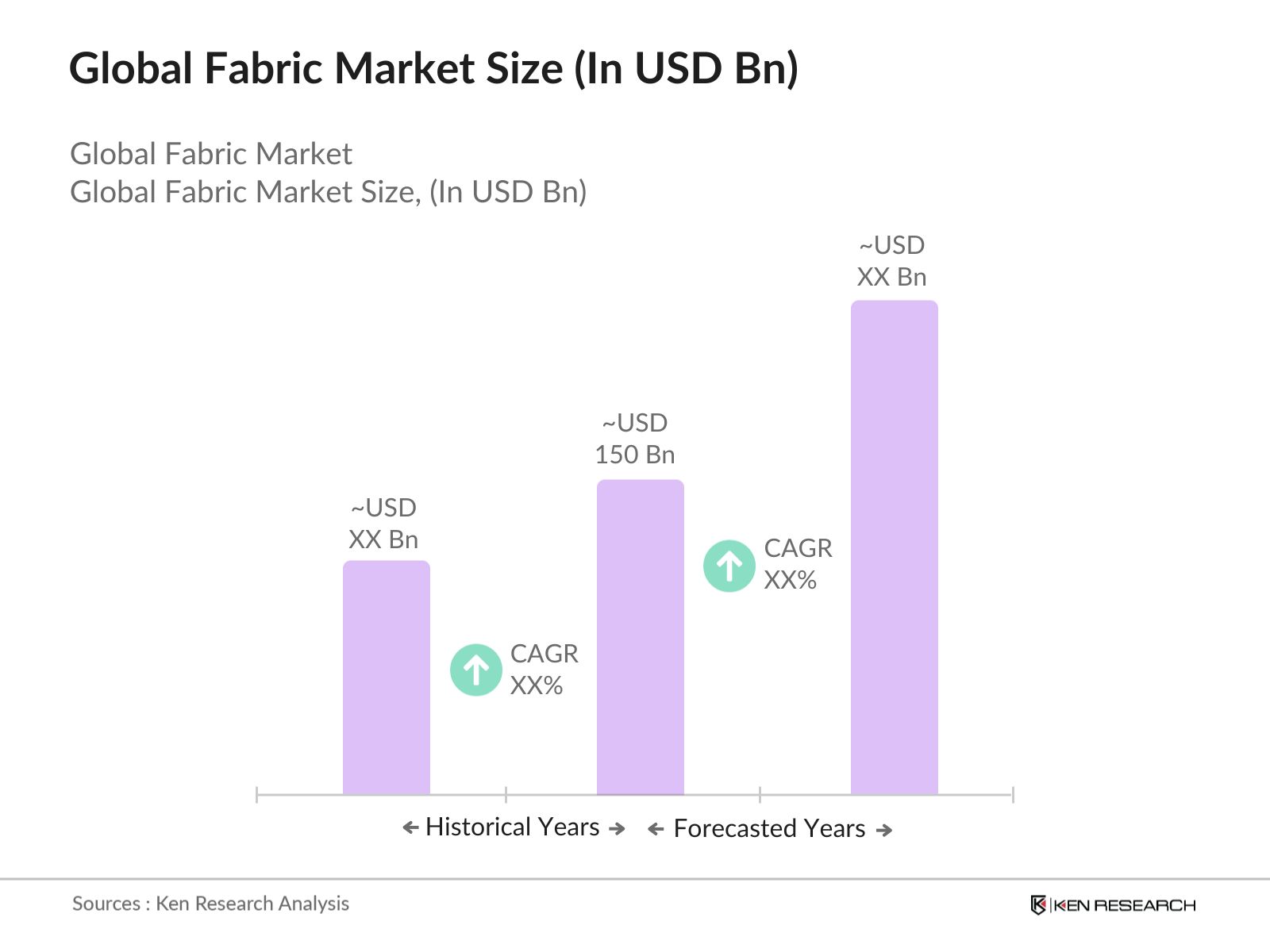
The Global Fabric Market is valued at USD 150 billion, driven by factors such as increasing demand, technological advancements, and supportive government initiatives.
Key challenges in the Global Fabric Market include intense competition, regulatory complexities, and infrastructure limitations affecting market dynamics.
Major players in the Global Fabric Market include DuPont, Toray Industries, Arvind Limited, Hanesbrands Inc., Aditya Birla Group, among others.
The primary growth drivers for the Global Fabric Market are increasing consumer demand, favorable policies, innovation, and substantial investment inflows.

What makes us stand out is that our consultants follows Robust, Refine and Result (RRR) methodology. i.e. Robust for clear definitions, approaches and sanity checking, Refine for differentiating respondents facts and opinions and Result for presenting data with story

We have set a benchmark in the industry by offering our clients with syndicated and customized market research reports featuring coverage of entire market as well as meticulous research and analyst insights.

While we don't replace traditional research, we flip the method upside down. Our dual approach of Top Bottom & Bottom Top ensures quality deliverable by not just verifying company fundamentals but also looking at the sector and macroeconomic factors.

With one step in the future, our research team constantly tries to show you the bigger picture. We help with some of the tough questions you may encounter along the way: How is the industry positioned? Best marketing channel? KPI's of competitors? By aligning every element, we help maximize success.

Our report gives you instant access to the answers and sources that other companies might choose to hide. We elaborate each steps of research methodology we have used and showcase you the sample size to earn your trust.

If you need any support, we are here! We pride ourselves on universe strength, data quality, and quick, friendly, and professional service.