















Global Fatty Acid Methyl Ester (FAME) Market Outlook to 2030
Region:Global
Author(s):Vijay Kumar
Product Code:KROD5291
October 2024
94
About the Report
Global Fatty Acid Methyl Ester (FAME) Market Overview
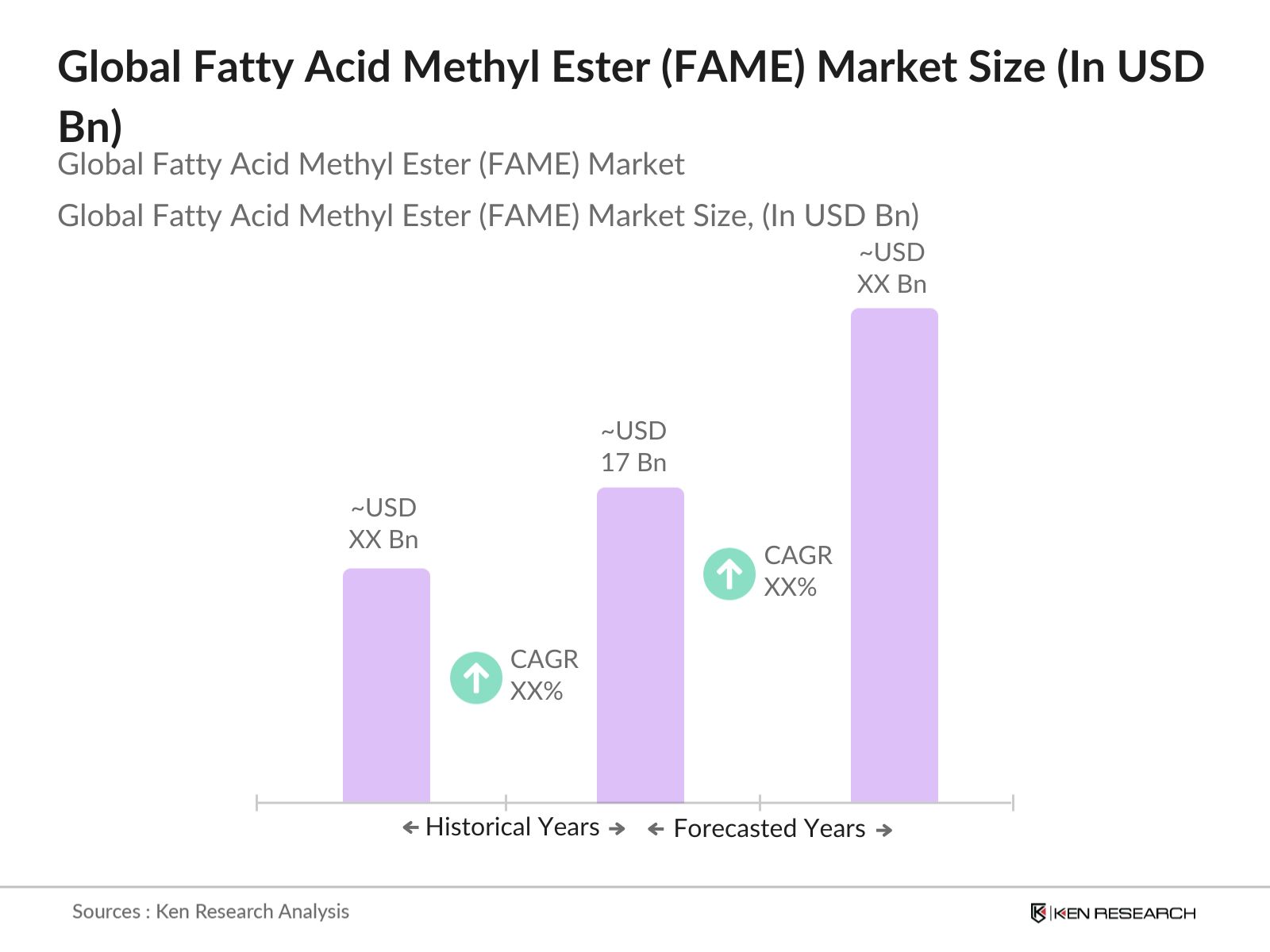
- The Global Fatty Acid Methyl Ester (FAME) market is valued at USD 17 billion, based on a five-year historical analysis. This market is primarily driven by the increasing use of biodiesel as an eco-friendly fuel alternative in the automotive and industrial sectors. Growing environmental regulations worldwide, particularly in developed countries, have pushed manufacturers to adopt FAME as a greener alternative to traditional petrochemical products. Additionally, the rising demand for renewable energy sources further drives the growth of the FAME market.
- Countries in regions like North America, Europe, and Asia-Pacific dominate the FAME market. North America leads due to its advanced infrastructure for biodiesel production, particularly in the United States, where supportive government policies and incentives drive high biodiesel consumption. Europe, especially Germany and France, dominates the market due to stringent environmental regulations promoting the use of renewable fuels. Meanwhile, the Asia-Pacific region, led by countries like China and Malaysia, sees high demand due to its large industrial base and abundant availability of raw materials like palm oil, essential for FAME production.
- Governments worldwide are enforcing biodiesel blending mandates to encourage the use of renewable energy. In Brazil, for instance, the government has set a minimum biodiesel blend mandate of 13% as of 2024. According to the Brazilian Ministry of Mines and Energy, this policy is expected to save 3 million tons of carbon dioxide emissions annually, driving up demand for FAME.
Global Fatty Acid Methyl Ester (FAME) Market Segmentation
By Application: The market is segmented by application into biodiesel, surfactants & detergents, lubricants & greases, personal care & cosmetics, and pharmaceuticals. Biodiesel is the dominant sub-segment under the application category. This is attributed to the global shift towards greener energy alternatives, where biodiesel plays a pivotal role. The transportation sector has seen a rapid increase in the adoption of biodiesel as it helps in reducing carbon emissions, aligning with stringent global emission norms.

By Type: The market is further categorized by type into rapeseed methyl ester (RME), soy methyl ester (SME), palm oil methyl ester (PME), sunflower methyl ester, and tallow methyl ester. Palm oil methyl ester dominates this segment due to the abundance of palm oil production in regions like Southeast Asia, specifically Indonesia and Malaysia. Palm oil is widely used due to its low cost and high yield, making it an ideal choice for FAME production, especially in biodiesel.
By Region: The market is segmented into five major regions: North America, Europe, Asia-Pacific, Latin America, and Middle East & Africa. Europe holds the largest market share, largely due to the European Union's Renewable Energy Directive (RED) which mandates the use of biofuels. This has significantly increased the adoption of FAME in Europe, particularly in countries like Germany, France, and Italy, which are keen on meeting their renewable energy targets.

Global Fatty Acid Methyl Ester (FAME) Market Competitive Landscape
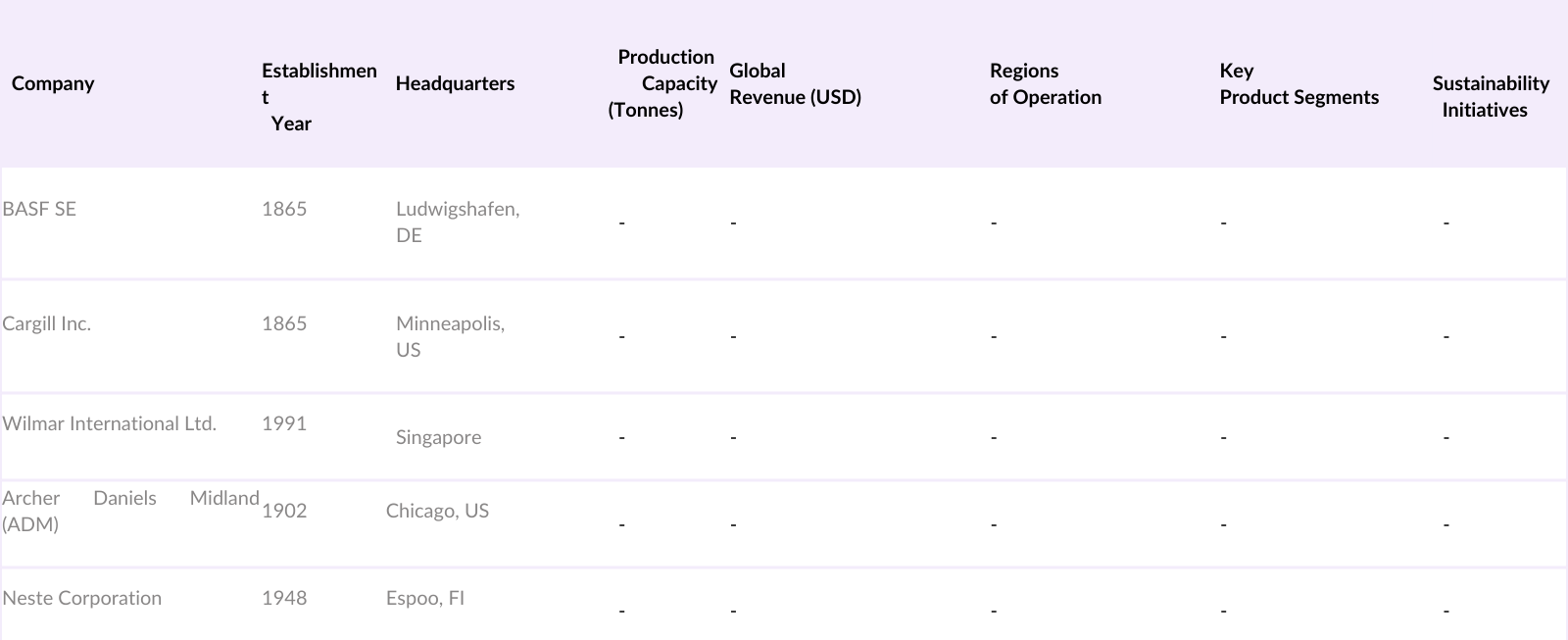
The Global FAME market is characterized by the presence of several major players, with strong competition among them. Key players in this market benefit from well-established production capabilities, diversified product portfolios, and access to multiple regions. Companies like BASF SE and Cargill have substantial influence due to their strong manufacturing and supply chain infrastructure. The FAME market is dominated by large multinational corporations, with major players utilizing strategic investments in R&D and sustainability to strengthen their market position.
Global Fatty Acid Methyl Ester (FAME) Industry Analysis
Growth Drivers
- Increased Demand in Biodiesel Production (Demand for renewable energy sources): The global shift towards renewable energy, driven by governmental policies and environmental mandates, has spurred significant growth in the biodiesel sector. Fatty Acid Methyl Ester (FAME) is a key component of biodiesel, produced from renewable sources like vegetable oils and animal fats. As of 2024, global biodiesel consumption is forecast to increase by 2.5 million barrels of oil equivalent per day, with large-scale production seen in countries like the U.S. and Brazil.
- Expansion in Oleochemicals Sector (Surfactants, Lubricants): The oleochemicals sector is expanding due to growing demand for bio-based surfactants and lubricants. Fatty Acid Methyl Ester is widely used in these applications, as it serves as a feedstock for biodegradable surfactants and lubricants. The global production of oleochemicals exceeded 18 million tons in 2023, led by Southeast Asia, where Malaysia and Indonesia account for over 60% of the production.
- Growth in Cosmetics and Personal Care Industry (Eco-friendly Ingredients): The cosmetics industry is increasingly incorporating eco-friendly ingredients like FAME, valued for its biodegradable and non-toxic properties. According to the European Commission, sales of green cosmetics surged by 18 billion euros globally in 2023, particularly in North America and Europe. FAME is used in formulations as an emulsifier and thickener, offering alternatives to petrochemical-based products.
Market Challenges
- Fluctuating Raw Material Prices (Feedstock Variability): One of the key challenges in the FAME market is the fluctuation in raw material prices, particularly soybean and palm oil. The UN Food and Agriculture Organization (FAO) reported that palm oil prices spiked by over $1,000 per metric ton in early 2023 due to supply disruptions in Southeast Asia, which accounts for 85% of global production.
- Regulatory Constraints (Environmental Certifications): Regulatory constraints present another challenge for FAME producers, particularly in meeting environmental certifications like the Roundtable on Sustainable Palm Oil (RSPO) standards. In 2024, only 19% of global palm oil production is RSPO certified, according to the RSPO Annual Report. FAME producers relying on non-certified palm oil may face limited market access in regions like the EU, which mandates stricter sustainability standards under the Renewable Energy Directive (RED II).
Global Fatty Acid Methyl Ester (FAME) Market Future Outlook
Over the next five years, the Global Fatty Acid Methyl Ester market is expected to witness significant growth driven by rising environmental concerns and increasing government regulations promoting renewable energy sources. The shift towards reducing greenhouse gas emissions and enhancing energy security will continue to favor the adoption of FAME, particularly in the biodiesel sector.
Market Opportunities
- Technological Advancements in Transesterification (Process Innovations): Technological innovations in the transesterification process are creating new opportunities for FAME production. Automated processing techniques, such as enzymatic transesterification, have improved production yields by up to 30% while reducing waste and energy consumption. According to the International Renewable Energy Agency (IRENA), these advancements could enhance production efficiency in the biodiesel sector by 25% by 2025, offering cost-saving benefits for FAME producers.
- Rising Investments in Biofuels (Green Energy): Rising investments in biofuels, backed by government incentives and green energy initiatives, are driving FAME demand. The U.S. Department of Agriculture (USDA) announced in 2023 that biofuel investments had surpassed $500 million, aimed at increasing biodiesel production capacity by 2.7 billion gallons by 2025. Such investments support FAME's role in green energy initiatives, contributing to reduced dependency on fossil fuels and encouraging its use in transport and power generation sectors.
Scope of the Report
|
Application |
Biodiesel Surfactants & Detergents Lubricants & Greases Personal Care & Cosmetics Pharmaceuticals |
|
Type |
Rapeseed Methyl Ester (RME) Soy Methyl Ester (SME) Palm Oil Methyl Ester (PME) Sunflower Methyl Ester Tallow Methyl Ester |
|
End-User Industry |
Automotive Personal Care Industrial Agriculture Food Industry |
|
Feedstock |
Palm Oil Soybean Oil Waste Vegetable Oil Animal Fat Sunflower Oil |
|
Region |
North America Europe Asia-Pacific Latin America Middle East & Africa |
Products
Key Target Audience
Biodiesel Manufacturers
Automotive Industry
Cosmetic & Personal Care Manufacturers
Pharmaceutical Industry
Food Processing Industry
Agricultural Chemical Producers
Government and Regulatory Bodies (e.g., US Environmental Protection Agency, EU Renewable Energy Directive)
Investments and Venture Capitalist Firms
Companies
Players Mentioned in the Report
BASF SE
Cargill Inc.
Wilmar International Ltd.
Evonik Industries AG
Archer Daniels Midland Company
Emery Oleochemicals
KLK OLEO
Renewable Energy Group Inc.
P&G Chemicals
Aemetis Inc.
Table of Contents
1. Global Fatty Acid Methyl Ester Market Overview
1.1. Definition and Scope
1.2. Market Taxonomy
1.3. Market Growth Rate
1.4. Market Segmentation Overview
2. Global Fatty Acid Methyl Ester Market Size (In USD Bn)
2.1. Historical Market Size
2.2. Year-On-Year Growth Analysis
2.3. Key Market Developments and Milestones
3. Global Fatty Acid Methyl Ester Market Analysis
3.1. Growth Drivers
3.1.1. Increased Demand in Biodiesel Production (Demand for renewable energy sources)
3.1.2. Expansion in Oleochemicals Sector (Surfactants, Lubricants)
3.1.3. Rising Environmental Regulations on GHG Emissions (Sustainability)
3.1.4. Growth in Cosmetics and Personal Care Industry (Eco-friendly Ingredients)
3.2. Market Challenges
3.2.1. Fluctuating Raw Material Prices (Feedstock Variability)
3.2.2. Regulatory Constraints (Environmental Certifications)
3.2.3. Complex Supply Chain Issues (Logistics and Distribution)
3.3. Opportunities
3.3.1. Technological Advancements in Transesterification (Process Innovations)
3.3.2. Rising Investments in Biofuels (Green Energy)
3.3.3. Growing Application in Pharmaceuticals (Green Solvents)
3.4. Trends
3.4.1. Adoption of Circular Economy Models (Sustainable Sourcing)
3.4.2. Integration of Renewable Energy in FAME Production (Energy Efficiency)
3.4.3. Increased Focus on Carbon-Neutral Initiatives (Net-Zero Targets)
3.5. Government Regulations
3.5.1. Biodiesel Blending Mandates
3.5.2. EU Renewable Energy Directive
3.5.3. US Environmental Protection Agency (EPA) Regulations
3.5.4. Certification Standards for Sustainable Palm Oil
3.6. SWOT Analysis
3.7. Value Chain Analysis (FAME Production & Distribution)
3.8. Porters Five Forces (Industry Competitive Landscape)
3.9. Stakeholder Ecosystem (Producers, Distributors, End-Users)
4. Global Fatty Acid Methyl Ester Market Segmentation
4.1. By Application (In Value %)
4.1.1. Biodiesel
4.1.2. Surfactants & Detergents
4.1.3. Lubricants & Greases
4.1.4. Personal Care & Cosmetics
4.1.5. Pharmaceuticals
4.2. By Type (In Value %)
4.2.1. Rapeseed Methyl Ester (RME)
4.2.2. Soy Methyl Ester (SME)
4.2.3. Palm Oil Methyl Ester (PME)
4.2.4. Sunflower Methyl Ester
4.2.5. Tallow Methyl Ester
4.3. By End-User Industry (In Value %)
4.3.1. Automotive (Fuel Blending, Lubricants)
4.3.2. Personal Care (Cosmetic Ingredients)
4.3.3. Industrial (Solvents, Cleaning Agents)
4.3.4. Agriculture (Pesticide Additives)
4.3.5. Food Industry (Emulsifiers, Flavor Carriers)
4.4. By Feedstock (In Value %)
4.4.1. Palm Oil
4.4.2. Soybean Oil
4.4.3. Waste Vegetable Oil
4.4.4. Animal Fat
4.4.5. Sunflower Oil
4.5. By Region (In Value %)
4.5.1. North America
4.5.2. Europe
4.5.3. Asia-Pacific
4.5.4. Latin America
4.5.5. Middle East & Africa
5. Global Fatty Acid Methyl Ester Market Competitive Analysis
5.1. Detailed Profiles of Major Companies
5.1.1. BASF SE
5.1.2. Cargill Inc.
5.1.3. Archer Daniels Midland Company
5.1.4. Wilmar International Ltd.
5.1.5. Evonik Industries AG
5.1.6. Emery Oleochemicals
5.1.7. KLK OLEO
5.1.8. Renewable Energy Group Inc.
5.1.9. P&G Chemicals
5.1.10. Aemetis Inc.
5.1.11. Stepan Company
5.1.12. Diester Industrie
5.1.13. Vantage Specialty Chemicals
5.1.14. Neste Corporation
5.1.15. Berg + Schmidt GmbH & Co. KG
5.2. Cross Comparison Parameters (No. of Employees, Headquarters, Inception Year, Revenue, Market Share, Manufacturing Capacity, Regional Presence, Product Portfolio)
5.3. Market Share Analysis
5.4. Strategic Initiatives
5.5. Mergers and Acquisitions
5.6. Investment Analysis
5.7. Venture Capital Funding
5.8. Government Grants
5.9. Private Equity Investments
6. Global Fatty Acid Methyl Ester Market Regulatory Framework
6.1. Biofuel Certification Requirements
6.2. Compliance with Environmental Standards
6.3. Feedstock Sustainability Certifications (RSPO, ISCC)
6.4. Regional Emission Reduction Regulations
7. Global Fatty Acid Methyl Ester Future Market Size (In USD Bn)
7.1. Future Market Size Projections
7.2. Key Factors Driving Future Market Growth
8. Global Fatty Acid Methyl Ester Future Market Segmentation
8.1. By Application (In Value %)
8.2. By Type (In Value %)
8.3. By End-User Industry (In Value %)
8.4. By Feedstock (In Value %)
8.5. By Region (In Value %)
9. Global Fatty Acid Methyl Ester Market Analysts Recommendations
9.1. TAM/SAM/SOM Analysis
9.2. Customer Cohort Analysis
9.3. Marketing Initiatives
9.4. White Space Opportunity Analysis
Research Methodology
Step 1: Identification of Key Variables
This phase involved mapping the FAME ecosystem and identifying key market variables such as production volumes, feedstock availability, and pricing structures. Desk research was conducted using secondary sources like government publications and proprietary databases.
Step 2: Market Analysis and Construction
Historical market data was compiled to analyze FAME market trends. Key factors such as demand for biodiesel and oleochemicals, production capacity, and the regulatory environment were assessed to construct market forecasts.
Step 3: Hypothesis Validation and Expert Consultation
Market hypotheses were validated through interviews with key stakeholders in the FAME industry. Experts from biodiesel manufacturers, chemical companies, and regulatory bodies provided critical insights into market dynamics.
Step 4: Research Synthesis and Final Output
This step involved synthesizing insights from primary research and data analysis to develop the final market report. The report includes detailed segmentation, competitive analysis, and market forecasts, providing a comprehensive overview of the FAME market.
Frequently Asked Questions
01. How big is the Global Fatty Acid Methyl Ester Market?
The Global Fatty Acid Methyl Ester (FAME) market is valued at USD 17 billion, based on a five-year historical analysis. This market is primarily driven by the increasing use of biodiesel as an eco-friendly fuel alternative in the automotive and industrial sectors.
02. What are the challenges in the Global Fatty Acid Methyl Ester Market?
Challenges include fluctuating feedstock prices, regulatory constraints in different regions, and competition from alternative biofuel sources.
03. Who are the major players in the Global Fatty Acid Methyl Ester Market?
Key players include BASF SE, Cargill Inc., Wilmar International, Archer Daniels Midland Company, and Neste Corporation. These companies lead due to their extensive global presence and diversified product portfolios.
04. What are the growth drivers of the Global Fatty Acid Methyl Ester Market?
The market is primarily driven by environmental regulations promoting renewable energy, the growing demand for biodiesel, and advancements in transesterification technology.
Why Buy From Us?

What makes us stand out is that our consultants follows Robust, Refine and Result (RRR) methodology. i.e. Robust for clear definitions, approaches and sanity checking, Refine for differentiating respondents facts and opinions and Result for presenting data with story

We have set a benchmark in the industry by offering our clients with syndicated and customized market research reports featuring coverage of entire market as well as meticulous research and analyst insights.

While we don't replace traditional research, we flip the method upside down. Our dual approach of Top Bottom & Bottom Top ensures quality deliverable by not just verifying company fundamentals but also looking at the sector and macroeconomic factors.

With one step in the future, our research team constantly tries to show you the bigger picture. We help with some of the tough questions you may encounter along the way: How is the industry positioned? Best marketing channel? KPI's of competitors? By aligning every element, we help maximize success.

Our report gives you instant access to the answers and sources that other companies might choose to hide. We elaborate each steps of research methodology we have used and showcase you the sample size to earn your trust.

If you need any support, we are here! We pride ourselves on universe strength, data quality, and quick, friendly, and professional service.