
Global Fiberglass Market Outlook 2030
Region:Global
Author(s):Shivani Mehra
Product Code:KROD9451
November 2024
88
About the Report
Global Fiberglass Market Overview
- The global fiberglass market is valued at USD 13.15 billion, with its growth primarily driven by increasing demand from industries such as construction, automotive, aerospace, and wind energy sectors. Fiberglass, known for its strength, lightweight, and corrosion resistance, plays a critical role in manufacturing components where durability and efficiency are crucial. Moreover, as industries shift towards energy-efficient solutions, fiberglass's thermal and insulation properties have made it a material of choice in various applications.
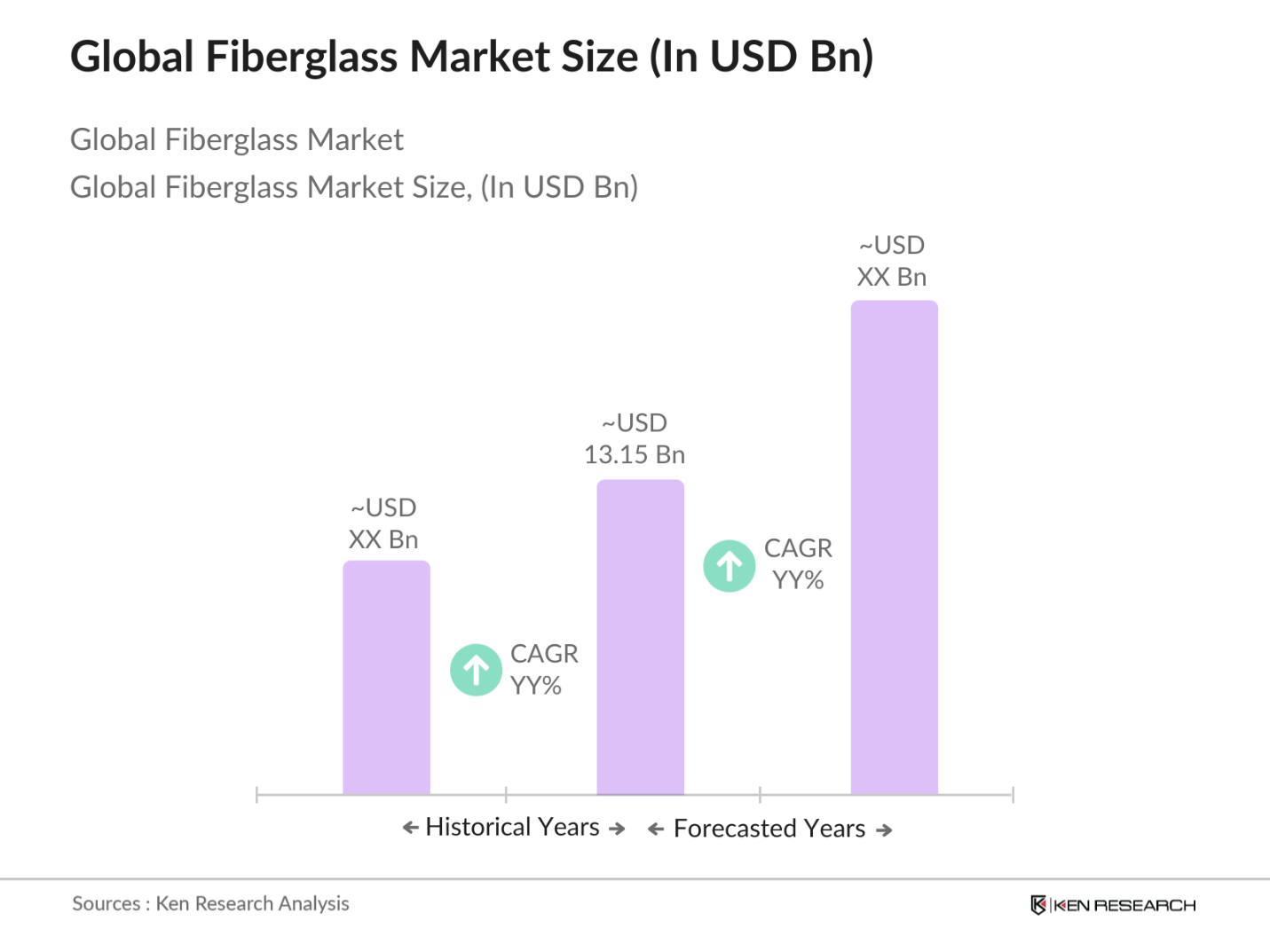
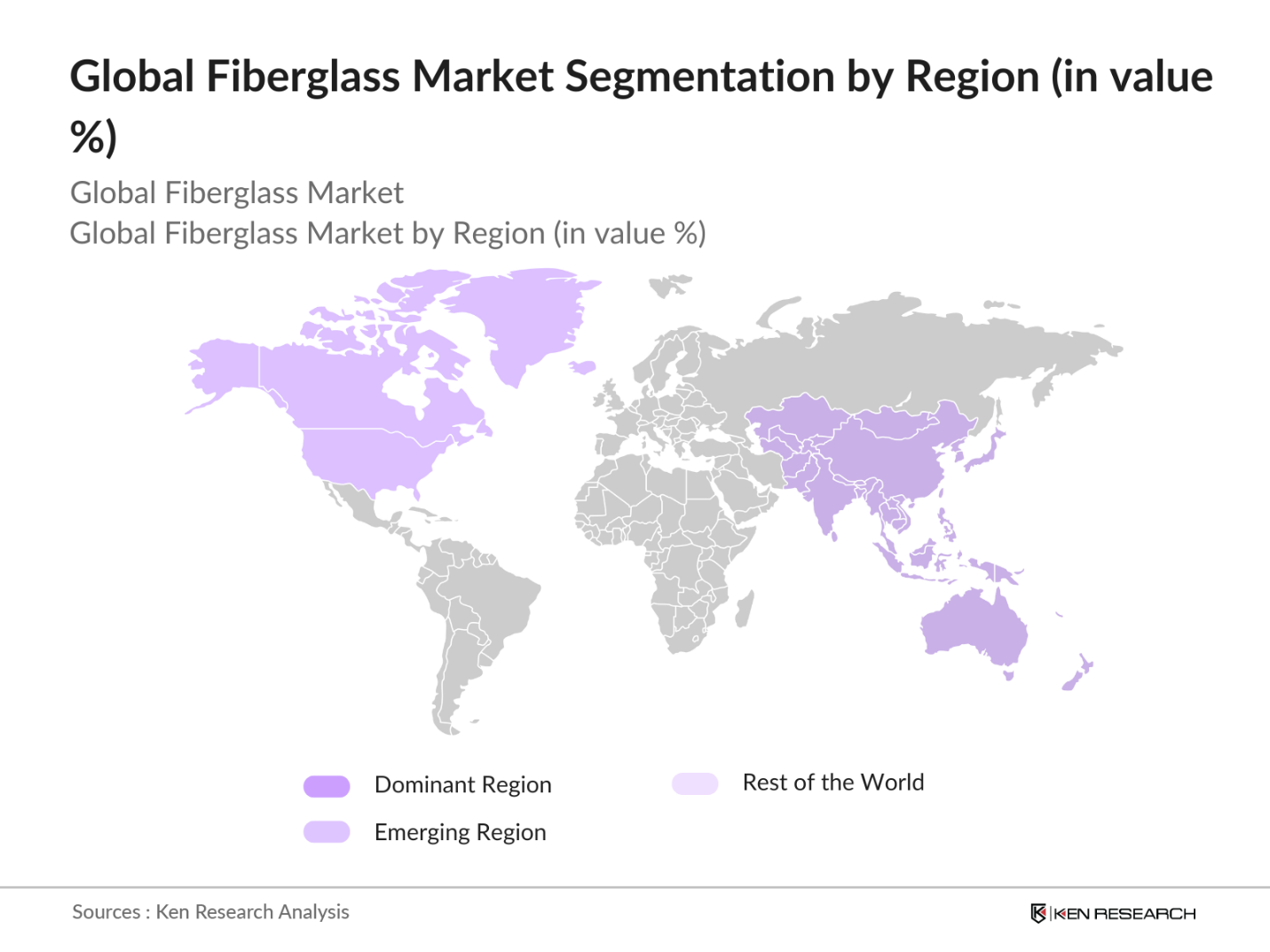
- The Asia-Pacific region, especially China and India, dominates the global fiberglass market. This can be attributed to rapid urbanization, industrial expansion, and high demand from the automotive and construction industries. Chinas dominance, in particular, stems from its extensive manufacturing base and heavy investments in renewable energy, where fiberglass is widely used in wind turbines and infrastructure projects.
- The global push for sustainable practices has led to stricter environmental regulations in fiberglass production. In 2023, the European Union mandated increased recycling of industrial waste, with the fiberglass industry being a key focus due to its significant production waste. The US Environmental Protection Agency (EPA) has also introduced tighter controls on air emissions from fiberglass manufacturing facilities. These regulations are driving the adoption of cleaner technologies and boosting the demand for more sustainable manufacturing practices within the industry, as companies seek to comply with these stringent environmental standards.
Global Fiberglass Market Segmentation
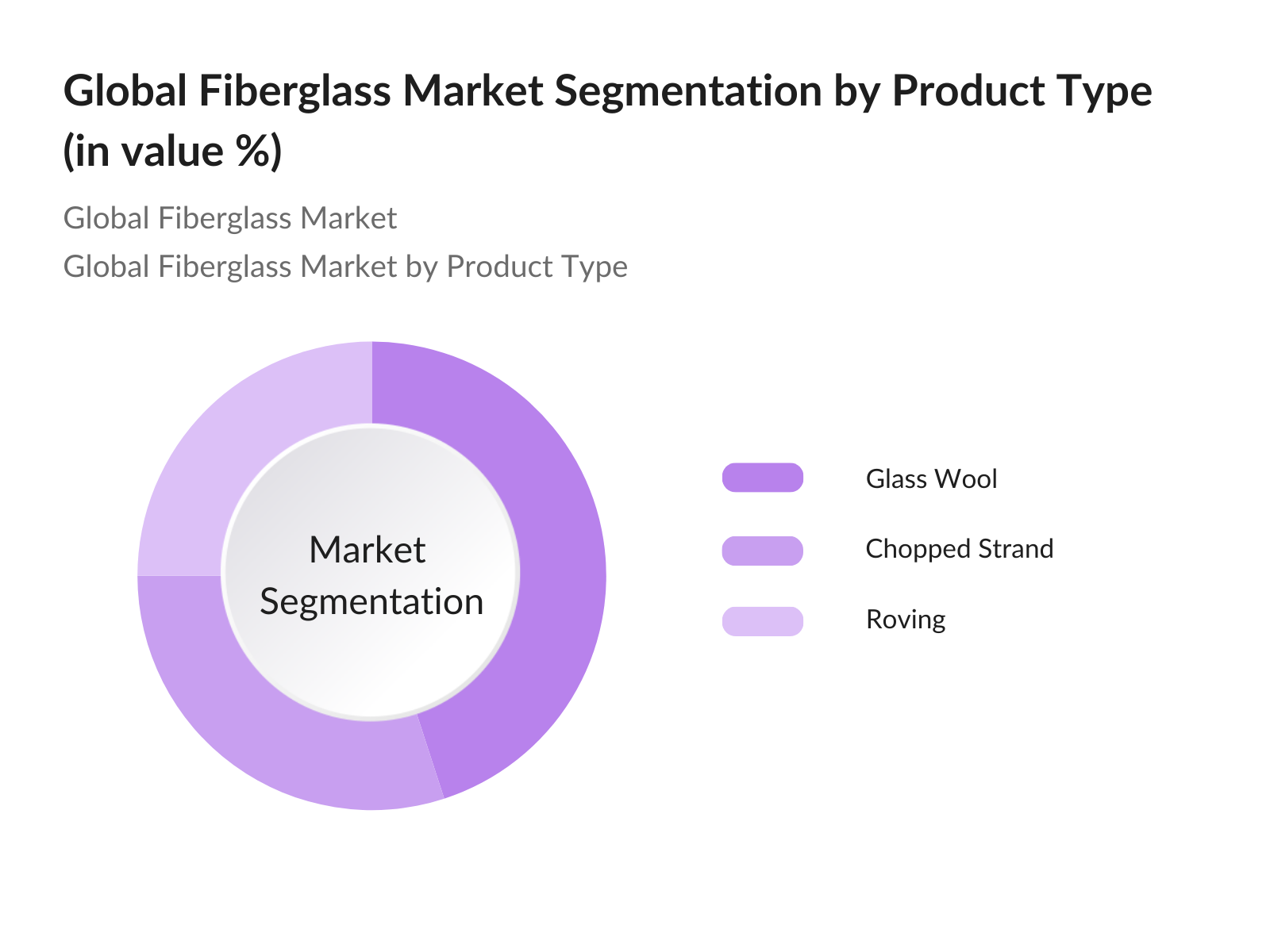
By Product Type: The fiberglass market is segmented by product type into Glass Wool, Chopped Strand, and Roving. Among these, Glass Wool holds a dominant market share in 2023 due to its widespread use in insulation, particularly in the construction and HVAC industries. Its cost-effectiveness and high thermal resistance make it a preferred material in residential and industrial buildings. Additionally, growing environmental concerns are pushing for more sustainable materials, boosting the demand for fiberglass-based insulation products.
By Region: The fiberglass market is segmented by region into North America, Europe, Asia-Pacific, and MEA (Middle East & Africa). Asia-Pacific dominates the market in 2023 due to its robust manufacturing sector, particularly in China and India, where fiberglass is used extensively in infrastructure projects. The regions growing automotive and electronics sectors further contribute to its dominance. Additionally, governmental incentives in APAC countries supporting renewable energy adoption have amplified the demand for fiberglass.
Global Fiberglass Market Competitive Landscape
The global fiberglass market is highly consolidated, with a few key players dominating the landscape. These companies invest significantly in research and development to innovate new fiberglass applications and improve production efficiency. For instance, Owens Corning and China Jushi lead in offering innovative solutions across sectors like wind energy and automotive. Other players like Nippon Electric Glass focus on high-end applications in the aerospace and electronics sectors, adding to the competitive landscape's diversity.
|
Company |
Establishment Year |
Headquarters |
Revenue (USD Billion) |
No. of Employees |
R&D Spending |
Production Capacity |
Product Portfolio |
|
China Jushi Co., Ltd. |
1993 |
China |
2.4 |
- |
- |
- |
- |
|
Owens Corning |
1938 |
USA |
7.1 |
- |
- |
- |
- |
|
Nippon Electric Glass |
1949 |
Japan |
2.3 |
- |
- |
- |
- |
|
Taishan Fiberglass Inc. |
1999 |
China |
1.6 |
- |
- |
- |
- |
|
Johns Manville Corp. |
1858 |
USA |
3.0 |
- |
- |
- |
- |
Global Fiberglass Market Analysis
Market Growth Drivers
- Increased Demand for Lightweight Materials: The global trend toward lightweight materials, particularly in the automotive and aerospace sectors, is driving the demand for fiberglass. Fiberglass, being significantly lighter than traditional materials like steel, has been increasingly adopted to improve fuel efficiency and reduce emissions. The International Energy Agency (IEA) reported that global car production exceeded 90 million units in 2023, with manufacturers increasingly focusing on lightweight components. This shift, especially within electric vehicles, is driving the need for materials like fiberglass to meet stringent emission and efficiency targets.
- Expansion in Construction and Automotive Sectors: The booming construction and automotive sectors are key drivers for fiberglass demand. In 2023, global construction output was valued at USD 12 trillion, according to the World Bank. Fiberglass, with its durability and resistance to environmental factors, is widely used in applications like insulation, roofing, and structural elements. The automotive industry, too, has increasingly adopted fiberglass, with the European Union alone producing over 10 million vehicles in 2023. As construction and automotive production increase in major economies, demand for fiberglass is projected to continue rising.
- Advancements in Manufacturing Processes (Innovation): Technological advancements in fiberglass manufacturing have improved production efficiency and product performance. Automation and the development of new production techniques have enabled manufacturers to produce fiberglass with better properties, such as enhanced thermal resistance and mechanical strength. Improvements in insulation materials, like fiberglass, have also significantly contributed to reducing energy consumption in construction, further driving demand. These innovations have allowed manufacturers to meet increasing industry demands while maintaining cost-effective production and delivering high-quality products.
Market Challenges:
- Increasing Applications in Wind Energy (Sustainability): Fiberglass plays a crucial role in the growing wind energy sector, particularly in the production of wind turbine blades. In 2023, the global wind energy market installed 95 GW of new capacity, with a significant portion of wind turbines using fiberglass blades due to their lightweight and strong characteristics. The Global Wind Energy Council (GWEC) reported that fiberglass is expected to remain a key material for blade manufacturing, as the renewable energy sector continues to expand. The focus on renewable energy projects, especially in regions like Europe and China, presents a substantial growth opportunity for fiberglass.
- Technological Advancements in Insulation (Efficiency): Fiberglass insulation is benefiting from technological advancements that improve energy efficiency. As governments promote energy-efficient building standards, fiberglass insulation has become a preferred choice for its thermal properties. Advanced insulation technologies, including fiberglass, are playing a critical role in reducing energy consumption in both residential and commercial buildings. This trend is bolstering the use of fiberglass insulation, as it meets the growing demand for sustainable building solutions while improving energy efficiency across a range of applications.
Global Fiberglass Market Future Outlook
The global fiberglass market is poised for significant growth over the next five years, driven by continuous advancements in renewable energy technologies and increasing demand from construction and automotive sectors. Governments worldwide are focusing on sustainability, and fiberglass, with its high recyclability and energy-efficient properties, will likely witness increased usage. Additionally, technological innovations, such as the use of bio-based resins in fiberglass production, will further bolster market growth
Market Opportunities:
- Growth in E-Glass and S-Glass Use (Product Innovation): E-glass and S-glass are becoming increasingly popular due to their superior strength and resistance to environmental factors. These advanced fiberglass materials are widely used in high-performance applications such as aerospace and defense, where their properties, including weight reduction and corrosion resistance, make them ideal for demanding environments. The increasing adoption of these materials highlights the importance of product innovation in the fiberglass industry, as manufacturers focus on developing stronger, more durable materials to meet the evolving needs of various sectors.
- Rise of Thermoplastic Resins in Automotive Manufacturing: The automotive industry is increasingly turning to thermoplastic resins reinforced with fiberglass to meet the demand for lightweight and durable materials. Fiberglass composites are widely used in body panels and battery enclosures in electric vehicles, where weight reduction and improved energy efficiency are key priorities. This shift towards thermoplastic resins in automotive manufacturing is driving growth in the fiberglass market, as manufacturers seek materials that can enhance vehicle performance while meeting the industry's evolving requirements for sustainability and efficiency.
Scope of the Report
|
By Type |
E-Glass S-Glass C-Glass AR-Glass |
|
By Resin Type |
Thermoset Resins Thermoplastic Resins |
|
By Application |
Automotive Aerospace Marine Wind Energy |
|
By Product Type |
Chopped Strand Roving Yarn Glass Wool |
|
By Region |
North America Europe APAC MEA |
Products
Key Target Audience
Government and regulatory bodies (e.g., Environmental Protection Agencies)
Fiberglass manufacturers
Automotive industry players
Construction and infrastructure companies
Renewable energy project developers
Aerospace manufacturers
Investments and venture capital firms
Wind turbine manufacturers
Companies
Players Mention in the Report
China Jushi Co., Ltd.
Owens Corning
Nippon Electric Glass Co., Ltd.
Taishan Fiberglass Inc.
Chongqing Polycomp International Corp. (CPIC)
Johns Manville Corp.
Saint-Gobain
AGY Holding Corp.
PPG Industries
Knauf Insulation
Hexcel Corporation
Owens Illinois
Fiberex Glass Corporation
Taiwan Glass Ind. Corp.
Advanced Glassfiber Yarns LLC
Table of Contents
1. Global Fiberglass Market Overview
1.1. Definition and Scope
1.2. Market Taxonomy
1.3. Market Growth Rate
1.4. Key Industry Developments
2. Global Fiberglass Market Size (In USD Billion)
2.1. Historical Market Size (Market Value, Volume)
2.2. Year-On-Year Growth Analysis
2.3. Major Market Drivers
2.4. Milestones in Market Development
3. Global Fiberglass Market Analysis
3.1. Market Drivers
3.1.1. Increased Demand for Lightweight Materials
3.1.2. Expansion in Construction and Automotive Sectors
3.1.3. Advancements in Manufacturing Processes (Innovation)
3.2. Market Challenges
3.2.1. Raw Material Price Volatility (Resin, Glass Fibers)
3.2.2. Environmental and Regulatory Pressures (Compliance)
3.3. Market Opportunities
3.3.1. Increasing Applications in Wind Energy (Sustainability)
3.3.2. Technological Advancements in Insulation (Efficiency)
3.4. Market Trends
3.4.1. Growth in E-Glass and S-Glass Use (Product Innovation)
3.4.2. Rise of Thermoplastic Resins in Automotive Manufacturing
3.4.3. Expanding Use of Fiberglass in Aerospace and Marine
3.5. Regulatory Landscape
3.5.1. Environmental Regulations (Waste Management)
3.5.2. Industry Safety Standards (ISO Certifications)
3.6. Competitive Ecosystem
3.6.1. Market Structure Overview
3.6.2. Key Competitor Profiles (Detailed below)
3.7. SWOT Analysis
3.7.1. Strengths (Durability, Resistance to Corrosion)
3.7.2. Weaknesses (High Manufacturing Costs)
3.7.3. Opportunities (Growing Renewable Energy Sector)
3.7.4. Threats (Emerging Substitutes like Carbon Fiber)
4. Global Fiberglass Market Segmentation
4.1. By Type (In Value %)
4.1.1. E-Glass
4.1.2. S-Glass
4.1.3. C-Glass
4.1.4. AR-Glass
4.2. By Resin Type (In Value %)
4.2.1. Thermoset Resins
4.2.2. Thermoplastic Resins
4.3. By Application (In Value %)
4.3.1. Construction & Infrastructure
4.3.2. Automotive
4.3.3. Wind Energy
4.3.4. Aerospace
4.4. By Product Type (In Value %)
4.4.1. Glass Wool
4.4.2. Chopped Strand
4.4.3. Roving
4.5. By Region (In Value %)
4.5.1. North America
4.5.2. Europe
4.5.3. APAC
4.5.4. MEA
5. Global Fiberglass Market Competitive Landscape
5.1. Detailed Profiles of Major Companies
5.1.1. China Jushi Co., Ltd.
5.1.2. Owens Corning
5.1.3. Nippon Electric Glass Co., Ltd.
5.1.4. Taishan Fiberglass Inc. (CTG Group)
5.1.5. Chongqing Polycomp International Corp. (CPIC)
5.1.6. Johns Manville Corp.
5.1.7. Saint-Gobain
5.1.8. AGY Holding Corp.
5.1.9. PPG Industries
5.1.10. Knauf Insulation
5.1.11. Hexcel Corporation
5.1.12. Owens Illinois
5.1.13. Fiberex Glass Corporation
5.1.14. Taiwan Glass Ind. Corp.
5.1.15. Advanced Glassfiber Yarns LLC
5.2. Cross Comparison Parameters (No. of Employees, Headquarters, Market Share, Product Portfolio, Financial Performance)
5.3. Market Share Analysis
5.4. Strategic Initiatives
5.4.1. Mergers & Acquisitions
5.4.2. Partnerships & Collaborations
5.5. Investment and Funding Analysis
5.6. New Product Launches
6. Global Fiberglass Market Regulatory Framework
6.1. Global Compliance Standards
6.2. Environmental Regulations and Certifications
6.3. Impact of Government Policies
7. Global Fiberglass Future Market Size (In USD Billion)
7.1. Future Market Size Projections
7.2. Key Factors Driving Future Market Growth
7.2.1. Adoption of Fiberglass in Sustainable Solutions
7.2.2. Expanding Use in Electric Vehicles
8. Market Analysts Recommendations
8.1. TAM/SAM/SOM Analysis
8.2. White Space Opportunity Analysis
8.3. Strategic Growth Areas
Research Methodology
Step 1: Identification of Key Variables
The first step involves constructing a comprehensive map of the global fiberglass market, incorporating major stakeholders such as manufacturers, suppliers, and end users. Desk research is utilized to define critical market variables influencing market dynamics.
Step 2: Market Analysis and Construction
This phase focuses on collecting historical data related to the fiberglass markets revenue, production capacity, and demand across various regions. This information helps in assessing market penetration and revenue estimates.
Step 3: Hypothesis Validation and Expert Consultation
Industry hypotheses are validated through interviews with market experts. These insights are vital for refining market estimates and ensuring the data's accuracy.
Step 4: Research Synthesis and Final Output
In the final stage, data from fiberglass manufacturers and industry reports is compiled to provide an in-depth analysis of market trends, product segments, and future outlook.
Frequently Asked Questions
01. How big is the global fiberglass market?
The global fiberglass market was valued at USD 13.15 billion, driven by its extensive use in construction, automotive, and renewable energy applications.
02. What are the challenges in the global fiberglass market?
Challenges include price volatility of raw materials such as resin and glass fibers, as well as stringent environmental regulations related to manufacturing processes.
03. Who are the major players in the global fiberglass market?
Key players include China Jushi Co., Ltd., Owens Corning, Nippon Electric Glass Co., Ltd., Taishan Fiberglass Inc., and Johns Manville Corp., which dominate due to their vast production capacities and diversified portfolios.
04. What drives the growth of the global fiberglass market?
The growth is primarily driven by increasing demand for lightweight, durable materials in industries like automotive and wind energy, as well as advancements in manufacturing technologies.
Why Buy From Us?

What makes us stand out is that our consultants follows Robust, Refine and Result (RRR) methodology. i.e. Robust for clear definitions, approaches and sanity checking, Refine for differentiating respondents facts and opinions and Result for presenting data with story

We have set a benchmark in the industry by offering our clients with syndicated and customized market research reports featuring coverage of entire market as well as meticulous research and analyst insights.

While we don't replace traditional research, we flip the method upside down. Our dual approach of Top Bottom & Bottom Top ensures quality deliverable by not just verifying company fundamentals but also looking at the sector and macroeconomic factors.

With one step in the future, our research team constantly tries to show you the bigger picture. We help with some of the tough questions you may encounter along the way: How is the industry positioned? Best marketing channel? KPI's of competitors? By aligning every element, we help maximize success.

Our report gives you instant access to the answers and sources that other companies might choose to hide. We elaborate each steps of research methodology we have used and showcase you the sample size to earn your trust.

If you need any support, we are here! We pride ourselves on universe strength, data quality, and quick, friendly, and professional service.