















Global Fit Massager Market Outlook to 2030
Region:Global
Author(s):Naman Rohilla
Product Code:KROD6942
December 2024
98
About the Report
Global Fit Massager Market Overview
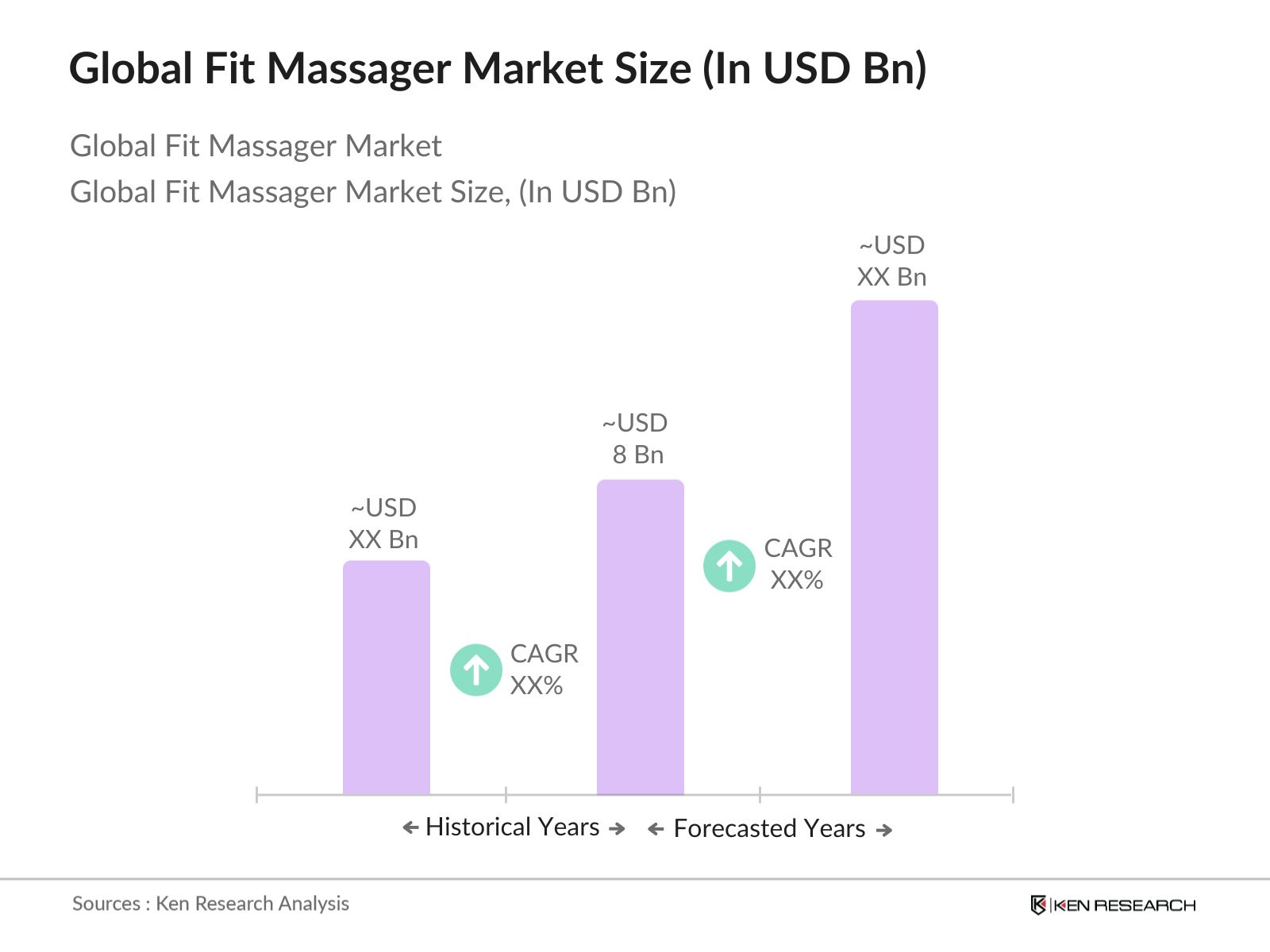
- The global fit massager market is valued at USD 8 billion, driven by increasing health consciousness, the growing trend of home wellness, and the integration of advanced technologies like AI and IoT in personal healthcare devices. These factors have expanded the market, supported by the rising disposable income and a shift towards preventive health measures. Additionally, the growing fitness culture and the availability of personalized massager solutions further propel the markets growth.
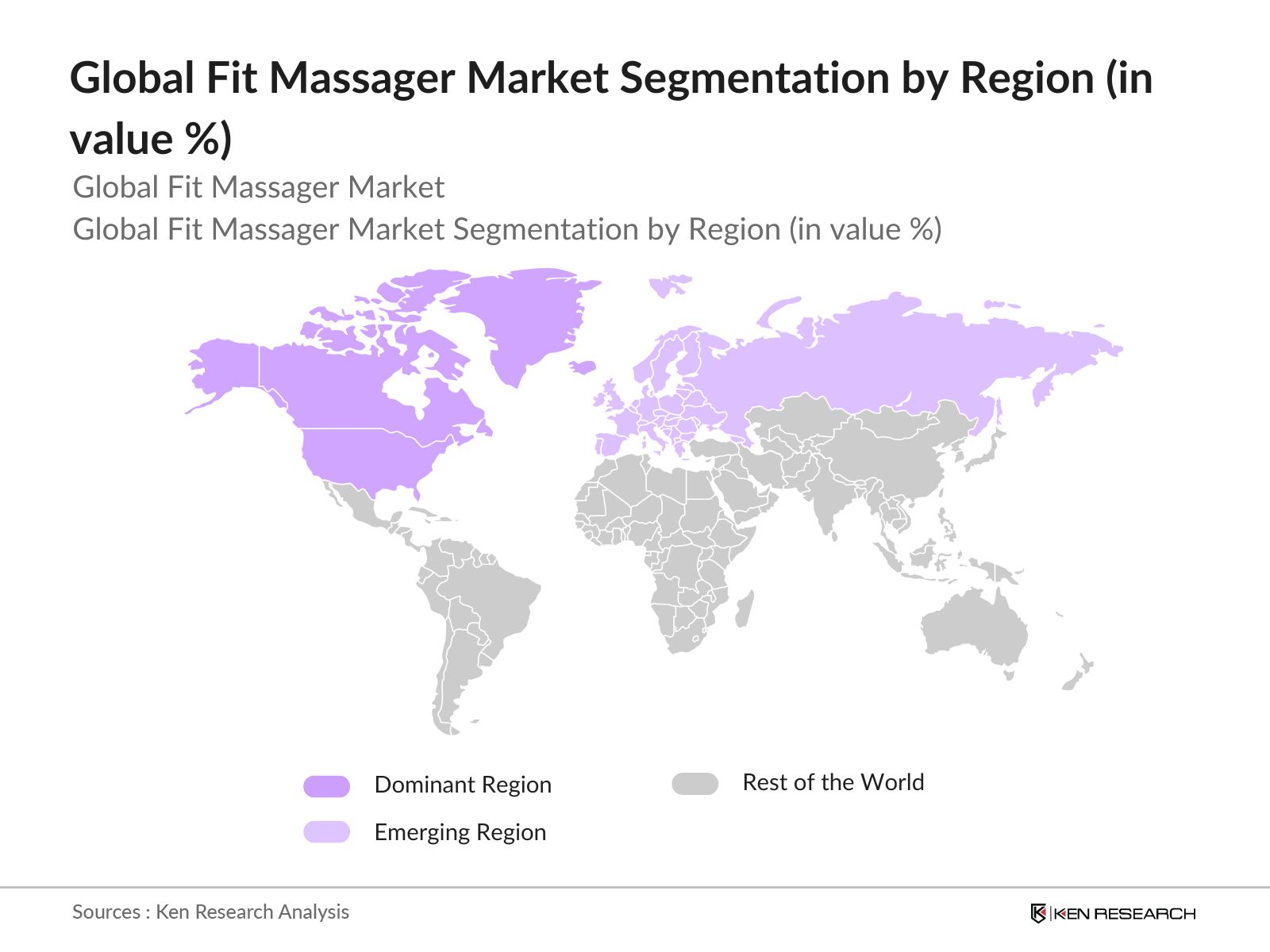
- North America and Europe are the dominant regions in the global fit massager market due to high consumer demand for fitness and wellness products. The presence of leading companies and early adoption of advanced technologies have driven the dominance in these regions. In addition, the strong purchasing power and increasing awareness of self-care in countries like the United States, Germany, and the UK contribute to their leadership in the market.
- Several regions, including the U.S. and China, impose tariffs on imported wellness devices, including fit massagers. The U.S.-China trade war led to the imposition of tariffs as high as 25% on certain products, impacting the cost structure for imported devices. According to data from the U.S. International Trade Commission, these tariffs affect over $500 billion in goods, including wellness and fitness equipment, making it more expensive for consumers to access imported fit massagers.
Global Fit Massager Market Segmentation
- By Application: The market is segmented by application into personal use, commercial use (gyms, spas, etc.), rehabilitation centers, and sports recovery. Personal use remains the dominant segment due to the increasing demand for home-based wellness products. The convenience and affordability of these massagers appeal to individual consumers looking for solutions for stress relief, relaxation, and muscle recovery after workouts.
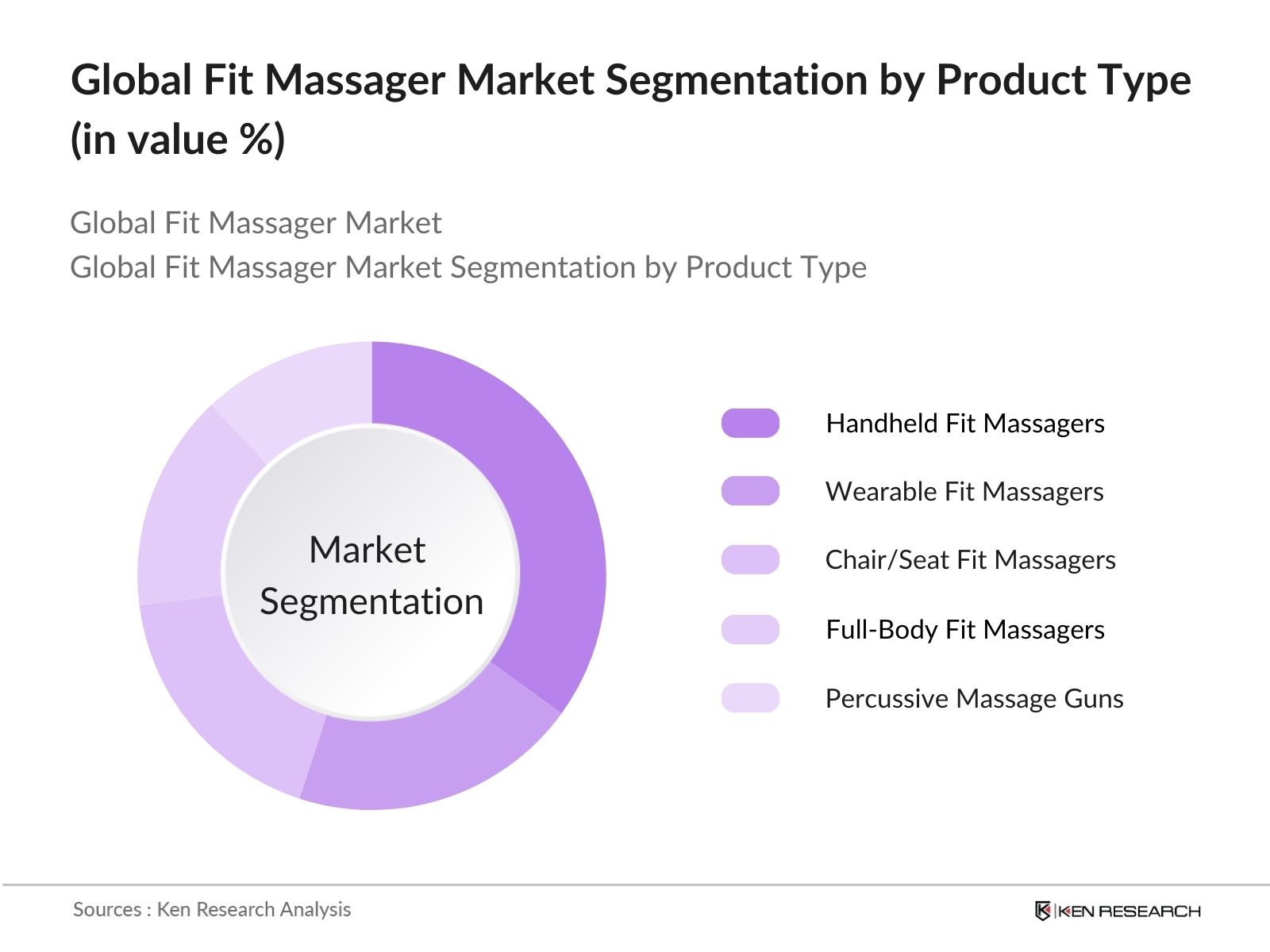
- By Product Type: The global fit massager market is segmented by product type into handheld fit massagers, wearable fit massagers, chair/seat massagers, full-body massagers, and percussive massage guns. Handheld fit massagers dominate this segment due to their portability and affordability, making them popular among consumers for quick and easy pain relief and muscle relaxation. Wearable fit massagers are gaining traction with their ability to provide targeted relief during activities like workouts and travel.
By Region: The global fit massager market is segmented regionally into North America, Europe, Asia Pacific, Middle East & Africa, and Latin America. North America leads the market due to a high demand for technologically advanced wellness solutions and the presence of key market players. Asia Pacific is emerging as a market, driven by rising awareness of fitness and wellness and increasing disposable incomes in countries like China and India.
Global Fit Massager Market Competitive Landscape
The global fit massager market is characterized by the presence of key players who offer a range of innovative products to meet the growing demand for wellness and fitness solutions. Major players dominate through strategic initiatives, such as mergers and acquisitions, product innovation, and geographical expansion.
|
Company |
Establishment Year |
Headquarters |
Revenue (USD Bn) |
Product Portfolio |
Geographical Presence |
Innovation Index |
Market Share (%) |
Employee Strength |
|
Theragun |
2009 |
Los Angeles, USA |
- |
- |
- |
- |
- |
- |
|
Hyperice |
2010 |
Irvine, USA |
- |
- |
- |
- |
- |
- |
|
Homedics |
1987 |
Michigan, USA |
- |
- |
- |
- |
- |
- |
|
Comfier |
2011 |
Hong Kong |
- |
- |
- |
- |
- |
- |
|
Beurer GmbH |
1919 |
Ulm, Germany |
- |
- |
- |
- |
- |
- |
Global Fit Massager Market Analysis
Global Fit Massager Market Growth Drivers
Increasing Health Consciousness: As of 2024, health-conscious lifestyles are gaining traction globally, driven by increasing awareness of the benefits of physical fitness. According to the World Health Organization (WHO), around 2.3 billion adults globally are engaging in moderate physical activity, boosting the demand for wellness products, including massagers. Consumers are prioritizing self-care and seeking solutions that aid muscle recovery and overall well-being. In developed markets like the U.S. and Europe, health expenditure has risen to over $3,800 per capita, contributing to the increased adoption of fit massagers.
Rising Adoption of Portable Devices: The portability and ease of use of devices like fit massagers have driven their adoption. In 2024, the global penetration of portable wellness devices, including massagers, has reached about 1.2 billion units, as per data from the International Telecommunication Union (ITU). This rise is attributed to the growing preference for convenient and compact health gadgets. Additionally, with mobile penetration increasing to over 8.4 billion globally, the market is positioned for rapid adoption of portable, smart-enabled fit massagers, particularly in urbanized and tech-driven markets.
Growth in Wellness and Self-Care Segments: The wellness economy is projected to grow substantially as consumers increasingly prioritize self-care. Data from the Global Wellness Institute indicates that the wellness market's value is currently over $4.4 trillion globally. The increasing interest in self-care products, including fit massagers, can be attributed to higher disposable incomes and better access to wellness information. In 2024, self-care products contributed more in revenue within the overall wellness industry, providing substantial growth opportunities for fit massagers that offer relief and convenience.
Global Fit Massager Market Challenges
- High Product Costs: Fit massagers often feature advanced technology, making them costly for a broader range of consumers. The average cost of IoT-enabled massagers can reach $350, limiting their accessibility in price-sensitive markets. As per the International Monetary Fund (IMF), median global wages in emerging markets, like India and Brazil, remain below $20,000 annually, making it challenging for middle-class consumers to afford these products. This pricing gap is a major barrier to mass adoption, especially in developing economies.
- Regulatory Barriers: Regulatory challenges for fit massagers, especially those with IoT components, vary across regions, creating hurdles for manufacturers. In the European Union, for example, massagers must meet stringent product safety standards, and compliance costs can be as high as $25,000 per product, as estimated by the European Commission's report on non-food product safety. These regulations can delay market entry and increase operational expenses, particularly for smaller players looking to expand globally.
Global Fit Massager Market Future Outlook
Over the next five years, the global fit massager market is expected to experience substantial growth, driven by technological advancements in smart massagers and increasing consumer awareness regarding personal health and wellness. The integration of artificial intelligence and personalized solutions will shape the future of the market. Additionally, the rising popularity of home-based wellness solutions and the growing demand for portable and easy-to-use devices will propel market growth.
Global Fit Massager Market Opportunities
- Penetration in Untapped Markets: Untapped markets such as Latin America and Sub-Saharan Africa present opportunities for fit massager manufacturers. According to the World Bank, around 800 million people in these regions have recently gained access to mobile internet, offering a new channel for online retail. Additionally, wellness spending is projected to grow in these regions due to rising middle-class populations. The lack of widespread competition in these markets allows for early market entry and brand establishment.
- Product Customization: AI and machine learning are becoming game-changers in product customization for fit massagers. Over 25 million personalized AI-powered devices are expected to be in use by 2024, according to data from the International Federation of Robotics (IFR). These products can adapt massage intensity and duration based on individual user profiles, providing a personalized experience. The rising demand for such products presents a growth opportunity for companies investing in R&D to offer customized solutions.
Scope of the Report
|
By Product Type |
Handheld Fit Massagers Wearable Fit Massagers Chair/Seat Massagers Full Body Massagers Percussive Massage Guns |
|
By Application |
Personal Use Commercial Use Rehabilitation Centers Sports Recovery |
|
By Distribution Channel |
Online Sales Offline Retail Stores Direct Sales Multi-brand Outlets |
|
By End-User |
Residential Commercial (e.g., Professional Therapists) |
|
By Region |
North America Europe Asia Pacific Middle East & Africa Latin America |
Products
Key Target Audience
Investor and Venture Capitalist Firms
Fitness and Wellness Centers
Retail and E-commerce Platforms
Sports Therapy Centers
Rehabilitation Centers
Banks and Financial Institutions
Government and Regulatory Bodies (FDA, CE)
Personal Care and Healthcare Brands
Technology Developers for Wearable Devices
Companies
Players Mentioned in the Report
Theragun
Hyperice
Homedics
Comfier
Beurer GmbH
Panasonic Corporation
OSIM International Ltd.
iRest Health Science Co. Ltd.
Wahl Clipper Corporation
Breo
Table of Contents
1. Global Fit Massager Market Overview
1.1. Definition and Scope
1.2. Market Taxonomy
1.3. Market Growth Rate
1.4. Market Segmentation Overview
2. Global Fit Massager Market Size (In USD Bn)
2.1. Historical Market Size
2.2. Year-On-Year Growth Analysis
2.3. Key Market Developments and Milestones
3. Global Fit Massager Market Analysis
3.1. Growth Drivers
3.1.1. Increasing Health Consciousness
3.1.2. Rising Adoption of Portable Devices
3.1.3. Growth in Wellness and Self-Care Segments
3.1.4. Technological Advancements (e.g., IoT-Enabled Massagers)
3.2. Market Challenges
3.2.1. High Product Costs
3.2.2. Regulatory Barriers
3.2.3. Low Consumer Awareness in Emerging Markets
3.3. Opportunities
3.3.1. Penetration in Untapped Markets
3.3.2. Product Customization (e.g., AI and Personalized Massagers)
3.3.3. Expansion of E-commerce Channels
3.4. Trends
3.4.1. Integration of Smart Technologies
3.4.2. Growth in Home-Based Wellness Solutions
3.4.3. Increased Usage of Wearable Massagers
3.5. Government Regulation
3.5.1. Import Restrictions and Tariffs (For Specific Regions)
3.5.2. Product Safety Standards
3.5.3. Data Privacy Laws for IoT Devices
3.6. SWOT Analysis
3.7. Stakeholder Ecosystem
3.8. Porters Five Forces Analysis
3.9. Competitive Ecosystem
4. Global Fit Massager Market Segmentation
4.1. By Product Type (In Value %)
4.1.1. Handheld Fit Massagers
4.1.2. Wearable Fit Massagers
4.1.3. Chair/Seat Fit Massagers
4.1.4. Full Body Fit Massagers
4.1.5. Percussive Massage Guns
4.2. By Application (In Value %)
4.2.1. Personal Use
4.2.2. Commercial Use (e.g., Gyms, Spas)
4.2.3. Rehabilitation Centers
4.2.4. Sports Recovery
4.3. By Distribution Channel (In Value %)
4.3.1. Online Sales
4.3.2. Offline Retail Stores
4.3.3. Direct Sales
4.3.4. Multi-brand Outlets
4.4. By End-User (In Value %)
4.4.1. Residential
4.4.2. Commercial (e.g., Professional Therapists)
4.5. By Region (In Value %)
4.5.1. North America
4.5.2. Europe
4.5.3. Asia Pacific
4.5.4. Middle East & Africa
4.5.5. Latin America
5. Global Fit Massager Market Competitive Analysis
5.1. Detailed Profiles of Major Companies
5.1.1. Theragun
5.1.2. Hyperice
5.1.3. Homedics
5.1.4. Comfier
5.1.5. Wahl Clipper Corporation
5.1.6. RENPHO
5.1.7. Breo
5.1.8. OSIM International Ltd.
5.1.9. Beurer GmbH
5.1.10. Panasonic Corporation
5.1.11. Achedaway
5.1.12. Restek
5.1.13. OTO Bodycare
5.1.14. iRest Health Science Co. Ltd.
5.1.15. Casada International
5.2. Cross Comparison Parameters (No. of Employees, Product Portfolio, Pricing Strategy, Revenue, Innovation Index, Geographical Presence, Market Share, Customer Satisfaction)
5.3. Market Share Analysis
5.4. Strategic Initiatives
5.5. Mergers and Acquisitions
5.6. Investment Analysis
5.7. Venture Capital Funding
5.8. Government Grants
5.9. Private Equity Investments
6. Global Fit Massager Market Regulatory Framework
6.1. Product Safety Standards (Electrical Safety, Battery Compliance)
6.2. Compliance with Environmental Regulations (e.g., E-Waste)
6.3. Certification Processes (e.g., CE, FDA)
7. Global Fit Massager Future Market Size (In USD Bn)
7.1. Future Market Size Projections
7.2. Key Factors Driving Future Market Growth
8. Global Fit Massager Future Market Segmentation
8.1. By Product Type (In Value %)
8.2. By Application (In Value %)
8.3. By Distribution Channel (In Value %)
8.4. By End-User (In Value %)
8.5. By Region (In Value %)
9. Global Fit Massager Market Analysts Recommendations
9.1. TAM/SAM/SOM Analysis
9.2. Consumer Cohort Analysis
9.3. Go-to-Market Strategy
9.4. White Space Opportunity Identification
Research Methodology
Step 1: Identification of Key Variables
In the initial phase, we develop an ecosystem map for the global fit massager market, identifying all major stakeholders, including product manufacturers, distribution channels, and end-users. This is achieved through extensive secondary research using proprietary databases to gather industry-level insights.
Step 2: Market Analysis and Construction
In this step, historical data is compiled, including the penetration of fit massager products across key regions, revenue generation, and analysis of product distribution. This phase is critical for estimating the market's revenue generation and growth trajectory.
Step 3: Hypothesis Validation and Expert Consultation
Market hypotheses are developed and validated via consultations with industry experts through telephonic interviews and face-to-face meetings. These consultations provide essential insights into market operations and help refine the data and growth forecasts.
Step 4: Research Synthesis and Final Output
The final phase involves engaging with key industry players to validate the market data through bottom-up research. This ensures that the research findings reflect the industry's on-ground realities, providing accurate and credible analysis.
Frequently Asked Questions
01. How big is the Global Fit Massager Market?
The global fit massager market is valued at USD 8 billion, driven by increasing demand for home-based wellness solutions and the rising adoption of advanced technologies like AI and IoT in the healthcare sector.
02. What are the challenges in the Global Fit Massager Market?
Challenges in the global fit massager market include high product costs, regulatory hurdles concerning safety standards, and low consumer awareness in developing markets, which restrict the mass adoption of fit massagers.
03. Who are the major players in the Global Fit Massager Market?
Key players in the global fit massager market include Theragun, Hyperice, Homedics, Comfier, and Beurer GmbH, with these companies leading the market due to their innovation in massager technologies and strong global presence.
04. What are the growth drivers of the Global Fit Massager Market?
The global fit massager market is propelled by factors such as increasing health consciousness, the rise of home-based wellness solutions, technological advancements in smart massagers, and a growing preference for personalized healthcare devices.
Why Buy From Us?

What makes us stand out is that our consultants follows Robust, Refine and Result (RRR) methodology. i.e. Robust for clear definitions, approaches and sanity checking, Refine for differentiating respondents facts and opinions and Result for presenting data with story

We have set a benchmark in the industry by offering our clients with syndicated and customized market research reports featuring coverage of entire market as well as meticulous research and analyst insights.

While we don't replace traditional research, we flip the method upside down. Our dual approach of Top Bottom & Bottom Top ensures quality deliverable by not just verifying company fundamentals but also looking at the sector and macroeconomic factors.

With one step in the future, our research team constantly tries to show you the bigger picture. We help with some of the tough questions you may encounter along the way: How is the industry positioned? Best marketing channel? KPI's of competitors? By aligning every element, we help maximize success.

Our report gives you instant access to the answers and sources that other companies might choose to hide. We elaborate each steps of research methodology we have used and showcase you the sample size to earn your trust.

If you need any support, we are here! We pride ourselves on universe strength, data quality, and quick, friendly, and professional service.