
Global Flexible Packaging Market Outlook to 2030
Region:Europe
Author(s):Sanjeev
Product Code:KROD2021
Region:Europe
Author(s):Sanjeev
Product Code:KROD2021
November 2024
85
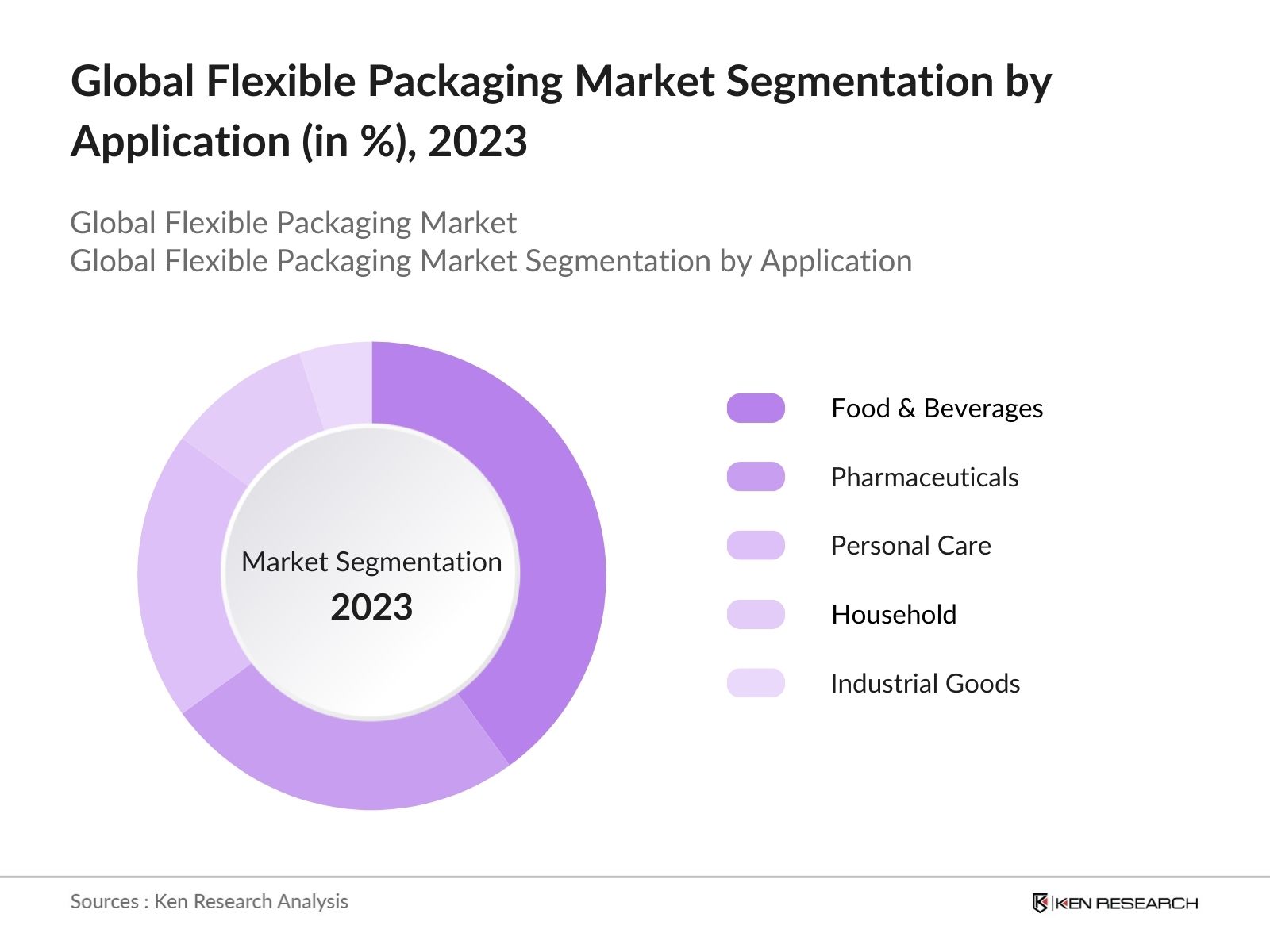
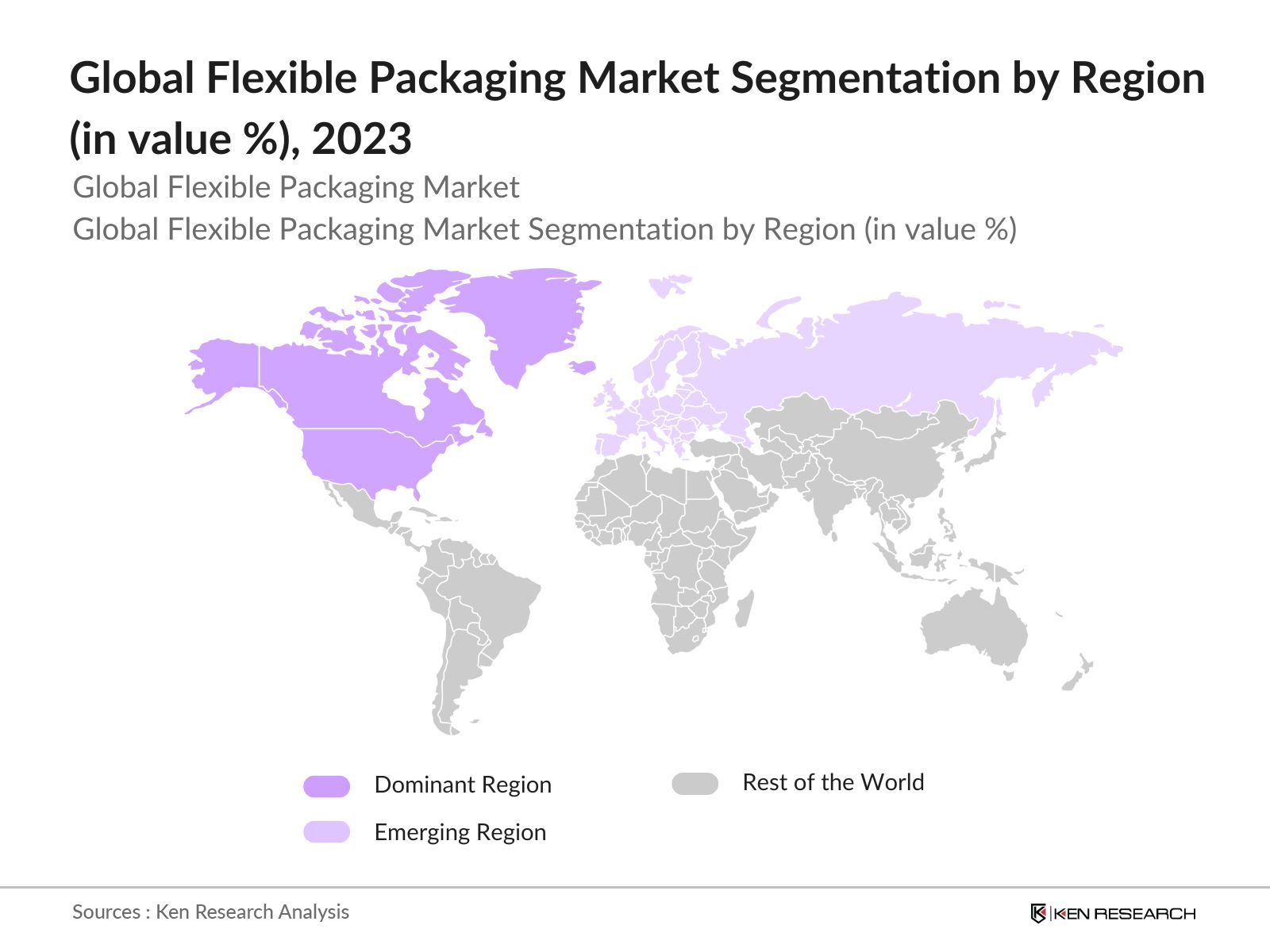
The global flexible packaging market is segmented by application, product type, and region:
|
Company |
Establishment Year |
Headquarters |
|
Amcor |
1860 |
Zurich, Switzerland |
|
Mondi Group |
1967 |
Vienna, Austria |
|
Berry Global |
1967 |
Evansville, USA |
|
Sealed Air |
1960 |
Charlotte, USA |
|
Huhtamaki |
1920 |
Espoo, Finland |
The global flexible packaging market is projected to show a substantial growth by 2028, driven by sustainability initiatives and technological advancements in packaging. The rise of e-commerce and the demand for lightweight, cost-effective packaging will further contribute to market growth.
|
By Region |
North America Europe Asia-Pacific Latin America Middle East & Africa |
|
By Material Type |
Plastics (Polyethylene, Polypropylene, Polyethylene Terephthalate) Paper Aluminum Biodegradable Materials Multilayer Films |
|
By Product Type |
Pouches Bags Wraps Tubes Sachets |
|
By Application |
Food & Beverage Industry Healthcare & Pharmaceuticals Cosmetics & Personal Care Household Products Industrial Goods |
1.1. Definition and Scope
1.2. Market Taxonomy
1.3. Market Growth Rate
1.4. Market Segmentation Overview
2.1. Historical Market Size
2.2. Year-on-Year Growth Analysis
2.3. Key Market Developments and Milestones
3.1. Growth Drivers
3.1.1. Rising Demand for Convenient Packaging
3.1.2. Sustainability Concerns
3.1.3. Growth in Processed Food Consumption
3.2. Restraints
3.2.1. Limited Recycling Infrastructure
3.2.2. Consumer Misinformation
3.2.3. High Initial Costs for Sustainable Solutions
3.3. Opportunities
3.3.1. Growth of E-commerce Packaging
3.3.2. Technological Innovations
3.3.3. Focus on Sustainability
3.4. Trends
3.4.1. Growth of Biodegradable Packaging
3.4.2. Adoption of Recyclable Solutions
3.4.3. Expansion in Emerging Markets
3.5. Government Regulation
3.5.1. Bipartisan Infrastructure Law
3.5.2. National Strategy for Reducing Food Loss and Waste
3.5.3. Consumer Electronics Battery Recycling Funding
3.6. SWOT Analysis
3.7. Stakeholder Ecosystem
3.8. Competitive Ecosystem
4.1. By Product Type (in Value %)
4.1.1. Pouches
4.1.2. Bags
4.1.3. Wraps
4.1.4. Tubes
4.1.5. Sachets
4.2. By Application (in Value %)
4.2.1. Food & Beverage Industry
4.2.2. Healthcare & Pharmaceuticals
4.2.3. Cosmetics & Personal Care
4.2.4. Household Products
4.2.5. Industrial Goods
4.3. By Material Type (in Value %)
4.3.1. Plastics
4.3.2. Paper
4.3.3. Aluminum
4.3.4. Biodegradable Materials
4.3.5. Multilayer Films
4.4. By Region (in Value %)
4.4.1. North America
4.4.2. Europe
4.4.3. Asia-Pacific
4.4.4. Latin America
4.4.5. Middle East & Africa
5.1 Detailed Profiles of Major Companies
5.1.1. Amcor
5.1.2. Mondi Group
5.1.3. Berry Global
5.1.4. Sealed Air
5.1.5. Huhtamaki
5.1.6. Sonoco Products Company
5.1.7. Constantia Flexibles
5.1.8. Coveris
5.1.9. Aluflexpack
5.1.10. UFlex
5.1.11. Clondalkin Group
5.1.12. Bemis Company, Inc.
5.1.13. ProAmpac
5.1.14. FlexPak Services
5.1.15. Glenroy, Inc.
5.2 Cross Comparison Parameters (No. of Employees, Headquarters, Inception Year, Revenue)
6.1. Market Share Analysis
6.2. Strategic Initiatives
6.3. Mergers and Acquisitions
6.4. Investment Analysis
6.4.1. Venture Capital Funding
6.4.2. Government Grants
6.4.3. Private Equity Investments
7.1. Environmental Standards
7.2. Compliance Requirements
7.3. Certification Processes
8.1. Future Market Size Projections
8.2. Key Factors Driving Future Market Growth
9.1. By Product Type (in Value %)
9.2. By Application (in Value %)
9.3. By Material Type (in Value %)
9.4. By Region (in Value %)
10.1. TAM/SAM/SOM Analysis
10.2. Customer Cohort Analysis
10.3. Marketing Initiatives
10.4. White Space Opportunity Analysis
We begin by referencing multiple secondary and proprietary databases to conduct desk research. This includes gathering industry-level information on market drivers, challenges, key players, consumer behavior, and packaging trends. We also assess regulatory impacts and market dynamics specific to the global flexible packaging market.
We collect historical data on market size, growth rates, product segmentation (by material, product type, and application), and the distribution of sales channels (supermarkets, e-commerce, and specialty stores). We also analyze market share and revenue generated by leading brands, emerging trends in sustainable packaging, and consumer preferences to ensure accuracy and reliability in the data presented.
We perform Computer-Assisted Telephone Interviews (CATIs) with industry experts, including representatives from leading flexible packaging manufacturers, distributors, and retailers. These interviews validate the statistics collected and provide insights into operational and financial aspects, such as pricing strategies, supply chain management, and sustainability trends.
Our team interacts with packaging manufacturers, industry experts, and market analysts to understand the dynamics of market segments, evolving consumer preferences, and emerging trends in eco-friendly packaging. This process helps validate the derived statistics using a bottom-to-top approach, ensuring that the final data accurately reflects the actual market conditions.
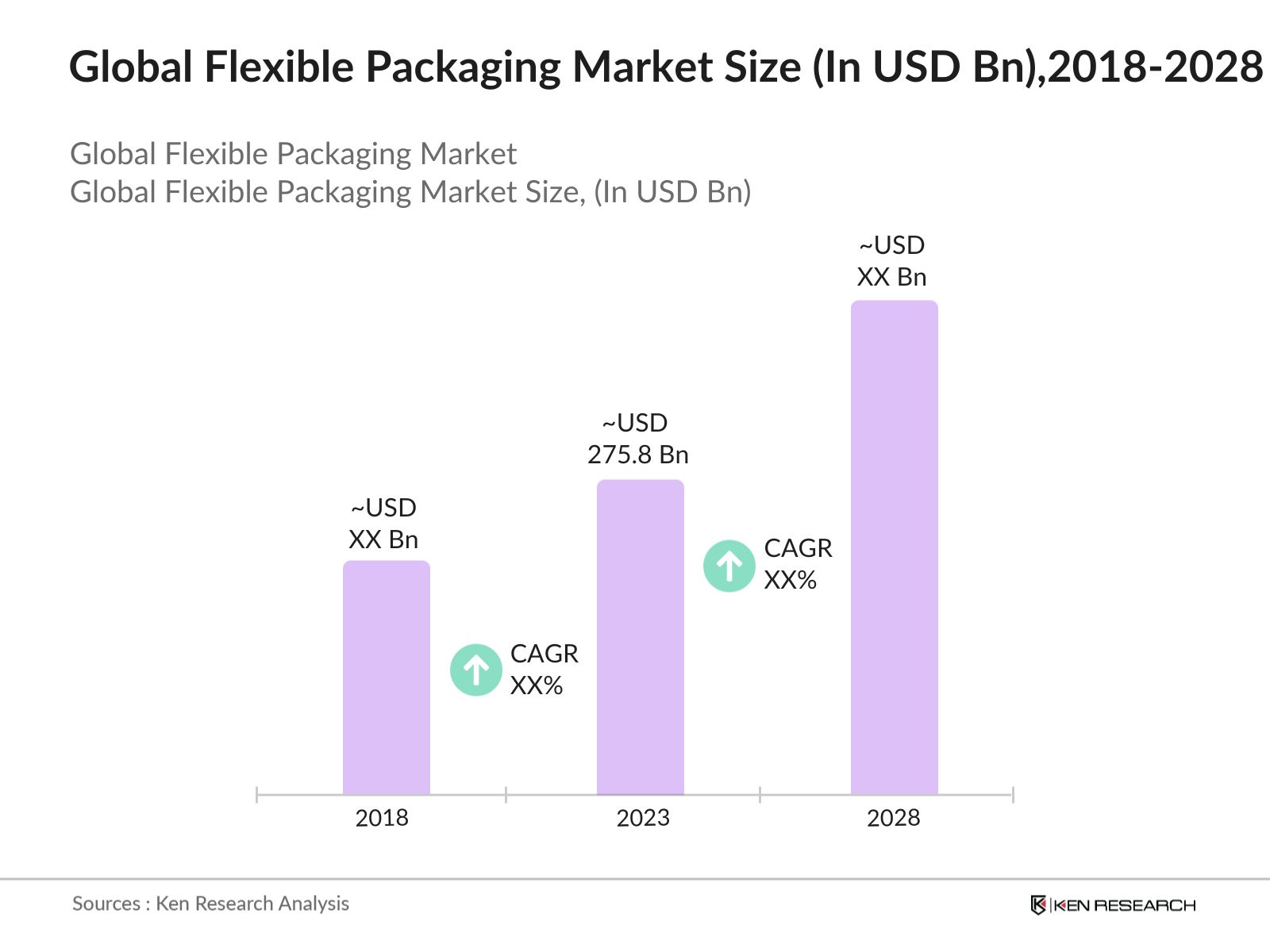
In 2023, the Global Flexible Packaging Market was valued at USD 275.8 billion. The market's growth is driven by the increasing demand for lightweight, convenient, and sustainable packaging solutions, particularly in the food, beverage, and pharmaceutical sectors.
Challenges in the flexible packaging market include rising raw material costs, which impact pricing and profit margins for manufacturers. Additionally, stringent regulatory requirements for sustainable and recyclable materials, as well as increasing competition, pose significant challenges.
Major players in the global flexible packaging market include Amcor, Mondi Group, Berry Global, Sealed Air, and Huhtamaki. These companies lead the market with their innovations in sustainable and recyclable packaging solutions, focusing on reducing plastic waste and developing eco-friendly alternatives.
Key growth drivers include the increasing demand for eco-friendly and lightweight packaging, the rising trend of e-commerce, and the ongoing innovations in packaging technology. Additionally, the growing preference for convenient, single-use packaging in the food and beverage sector contributes to the market's expansion.

What makes us stand out is that our consultants follows Robust, Refine and Result (RRR) methodology. i.e. Robust for clear definitions, approaches and sanity checking, Refine for differentiating respondents facts and opinions and Result for presenting data with story

We have set a benchmark in the industry by offering our clients with syndicated and customized market research reports featuring coverage of entire market as well as meticulous research and analyst insights.

While we don't replace traditional research, we flip the method upside down. Our dual approach of Top Bottom & Bottom Top ensures quality deliverable by not just verifying company fundamentals but also looking at the sector and macroeconomic factors.

With one step in the future, our research team constantly tries to show you the bigger picture. We help with some of the tough questions you may encounter along the way: How is the industry positioned? Best marketing channel? KPI's of competitors? By aligning every element, we help maximize success.

Our report gives you instant access to the answers and sources that other companies might choose to hide. We elaborate each steps of research methodology we have used and showcase you the sample size to earn your trust.

If you need any support, we are here! We pride ourselves on universe strength, data quality, and quick, friendly, and professional service.