
Global Flying Car Market Outlook to 2030
Region:Global
Author(s):Abhinav kumar
Product Code:KROD5296
December 2024
82
About the Report
Global Flying Car Market Overview
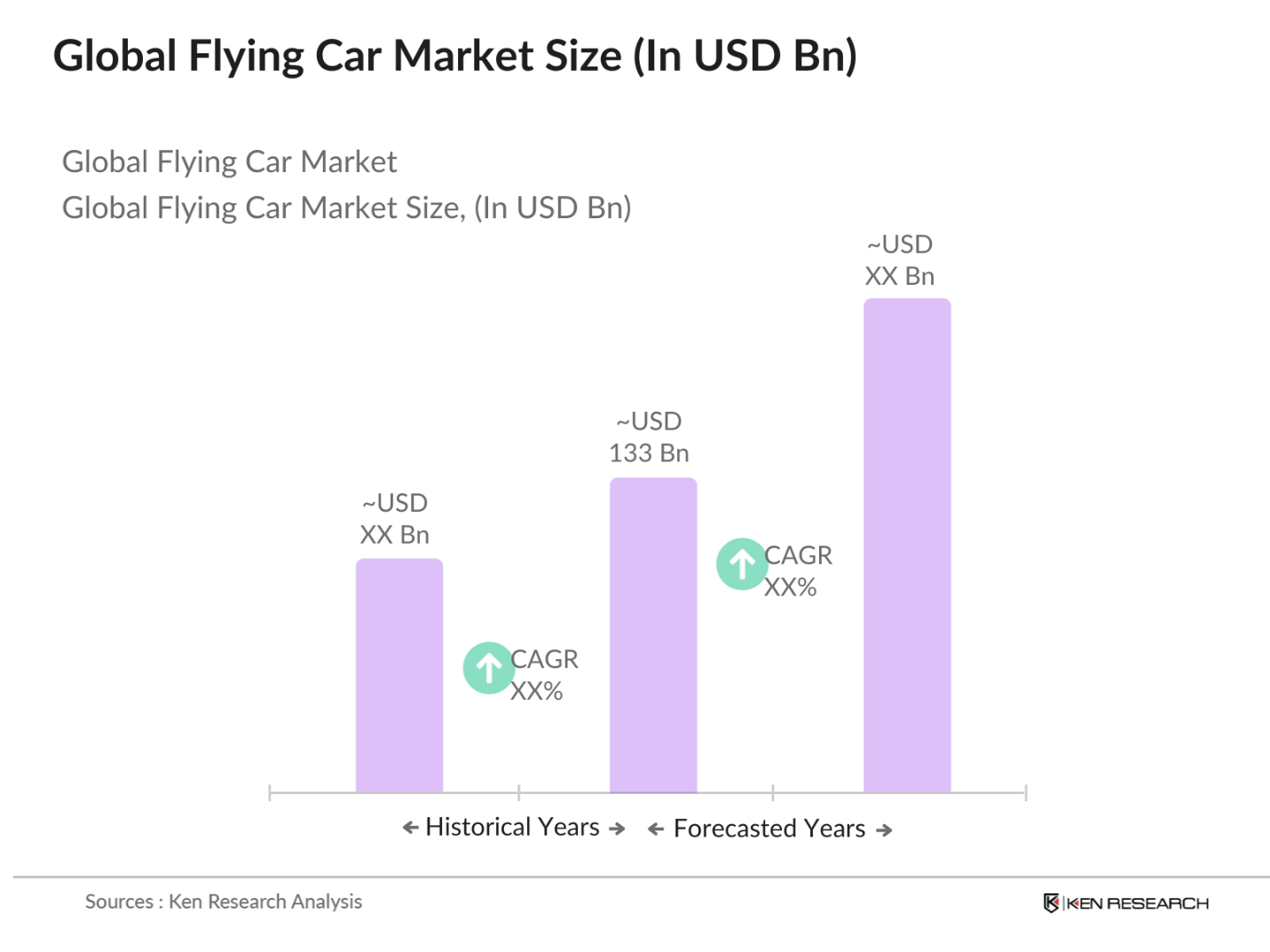
- The global flying car market has seen rapid development, primarily driven by technological advancements in urban mobility solutions and a growing focus on sustainable transport alternatives. The market is valued at USD 133 billion, based on a five-year historical analysis. This figure has been fueled by significant investments in autonomous technologies, electrification of vehicles, and growing concerns about traffic congestion in urban environments. The market is further supported by government initiatives promoting airspace innovations, which are expected to enhance the demand for flying cars.
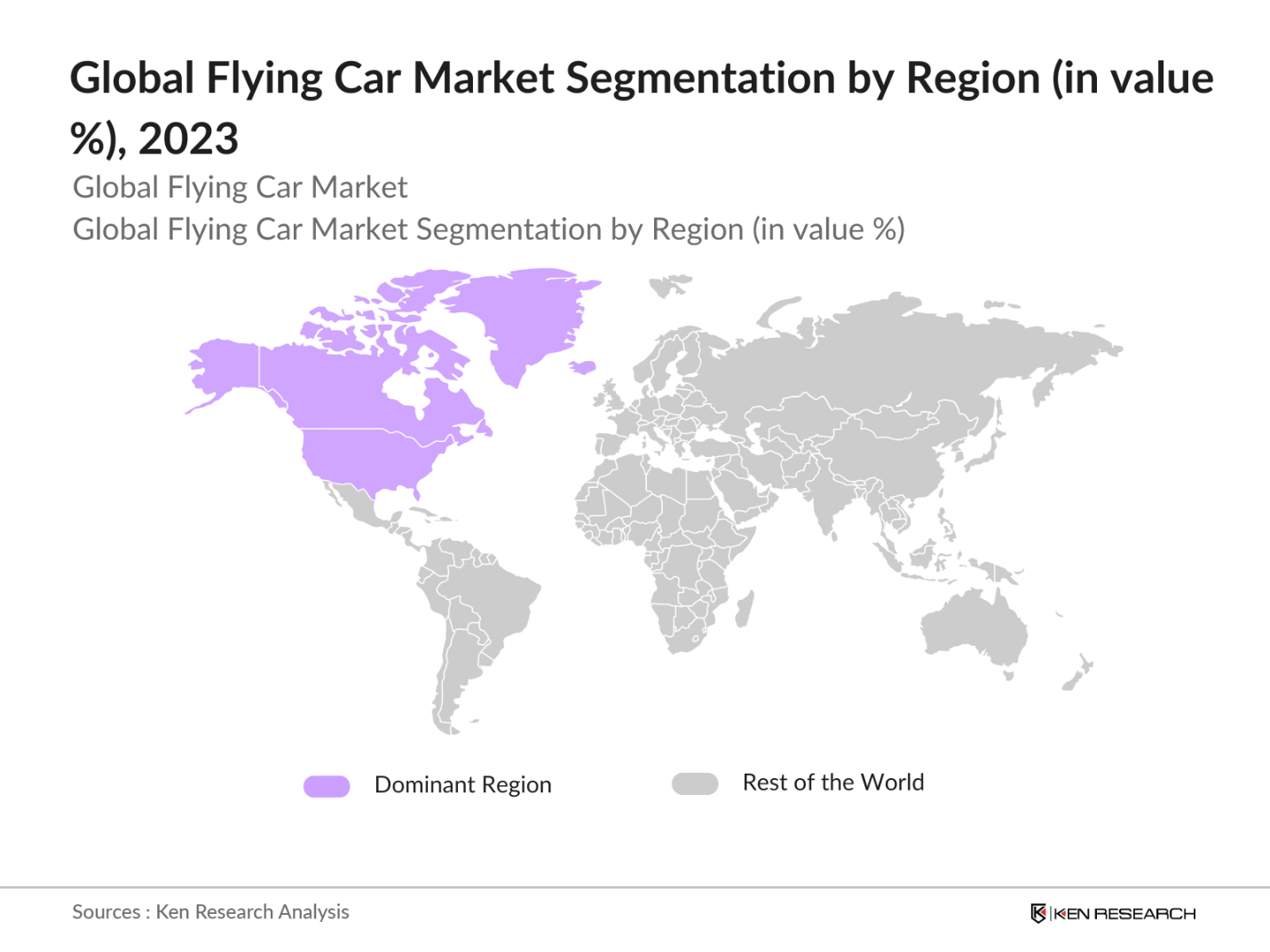
- The market is dominated by a few key regions, with North America and Europe leading the charge. North America's dominance is largely due to the presence of major aerospace and automotive companies, coupled with a strong regulatory framework supporting the development of urban air mobility. In Europe, countries like Germany and France are at the forefront of innovation, backed by government funding and a well-established aerospace industry. These regions have become pioneers in the development of electric vertical take-off and landing (eVTOL) vehicles, ensuring their market dominance.
- VTOL technology has seen significant progress, especially in terms of power efficiency and stability. By 2024, companies like Joby Aviation have achieved VTOL flight capabilities of over 200 kilometers. This leap in technology is a critical enabler for the commercialization of flying cars, offering rapid urban mobility solutions. VTOL technology also reduces the need for runways, making it ideal for densely populated urban areas.
Global Flying Car Market Segmentation
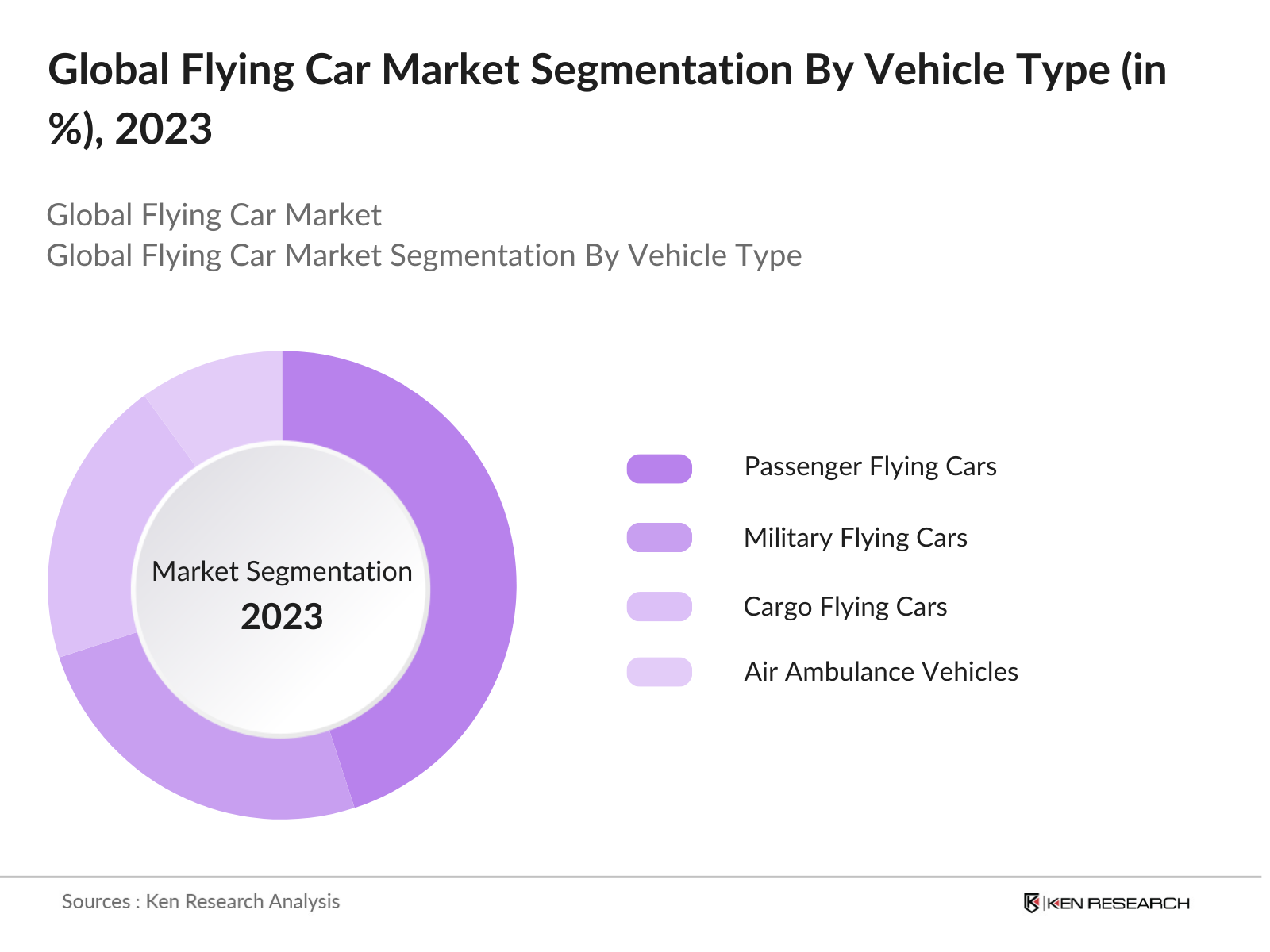
By Vehicle Type: The global flying car market is segmented by vehicle type into passenger flying cars, cargo flying cars, military flying cars, and air ambulance vehicles. Recently, passenger flying cars hold a dominant market share due to increasing demand for alternative urban mobility solutions. With cities becoming more congested, the need for efficient and fast transportation options is paramount, leading to significant investments in the passenger flying car segment. Moreover, technological advancements in autonomous and electric propulsion systems are propelling growth in this segment.
By Region: The market is geographically segmented into North America, Europe, Asia-Pacific, the Middle East & Africa, and Latin America. North America is the dominant region, owing to its strong technological infrastructure and the presence of major aerospace companies. The region also benefits from proactive regulations that support urban air mobility initiatives. Additionally, growing partnerships between aerospace companies and ride-hailing firms in this region have accelerated the development of flying cars, especially in cities like Los Angeles and Dallas, where air traffic congestion is a major issue.
By Technology: In terms of technology, the market is segmented into electric flying cars, hybrid flying cars, autonomous flying cars, and semi-autonomous flying cars. Electric flying cars dominate the market, accounting for the largest share. The shift toward electric propulsion systems is driven by the increasing focus on environmental sustainability and reducing emissions. The electric vehicle segment benefits from advancements in battery technologies, leading to extended flight ranges and enhanced performance. Furthermore, government incentives and subsidies for electric vehicles are supporting the adoption of electric flying cars.
Global Flying Car Market Competitive Landscape
The global flying car market is consolidated with a few major players who dominate due to their technological prowess and strategic partnerships. These companies include established aerospace and automotive giants, as well as new startups backed by venture capital investments. The industry is seeing increased collaboration between companies, governments, and regulatory bodies to ensure safe air traffic management and infrastructure development for urban air mobility. The competitive landscape is marked by strategic partnerships, mergers and acquisitions, and continuous R&D investments. Companies like Lilium and Joby Aviation have secured significant funding to advance their eVTOL technology, positioning themselves at the forefront of the market.
|
Company |
Establishment Year |
Headquarters |
Technology Focus |
Strategic Partnerships |
R&D Investment |
Revenue (2023) |
Production Capabilities |
Product Innovations |
|
AeroMobil |
2010 |
Slovakia |
_ |
_ |
_ |
_ |
_ |
_ |
|
Lilium |
2015 |
Munich, Germany |
_ |
_ |
_ |
_ |
_ |
_ |
|
Joby Aviation |
2009 |
California, USA |
_ |
_ |
_ |
_ |
_ |
_ |
|
Volocopter |
2011 |
Bruchsal, Germany |
_ |
_ |
_ |
_ |
_ |
_ |
|
Terrafugia |
2006 |
Woburn, USA |
_ |
_ |
_ |
_ |
_ |
_ |
Global Flying Car Industry Analysis
Growth Drivers
- Urban Mobility Solutions: Urbanization continues to rise with over 4.4 billion people now living in cities, and this number is projected to reach 5 billion by 2030, according to the World Bank. As cities become more congested, traditional road networks face heavy pressure, causing delays and inefficiencies. Flying cars are emerging as a viable solution to decongest city traffic by utilizing airspace. Countries like Japan and South Korea are actively investing in infrastructure that supports urban air mobility (UAM) initiatives. This transition to air-based mobility could potentially alleviate traffic problems by as much as 30% in some cities.
- Government Regulations on Traffic Decongestion: Governments are introducing policies to reduce urban traffic, with traffic congestion causing annual economic losses of $160 billion in the U.S. alone, as noted by the Department of Transportation. Policies favoring flying cars are in motion, particularly in countries like the U.S. and the UAE. The UAEs Vision 2030 outlines air mobility solutions as a significant part of its urban decongestion plans. Federal Aviation Administration (FAA) regulations have been updated to integrate flying cars into urban airspaces by creating low-altitude air corridors.
- Increasing Investments in Autonomous Technologies: Autonomous flying car technology is being heavily invested in by major players. The global autonomous vehicle sector saw investments exceeding $100 billion in 2022, with a portion of this focused on air mobility solutions. Governments, including those of China and the U.S., have committed over $3 billion towards R&D for autonomous flying vehicles between 2022 and 2024. These investments support the development of AI, sensors, and radar systems necessary for safe autonomous flight.
Market Challenges
- High Development and Infrastructure Costs: The development of flying cars requires significant investment in infrastructure, including vertiports and air traffic management systems. The cost of establishing urban air mobility infrastructure is estimated to exceed $500 billion globally by 2025, according to government transportation reports. High operational costs for battery technology and vertical take-off systems further hinder market growth. For example, the development of the Lilium Jet's infrastructure in Germany has already surpassed $100 million.
- Regulatory Compliance and Safety Standards: Achieving regulatory compliance for flying cars is a significant hurdle. Safety standards are rigorous due to the complex nature of integrating flying cars into crowded urban airspaces. For instance, the FAA has mandated strict certification processes for eVTOL aircraft, delaying commercialization by at least three years. In Europe, the European Union Aviation Safety Agency (EASA) has rolled out additional safety requirements for battery-powered air vehicles.
Global Flying Car Market Future Outlook
Over the next five years, the global flying car market is expected to witness substantial growth. This surge will be driven by increasing urbanization, investments in autonomous technologies, and rising environmental concerns. Additionally, the expansion of urban air mobility networks, particularly in North America and Europe, will play a critical role in propelling market growth. Technological advancements, such as the integration of AI in air traffic management systems and improvements in battery efficiency, will further enhance the viability of flying cars. The market will also benefit from the growing interest of major automotive and aerospace companies looking to tap into this new mode of transportation.
Opportunities
- Collaboration Between Aviation and Automotive Industries: Cross-industry collaboration between aerospace and automotive manufacturers has accelerated the development of flying cars. Partnerships such as the joint ventures between Boeing and Porsche are driving technological advancements, especially in eVTOL. Such collaborations are projected to create new avenues for flying car deployment, facilitating smoother integration into both industries. Currently, over 30 global automotive and aerospace firms are involved in the flying car ecosystem, according to industry reports.
- Emerging Markets for Urban Air Mobility: Emerging markets like Southeast Asia and Africa are investing in flying car infrastructure, recognizing the potential for UAM to solve transportation bottlenecks. For example, Singapore has committed $300 million towards the development of vertiports, while Rwanda is exploring UAM solutions for medical supply delivery. With urbanization rates exceeding 4% annually in many developing nations, these markets are expected to become key areas for flying car deployment.
Scope of the Report
|
Vehicle Type |
Passenger Flying Cars Cargo Flying Cars Military Flying Cars Air Ambulance |
|
Technology |
Electric Flying Cars Hybrid Flying Cars Autonomous Flying Cars Semi-Autonomous |
|
Component |
Propulsion Systems Airframes Control Systems Sensors Actuators |
|
Application |
Urban Air Mobility Emergency Services Military and Defense Goods Transportation |
|
Region |
North America Europe Asia-Pacific Middle East & Africa Latin America |
Products
Key Target Audience Organizations and Entities Who Can Benefit by Subscribing This Report:
Government and regulatory bodies (e.g., FAA, EASA)
Automotive and Aerospace Manufacturing Companies
Electric Vehicle Charging Infrastructure Companies
Urban Air Mobility Service Provider Industries
Venture Capitalists and Investment Firms
Aircraft Component Supplier Companies
Air Traffic Management System Provider Companies
Public Transport and Ride-Sharing Companies
Companies
Players Mentioned in the Report
AeroMobil
Terrafugia
PAL-V
Lilium
Kitty Hawk
Volocopter
EHang
Joby Aviation
Bell Helicopter
Hyundai Motor Group
Table of Contents
1. Global Flying Car Market Overview
1.1 Definition and Scope
1.2 Market Taxonomy
1.3 Market Growth Rate
1.4 Market Segmentation Overview
2. Global Flying Car Market Size (In USD Mn)
2.1 Historical Market Size
2.2 Year-On-Year Growth Analysis
2.3 Key Market Developments and Milestones
3. Global Flying Car Market Analysis
3.1 Growth Drivers
3.1.1 Urban Mobility Solutions
3.1.2 Government Regulations on Traffic Decongestion
3.1.3 Increasing Investments in Autonomous Technologies
3.1.4 Rising Demand for Sustainable Transport Solutions
3.2 Market Challenges
3.2.1 High Development and Infrastructure Costs
3.2.2 Regulatory Compliance and Safety Standards
3.2.3 Limited Consumer Adoption
3.2.4 Technological Barriers
3.3 Opportunities
3.3.1 Collaboration Between Aviation and Automotive Industries
3.3.2 Emerging Markets for Urban Air Mobility
3.3.3 Investment in R&D for Battery Efficiency
3.3.4 Strategic Partnerships with Ride-Sharing Companies
3.4 Trends
3.4.1 Advancements in VTOL (Vertical Take-Off and Landing) Technologies
3.4.2 Growing Adoption of Electric Propulsion Systems
3.4.3 Expansion of Urban Air Mobility Networks
3.4.4 Integration of AI and 5G for Air Traffic Management
3.5 Government Regulation
3.5.1 Airspace Management Regulations
3.5.2 Environmental Impact and Emission Standards
3.5.3 Certification Processes for Flying Cars
3.5.4 National and International Flying Car Policies
3.6 SWOT Analysis
3.7 Stake Ecosystem (Manufacturers, Component Suppliers, Service Providers, Regulators)
3.8 Porters Five Forces
3.9 Competition Ecosystem
4. Global Flying Car Market Segmentation
4.1 By Vehicle Type (In Value %)
4.1.1 Passenger Flying Cars
4.1.2 Cargo Flying Cars
4.1.3 Military Flying Cars
4.1.4 Air Ambulance and Emergency Flying Cars
4.2 By Technology (In Value %)
4.2.1 Electric Flying Cars
4.2.2 Hybrid Flying Cars
4.2.3 Autonomous Flying Cars
4.2.4 Semi-Autonomous Flying Cars
4.3 By Component (In Value %)
4.3.1 Propulsion Systems
4.3.2 Airframes
4.3.3 Control Systems
4.3.4 Sensors and Actuators
4.4 By Application (In Value %)
4.4.1 Urban Air Mobility
4.4.2 Emergency Services
4.4.3 Military and Defense
4.4.4 Goods Transportation
4.5 By Region (In Value %)
4.5.1 North America
4.5.2 Europe
4.5.3 Asia-Pacific
4.5.4 Middle East & Africa
4.5.5 Latin America
5. Global Flying Car Market Competitive Analysis
5.1 Detailed Profiles of Major Companies
5.1.1 AeroMobil
5.1.2 Terrafugia
5.1.3 PAL-V
5.1.4 Lilium
5.1.5 Kitty Hawk
5.1.6 Volocopter
5.1.7 EHang
5.1.8 Joby Aviation
5.1.9 Bell Helicopter
5.1.10 Hyundai Motor Group
5.1.11 Airbus SE
5.1.12 Boeing
5.1.13 Uber Elevate
5.1.14 Vertical Aerospace
5.1.15 Pipistrel Aircraft
5.2 Cross Comparison Parameters (Revenue, Headquarters, Inception Year, Technology Focus, Production Capabilities, Strategic Partnerships, Product Launches, Patents)
5.3 Market Share Analysis
5.4 Strategic Initiatives
5.5 Mergers and Acquisitions
5.6 Investment Analysis
5.7 Venture Capital Funding
5.8 Government Grants
5.9 Private Equity Investments
6. Global Flying Car Market Regulatory Framework
6.1 Air Traffic Management Systems
6.2 Certification and Licensing
6.3 Safety Standards
6.4 Environmental Compliance
7. Global Flying Car Future Market Size (In USD Mn)
7.1 Future Market Size Projections
7.2 Key Factors Driving Future Market Growth
8. Global Flying Car Future Market Segmentation
8.1 By Vehicle Type
8.2 By Technology
8.3 By Application
8.4 By Component
8.5 By Region
9. Global Flying Car Market Analysts Recommendations
9.1 TAM/SAM/SOM Analysis
9.2 Competitive Benchmarking
9.3 Market Entry Strategies
9.4 White Space Opportunity Analysis
Disclaimer Contact UsResearch Methodology
Step 1: Identification of Key Variables
This step involves the identification of key variables that influence the global flying car market. Key stakeholders, including aerospace manufacturers, regulatory bodies, and urban mobility service providers, are mapped out. Comprehensive desk research, leveraging proprietary databases and secondary data sources, is utilized to understand the market structure and the most critical factors shaping it.
Step 2: Market Analysis and Construction
Historical data from 2018 onwards is analyzed to construct the market landscape. This includes tracking trends in vehicle adoption raes, technological advancements, and consumer preferences for flying cars. The market analysis helps in establishing clear revenue estimates for various segments and understanding the ratio between different vehicle types.
Step 3: Hypothesis Validation and Expert Consultation
Industry experts from companies such as Joby Aviation and AeroMobil are consulted through computer-assisted telephone interviews (CATIs). These interviews help validate the assumptions made during the initial stages and provide real-world insights into market dynamics.
Step 4: Research Synthesis and Final Output
The final phase synthesizes the data gathered from primary and secondary research. This involves refining market estimates and producing validated insights for the flying car market, including competitive analysis and future market growth projections.
Frequently Asked Questions
1. How big is the global flying car market?
The global flying car market is valued at USD 133 billion, driven by advancements in autonomous and electric technologies, as well as increased interest in sustainable urban mobility solutions.
2. What are the challenges in the global flying car market?
Key challenges include high infrastructure costs, regulatory compliance issues, and limited consumer adoption due to safety concerns. Technological barriers also pose a hurdle to the rapid commercialization of flying cars.
3. Who are the major players in the global flying car market?
Major players include AeroMobil, Terrafugia, Lilium, Kitty Hawk, and Joby Aviation. These companies are at the forefront of developing innovative urban air mobility solutions.
4. What are the growth drivers of the global flying car market?
The market is primarily driven by urbanization, traffic congestion in metropolitan cities, advancements in autonomous vehicle technologies, and growing interest in sustainable transport solutions.
Why Buy From Us?

What makes us stand out is that our consultants follows Robust, Refine and Result (RRR) methodology. i.e. Robust for clear definitions, approaches and sanity checking, Refine for differentiating respondents facts and opinions and Result for presenting data with story

We have set a benchmark in the industry by offering our clients with syndicated and customized market research reports featuring coverage of entire market as well as meticulous research and analyst insights.

While we don't replace traditional research, we flip the method upside down. Our dual approach of Top Bottom & Bottom Top ensures quality deliverable by not just verifying company fundamentals but also looking at the sector and macroeconomic factors.

With one step in the future, our research team constantly tries to show you the bigger picture. We help with some of the tough questions you may encounter along the way: How is the industry positioned? Best marketing channel? KPI's of competitors? By aligning every element, we help maximize success.

Our report gives you instant access to the answers and sources that other companies might choose to hide. We elaborate each steps of research methodology we have used and showcase you the sample size to earn your trust.

If you need any support, we are here! We pride ourselves on universe strength, data quality, and quick, friendly, and professional service.