















Global Foldable Container Home Market Outlook to 2030
Region:Global
Author(s):Naman Rohilla
Product Code:KROD9248
December 2024
90
About the Report
Global Foldable Container Home Market Overview
- The Global Foldable Container Home Market is valued at USD 8 billion, driven by the demand for cost-effective, sustainable housing solutions. The shift toward eco-friendly lifestyles and the need for quickly deployable housing units have increased the adoption of foldable container homes, especially in regions impacted by natural disasters and housing shortages. This market growth is attributed to advancements in construction technology and increased interest from both individuals and enterprises in flexible, modular housing options.
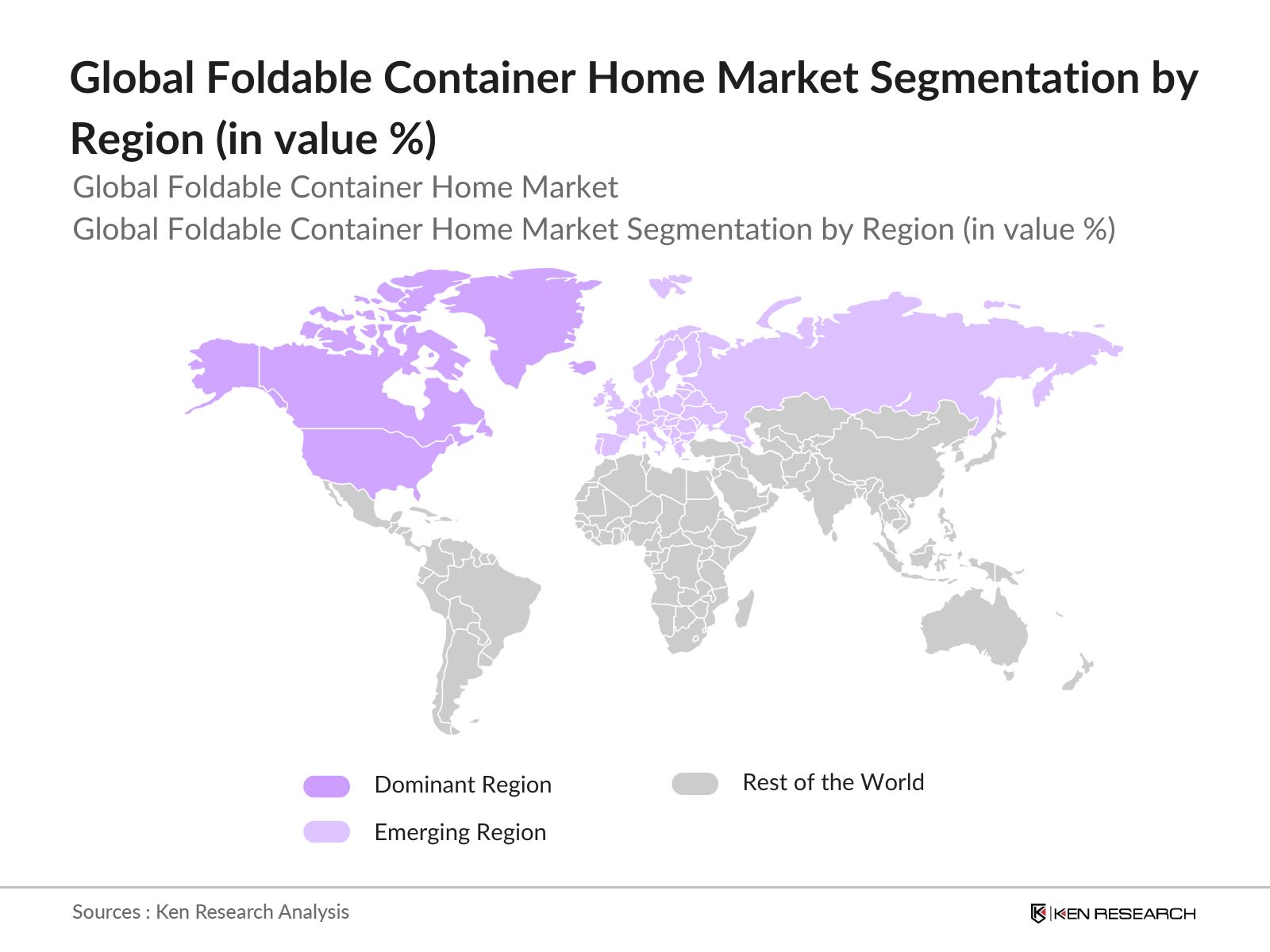
- The Asia-Pacific and North America regions dominate the foldable container home market due to urbanization trends, cost-saving initiatives, and robust government support for sustainable housing. In Asia-Pacific, countries such as China and Japan lead the market, spurred by high population density and government efforts to promote affordable housing. North Americas market presence is fueled by eco-conscious consumers and a rise in disaster-resistant, durable housing demand in areas prone to climate-related incidents.
- The regulatory environment for foldable container homes is evolving, with more governments amending building codes to support alternative housing solutions. For instance, the US Department of Housing and Urban Development has issued guidelines to incorporate modular housing into residential zoning, reflecting a trend toward regulatory inclusivity. Compliance with local building standards remains a challenge, however, with countries like Japan mandating seismic testing for all housing, including container homes, to ensure safety. This regulatory adaptation highlights the ongoing evolution in housing standards aimed at supporting flexible housing options.

Global Foldable Container Home Market Segmentation
- By Product Type: The foldable container home market is segmented by product type into residential units, commercial units, and emergency and relief housing. Residential units hold a dominant market share within this segment due to the cost-effective nature of foldable homes for urban dwellers. Individuals looking for affordable housing solutions, especially in high-density cities, prefer these units due to their customizable, durable, and compact design, which also aligns well with modern minimalist lifestyles.
- By Material Type: By material type, the foldable container home market includes steel, aluminum, and composite materials. Steel-based units lead this segment due to their strength, durability, and relatively lower cost. Steel is preferred because it provides optimal strength for structural integrity, making it ideal for emergency housing or temporary installations in challenging environments.

- By Region: Regionally, the foldable container home market is segmented into North America, Europe, Asia-Pacific, Latin America, and Middle East & Africa. Asia-Pacific holds the largest share due to rapid urbanization, housing demand, and government initiatives focused on affordable housing. Moreover, cultural adaptability to compact living spaces and the rising popularity of minimalistic housing in Japan and China drive demand in the region.
Global Foldable Container Home Market Competitive Landscape
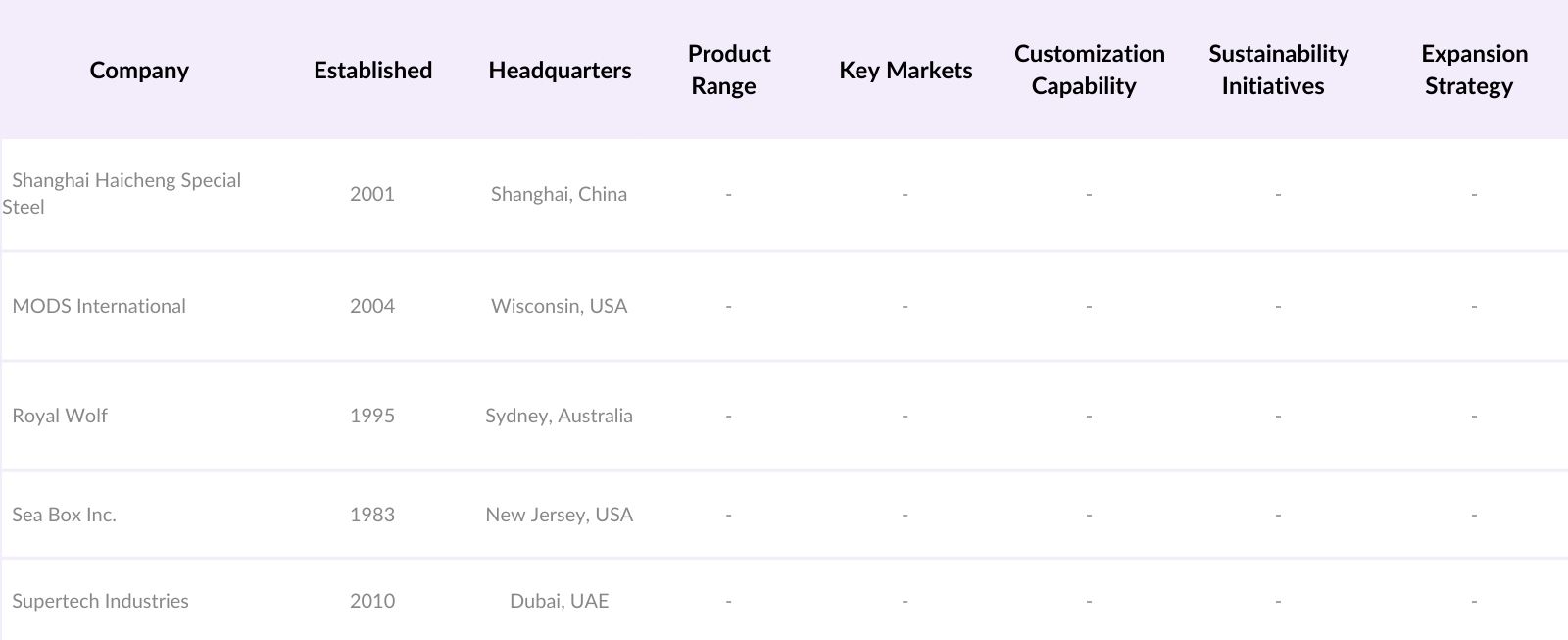
The foldable container home market features several key players who have established a stronghold through quality product offerings and strategic expansions. These companies leverage sustainable materials, cutting-edge design, and innovative modular housing solutions to differentiate themselves in a competitive landscape. The Global Foldable Container Home Market is characterized by the presence of a few established players and several emerging companies, particularly from Asia-Pacific and North America. Noteworthy players include Shanghai Haicheng Special Steel Container, which leads in steel-based modular designs, and Royal Wolf, renowned for its diverse range of container-based housing solutions across the Asia-Pacific.
Global Foldable Container Home Market Analysis
Market Growth Drivers
- Rising Demand for Affordable Housing: The global need for affordable housing is a growth driver of the foldable container home market, as population growth continues in densely populated urban centers. The United Nations reports that as of 2023, 1.6 billion people lacked adequate housing worldwide, reflecting the critical need for low-cost, adaptable housing solutions. In response, foldable container homes are increasingly seen as viable, cost-effective alternatives that reduce construction timelines and material costs while providing durable structures suitable for urban environments. Their affordability aligns with the World Bank's emphasis on housing accessibility as a primary factor in urban economic stability.
- Increase in Urbanization: Urbanization is expanding at an unprecedented rate, with over 55% of the global population residing in urban areas by 2024, as indicated by the United Nations' World Urbanization Prospects. The rapid influx of urban residents demands scalable housing solutions, such as foldable container homes, which can be rapidly deployed and customized for limited urban spaces. This rise is particularly notable in countries with substantial rural-to-urban migration, where foldable container housing options offer flexibility and cost-efficiency. This urban growth aligns with economic indicators supporting increased infrastructure demand in emerging urban hubs.
- Sustainable and Eco-Friendly Living Solutions: Foldable container homes are gaining popularity as they align with global sustainability targets. The International Energy Agency (IEA) notes that the construction industry is responsible for nearly 40% of energy-related carbon dioxide emissions, prompting shifts toward more eco-friendly practices. Foldable container homes are typically constructed from recycled materials, which lowers carbon footprints and aligns with national and international carbon reduction goals. They also reduce waste in construction by nearly 70%, creating an environmentally responsible option that is increasingly attractive to eco-conscious consumers and aligned with current environmental policy directives.
Market Challenges
- Regulatory and Zoning Restrictions: Despite the potential benefits, regulatory challenges pose barriers to foldable container home adoption. For example, many urban municipalities require compliance with stringent building codes, which often lack provisions for alternative housing models. The International Code Council reports that fewer than 15% of urban areas globally have revised building codes to accommodate modular or container housing, stifling innovation in regions with restrictive zoning laws. Addressing these regulatory gaps is critical to mainstreaming foldable container homes in areas facing housing shortages.
- Transportation and Logistics Limitations: Transportation challenges also impede the foldable container home market. As these homes are manufactured off-site, they often face logistical hurdles in reaching their final destinations, particularly in areas with underdeveloped infrastructure. A World Bank report on global logistics performance cites that inadequate road networks in emerging markets contribute to a 20% increase in transportation delays, making efficient distribution of prefabricated homes challenging. Solutions are needed to streamline logistics to ensure that the homes can be effectively transported and set up in target areas.
Global Foldable Container Home Market Future Outlook
Over the next few years, the foldable container home market is expected to expand as demand for sustainable, cost-effective housing rises globally. The market will likely benefit from technological advancements in modular design and construction, along with government support in regions aiming to address housing shortages. The rapid urbanization and increased popularity of minimalist lifestyles will also contribute to market growth, particularly in urban centers across Asia-Pacific and North America.
Market Opportunities
- Innovative Designs and Customizations: The trend toward personalized, adaptable housing presents a strong opportunity for foldable container homes, which can be tailored with modern features to meet specific consumer needs. Current advancements in modular construction, such as energy-efficient insulation and solar panel integration, enhance customizability while aligning with sustainable living standards. According to data from the International Renewable Energy Agency, nearly 18% of newly constructed homes in urban areas integrate renewable energy solutions, creating a pathway for container homes to meet sustainability standards through similar integrations.
- Market Expansion in Developing Regions: Developing regions exhibit substantial demand for affordable housing options, making them ideal markets for foldable container homes. The World Bank reports that as of 2024, there are over 300 million urban poor across sub-Saharan Africa, Southeast Asia, and Latin America, regions where foldable housing could address acute housing shortages affordably. Local governments increasingly explore alternative housing models to meet this demand, opening up opportunities for container homes to serve as viable, scalable solutions.
Scope of the Report
|
Product Type |
Residential Units Commercial Units Emergency and Relief Housing |
|
Material Type |
Steel Aluminum Composite Materials |
|
Application |
Permanent Housing Temporary Housing Hospitality and Tourism |
|
Distribution Channel |
Direct Sales Online Platforms Retail Distributors |
|
Region |
North America Europe Asia Pacific Latin America Middle East & Africa |
Products
Key Target Audience
Investor and Venture Capitalist Firms
Government and Regulatory Bodies (e.g., U.S. Department of Housing and Urban Development, China Ministry of Housing and Urban-Rural Development)
Real Estate Developers
Banks and Financial Instituions
Emergency Relief Organizations (e.g., Red Cross, United Nations)
Urban Planning and Housing Authorities
Construction and Architecture Firms
Eco-conscious Consumers and Environmental Groups
Disaster Management and Response Agencies
Companies
Players Mentioned in the Report
Shanghai Haicheng Special Steel Container
Guangzhou Moneybox Steel Structure Engineering
Hebei Weizhengheng Modular House
Giant Containers
MODS International
ConGlobal Industries
Royal Wolf
WZHGROUP
Supertech Industries
Sea Box Inc.
Table of Contents
1. Global Foldable Container Home Market Overview
1.1 Definition and Scope
1.2 Market Taxonomy
1.3 Market Dynamics
1.4 Value Chain Analysis
2. Global Foldable Container Home Market Size (in USD Bn)
2.1 Historical Market Size
2.2 Market Growth Rate Analysis
2.3 Key Market Milestones and Developments
3. Global Foldable Container Home Market Analysis
3.1 Growth Drivers
3.1.1 Rising Demand for Affordable Housing
3.1.2 Increase in Urbanization
3.1.3 Sustainable and Eco-Friendly Living Solutions
3.2 Market Challenges
3.2.1 Regulatory and Zoning Restrictions
3.2.2 Transportation and Logistics Limitations
3.3 Opportunities
3.3.1 Innovative Designs and Customizations
3.3.2 Market Expansion in Developing Regions
3.4 Trends
3.4.1 Integration with Renewable Energy Sources
3.4.2 Increased Interest in Minimalist Lifestyles
3.5 Regulatory Landscape
3.5.1 Building Codes and Standards
3.5.2 Sustainability and Green Certifications
3.6 Competitive Analysis [(SWOT Analysis, Porters Five Forces)]
3.7 Stakeholder Ecosystem
3.8 Industry Value Chain Analysis
3.9 Supplier and Distributor Networks
4. Global Foldable Container Home Market Segmentation
4.1 By Product Type (in Value %)
4.1.1 Residential Units
4.1.2 Commercial Units
4.1.3 Emergency and Relief Housing
4.2 By Material Type (in Value %)
4.2.1 Steel
4.2.2 Aluminum
4.2.3 Composite Materials
4.3 By Application (in Value %)
4.3.1 Permanent Housing
4.3.2 Temporary Housing
4.3.3 Hospitality and Tourism
4.4 By Distribution Channel (in Value %)
4.4.1 Direct Sales
4.4.2 Online Platforms
4.4.3 Retail Distributors
4.5 By Region (in Value %)
4.5.1 North America
4.5.2 Europe
4.5.3 Asia Pacific
4.5.4 Latin America
4.5.5 Middle East & Africa
5. Global Foldable Container Home Market Competitive Landscape
5.1 Detailed Company Profiles
5.1.1. Shanghai Haicheng Special Steel Container
5.1.2. Guangzhou Moneybox Steel Structure Engineering
5.1.3. Hebei Weizhengheng Modular House
5.1.4. Giant Containers
5.1.5. MODS International
5.1.6. ConGlobal Industries
5.1.7. Royal Wolf
5.1.8. WZHGROUP
5.1.9. Supertech Industries
5.1.10. Sea Box Inc.
5.1.11. ALHO Systembau GmbH
5.1.12. ELLY, Inc.
5.1.13. Boxman Studios
5.1.14. SG Blocks
5.1.15. Mobile Modular
5.2 Cross-Comparison Parameters (Revenue, Headquarters, Inception Year, Market Share, Product Differentiation, Expansion Strategies, Sustainable Initiatives, Client Base)
5.3 Market Share Analysis
5.4 Key Strategic Initiatives
5.5 Mergers and Acquisitions
5.6 Joint Ventures and Partnerships
5.7 Investment and Funding Landscape
6. Global Foldable Container Home Market Regulatory Framework
6.1 Zoning Laws and Compliance Requirements
6.2 Construction Permits and Approvals
6.3 Safety and Building Codes
6.4 Environmental Impact and Sustainability Standards
6.5 Certification Processes
7. Future Market Size for Global Foldable Container Homes (in USD Bn)
7.1 Future Market Size Projections
7.2 Key Growth Factors
8. Future Market Segmentation for Foldable Container Homes
8.1 By Product Type (in Value %)
8.2 By Material Type (in Value %)
8.3 By Application (in Value %)
8.4 By Distribution Channel (in Value %)
8.5 By Region (in Value %)
9. Analysts Recommendations
9.1 Market Entry Strategies
9.2 White Space Opportunity Analysis
9.3 Risk Assessment and Mitigation
9.4 Marketing and Customer Retention Initiatives
Research Methodology
Step 1: Identification of Key Variables
This phase involves mapping the industrys ecosystem, identifying stakeholders, and collecting data on crucial market variables like product types, regional demands, and material innovations through desk research and verified secondary data sources.
Step 2: Market Analysis and Construction
Data on past market performance, consumer preferences, and regional housing needs are compiled to analyze market dynamics. This includes estimating product demand within key segments and understanding the impact of regulatory policies.
Step 3: Hypothesis Validation and Expert Consultation
Market assumptions are validated through interviews with industry experts, providing insights on operational trends, customer preferences, and competitor strategies, which enhance the accuracy of market data.
Step 4: Research Synthesis and Final Output
The concluding phase includes synthesizing insights from manufacturers, distributors, and end-users to develop a comprehensive market model. This model includes data-backed analysis to support decision-making for stakeholders in the Global Foldable Container Home Market.
Frequently Asked Questions
01. How big is the Global Foldable Container Home Market?
The Global Foldable Container Home Market is valued at USD 8 billion, driven by rising demand for affordable, eco-friendly housing solutions.
02. What are the challenges in the Global Foldable Container Home Market?
Key challenges include regulatory and zoning restrictions, logistical constraints, and material durability concerns in extreme climates.
03. Who are the major players in the Global Foldable Container Home Market?
Leading players include Shanghai Haicheng Special Steel Container, MODS International, Royal Wolf, Sea Box Inc., and Supertech Industries, known for their market reach and innovation.
04. What factors drive the Global Foldable Container Home Market?
Drivers include the need for sustainable housing, advancements in modular design, and the rising trend of minimalist, flexible living spaces.
Why Buy From Us?

What makes us stand out is that our consultants follows Robust, Refine and Result (RRR) methodology. i.e. Robust for clear definitions, approaches and sanity checking, Refine for differentiating respondents facts and opinions and Result for presenting data with story

We have set a benchmark in the industry by offering our clients with syndicated and customized market research reports featuring coverage of entire market as well as meticulous research and analyst insights.

While we don't replace traditional research, we flip the method upside down. Our dual approach of Top Bottom & Bottom Top ensures quality deliverable by not just verifying company fundamentals but also looking at the sector and macroeconomic factors.

With one step in the future, our research team constantly tries to show you the bigger picture. We help with some of the tough questions you may encounter along the way: How is the industry positioned? Best marketing channel? KPI's of competitors? By aligning every element, we help maximize success.

Our report gives you instant access to the answers and sources that other companies might choose to hide. We elaborate each steps of research methodology we have used and showcase you the sample size to earn your trust.

If you need any support, we are here! We pride ourselves on universe strength, data quality, and quick, friendly, and professional service.