
Global Food Truck Market Outlook 2030
Region:Global
Author(s):Shivani Mehra
Product Code:KROD5593
Region:Global
Author(s):Shivani Mehra
Product Code:KROD5593
December 2024
95
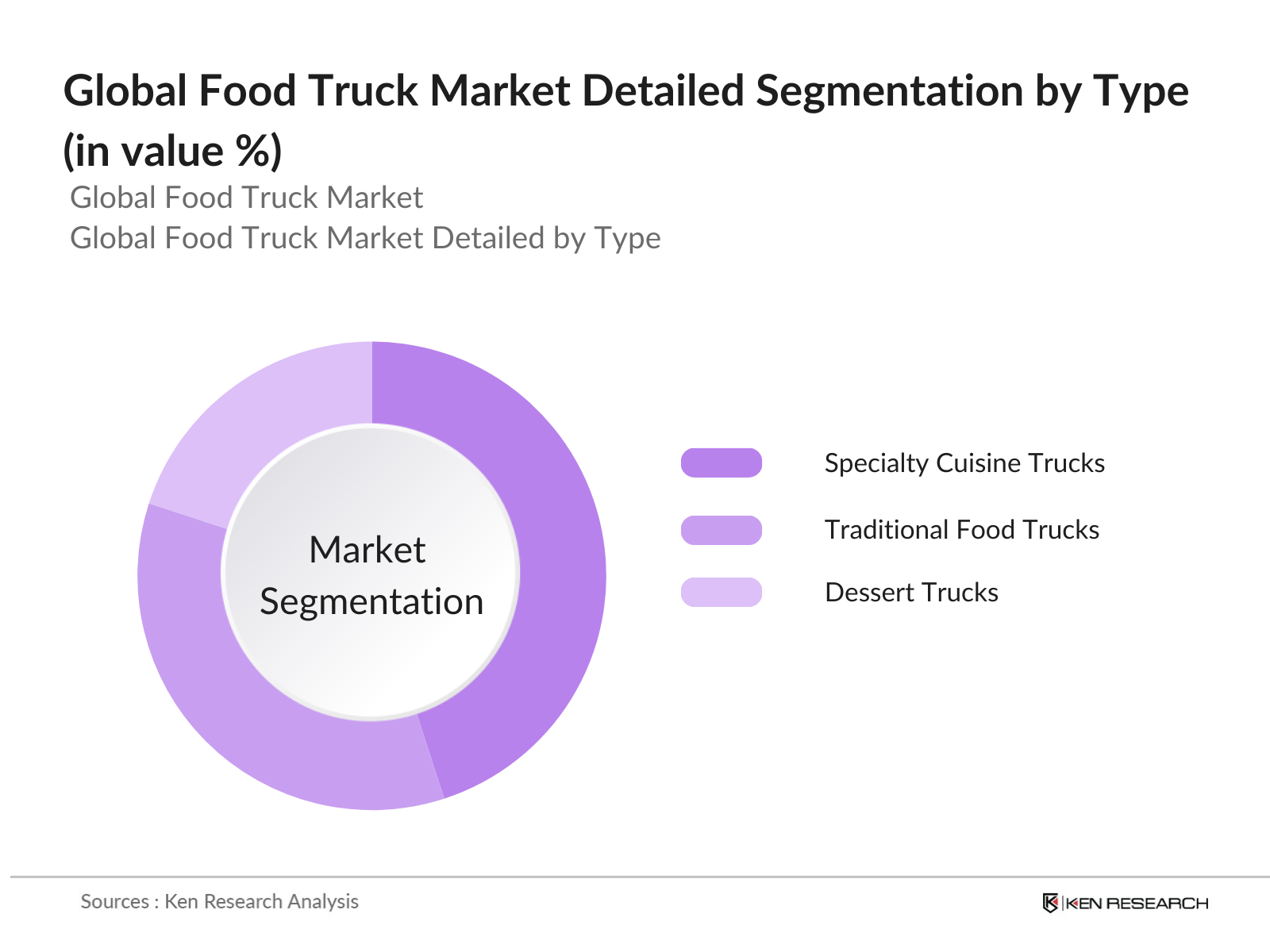
By Type: The global food truck market is segmented by type into traditional food trucks, specialty cuisine trucks, and dessert trucks. Recently, specialty cuisine trucks have been dominating the market share in this category. This dominance is attributed to the growing demand for unique and innovative food offerings, which cater to adventurous consumers seeking gourmet and fusion cuisines. The flexibility of food trucks allows chefs to experiment with different culinary trends and serve high-quality, niche dishes, driving their appeal among urban populations and food enthusiasts.
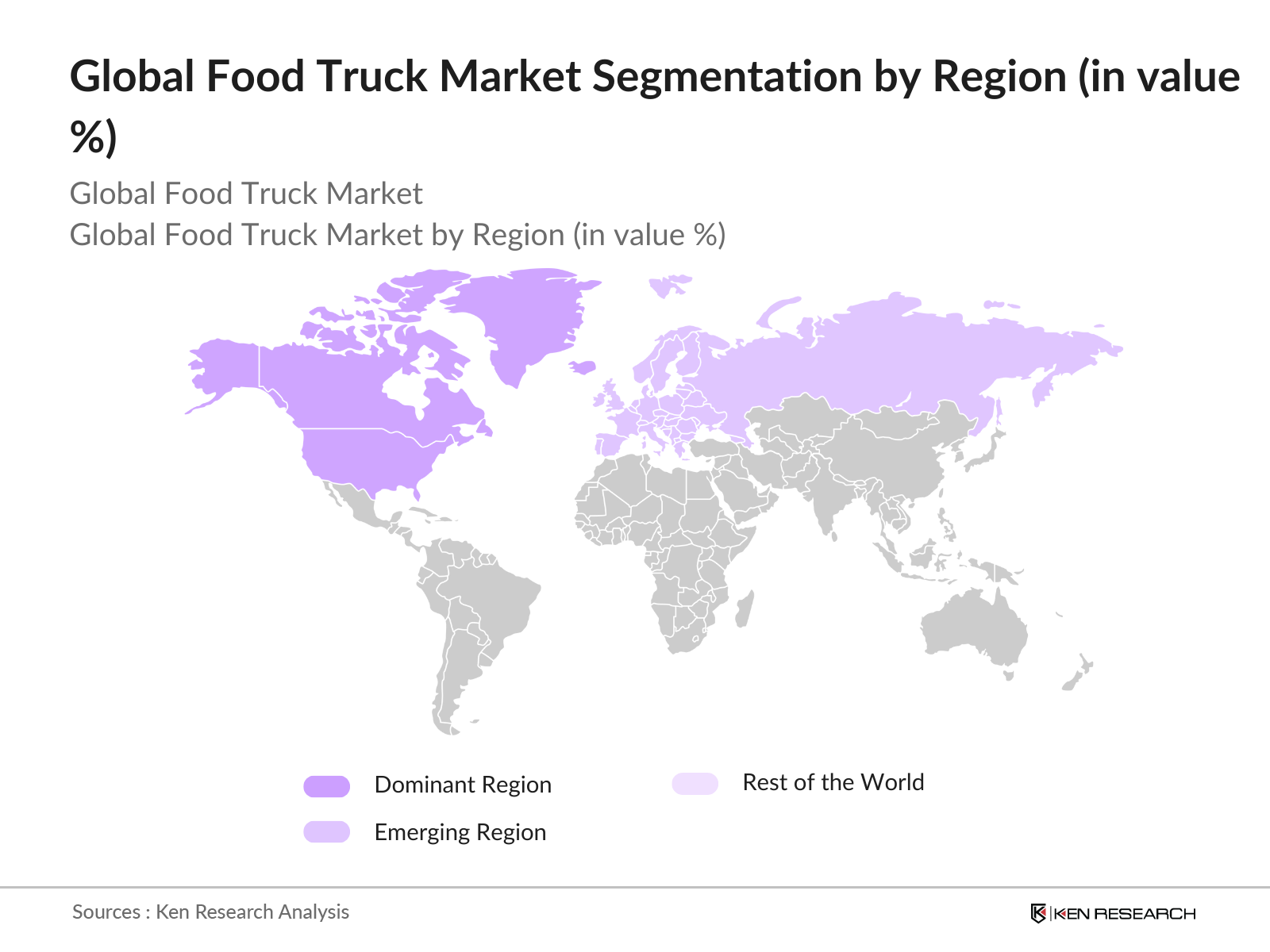
By Region: The global food truck market is segmented into North America, Europe, Asia-Pacific, Latin America, and the Middle East & Africa. North America leads the market due to the strong food truck culture in the United States and Canada, supported by favorable regulatory frameworks and consumer interest in diverse culinary experiences. The regions urban centers, coupled with high disposable incomes and the popularity of food festivals, contribute to the dominance of North America in the global food truck market.
The global food truck market is highly competitive, with a mix of established and emerging players. The market is dominated by key players who have built a loyal customer base and expanded their operations through franchising, partnerships, and diversification of menu offerings. Many players have leveraged technology and social media to build their brand and attract customers.
|
Company |
Establishment Year |
Headquarters |
Cuisine Focus |
Geographic Reach |
Revenue (USD mn) |
No. of Trucks |
Expansion Strategy |
|
The Grilled Cheese Truck |
2010 |
Los Angeles, USA |
- |
- |
- |
- |
- |
|
Cousins Maine Lobster |
2012 |
Los Angeles, USA |
- |
- |
- |
- |
- |
|
Kogi BBQ |
2008 |
Los Angeles, USA |
- |
- |
- |
- |
- |
|
The Halal Guys |
1990 |
New York, USA |
- |
- |
- |
- |
- |
|
Lukes Lobster |
2009 |
New York, USA |
- |
- |
- |
- |
- |
Market Growth Analysis
Market Challenges:
Over the next five years, the global food truck market is expected to experience steady growth, driven by increasing urbanization, consumer demand for unique and convenient dining options, and the continued expansion of the food truck business model into new regions. Key trends such as sustainable operations, digital innovation, and growing interest in plant-based and health-conscious menus are expected to shape the future of the market, making food trucks a vital part of the evolving foodservice landscape.
Market Opportunities:
|
By Type |
Traditional Food Trucks Specialty Cuisine Trucks Dessert Trucks |
|
By Size of Truck |
Small Medium Large |
|
By Service Type |
Standalone Event-based Catering |
|
By Cuisine Focus |
American Asian Mexican Mediterranean Fusion |
|
By Region |
North America Europe Asia-Pacific Latin America Middle East & Africa |
1.1. Definition and Scope
1.2. Market Taxonomy
1.3. Market Growth Rate
1.4. Market Segmentation Overview
2.1. Historical Market Size
2.2. Year-on-Year Growth Analysis
2.3. Key Market Developments and Milestones
3.1. Growth Drivers
3.1.1. Increasing Urbanization
3.1.2. Rising Demand for Street Food
3.1.3. Low Startup Costs and Flexibility
3.1.4. Growing Culinary Tourism
3.2. Market Challenges
3.2.1. Regulatory Hurdles (Health & Safety Regulations, Licensing)
3.2.2. Intense Competition (Local Competition, Entry Barriers)
3.2.3. Seasonal Dependence (Revenue Fluctuations)
3.3. Opportunities
3.3.1. Franchise Expansion Opportunities
3.3.2. Integration with Online Food Delivery Platforms
3.3.3. Sustainable Food Truck Concepts
3.4. Trends
3.4.1. Gourmet and Fusion Menus
3.4.2. Eco-Friendly Food Truck Solutions
3.4.3. Event Catering and Mobile Vending
3.5. Government Regulation
3.5.1. Food Safety Standards
3.5.2. Licensing Requirements
3.5.3. Location and Parking Regulations
3.6. SWOT Analysis
3.7. Stakeholder Ecosystem
3.8. Porters Five Forces
3.9. Competition Ecosystem
4.1. By Type (In Value %)
4.1.1. Traditional Food Trucks
4.1.2. Specialty Cuisine Trucks
4.1.3. Dessert Trucks
4.2. By Size of Truck (In Value %)
4.2.1. Small
4.2.2. Medium
4.2.3. Large
4.3. By Service Type (In Value %)
4.3.1. Standalone
4.3.2. Event-based
4.3.3. Catering
4.4. By Region (In Value %)
4.4.1. North America
4.4.2. Europe
4.4.3. Asia-Pacific
4.4.4. Latin America
4.4.5. Middle East & Africa
5.1. Detailed Profiles of Major Companies
5.1.1. The Grilled Cheese Truck
5.1.2. Cousins Maine Lobster
5.1.3. Kogi BBQ
5.1.4. The Halal Guys
5.1.5. Lukes Lobster
5.1.6. BBQ Bus
5.1.7. Frying Dutchmen
5.1.8. Nom Nom Truck
5.1.9. Gorilla Cheese NYC
5.1.10. Fivetenburger
5.1.11. Roxys Grilled Cheese
5.1.12. Green Truck
5.1.13. Wafels & Dinges
5.1.14. Streetza
5.1.15. The Cinnamon Snail
5.2. Cross Comparison Parameters (No. of Trucks, Geographic Presence, Cuisine Focus, Customer Reviews, Partnerships, Event Catering, Revenue, Employee Strength)
5.3. Market Share Analysis
5.4. Strategic Initiatives
5.5. Mergers and Acquisitions
5.6. Investment Analysis
5.7. Franchise Expansion
5.8. Public and Private Equity Investments
6.1. Licensing Requirements
6.2. Food Safety Regulations
6.3. Zoning and Parking Regulations
6.4. Environmental Standards
7.1. Future Market Size Projections
7.2. Key Factors Driving Future Market Growth
8.1. By Type (In Value %)
8.2. By Size of Truck (In Value %)
8.3. By Service Type (In Value %)
8.4. By Region (In Value %)
9.1. TAM/SAM/SOM Analysis
9.2. Franchise Opportunities
9.3. White Space Opportunity Analysis
The first step involves creating an in-depth ecosystem map that outlines the major players within the global food truck market. This is achieved through comprehensive desk research, analyzing secondary sources such as industry reports, databases, and government publications. The objective is to identify the key variables that drive the market, such as consumer behavior, regulations, and economic factors.
In this phase, historical data is compiled to assess the growth trajectory of the food truck market. Key metrics such as market penetration, revenue generation, and market saturation are analyzed. This data provides a foundation for understanding the past performance of the market and helps forecast future trends based on current dynamics.
The next step is the validation of market hypotheses through consultations with food truck operators, industry experts, and analysts. These consultations offer insights into operational challenges, growth opportunities, and consumer preferences, which are integral to refining the market forecasts and understanding the competitive landscape.
Finally, the collected data is synthesized and validated through a bottom-up approach. Direct engagement with food truck operators provides critical data on customer trends, menu preferences, and operational strategies, ensuring that the final analysis is both accurate and comprehensive. This synthesis leads to the creation of detailed market reports, providing actionable insights for stakeholders.
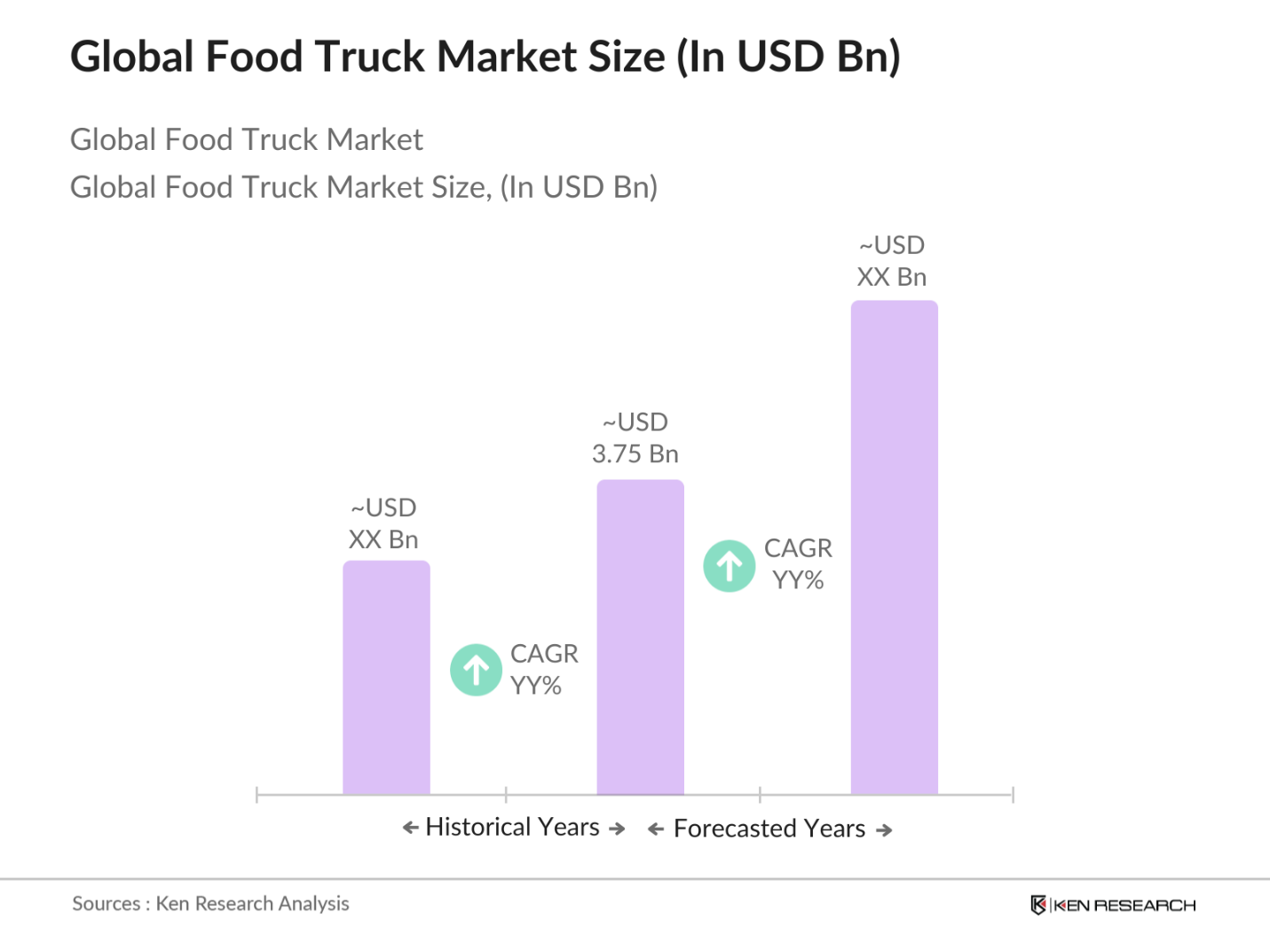
The global food truck market was valued at USD 3.75 billion, driven by the increasing demand for convenient and diverse food options, as well as the affordability and flexibility of starting a food truck business.
Challenges in the food truck market include stringent regulatory requirements related to food safety and licensing, the high level of competition among operators, and seasonal fluctuations in demand, which can impact revenue.
Key players include The Grilled Cheese Truck, Cousins Maine Lobster, Kogi BBQ, The Halal Guys, and Lukes Lobster. These companies dominate the market due to their strong brand presence, extensive geographic reach, and successful expansion strategies.
Growth drivers include increasing urbanization, consumer preference for gourmet street food, low entry barriers for new entrepreneurs, and the growing popularity of food trucks at festivals and events.

What makes us stand out is that our consultants follows Robust, Refine and Result (RRR) methodology. i.e. Robust for clear definitions, approaches and sanity checking, Refine for differentiating respondents facts and opinions and Result for presenting data with story

We have set a benchmark in the industry by offering our clients with syndicated and customized market research reports featuring coverage of entire market as well as meticulous research and analyst insights.

While we don't replace traditional research, we flip the method upside down. Our dual approach of Top Bottom & Bottom Top ensures quality deliverable by not just verifying company fundamentals but also looking at the sector and macroeconomic factors.

With one step in the future, our research team constantly tries to show you the bigger picture. We help with some of the tough questions you may encounter along the way: How is the industry positioned? Best marketing channel? KPI's of competitors? By aligning every element, we help maximize success.

Our report gives you instant access to the answers and sources that other companies might choose to hide. We elaborate each steps of research methodology we have used and showcase you the sample size to earn your trust.

If you need any support, we are here! We pride ourselves on universe strength, data quality, and quick, friendly, and professional service.