
Global Football Club Market Outlook to 2030
Region:Global
Author(s):Naman Rohilla
Product Code:KROD11289
December 2024
88
About the Report
Global Football Club Market Overview
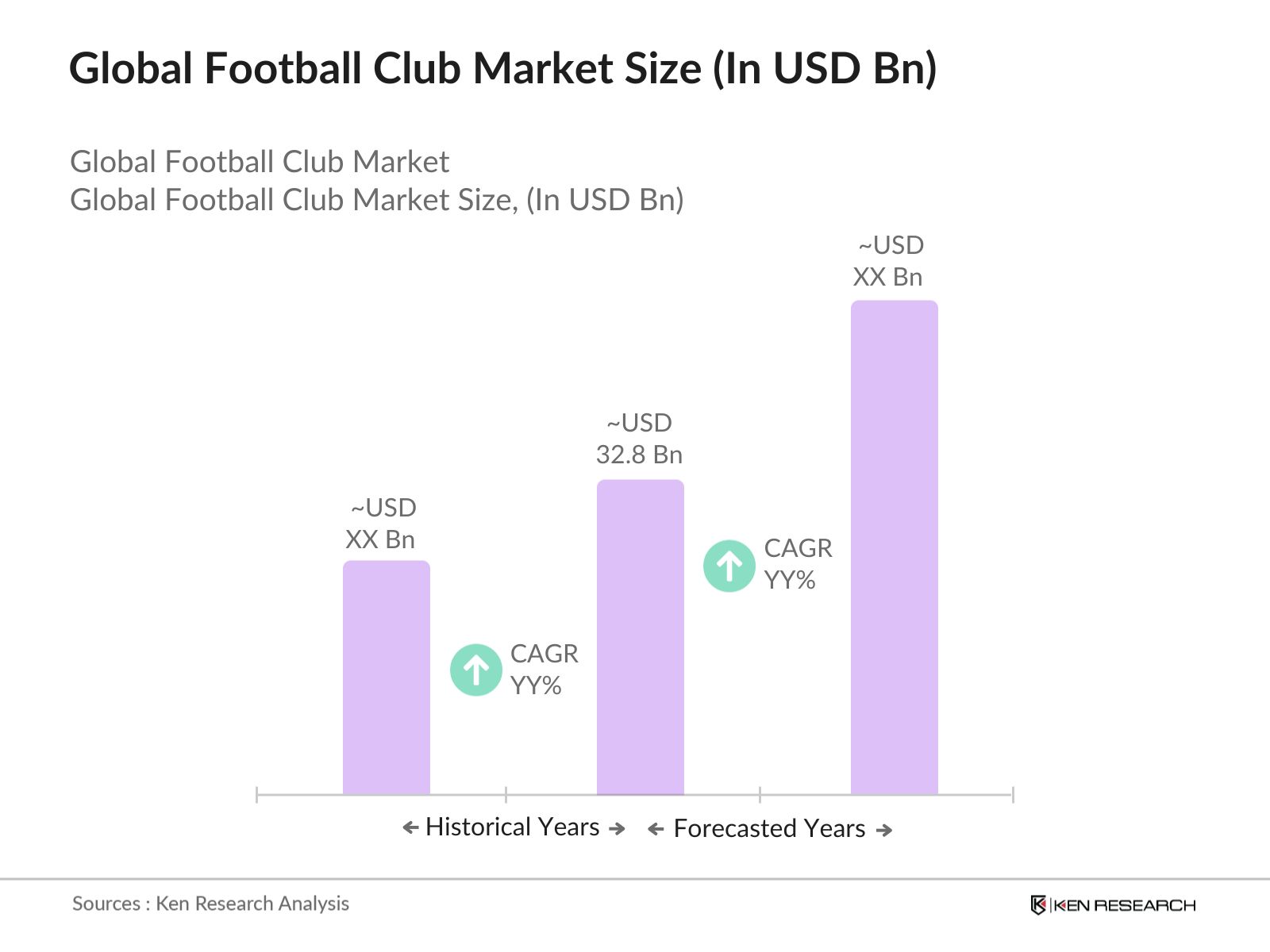
- The Global Football Club market, valued at USD 32.8 billion, is propelled by factors such as commercial revenue from broadcasting rights, merchandising, and ticket sales. Notably, broadcasting contracts have emerged as a substantial revenue stream, especially in Europe and North America, with clubs leveraging digital platforms to expand their fanbase and increase merchandise sales. Revenue from sponsorships also plays a vital role, as brands view partnerships with top clubs as high-value marketing opportunities, further driving the market.
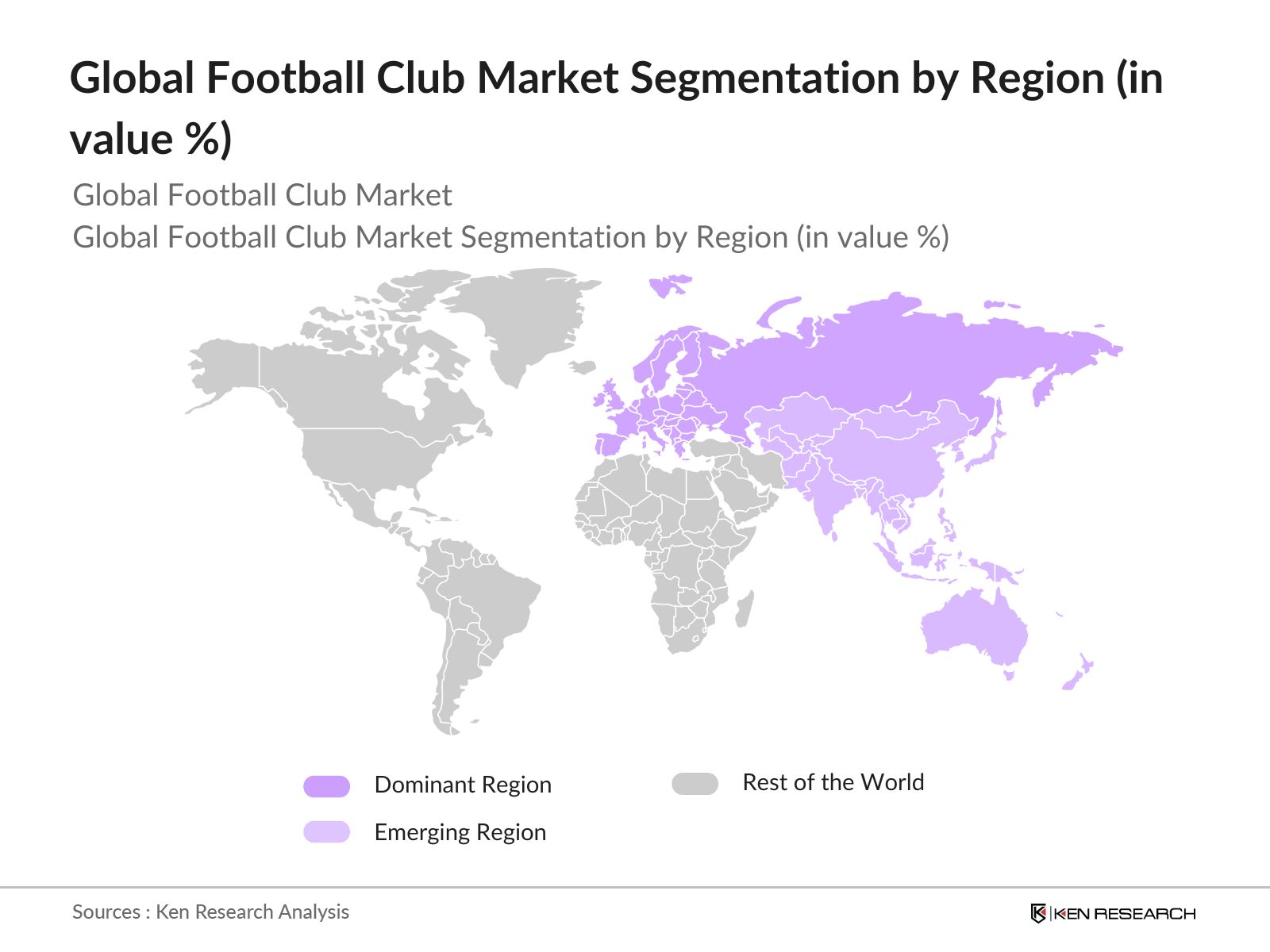
- Europe and South America lead the global football market due to their long-standing football culture, high fan engagement, and established club infrastructures. Europe, particularly countries like the United Kingdom, Spain, and Germany, is home to globally recognized clubs with substantial fanbases and brand value. These clubs benefit from robust domestic leagues, broadcasting deals, and corporate sponsorships, cementing their dominance in the global football landscape.
- FFP regulations mandate that clubs spend within their means to maintain financial integrity in football. Recent FFP enforcement in 2024 has led to 8 major clubs facing restrictions on player transfers, directly impacting club competitiveness. This framework is crucial in ensuring financial equity among clubs, though it can limit investment capabilities for emerging clubs. UEFA FFP Regulations.
Global Football Club Market Segmentation
- By Revenue Stream: The Global Football Club market is segmented by revenue stream into broadcasting rights, commercial partnerships, ticket sales, merchandising, and other revenue sources. Recently, broadcasting rights have become the dominant revenue stream, primarily due to high-value media deals with networks and digital streaming platforms. This prominence is driven by the clubs increasing engagement through digital channels, where streaming rights alone account for substantial revenue contributions.

- By Club Tier: The football market is segmented by club tier into top-tier, mid-tier, and emerging clubs. Top-tier clubs, known for their global fan following and high-value sponsorships, dominate this segment. Clubs like Manchester United and Real Madrid, with their international brand recognition and extensive digital presence, secure substantial sponsorships and broadcasting deals, maintaining their top-tier status.
- By Region: The market is also segmented by regional fan base into Europe, Asia-Pacific, North America, Latin America, and the Middle East & Africa. Europe leads due to the presence of renowned leagues and clubs. However, Asia-Pacific is a rising segment, with major fanbase growth driven by digital engagement, merchandising, and broadcasting initiatives.
Global Football Club Market Competitive Landscape
The Global Football Club market is dominated by key players with strong brand presence, valuable sponsorship deals, and large fanbases worldwide. Clubs with extensive social media engagement and high digital viewership are better positioned to attract sponsorships and partnerships.

Global Football Club Market Analysis
Market Growth Drivers
- Commercialization of Football: The commercialization of football clubs has spurred global interest and revenue growth through multiple channels such as ticket sales, sponsorships, and merchandise. In 2023, global football ticket sales alone generated over 9 billion USD, reflecting high fan engagement and willingness to invest in live games. Notably, UEFA reports that clubs in the top five European leagues collectively earned 3 billion USD from merchandise and sponsorships, highlighting corporate involvement in the sport's commercial success.
- Broadcasting Rights and Media Exposure: Media and broadcasting rights remain critical to football clubs' growth by expanding audience reach and generating substantial revenue. In 2024, the English Premier League broadcasting rights sold for a record-breaking 10 billion USD across multiple regions, with over 60% of this revenue supporting club operations. The increased media exposure has facilitated club branding worldwide, with some clubs experiencing a fan base expansion of up to 30 million viewers annually due to global broadcasting agreements.
- Fan Base and Regional Influence: Footballs fan base has seen remarkable growth, with FIFA estimating over 3.5 billion followers worldwide. Particularly in Asia-Pacific and Africa, fan numbers have surged by over 500 million, where regional clubs like Manchester United and Real Madrid have active fan bases. This regional influence underscores football clubs' extensive reach and cultural impact, generating local economic benefits as well. Fan engagement in these regions, especially among youth, is vital for sustained interest, as it translates to higher ticket sales, merchandise purchases, and digital interaction.
Market Challenges
- Competition from Other Sports: Football clubs face intense competition from sports such as basketball, cricket, and esports, particularly in regions where these sports are culturally entrenched. In the U.S., for example, footballs viewership competes with basketballs 450 million fans globally. The sports industrys market fragmentation reduces the potential fan base growth for football clubs, as alternative sports offer comparable engagement opportunities. Clubs must innovate in fan engagement to compete effectively with these rivals.
- Financial Constraints and FFP: Financial Fair Play (FFP) regulations mandate clubs to maintain a balanced budget, limiting their spending relative to income. As of 2024, UEFA imposed FFP sanctions on 12 European clubs for breaching these standards, impacting their transfer strategies and operational flexibility. Financial constraints are a challenge, particularly for clubs that cannot compete with high-revenue teams, potentially limiting player acquisition and international growth.
Global Football Club Market Future Outlook
Over the next five years, the Global Football Club market is expected to expand due to rising digital engagement, increased commercialization, and broader fan reach in regions like Asia-Pacific and North America. Additionally, clubs are likely to enhance their revenue generation through merchandise and sponsorship deals, leveraging the growing global fanbase. Technological advancements, such as augmented reality fan experiences, will further drive engagement and revenue for top clubs.
Market Opportunities
- Expansion into Emerging Markets: Emerging markets in the Asia-Pacific and Middle East regions represent substantial growth opportunities for global football clubs. With a combined youth population of over 1.2 billion, these regions present a vast fan base for clubs seeking international growth. Sponsorship agreements between European clubs and Middle Eastern firms, worth nearly 2 billion USD in 2023, reflect this growing market interest. Expanding into these regions enables clubs to tap into new sponsorships, merchandise sales, and fan memberships.
- Digital Transformation and E-sports Integration: Football clubs are leveraging digital platforms and e-sports to engage fans. By 2024, over 15 top-tier clubs have launched e-sports divisions, targeting younger, tech-savvy audiences. Clubs like Paris Saint-Germain have attracted over 2 million followers in their e-sports division alone, showcasing digital transformation's potential. This adaptation to digital media broadens fan engagement and provides a sustainable revenue channel for clubs outside traditional match-day earnings.
Scope of the Report
|
Segments |
Sub-Segments |
|
Revenue Stream |
Broadcasting Rights Commercial Partnerships Ticket Sales Merchandising Other |
|
Club Tier |
Top-tier (Premier Clubs) Mid-tier Emerging Clubs |
|
Regional Fan Base |
Europe Asia-Pacific North America Latin America Middle East and Africa |
|
Merchandise Type |
Apparel and Footwear Accessories Memorabilia Collectibles |
|
Digital Engagement Platforms |
Social Media Channels Club Websites and Mobile Apps OTT Platforms E-sports and Gaming |
Products
Key Target Audience
Investor and Venture Capitalist Firms
Government and Regulatory Bodies (UEFA, FIFA, National Football Associations)
Broadcasting and Media Companies
Sponsorship and Advertising Agencies
Football Merchandise Manufacturers and Retailers
Digital Marketing and Social Media Firms
E-sports and Gaming Companies
Stadium Infrastructure and Maintenance Providers
Companies
Players Mentioned in the Report
Real Madrid CF
FC Barcelona
Manchester United FC
Manchester City FC
FC Bayern Munich
Paris Saint-Germain FC
Juventus FC
Chelsea FC
Arsenal FC
Liverpool FC
Table of Contents
1. Global Football Club Market Overview
1.1. Definition and Scope
1.2. Market Taxonomy
1.3. Market Growth Rate
1.4. Market Segmentation Overview
2. Global Football Club Market Size (In USD Bn)
2.1. Historical Market Size
2.2. Year-On-Year Growth Analysis
2.3. Key Market Developments and Milestones
3. Global Football Club Market Analysis
3.1. Growth Drivers
3.1.1. Commercialization of Football (Ticket Sales, Sponsorships, Merchandise)
3.1.2. Broadcasting Rights and Media Exposure
3.1.3. Rising Fan Base and Regional Influence
3.1.4. Globalization of Club Brands
3.2. Market Challenges
3.2.1. Competition from Other Sports (Rival Sports Engagement)
3.2.2. Financial Constraints and FFP (Financial Fair Play Regulations)
3.2.3. Risk of Injuries Affecting Key Players
3.3. Opportunities
3.3.1. Expansion into Emerging Markets (Asia-Pacific and Middle East)
3.3.2. Digital Transformation and E-sports Integration
3.3.3. Enhanced Fan Experience through Technology (AR/VR, In-stadium Apps)
3.4. Trends
3.4.1. Rising Popularity of Womens Football Clubs
3.4.2. Growing Emphasis on Sustainable Practices and ESG
3.4.3. Data Analytics in Player Performance and Fan Engagement
3.5. Regulatory Framework
3.5.1. Financial Fair Play (FFP) Regulations
3.5.2. Player Transfer Regulations
3.5.3. Governance and Ownership Laws
3.6. Stakeholder Ecosystem
3.7. Porters Five Forces Analysis
3.8. Competition Ecosystem
Global Football Club Market Segmentation
4.1. By Revenue Stream (In Value %)
4.1.1. Broadcasting Rights
4.1.2. Commercial Partnerships and Sponsorships
4.1.3. Ticket Sales
4.1.4. Merchandising
4.1.5. Other (e.g., Hospitality, E-sports)
4.2. By Club Tier (In Value %)
4.2.1. Top-tier (Premier Clubs)
4.2.2. Mid-tier
4.2.3. Emerging Clubs
4.3. By Regional Fan Base (In Value %)
4.3.1. Europe
4.3.2. Asia-Pacific
4.3.3. North America
4.3.4. Latin America
4.3.5. Middle East and Africa
4.4. By Merchandise Type (In Value %)
4.4.1. Apparel and Footwear
4.4.2. Accessories
4.4.3. Memorabilia
4.4.4. Collectibles
4.5. By Digital Engagement Platforms (In Value %)
4.5.1. Social Media Channels
4.5.2. Club Websites and Mobile Apps
4.5.3. OTT Platforms
4.5.4. E-sports and Gaming
5. Global Football Club Market Competitive Analysis
5.1. Detailed Profiles of Major Clubs
5.1.1. Real Madrid CF
5.1.2. FC Barcelona
5.1.3. Manchester United FC
5.1.4. Manchester City FC
5.1.5. FC Bayern Munich
5.1.6. Paris Saint-Germain FC
5.1.7. Juventus FC
5.1.8. Chelsea FC
5.1.9. Arsenal FC
5.1.10. Liverpool FC
5.1.11. Tottenham Hotspur FC
5.1.12. Borussia Dortmund
5.1.13. AC Milan
5.1.14. Inter Milan
5.1.15. Atletico Madrid
5.2. Cross-Comparison Parameters (Revenue, Market Reach, Brand Value, Digital Engagement, Merchandising Revenue, Fan Engagement, Stadium Capacity, Regional Popularity)
5.3. Market Share Analysis
5.4. Strategic Initiatives (Player Development, Infrastructure Investment)
5.5. Mergers and Acquisitions
5.6. Investment Analysis
5.7. Venture Capital and Private Equity Investments
5.8. Sponsorship and Partnership Analysis
6. Global Football Club Market Regulatory Framework
6.1. Financial Fair Play Standards
6.2. Transfer and Player Loan Regulations
6.3. Broadcasting Rights Compliance
6.4. Ownership and Governance Standards
7. Global Football Club Future Market Size (In USD Bn)
7.1. Future Market Size Projections
7.2. Key Factors Driving Future Market Growth
8. Global Football Club Future Market Segmentation
8.1. By Revenue Stream (In Value %)
8.2. By Club Tier (In Value %)
8.3. By Regional Fan Base (In Value %)
8.4. By Merchandise Type (In Value %)
8.5. By Digital Engagement Platforms (In Value %)
9. Global Football Club Market Analysts Recommendations
9.1. TAM/SAM/SOM Analysis
9.2. Customer Cohort Analysis
9.3. Marketing and Sponsorship Initiatives
9.4. White Space Opportunity Analysis
Disclaimer Contact UsResearch Methodology
Step 1: Identification of Key Variables
The first phase involves identifying key stakeholders and revenue streams within the Global Football Club Market. This includes gathering data on broadcasting, sponsorship, and merchandising from secondary and proprietary sources to establish the primary variables that impact market growth.
Step 2: Market Analysis and Construction
This phase involves analyzing historical revenue and fan engagement data across key regions. Assessments include market penetration in terms of broadcasting and merchandise sales, aiding in precise market value estimates.
Step 3: Hypothesis Validation and Expert Consultation
Hypotheses on market dynamics are validated through in-depth interviews with industry professionals. This stage provides insights into club-level financials, fan engagement strategies, and revenue streams to corroborate data accuracy.
Step 4: Research Synthesis and Final Output
The last step entails finalizing the market analysis through consultations with major club stakeholders to verify statistics. This process ensures a comprehensive view of the global football market, with robust validation and data triangulation.
Frequently Asked Questions
01. How big is the Global Football Club Market?
The Global Football Club market is valued at USD 32.8 billion, driven by broadcasting rights, sponsorships, and merchandise sales, reflecting the strong commercialization of top football clubs worldwide.
02. What are the challenges in the Global Football Club Market?
Challenges include regulatory compliance with Financial Fair Play standards, intense competition, and economic instability affecting ticket sales and fan spending.
03. Who are the major players in the Global Football Club Market?
Key players include Real Madrid CF, FC Barcelona, Manchester United FC, Bayern Munich, and PSG, all leading through strong brand value, extensive fanbases, and lucrative sponsorship deals.
04. What drives the revenue in the Global Football Club Market?
Revenue is driven by broadcasting rights, commercial sponsorships, and merchandise sales, with clubs increasingly leveraging digital channels to expand global reach and engagement.
Why Buy From Us?

What makes us stand out is that our consultants follows Robust, Refine and Result (RRR) methodology. i.e. Robust for clear definitions, approaches and sanity checking, Refine for differentiating respondents facts and opinions and Result for presenting data with story

We have set a benchmark in the industry by offering our clients with syndicated and customized market research reports featuring coverage of entire market as well as meticulous research and analyst insights.

While we don't replace traditional research, we flip the method upside down. Our dual approach of Top Bottom & Bottom Top ensures quality deliverable by not just verifying company fundamentals but also looking at the sector and macroeconomic factors.

With one step in the future, our research team constantly tries to show you the bigger picture. We help with some of the tough questions you may encounter along the way: How is the industry positioned? Best marketing channel? KPI's of competitors? By aligning every element, we help maximize success.

Our report gives you instant access to the answers and sources that other companies might choose to hide. We elaborate each steps of research methodology we have used and showcase you the sample size to earn your trust.

If you need any support, we are here! We pride ourselves on universe strength, data quality, and quick, friendly, and professional service.