















Global Frac Tank Market Outlook to 2030
Region:Global
Author(s):Yogita Sahu
Product Code:KROD8142
December 2024
93
About the Report
Global Frac Tank Market Overview
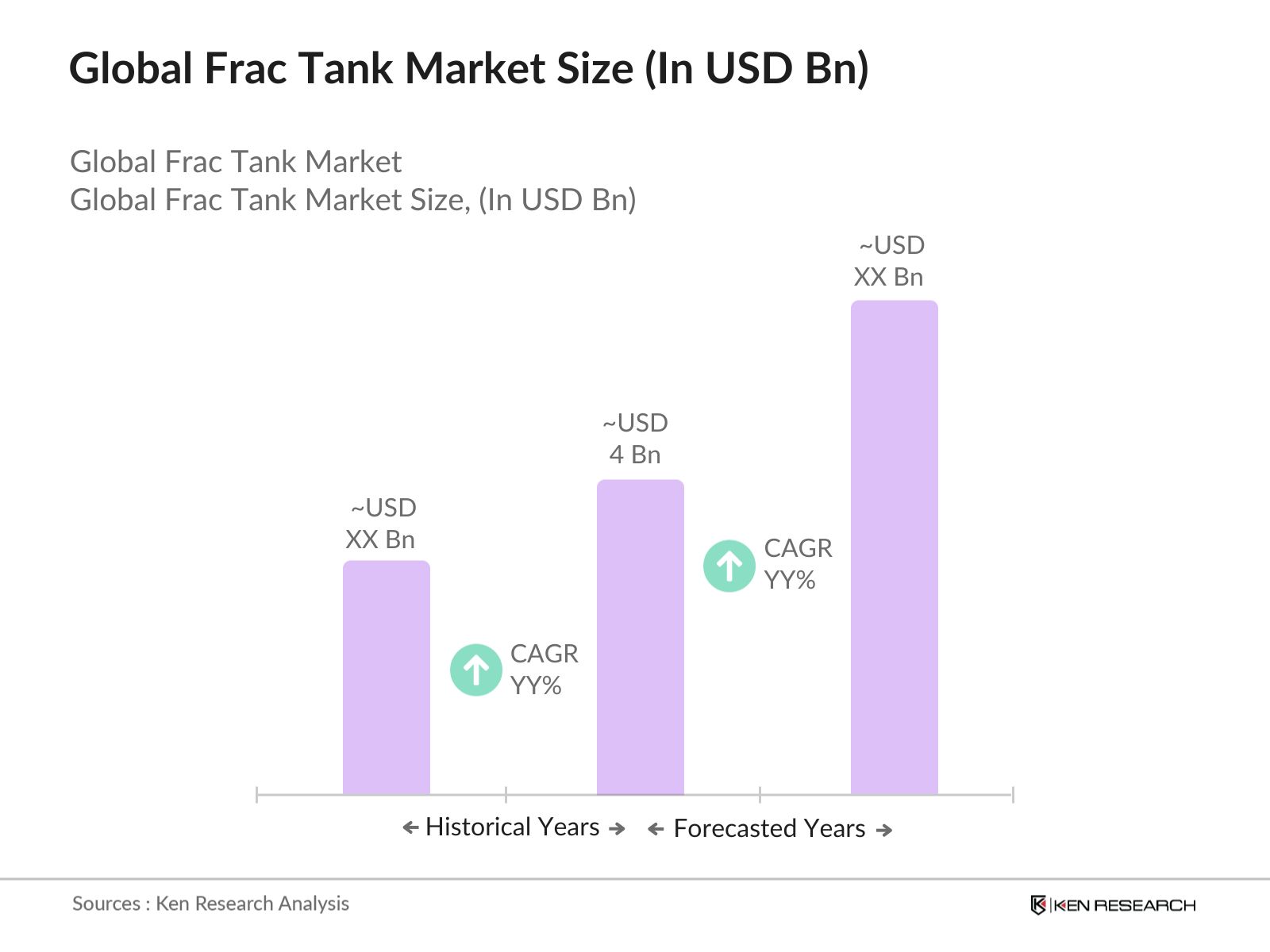
- The global frac tank market is valued at USD 4 billion, with strong growth driven by increasing oil and gas exploration activities, particularly in hydraulic fracturing. Frac tanks are essential for storing water, chemicals, and other fluids used during the fracturing process, contributing to their steady demand in the energy sector.
- North America dominates the market due to the United States' shale gas extraction operations. Countries like the U.S. are heavily reliant on hydraulic fracturing, where frac tanks play a pivotal role. In addition, countries with mature oil and gas industries, such as Canada and Norway, continue to expand their usage of advanced frac tanks, making them key players in the global market.
- The U.S. government, through the Infrastructure Investment and Jobs Act, has allocated more than $10 billion towards enhancing energy infrastructure, including oil and gas facilities. This initiative will increase drilling activities in 2024 and beyond, creating higher demand for frac tanks used in these operations. The Department of Energy projects that the act will support the development of at least 200 new oil wells by the end of 2024, significantly boosting the need for frac tanks.
Global Frac Tank Market Segmentation
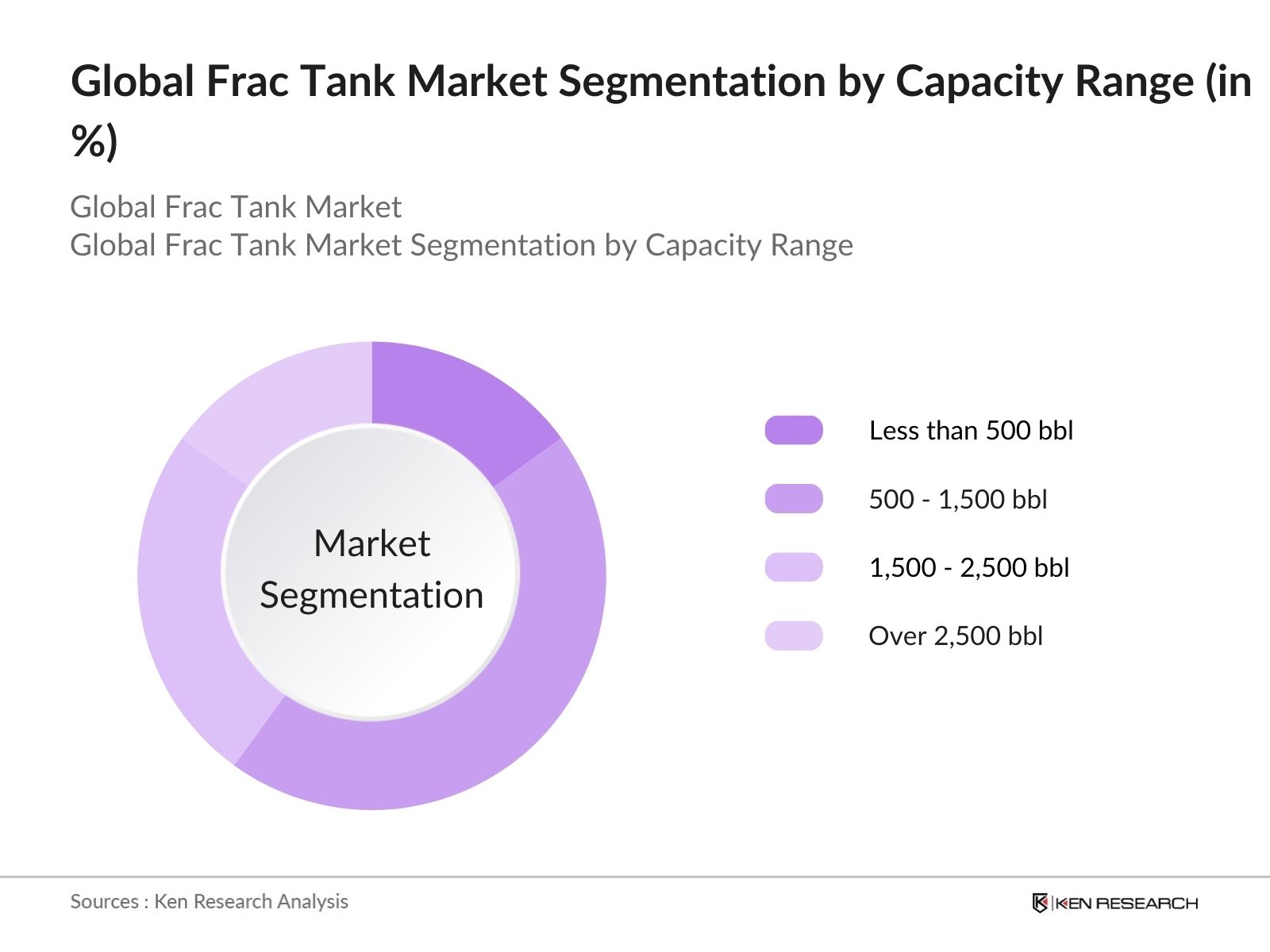
By Capacity: The market is segmented by capacity into less than 500 bbl, 500 - 1,500 bbl, 1,500 - 2,500 bbl, and over 2,500 bbl. Tanks with a capacity between 500 and 1,500 bbl dominate the market, owing to their versatility and widespread use across various applications in hydraulic fracturing. These tanks are preferred because they provide a balance between cost-efficiency and capacity, making them the standard for most onshore operations.
By Material: The market is segmented by material into steel, aluminum, and composite. Steel tanks lead the market, accounting for the majority of sales due to their durability and high resistance to corrosion, making them suitable for both onshore and offshore applications. Aluminum tanks are gaining traction in offshore applications where weight reduction is crucial, while composite tanks are becoming popular in highly corrosive environments, particularly offshore.
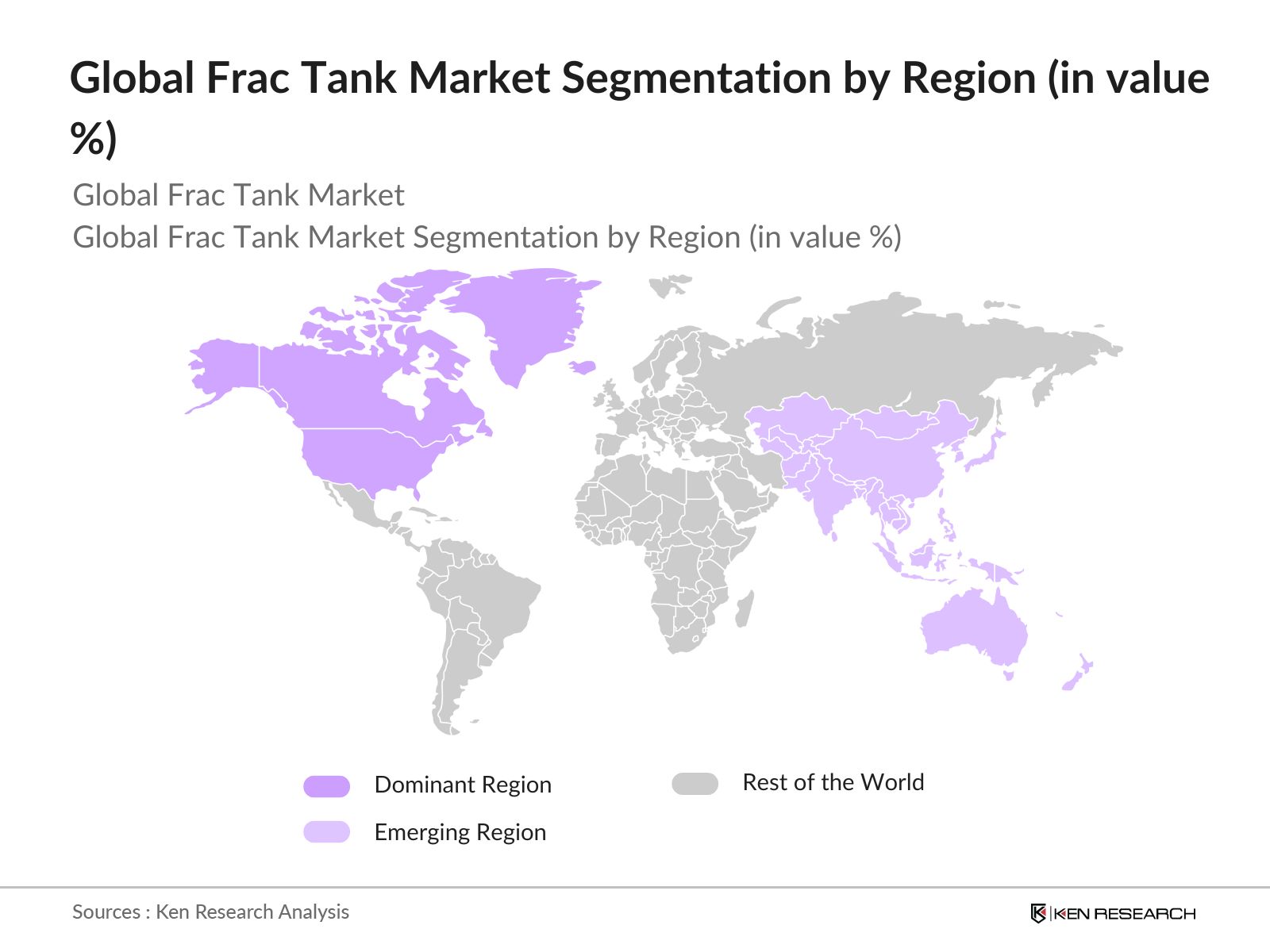
By Region: The market is segmented regionally into North America, Europe, Asia-Pacific, South America, and the Middle East & Africa. North America leads the market due to its large shale oil and gas operations, particularly in the U.S. In Europe, countries such as the UK and Norway are key markets, while Asia-Pacific is experiencing rapid growth, driven by expanding energy needs in China and India.
Global Frac Tank Market Competitive Landscape
The market is dominated by several key players who focus on innovation, efficiency, and environmental sustainability. Schlumberger and Baker Hughes, two leading companies, maintain a competitive edge through advanced technology, strong distribution networks, and strategic mergers and acquisitions.
|
Company |
Year of Establishment |
Headquarters |
Product Range |
R&D Investment |
Revenue (USD bn) |
No. of Employees |
Global Reach |
Key Clients |
Market Focus |
|
Schlumberger |
1926 |
Houston, USA |
|||||||
|
Baker Hughes |
1907 |
Houston, USA |
|||||||
|
United Rentals |
1997 |
Stamford, USA |
|||||||
|
Dragon Products |
1963 |
Beaumont, USA |
|||||||
|
Aggreko |
1962 |
Glasgow, UK |
Global Frac Tank Market Analysis
Market Growth Drivers
- Increased Oil and Gas Drilling Activities: The global demand for energy continues to rise, and oil and gas companies are expanding their drilling operations to meet this demand. In 2024, the International Energy Agency (IEA) predicts that the global oil demand will increase by 1.4 million barrels per day due to rising energy needs in Asia and the Middle East.
- Stringent Environmental Regulations: Governments around the world are implementing strict environmental regulations regarding wastewater management, particularly in the oil and gas industry. For instance, the U.S. Environmental Protection Agency (EPA) has introduced stringent policies that mandate companies to manage wastewater generated from hydraulic fracturing responsibly.
- Expansion of Unconventional Gas Resources: In countries like the U.S., Canada, and China, unconventional gas resources such as shale gas are becoming increasingly crucial to meet energy needs. The U.S. Department of Energy expects natural gas production from shale to increase by approximately 300 billion cubic feet in 2024.
Market Challenges
- Rising Environmental Concerns: Despite advancements in wastewater management, hydraulic fracturing continues to face public opposition due to concerns about its environmental impact. In 2024, environmental advocacy groups are projected to launch more than 50 campaigns worldwide against fracking operations, particularly in regions like Europe and North America.
- Limited Technological Advancements in Frac Tanks: The market has seen limited technological advancements, with most tanks still relying on traditional materials such as steel. This lack of innovation leads to higher maintenance costs and reduced durability. In 2024, the global steel price is expected to stabilize at $900 per metric ton, keeping the costs of manufacturing frac tanks high.
Global Frac Tank Market Future Outlook
Over the next five years, the global frac tank industry is expected to experience growth, driven by advancements in hydraulic fracturing techniques, an increasing focus on sustainability, and the rising demand for efficient fluid storage solutions.
Future Market Opportunities
- Increased Adoption of Water Recycling Tanks: Over the next five years, the demand for frac tanks specifically designed for water recycling in hydraulic fracturing is expected to grow significantly. By 2028, it is estimated that over 30% of all frac tanks in use will be dedicated to water recycling as companies focus on reducing freshwater consumption.
- Expansion in Middle Eastern Markets: The Middle Eastern oil and gas market is expected to be one of the fastest-growing regions for frac tank demand by 2029. Countries like Saudi Arabia and the UAE will invest heavily in hydraulic fracturing technologies, requiring larger quantities of frac tanks to support their expanding oil extraction activities.
Scope of the Report
|
Capacity |
Less than 500 bbl |
|
500 - 1,500 bbl |
|
|
1,500 - 2,500 bbl |
|
|
Over 2,500 bbl |
|
|
Material |
Steel |
|
Aluminum |
|
|
Composite |
|
|
Application |
Onshore Fracturing |
|
Offshore Fracturing |
|
|
Fluid Storage |
|
|
Oil & Gas Production |
|
|
Region |
North America |
|
Europe |
|
|
Asia Pacific |
|
|
South America |
|
|
Middle East & Africa |
Products
Key Target Audience Organizations and Entities Who Can Benefit by Subscribing This Report:
Oil and Gas Companies
Frac Tank Manufacturers
Equipment Leasing Firms
Investor and Venture Capitalist Firms
Government and Regulatory Bodies (EPA, OSHA)
Energy Service Providers
Offshore Drilling Companies
Fluid Storage Solution Providers
Companies
Players Mentioned in the Report:
Schlumberger
Baker Hughes
United Rentals
Dragon Products
Aggreko
CES Energy Solutions
Superior Tank
Zeppelin Rental
Aquaterra Energy
Drilcorp
Table of Contents
1. Global Frac Tank Market Overview
1.1 Definition and Scope
1.2 Market Taxonomy
1.3 Market Growth Rate
1.4 Market Segmentation Overview
2. Global Frac Tank Market Size (In USD Bn)
2.1 Historical Market Size
2.2 Year-On-Year Growth Analysis
2.3 Key Market Developments and Milestones
3. Global Frac Tank Market Analysis
3.1 Growth Drivers
Increasing Oil and Gas Exploration (Capacity Utilization)
Environmental Regulations (Fluid Storage)
Rising Offshore Drilling (Corrosion Resistance Needs)
Operational Efficiency (Modular Tank Systems)
3.2 Market Challenges
High Manufacturing Costs (Material Specific)
Regulatory Compliance (Environmental Standards)
Regional Variability (Demand Volatility)
Supply Chain Constraints (Raw Material Shortages)
3.3 Opportunities
Expanding Shale Gas Operations (Demand Surge)
Innovation in Tank Materials (Composite Structures)
International Expansion (Developing Markets)
Strategic Collaborations (Technology Partnerships)
3.4 Trends
Growth in Composite Tanks (Material Durability)
Automation in Fluid Monitoring (Technological Integration)
Increasing Offshore Projects (High-Capacity Tanks)
Sustainable Tank Solutions (Eco-friendly Initiatives)
3.5 Government Regulation
Environmental Guidelines for Fluid Containment
Safety Standards for Storage Tanks
Compliance with Emission Regulations
Regional Regulatory Initiatives
3.6 SWOT Analysis
3.7 Stakeholder Ecosystem
3.8 Porters Five Forces Analysis
3.9 Competition Ecosystem
4. Global Frac Tank Market Segmentation
4.1 By Capacity (In Value %)
Less than 500 bbl
500 - 1,500 bbl
1,500 - 2,500 bbl
Over 2,500 bbl
4.2 By Material (In Value %)
Steel
Aluminum
Composite
4.3 By Application (In Value %)
Onshore Fracturing
Offshore Fracturing
Fluid Storage
Oil & Gas Production
4.4 By Region (In Value %)
North America
Europe
Asia Pacific
South America
Middle East & Africa
5. Global Frac Tank Market Competitive Analysis
5.1 Detailed Profiles of Major Companies
Schlumberger
Baker Hughes
Dragon Products
United Rentals
Aggreko
CES Energy Solutions
Superior Tank
Zeppelin Rental
Aquaterra Energy
Drilcorp
Watco
Deep Well Services
Kimray
OSCO
Gravity Energy Services
5.2 Cross Comparison Parameters (Material Type, Tank Capacity, Revenue, Headquarters, Employees, Year of Inception, Regional Presence, Product Differentiation)
5.3 Market Share Analysis
5.4 Strategic Initiatives
5.5 Mergers and Acquisitions
5.6 Investment Analysis
5.7 Venture Capital Funding
5.8 Government Grants
5.9 Private Equity Investments
6. Global Frac Tank Market Regulatory Framework
6.1 Environmental Standards
6.2 Compliance Requirements
6.3 Certification Processes
7. Global Frac Tank Future Market Size (In USD Bn)
7.1 Future Market Size Projections
7.2 Key Factors Driving Future Market Growth
8. Global Frac Tank Market Future Segmentation
8.1 By Capacity (In Value %)
8.2 By Material (In Value %)
8.3 By Application (In Value %)
8.4 By Region (In Value %)
9. Global Frac Tank Market Analyst's Recommendations
9.1 TAM/SAM/SOM Analysis
9.2 Customer Cohort Analysis
9.3 Marketing Initiatives
9.4 White Space Opportunity Analysis
Research Methodology
Step 1: Identification of Key Variables
We constructed an ecosystem map covering key stakeholders in the global frac tank market. This involved extensive desk research from secondary and proprietary databases to understand market dynamics and identify critical variables influencing the market.
Step 2: Market Analysis and Construction
Historical data were analyzed to assess market penetration and frac tank usage. We also evaluated the ratio of tank providers to oil and gas service companies, ensuring reliable revenue estimates and insights into supply chain dynamics.
Step 3: Hypothesis Validation and Expert Consultation
We conducted interviews with industry experts from top frac tank manufacturers, using CATI methods. These experts provided operational and financial insights, which helped refine the market data.
Step 4: Research Synthesis and Final Output
The final phase included direct engagement with oil and gas companies to validate insights on product preferences, material demand, and future growth prospects in the frac tank market.
Frequently Asked Questions
How big is the global frac tank market?
The global frac tank market is valued at USD 4 billion, driven by increasing demand from the oil and gas sector, particularly in hydraulic fracturing operations.
What are the challenges in the global frac tank market?
Challenges in the global frac tank market include high manufacturing costs, stringent environmental regulations, and supply chain constraints, particularly in acquiring raw materials for tank production.
Who are the major players in the global frac tank market?
Key players in the global frac tank market include Schlumberger, Baker Hughes, United Rentals, Dragon Products, and Aggreko, who dominate the market due to their innovation, extensive distribution networks, and strong client relationships.
What are the growth drivers of the global frac tank market?
Key growth drivers in the global frac tank market include expanding shale gas exploration, rising offshore drilling activities, and advancements in frac tank material technology, such as composite structures for enhanced durability.
What are the future trends in the global frac tank market?
Future trends in the global frac tank market include the increased adoption of lightweight composite tanks, automated fluid monitoring systems, and the shift towards more environmentally sustainable frac tank solutions.
Why Buy From Us?

What makes us stand out is that our consultants follows Robust, Refine and Result (RRR) methodology. i.e. Robust for clear definitions, approaches and sanity checking, Refine for differentiating respondents facts and opinions and Result for presenting data with story

We have set a benchmark in the industry by offering our clients with syndicated and customized market research reports featuring coverage of entire market as well as meticulous research and analyst insights.

While we don't replace traditional research, we flip the method upside down. Our dual approach of Top Bottom & Bottom Top ensures quality deliverable by not just verifying company fundamentals but also looking at the sector and macroeconomic factors.

With one step in the future, our research team constantly tries to show you the bigger picture. We help with some of the tough questions you may encounter along the way: How is the industry positioned? Best marketing channel? KPI's of competitors? By aligning every element, we help maximize success.

Our report gives you instant access to the answers and sources that other companies might choose to hide. We elaborate each steps of research methodology we have used and showcase you the sample size to earn your trust.

If you need any support, we are here! We pride ourselves on universe strength, data quality, and quick, friendly, and professional service.