
Global French Fries Market Outlook to 2030
Region:Global
Author(s):Naman Rohilla
Product Code:KROD8145
December 2024
95
About the Report
Global French Fries Market Overview
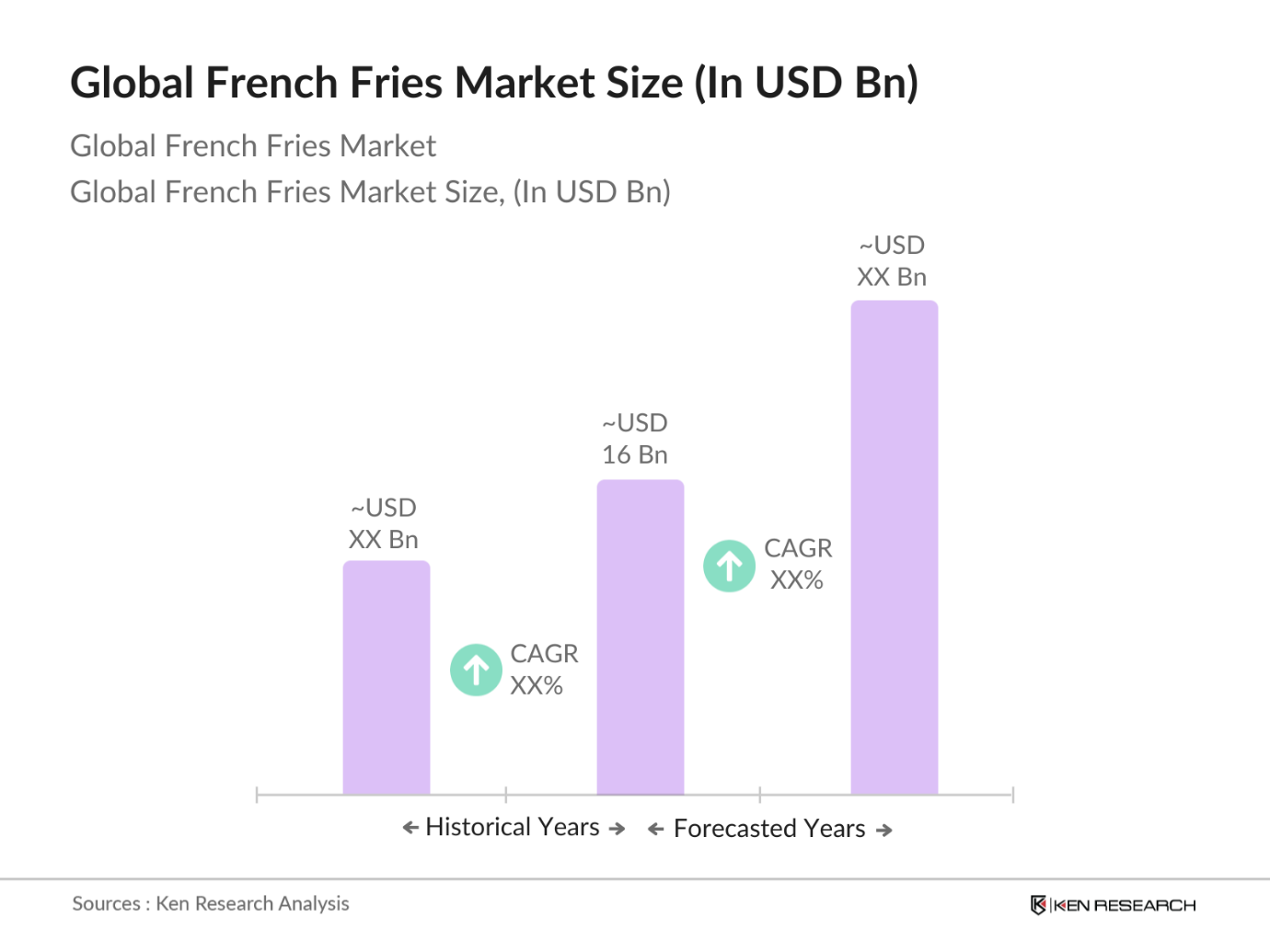
- The global French fries market has seen steady growth, driven by changing consumer preferences and increased demand for convenient, ready-to-eat food options. The market is valued at USD 16 billion, based on a five-year historical analysis, primarily fueled by the increasing popularity of fast food chains and frozen food products. The rising urbanization and shift in consumer lifestyles toward quick meal options have been pivotal in driving this growth. Data from legitimate sources, including market research firms and industry publications, confirm this trend.
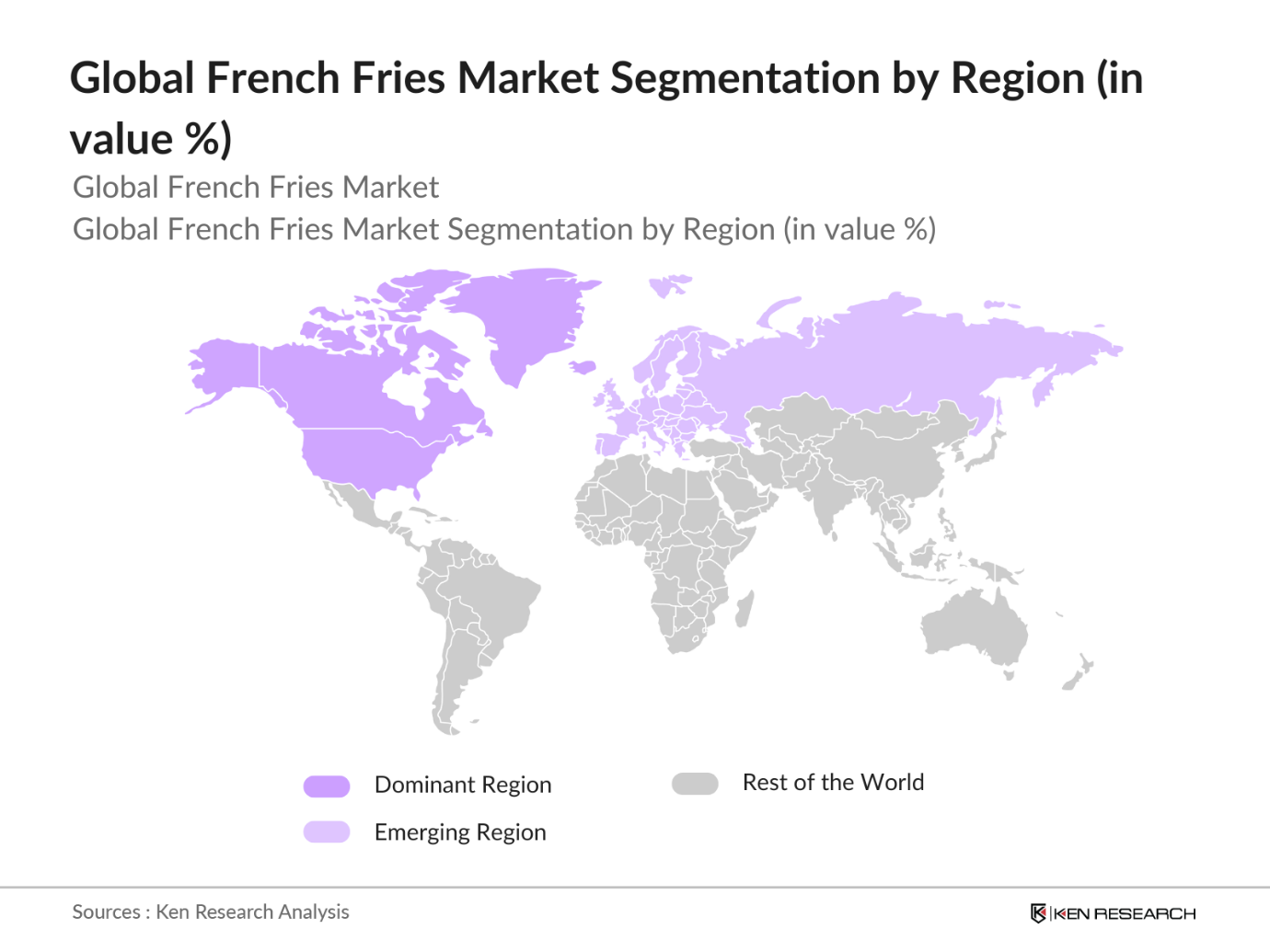
- Key markets that dominate the French fries industry include North America and Europe, with cities like New York, Los Angeles, Paris, and Berlin being central hubs for fast food consumption. The dominance in these regions is largely due to the prevalence of fast food culture, strong infrastructure for frozen food supply chains, and the presence of major fast food giants like McDonald's and Burger King. Additionally, the high consumption of frozen foods in these regions supports the robust market demand.
- In 2023, the FDA introduced stricter food safety guidelines for the production and processing of frozen French fries. These guidelines focus on reducing harmful chemicals such as acrylamide, which forms when potatoes are fried at high temperatures. Compliance with these regulations is mandatory for all manufacturers operating in the U.S. market, and failure to meet these standards can result in fines and product recalls. The FDA also requires proper labeling of nutritional information, including fat and sodium content, on all French fry packaging.
Global French Fries Market Segmentation
- By Distribution Channel: The distribution of French fries is categorized into supermarkets & hypermarkets, convenience stores, quick service restaurants (QSRs), online retail, and specialty stores. Quick service restaurants dominate the market, capturing the largest share in 2023. This dominance is attributed to the wide presence of global fast food chains, which account for a substantial portion of French fries consumption. The convenience and affordability offered by these restaurants have made them a preferred choice for consumers, especially in urban areas.
- By Product Type: The global French fries market is segmented by product type into regular fries, curly fries, crinkle-cut fries, waffle fries, and steak fries. Among these, regular fries hold the largest market share in 2023. This is due to their widespread availability across fast food chains, restaurants, and retail stores. Regular fries are a staple in most menus, contributing to their dominant position in the market. Consumers' familiarity with the product and its consistent taste and texture also play a major role in its popularity.

- By Region: The global French fries market is regionally segmented into North America, Europe, Asia-Pacific, Latin America, and the Middle East & Africa. North America holds the highest market share in 2023 due to the large fast-food industry and the high consumption of frozen foods. Europe follows closely, driven by the increasing preference for convenient food options in countries like Germany, France, and the UK. The robust infrastructure for frozen food supply chains in these regions further strengthens their market position.
Global French Fries Market Competitive Landscape
The global French fries market is highly competitive, with both global and regional players vying for market share. The market is dominated by companies with established brand recognition and wide distribution networks. The key players focus on innovation, sustainability, and expanding their product portfolios to meet changing consumer preferences.

Global French Fries Market Analysis
Global French Fries Market Growth Drivers
- Rising Demand for Frozen Foods: The growing demand for frozen foods, especially in urban regions, is a growth driver driver for the global French fries market. In 2023, the World Bank reported that the global population living in urban areas surpassed 4.6 billion, a major contributor to the increasing reliance on convenient, ready-to-eat foods like frozen French fries. Additionally, improvements in frozen food storage and distribution capabilities are enabling longer shelf lives, ensuring product availability in retail outlets. As of 2024, advancements in cold chain logistics support the delivery of frozen goods to remote areas, bolstering sales of frozen French fries globally.
- Increased Global Fast-Food Consumption: Global fast-food consumption has grown rapidly, driven by busy lifestyles and a preference for quick-service meals. Data from the International Monetary Fund (IMF) shows that in 2023, global fast-food industry revenues reached $1.3 trillion, a substantial contributor to the rising demand for French fries, a staple menu item. This growth is largely driven by the expansion of fast-food chains in emerging economies, particularly in Asia and Latin America, where disposable income is increasing, and western dining habits are becoming more prevalent.
- Growing Urbanization and Busy Lifestyles: The urban population continues to grow, with the World Bank reporting that by 2023, 56% of the global population lived in urban areas. Urbanization is closely linked with busier lifestyles and the demand for convenient meal solutions like French fries. In countries such as China and India, the rise of middle-class urban consumers, who prioritize convenience due to hectic work schedules, is accelerating the consumption of fast foods. This shift is fueling the demand for French fries as a convenient side dish or snack.
Global French Fries Market Challenges
- Fluctuating Potato Prices: Potato prices are a key factor affecting the French fries market. In 2023, the average price of potatoes increased due to extreme weather events in major producing regions like Europe and North America, which resulted in lower yields. According to the Food and Agriculture Organization (FAO), global potato production in 2023 decreased by 3.2 million metric tons compared to the previous year, leading to price volatility. Such fluctuations directly impact French fry manufacturers, who rely on stable potato supplies to meet consumer demand.
- High Competition Among Manufacturers: The French fries market is highly competitive, with a multitude of players from different regions. According to data from the IMF, major manufacturers are constantly engaging in pricing wars and product differentiation strategies to gain market share. In 2024, several new entrants, particularly from Asia, increased competition by introducing local varieties of frozen fries, which are now challenging established global brands. This increased competition pressures producers to lower prices, affecting profit margins.
Global French Fries Market Future Outlook
Over the next five years, the global French fries market is expected to continue its steady growth, driven by the rising demand for convenient, ready-to-eat meals and the increasing penetration of fast food chains in emerging markets. Advances in frozen food preservation technology and an increasing focus on healthier frying methods, such as air frying, are also expected to contribute to the market's growth. Furthermore, the growing consumer preference for organic and low-fat alternatives provides additional opportunities for innovation in this sector.
Global French Fries Market Growth Drivers
- Rising Demand for Frozen Foods: The growing demand for frozen foods, especially in urban regions, is a growth driver for the global French fries market. In 2023, the World Bank reported that the global population living in urban areas surpassed 4.6 billion, a major contributor to the increasing reliance on convenient, ready-to-eat foods like frozen French fries. Additionally, improvements in frozen food storage and distribution capabilities are enabling longer shelf lives, ensuring product availability in retail outlets. As of 2024, advancements in cold chain logistics support the delivery of frozen goods to remote areas, bolstering sales of frozen French fries globally.
- Increased Global Fast-Food Consumption: Global fast-food consumption has grown rapidly, driven by busy lifestyles and a preference for quick-service meals. Data from the International Monetary Fund (IMF) shows that in 2023, global fast-food industry revenues reached $1.3 trillion, a substantial contributor to the rising demand for French fries, a staple menu item. This growth is largely driven by the expansion of fast-food chains in emerging economies, particularly in Asia and Latin America, where disposable income is increasing, and western dining habits are becoming more prevalent.
- Growing Urbanization and Busy Lifestyles: The urban population continues to grow, with the World Bank reporting that by 2023, 56% of the global population lived in urban areas. Urbanization is closely linked with busier lifestyles and the demand for convenient meal solutions like French fries. In countries such as China and India, the rise of middle-class urban consumers, who prioritize convenience due to hectic work schedules, is accelerating the consumption of fast foods. This shift is fueling the demand for French fries as a convenient side dish or snack.
Global French Fries Market Challenges
Scope of the Report
|
By Product Type |
Regular Fries, Curly Fries Crinkle-Cut Fries Waffle Fries Steak Fries |
|
By Distribution Channel |
Supermarkets & Hypermarkets Convenience Stores QSRs Online Retail Specialty Stores |
|
By End-User |
Food Service Industry Household/Retail Consumers |
|
By Type of Preparation |
Freshly Cut Frozen Pre-Cooked |
|
By Region |
North America Europe Asia-Pacific Latin America Middle East & Africa |
Products
Key Target Audience
Fast Food Chains
Frozen Food Manufacturers
Supermarkets & Hypermarkets
Quick Service Restaurants (QSRs)
Online Retailers
Banks and Financial Institutions
Investors and Venture Capitalist Firms
Government and Regulatory Bodies (FDA, USDA)
Packaging and Logistics Companies
Companies
Players Mentioned in the Report
McCain Foods
Lamb Weston Holdings
Simplot Company
Aviko BV
Cavendish Farms
Ore-Ida (The Kraft Heinz Company)
Agrarfrost GmbH
Albert Bartlett and Sons
Himalaya Food International
11er Nahrungsmittel GmbH
Table of Contents
1. Global French Fries Market Overview
1.1. Definition and Scope
1.2. Market Taxonomy
1.3. Market Growth Rate
1.4. Market Segmentation Overview
2. Global French Fries Market Size (In USD Mn)
2.1. Historical Market Size
2.2. Year-On-Year Growth Analysis
2.3. Key Market Developments and Milestones
3. Global French Fries Market Analysis
3.1. Growth Drivers
3.1.1. Rising Demand for Frozen Foods
3.1.2. Increased Global Fast-Food Consumption
3.1.3. Growing Urbanization and Busy Lifestyles
3.1.4. Advances in Cold Chain Logistics
3.2. Market Challenges
3.2.1. Fluctuating Potato Prices
3.2.2. High Competition Among Manufacturers
3.2.3. Stringent Health Regulations
3.3. Opportunities
3.3.1. Expansion into Emerging Markets
3.3.2. Innovations in Processing Technology
3.3.3. Growing Demand for Organic and Low-Fat French Fries
3.4. Trends
3.4.1. Introduction of Healthier Frying Oils
3.4.2. Popularity of Private Label Brands
3.4.3. Growing Popularity of Gluten-Free Variants
3.5. Government Regulations
3.5.1. FDA Guidelines on Food Safety
3.5.2. Import-Export Regulations
3.5.3. Sustainability Initiatives for Packaging and Production
3.5.4. Subsidies and Tariffs on Potatoes
3.6. SWOT Analysis
3.7. Stake Ecosystem (Key Industry Stakeholders, Value Chain Analysis)
3.8. Porters Five Forces (Market Power Analysis)
3.9. Competition Ecosystem
4. Global French Fries Market Segmentation
4.1. By Product Type (In Value %)
4.1.1. Regular Fries
4.1.2. Curly Fries
4.1.3. Crinkle-Cut Fries
4.1.4. Waffle Fries
4.1.5. Steak Fries
4.2. By Distribution Channel (In Value %)
4.2.1. Supermarkets & Hypermarkets
4.2.2. Convenience Stores
4.2.3. Quick Service Restaurants (QSRs)
4.2.4. Online Retail
4.2.5. Specialty Stores
4.3. By End-User (In Value %)
4.3.1. Food Service Industry
4.3.2. Household/Retail Consumers
4.4. By Type of Preparation (In Value %)
4.4.1. Freshly Cut
4.4.2. Frozen
4.4.3. Pre-Cooked
4.5. By Region (In Value %)
4.5.1. North America
4.5.2. Europe
4.5.3. Asia-Pacific
4.5.4. Latin America
4.5.5. Middle East & Africa
5. Global French Fries Market Competitive Analysis
5.1. Detailed Profiles of Major Companies
5.1.1. McCain Foods
5.1.2. Lamb Weston Holdings
5.1.3. Simplot Company
5.1.4. Aviko BV
5.1.5. Farm Frites International
5.1.6. Cavendish Farms
5.1.7. Ore-Ida (The Kraft Heinz Company)
5.1.8. Agrarfrost GmbH
5.1.9. Albert Bartlett and Sons
5.1.10. Himalaya Food International
5.1.11. 11er Nahrungsmittel GmbH
5.1.12. Alexia Foods
5.1.13. PepsiCo (Lay's)
5.1.14. Intersnack Group
5.1.15. Arby's Restaurant Group
5.2. Cross Comparison Parameters (Product Portfolio, Production Capacity, Regional Reach, Revenue, No. of Employees, Sustainability Initiatives, Customer Base, Innovation)
5.3. Market Share Analysis
5.4. Strategic Initiatives (Partnerships, Collaborations, New Product Launches)
5.5. Mergers And Acquisitions
5.6. Investment Analysis
5.7. Venture Capital Funding
5.8. Government Grants and Subsidies
5.9. Private Equity Investments
6. Global French Fries Market Regulatory Framework
6.1. Food Safety Standards
6.2. Packaging and Labeling Regulations
6.3. Sustainability and Waste Management Practices
6.4. Health and Nutrition Claims Compliance
7. Global French Fries Future Market Size (In USD Bn)
7.1. Future Market Size Projections
7.2. Key Factors Driving Future Market Growth
8. Global French Fries Future Market Segmentation
8.1. By Product Type (In Value %)
8.2. By Distribution Channel (In Value %)
8.3. By End-User (In Value %)
8.4. By Type of Preparation (In Value %)
8.5. By Region (In Value %)
9. Global French Fries Market Analysts Recommendations
9.1. TAM/SAM/SOM Analysis
9.2. Customer Cohort Analysis
9.3. White Space Opportunity Analysis
9.4. Marketing and Branding Initiatives
Disclaimer Contact UsResearch Methodology
Step 1: Identification of Key Variables
The first step in this research involved mapping the key variables influencing the global French fries market, including product demand, distribution channels, and consumer preferences. Secondary research was conducted using proprietary databases and credible public sources to identify these variables.
Step 2: Market Analysis and Construction
In this step, we analyzed historical data from various market reports and compiled insights from industry experts. This analysis included understanding market penetration rates and supply chain dynamics to develop accurate revenue projections for the market.
Step 3: Hypothesis Validation and Expert Consultation
We validated market hypotheses through interviews with key stakeholders in the French fries industry. These included representatives from fast food chains, frozen food manufacturers, and logistics companies. The insights obtained were instrumental in refining the market data.
Step 4: Research Synthesis and Final Output
The final phase involved synthesizing all the collected data and insights to provide a comprehensive analysis of the global French fries market. The research findings were validated through cross-referencing with financial reports, trade publications, and industry white papers.
Frequently Asked Questions
01. How big is the Global French Fries Market?
The global French fries market is valued at USD 16 billion, driven by the increased consumption of fast food and the growing popularity of frozen foods.
02. What are the challenges in the Global French Fries Market?
The global French fries market faces challenges such as fluctuating potato prices, high competition among global and local manufacturers, and growing health concerns over fried foods.
03. Who are the major players in the Global French Fries Market?
Key players in the global French fries market include McCain Foods, Lamb Weston Holdings, Simplot Company, Aviko BV, and Cavendish Farms, all of which have extensive production capabilities and strong distribution networks.
04. What are the growth drivers of the Global French Fries Market?
Key growth drivers of the global French fries market include rising demand for convenient, ready-to-eat food options, increased urbanization, and the expansion of fast food chains in emerging markets.
Why Buy From Us?

What makes us stand out is that our consultants follows Robust, Refine and Result (RRR) methodology. i.e. Robust for clear definitions, approaches and sanity checking, Refine for differentiating respondents facts and opinions and Result for presenting data with story

We have set a benchmark in the industry by offering our clients with syndicated and customized market research reports featuring coverage of entire market as well as meticulous research and analyst insights.

While we don't replace traditional research, we flip the method upside down. Our dual approach of Top Bottom & Bottom Top ensures quality deliverable by not just verifying company fundamentals but also looking at the sector and macroeconomic factors.

With one step in the future, our research team constantly tries to show you the bigger picture. We help with some of the tough questions you may encounter along the way: How is the industry positioned? Best marketing channel? KPI's of competitors? By aligning every element, we help maximize success.

Our report gives you instant access to the answers and sources that other companies might choose to hide. We elaborate each steps of research methodology we have used and showcase you the sample size to earn your trust.

If you need any support, we are here! We pride ourselves on universe strength, data quality, and quick, friendly, and professional service.