
Global Fruit Infused Water Market Outlook to 2030
Region:Global
Author(s):Vijay Kumar
Product Code:KROD5655
December 2024
97
About the Report
Global Fruit Infused Water Market Overview
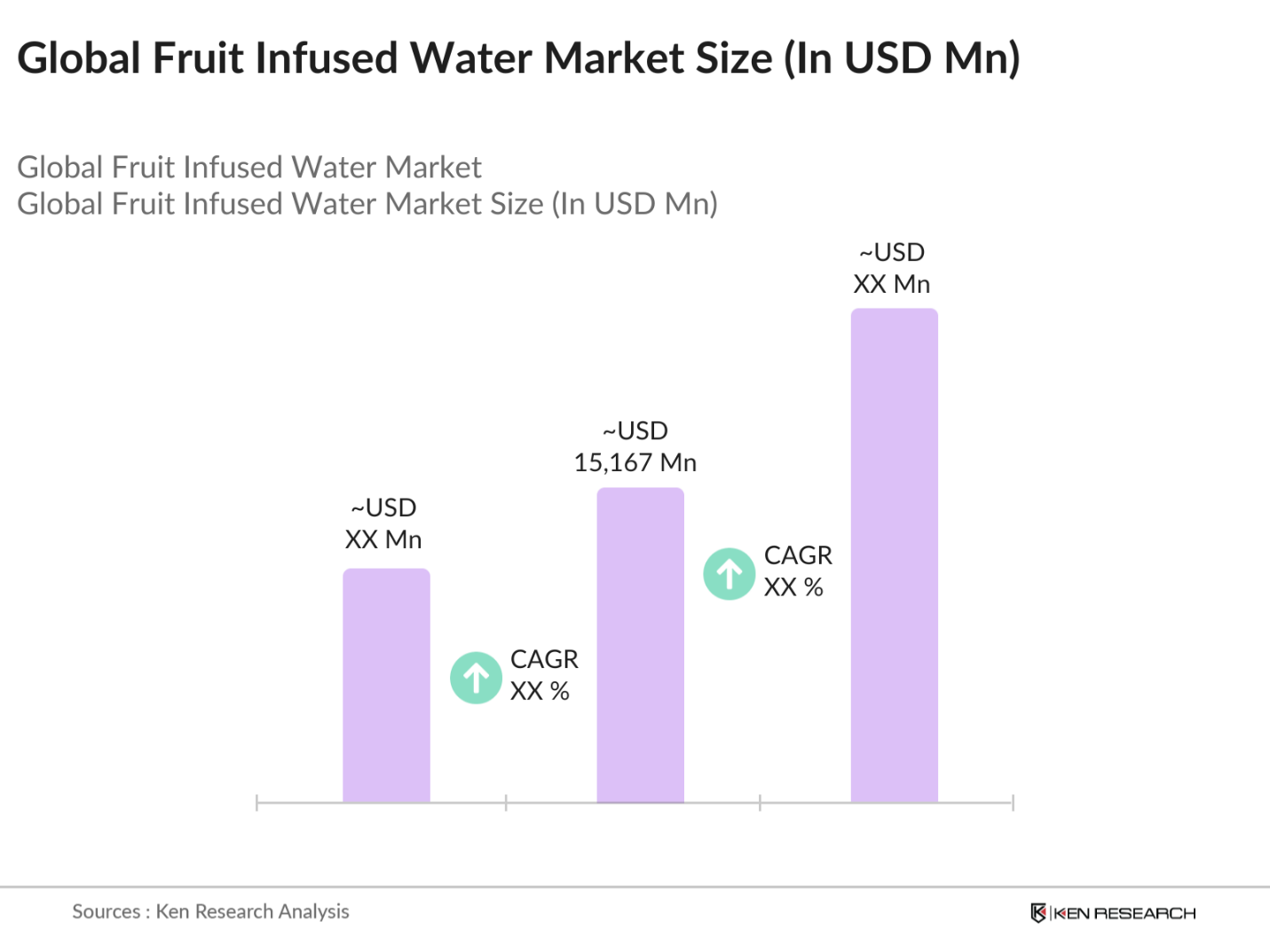
- The global fruit infused water market is valued at USD 15,167 million, based on a five-year historical analysis. This market is driven by increasing consumer awareness of health and wellness, leading to a significant shift from sugary beverages to healthier alternatives. Fruit infused water provides the benefits of hydration with the added appeal of natural fruit flavors, without artificial additives. Consumers are increasingly seeking functional drinks that promote well-being, and this trend has propelled the market growth significantly.
- The global fruit infused water market is dominated by key countries such as the United States, Germany, and Japan. The dominance of these regions is attributed to their advanced food and beverage sectors, high consumer demand for premium health beverages, and the presence of major companies innovating in the space. These regions also benefit from a well-established distribution network and a trend towards healthier lifestyles, particularly in urban areas.
- Compliance with stringent food safety standards remains a critical aspect of the fruit-infused water market. In the U.S., fruit-infused beverages must adhere to the FDAs Hazard Analysis Critical Control Points (HACCP) system to ensure product safety. Similarly, in Europe, the European Food Safety Authority (EFSA) regulates the safety of these beverages under Regulation (EC) No 178/2002. In 2023, over 1,200 food safety inspections were conducted globally, with 30% of cases related to beverage contamination.
Global Fruit Infused Water Market Segmentation
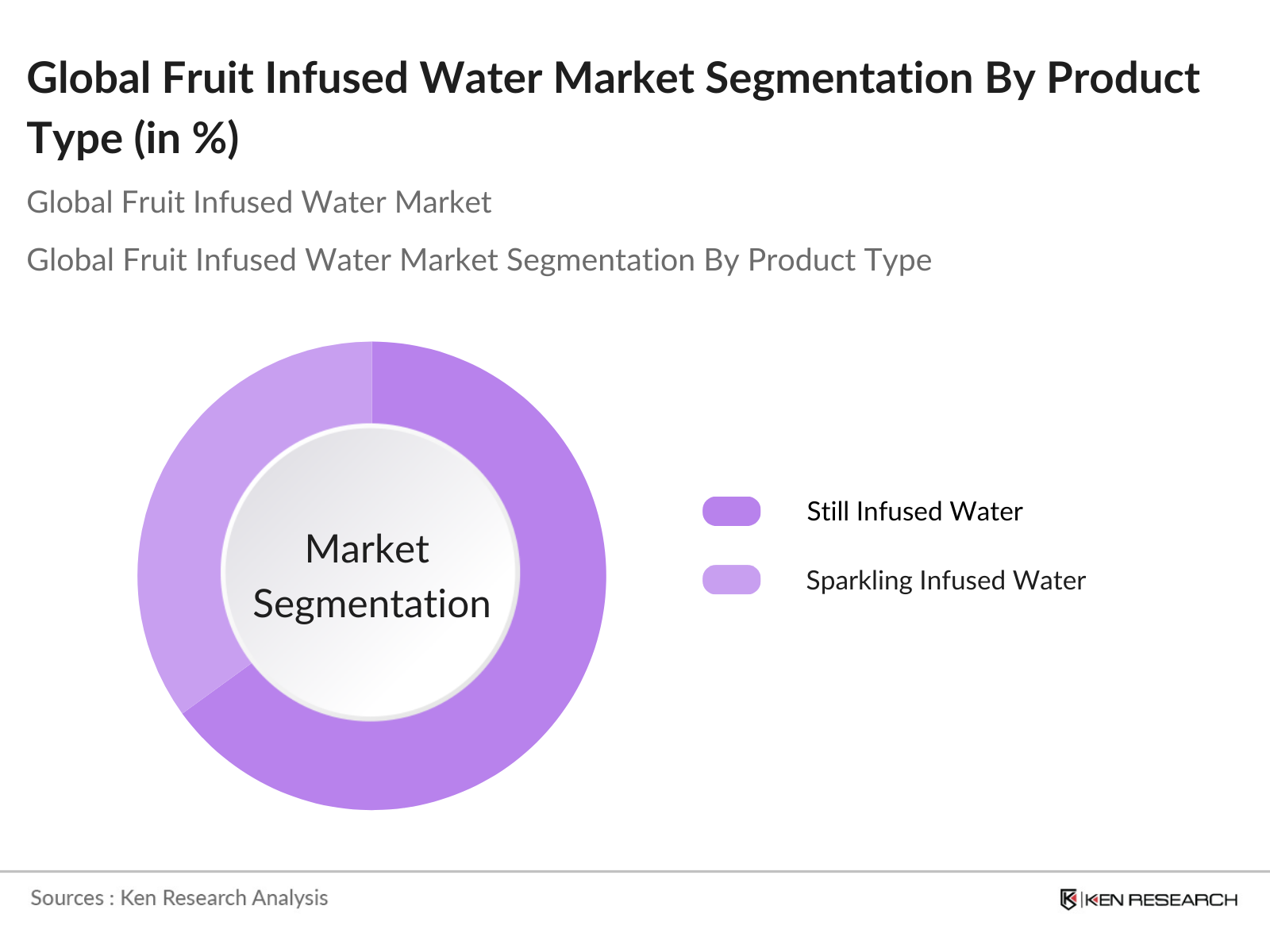
By Product Type: The global fruit infused water market is segmented by product type into still infused water and sparkling infused water. Still infused water holds a dominant market share due to its widespread availability and appeal to consumers looking for a simple, refreshing beverage without carbonation. Consumers are increasingly opting for still water because it aligns with health and hydration goals, making it the preferred choice in most regions.
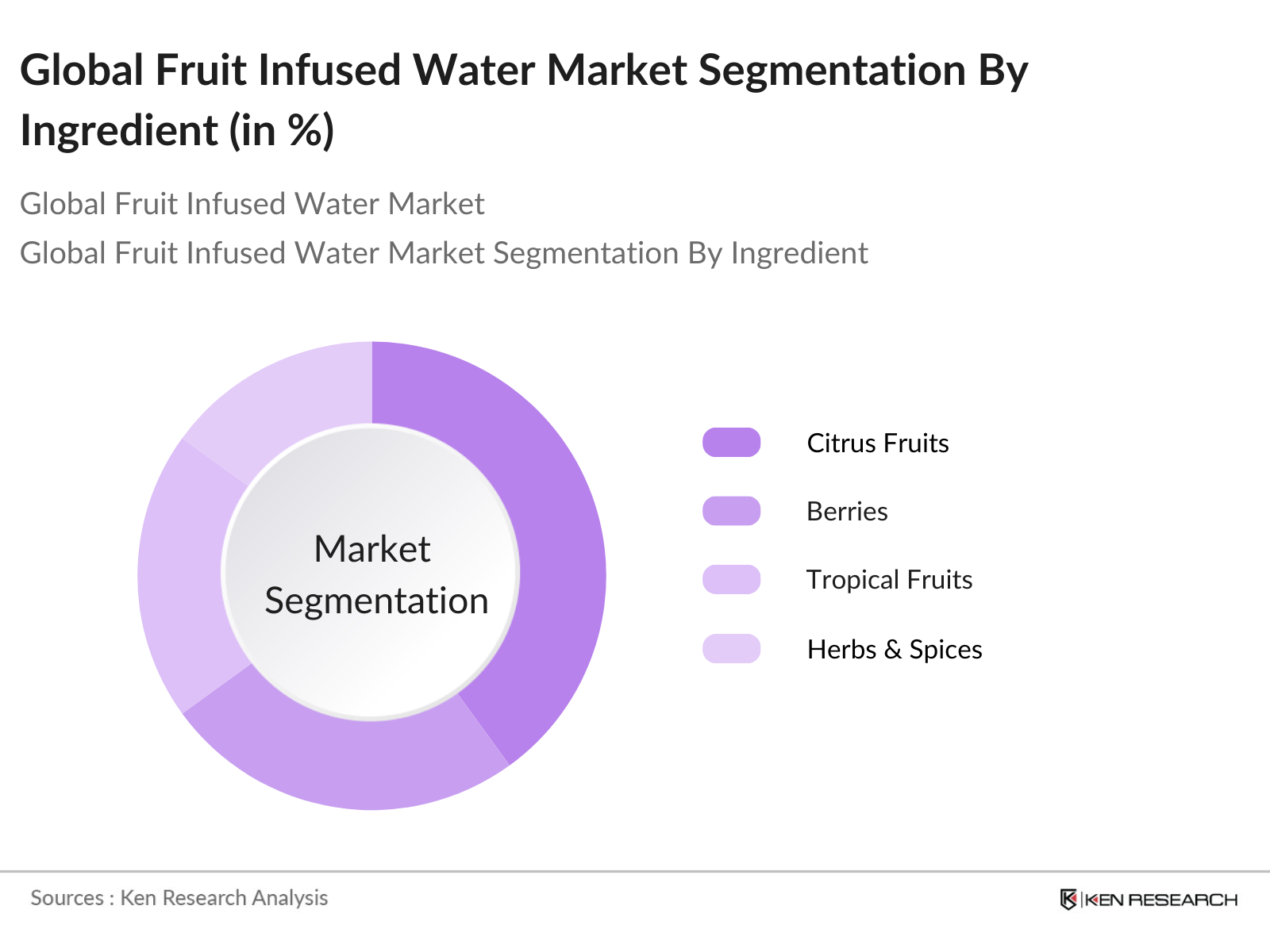
By Ingredient: The market is also segmented by ingredient into citrus fruits, berries, tropical fruits, and herbs & spices. Citrus fruits, particularly lemon and lime, dominate the market share due to their refreshing taste, availability, and consumer perception of their health benefits. Citrus-infused water is often marketed as a detoxifying drink, which resonates with the health-conscious demographic.
Global Fruit Infused Water Market Competitive Landscape
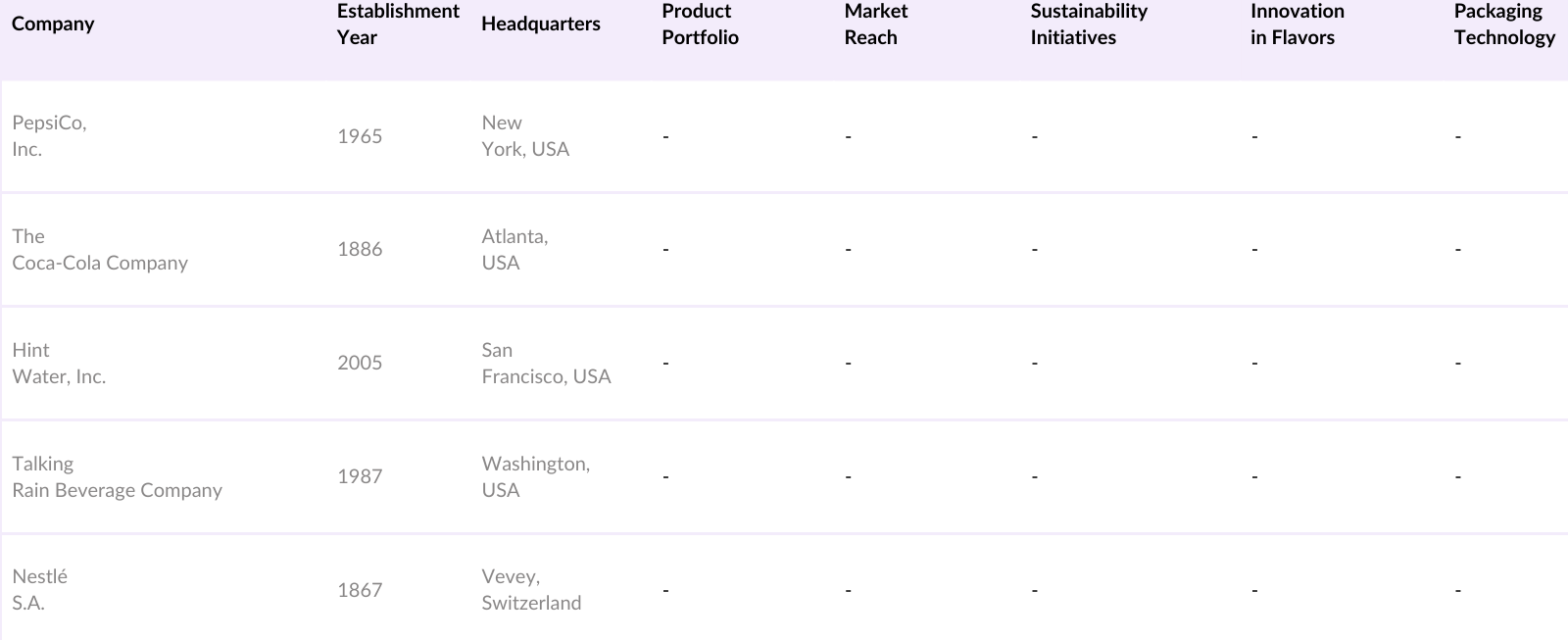
The global fruit infused water market is highly competitive, with both established beverage companies and smaller niche players contributing to the market's growth. The competition is shaped by innovation in flavors, packaging, and functional benefits. Major players in the market are focusing on expanding their product lines, improving distribution networks, and adopting sustainable packaging solutions.
Global Fruit Infused Water Industry Analysis
Growth Drivers
- Health & Wellness Trends: The global fruit-infused water market is significantly driven by the increasing consumer shift towards health and wellness, with a particular focus on healthier beverage choices. According to World Bank data, global life expectancy has increased to 73 years in 2023, reflecting better health awareness. Additionally, with over 40% of adults globally reported to be overweight, there is a surge in demand for functional and healthy drinks, including fruit-infused water, as an alternative to sugary beverages.
- Rising Disposable Income: Increasing disposable income has allowed consumers, particularly in developing regions, to spend more on premium products such as fruit-infused water. According to the IMF, global disposable income per capita rose to approximately $12,000 in 2023, with notable growth in middle-income economies such as China, India, and Brazil. This higher spending capacity is encouraging consumers to explore premium and natural beverages over traditional sugary drinks, expanding the market for fruit-infused water products.
- Product Innovation: Product innovation remains a key growth driver, with manufacturers introducing new flavors and ingredients to cater to changing consumer preferences. In 2023, the global food and beverage industry saw the introduction of over 2,000 new flavor combinations, with fruit-infused water featuring unique blends such as coconut-lime and pomegranate-berry. Innovation in ingredients, such as the incorporation of functional additives like electrolytes and antioxidants, has also gained traction, appealing to health-conscious consumers.
Market Challenges
- High Production Costs: The production of fruit-infused water faces high costs due to fruit sourcing and processing, especially when using premium, organic, or exotic fruits. In 2023, the average global cost of sourcing fresh fruit rose to $4.8 per kilogram, influenced by climate change and supply chain disruptions. This, coupled with the need for specialized processing techniques to maintain flavor and nutritional content, raises production costs. The increased costs can limit the affordability and accessibility of these products, especially in price-sensitive markets.
- Supply Chain Disruptions: Supply chain disruptions, particularly in sourcing raw materials like fresh fruits, pose a challenge to the fruit-infused water market. Global supply chain issues in 2023 affected over 30% of food and beverage companies, with fruit supply being heavily impacted by climate variability, transportation bottlenecks, and geopolitical tensions. Shortages in key fruit-producing regions, such as Latin America, which accounts for 10% of global fruit production, resulted in delayed shipments and increased raw material costs, hindering the smooth production of fruit-infused beverages.
Global Fruit Infused Water Market Future Outlook
Over the next five years, the global fruit infused water market is expected to experience significant growth, driven by increasing consumer demand for functional beverages, product innovation, and the adoption of sustainable practices by manufacturers. The rise of e-commerce and online retail platforms is further expected to expand the market's reach, allowing more consumers access to premium, niche products.
Market Opportunities
- Expansion into Emerging Markets: Emerging markets in Asia, Africa, and Latin America present a lucrative opportunity for the fruit-infused water market. As of 2023, these regions accounted for over 55% of global beverage consumption, driven by increasing urbanization and rising health awareness. According to the World Bank, urban populations in these regions are growing at a rate of 2.4% annually, leading to greater demand for convenient and healthy beverages.
- E-commerce Penetration: The rise of e-commerce is creating new distribution channels for fruit-infused water, with online grocery sales increasing by 20% globally in 2023. In markets like China and the U.S., online platforms have become a dominant retail channel for beverages, accounting for over 30% of total beverage sales. According to IMF data, the global internet user base reached 5.2 billion in 2023, creating a wider consumer base for online retail.
Scope of the Report
|
Product Type |
Still Infused Water Sparkling Infused Water |
|
Ingredient |
Citrus Fruits Berries Tropical Fruits Herbs and Spices |
|
Distribution Channel |
Supermarkets & Hypermarkets Convenience Stores Online Retailers Specialty Stores |
|
Packaging Type |
Plastic Bottles Glass Bottles Aluminum Cans |
|
By Region |
North America Europe Asia-Pacific Latin America Middle East & Africa |
Products
Key Target Audience
Bottled Water Manufacturers
Health and Wellness Brands
E-commerce Platforms
Specialty Retailers
Investments and Venture Capitalist Firms
Government and Regulatory Bodies (FDA, EFSA)
Hospitality and Tourism Industry
Packaging Solution Providers
Companies
Players Mentioned in the Report
PepsiCo, Inc.
The Coca-Cola Company
Hint Water, Inc.
Talking Rain Beverage Company
Nestl S.A.
Danone S.A.
Keurig Dr Pepper Inc.
Spindrift Beverage Co., Inc.
Kraft Heinz Company
Reignwood Group
Table of Contents
1. Global Fruit Infused Water Market Overview
1.1. Definition and Scope
1.2. Market Taxonomy
1.3. Market Growth Rate
1.4. Market Segmentation Overview
2. Global Fruit Infused Water Market Size (In USD Bn)
2.1. Historical Market Size
2.2. Year-On-Year Growth Analysis
2.3. Key Market Developments and Milestones
3. Global Fruit Infused Water Market Analysis
3.1. Growth Drivers
3.1.1. Health & Wellness Trends (Growing consumer preference for healthy beverages)
3.1.2. Rising Disposable Income (Increased spending on premium products)
3.1.3. Product Innovation (Introduction of new flavors and ingredients)
3.1.4. Sustainability Focus (Shift towards eco-friendly packaging)
3.2. Market Challenges
3.2.1. High Production Costs (Costs related to fruit sourcing and processing)
3.2.2. Supply Chain Disruptions (Impact of raw material shortages)
3.2.3. Limited Shelf Life (Perishability concerns of fruit-infused products)
3.3. Opportunities
3.3.1. Expansion into Emerging Markets (Untapped markets in developing regions)
3.3.2. E-commerce Penetration (Growth of online retail channels)
3.3.3. Functional Beverages Demand (Rise in demand for beverages with added health benefits)
3.4. Trends
3.4.1. Clean Label Movement (Consumer demand for transparency in ingredients)
3.4.2. Personalized Nutrition (Customization of infused water to meet dietary needs)
3.4.3. Functional Ingredients (Inclusion of vitamins, minerals, and antioxidants)
3.5. Government Regulation
3.5.1. Food Safety Standards (Compliance with FDA, EFSA regulations)
3.5.2. Labeling Requirements (Mandatory ingredient and nutritional information)
3.5.3. Packaging Regulations (Guidelines on recyclable packaging)
3.6. SWOT Analysis
3.7. Stake Ecosystem
3.8. Porters Five Forces
3.9. Competition Ecosystem
4. Global Fruit Infused Water Market Segmentation
4.1. By Product Type (In Value %)
4.1.1. Still Infused Water
4.1.2. Sparkling Infused Water
4.2. By Ingredient (In Value %)
4.2.1. Citrus Fruits
4.2.2. Berries
4.2.3. Tropical Fruits
4.2.4. Herbs and Spices
4.3. By Distribution Channel (In Value %)
4.3.1. Supermarkets & Hypermarkets
4.3.2. Convenience Stores
4.3.3. Online Retailers
4.3.4. Specialty Stores
4.4. By Packaging Type (In Value %)
4.4.1. Plastic Bottles
4.4.2. Glass Bottles
4.4.3. Aluminum Cans
4.5. By Region (In Value %)
4.5.1. North America
4.5.2. Europe
4.5.3. Asia-Pacific
4.5.4. Latin America
4.5.5. Middle East & Africa
5. Global Fruit Infused Water Market Competitive Analysis
5.1. Detailed Profiles of Major Companies
5.1.1. PepsiCo, Inc.
5.1.2. The Coca-Cola Company
5.1.3. Hint Water, Inc.
5.1.4. Talking Rain Beverage Company
5.1.5. Nestl S.A.
5.1.6. Danone S.A.
5.1.7. Keurig Dr Pepper Inc.
5.1.8. Spindrift Beverage Co., Inc.
5.1.9. Kraft Heinz Company
5.1.10. Reignwood Group
5.1.11. The Alkaline Water Company
5.1.12. Hain Celestial Group, Inc.
5.1.13. Suntory Beverage & Food Ltd.
5.1.14. VOSS Water
5.1.15. New York Spring Water
5.2. Cross Comparison Parameters (Revenue, Product Portfolio, Market Share, Distribution Reach, Sustainability Initiatives, Innovation in Ingredients, Packaging Technology, Consumer Engagement)
5.3. Market Share Analysis
5.4. Strategic Initiatives
5.5. Mergers and Acquisitions
5.6. Investment Analysis
5.7. Venture Capital Funding
5.8. Government Grants
5.9. Private Equity Investments
6. Global Fruit Infused Water Market Regulatory Framework
6.1. Food and Beverage Industry Standards
6.2. Compliance Requirements for Ingredients
6.3. Labeling and Nutritional Information
6.4. Environmental Standards for Packaging
7. Global Fruit Infused Water Future Market Size (In USD Bn)
7.1. Future Market Size Projections
7.2. Key Factors Driving Future Market Growth
8. Global Fruit Infused Water Future Market Segmentation
8.1. By Product Type (In Value %)
8.2. By Ingredient (In Value %)
8.3. By Distribution Channel (In Value %)
8.4. By Packaging Type (In Value %)
8.5. By Region (In Value %)
9. Global Fruit Infused Water Market Analysts Recommendations
9.1. TAM/SAM/SOM Analysis
9.2. Customer Cohort Analysis
9.3. Marketing Initiatives
9.4. White Space Opportunity Analysis
Research Methodology
Step 1: Identification of Key Variables
The initial phase involves constructing an ecosystem map encompassing all major stakeholders within the global fruit infused water market. This step is underpinned by extensive desk research, utilizing a combination of secondary and proprietary databases to gather comprehensive industry-level information. The primary objective is to identify and define the critical variables that influence market dynamics.
Step 2: Market Analysis and Construction
In this phase, we will compile and analyze historical data pertaining to the global fruit infused water market. This includes assessing market penetration, the ratio of marketplaces to service providers, and the resultant revenue generation. Furthermore, an evaluation of consumer preferences will be conducted to ensure the reliability and accuracy of the revenue estimates.
Step 3: Hypothesis Validation and Expert Consultation
Market hypotheses will be developed and subsequently validated through computer-assisted telephone interviews (CATIs) with industry experts representing a diverse array of companies. These consultations will provide valuable operational and financial insights directly from industry practitioners, which will be instrumental in refining and corroborating the market data.
Step 4: Research Synthesis and Final Output
The final phase involves direct engagement with multiple beverage manufacturers to acquire detailed insights into product segments, sales performance, consumer preferences, and other pertinent factors. This interaction will serve to verify and complement the statistics derived from the bottom-up approach, thereby ensuring a comprehensive, accurate, and validated analysis of the global fruit infused water market.
Frequently Asked Questions
1. How big is the global fruit infused water market?
The global fruit infused water market is valued at USD 15,167 million, based on a five-year historical analysis. This market is driven by increasing consumer awareness of health and wellness, leading to a significant shift from sugary beverages to healthier alternatives.
2. What are the challenges in the global fruit infused water market?
Key challenges include high production costs, short shelf life due to the use of natural ingredients, and supply chain disruptions, particularly related to the sourcing of fresh fruits.
3. Who are the major players in the global fruit infused water market?
Major players in the market include PepsiCo, Inc., The Coca-Cola Company, Hint Water, Inc., Talking Rain Beverage Company, and Nestl S.A., all of which have established strong distribution networks and robust product portfolios.
4. What are the growth drivers of the global fruit infused water market?
The market is propelled by health and wellness trends, product innovation, and the increasing popularity of functional beverages that offer health benefits beyond basic hydration.
Why Buy From Us?

What makes us stand out is that our consultants follows Robust, Refine and Result (RRR) methodology. i.e. Robust for clear definitions, approaches and sanity checking, Refine for differentiating respondents facts and opinions and Result for presenting data with story

We have set a benchmark in the industry by offering our clients with syndicated and customized market research reports featuring coverage of entire market as well as meticulous research and analyst insights.

While we don't replace traditional research, we flip the method upside down. Our dual approach of Top Bottom & Bottom Top ensures quality deliverable by not just verifying company fundamentals but also looking at the sector and macroeconomic factors.

With one step in the future, our research team constantly tries to show you the bigger picture. We help with some of the tough questions you may encounter along the way: How is the industry positioned? Best marketing channel? KPI's of competitors? By aligning every element, we help maximize success.

Our report gives you instant access to the answers and sources that other companies might choose to hide. We elaborate each steps of research methodology we have used and showcase you the sample size to earn your trust.

If you need any support, we are here! We pride ourselves on universe strength, data quality, and quick, friendly, and professional service.