
Global Fruit Market Outlook to 2030
Region:Global
Author(s):Sanjna
Product Code:KROD10373
December 2024
99
About the Report
Global Fruit Market Overview
- The global fruit market, valued at USD 597 billion, is driven by shifting consumer preferences toward healthier, natural foods. With increasing demand for organic and exotic fruits, producers are expanding their offerings, supported by advancements in agricultural practices and logistics that improve quality and accessibility. Additionally, the growing popularity of plant-based diets and the convenience of processed fruit products are further propelling market growth, making fruit consumption a global dietary staple.
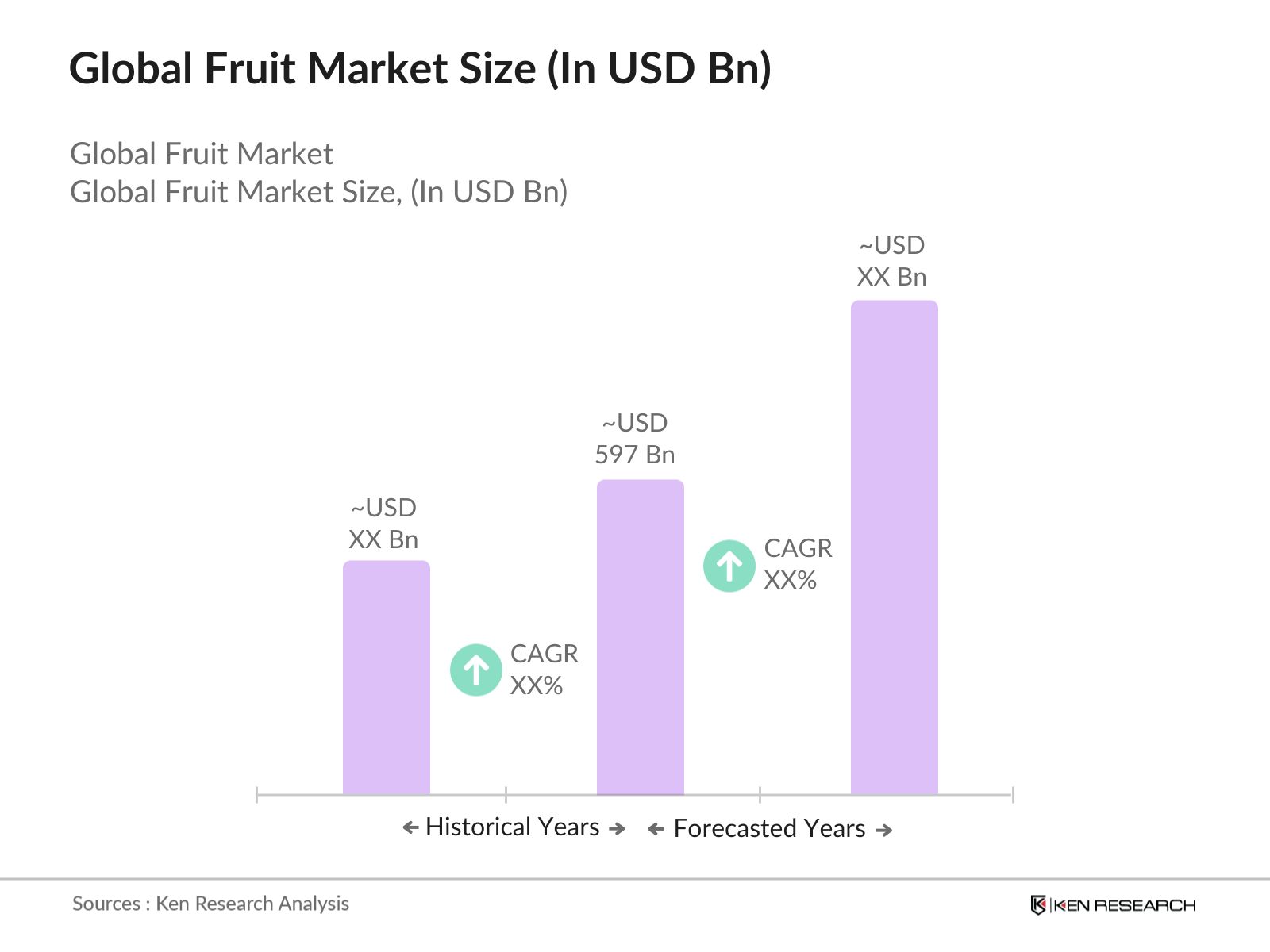
- Countries such as the United States, Brazil, and China dominate the fruit market due to favorable climatic conditions, robust production capacities, and government-backed agricultural policies that boost output and ensure stable supply chains. In the U.S., large-scale commercial farming and advanced cold storage solutions aid market stability, while Brazil leverages its extensive fruit varieties and export-oriented policies, positioning these nations as significant players in the global fruit supply network.
- Government-enforced quality standards have become critical for the global fruit market, ensuring health and safety compliance. The USDA inspected over 9 billion pounds of fruits for quality and safety in 2023. EU certifications now require traceability from farm to consumer, enhancing food safety protocols and boosting consumer confidence in certified fruit products. These standards help maintain quality across borders, facilitating safe trade of fruit products globally.
Global Fruit Market Segmentation
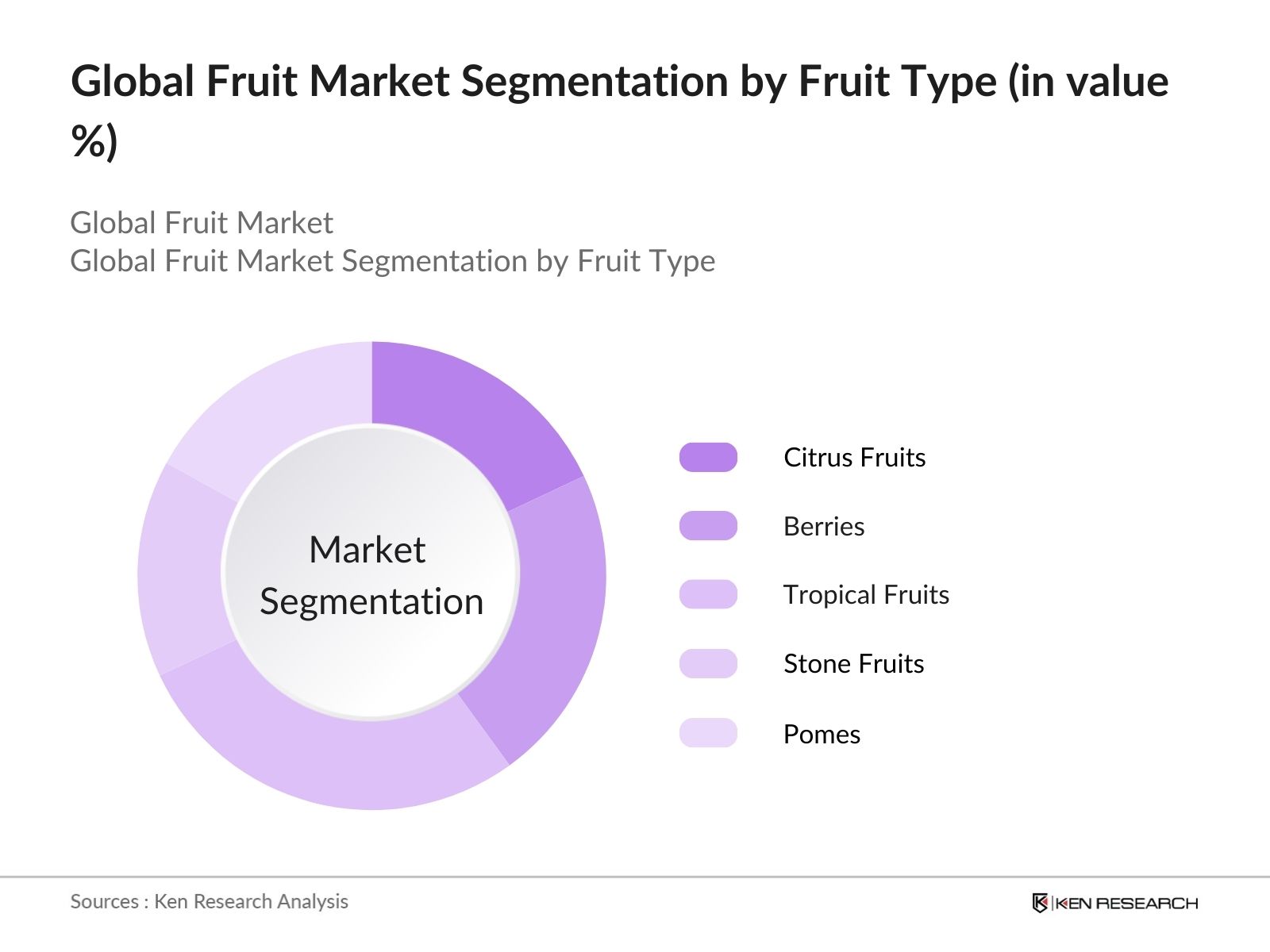
By Fruit Type: The global fruit market is segmented by fruit type into citrus fruits, berries, tropical fruits, stone fruits, and pomes. Tropical fruits dominate this segment, with substantial demand driven by the increasing popularity of exotic fruits in regions like North America and Europe. Tropical fruits such as pineapples, mangoes, and papayas are favored due to their unique flavors and perceived health benefits. Consumers are drawn to these options as they align with trends in exotic and health-driven diets, encouraging retail expansion for these fruit types.
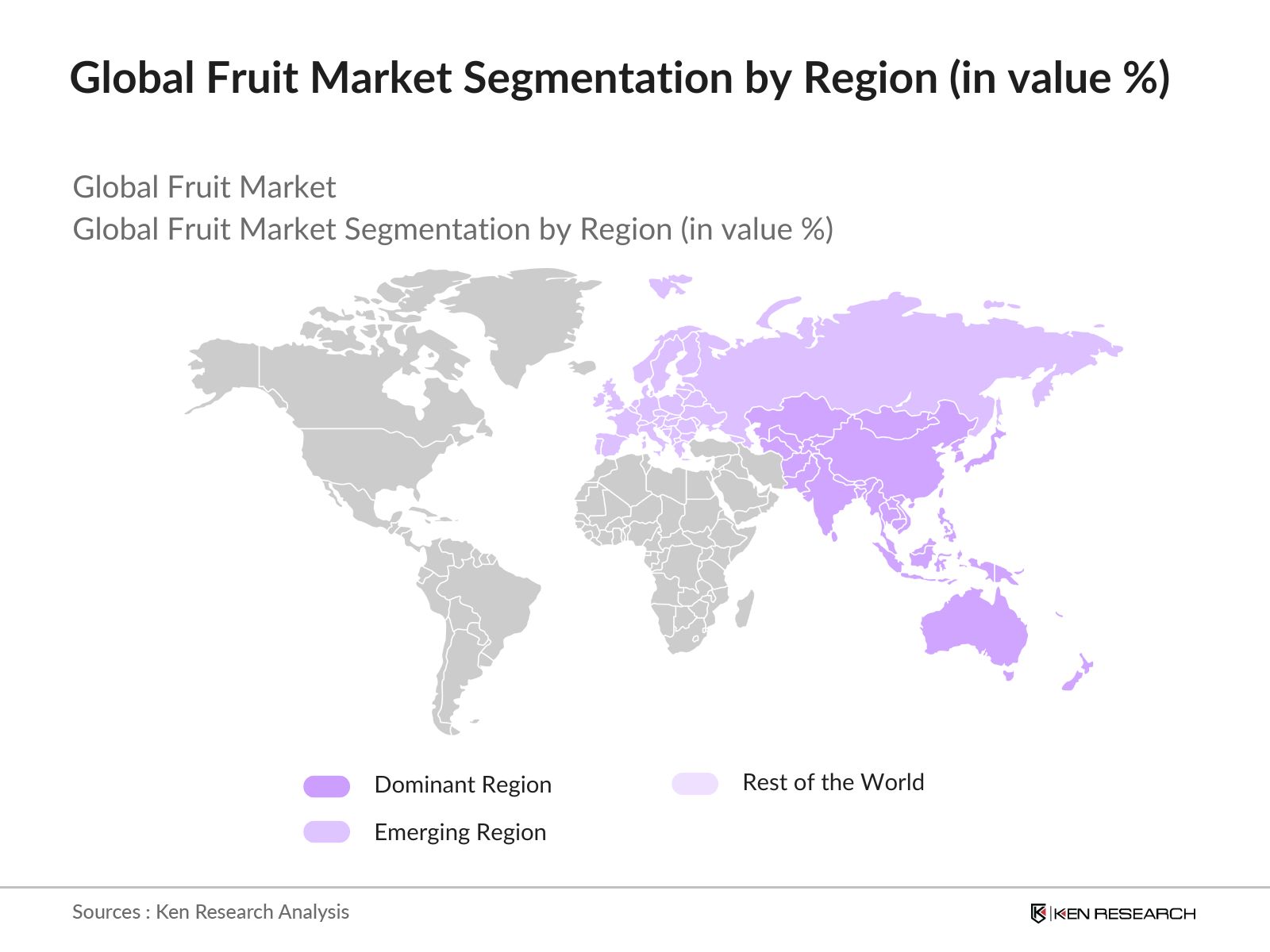
By Region: The global fruit market is segmented by region into North America, Europe, Asia Pacific, Latin America, and the Middle East & Africa. Asia Pacific leads the market due to favorable agricultural conditions, lower production costs, and a large consumer base. Countries like China and India benefit from diverse climates supporting a variety of fruits, alongside government support for agricultural production. The presence of large-scale markets and export agreements also supports Asia Pacifics stronghold in the global fruit industry.
By Form: The global fruit market is segmented by form into fresh, frozen, dried, and purees and juices. Fresh fruits maintain a dominant position due to consumer preference for minimally processed, natural foods. Fresh fruit consumption is particularly strong in urban centers where consumer awareness regarding health and wellness trends is high. Enhanced supply chain capabilities ensure the availability of fresh produce across various regions, supporting this segments dominance in the global market.
Global Fruit Market Competitive Landscape
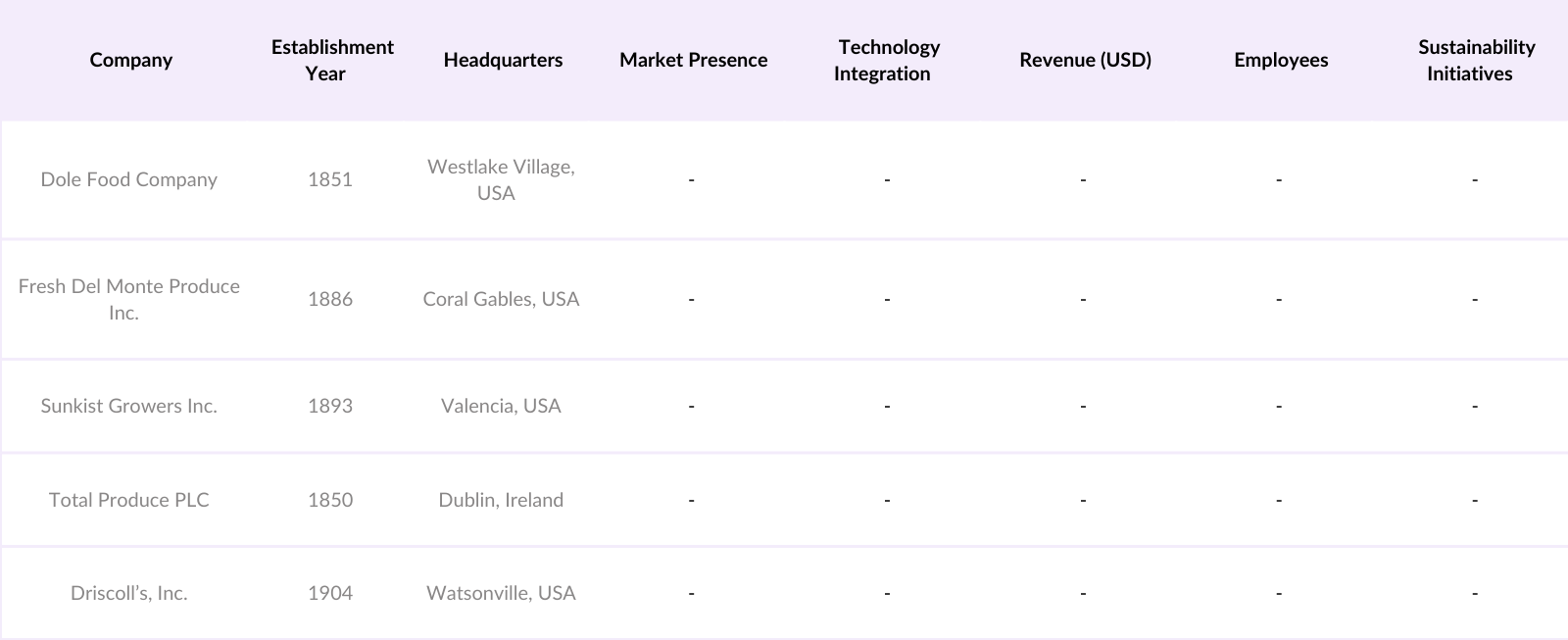
The global fruit market is dominated by a mix of multinational corporations and regional suppliers, with significant competition centered around production capabilities, distribution networks, and sustainable practices. Major players such as Dole Food Company, Fresh Del Monte Produce Inc., and Sunkist Growers Inc. have established strong global presences, leveraging advanced supply chain solutions to meet the demand for fresh and processed fruits across diverse regions.
Global Fruit Market Analysis
Growth Drivers
- Health and Wellness Trends: As health awareness rises globally, the demand for nutrient-dense foods like fruits has surged, fueled by increased consumption in both developed and emerging economies. In the U.S., the Department of Agriculture noted a rise in per capita fruit consumption from 119.7 pounds in 2023 to 121 pounds in 2024, signifying a growth in health-focused dietary habits. This shift aligns with heightened attention to immune-boosting properties in fruits, encouraged by health initiatives across Europe and APAC nations.
- Increasing Demand for Organic Produce: With organic fruit sales steadily increasing, the global focus on pesticide-free and non-GMO produce has led to heightened demand for organic fruits. In 2023, organic farmland expanded by 4 million hectares worldwide, with over 60% of organic fruit production concentrated in the Americas and Europe. The USDA certified over 22,000 organic farms by the end of 2024, a significant increase driven by policy incentives, leading to a production hike of organic fruit exports from these regions. Additionally, organic fruit consumption in the EU increased by 15% compared to 2022, indicating a steady demand for organic produce in high-income countries.
- Rising Global Population: The global population, projected to surpass 8.1 billion by the end of 2024, has driven increased food production requirements, with fruits comprising a crucial part of staple diets across regions. According to the UN, developing nations in Africa and Asia have seen the highest population growth rates, which has fueled local fruit consumption by over 5 million tons from 2022 to 2024. To address these needs, large-scale agricultural projects are ongoing in high-demand areas, supported by government-backed land and labor initiatives that enhance fruit production capacity across major economies.
Challenges
- Seasonal Availability: Seasonal fluctuations and climate-related impacts on production have led to inconsistent fruit availability globally. In 2024, abnormal temperature increases affected nearly 15% of the fruit harvest in Southern Europe. Seasonal shortages due to extreme weather events have pressured both suppliers and consumers, particularly impacting temperate regions where seasonal fruit prices and availability fluctuate substantially.
- Price Volatility: The fruit market faces substantial price volatility driven by supply chain disruptions and inconsistent yield levels. Supply chain costs increased as a result, with transportation expenses accounting for a 15% rise in consumer fruit prices across developed economies, impacting affordability and accessibility. To mitigate fluctuations, governments in North America are enhancing subsidies for domestic fruit producers to ensure stable market pricing.
Global Fruit Market Future Outlook
Over the next five years, the global fruit market is expected to witness substantial growth driven by increasing consumer awareness regarding health and nutrition, advancements in production and supply chain technologies, and government support for agricultural sectors. Rising urbanization and growing demand for organic fruits, coupled with innovative distribution channels like online grocery platforms, are anticipated to contribute significantly to the market's expansion.
Market Opportunities
- Expansion of E-commerce for Fresh Produce: E-commerce platforms are becoming integral for fresh produce sales, enhancing access to diverse fruit types across regions. In China alone, online fresh produce sales grew by 20 million metric tons from 2022 to 2024. This shift allows consumers in urban and rural areas to access high-quality produce through online channels, with governments in regions like APAC supporting digital retail subsidies to streamline logistics. The growth of e-commerce in North America is similarly strong, aided by innovative delivery models and same-day delivery options.
- Emerging Markets: Developing economies, particularly in Africa and Southeast Asia, present substantial growth potential as they shift toward higher fruit consumption. According to the World Bank, fruit import volumes in sub-Saharan Africa grew by 25% from 2022 to 2024, spurred by rising income levels and government-led nutritional initiatives. Local farmers are benefiting from international investments in agriculture, creating a foundation for fruit supply in the region and supporting domestic consumption trends that present new opportunities for global suppliers.
Scope of the Report
|
Segment |
Sub-Segments |
|
Fruit Type |
Citrus Fruits Berries Tropical Fruits Stone Fruits Pomes |
|
Form |
Fresh Frozen Dried Purees and Juices |
|
Distribution Channel |
Supermarkets and Hypermarkets Convenience Stores Online Platforms Specialty Stores |
|
Organic Certification |
Organic Certified Non-Certified Organic Conventional |
|
Region |
North America Europe Asia Pacific Latin America Middle East & Africa |
Products
Key Target Audience
Fruit Processing Companies
Nutraceutical & Health Supplement Companies
Health and Wellness Companies
Agrochemical & Fertilizer Companies
Food and Beverage Manufacturers
Sustainable Agriculture Associations
Investors and Venture Capitalist Firms
Government and Regulatory Bodies (USDA, EFSA, APEDA)
Companies
Players Mentioned in the Report
Dole Food Company
Fresh Del Monte Produce Inc.
Sunkist Growers Inc.
Total Produce PLC
Driscolls, Inc.
The Wonderful Company LLC
Blue Diamond Growers
China Haisheng Juice Holdings Co., Ltd.
Fyffes PLC
Chiquita Brands International
Table of Contents
1. Global Fruit Market Overview
1.1 Definition and Scope
1.2 Market Taxonomy
1.3 Market Dynamics Overview
1.4 Fruit Industry Value Chain
2. Global Fruit Market Size (In USD Mn)
2.1 Historical Market Size
2.2 Growth Rate Analysis
2.3 Key Market Developments and Milestones
3. Global Fruit Market Analysis
3.1 Growth Drivers
3.1.1 Health and Wellness Trends
3.1.2 Increasing Demand for Organic Produce
3.1.3 Rising Global Population
3.1.4 Technological Advancements in Production and Supply Chain
3.2 Market Challenges
3.2.1 Seasonal Availability (Climate Impact)
3.2.2 Price Volatility (Supply Fluctuations)
3.2.3 Trade Regulations (Import/Export Policies)
3.2.4 Competition from Synthetic Supplements
3.3 Opportunities
3.3.1 Expansion of E-commerce for Fresh Produce
3.3.2 Emerging Markets (Developing Economies)
3.3.3 Growth in Organic and Exotic Fruit Categories
3.3.4 Demand for Processed Fruit Products
3.4 Trends
3.4.1 Adoption of Vertical Farming and Hydroponics
3.4.2 Increase in Plant-Based Diets
3.4.3 Innovative Packaging Solutions
3.4.4 Collaborations for Sustainable Practices
3.5 Government Regulation
3.5.1 Quality Standards (USDA, EU Certifications)
3.5.2 Import Tariffs and Quotas
3.5.3 Subsidies for Organic Farming
3.5.4 Sustainability Initiatives and Carbon Footprint Reduction
3.6 SWOT Analysis
3.7 Stakeholder Ecosystem (Farmers, Distributors, Retailers)
3.8 Porters Five Forces
3.9 Competition Ecosystem
4. Global Fruit Market Segmentation
4.1 By Fruit Type (In Value %)
4.1.1 Citrus Fruits
4.1.2 Berries
4.1.3 Tropical Fruits
4.1.4 Stone Fruits
4.1.5 Pomes
4.2 By Form (In Value %)
4.2.1 Fresh
4.2.2 Frozen
4.2.3 Dried
4.2.4 Purees and Juices
4.3 By Distribution Channel (In Value %)
4.3.1 Supermarkets and Hypermarkets
4.3.2 Convenience Stores
4.3.3 Online Platforms
4.3.4 Specialty Stores
4.4 By Organic Certification (In Value %)
4.4.1 Organic Certified
4.4.2 Non-Certified Organic
4.4.3 Conventional
4.5 By Region (In Value %)
4.5.1 North America
4.5.2 Europe
4.5.3 Asia Pacific
4.5.4 Latin America
4.5.5 Middle East & Africa
5. Global Fruit Market Competitive Analysis
5.1 Detailed Profiles of Major Companies
5.1.1 Dole Food Company
5.1.2 Fresh Del Monte Produce Inc.
5.1.3 Chiquita Brands International
5.1.4 Sunkist Growers Inc.
5.1.5 Total Produce PLC
5.1.6 Fyffes PLC
5.1.7 China Haisheng Juice Holdings Co., Ltd.
5.1.8 Driscolls, Inc.
5.1.9 The Wonderful Company LLC
5.1.10 Blue Diamond Growers
5.2 Cross Comparison Parameters (Revenue, Global Presence, Production Capacity, Distribution Network, Sustainability Initiatives, Product Range, R&D Investments, Certifications)
5.3 Market Share Analysis
5.4 Strategic Initiatives
5.5 Mergers and Acquisitions
5.6 Investment Analysis
5.7 Government Grants and Subsidies
6. Global Fruit Market Regulatory Framework
6.1 Global Standards for Organic and Conventional Fruits
6.2 Certification Processes for Export and Import
6.3 Compliance with Pesticide Regulations
6.4 Packaging and Labeling Requirements
7. Global Fruit Market Future Size (In USD Mn)
7.1 Future Market Size Projections
7.2 Key Factors Driving Future Market Growth
8. Global Fruit Market Future Segmentation
8.1 By Fruit Type (In Value %)
8.2 By Form (In Value %)
8.3 By Distribution Channel (In Value %)
8.4 By Organic Certification (In Value %)
8.5 By Region (In Value %)
9. Global Fruit Market Analysts Recommendations
9.1 Total Addressable Market (TAM) Analysis
9.2 Specific Growth Opportunities (Emerging Markets)
9.3 Innovation and Investment Needs
9.4 White Space Opportunity Analysis
Disclaimer Contact UsResearch Methodology
Step 1: Identification of Key Variables
The research begins with identifying critical factors influencing the global fruit market, such as production volume, seasonal availability, distribution networks, and consumer demand patterns. This data is sourced from credible industry databases and agricultural export reports.
Step 2: Market Analysis and Construction
A historical data analysis of production and consumption patterns provides a foundation for understanding market dynamics. Key data points are aggregated and analyzed to assess the market's current standing and identify trends in specific regions and sub-segments.
Step 3: Hypothesis Validation and Expert Consultation
Developed market hypotheses are tested through interviews with industry experts, including agricultural producers, distributors, and retail specialists. These insights are used to validate findings and refine projections.
Step 4: Research Synthesis and Final Output
Data from multiple sources is compiled to create a comprehensive market overview, highlighting both quantitative and qualitative factors. This approach ensures a robust, accurate, and actionable report for stakeholders.
Frequently Asked Questions
01. How big is the global fruit market?
The global fruit market, valued at USD 597 billion, is experiencing robust growth driven by increased consumer demand for healthy, natural foods and a surge in organic and exotic fruit varieties.
02. What are the key challenges in the global fruit market?
Challenges in global fruit market include climate variability affecting production, logistical constraints, and strict international trade regulations. The reliance on seasonal produce also affects year-round availability, posing a challenge for consistent supply.
03. Who are the major players in the global fruit market?
Key players in global fruit market include Dole Food Company, Fresh Del Monte Produce Inc., Sunkist Growers Inc., and Driscolls, Inc. These companies dominate due to extensive distribution networks, production capacities, and strong brand presence.
04. What drives growth in the global fruit market?
Growth in global fruit market is fueled by rising health awareness, increasing demand for organic and exotic fruits, and advancements in cold chain logistics that ensure longer shelf life and global accessibility.
Why Buy From Us?

What makes us stand out is that our consultants follows Robust, Refine and Result (RRR) methodology. i.e. Robust for clear definitions, approaches and sanity checking, Refine for differentiating respondents facts and opinions and Result for presenting data with story

We have set a benchmark in the industry by offering our clients with syndicated and customized market research reports featuring coverage of entire market as well as meticulous research and analyst insights.

While we don't replace traditional research, we flip the method upside down. Our dual approach of Top Bottom & Bottom Top ensures quality deliverable by not just verifying company fundamentals but also looking at the sector and macroeconomic factors.

With one step in the future, our research team constantly tries to show you the bigger picture. We help with some of the tough questions you may encounter along the way: How is the industry positioned? Best marketing channel? KPI's of competitors? By aligning every element, we help maximize success.

Our report gives you instant access to the answers and sources that other companies might choose to hide. We elaborate each steps of research methodology we have used and showcase you the sample size to earn your trust.

If you need any support, we are here! We pride ourselves on universe strength, data quality, and quick, friendly, and professional service.