
Global GLP-1 Receptor Agonist Market Outlook to 2030
Region:Global
Author(s):Yogita Sahu
Product Code:KROD8925
November 2024
96
About the Report
Global GLP-1 Receptor Agonist Market Overview
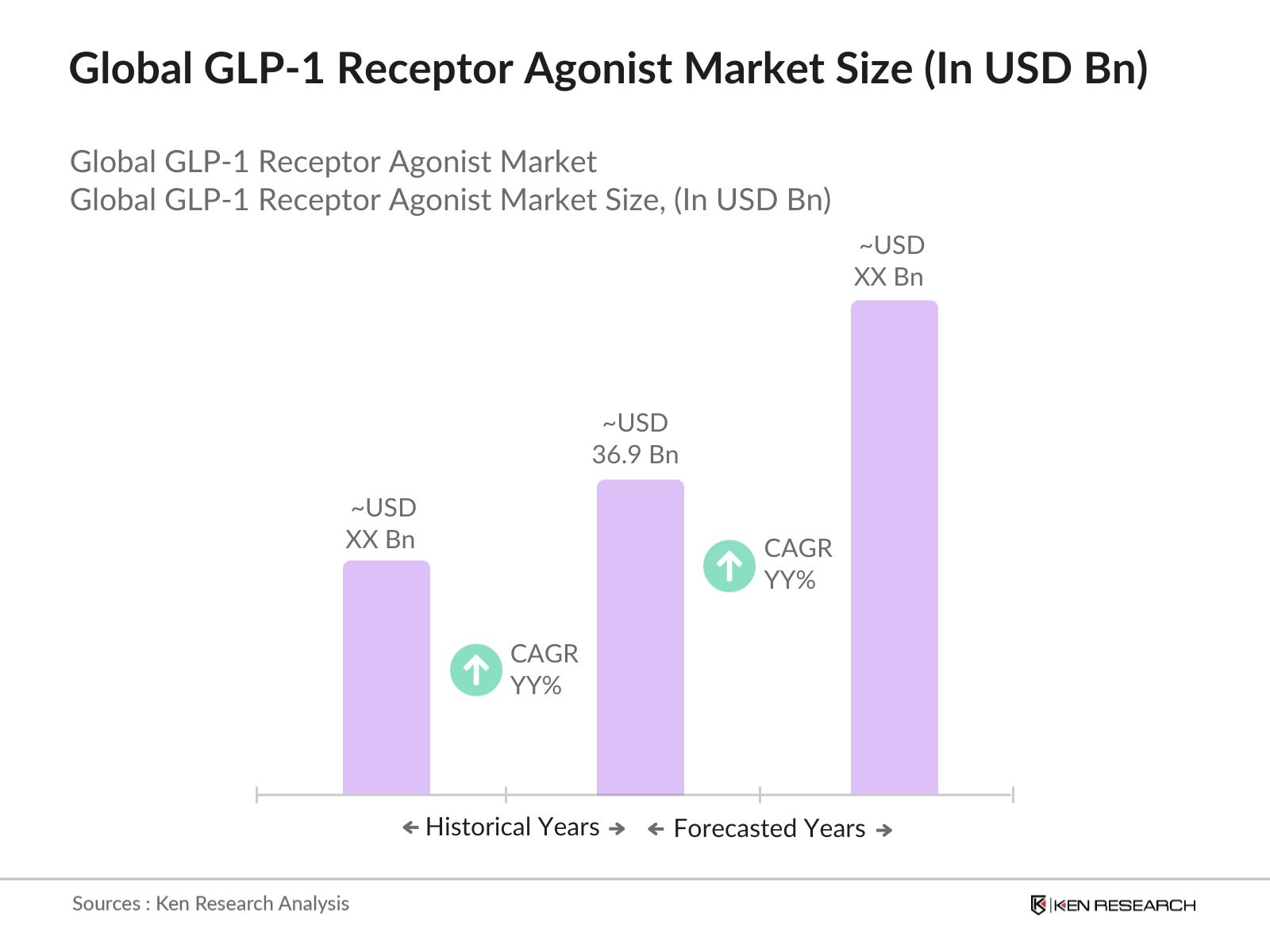
- The Global GLP-1 Receptor Agonist Market is valued at USD 36.9 billion, driven by the rising prevalence of Type 2 diabetes and obesity globally. This growth is further spurred by innovative drug formulations that improve patient compliance and expand the range of GLP-1-based therapies. These factors have collectively contributed to the markets expansion, underscoring the growing demand for effective therapeutic interventions for chronic disease management.
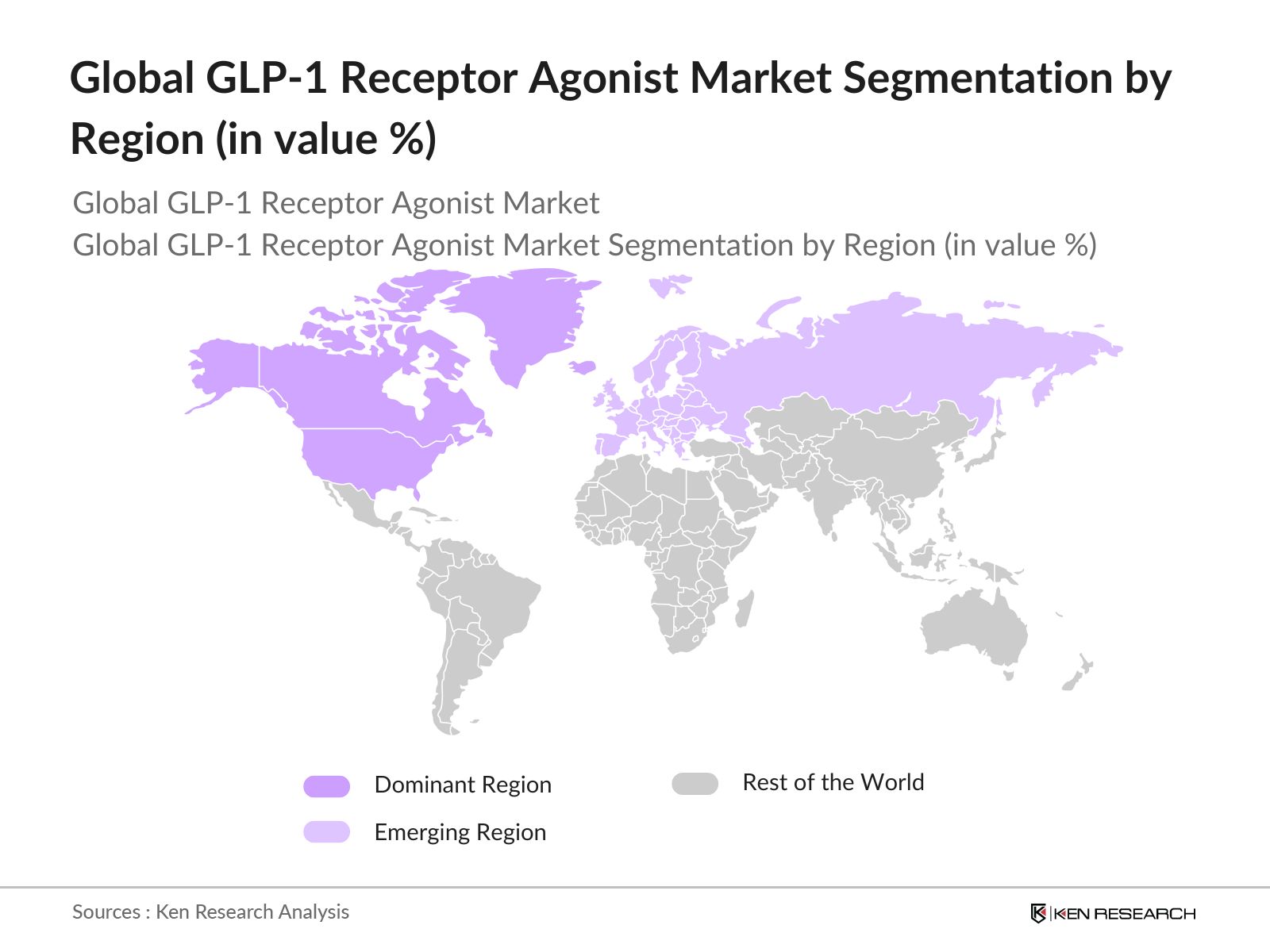
- The market is primarily dominated by North America, particularly the United States, due to a high number of diabetic patients, substantial healthcare expenditure, and favorable regulatory support for innovative diabetes treatments. In Europe, countries like Germany and the UK lead, benefiting from advanced healthcare infrastructure and strong government backing for chronic disease management.
- Governments, especially in North America and Europe, have launched large-scale diabetes prevention programs to reduce healthcare expenditure. For instance, the U.S. Diabetes Prevention Program, with over USD 1 billion allocated, promotes early intervention treatments like GLP-1 receptor agonists to minimize diabetes complications and healthcare costs.
Global GLP-1 Receptor Agonist Market Segmentation
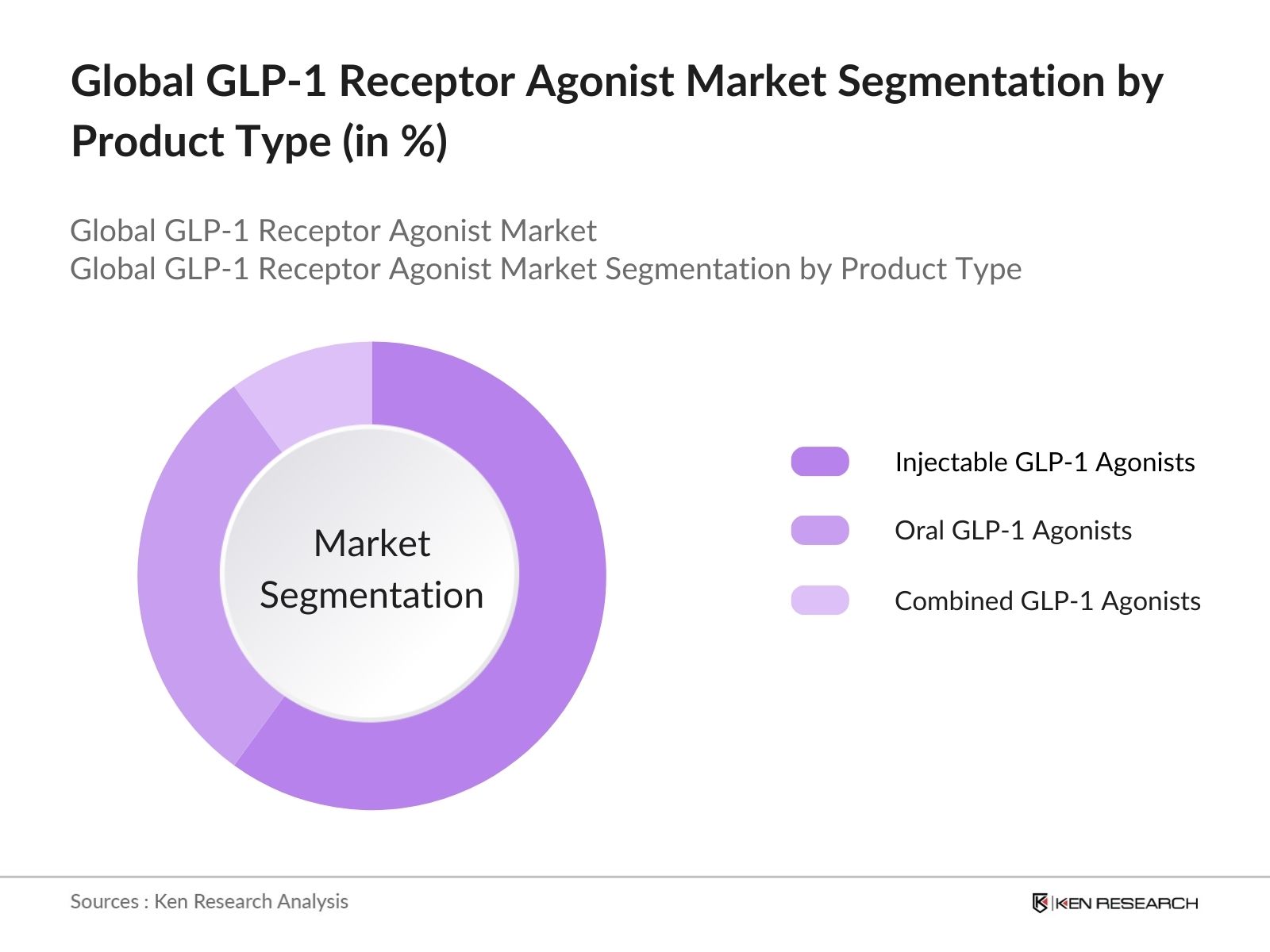
By Product Type: The market is segmented by product type into injectable GLP-1 agonists, oral GLP-1 agonists, and combined GLP-1 agonists. Currently, injectable GLP-1 agonists hold the largest market share due to their established efficacy and broad adoption in diabetes management. The dominance of injectables can be attributed to their rapid onset of action, high patient adherence, and the availability of several well-known brands that have gained widespread trust among healthcare professionals and patients alike.
By Application: The market is segmented by application into Type 2 diabetes, weight management, and cardiovascular disease. The Type 2 diabetes segment dominates the market due to the increasing global diabetes burden and strong endorsement of GLP-1 therapies as an effective treatment option. These medications address key diabetes management challenges, including glucose control and weight loss, and their acceptance among diabetic patients solidifies their prominent position within this segment.
By Region: The market is regionally segmented into North America, Europe, Asia Pacific, Latin America, and the Middle East & Africa. North America leads the market, with the United States accounting for the highest share. This dominance stems from advanced healthcare systems, significant healthcare spending, and an extensive patient pool that fosters a strong demand for GLP-1 therapies. The regions focus on enhancing diabetes treatment outcomes and providing comprehensive patient care further drives the market growth.
Global GLP-1 Receptor Agonist Market Competitive Landscape
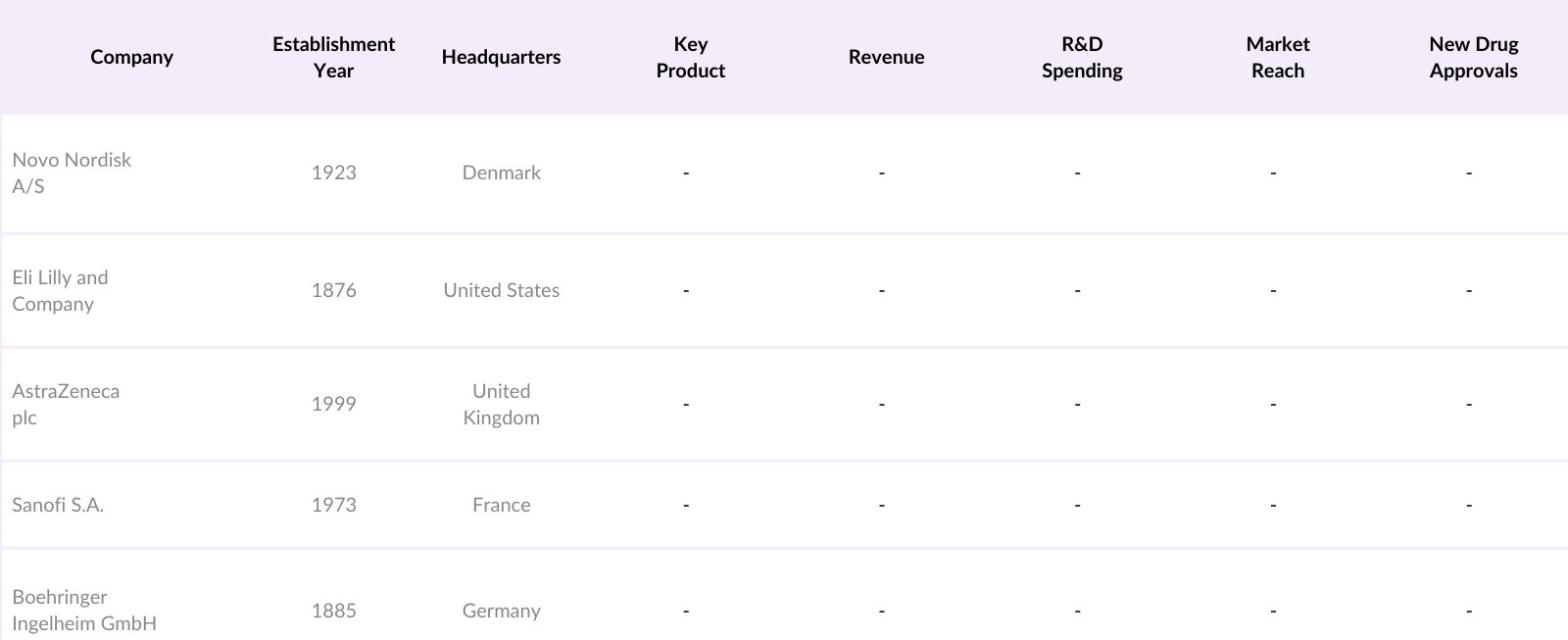
The market is consolidated, with several prominent companies dominating the industry. These firms leverage extensive R&D capabilities and a diverse product portfolio to maintain their competitive edge, focusing on innovation, patient-centric solutions, and strategic partnerships.
Global GLP-1 Receptor Agonist Market Analysis
Market Growth Drivers
- Rising Prevalence of Diabetes and Obesity: By 2024, the global diabetic population is projected to surpass 650 million, with nearly half of this population likely to require advanced treatment due to comorbid obesity. The GLP-1 receptor agonists market gains significant traction from this large population base requiring management solutions for blood glucose levels and weight.
- Government Focus on Reducing Healthcare Burdens from Chronic Diseases: The financial burden of diabetes on global healthcare systems is estimated to exceed USD 1 trillion annually. Governments in regions with high diabetes prevalence, including North America and parts of Europe, have initiated programs to incentivize the adoption of preventive and maintenance treatments, such as GLP-1 receptor agonists.
- Growing Investment in R&D for New Drug Approvals: With over 100 GLP-1 receptor agonist drugs currently under development or in clinical trials, pharmaceutical companies are making considerable investments to bring more advanced formulations to the market. This increased investment is supported by funding from health institutes and global healthcare bodies, which collectively provided approximately USD 300 million in 2023 alone to support research and development of GLP-1 drugs.
Market Challenges
- High Treatment Costs Affecting Accessibility: The annual treatment cost for patients using GLP-1 receptor agonists can reach up to USD 5,000 in the United States, making it a financial burden for uninsured or underinsured patients. High treatment costs have led to restricted adoption rates, particularly in low- and middle-income regions where healthcare budgets are limited.
- Complex Manufacturing Processes and Limited Production Capacity: Manufacturing GLP-1 receptor agonists requires specialized bioengineering processes, with estimated production costs reaching upwards of USD 200 per vial. These high production costs stem from the need for stringent regulatory compliance and quality control.
Global GLP-1 Receptor Agonist Market Future Outlook
Over the next five years, the Global GLP-1 Receptor Agonist industry is anticipated to grow, driven by the development of novel formulations, an increasing diabetic population, and a shift toward personalized medicine.
Future Market Opportunities
- Increased Adoption of Personalized GLP-1 Treatment Plans: Within the next five years, data analytics integration is projected to enable personalized GLP-1 treatment plans, addressing patient-specific needs. This innovation will likely attract approximately 2 million new users globally, as it offers tailored and effective diabetic and weight management solutions that align with patients unique metabolic profiles.
- Rise in Telemedicine and Remote GLP-1 Management Solutions: Telemedicine platforms are anticipated to support GLP-1 treatment adherence by providing real-time monitoring and consultations. With over 100 million telemedicine appointments expected globally by 2029, remote management solutions will play a crucial role in expanding GLP-1 receptor agonist usage, especially in remote and rural areas where access to specialized healthcare is limited.
Scope of the Report
|
Product Type |
Injectable GLP-1 Agonists |
|
Application |
Type 2 Diabetes |
|
End User |
Hospitals |
|
Distribution Channel |
Hospital Pharmacies |
|
Region |
North America |
Products
Key Target Audience Organizations and Entities Who Can Benefit by Subscribing This Report:
Pharmaceutical Manufacturers
Hospital and Clinical Providers
Healthcare Distributors and Retailers
Insurance Providers and Payers
Patient Advocacy Groups
Investor and Venture Capitalist Firms
Government and Regulatory Bodies (FDA, EMA)
Digital Health Solution Providers
Companies
Novo Nordisk A/S
Eli Lilly and Company
AstraZeneca plc
Sanofi S.A.
Boehringer Ingelheim GmbH
Merck & Co., Inc.
Johnson & Johnson
GlaxoSmithKline plc
Amgen Inc.
Bristol-Myers Squibb
Table of Contents
1. Global GLP-1 Receptor Agonist Market Overview
1.1 Definition and Scope
1.2 Market Taxonomy
1.3 Market Dynamics
2. Global GLP-1 Receptor Agonist Market Size (In USD Billion)
2.1 Historical Market Size
2.2 Year-On-Year Growth Analysis
2.3 Key Market Developments and Milestones
3. Global GLP-1 Receptor Agonist Market Analysis
3.1 Growth Drivers
3.1.1 Rising Prevalence of Type 2 Diabetes and Obesity
3.1.2 Innovations in Drug Delivery Mechanisms
3.1.3 Government Healthcare Initiatives
3.1.4 Increased Awareness of Chronic Disease Management
3.2 Market Challenges
3.2.1 High Treatment Costs
3.2.2 Potential Side Effects and Safety Concerns
3.2.3 Competitive Pressure from Alternative Therapies
3.3 Opportunities
3.3.1 Expanding Applications Beyond Diabetes Treatment
3.3.2 Integration with Digital Health Platforms
3.3.3 Partnerships with Research and Development Institutions
3.4 Trends
3.4.1 Growth in Injectable and Oral GLP-1 Agonists
3.4.2 Incorporation of Personalized Medicine Approaches
3.4.3 Adoption of Extended-Release Formulations
3.5 Regulatory Landscape
3.5.1 FDA Guidelines
3.5.2 EMA Approvals
3.5.3 Market Access Requirements (Payer Landscape)
3.6 SWOT Analysis
3.7 Porters Five Forces Analysis
3.8 Value Chain Analysis
3.9 Key Stakeholders and Ecosystem Mapping
4. Global GLP-1 Receptor Agonist Market Segmentation
4.1 By Product Type (In Value %)
4.1.1 Injectable GLP-1 Agonists
4.1.2 Oral GLP-1 Agonists
4.1.3 Combined GLP-1 Agonists
4.2 By Application (In Value %)
4.2.1 Type 2 Diabetes
4.2.2 Weight Management
4.2.3 Cardiovascular Disease
4.3 By End User (In Value %)
4.3.1 Hospitals
4.3.2 Clinics
4.3.3 Homecare Settings
4.4 By Distribution Channel (In Value %)
4.4.1 Hospital Pharmacies
4.4.2 Retail Pharmacies
4.4.3 Online Pharmacies
4.5 By Region (In Value %)
4.5.1 North America
4.5.2 Europe
4.5.3 Asia Pacific
4.5.4 Latin America
4.5.5 Middle East & Africa
5. Global GLP-1 Receptor Agonist Market Competitive Analysis
5.1 Detailed Profiles of Major Companies
5.1.1 Novo Nordisk A/S
5.1.2 Eli Lilly and Company
5.1.3 AstraZeneca plc
5.1.4 Sanofi S.A.
5.1.5 Pfizer Inc.
5.1.6 Boehringer Ingelheim GmbH
5.1.7 Merck & Co., Inc.
5.1.8 Johnson & Johnson
5.1.9 GlaxoSmithKline plc
5.1.10 Amgen Inc.
5.1.11 Bristol-Myers Squibb
5.1.12 Gilead Sciences, Inc.
5.1.13 Teva Pharmaceuticals
5.1.14 Roche Holding AG
5.1.15 Bayer AG
5.2 Cross Comparison Parameters (Revenue, Headquarters, GLP-1 Product Portfolio, Market Share, R&D Investment, Regional Presence, Growth Strategies, Patent Portfolio)
5.3 Market Share Analysis
5.4 Strategic Initiatives
5.5 Mergers and Acquisitions
5.6 Investment and Funding Analysis
6. Global GLP-1 Receptor Agonist Market Regulatory Framework
6.1 FDA and EMA Approval Processes
6.2 Global Compliance Standards
6.3 Health Insurance Coverage Policies
7. Global GLP-1 Receptor Agonist Market Segmentation Future
7.1 Product Type
7.2 End-User
7.3 Distribution Channel
7.4 Application
7.5 Region
8. Global GLP-1 Receptor Agonist Future Market Size (In USD Billion)
8.1 Projected Market Growth
8.2 Key Drivers for Future Growth
9. Global GLP-1 Receptor Agonist Market Analysts Recommendations
9.1 Market Entry Strategies
9.2 Product Differentiation and Innovation
9.3 Expansion Opportunities in Emerging Markets
9.4 Potential for Strategic Partnerships
Disclaimer Contact UsResearch Methodology
Step 1: Identification of Key Variables
This initial phase involves mapping out the ecosystem surrounding the Global GLP-1 Receptor Agonist Market. A comprehensive desk review and proprietary database analysis were conducted to identify variables influencing market dynamics and relevant stakeholder interactions.
Step 2: Market Analysis and Construction
Historical data analysis of GLP-1 receptor agonists was undertaken, focusing on drug penetration rates, adoption of advanced therapies, and revenue generation patterns. Service quality metrics were also evaluated to ensure reliable market projections.
Step 3: Hypothesis Validation and Expert Consultation
Hypotheses regarding market trends were established and validated through interviews with industry experts. These consultations provided insights from manufacturers, healthcare providers, and payers, helping refine market forecasts and confirm operational metrics.
Step 4: Research Synthesis and Final Output
In the final phase, comprehensive insights were gathered from GLP-1 therapy providers to verify product segmentation, sales figures, and patient preferences. This step consolidated the findings, ensuring a validated analysis of the Global GLP-1 Receptor Agonist Market.
Frequently Asked Questions
01. How big is the Global GLP-1 Receptor Agonist Market?
The Global GLP-1 Receptor Agonist Market was valued at USD 36.9 billion, reflecting an increase in Type 2 diabetes and obesity cases worldwide.
02. What are the key drivers of the Global GLP-1 Receptor Agonist Market?
Key drivers in the Global GLP-1 Receptor Agonist Market include the rise in chronic diseases, increased R&D in therapeutic formulations, and supportive healthcare policies that prioritize diabetes and weight management solutions.
03. Who are the leading players in the Global GLP-1 Receptor Agonist Market?
Top players in the Global GLP-1 Receptor Agonist Market include Novo Nordisk, Eli Lilly, AstraZeneca, Sanofi, and Boehringer Ingelheim, recognized for their extensive product portfolios and strong R&D investments.
04. What challenges does the Global GLP-1 Receptor Agonist Market face?
Challenges in the Global GLP-1 Receptor Agonist Market include high treatment costs, competitive pressures from alternative therapies, and regulatory complexities surrounding drug approvals and market entry.
Why Buy From Us?

What makes us stand out is that our consultants follows Robust, Refine and Result (RRR) methodology. i.e. Robust for clear definitions, approaches and sanity checking, Refine for differentiating respondents facts and opinions and Result for presenting data with story

We have set a benchmark in the industry by offering our clients with syndicated and customized market research reports featuring coverage of entire market as well as meticulous research and analyst insights.

While we don't replace traditional research, we flip the method upside down. Our dual approach of Top Bottom & Bottom Top ensures quality deliverable by not just verifying company fundamentals but also looking at the sector and macroeconomic factors.

With one step in the future, our research team constantly tries to show you the bigger picture. We help with some of the tough questions you may encounter along the way: How is the industry positioned? Best marketing channel? KPI's of competitors? By aligning every element, we help maximize success.

Our report gives you instant access to the answers and sources that other companies might choose to hide. We elaborate each steps of research methodology we have used and showcase you the sample size to earn your trust.

If you need any support, we are here! We pride ourselves on universe strength, data quality, and quick, friendly, and professional service.