















Global Glycidyl Methacrylate (GMA) Market Outlook 2030
Region:Global
Author(s):Shivani Mehra
Product Code:KROD3930
November 2024
97
About the Report
Global Glycidyl Methacrylate (GMA) Market Overview
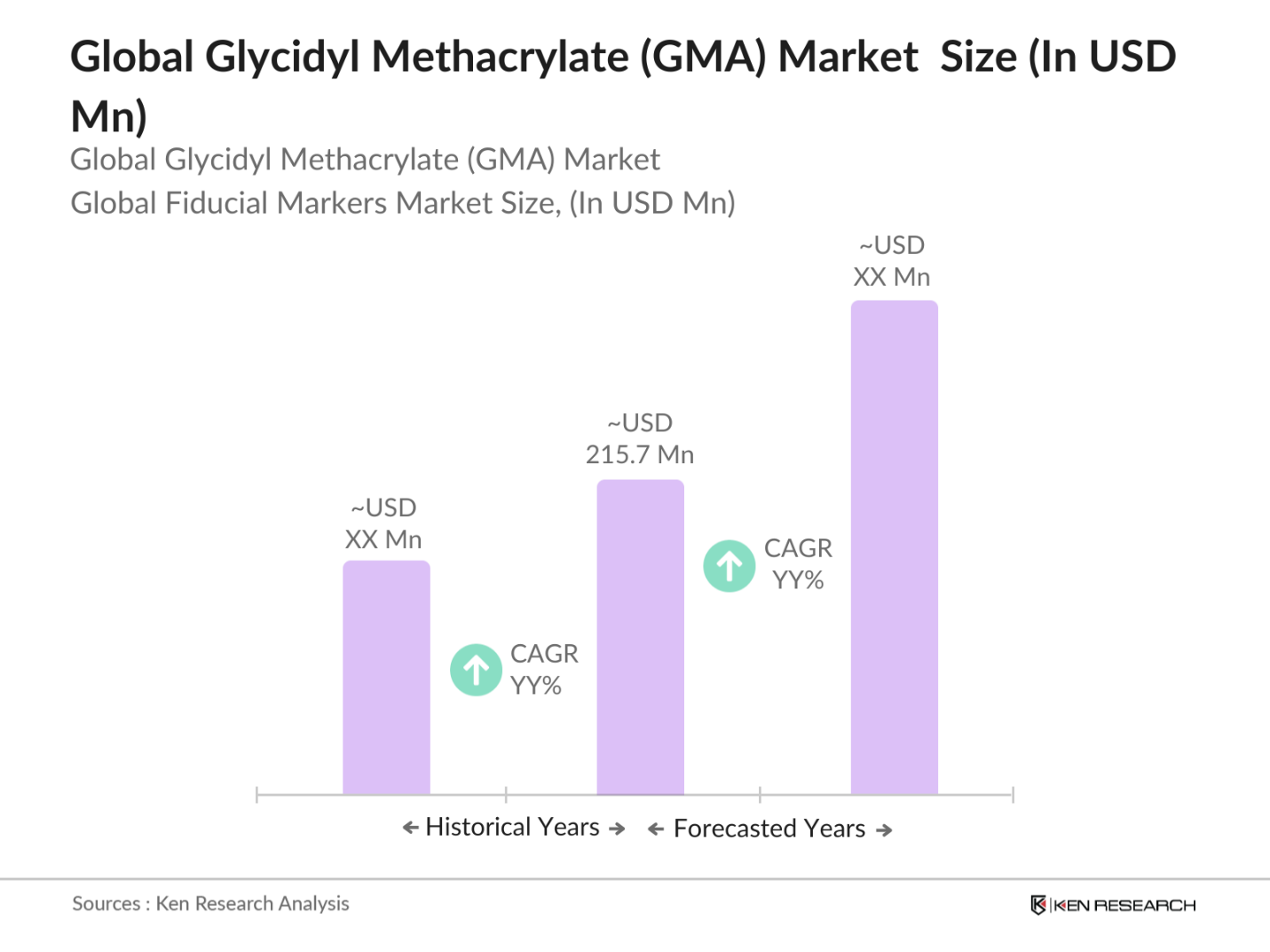
- The global Glycidyl Methacrylate (GMA) market, valued at approximately USD 215.7, million, is driven by its versatile applications in coatings, adhesives, and polymer production. GMA is extensively used to enhance the performance of materials by improving their adhesion, flexibility, and durability. The rising demand from industries such as automotive, electronics, and packaging has significantly contributed to the market's growth. The market is also witnessing increased investments in sustainable and eco-friendly alternatives, pushing manufacturers to innovate bio-based GMA products.
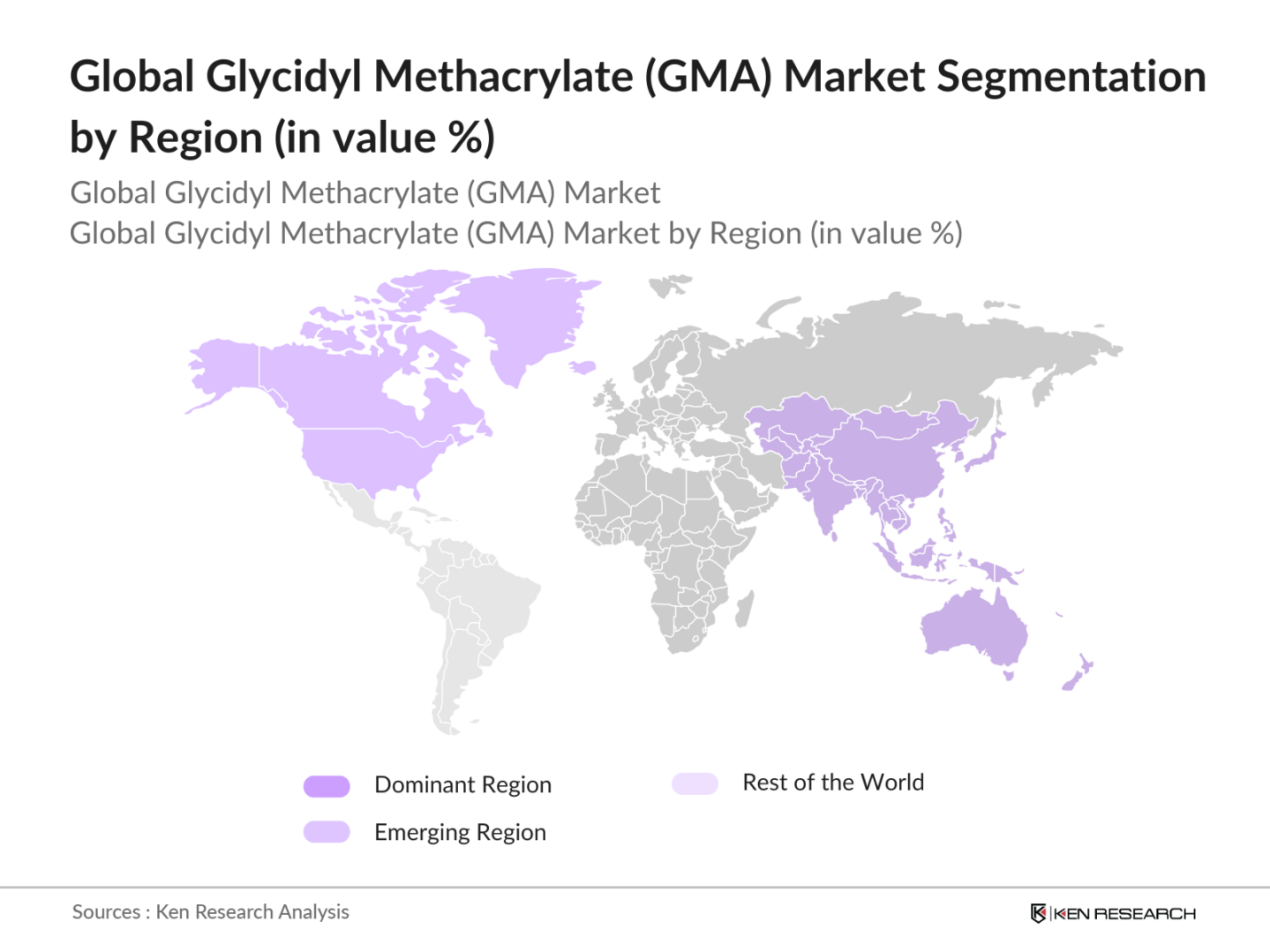
- The dominant regions in the GMA market include Asia-Pacific, North America, and Europe. The Asia-Pacific region, particularly countries like China, Japan, and India, dominates due to their robust industrial sectors and high demand for automotive and packaging solutions. North Americas growth is attributed to advanced electronics and construction sectors. Europes dominance stems from stringent environmental regulations that favor the use of eco-friendly GMA products.
- Environmental and safety regulations, particularly REACH in Europe and EPA guidelines in the US, significantly impact the GMA market. In 2023, over 3,000 companies in Europe faced REACH compliance audits, resulting in a $500 million increase in operational costs for chemical producers. The US EPA has also tightened restrictions on volatile organic compounds (VOCs) in coatings, leading to additional compliance requirements for GMA manufacturers. This regulatory landscape is expected to continue influencing production costs and market entry barriers for new players.
Global Glycidyl Methacrylate (GMA) Market Segmentation
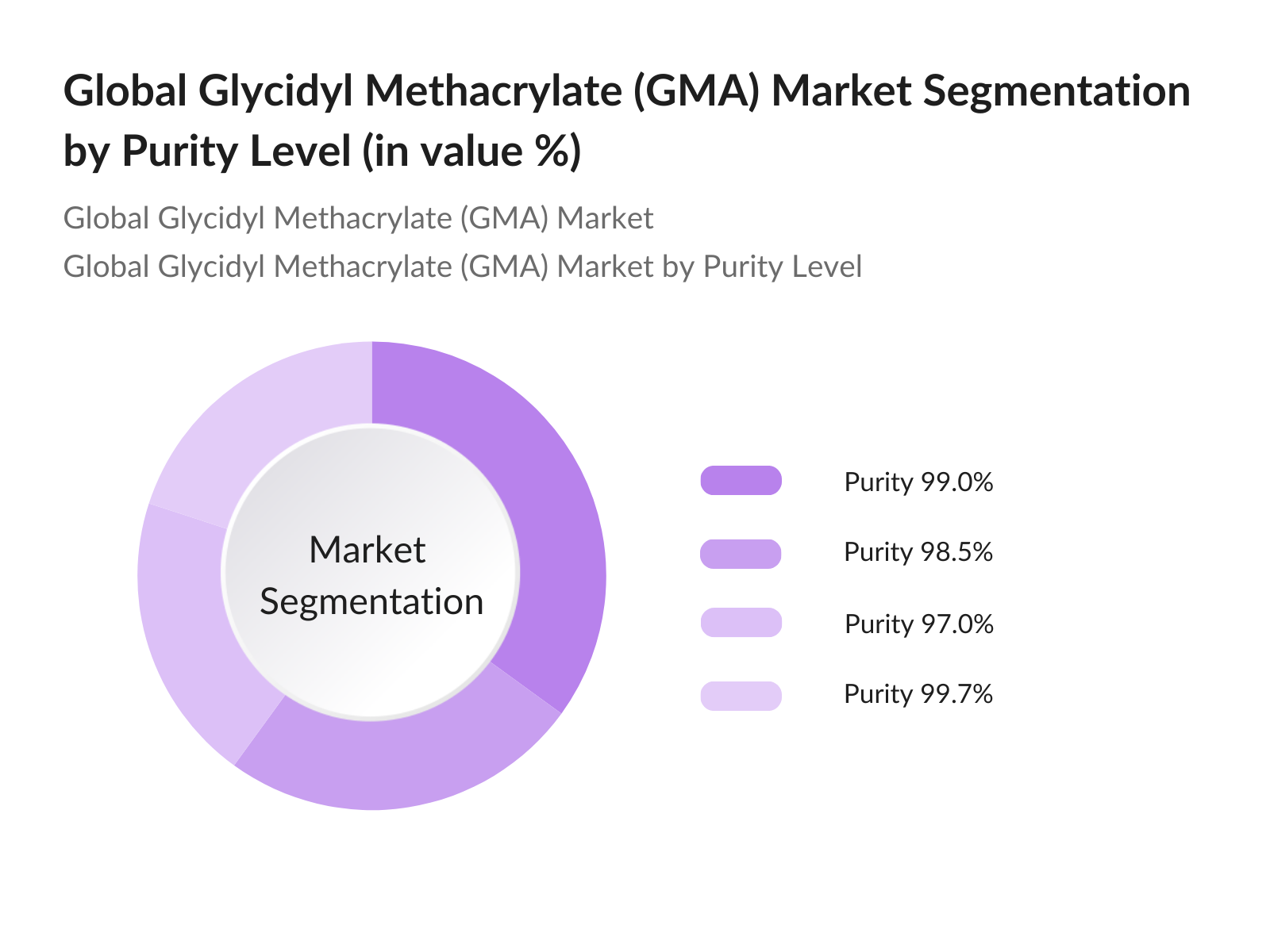
By Purity Level: The GMA market is segmented by purity levels, including 97.0%, 98.5%, 99.0%, and 99.7%. The 99.0% purity segment has a dominant market share due to its superior quality, which is essential in high-performance coatings and adhesive applications. This purity level is preferred in industries such as automotive and aerospace, where durability and performance are crucial. As industries continue to demand high-quality materials, this segment is expected to maintain its dominance.
By Region: The GMA market is segmented into North America, Europe, Asia-Pacific, Middle East & Africa, and South America. Asia-Pacific holds the largest share due to the region's rapid industrialization and urbanization. The automotive and electronics industries, particularly in China, India, and Japan, are key contributors to the growth. North America follows closely, with rising demand from the construction and automotive industries.
Global Glycidyl Methacrylate (GMA) Market Competitive Landscape
The GMA market is highly consolidated, with a few key players dominating the landscape. These companies focus on expanding their production capacities and investing in R&D to develop eco-friendly and bio-based GMA products.
|
Company |
Year of Establishment |
Headquarters |
Revenue (USD Mn) |
Employees |
Global Presence |
R&D Investment |
Product Portfolio |
Strategic Initiatives |
|
Dow Chemicals |
1897 |
Midland, USA |
43,000 |
|||||
|
Mitsubishi Gas Chemical |
1918 |
Tokyo, Japan |
13,000 |
|||||
|
Evonik Industries |
2007 |
Essen, Germany |
18,000 |
|||||
|
Merck KGaA |
1668 |
Darmstadt, Germany |
21,000 |
|||||
|
Kowa American Corporation |
1894 |
Tokyo, Japan |
7,500 |
Global Glycidyl Methacrylate (GMA) Market Analysis
Market Growth Drivers
- Increasing demand from coatings and adhesives sectors: The glycidyl methacrylate (GMA) market is witnessing significant demand from the coatings and adhesives industries. According to World Bank data, the global coatings sector saw robust growth in 2022, fueled by infrastructure development and increased vehicle production, which utilized more adhesives. The automotive industry, with over 80 million vehicles produced globally in 2023, has been a major consumer of GMA-based coatings for its superior durability. The construction industry, projected to reach $15 trillion globally by 2025, also drives GMA demand for adhesives used in infrastructure projects.
- Technological advancements in resin production: Technological advancements in resin production, such as improved polymerization techniques, have enhanced GMA's application in producing high-performance resins. As per IMF's 2023 report, investments in resin production technologies saw a 12% increase globally, with Asia-Pacific leading in innovation. For instance, Japan's resin output increased by 7% in 2023, benefiting the automotive and electronics sectors, which rely on GMA resins. These advancements have also reduced waste and production costs, making GMA-based resins more economically viable for various industries.
- Expansion in electronics and automotive industries: The expansion of the electronics and automotive industries has driven GMA consumption due to its applications in printed circuit boards (PCBs) and automotive coatings. The global electronics market, valued at $3.1 trillion in 2023, saw increased demand for GMA-based adhesives and coatings, particularly in Asia-Pacific. Additionally, the automotive sector added over 70 million new electric vehicles in 2022-2023, requiring advanced coatings and adhesives. These industries rely on GMA for its thermal stability and mechanical strength, making it indispensable for next-generation technology.
Market Challenges:
- Stringent regulations (e.g., REACH, FDA guidelines): Regulatory frameworks, such as REACH and FDA guidelines, are a major challenge for GMA manufacturers. Compliance with stringent safety standards has resulted in higher production costs and delays. For example, the European Unions REACH regulations require manufacturers to reduce harmful chemical emissions, raising the compliance cost by nearly $1 billion annually for chemical manufacturers as of 2023. The US FDA also imposes stringent rules on the use of GMA in food packaging materials, adding to the burden for companies seeking approval for their products.
- Adverse health effects (carcinogenic risks): GMA poses health risks, including carcinogenic concerns, making it a target for strict safety regulations. The International Agency for Research on Cancer (IARC) has classified certain derivatives of GMA as potential carcinogens. In 2023, over 120,000 chemical workers globally were reportedly exposed to harmful levels of GMA-related chemicals, prompting the need for enhanced protective measures. This has led to tighter control over GMA production and higher investments in worker safety, further increasing operational costs for manufacturers.
Global Glycidyl Methacrylate (GMA) Market Future Outlook
Over the next five years, the GMA market is projected to witness steady growth driven by rising demand for high-performance materials in automotive, electronics, and packaging industries. Increasing environmental regulations are also pushing manufacturers to innovate bio-based GMA products. The ongoing industrial expansion in emerging economies, coupled with advancements in adhesive and coating technologies, will further bolster the market.
Market Opportunities:
- Innovation in bio-based GMA products: The rising trend toward sustainability presents a significant opportunity for GMA manufacturers to innovate with bio-based products. According to a 2023 World Bank report, there was a 15% increase in global investment in bio-based chemicals, with GMA being a key focus for sustainable resin and coating applications. Countries like Germany have pledged over $2 billion in green chemical initiatives, aiming to reduce reliance on petroleum-based chemicals. Bio-based GMA is gaining traction due to its lower environmental impact and compliance with global sustainability goals.
- Rising demand in packaging and electronics sectors: The packaging and electronics industries are driving new demand for GMA, particularly in developing economies. The electronics sector in India, valued at over $120 billion in 2023, has seen a surge in demand for advanced adhesives and coatings, while the packaging sector in China grew by 10% in the same year, both requiring large quantities of GMA for eco-friendly solutions. These sectors growing importance in emerging markets creates opportunities for GMA producers to expand their operations globally.
Scope of the Report
|
By Purity Level |
Purity 97.0% Purity 98.5% Purity 99.0% Purity 99.7% |
|
By Application |
Coatings Adhesives Plastics Electronics Polymer Modifiers |
|
By End-Use Industry |
Automotive Electronics Packaging Construction Healthcare |
|
By Technology Type |
Radiation Curable Waterborne Solvent-based Powder Coatings |
|
By Region |
North America Europe Asia-Pacific Middle East & Africa South America |
Products
Key Target Audience
Glycidyl Methacrylate Manufacturers
Automotive Coating Companies
Adhesive and Sealant Manufacturers
Government Agencies (e.g., EPA, FDA)
Venture Capital Firms
R&D Institutes Focused on Polymers
Environmental Regulatory Bodies
Electronics Manufacturers
Companies
Players Mention in the Report
Dow Chemicals
Mitsubishi Gas Chemical
Evonik Industries
Merck KGaA
Kowa American Corporation
Estron Chemical
Zhonglan Industry
Jindun Chemical
OswalUdhyog
Hubei Xiansheng Biotechnology
Haihang Industry Co., Ltd.
BASF SE
Nippon Shokubai Co., Ltd.
Eternal Materials Co., Ltd.
Nan Ya Plastics Corporation
Table of Contents
01. Global Glycidyl Methacrylate (GMA) Market Overview
1.1 Definition and Scope
1.2 Market Taxonomy
1.3 Market Dynamics
1.4 Market Growth Rate (in value and volume)
02. Global Glycidyl Methacrylate (GMA) Market Size (USD Mn)
2.1 Historical Market Size
2.2 Key Market Milestones
2.3 Year-on-Year Growth Analysis (in value and volume)
03. Global Glycidyl Methacrylate (GMA) Market Analysis
3.1 Growth Drivers
Increasing demand from coatings and adhesives sectors
Technological advancements in resin production
Expansion in electronics and automotive industries
3.2 Market Challenges
Stringent regulations (e.g., REACH, FDA guidelines)
Adverse health effects (carcinogenic risks)
3.3 Market Opportunities
Innovation in bio-based GMA products
Rising demand in packaging and electronics sectors
Adoption of GMA in developing economies
3.4 Market Trends
Growing use in eco-friendly products
Increased investments in R&D for sustainable applications
3.5 Government Regulations
Environmental and Safety Regulations (EPA, REACH compliance)
Packaging and Food Safety Laws (FDA, EU regulations)
Restrictions on hazardous chemicals
04. Global Glycidyl Methacrylate (GMA) Market Segmentation (in Value %)
4.1 By Purity Level
Purity 97.0%
Purity 98.5%
Purity 99.0%
Purity 99.7%
4.2 By Application
Coatings (automotive, industrial)
Adhesives
Plastics
Electronics
Polymer Modifiers
4.3 By End-Use Industry
Automotive
Electronics
Packaging
Construction
Healthcare
4.4 By Region
North America
Europe
Asia-Pacific
Middle East & Africa
South America
05. Global Glycidyl Methacrylate (GMA) Competitive Analysis
5.1 Major Companies and Their Market Shares
Dow Chemicals
Mitsubishi Gas Chemical
Kowa American Corporation
Evonik Industries
Estron Chemical
Merck KGaA
Haihang Industry Co., Ltd.
Zhonglan Industry
Jindun Chemical
OswalUdhyog
Hubei Xiansheng Biotechnology
Nan Ya Plastics Corporation
Eternal Materials Co., Ltd.
Nippon Shokubai Co., Ltd.
BASF SE
5.2 Cross Comparison Parameters (Revenue, R&D Investment, Regional Presence, Market Share, Application Focus, Strategic Initiatives, Mergers & Acquisitions)
5.3 Strategic Initiatives
5.4 Mergers and Acquisitions
06. Global Glycidyl Methacrylate (GMA) Regulatory Framework
6.1 Compliance with Environmental Standards
6.2 Product Approvals and Certifications
6.3 Trade Regulations and Tariffs
07. Future Market Size
7.1 Market Forecast (USD Mn)
7.2 Key Factors Driving Future Growth
08. Market Analysts Recommendations
8.1 Product Innovation Opportunities
8.2 Key Investment Areas
8.3 Strategic Partnerships and Alliances
Research Methodology
Step 1: Identification of Key Variables
The initial phase involves mapping the global GMA market ecosystem, identifying all key stakeholders from suppliers to end-users. This step is driven by detailed desk research and industry data collection to identify critical variables that shape the market.
Step 2: Market Analysis and Construction
Historical data on market size, production capacity, and consumer demand is gathered and analyzed to construct a comprehensive market model. This includes assessing penetration rates in different end-use industries and key geographies.
Step 3: Hypothesis Validation and Expert Consultation
Market assumptions and hypotheses are validated through in-depth consultations with industry experts and representatives from leading GMA manufacturers. These interviews provide critical insights and refine the market model.
Step 4: Research Synthesis and Final Output
The final stage involves synthesizing the research findings into a coherent report. Data validation is conducted through engagement with key players in the GMA market, ensuring the accuracy of the projections and insights.
Frequently Asked Questions
01. How big is the Global Glycidyl Methacrylate Market?
The global Glycidyl Methacrylate market is valued at USD 215.7 million and is driven by its use in high-performance coatings, adhesives, and polymers across various industries.
02. What are the challenges in the Global Glycidyl Methacrylate Market?
Key challenges include stringent regulations concerning its usage and adverse health effects, which are pushing manufacturers to innovate safer and more sustainable alternatives.
03. Who are the major players in the Global Glycidyl Methacrylate Market?
The major players include Dow Chemicals, Mitsubishi Gas Chemical, Evonik Industries, and Merck KGaA, among others, who lead the market through innovation and expansion.
04. What drives the growth of the Global Glycidyl Methacrylate Market?
Growth is primarily driven by rising demand from the automotive, packaging, and electronics industries, as well as the development of bio-based GMA to meet sustainability goals.
Why Buy From Us?

What makes us stand out is that our consultants follows Robust, Refine and Result (RRR) methodology. i.e. Robust for clear definitions, approaches and sanity checking, Refine for differentiating respondents facts and opinions and Result for presenting data with story

We have set a benchmark in the industry by offering our clients with syndicated and customized market research reports featuring coverage of entire market as well as meticulous research and analyst insights.

While we don't replace traditional research, we flip the method upside down. Our dual approach of Top Bottom & Bottom Top ensures quality deliverable by not just verifying company fundamentals but also looking at the sector and macroeconomic factors.

With one step in the future, our research team constantly tries to show you the bigger picture. We help with some of the tough questions you may encounter along the way: How is the industry positioned? Best marketing channel? KPI's of competitors? By aligning every element, we help maximize success.

Our report gives you instant access to the answers and sources that other companies might choose to hide. We elaborate each steps of research methodology we have used and showcase you the sample size to earn your trust.

If you need any support, we are here! We pride ourselves on universe strength, data quality, and quick, friendly, and professional service.