
Global GPS Tracking Device Market Outlook to 2030
Region:Global
Author(s):Shivani Mehra
Product Code:KROD6993
Region:Global
Author(s):Shivani Mehra
Product Code:KROD6993
November 2024
100
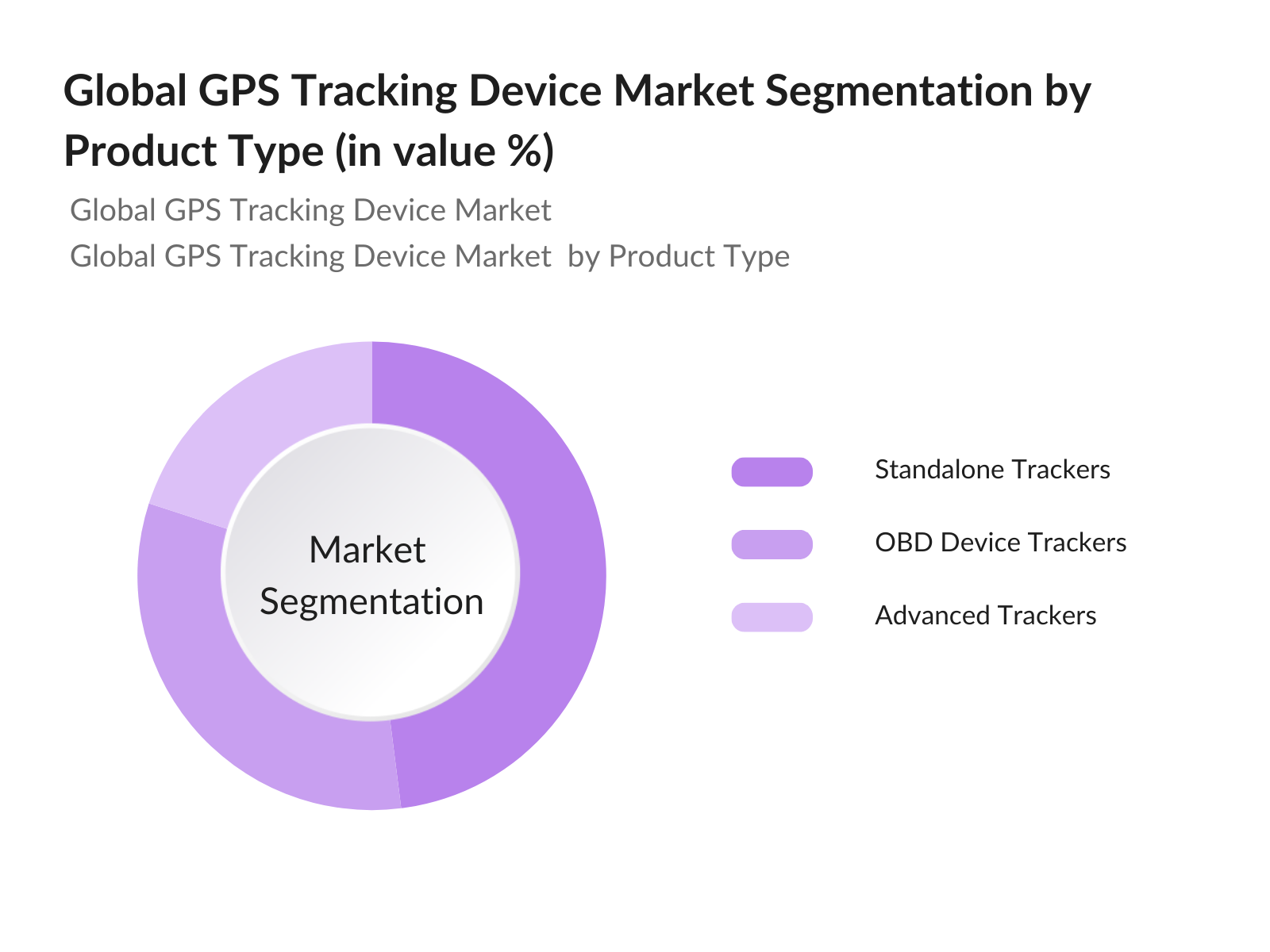
By Product Type: The Global GPS Tracking Device market is segmented into standalone trackers, OBD device trackers, and advanced trackers. Standalone trackers hold a dominant market share, driven by their versatile use across industries such as logistics, personal safety, and construction. These devices offer a balance between cost and functionality, providing essential real-time tracking without the need for additional hardware integration. Their popularity is particularly high in fleet management, where they ensure optimal vehicle utilization and improved security.
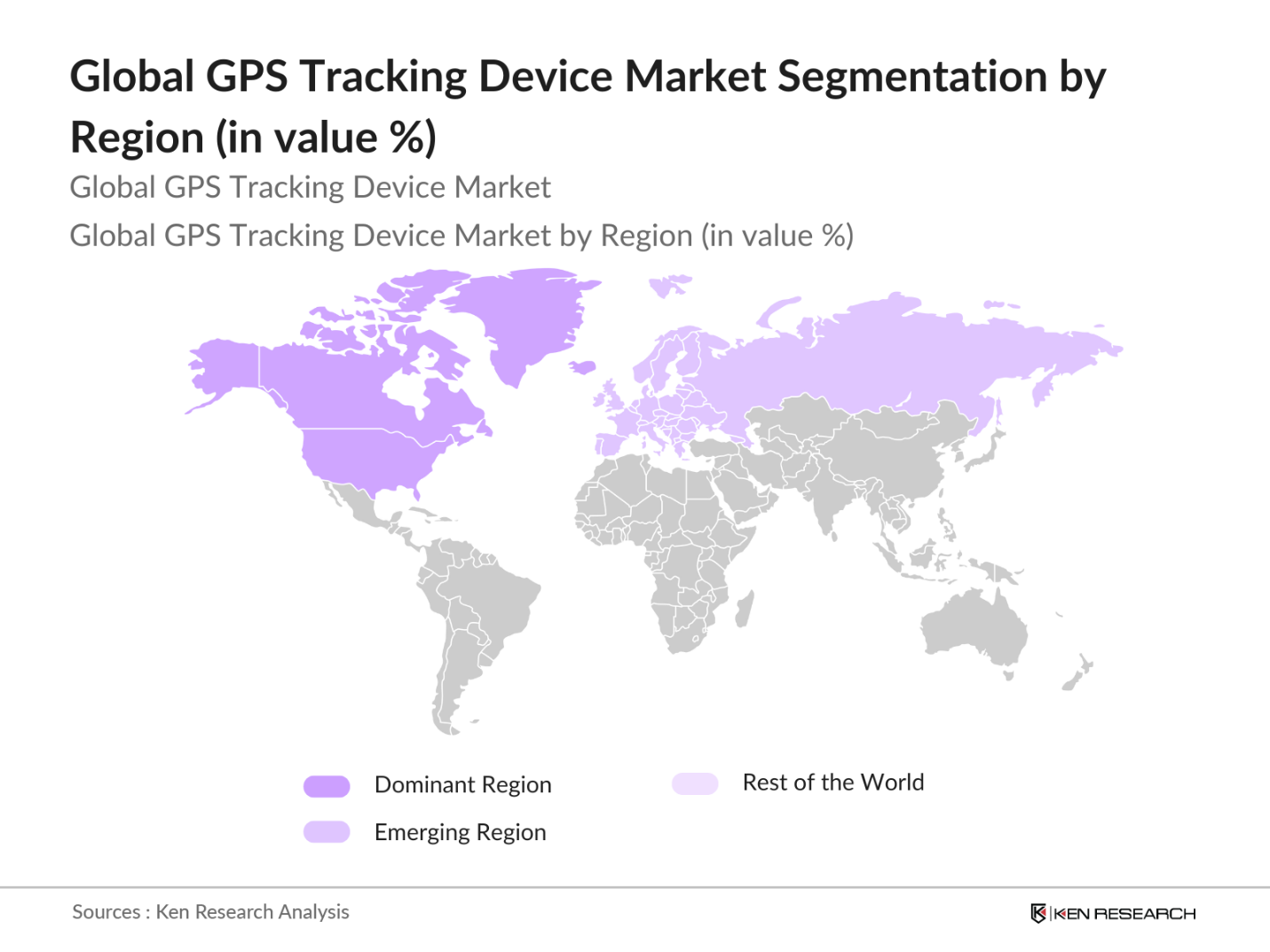
By Region: The Global GPS Tracking Device market is segmented into North America, Europe, Asia-Pacific, Latin America, and the Middle East & Africa. North America dominates the market due to its advanced technological infrastructure and high demand from sectors like logistics, defense, and personal security. The U.S. leads this region, particularly driven by federal mandates for vehicle tracking in commercial fleets and increasing adoption by private enterprises. Asia-Pacific is experiencing rapid growth, with countries like China and India seeing increased demand due to expanding e-commerce sectors and enhanced fleet management systems.
The Global GPS Tracking Device market is characterized by strong competition from a mix of established players and emerging companies. The major players in this market have developed robust product portfolios and are investing in R&D to enhance their product offerings with advanced features like IoT integration and real-time analytics.
|
Company |
Year Established |
Headquarters |
Market Share (%) |
Number of Patents |
R&D Spending |
Key Product |
Employees |
Revenue (USD Bn) |
|
Garmin Ltd. |
1989 |
Switzerland |
16% |
|||||
|
TomTom N.V. |
1991 |
Netherlands |
12% |
|||||
|
Sierra Wireless |
1993 |
Canada |
10% |
|||||
|
CalAmp Corp. |
1981 |
USA |
9% |
|||||
|
Orbcomm Inc. |
1993 |
USA |
8% |
Over the next few years, the Global GPS Tracking Device market is expected to exhibit significant growth, driven by increasing demand from industries such as transportation, healthcare, and defense. Continuous advancements in GPS technology, along with the integration of AI and IoT, will enhance the functionality of tracking devices, making them indispensable tools for businesses across various sectors. Additionally, the rising need for accurate location data in emerging applications like smart cities and connected vehicles will contribute to the market’s growth trajectory.
|
By Product Type |
Standalone Trackers OBD Device Trackers Advanced Trackers |
|
By Application |
Fleet Management Asset Tracking Personal Tracking Sports & Fitness, Marine |
|
By Technology |
2G GPS Trackers 3G GPS Trackers 4G GPS Trackers GNSS Trackers |
|
By Industry Vertical |
Transportation & Logistics Healthcare Government & Defense Construction, Retail |
|
By Region |
North America Europe Asia-Pacific Latin America Middle East & Africa |
1.1. Definition and Scope
1.2. Market Taxonomy
1.3. Market Growth Rate
1.4. Market Segmentation Overview
2.1. Historical Market Size
2.2. Year-On-Year Growth Analysis
2.3. Key Market Developments and Milestones
3.1. Growth Drivers
3.1.1. Increasing Demand for Fleet Management Solutions
3.1.2. Growing Adoption of IoT in Tracking Devices
3.1.3. Regulatory Push for Vehicle Security and Anti-Theft Systems
3.1.4. Rising Demand in Logistics & Transportation
3.2. Market Challenges
3.2.1. High Operational and Maintenance Costs
3.2.2. Privacy and Data Security Concerns
3.2.3. Limited Battery Life of GPS Devices
3.3. Opportunities
3.3.1. Integration with AI and Big Data Analytics
3.3.2. Expansion in Emerging Markets
3.3.3. Partnerships in Smart City Projects
3.4. Trends
3.4.1. Miniaturization of GPS Devices
3.4.2. Real-time Tracking in E-commerce
3.4.3. Cloud-based GPS Solutions for SMEs
3.5. Government Regulation
3.5.1. Mandatory Vehicle Tracking Regulations
3.5.2. Government Contracts for Military & Defense Applications
3.5.3. National Fleet Management Programs
3.5.4. International Data Privacy Regulations
3.6. SWOT Analysis
3.7. Stake Ecosystem
3.8. Porters Five Forces
3.9. Competition Ecosystem
4.1. By Product Type (In Value %)
4.1.1. Standalone Trackers
4.1.2. OBD Device Trackers
4.1.3. Advanced Trackers
4.2. By Application (In Value %)
4.2.1. Fleet Management
4.2.2. Asset Tracking
4.2.3. Personal Tracking
4.2.4. Sports & Fitness
4.2.5. Marine
4.3. By Technology (In Value %)
4.3.1. 2G GPS Trackers
4.3.2. 3G GPS Trackers
4.3.3. 4G GPS Trackers
4.3.4. GNSS Trackers
4.4. By Industry Vertical (In Value %)
4.4.1. Transportation & Logistics
4.4.2. Healthcare
4.4.3. Government & Defense
4.4.4. Construction
4.4.5. Retail
4.5. By Region (In Value %)
4.5.1. North America
4.5.2. Europe
4.5.3. Asia-Pacific
4.5.4. Latin America
4.5.5. Middle East & Africa
5.1 Detailed Profiles of Major Companies
5.1.1. Garmin Ltd.
5.1.2. TomTom N.V.
5.1.3. Sierra Wireless
5.1.4. CalAmp Corp.
5.1.5. Orbcomm Inc.
5.1.6. Queclink Wireless Solutions Co. Ltd.
5.1.7. Teltonika UAB
5.1.8. Geotab Inc.
5.1.9. Trackimo LLC
5.1.10. Xirgo Technologies, LLC
5.1.11. Verizon Connect
5.1.12. Spark Nano
5.1.13. Ruptela
5.1.14. Concox Information Technology Co., Ltd.
5.1.15. ATrack Technology Inc.
5.2 Cross Comparison Parameters (No. of Employees, Headquarters, Inception Year, Revenue, Technology Adoption, Market Presence, Product Portfolio, Customer Base)
5.3 Market Share Analysis
5.4 Strategic Initiatives
5.5 Mergers and Acquisitions
5.6 Investment Analysis
5.7 Venture Capital Funding
5.8 Government Contracts
5.9 Partnerships and Collaborations
6.1. Industry Compliance Standards
6.2. Certification Processes
6.3. Regulatory Mandates for Vehicle Tracking
6.4. Data Privacy and Security Regulations
7.1. Future Market Size Projections
7.2. Key Factors Driving Future Market Growth
8.1. By Product Type (In Value %)
8.2. By Application (In Value %)
8.3. By Technology (In Value %)
8.4. By Industry Vertical (In Value %)
8.5. By Region (In Value %)
9.1. TAM/SAM/SOM Analysis
9.2. Customer Cohort Analysis
9.3. Marketing Initiatives
9.4. White Space Opportunity Analysis
The research begins by constructing an ecosystem map that identifies major stakeholders in the Global GPS Tracking Device market. This includes extensive desk research and data collection from secondary and proprietary databases to gather information about industry dynamics. The key variables such as market demand, regulatory changes, and technological innovations are then defined.
This phase involves compiling and analyzing historical data on the GPS Tracking Device market. The research focuses on the penetration rate of GPS technology across various sectors, the number of active tracking devices, and revenue generation patterns. This data helps establish a detailed market analysis, ensuring the reliability of the report.
Market hypotheses are developed based on the data collected. These are then validated through consultations with industry experts, including GPS device manufacturers and fleet management companies. These discussions provide valuable insights that help refine and confirm the market estimates and trends.
The final step involves integrating all data from the bottom-up approach to provide an accurate and comprehensive analysis. Direct engagement with key market players ensures that the report is thorough and validated, offering actionable insights for stakeholders.
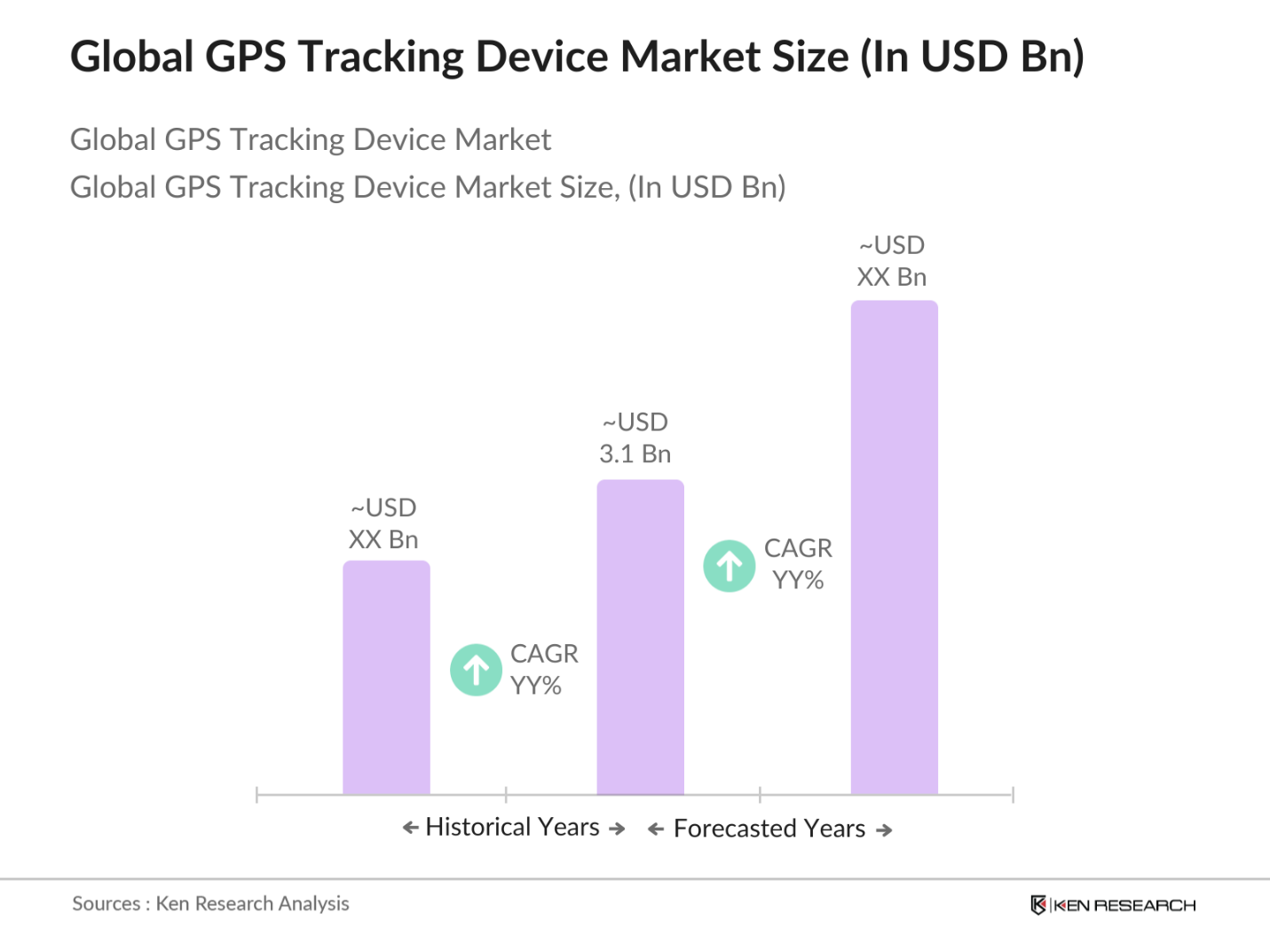
The Global GPS Tracking Device market was valued at USD 3.1billion, driven by increased demand for fleet management solutions, asset tracking, and personal safety applications. This market benefits from the widespread adoption of GPS-enabled devices across various sectors.
The primary challenges include high operational costs, limited battery life of GPS devices, and data privacy concerns. These issues have hindered broader adoption, particularly in sectors with tight margins or strict data security regulations.
Key players in this market include Garmin Ltd., TomTom N.V., Sierra Wireless, CalAmp Corp., and Orbcomm Inc. These companies have established themselves due to their technological expertise, robust product portfolios, and focus on innovation.
Growth is driven by the increasing integration of IoT with GPS devices, which enables real-time tracking and data analytics. The expanding use of GPS in logistics, personal safety, and smart cities also contributes to the market's growth.

What makes us stand out is that our consultants follows Robust, Refine and Result (RRR) methodology. i.e. Robust for clear definitions, approaches and sanity checking, Refine for differentiating respondents facts and opinions and Result for presenting data with story

We have set a benchmark in the industry by offering our clients with syndicated and customized market research reports featuring coverage of entire market as well as meticulous research and analyst insights.

While we don't replace traditional research, we flip the method upside down. Our dual approach of Top Bottom & Bottom Top ensures quality deliverable by not just verifying company fundamentals but also looking at the sector and macroeconomic factors.

With one step in the future, our research team constantly tries to show you the bigger picture. We help with some of the tough questions you may encounter along the way: How is the industry positioned? Best marketing channel? KPI's of competitors? By aligning every element, we help maximize success.

Our report gives you instant access to the answers and sources that other companies might choose to hide. We elaborate each steps of research methodology we have used and showcase you the sample size to earn your trust.

If you need any support, we are here! We pride ourselves on universe strength, data quality, and quick, friendly, and professional service.