
Global Grass-Fed Beef Market Outlook to 2030
Region:Global
Author(s):Vijay Kumar
Product Code:KROD6999
Region:Global
Author(s):Vijay Kumar
Product Code:KROD6999
November 2024
84
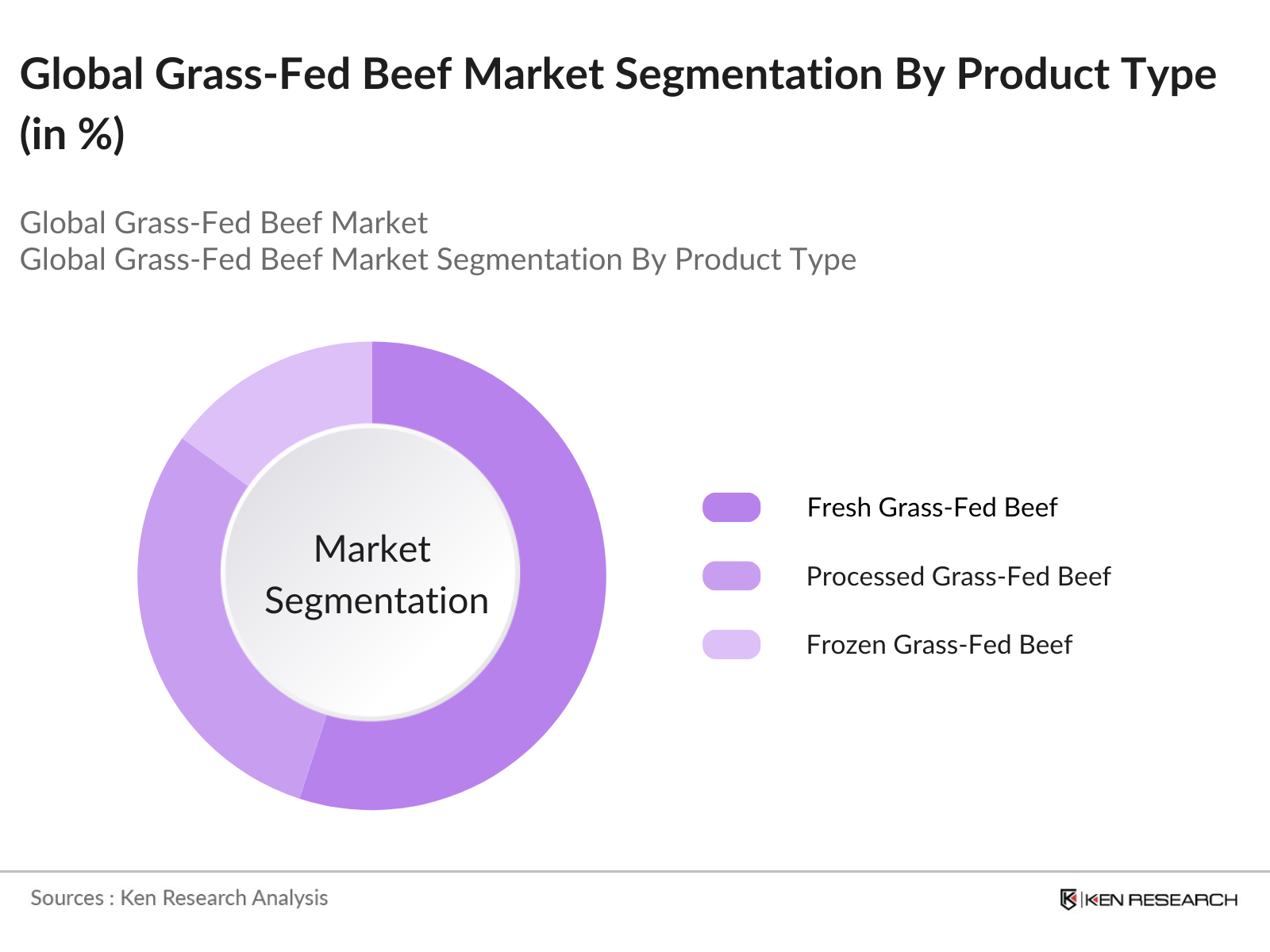
By Product Type: The global grass-fed beef market is segmented by product type into fresh grass-fed beef, processed grass-fed beef, and frozen grass-fed beef. Fresh grass-fed beef has emerged as the dominant segment due to consumer preferences for minimally processed, fresh, and natural products. Fresh beef is widely available in supermarkets, specialty stores, and direct-to-consumer sales channels, further enhancing its market penetration.
By Distribution Channel: The distribution channels for grass-fed beef include supermarkets & hypermarkets, online retail, specialty stores, and direct-to-consumer channels. Supermarkets & hypermarkets dominate the distribution channel, as they offer a variety of grass-fed beef options at competitive prices, appealing to a wide consumer base. Their established supply chains ensure consistent availability, which is key to maintaining customer loyalty.
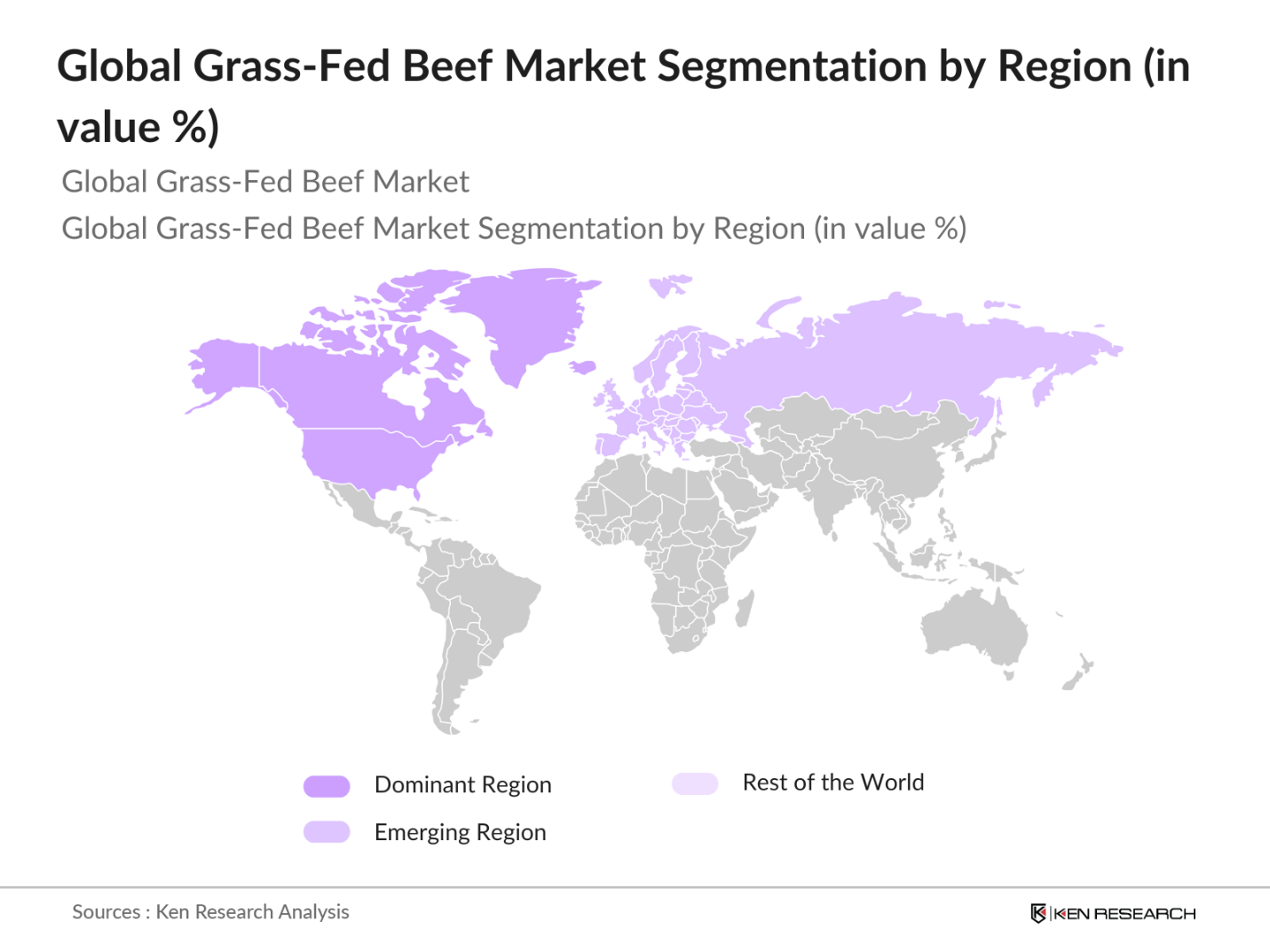
By Region: The regional segmentation of the grass-fed beef market includes North America, Europe, Asia-Pacific, Latin America, and the Middle East & Africa. North America leads the market, driven by strong demand for organic and grass-fed products, along with the presence of well-established producers. The regions advanced farming technologies and government initiatives supporting sustainable beef production also play a key role in its dominance.
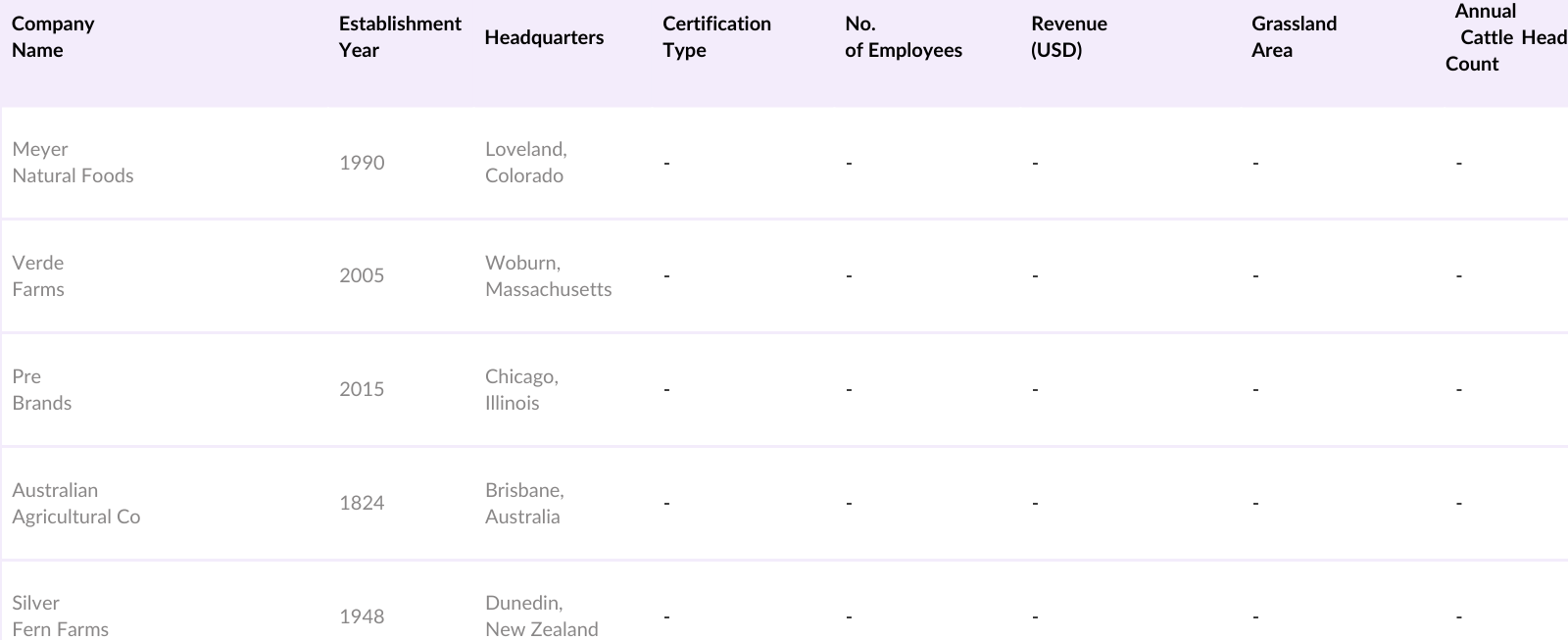
The global grass-fed beef market is characterized by a few key players who control a significant portion of the market. These companies have established a reputation for producing high-quality grass-fed beef products and have invested heavily in certifications, sustainability initiatives, and strategic partnerships. Additionally, these companies have developed strong supply chain networks that allow them to meet the growing demand for organic and natural meat.
The global grass-fed beef market is poised for significant growth over the next five years, driven by increasing consumer awareness of the health benefits of grass-fed beef and a continued shift toward sustainable and organic products. Government initiatives promoting ethical farming practices, along with the expansion of direct-to-consumer sales channels, are expected to further fuel market growth.
|
Product Type |
Fresh Grass-Fed Beef Processed Grass-Fed Beef Frozen Grass-Fed Beef |
|
Distribution Channel |
Supermarkets & Hypermarkets Online Retail Specialty Stores Direct-to-Consumer |
|
End-Use |
Household Consumption Foodservice Retailers and Wholesalers |
|
Source Certification |
Organic Grass-Fed Beef Non-GMO Verified AGA Certified Grass-Fed Beef |
|
Region |
North America Europe Asia-Pacific Latin America Middle East & Africa |
1.1. Definition and Scope
1.2. Market Taxonomy
1.3. Market Growth Rate (CAGR, Market Volume Growth)
1.4. Market Segmentation Overview
2.1. Historical Market Size (In Value & Volume)
2.2. Year-On-Year Growth Analysis
2.3. Key Market Developments and Milestones (Global Trade, Export/Import Data, Production Trends)
3.1. Growth Drivers
3.1.1. Increasing Consumer Demand for Sustainable and Organic Meat
3.1.2. Rising Awareness of Health Benefits (Nutrient Density, Omega-3 Levels)
3.1.3. Expansion of Ethical Farming Practices
3.1.4. Shift in Consumer Preferences from Conventional to Grass-Fed Products
3.2. Market Challenges
3.2.1. Higher Production Costs (Grazing Land Requirements, Slower Growth Rates)
3.2.2. Limited Availability and Supply Chain Constraints
3.2.3. Pricing Pressures (Premium Pricing for Grass-Fed Beef)
3.3. Opportunities
3.3.1. Expanding Markets in Emerging Economies
3.3.2. Potential for Branding and Certifications (Organic, Non-GMO, Pasture-Raised)
3.3.3. Growing E-Commerce Distribution Channels for Premium Products
3.4. Trends
3.4.1. Emergence of Direct-to-Consumer Sales Models
3.4.2. Adoption of Regenerative Agriculture Practices
3.4.3. Technological Integration in Grassland Management (Precision Grazing)
3.4.4. Increase in Specialty Retailers and Farmer Market Presence
3.5. Government Regulation
3.5.1. Livestock Production Standards (USDA Organic, AGA Certification)
3.5.2. Export Restrictions and Trade Agreements (Tariffs, Quotas)
3.5.3. Animal Welfare Standards (RSPCA Assured, Global GAP)
3.6. SWOT Analysis
3.7. Stake Ecosystem (Supply Chain, Farmers, Retailers, Distributors)
3.8. Porters Five Forces
3.9. Competition Ecosystem
4.1. By Product Type (In Value & Volume %)
4.1.1. Fresh Grass-Fed Beef
4.1.2. Processed Grass-Fed Beef (Jerky, Ground Beef, Steaks)
4.1.3. Frozen Grass-Fed Beef
4.2. By Distribution Channel (In Value & Volume %)
4.2.1. Supermarkets & Hypermarkets
4.2.2. Online Retail
4.2.3. Specialty Stores
4.2.4. Direct-to-Consumer
4.3. By End-Use (In Value & Volume %)
4.3.1. Household Consumption
4.3.2. Foodservice (Restaurants, Hotels, Catering)
4.3.3. Retailers and Wholesalers
4.4. By Source Certification (In Value %)
4.4.1. Organic Grass-Fed Beef
4.4.2. Non-GMO Verified
4.4.3. AGA Certified Grass-Fed Beef
4.5. By Region (In Value & Volume %)
4.5.1. North America
4.5.2. Europe
4.5.3. Asia-Pacific
4.5.4. Latin America
4.5.5. Middle East & Africa
5.1 Detailed Profiles of Major Companies
5.1.1. Meyer Natural Foods
5.1.2. Verde Farms
5.1.3. Pre Brands
5.1.4. Strauss Brands
5.1.5. Panorama Meats
5.1.6. Australian Agricultural Company (AACo)
5.1.7. OBE Organic
5.1.8. Green Pasture Farms
5.1.9. Thousand Hills Lifetime Grazed
5.1.10. Eversfield Organic
5.1.11. First Light
5.1.12. Silver Fern Farms
5.1.13. Arcadian Organic
5.1.14. Coonawarra Farm
5.1.15. The Honest Bison
5.2 Cross Comparison Parameters (No. of Employees, Headquarters, Inception Year, Revenue, Grassland Area, Cattle Head Count, Annual Yield, Brand Positioning)
5.3. Market Share Analysis
5.4. Strategic Initiatives (Partnerships, Certifications, Product Line Expansion)
5.5. Mergers and Acquisitions
5.6. Investment Analysis
5.7 Venture Capital Funding
5.8. Government Grants
5.9. Private Equity Investments
6.1. Environmental Standards
6.2. Compliance Requirements (Health and Safety, Meat Labeling)
6.3. Certification Processes (Organic, Grass-Fed Certifications)
7.1. Future Market Size Projections
7.2. Key Factors Driving Future Market Growth
8.1. By Product Type (In Value & Volume %)
8.2. By Distribution Channel (In Value & Volume %)
8.3. By End-Use (In Value & Volume %)
8.4. By Source Certification (In Value %)
8.5. By Region (In Value & Volume %)
9.1. TAM/SAM/SOM Analysis
9.2. Customer Cohort Analysis
9.3. Marketing Initiatives (Brand Positioning, Influencer Campaigns, Certification Advantages)
9.4. White Space Opportunity Analysis
This phase involved mapping out the key stakeholders within the global grass-fed beef market. Through extensive desk research and proprietary databases, we identified the critical market drivers, including consumer trends, certification processes, and supply chain developments.
We analyzed historical data on grass-fed beef production and consumption, focusing on market penetration, key distribution channels, and revenue growth. Data on pricing dynamics and supply chain inefficiencies were also compiled to assess current market performance.
Market hypotheses were validated through in-depth interviews with industry experts, including grass-fed beef producers, retailers, and distributors. Their insights provided a deeper understanding of operational challenges and future market trends.
The final stage involved synthesizing all the data and producing a comprehensive report. Data was cross-referenced with expert insights and primary research to ensure accuracy and reliability, culminating in a thorough analysis of the global grass-fed beef market.
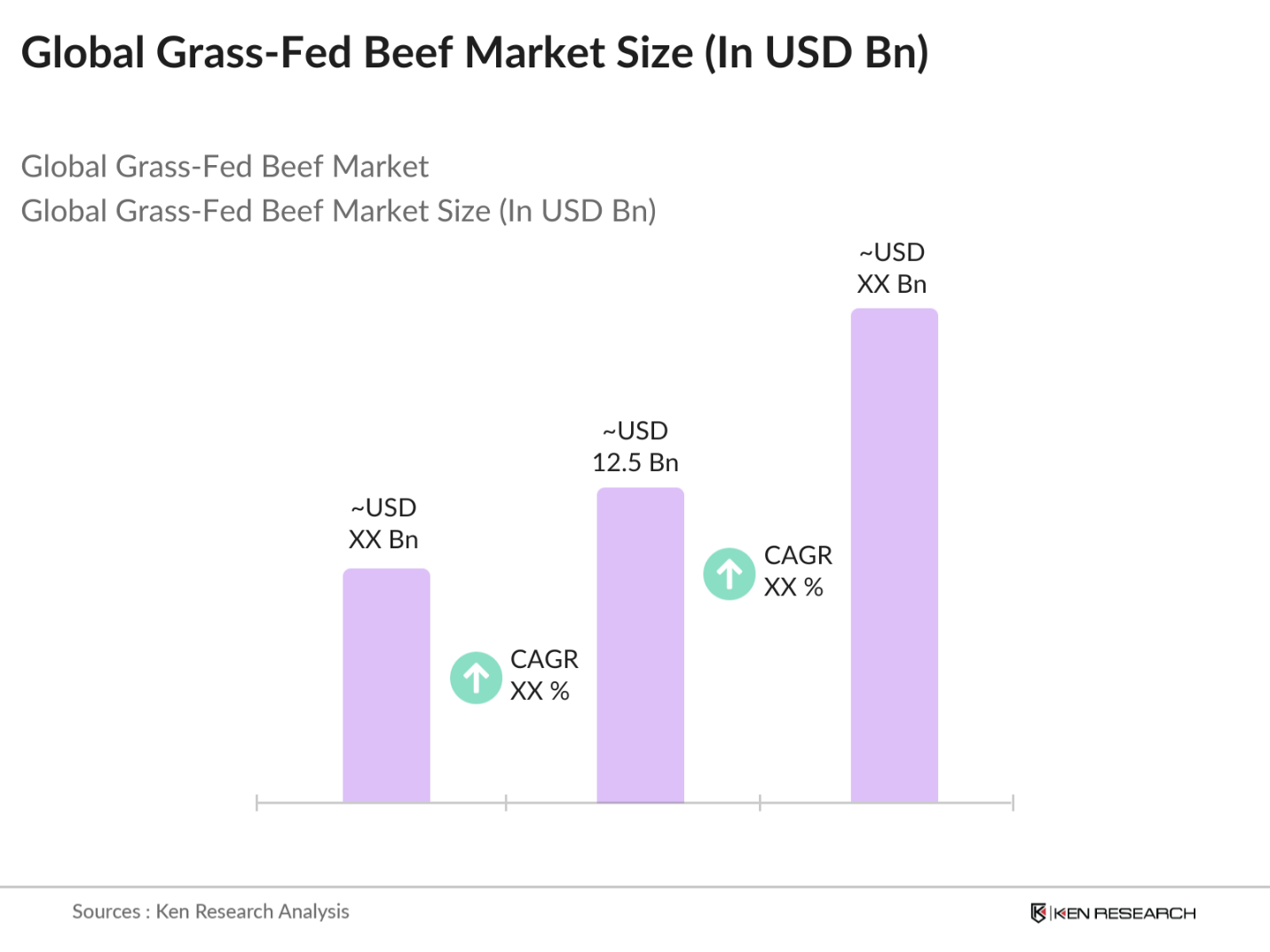
The global grass-fed beef market is valued at USD 12.5 billion, based on a five-year historical analysis. This market is driven by increasing consumer demand for healthier, natural, and organic food options, as well as the rising awareness of the environmental benefits of grass-fed cattle farming.
Challenges include high production costs, limited availability due to slower cattle growth rates, and premium pricing that may deter price-sensitive consumers.
Key players include Meyer Natural Foods, Verde Farms, Pre-Brands, and Australian Agricultural Company, all known for their large-scale production and strong certifications.
The market is driven by growing health consciousness, demand for sustainable products, and consumer preference for minimally processed, organic foods.

What makes us stand out is that our consultants follows Robust, Refine and Result (RRR) methodology. i.e. Robust for clear definitions, approaches and sanity checking, Refine for differentiating respondents facts and opinions and Result for presenting data with story

We have set a benchmark in the industry by offering our clients with syndicated and customized market research reports featuring coverage of entire market as well as meticulous research and analyst insights.

While we don't replace traditional research, we flip the method upside down. Our dual approach of Top Bottom & Bottom Top ensures quality deliverable by not just verifying company fundamentals but also looking at the sector and macroeconomic factors.

With one step in the future, our research team constantly tries to show you the bigger picture. We help with some of the tough questions you may encounter along the way: How is the industry positioned? Best marketing channel? KPI's of competitors? By aligning every element, we help maximize success.

Our report gives you instant access to the answers and sources that other companies might choose to hide. We elaborate each steps of research methodology we have used and showcase you the sample size to earn your trust.

If you need any support, we are here! We pride ourselves on universe strength, data quality, and quick, friendly, and professional service.