















Global Ground Effect Aircraft Market Outlook to 2030
Region:Global
Author(s):Mukul
Product Code:KROD8937
October 2024
82
About the Report
Global Ground Effect Aircraft Market Overview
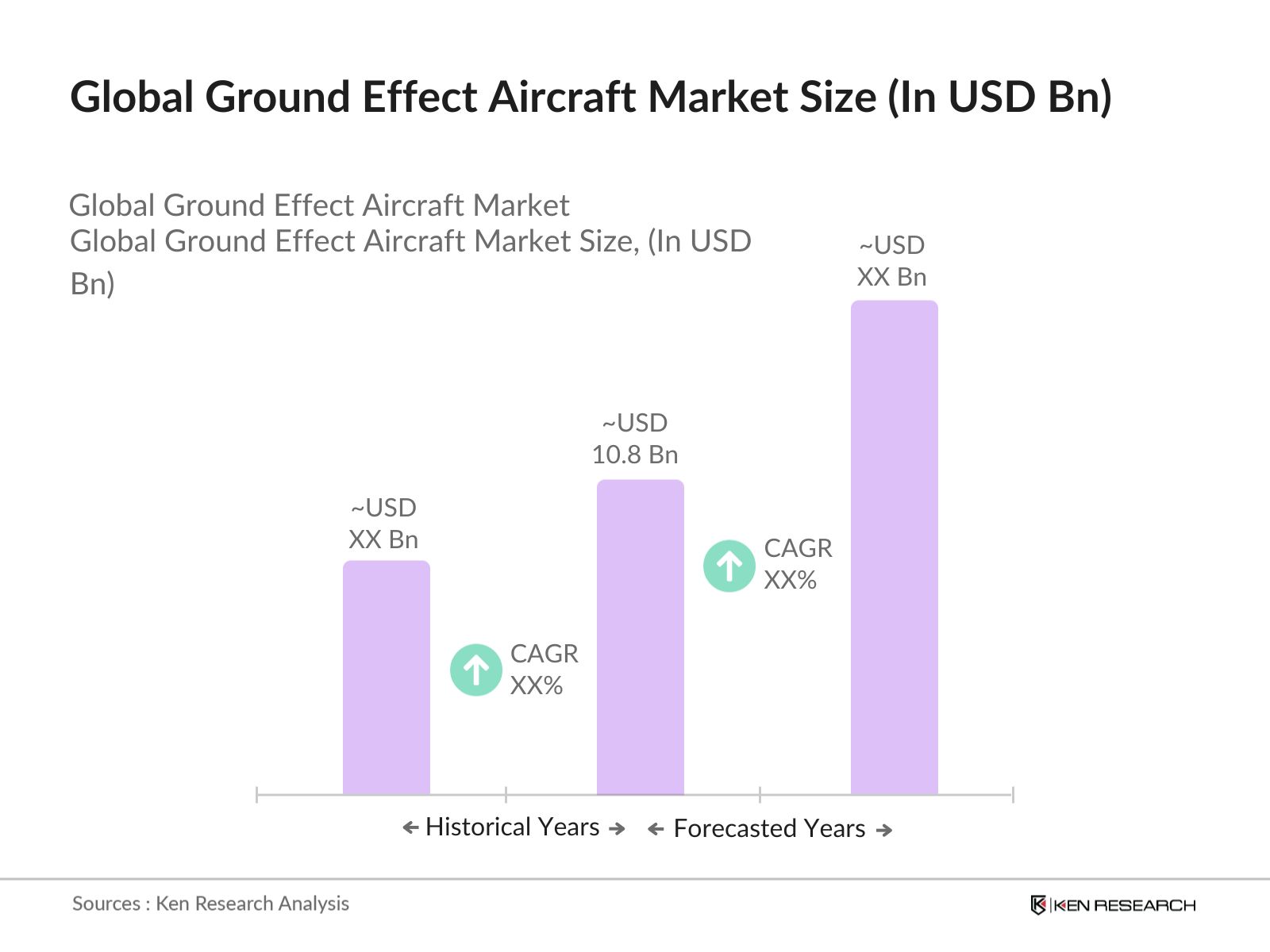
- The Global Ground Effect Aircraft Market is valued at USD 10.8 billion, based on a five-year historical analysis. This market is driven by increased demand for fuel-efficient and versatile transportation solutions, particularly for coastal surveillance, military applications, and recreational use. Technological advancements in materials and propulsion systems have also contributed to the market's growth by enabling more efficient designs and operations of these aircraft. The demand is further bolstered by the aircraft's ability to operate efficiently over water surfaces, making it ideal for specific use cases.
- Countries dominating the market include Russia, the United States, and China. Russia leads due to its long-standing tradition in developing ground effect vehicles for military and civilian uses, supported by extensive research and development infrastructure. The U.S. dominates with significant military interest and commercial use in niche tourism markets. Meanwhile, Chinas dominance is due to its aggressive investments in the defense and tourism sectors, along with growing interest in alternative maritime transportation solutions.
- As hybrid air and sea vehicles, ground effect aircraft must meet stringent safety standards imposed by international regulatory bodies. In 2024, safety requirements for these aircraft involve comprehensive testing for water and air operations, along with adherence to both aviation and maritime safety regulations. The International Maritime Organization (IMO) and the International Civil Aviation Organization (ICAO) mandate advanced safety mechanisms and regular inspections for these aircraft, increasing operational costs.
Market Segmentation
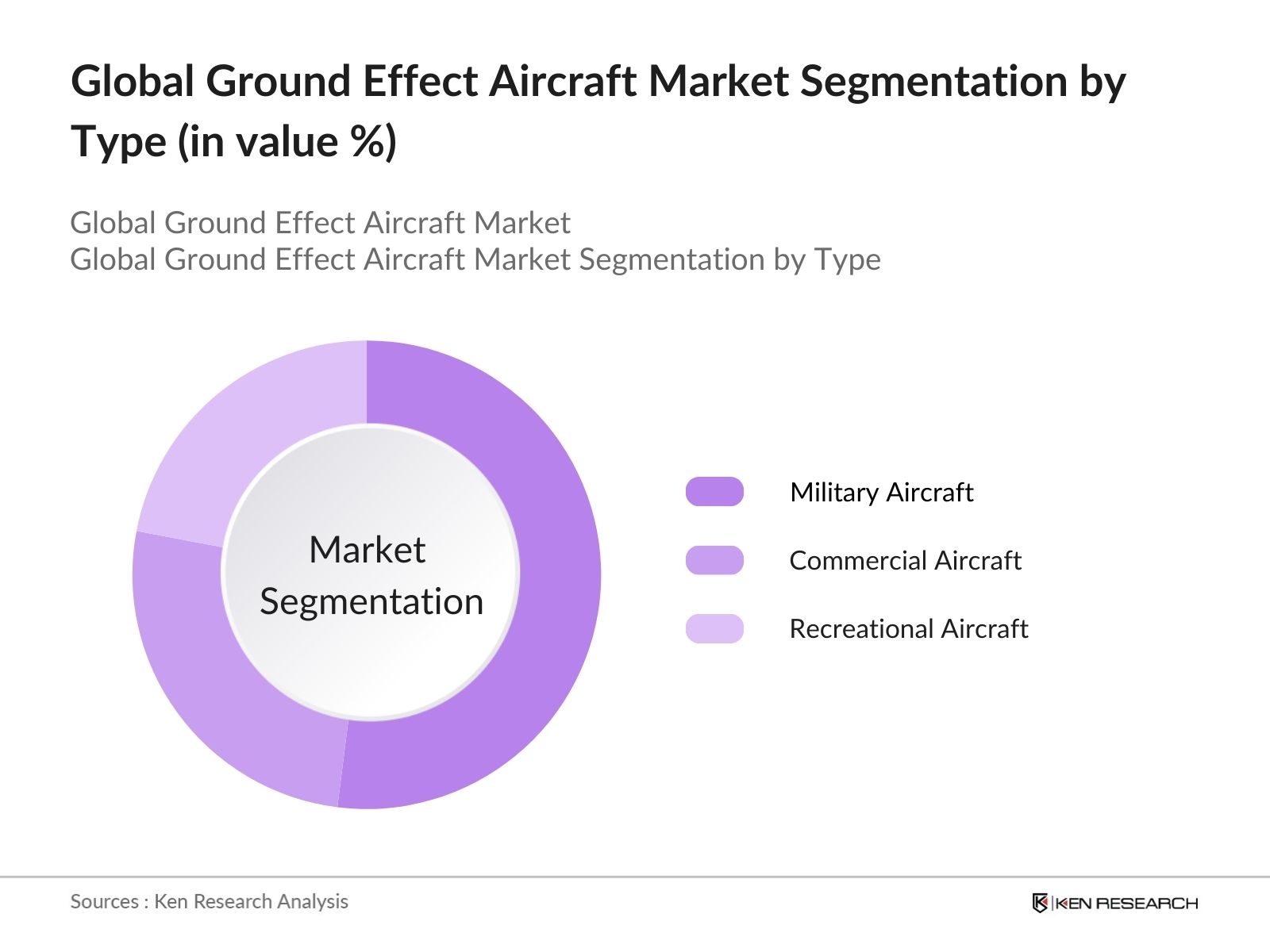
- By Type: The ground effect aircraft market is segmented by type into recreational, military, and commercial ground effect aircraft. The military segment currently holds the dominant market share. This is primarily due to the military's extensive use of ground effect vehicles for coastal defense and surveillance operations. Their ability to fly close to water while remaining undetected by radar makes them a valuable asset for military forces. Additionally, the versatility and cost-effectiveness of these aircraft compared to traditional maritime vessels contribute to their dominance in this segment.
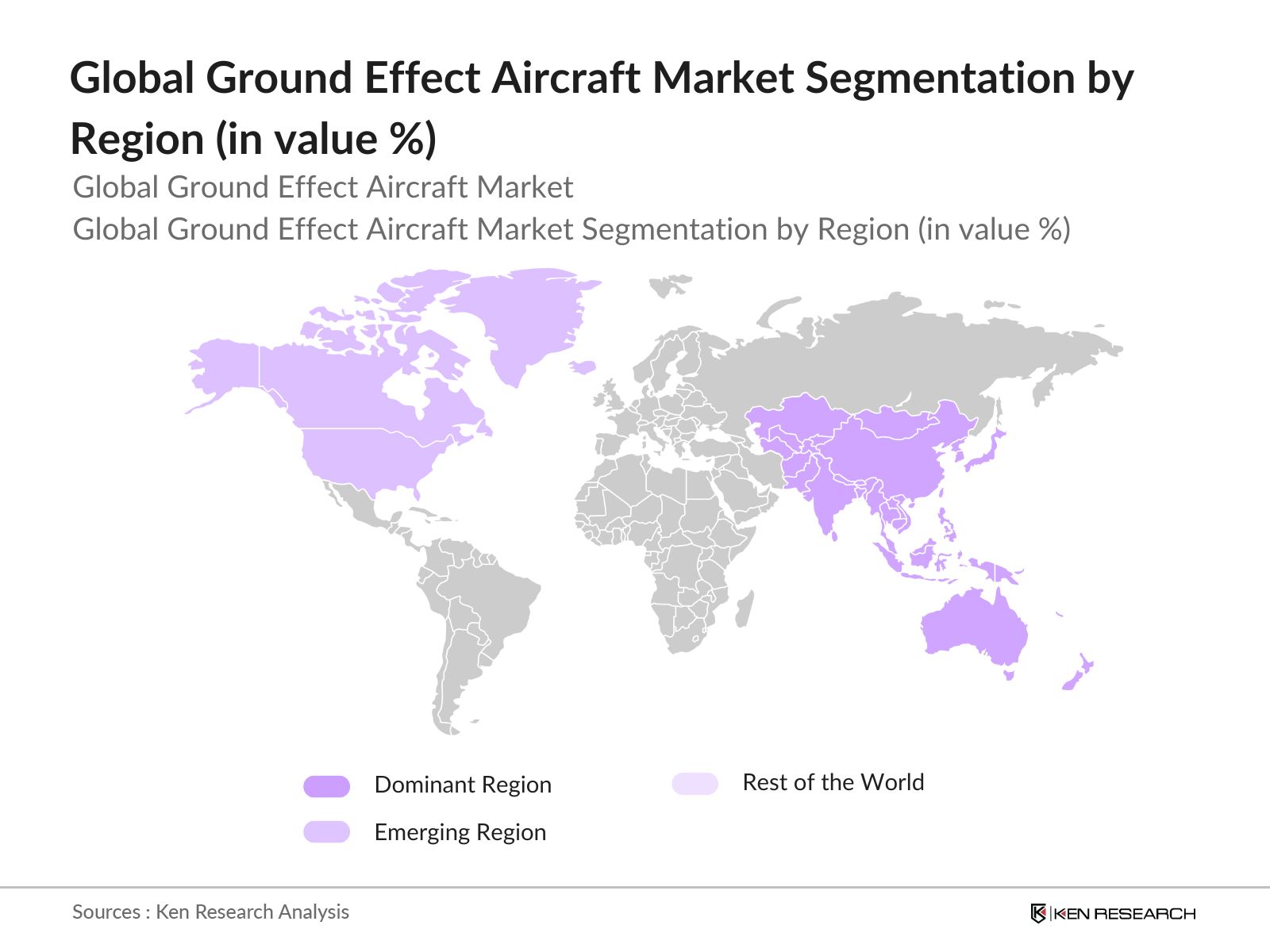
- By Region: Geographically, the market is divided into North America, Europe, Asia Pacific, Latin America, and the Middle East & Africa. Asia Pacific dominates the regional segmentation due to China and Russia's strong presence in both the military and commercial sectors. The rapid development of coastal infrastructure, along with heavy investments in defense capabilities and tourism, drives the significant market share in this region. Additionally, favorable government policies aimed at enhancing maritime security and economic development further bolster the market in the Asia Pacific.
- By Application: The ground effect aircraft market is also segmented by application into coastal surveillance, search and rescue operations, and transport and logistics. Coastal surveillance holds the dominant share due to the strategic importance of monitoring and protecting coastlines. Ground effect aircraft offer high-speed, low-altitude capabilities that are ideal for patrolling large coastal areas, ensuring rapid response times for surveillance missions, and enhancing the security of maritime borders.
Global Ground Effect Aircraft Market Competitive Landscape
The Global Ground Effect Aircraft Market is dominated by several key players with strong R&D capabilities and extensive product portfolios. The markets consolidation emphasizes the significance of these companies in maintaining technological advancements and fulfilling government and commercial contracts.
|
1 |
Establishment Year |
Headquarters |
Fleet Size |
Market Penetration |
Product Innovation |
Government Contracts |
R&D Expenditure |
Customer Base |
|
Boeing |
1916 |
USA |
||||||
|
Airbus |
1970 |
France |
||||||
|
Wing Ship Technology Corp |
2004 |
South Korea |
||||||
|
Beriev Aircraft Company |
1934 |
Russia |
||||||
|
Textron Aviation |
1923 |
USA |
Global Ground Effect Aircraft Industry Analysis
Growth Drivers
- Enhanced Fuel Efficiency: Ground effect aircraft are highly efficient due to their ability to fly just above water or land surfaces, minimizing drag and conserving fuel. In 2024, the global aviation industry is prioritizing fuel efficiency, with ground effect aircraft becoming a viable solution for short to medium-range operations. Aircraft operating near the surface reduce drag by up to 50%, consuming significantly less fuel compared to traditional aircraft. For instance, the International Energy Agency (IEA) noted a global shift toward fuel-efficient technologies, projecting a rise in adoption across aviation sectors due to rising fuel prices and carbon reduction policies.
- Increasing Need for Coastal Surveillance: The demand for coastal surveillance is escalating due to increased geopolitical tensions and the need to protect maritime boundaries. Ground effect aircraft offer significant advantages for coastal patrols due to their rapid deployment, low altitude capabilities, and ability to operate near shorelines. As of 2024, global maritime security expenditures have increased, with governments allocating resources to secure their coastlines. For example, the U.S. Coast Guard's budget in 2024 surpassed $13 billion, with a portion dedicated to new surveillance technologies, including aircraft suited for coastal monitoring.
- Advancements in Lightweight Materials: Technological advancements in materials science, especially the use of composites and advanced alloys, have reduced the weight of ground effect aircraft, improving their performance and fuel efficiency. By 2024, aircraft manufacturing processes are increasingly integrating lightweight, durable materials such as carbon fiber. According to the World Bank, material advancements have led to reductions in production costs by nearly 20% in the aerospace sector, allowing for the production of more efficient and cost-effective ground effect aircraft.
Market Restraints
- High Development and Maintenance Costs: Developing ground effect aircraft requires significant investments in research, design, and testing, leading to high development costs. As of 2024, aerospace R&D expenditure in developed economies has reached approximately $60 billion, with companies facing challenges in funding the initial stages of development. Additionally, maintenance of these specialized aircraft is complex, leading to further financial burdens. The high cost of developing new aircraft has prompted collaborations between governments and private companies to share the financial load.
- Regulatory Hurdles and Certifications: Navigating the complex regulatory landscape remains a significant challenge for ground effect aircraft manufacturers. As of 2024, both the International Maritime Organization (IMO) and civil aviation authorities impose stringent certification processes on these hybrid crafts due to their dual capabilities. In the U.S., the Federal Aviation Administration (FAA) mandates specific certifications for crafts operating in ground effect, leading to extended timeframes and additional costs for compliance
Global Ground Effect Aircraft Market Future Outlook
Over the next five years, the global ground effect aircraft market is expected to show steady growth driven by increasing military investments, technological advancements, and the expansion of commercial applications. The rising demand for efficient maritime surveillance and transport solutions is likely to boost the adoption of ground effect aircraft in various regions, particularly in Asia Pacific and North America. Furthermore, the development of electric propulsion systems and hybrid aircraft is expected to enhance the market's sustainability and fuel efficiency.
Market Opportunities
- Expansion in Tourism Sector: Ground effect aircraft present significant opportunities for the tourism industry, particularly for island-hopping and scenic coastal routes. By 2024, tourism spending has increased in regions such as Southeast Asia and the Mediterranean, with governments and private operators exploring innovative transport solutions. For instance, Indonesias tourism sector, which saw $21.4 billion in revenues in 2023, is investing in new transportation modes, including ground effect aircraft, to boost regional connectivity between its 17,000 islands.
- Increasing Defense Sector Demand: The defense sector is increasingly adopting ground effect aircraft for surveillance, transport, and rescue missions due to their speed, low radar profile, and operational flexibility. In 2024, global defense spending exceeded $2.2 trillion, with a focus on modernizing equipment and integrating new technologies. Ground effect aircraft have become part of this trend, particularly for coastal nations with extensive maritime borders like Japan and India. In India, defense spending rose to $76.6 billion in 2023, with substantial investments in hybrid aircraft for maritime operations.
Scope of the Report
|
Type |
- Recreational Ground Effect Aircraft |
|
- Military Ground Effect Aircraft |
|
|
- Commercial Ground Effect Aircraft |
|
|
Application |
- Coastal Surveillance |
|
- Search and Rescue Operations |
|
|
- Transport and Logistics |
|
|
Technology |
- Conventional Aircraft Design |
|
- Hybrid Aircraft Design |
|
|
- Autonomous and Unmanned Systems |
|
|
Engine Type |
- Jet Propulsion Engines |
|
- Turboprop Engines |
|
|
- Electric Engines |
|
|
Region |
- North America |
|
- Europe |
|
|
- Asia Pacific |
|
|
- Latin America |
|
|
- Middle East & Africa |
Products
Key Target Audience
Investor and Venture Capitalist Firms
Government and Regulatory Bodies (e.g., International Maritime Organization, Civil Aviation Authorities)
Ground Effect Aircraft Manufacturers
Defense Departments
Tourism Operators
Maritime Transportation Providers
Coastal Security Agencies
Aviation and Aerospace Industry Suppliers
Companies
Players Mentioned in the Report:
Boeing
Airbus
Wing Ship Technology Corp
Beriev Aircraft Company
Textron Aviation
ICON Aircraft
Lockheed Martin
Dornier Seawings GmbH
Sikorsky Aircraft
China Academy of Aerospace Aerodynamics
Universal Hovercraft
Aquavion Systems
AirFish Technology
Ilyushin Aviation Complex
Neva Aerospace
Table of Contents
1. Global Ground Effect Aircraft Market Overview
1.1. Definition and Scope
1.2. Market Taxonomy
1.3. Market Growth Rate
1.4. Market Segmentation Overview
2. Global Ground Effect Aircraft Market Size (In USD Bn)
2.1. Historical Market Size
2.2. Year-On-Year Growth Analysis
2.3. Key Market Developments and Milestones
3. Global Ground Effect Aircraft Market Analysis
3.1. Growth Drivers (Fuel Efficiency, Coastal Surveillance, Technological Advancements)
3.1.1. Enhanced Fuel Efficiency
3.1.2. Increasing Need for Coastal Surveillance
3.1.3. Advancements in Lightweight Materials
3.2. Market Challenges (High Development Costs, Regulatory Issues, Infrastructure Limitations)
3.2.1. High Development and Maintenance Costs
3.2.2. Regulatory Hurdles and Certifications
3.2.3. Lack of Supporting Infrastructure
3.3. Opportunities (Tourism, Defense Contracts, Emerging Markets)
3.3.1. Expansion in Tourism Sector
3.3.2. Increasing Defense Sector Demand
3.3.3. Opportunities in Emerging Markets
3.4. Trends (Autonomous Operations, Green Technologies, Multipurpose Usage)
3.4.1. Adoption of Autonomous Ground Effect Aircraft
3.4.2. Integration of Green and Sustainable Technologies
3.4.3. Versatility in Commercial and Military Applications
3.5. Government Regulations (International Maritime Organization, Civil Aviation Authorities)
3.5.1. Certification Processes by Aviation and Marine Authorities
3.5.2. Environmental and Emissions Standards
3.5.3. Safety and Compliance Requirements
3.6. SWOT Analysis
3.7. Stakeholder Ecosystem
3.8. Porters Five Forces Analysis
3.9. Competitive Landscape
4. Global Ground Effect Aircraft Market Segmentation
4.1. By Type (In Value %)
4.1.1. Recreational Ground Effect Aircraft
4.1.2. Military Ground Effect Aircraft
4.1.3. Commercial Ground Effect Aircraft
4.2. By Application (In Value %)
4.2.1. Coastal Surveillance
4.2.2. Search and Rescue Operations
4.2.3. Transport and Logistics
4.3. By Technology (In Value %)
4.3.1. Conventional Aircraft Design
4.3.2. Hybrid Aircraft Design
4.3.3. Autonomous and Unmanned Systems
4.4. By Engine Type (In Value %)
4.4.1. Jet Propulsion Engines
4.4.2. Turboprop Engines
4.4.3. Electric Engines
4.5. By Region (In Value %)
4.5.1. North America
4.5.2. Europe
4.5.3. Asia Pacific
4.5.4. Latin America
4.5.5. Middle East & Africa
5. Global Ground Effect Aircraft Market Competitive Analysis
5.1. Detailed Profiles of Major Companies
5.1.1. Boeing
5.1.2. Airbus
5.1.3. Wing Ship Technology Corp
5.1.4. Beriev Aircraft Company
5.1.5. Sikorsky Aircraft
5.1.6. Dornier Seawings GmbH
5.1.7. Textron Aviation
5.1.8. ICON Aircraft
5.1.9. Universal Hovercraft
5.1.10. China Academy of Aerospace Aerodynamics
5.1.11. Neva Aerospace
5.1.12. Ilyushin Aviation Complex
5.1.13. Lockheed Martin
5.1.14. Aquavion Systems
5.1.15. AirFish Technology
5.2. Cross Comparison Parameters (Revenue, Fleet Size, Product Portfolio, Innovation Index, Market Penetration, M&A Activity, R&D Spending, Employee Strength)
5.3. Market Share Analysis
5.4. Strategic Initiatives
5.5. Mergers and Acquisitions
5.6. Investment Analysis
5.7. Venture Capital Funding
5.8. Government Grants
5.9. Private Equity Investments
6. Global Ground Effect Aircraft Market Regulatory Framework
6.1. Maritime Safety Regulations
6.2. Civil Aviation Certification
6.3. Compliance with International Trade Standards
7. Global Ground Effect Aircraft Future Market Size (In USD Bn)
7.1. Future Market Size Projections
7.2. Key Factors Driving Future Market Growth
8. Global Ground Effect Aircraft Future Market Segmentation
8.1. By Type (In Value %)
8.2. By Application (In Value %)
8.3. By Technology (In Value %)
8.4. By Engine Type (In Value %)
8.5. By Region (In Value %)
9. Global Ground Effect Aircraft Market Analysts Recommendations
9.1. TAM/SAM/SOM Analysis
9.2. Customer Cohort Analysis
9.3. Marketing Initiatives
9.4. White Space Opportunity Analysis
Research Methodology
Step 1: Identification of Key Variables
The initial phase involves constructing an ecosystem map encompassing all major stakeholders within the Ground Effect Aircraft Market. This step is underpinned by extensive desk research, utilizing a combination of secondary and proprietary databases to gather comprehensive industry-level information. The primary objective is to identify and define the critical variables that influence market dynamics.
Step 2: Market Analysis and Construction
In this phase, we compile and analyze historical data pertaining to the Ground Effect Aircraft Market. This includes assessing market penetration, production capacities, and the resultant revenue generation. Additionally, performance metrics for different applications will be evaluated to ensure reliable and accurate market estimates.
Step 3: Hypothesis Validation and Expert Consultation
Market hypotheses will be developed and subsequently validated through expert consultations and industry surveys. These consultations will provide valuable operational and financial insights directly from key industry players, which will be instrumental in refining and corroborating the market data.
Step 4: Research Synthesis and Final Output
The final phase involves synthesizing the research findings through detailed analysis. This includes direct engagement with multiple aircraft manufacturers to acquire insights into product segments, technological advancements, and market trends. These insights will be integrated into the final output to ensure the analysis is comprehensive and validated.
Frequently Asked Questions
01. How big is the Global Ground Effect Aircraft Market?
The Global Ground Effect Aircraft Market was valued at USD 10.8 billion. The market is driven by increasing demand for coastal surveillance, military operations, and niche commercial applications, such as tourism.
02. What are the challenges in the Ground Effect Aircraft Market?
Key challenges include high development and operational costs, regulatory hurdles for certification, and the lack of supporting infrastructure for these specialized aircraft. These factors have constrained wider adoption, particularly in emerging markets.
03. Who are the major players in the Ground Effect Aircraft Market?
Major players include Boeing, Airbus, Wing Ship Technology Corp, Beriev Aircraft Company, and Textron Aviation. These companies dominate the market due to their advanced technological capabilities and strong presence in both military and commercial sectors.
04. What are the growth drivers of the Ground Effect Aircraft Market?
Growth drivers include increased military spending, advancements in lightweight materials, and the growing need for efficient coastal surveillance systems. Furthermore, technological innovations in hybrid propulsion systems are expected to support market expansion.
Why Buy From Us?

What makes us stand out is that our consultants follows Robust, Refine and Result (RRR) methodology. i.e. Robust for clear definitions, approaches and sanity checking, Refine for differentiating respondents facts and opinions and Result for presenting data with story

We have set a benchmark in the industry by offering our clients with syndicated and customized market research reports featuring coverage of entire market as well as meticulous research and analyst insights.

While we don't replace traditional research, we flip the method upside down. Our dual approach of Top Bottom & Bottom Top ensures quality deliverable by not just verifying company fundamentals but also looking at the sector and macroeconomic factors.

With one step in the future, our research team constantly tries to show you the bigger picture. We help with some of the tough questions you may encounter along the way: How is the industry positioned? Best marketing channel? KPI's of competitors? By aligning every element, we help maximize success.

Our report gives you instant access to the answers and sources that other companies might choose to hide. We elaborate each steps of research methodology we have used and showcase you the sample size to earn your trust.

If you need any support, we are here! We pride ourselves on universe strength, data quality, and quick, friendly, and professional service.