















Global Hazmat Suit Market Outlook to 2030
Region:Global
Author(s):Shambhavi
Product Code:KROD4017
December 2024
90
About the Report
Global Hazmat Suit Market Overview
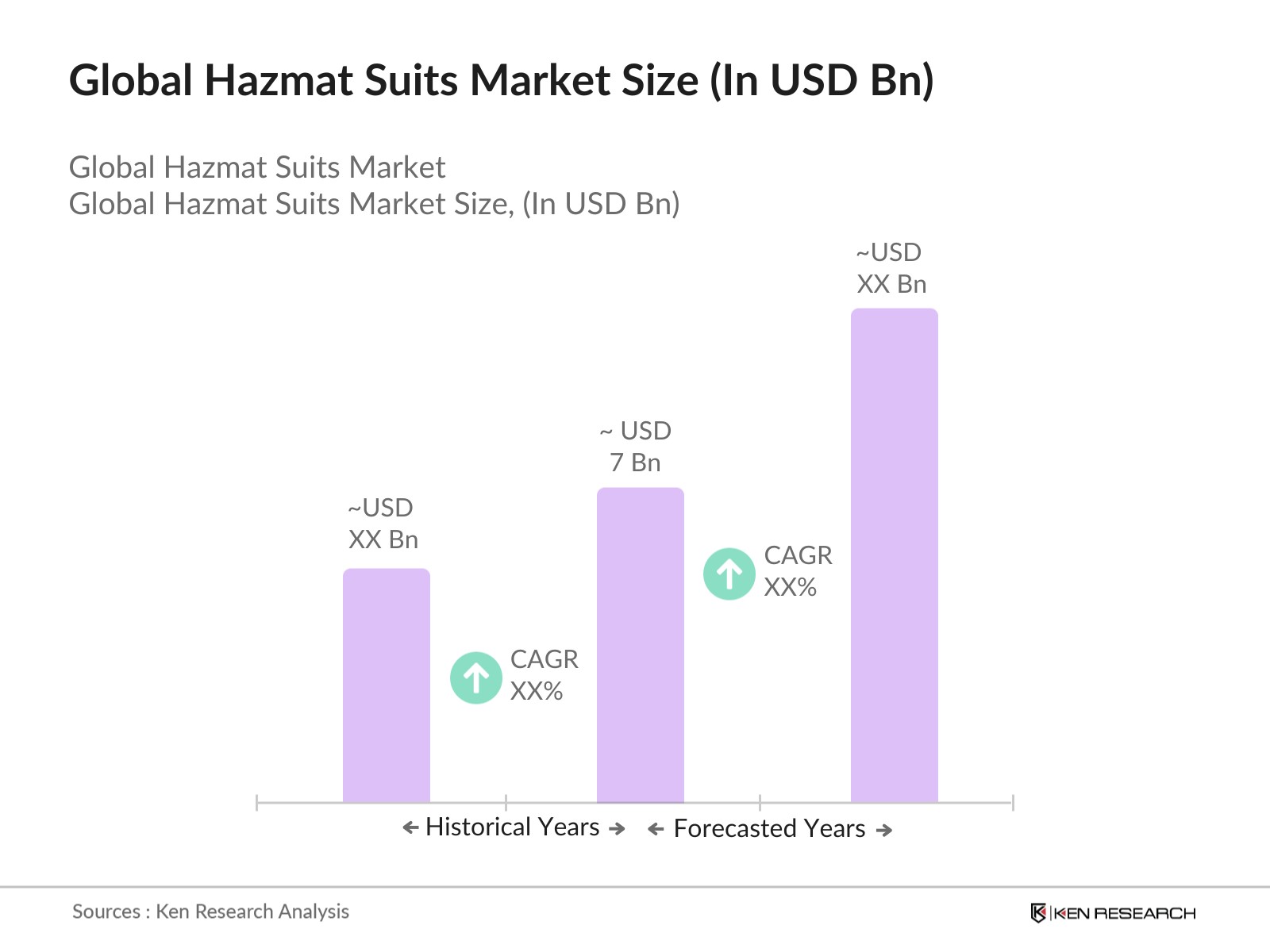
- The global hazmat suit market, based on a five-year historical analysis, is valued at USD 7 billion. This market is driven by stringent safety regulations in industries such as chemical, healthcare, and defense, where exposure to hazardous materials is high. Increasing incidences of chemical spills, biohazard threats, and pandemic preparedness have accelerated the demand for high-performance hazmat suits, particularly in developed regions where health and safety standards are rigorously enforced.
- Countries like the United States, Germany, and China dominate the market due to their large industrial bases, strong defense sectors, and robust healthcare systems. The U.S. leads the market, largely due to its advanced manufacturing capabilities and government investments in defense and emergency preparedness. Germanys leadership in industrial safety standards and Chinas fast-growing industrial sector contribute to their significant market positions.
- Government safety regulations, particularly in the developed markets, are driving the demand for hazmat suits. In the U.S., the Occupational Safety and Health Administration (OSHA) enforces strict regulations related to the use of protective gear for employees working in hazardous environments. For example, industries like chemical manufacturing, which employed 850,000 people in the U.S. as of 2022, are mandated to equip workers with protective clothing such as hazmat suits. The European Union also implemented strict rules under the REACH regulation, affecting over 28,000 businesses dealing with chemicals. These regulations boost demand across industries, fostering growth in the hazmat suit market.
Global Hazmat Suit Market Segmentation
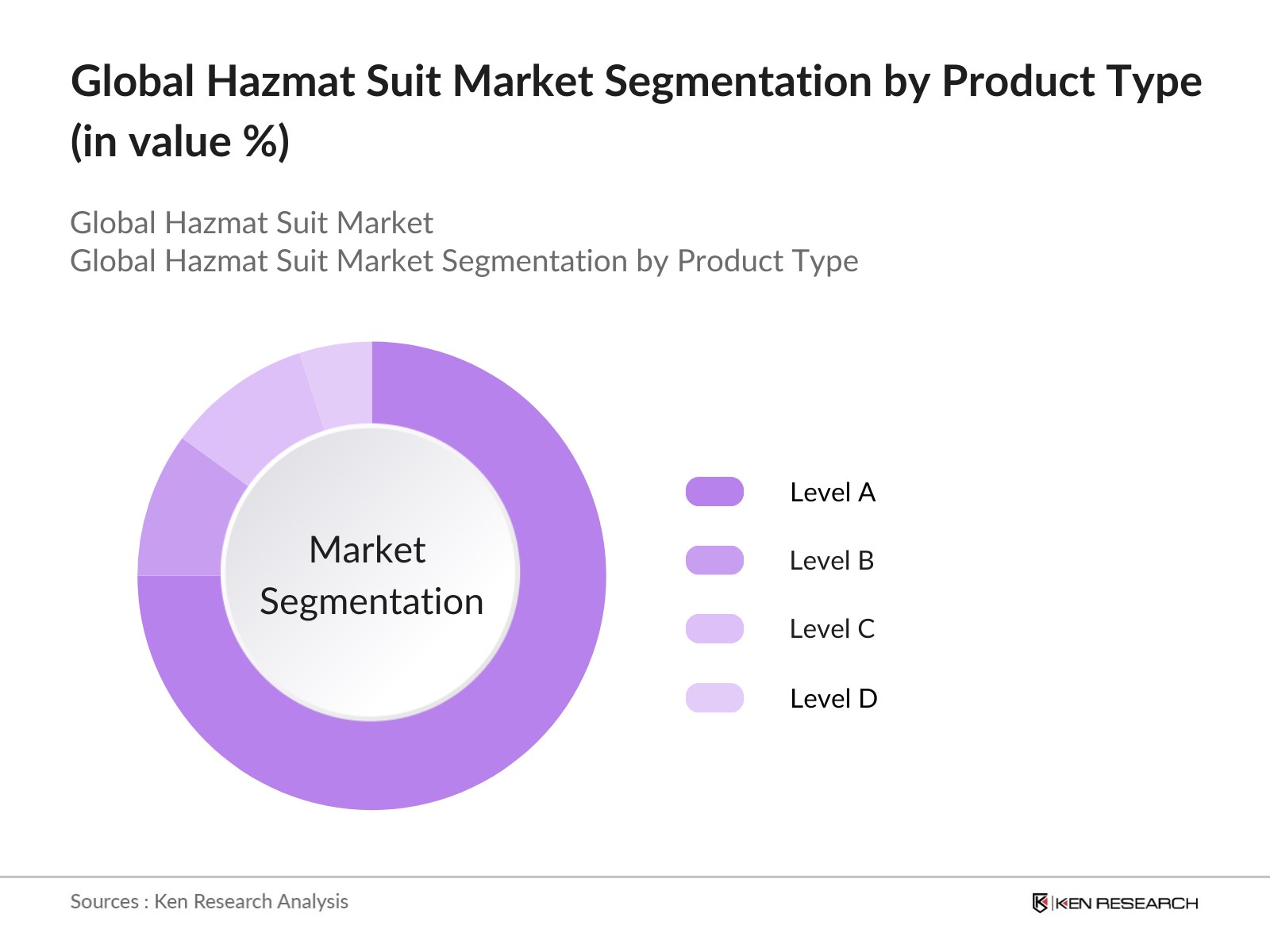
By Product Type: The global hazmat suit market is segmented by product type into Level A, Level B, Level C, and Level D suits. Recently, Level A hazmat suits have dominated the market share under the product type segmentation. This is due to their superior protection against highly toxic chemicals and gases, which makes them essential for use in extreme hazardous environments like chemical spills and biological warfare. Level A suits offer fully encapsulated protection, including respiratory and skin defense, which makes them the go-to choice for emergency responders and defense personnel.
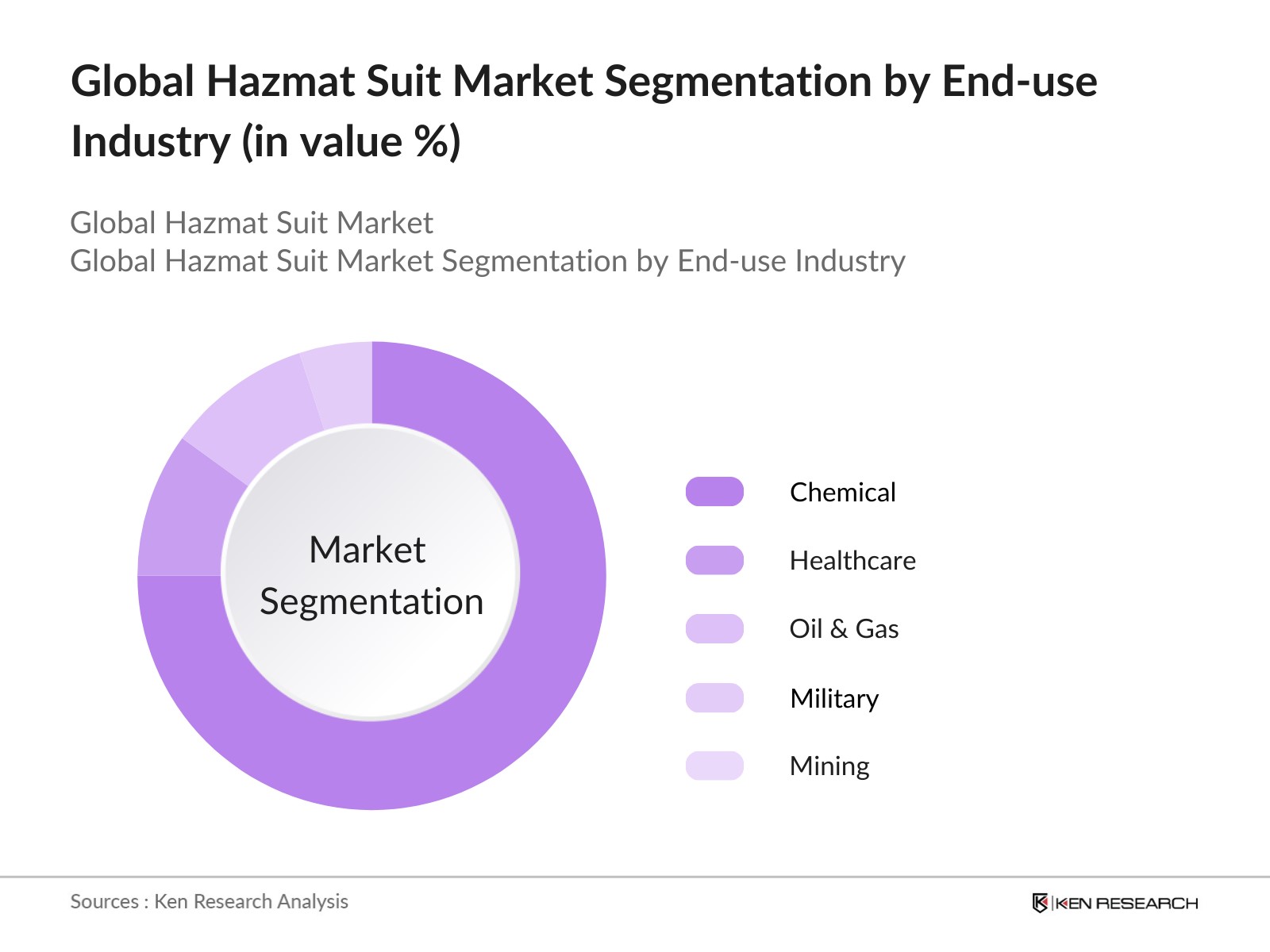
By End-use Industry: The market is also segmented by end-use industries, which include chemical, healthcare, oil & gas, military, and mining sectors. The chemical industry is currently dominating this market segment due to the high demand for hazmat suits to protect workers from toxic chemicals during manufacturing and handling processes. Stringent occupational safety regulations and the need for reliable protective gear in environments where workers handle hazardous materials directly have boosted demand for hazmat suits in this sector.
Global Hazmat Suit Market Competitive Landscape
The global hazmat suit market is dominated by a handful of key players, each bringing unique strengths to the market through advanced product development, strategic mergers, and robust distribution channels. The competition is shaped by innovations in suit material, breathability, and overall protection levels. These companies also benefit from government contracts, particularly in defense and emergency response sectors.
|
Company Name |
Established |
Headquarters |
Revenue (USD) |
No. of Employees |
Product Type |
Industry Focus |
Market Share (%) |
R&D Investment (%) |
Key Patents |
|
3M Company |
1902 |
St. Paul, Minnesota, USA |
- |
- |
- |
- |
- |
- |
- |
|
DuPont de Nemours, Inc. |
1802 |
Wilmington, Delaware, USA |
- |
- |
- |
- |
- |
- |
- |
|
Honeywell International Inc. |
1906 |
Charlotte, North Carolina, USA |
- |
- |
- |
- |
- |
- |
- |
|
Lakeland Industries, Inc. |
1982 |
Decatur, Alabama, USA |
- |
- |
- |
- |
- |
- |
- |
|
Alpha Pro Tech, Ltd. |
1989 |
Ontario, Canada |
- |
- |
- |
- |
- |
- |
- |
Global Hazmat Suit Market Analysis
Growth Drivers
- Rising Awareness of Workplace Safety: Rising awareness about workplace safety, especially in industrial sectors, has led to increased demand for hazmat suits globally. As per the International Labour Organization (ILO), there were 2.8 million work-related deaths globally in 2023, with a significant portion linked to exposure to hazardous materials. In India alone, 30 million people work in chemical industries, and the Indian government is pushing for stricter enforcement of safety measures to reduce occupational hazards. This push for safety awareness significantly fuels the growth of the hazmat suit market.
- Technological Advancements in Materials: Technological advancements in protective clothing materials are a key driver in the market. The latest material innovations, such as fabrics integrating graphene and nanotechnology, have improved the breathability and durability of hazmat suits. For example, the development of durable yet lightweight materials like Tyvek has gained traction, increasing comfort without compromising safety. Global production of graphene is set to reach over 3,200 metric tons by 2024, indicating the rapid evolution of new materials applicable in this sector, contributing to growth.
- Rising Chemical and Biological Threats: The increasing incidence of chemical and biological threats worldwide is driving demand for hazmat suits. In 2023, the World Health Organization (WHO) reported over 500 confirmed hazardous material incidents globally, ranging from industrial chemical spills to biological threats such as Ebola outbreaks. The global chemical industry employs 20 million people across 100 countries, with each region facing distinct hazardous material threats. These rising risks are fostering demand for specialized protective gear, further accelerating the hazmat suit market growth.
Market Challenges
- High Manufacturing Costs: The high costs of manufacturing hazmat suits are a challenge due to the advanced materials required, such as multilayered composites and reinforced fabrics. Global raw material prices have fluctuated in recent years; for example, the price of aramid fiber used in these suits was around USD 40 per kilogram in 2023, increasing production costs. Sourcing materials from regions like China and Europe has also seen supply chain disruptions, particularly during the COVID-19 pandemic, further straining manufacturers and limiting growth potential.
- Lack of Standardization Across Regions: A lack of uniform safety standards across regions poses a significant market challenge. In 2023, over 150 countries had varying compliance requirements for protective clothing, according to the International Organization for Standardization (ISO). For instance, while the U.S. and Europe have stringent OSHA and REACH regulations, developing markets in Africa and Southeast Asia lag in implementing uniform standards. This disparity hampers global manufacturers' ability to meet diverse regulatory requirements, restricting cross-border market growth.
Global Hazmat Suit Market Future Outlook
Over the next five years, the global hazmat suit market is expected to experience significant growth, driven by the expansion of industrial activities, increasing awareness of workplace safety, and the rising frequency of chemical and biological threats. Technological advancements, such as the integration of smart sensors in hazmat suits to monitor vital signs and environmental conditions, are expected to play a key role in shaping the future of the market. Additionally, the demand for lightweight, breathable, and highly durable materials will continue to propel innovations in product design.
Market Opportunities
- Growing Demand in Emerging Markets: Emerging markets in Asia-Pacific and Latin America are witnessing growing demand for hazmat suits due to increased industrialization and hazardous material usage. In India, over 12 million people are employed in chemical industries, and this number is growing as industrial production expands. Similarly, Brazil, with a growing industrial workforce of 36 million as of 2024, is driving demand for protective clothing. These regions offer significant untapped potential, with government initiatives to improve workplace safety further boosting the hazmat suit market.
- Increasing Industrialization in Key Regions: Industrialization, particularly in regions like Southeast Asia and Africa, has seen a surge in demand for safety gear, including hazmat suits. In Vietnam, industrial employment reached 14 million workers in 2023, with over 10% involved in chemical and hazardous industries. Similarly, Ethiopias manufacturing sector, employing 5 million people, has seen increased enforcement of workplace safety regulations, creating new opportunities for hazmat suit manufacturers. These trends are directly contributing to rising demand for protective gear in industrializing economies.
Scope of the Report
|
Segment |
Sub-segments |
|
By Product Type |
Level A Level B Level C Level D |
|
By Material Type |
Teflon Coated PVC Neoprene Polyethylene |
|
By End-use Industry |
Chemical Healthcare Oil & Gas Military Mining |
|
By Distribution Channel |
Direct Sales Online Channels Retail Distributors |
|
By Region |
North America Europe Asia Pacific Latin America Middle East & Africa |
Products
Key Target Audience
Chemical Manufacturing Companies
Healthcare and Medical Institutions
Oil & Gas Companies
Defense and Military Organizations
Mining Corporations
Emergency Response Teams
Government and Regulatory Bodies (e.g., OSHA, CDC, NFPA)
Investors and Venture Capitalist Firms
Companies
Players mentioned in the report
3M Company
DuPont de Nemours, Inc.
Honeywell International Inc.
Lakeland Industries, Inc.
Alpha Pro Tech, Ltd.
Drgerwerk AG & Co. KGaA
Msa Safety Incorporated
Kimberly-Clark Corporation
Ansell Ltd.
Sioen Industries NV
International Enviroguard
Asatex AG
TST Sweden AB
Respirex International Ltd.
Kappler, Inc.
Table of Contents
1. Global Hazmat Suit Market Overview
1.1. Definition and Scope
1.2. Market Taxonomy
1.3. Market Growth Rate
1.4. Market Segmentation Overview
2. Global Hazmat Suit Market Size (In USD Bn)
2.1. Historical Market Size
2.2. Year-on-Year Growth Analysis
2.3. Key Market Developments and Milestones
3. Global Hazmat Suit Market Analysis
3.1. Growth Drivers
3.1.1. Stringent Government Safety Regulations
3.1.2. Rising Awareness of Workplace Safety (Occupational Safety Metrics)
3.1.3. Technological Advancements in Materials (Lightweight, Breathability, Durability)
3.1.4. Rising Chemical and Biological Threats (Hazardous Materials Trends)
3.2. Market Challenges
3.2.1. High Manufacturing Costs (Material Sourcing, Advanced Fabrics)
3.2.2. Lack of Standardization Across Regions (Safety Compliance Regulations)
3.2.3. Limited Awareness in Developing Markets
3.3. Opportunities
3.3.1. Growing Demand in Emerging Markets
3.3.2. Increasing Industrialization in Key Regions
3.3.3. Adoption of Multi-layer Protection Suits (Thermal, Chemical, and Biological)
3.4. Trends
3.4.1. Sustainability in Manufacturing (Recyclable Materials)
3.4.2. Customization for Specific Industries (Oil & Gas, Chemical, Mining)
3.4.3. Integration of Smart Sensors in Suits
3.5. Government Regulations and Standards
3.5.1. Occupational Safety and Health Administration (OSHA) Regulations
3.5.2. ISO and ANSI Standards (Hazardous Materials Management)
3.5.3. International Safety Compliance Requirements
3.6. SWOT Analysis
3.7. Stakeholder Ecosystem (Manufacturers, Distributors, Regulatory Bodies)
3.8. Porters Five Forces Analysis
3.9. Competition Ecosystem
4. Global Hazmat Suit Market Segmentation
4.1. By Product Type (In Value %)
4.1.1. Level A Hazmat Suits (Complete Protection)
4.1.2. Level B Hazmat Suits (Respiratory Protection)
4.1.3. Level C Hazmat Suits (Limited Chemical Protection)
4.1.4. Level D Hazmat Suits (Minimal Protection)
4.2. By Material Type (In Value %)
4.2.1. Teflon Coated Suits
4.2.2. Polyvinyl Chloride (PVC) Suits
4.2.3. Neoprene Suits
4.2.4. Polyethylene Suits
4.3. By End-use Industry (In Value %)
4.3.1. Chemical Industry
4.3.2. Healthcare
4.3.3. Oil & Gas Industry
4.3.4. Military and Defense
4.3.5. Mining Industry
4.4. By Distribution Channel (In Value %)
4.4.1. Direct Sales
4.4.2. Online Channels
4.4.3. Retail Distributors
4.5. By Region (In Value %)
4.5.1. North America
4.5.2. Europe
4.5.3. Asia Pacific
4.5.4. Latin America
4.5.5. Middle East & Africa
5. Global Hazmat Suit Market Competitive Analysis
5.1. Detailed Profiles of Major Companies
5.1.1. 3M Company
5.1.2. DuPont de Nemours, Inc.
5.1.3. Honeywell International Inc.
5.1.4. Lakeland Industries, Inc.
5.1.5. Alpha Pro Tech, Ltd.
5.1.6. Kimberly-Clark Corporation
5.1.7. Ansell Ltd.
5.1.8. Drgerwerk AG & Co. KGaA
5.1.9. Msa Safety Incorporated
5.1.10. Sioen Industries NV
5.1.11. International Enviroguard
5.1.12. Asatex AG
5.1.13. TST Sweden AB
5.1.14. Respirex International Ltd.
5.1.15. Kappler, Inc.
5.2. Cross Comparison Parameters (Revenue, Headquarters, No. of Employees, Product Portfolio, Industry Focus, Market Share, R&D Investments, Key Patents)
5.3. Market Share Analysis
5.4. Strategic Initiatives
5.5. Mergers and Acquisitions
5.6. Investment Analysis
5.7. Venture Capital Funding
5.8. Government Grants
5.9. Private Equity Investments
6. Global Hazmat Suit Market Regulatory Framework
6.1. Safety Certifications (CE Marking, NFPA Standards)
6.2. Compliance Requirements Across Key Markets
6.3. Environmental and Workplace Safety Legislation
7. Global Hazmat Suit Future Market Size (In USD Bn)
7.1. Future Market Size Projections
7.2. Key Factors Driving Future Market Growth
8. Global Hazmat Suit Future Market Segmentation
8.1. By Product Type (In Value %)
8.2. By Material Type (In Value %)
8.3. By End-use Industry (In Value %)
8.4. By Distribution Channel (In Value %)
8.5. By Region (In Value %)
9. Global Hazmat Suit Market Analysts' Recommendations
9.1. Total Addressable Market (TAM), Serviceable Available Market (SAM), and Serviceable Obtainable Market (SOM) Analysis
9.2. Customer Cohort Analysis
9.3. Marketing Initiatives
9.4. White Space Opportunity Analysis
Disclaimer Contact Us
Research Methodology
Step 1: Identification of Key Variables
The first phase involved identifying key variables that impact the global hazmat suit market. Through comprehensive desk research, relevant data on market players, trends, and regulatory influences were compiled from secondary sources and proprietary databases.
Step 2: Market Analysis and Construction
During this phase, historical data for the global hazmat suit market was analyzed, covering product demand across industries, market growth, and revenue generation patterns. Additionally, we examined the impact of safety regulations on market penetration rates.
Step 3: Hypothesis Validation and Expert Consultation
To validate the data, consultations were held with industry experts, focusing on current trends in material science, government regulations, and customer preferences. These consultations helped refine market hypotheses and provided insights into upcoming product innovations.
Step 4: Research Synthesis and Final Output
The final phase synthesized insights from manufacturers and key market participants. This stage was essential in verifying the accuracy of projections and ensuring that the market forecast aligned with both bottom-up and top-down approaches.
Frequently Asked Questions
How big is the Global Hazmat Suit Market?
The global hazmat suit market was valued at USD 7 billion, driven by increasing industrial safety requirements and growing demand from the defense and healthcare sectors.
What are the key challenges in the Global Hazmat Suit Market?
Challenges include high manufacturing costs, regulatory complexity across regions, and the lack of standardization in safety protocols. These hurdles limit market expansion, particularly in developing regions.
Who are the major players in the Global Hazmat Suit Market?
Key players include 3M Company, DuPont, Honeywell, Lakeland Industries, and Alpha Pro Tech, all of which dominate the market due to their advanced product lines and strong distribution networks.
What are the growth drivers of the Global Hazmat Suit Market?
Key growth drivers include stringent government safety regulations, rising biohazard threats, and technological advancements in suit materials, making hazmat suits lighter and more durable.
Which end-use industries dominate the Global Hazmat Suit Market?
The chemical industry is the leading end-use sector, accounting for 40% of the market share due to high safety requirements in chemical handling and manufacturing processes.
Why Buy From Us?

What makes us stand out is that our consultants follows Robust, Refine and Result (RRR) methodology. i.e. Robust for clear definitions, approaches and sanity checking, Refine for differentiating respondents facts and opinions and Result for presenting data with story

We have set a benchmark in the industry by offering our clients with syndicated and customized market research reports featuring coverage of entire market as well as meticulous research and analyst insights.

While we don't replace traditional research, we flip the method upside down. Our dual approach of Top Bottom & Bottom Top ensures quality deliverable by not just verifying company fundamentals but also looking at the sector and macroeconomic factors.

With one step in the future, our research team constantly tries to show you the bigger picture. We help with some of the tough questions you may encounter along the way: How is the industry positioned? Best marketing channel? KPI's of competitors? By aligning every element, we help maximize success.

Our report gives you instant access to the answers and sources that other companies might choose to hide. We elaborate each steps of research methodology we have used and showcase you the sample size to earn your trust.

If you need any support, we are here! We pride ourselves on universe strength, data quality, and quick, friendly, and professional service.