















Global Healthcare Information Technology Market Outlook to 2030
Region:Global
Author(s):Shivani
Product Code:KROD436
October 2024
96
About the Report
Global Healthcare Information Technology Market Overview
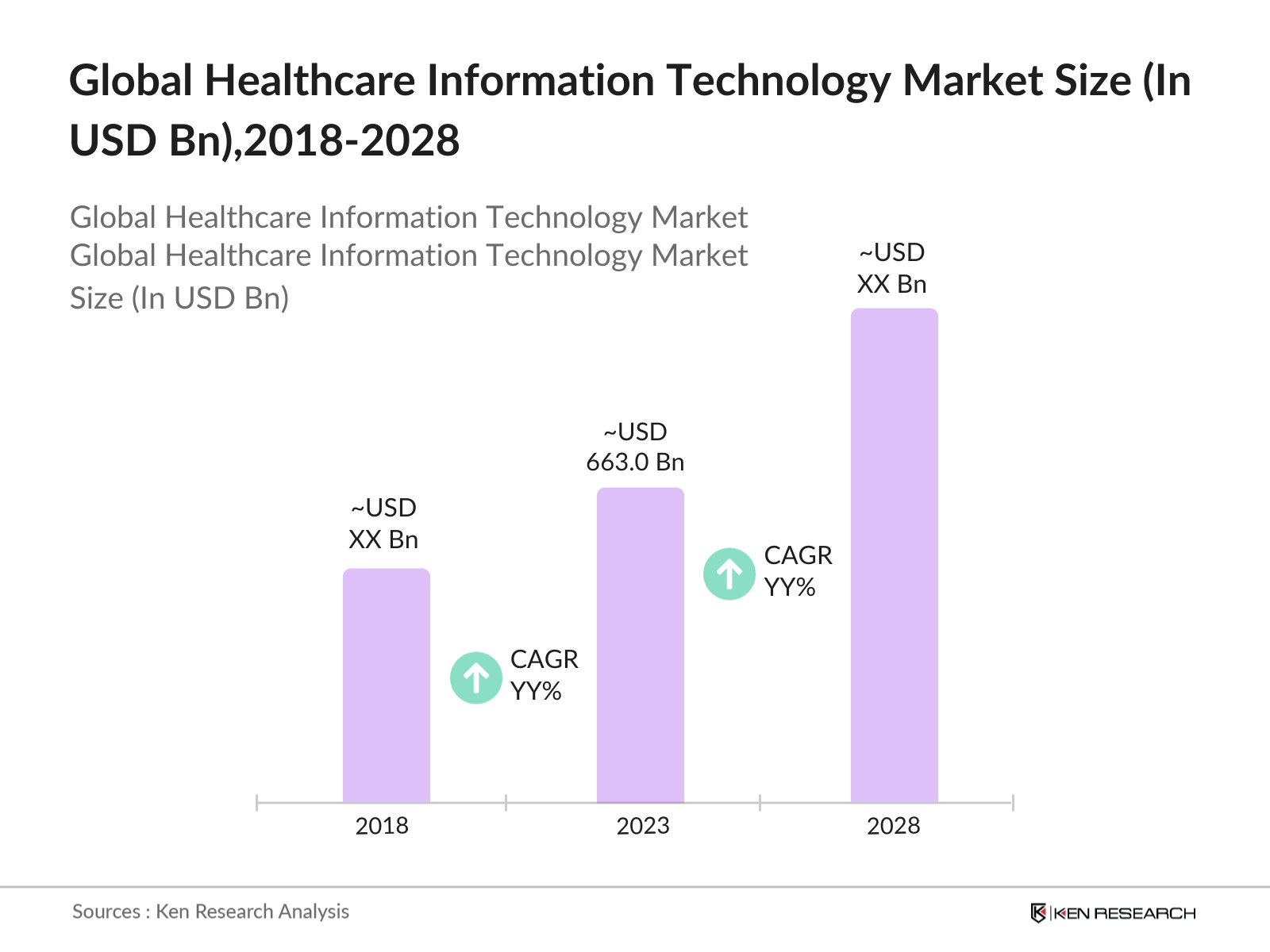
- The Global Healthcare Information Technology (HIT) market reached a significant valuation of USD 663.0 billion in 2023, driven primarily by the increasing adoption of electronic health records (EHRs) and telemedicine services. This growth is further fueled by the rising need for integrated healthcare systems, which enable efficient data management and improve patient outcomes. The demand for advanced analytics and AI-based healthcare solutions also contributes significantly to the market's expansion.
- Key players such as Cerner Corporation, Epic Systems, Philips Healthcare, Siemens Healthineers, and Allscripts Healthcare Solutions. These companies are at the forefront of innovation, offering comprehensive EHR solutions, advanced diagnostic imaging technologies, and AI-driven analytics platforms. Their strong presence and continuous investment in R&D have helped them secure a dominant position in the global market, ensuring sustained growth and market influence.
- Cerner Corporation announced its strategic collaboration with Amazon Web Services (AWS) in July 2023. This partnership designates AWS as Cerner's preferred cloud provider, focusing on accelerating healthcare innovation through enhanced clinical experiences and operational efficiencies by leveraging advanced technologies such as artificial intelligence and machine learning.
- Cities like New York, London, and Berlin dominate the HIT market due to their advanced healthcare infrastructure, high concentration of leading healthcare providers, and strong government support for healthcare innovation. New York, for instance, is home to some of the largest hospitals and research institutions in the U.S., driving demand for cutting-edge healthcare IT solutions. Similarly, London and Berlin are leading hubs for digital health startups, benefiting from favorable government policies and access to a large pool of tech talent, which propels market growth.
Global Healthcare Information Technology Market Segmentation
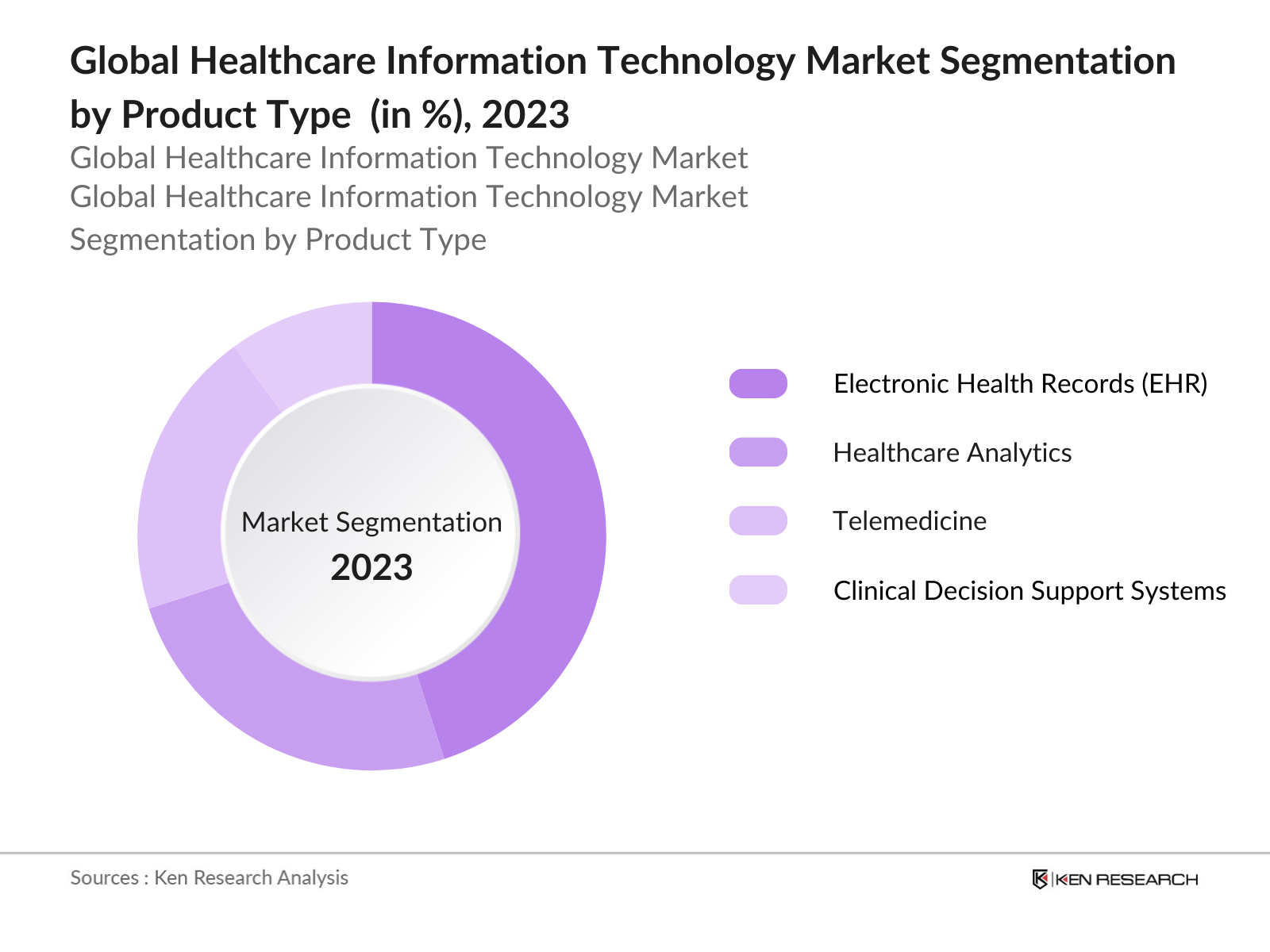
By Product Type: The global Healthcare IT market is segmented by product type into Electronic Health Records (EHR), Healthcare Analytics, Telemedicine, and Clinical Decision Support Systems (CDSS). In 2023, Electronic Health Records (EHR) held a dominant market share. This dominance is attributed to the widespread adoption of EHRs by healthcare providers globally, driven by the need for efficient patient data management and compliance with regulatory mandates. The increasing focus on patient-centric care and the integration of EHRs with other healthcare systems further bolster this segment's market share.
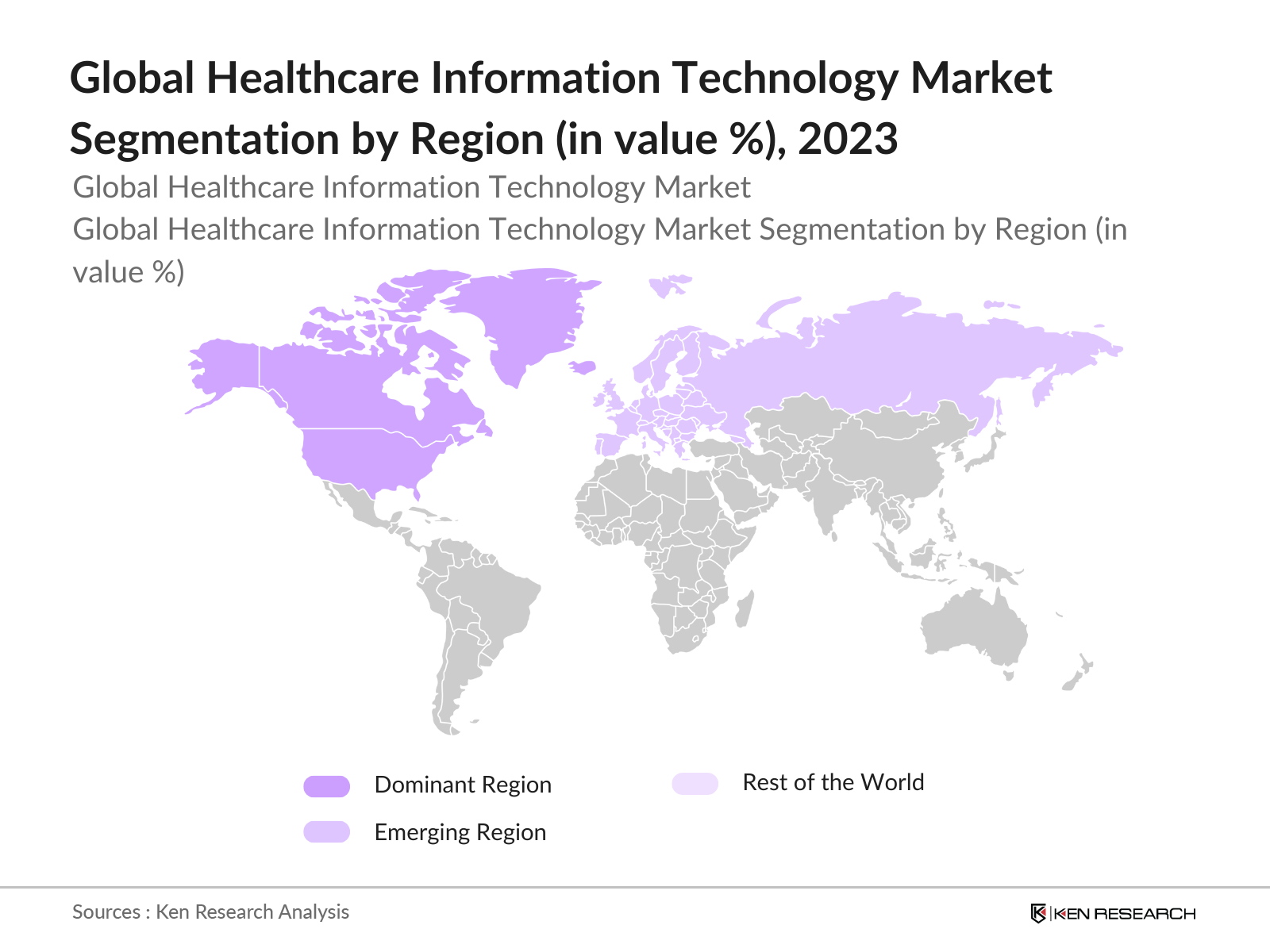
By Region: The global Healthcare IT market is segmented by region into North America, Europe, Asia-Pacific (APAC), Latin America, and the Middle East & Africa (MEA). In 2023, North America held a dominant market share. This leadership is driven by the presence of major healthcare IT companies, advanced healthcare infrastructure, and strong government support for digital health initiatives. The high adoption rates of EHRs, telemedicine, and healthcare analytics solutions across the U.S. and Canada further bolster the market's dominance in this region.
By Deployment Mode: The global Healthcare IT market is segmented by deployment mode into On-Premises, Cloud-Based, and Web-Based solutions. In 2023, Cloud-Based solutions dominated the market. This dominance is driven by their scalability, cost-effectiveness, and ability to support remote access, which are crucial in the current healthcare landscape. The increasing integration of cloud services with AI and machine learning technologies further enhances the efficiency and accuracy of healthcare delivery, solidifying this segment's leadership.
Global Healthcare Information Technology Market Competitive Landscape
|
Company Name |
Establishment Year |
Headquarters |
|
Cerner Corporation |
1979 |
Kansas City, USA |
|
Epic Systems |
1979 |
Verona, USA |
|
Philips Healthcare |
1891 |
Amsterdam, Netherlands |
|
Siemens Healthineers |
1847 |
Erlangen, Germany |
|
Allscripts Healthcare |
1986 |
Chicago, USA |
- Epic Systems: Epic Systems recently held its annual Users Group Meeting (UGM) where it announced plans to integrate over 100 new AI features into its products, including MyChart and Cosmos. CEO Judy Faulkner highlighted the potential of these AI tools to improve communication between healthcare providers and patients, streamline administrative tasks, and enhance patient care. The company aims to launch generative AI tools that can assist in preparing prescriptions and lab orders by the end of the year.
- Philips Healthcare: In 2024, Philips Healthcare launched a new telemedicine platform designed for remote monitoring of chronic disease patients. The platform integrates AI-driven analytics to provide real-time insights into patient health, allowing for timely interventions. Philips reported that the platform has been adopted by over 50 hospitals across Europe within the first six months of its launch, indicating strong market acceptance and positioning Philips as a key player in the telemedicine segment.
Global Healthcare Information Technology Market Analysis
Global Healthcare Information Technology Market Growth Drivers
- Regulatory Compliance and Incentives: The global healthcare information technology (HIT) market is driven by stringent regulations and government incentives for adopting electronic health records (EHR) and digital health solutions. Initiatives like the U.S. HITECH Act, which provided substantial incentives, have led to widespread EHR adoption in hospitals by 2023. Similar policies in Europe and Asia-Pacific, such as the EU's Digital Health Strategy, are accelerating the global adoption of healthcare IT solutions, fueling market growth.
- Rising Demand for Telehealth and Remote Monitoring The demand for telehealth and remote patient monitoring solutions has surged, particularly post-pandemic, as healthcare providers seek to offer more accessible and efficient patient care. In 2023, telehealth usage in Europe saw a significant rise, with reports indicating a 50% increase in adoption.
- Integration of AI and Machine Learning: The integration of artificial intelligence (AI) and machine learning (ML) in healthcare IT has become a key growth driver, offering enhanced data analytics, predictive insights, and automation. In 2023, AI-driven diagnostics and decision support systems played a significant role in improving healthcare processes.
Global Healthcare Information Technology Market Challenges
- Data Privacy and Security Concerns: Data privacy and security remain significant challenges in the healthcare IT market, with the increasing digitization of patient records making healthcare systems more vulnerable to cyberattacks. These breaches have raised concerns among healthcare providers about the security of their IT systems, leading to increased investments in cybersecurity measures. However, these risks have also slowed down the adoption of new digital solutions due to heightened concerns over data protection.
- High Implementation Costs: The high costs associated with implementing healthcare IT solutions, particularly in developing countries, continue to be a barrier to market growth. For instance, a report by the Indian Ministry of Health in 2023 highlighted that the average cost of implementing a comprehensive EHR system in a mid-sized hospital is approximately INR 2.5 crore (USD 300,000). Such high costs deter smaller healthcare providers from adopting advanced IT systems, thereby limiting market penetration in cost-sensitive regions.
Global Healthcare Information Technology Market Government Initiatives
- U.S. 2023 Healthcare IT Modernization Initiative: In 2023, the IHS made significant advancements in its Health Information Technology Modernization Program. This included preparations for acquiring a new enterprise EHR solution, with General Dynamics Information Technology, Inc. (GDIT) selected to build, configure, and maintain this system. The new EHR solution will utilize Oracle Cerner technology, aimed at replacing the outdated Resource and Patient Management System (RPMS), which has been in operation for nearly 40 years.
- Indias National Digital Health Mission (NDHM) Indias National Digital Health Mission, launched in 2023, aims to digitize the healthcare sector by creating a nationwide digital health ecosystem. With a budget of INR 15,000 crore (USD 2 billion) over five years, the initiative includes the development of a unified health interface, digital health IDs, and integrated health records. This mission is expected to drive the adoption of healthcare IT solutions across the country, particularly in rural and underserved areas, leading to significant market growth.
Global Healthcare Information Technology Market Outlook
The Global Healthcare Information Technology (HIT) market continues to evolve, several key trends are expected to shape its trajectory towards 2028. Driven by advancements in technology and the growing need for enhanced patient care, the market will witness significant developments in areas such as blockchain integration, personalized medicine, and virtual reality.
Future Trends:
- Integration of Blockchain for Enhanced Data Security: By 2028, the integration of blockchain technology in healthcare IT systems will become increasingly prevalent, driven by the need for enhanced data security and transparency. Blockchains decentralized and immutable nature will allow healthcare providers to securely store and share patient data, reducing the risk of breaches. This trend is expected to lead to widespread adoption of blockchain in healthcare IT solutions, significantly enhancing data security over the next five years.
- Growth of Personalized Medicine through AI and Genomics: The next five years will see significant advancements in personalized medicine, driven by the integration of AI and genomics in healthcare IT platforms. By 2028, AI-driven analytics will enable healthcare providers to tailor treatments based on individual genetic profiles, improving patient outcomes. This trend is expected to position personalized medicine as a key growth area in the healthcare IT market, with AI and genomics playing a central role in enhancing treatment effectiveness.
Scope of the Report
|
By Product Type |
Electronic Health Records (EHR) Healthcare Analytics Telemedicine Clinical Decision Support Systems |
|
By Deployment Mode |
Cloud-Based On-Premises Web-Based |
|
By Region |
North America Europe Asia-Pacific (APAC Latin America Middle East & Africa (MEA) |
|
By End-User |
Hospitals Ambulatory Care Centers Diagnostic Centers Others |
Products
Key Target Audience Organizations and Entities Who Can Benefit by Subscribing This Report:
Healthcare Providers
Healthcare IT Companies
Insurance Companies
Pharmaceutical Companies
Government and Regulatory Bodies (FDA)
Investment and Venture Capitalist Firms
Telemedicine Service Providers
Companies
Players Mentioned in the Report:
Cerner Corporation
Epic Systems
Philips Healthcare
Siemens Healthineers
Allscripts Healthcare Solutions
McKesson Corporation
GE Healthcare
Oracle Cerner
Medtronic
Athenahealth
IBM Watson Health
Optum Inc.
NextGen Healthcare
InterSystems Corporation
SAP SE
Table of Contents
1. Global Healthcare Information Technology Market Overview
1.1. Definition and Scope
1.2. Market Taxonomy
1.3. Market Growth Rate
1.4. Market Segmentation Overview
2. Global Healthcare Information Technology Market Size (in USD Bn), 2018-2023
2.1. Historical Market Size
2.2. Year-on-Year Growth Analysis
2.3. Key Market Developments and Milestones
3. Global Healthcare Information Technology Market Analysis
3.1. Growth Drivers
3.1.1. Regulatory Compliance and Incentives
3.1.2. Rising Demand for Telehealth and Remote Monitoring
3.1.3. Integration of AI and Machine Learning
3.2. Challenges
3.2.1. Data Privacy and Security Concerns
3.2.2. Interoperability Issues
3.2.3. High Implementation Costs
3.3. Government Initiatives
3.3.1. U.S. Healthcare IT Modernization Initiative
3.3.2. European Union Digital Health Action Plan
3.3.3. Indias National Digital Health Mission
3.4. Recent Trends
3.4.1. Increased Adoption of Cloud-Based Solutions
3.4.2. Growth in AI-Powered Diagnostics
3.4.3. Expansion of Telehealth Services
3.5. Company-Specific Recent Developments
3.5.1. Siemens Healthineers Acquires Varian Medical Systems
3.5.2. IBM Watson Healths Collaboration with Mayo Clinic
3.5.3. Oracle Cerner Expands Global Presence
3.6. SWOT Analysis
3.7. Stake Ecosystem
3.8. Competition Ecosystem
4. Global Healthcare Information Technology Market Segmentation, 2023
4.1. By Product Type (in Value %)
4.1.1. Electronic Health Records (EHR)
4.1.2. Healthcare Analytics
4.1.3. Telemedicine
4.1.4. Clinical Decision Support Systems (CDSS)
4.2. By Deployment Mode (in Value %)
4.2.1. Cloud-Based
4.2.2. On-Premises
4.2.3. Web-Based
4.3. By Application (in Value %)
4.3.1. Clinical Applications
4.3.2. Administrative Applications
4.3.3. Financial Applications
4.4. By End-User (in Value %)
4.4.1. Hospitals
4.4.2. Ambulatory Care Centers
4.4.3. Diagnostic Centers
4.4.4. Others
4.5. By Region (in Value %)
4.5.1. North America
4.5.2. Europe
4.5.3. Asia-Pacific
4.5.4. Latin America
4.5.5. Middle East & Africa (MEA)
5. Global Healthcare Information Technology Market Cross Comparison
5.1. Detailed Profiles of Major Companies
5.1.1. Cerner Corporation
5.1.2. Epic Systems
5.1.3. Philips Healthcare
5.1.4. Siemens Healthineers
5.1.5. Allscripts Healthcare Solutions
5.1.6. McKesson Corporation
5.1.7. GE Healthcare
5.1.8. Oracle Cerner
5.1.9. Medtronic
5.1.10. Athenahealth
5.1.11. IBM Watson Health
5.1.12. Optum Inc.
5.1.13. NextGen Healthcare
5.1.14. InterSystems Corporation
5.1.15. SAP SE
5.2. Cross Comparison Parameters (No. of Employees, Headquarters, Inception Year, Revenue)
6. Global Healthcare Information Technology Market Competitive Landscape
6.1. Market Share Analysis
6.2. Strategic Initiatives
6.3. Mergers and Acquisitions
6.4. Investment Analysis
6.4.1. Venture Capital Funding
6.4.2. Government Grants
6.4.3. Private Equity Investments
7. Global Healthcare Information Technology Market Regulatory Framework
7.1. Data Privacy and Security Standards
7.2. Compliance Requirements
7.3. Certification Processes
8. Global Healthcare Information Technology Market Future Market Size (in USD Bn), 2023-2028
8.1. Future Market Size Projections
8.2. Key Factors Driving Future Market Growth
9. Global Healthcare Information Technology Market Future Market Segmentation, 2028
9.1. By Product Type (in Value %)
9.2. By Deployment Mode (in Value %)
9.3. By Application (in Value %)
9.4. By End-User (in Value %)
9.5. By Region (in Value %)
10. Global Healthcare Information Technology Market Analysts Recommendations
10.1. TAM/SAM/SOM Analysis
10.2. Customer Cohort Analysis
10.3. Marketing Initiatives
10.4. White Space Opportunity Analysis
Disclaimer Contact UsResearch Methodology
Step: 1 Identifying Key Variables:
Ecosystem creation for all the major entities and referring to multiple secondary and proprietary databases to perform desk research around market to collate industry level information.
Step: 2 Market Building:
Collating statistics on the Global Healthcare Information Technology Market over the years, penetration of marketplaces and service providers ratio to compute revenue generated for Global Healthcare Information Technology Market. We will also review service quality statistics to understand revenue generated which can ensure accuracy behind the data points shared.
Step: 3 Validating and Finalizing:
Building market hypothesis and conducting CATIs with industry experts belonging to different companies to validate statistics and seek operational and financial information from company representatives.
Step: 4 Research Output:
Our team will approach multiple Healthcare Information Technology and understand nature of product segments and sales, consumer preference and other parameters, which will support us validate statistics derived through bottom to top approach from Healthcare Information Technology.
Frequently Asked Questions
1- How big is the Global Healthcare Information Technology (HIT) market?
The Global Healthcare Information Technology market was valued at USD 663.0 billion in 2023, driven by the rising adoption of electronic health records (EHRs), telehealth services, and AI-driven healthcare solutions.
2- What are the challenges in the Global Healthcare Information Technology market?
Challenges include data privacy and security concerns, high implementation costs, and interoperability issues between different healthcare IT systems, which can hinder seamless data exchange and slow down the adoption of new technologies.
3- Who are the major players in the Global Healthcare Information Technology market?
Key players in the market include Cerner Corporation, Epic Systems, Philips Healthcare, Siemens Healthineers, and Allscripts Healthcare Solutions, dominating due to their innovative healthcare solutions, strong R&D investments, and extensive global reach.
4- What are the growth drivers of the Global Healthcare Information Technology market?
The market is driven by regulatory compliance requirements, the rising demand for telehealth and remote monitoring solutions, and the integration of AI and machine learning in healthcare IT systems, which enhance diagnostic accuracy and operational efficiency.
Why Buy From Us?

What makes us stand out is that our consultants follows Robust, Refine and Result (RRR) methodology. i.e. Robust for clear definitions, approaches and sanity checking, Refine for differentiating respondents facts and opinions and Result for presenting data with story

We have set a benchmark in the industry by offering our clients with syndicated and customized market research reports featuring coverage of entire market as well as meticulous research and analyst insights.

While we don't replace traditional research, we flip the method upside down. Our dual approach of Top Bottom & Bottom Top ensures quality deliverable by not just verifying company fundamentals but also looking at the sector and macroeconomic factors.

With one step in the future, our research team constantly tries to show you the bigger picture. We help with some of the tough questions you may encounter along the way: How is the industry positioned? Best marketing channel? KPI's of competitors? By aligning every element, we help maximize success.

Our report gives you instant access to the answers and sources that other companies might choose to hide. We elaborate each steps of research methodology we have used and showcase you the sample size to earn your trust.

If you need any support, we are here! We pride ourselves on universe strength, data quality, and quick, friendly, and professional service.