
Global Heated Mats Market Outlook to 2030
Region:Global
Author(s):Shreya Garg
Product Code:KROD1564
Region:Global
Author(s):Shreya Garg
Product Code:KROD1564
November 2024
96
The global heated mats market is valued at USD 730 Million, driven by its growing application in residential, commercial, and industrial sectors. The demand for heated mats is primarily driven by cold climate regions, where they are extensively used for snow and ice melting on walkways, driveways, and rooftops. Additionally, the rising consumer interest in energy-efficient heating solutions and home automation is accelerating market growth. With technological innovations such as smart heated mats integrated with IoT, the market is expected to witness steady expansion.
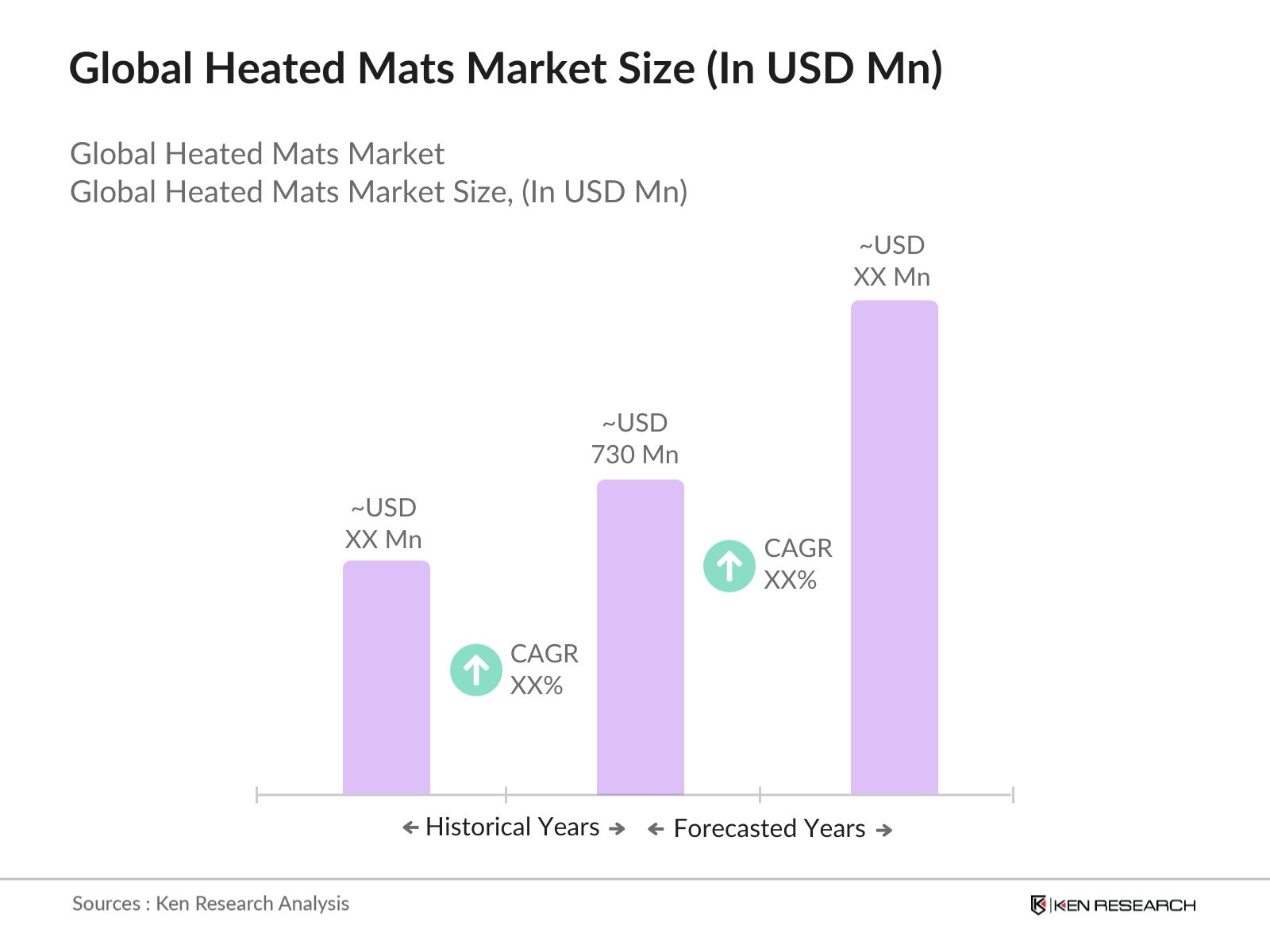
Dominant regions in the heated mats market include North America and Europe. North America leads the market due to widespread adoption in residential and commercial sectors, particularly in colder states like Alaska, Minnesota, and Michigan. In Europe, countries like Sweden and Finland dominate due to severe winters and government support for energy-efficient heating systems. The preference for sustainable solutions and the presence of well-established manufacturers also contribute to the dominance of these regions in the market.
Governments worldwide are offering incentives to adopt energy-efficient heating solutions. For instance, the U.S. Department of Energy is providing grants and tax breaks for installing energy-efficient systems, including heated mats, as part of its broader goal to reduce national energy consumption by 20% by 2030. The World Bank reports that several governments are now mandating lower energy consumption in residential and commercial buildings as part of their national sustainability goals.
The global heated mats market is segmented into various factors such as product type, application etc.
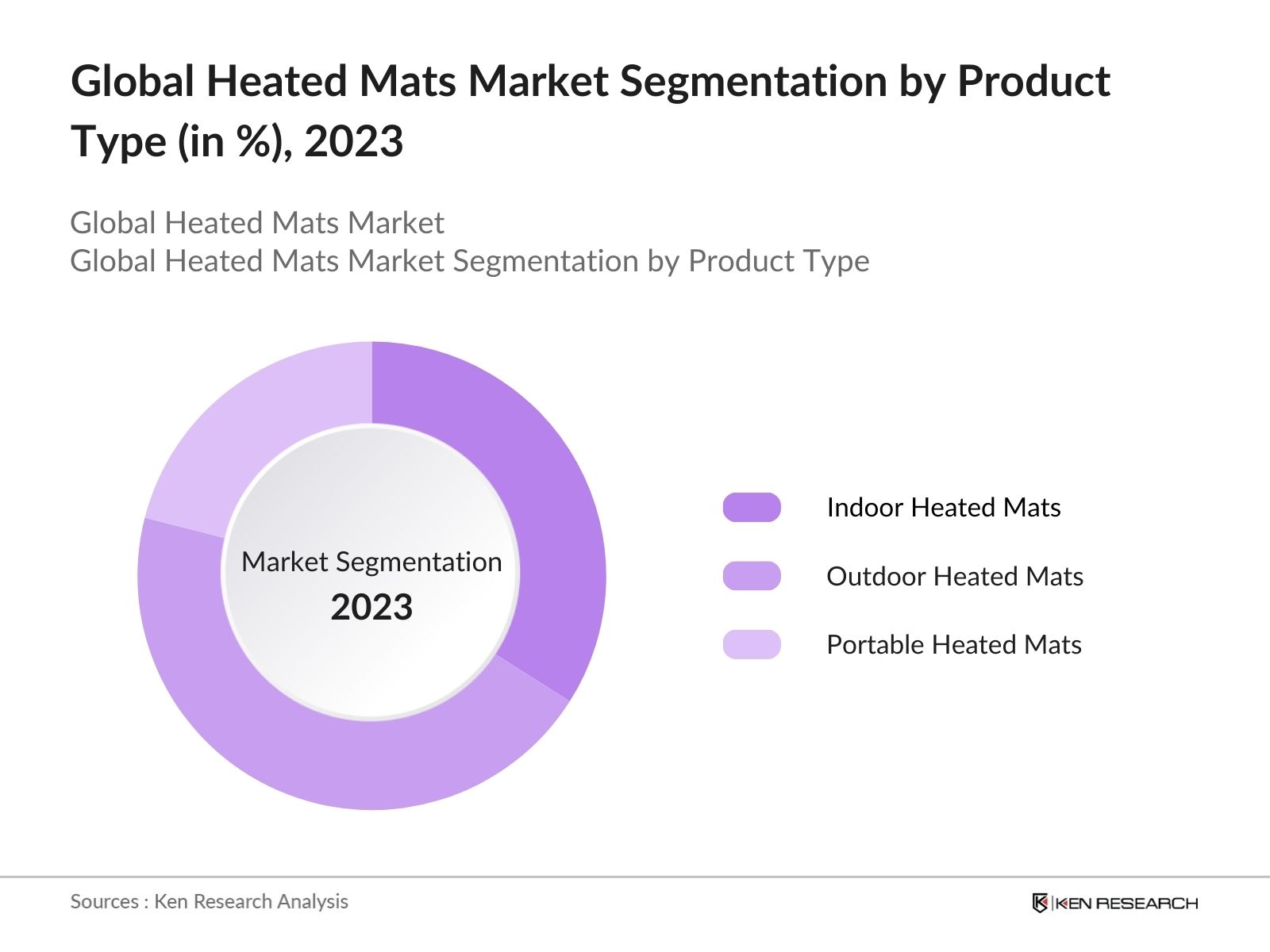
By Product Type: The market is segmented by product type into indoor heated mats, outdoor heated mats, and portable heated mats. Currently, outdoor heated mats hold a dominant share in the market due to their increasing demand in colder regions for snow and ice removal. The commercial sector, including shopping malls, airports, and public buildings, widely adopts outdoor heated mats to ensure pedestrian safety during winter. Their integration with energy-efficient systems has further propelled their market share, making them a preferred choice for large-scale installations.
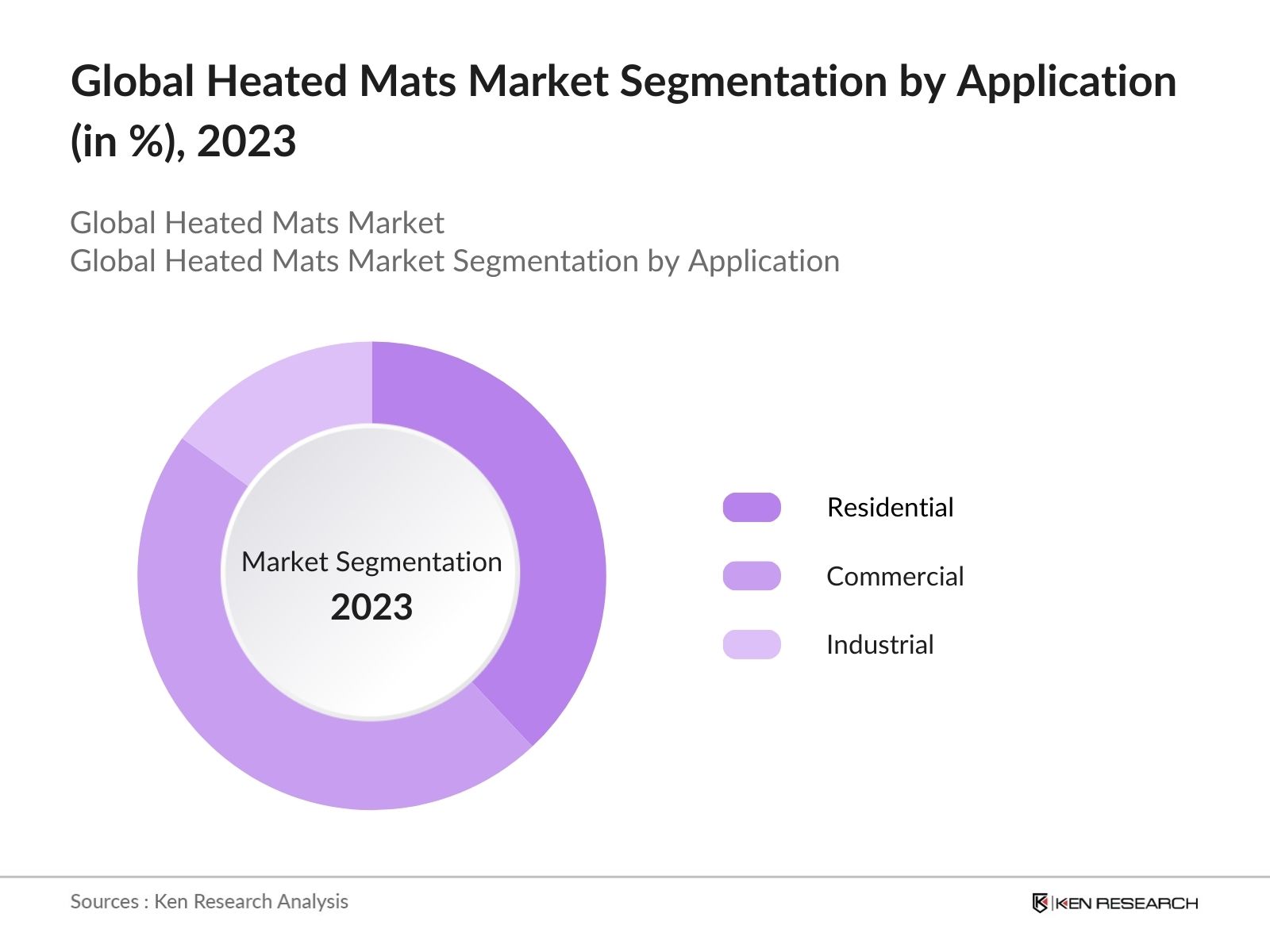
By Application: The market is segmented by application into residential, commercial, and industrial. The commercial application segment dominates the market, with the highest demand coming from hotels, retail outlets, and office buildings. Commercial spaces tend to prioritize customer comfort and safety, which drives the adoption of heated mats for outdoor walkways, parking lots, and entrances. Moreover, the expansion of smart cities has led to an increase in heated mat installations in public spaces, further boosting the segments growth.
The global heated mats market is dominated by key players that focus on product innovation, strategic partnerships, and geographical expansion. Major companies include Warmup PLC, Comfort Mat, and Danfoss A/S, which have established themselves through strong product portfolios and an emphasis on energy-efficient solutions.
|
Company |
Establishment Year |
Headquarters |
Revenue |
No. of Patents |
Global Presence |
R&D Investments |
Employees |
|
Warmup PLC |
1994 |
UK |
|||||
|
Comfort Mat |
1989 |
USA |
|||||
|
Delta-Therm Corporation |
1976 |
USA |
|||||
|
ThermoSoft International Corporation |
1996 |
USA |
|||||
|
Danfoss A/S |
1933 |
Denmark |
Increasing Demand in Cold Climate Regions: The demand for heated mats is significantly growing in cold climate regions, particularly in Northern Europe, Canada, and parts of the United States. In Canada alone, over 15 million households experience severe winter conditions annually, driving the need for efficient indoor and outdoor heating solutions like heated mats. The Nordic countries have reported a surge in the use of heated mats, particularly in public spaces such as walkways and driveways, to prevent ice formation. The extreme weather conditions in these regions make heated mats a practical solution for ensuring safety and comfort.
Energy Efficiency and Cost-Effectiveness: Heated mats are becoming popular due to their energy efficiency and cost-effectiveness. Modern heated mats consume significantly less energy compared to traditional heating systems. According to the U.S. Energy Information Administration, energy-efficient heating solutions have seen a 30% increase in adoption among American households. With the cost of energy rising, products that reduce consumption are becoming increasingly attractive. Heated mats use low-wattage systems that help users save on energy bills, making them a practical option for both residential and commercial use. In colder climates, these products offer cost-effective alternatives for localized heating.
Rising Consumer Interest in Home Automation: The growing interest in home automation systems is driving the adoption of smart heated mats that can be controlled remotely via smartphones or integrated into home automation systems like Amazon Alexa and Google Home. In 2022, the global home automation market saw the installation of over 200 million smart devices, and this number is expected to climb steadily as consumers seek more convenience. Heated mats with IoT connectivity allow users to manage heating schedules, further enhancing their energy efficiency and ease of use, particularly in regions where homeowners demand intelligent climate control solutions.
Limited Awareness in Developing Markets: Awareness of the benefits of heated mats is relatively low in developing markets such as India, Southeast Asia, and parts of Latin America. In these regions, heating technologies are generally less advanced, and traditional methods are still predominantly used. In 2023, it was reported that very limited households in Southeast Asia use any form of modern heating systems, highlighting a gap in market penetration. As a result, companies face the challenge of educating consumers and building awareness about the advantages of heated mats in these untapped markets.
Limited Awareness in Developing Markets: In developing regions, such as parts of Africa and Southeast Asia, the market for heated mats remains untapped due to a lack of awareness and infrastructure challenges. The World Bank reports that over 685 million people globally still lack access to electricity, which hampers the adoption of such technologies. As energy access improves, awareness of energy-efficient heating solutions like heated mats could potentially rise.
Over the next five years, the global heated mats market is expected to experience substantial growth, driven by increasing adoption of smart heating solutions, the rising demand for energy-efficient systems, and favorable government regulations promoting green building technologies. The growing preference for home automation, coupled with advancements in IoT, is likely to lead to the development of innovative heated mats that can be controlled remotely via mobile devices.
Integration with Renewable Energy Sources: Heated mats offer a viable opportunity for integration with renewable energy sources, such as solar and wind power. In 2023, one-third of the energy consumed in Europe came from renewable sources, and there is a growing trend toward integrating heating systems with renewable energy. This combination can significantly reduce the carbon footprint of heating solutions. Heated mats that are powered by renewable energy can cater to the demand for energy-efficient and eco-friendly products, especially in regions like Scandinavia, where renewable energy adoption is high. This trend opens up a new avenue for market growth.
Innovation in Product Design and Customization: With advancements in material science and electronics, heated mats are becoming more versatile, offering customizable sizes, shapes, and heating capabilities. In 2024, manufacturers have begun developing heated mats with flexible designs that can be customized for various applications, including underfloor heating, outdoor pavements, and industrial settings. This innovation is driving product adoption in specialized markets. In the U.S., the demand for customized heated mats for industrial use grew by 12% in 2023, driven by the need for tailored solutions in sectors such as agriculture and logistics. Continued product innovation will drive future market expansion.
|
Product Type |
Indoor Heated Mats Outdoor Heated Mats Portable Heated Mats |
|
Application |
Residential Commercial Industrial |
|
Material Type |
Rubber-Based Mats PVC-Based Mats Others |
|
End-User |
Homeowners Commercial Building Owners Industrial Facility Operators |
|
Region |
North America Europe Asia Pacific Latin America Middle East & Africa |
1.1 Definition and Scope
1.2 Market Taxonomy
1.3 Market Growth Rate
1.4 Market Segmentation Overview
2.1 Historical Market Size
2.2 Year-On-Year Growth Analysis
2.3 Key Market Developments and Milestones
3.1 Growth Drivers
3.1.1. Increasing Demand in Cold Climate Regions (Geographical Relevance)
3.1.2. Energy Efficiency and Cost-Effectiveness (Product Functionality)
3.1.3. Rising Consumer Interest in Home Automation (Technological Advancements)
3.1.4. Growing Demand for Outdoor Applications (Commercial and Industrial Usage)
3.2 Market Challenges
3.2.1. High Initial Installation Costs (Economic Constraints)
3.2.2. Limited Awareness in Developing Markets (Geographical Gaps)
3.2.3. Competing Technologies (Competitive Landscape)
3.3 Opportunities
3.3.1. Expansion into Emerging Markets (New Geographical Markets)
3.3.2. Integration with Renewable Energy Sources (Sustainability)
3.3.3. Innovation in Product Design and Customization (Product Development)
3.4 Trends
3.4.1. Smart Heated Mats Integrated with IoT (Technological Innovation)
3.4.2. Increasing Adoption in Construction Industry (Industrial Trends)
3.4.3. Enhanced Durability and Safety Features (Product Innovation)
3.5 Government Regulations
3.5.1. Building Codes for Heated Floors and Mats (Compliance)
3.5.2. Energy Efficiency Regulations (Sustainability)
3.5.3. Incentives for Energy-Efficient Heating Solutions (Government Support)
3.6. SWOT Analysis
3.7. Stakeholder Ecosystem (Manufacturers, Distributors, Consumers)
3.8. Porters Five Forces Analysis
3.9. Competition Ecosystem
4.1 By Product Type (In Value %)
4.1.1. Indoor Heated Mats
4.1.2. Outdoor Heated Mats
4.1.3. Portable Heated Mats
4.2 By Application (In Value %)
4.2.1. Residential
4.2.2. Commercial
4.2.3. Industrial
4.3 By Material Type (In Value %)
4.3.1. Rubber-Based Mats
4.3.2. PVC-Based Mats
4.3.3. Others
4.4 By End-User (In Value %)
4.4.1. Homeowners
4.4.2. Commercial Building Owners
4.4.3. Industrial Facility Operators
4.5 By Region (In Value %)
4.5.1. North America
4.5.2. Europe
4.5.3. Asia Pacific
4.5.4. Latin America
4.5.5. Middle East & Africa
5.1. Detailed Profiles of Major Companies
5.1.1. Warmup PLC
5.1.2. Comfort Mat
5.1.3. Delta-Therm Corporation
5.1.4. ThermoSoft International Corporation
5.1.5. EasyHeat Inc.
5.1.6. Anbang Electric Co. Ltd.
5.1.7. Emerson Electric Co.
5.1.8. King Electric Manufacturing Co.
5.1.9. Calorique Ltd.
5.1.10. Danfoss A/S
5.1.11. Flexel International Ltd.
5.1.12. Pentair PLC
5.1.13. ProWarm
5.1.14. Warmzone
5.1.15. LuxHeat
5.2. Cross Comparison Parameters (Revenue, Product Offerings, Market Share, R&D Investments, Headquarters, No. of Patents, No. of Employees, Global Presence)
5.3. Market Share Analysis
5.4. Strategic Initiatives
5.5. Mergers and Acquisitions
5.6. Investment Analysis
5.7. Venture Capital Funding
5.8. Government Grants
5.9. Private Equity Investments
6.1. Industry Standards (Heated Floor Certifications)
6.2. Safety Compliance (Fire and Electric Safety)
6.3. Energy Efficiency Certification (Green Building Standards)
7.1. Future Market Size Projections
7.2. Key Factors Driving Future Market Growth
8.1. By Product Type (In Value %)
8.2. By Application (In Value %)
8.3. By Material Type (In Value %)
8.4. By End-User (In Value %)
8.5. By Region (In Value %)
9.1. TAM/SAM/SOM Analysis
9.2. Customer Cohort Analysis
9.3. Marketing Initiatives
9.4. White Space Opportunity Analysis
The research begins with a comprehensive analysis of the global heated mats market ecosystem, including all stakeholders, such as manufacturers, suppliers, distributors, and end-users. Extensive desk research using secondary databases and industry reports helps to define critical market variables and identify influencing factors.
Historical market data is analyzed to establish the penetration of heated mats in various sectors. This analysis includes reviewing market growth, revenue generation, and the distribution of heated mats across different applications. The data is then compiled to estimate the market's future trajectory.
Primary interviews are conducted with industry experts, including manufacturers and distributors, to validate the market hypotheses. These interviews provide deeper insights into market trends, customer preferences, and challenges, ensuring data accuracy.
Finally, market data from all sources is synthesized, leading to the creation of a detailed and accurate report. The bottom-up approach ensures that every data point is validated, delivering a comprehensive market analysis of the heated mats industry.
The global heated mats market was valued at USD 730 million, driven by increasing applications in the residential, commercial, and industrial sectors.
Challenges include high installation costs, lack of awareness in developing regions, and competition from alternative heating technologies like radiant floor heating.
Key players include Warmup PLC, Comfort Mat, Delta-Therm Corporation, and Danfoss A/S. These companies dominate due to their focus on product innovation and strong distribution networks.
The market is driven by increasing demand in cold climate regions, advancements in energy-efficient solutions, and the rising trend of home automation.
North America and Europe dominate the heated mats market due to extreme winter conditions, strong government regulations promoting energy efficiency, and high adoption in commercial spaces.

What makes us stand out is that our consultants follows Robust, Refine and Result (RRR) methodology. i.e. Robust for clear definitions, approaches and sanity checking, Refine for differentiating respondents facts and opinions and Result for presenting data with story

We have set a benchmark in the industry by offering our clients with syndicated and customized market research reports featuring coverage of entire market as well as meticulous research and analyst insights.

While we don't replace traditional research, we flip the method upside down. Our dual approach of Top Bottom & Bottom Top ensures quality deliverable by not just verifying company fundamentals but also looking at the sector and macroeconomic factors.

With one step in the future, our research team constantly tries to show you the bigger picture. We help with some of the tough questions you may encounter along the way: How is the industry positioned? Best marketing channel? KPI's of competitors? By aligning every element, we help maximize success.

Our report gives you instant access to the answers and sources that other companies might choose to hide. We elaborate each steps of research methodology we have used and showcase you the sample size to earn your trust.

If you need any support, we are here! We pride ourselves on universe strength, data quality, and quick, friendly, and professional service.