
Global Hematology Analyzers Market Outlook to 2030
Region:Global
Author(s):Mukul
Product Code:KROD8292
October 2024
96
About the Report
Global Hematology Analyzers Market Overview
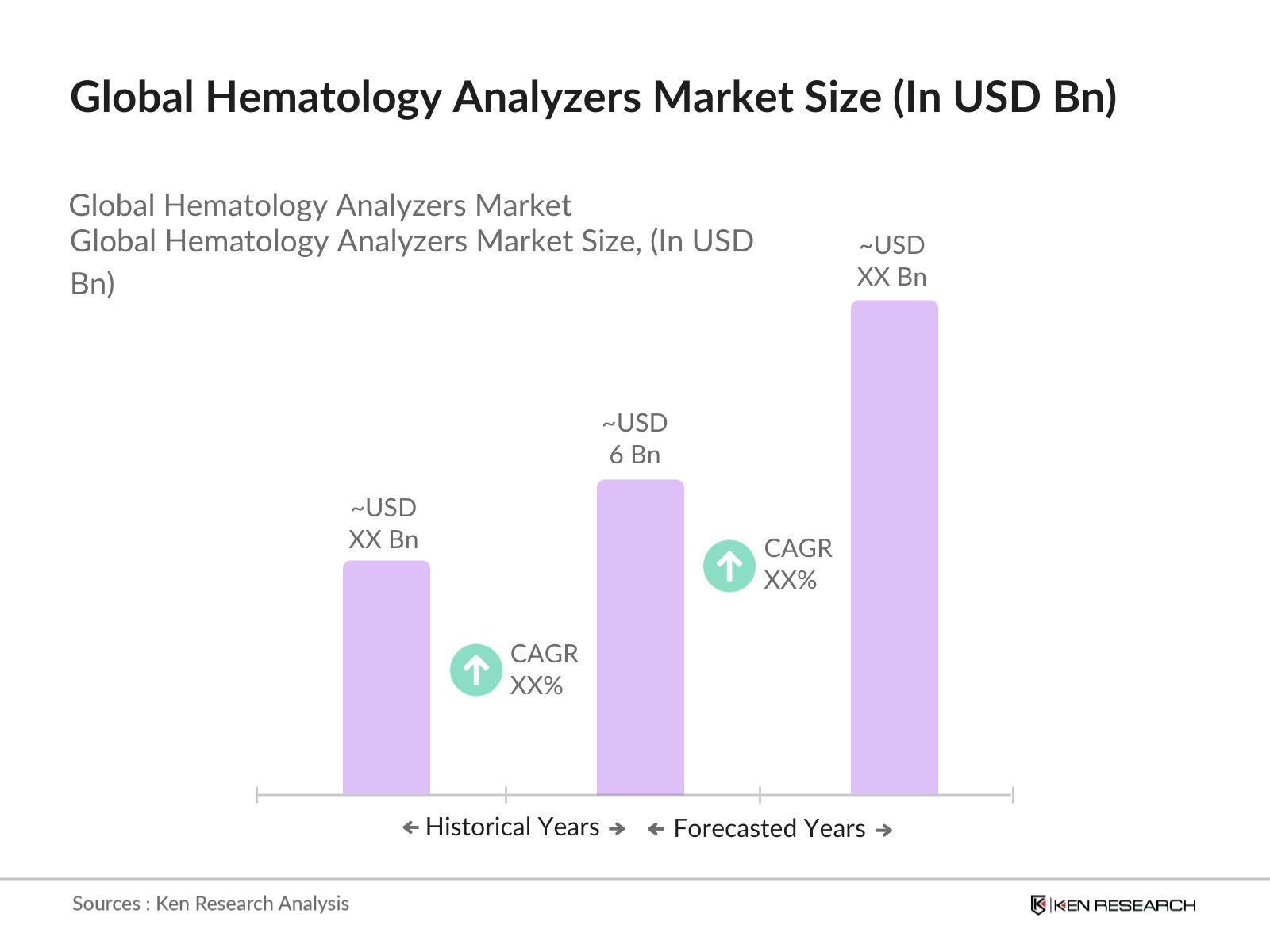
- The Global Hematology Analyzers market is valued at USD 6 billion, driven by advancements in diagnostic technology and the rising prevalence of blood-related disorders such as anemia and leukemia. The demand for automated and high-throughput analyzers in hospitals and diagnostic labs is surging due to their efficiency in providing quick and accurate results. Moreover, healthcare institutions are increasingly adopting hematology analyzers to meet the growing demand for better patient care. These factors have contributed significantly to the market's current size.
- Countries like the United States, Germany, and China are the key players in the hematology analyzers market due to their advanced healthcare infrastructure, increasing geriatric population, and higher incidence of blood disorders. The U.S. dominates the market due to its well-established healthcare system and the availability of technologically advanced products. Similarly, Germany leads in Europe with its top-tier healthcare services, while Chinas dominance in Asia stems from its large population base and growing healthcare investments.
- International healthcare initiatives, such as the World Banks Health Nutrition and Population (HNP) program, are increasing access to diagnostic tools in low-income countries. In 2023, the HNP program allocated over $500 million to improve diagnostic infrastructure in Africa and Southeast Asia, including the procurement of hematology analyzers. These grants and global efforts are crucial in expanding access to quality healthcare diagnostics in underserved regions.
Global Hematology Analyzers Market Segmentation
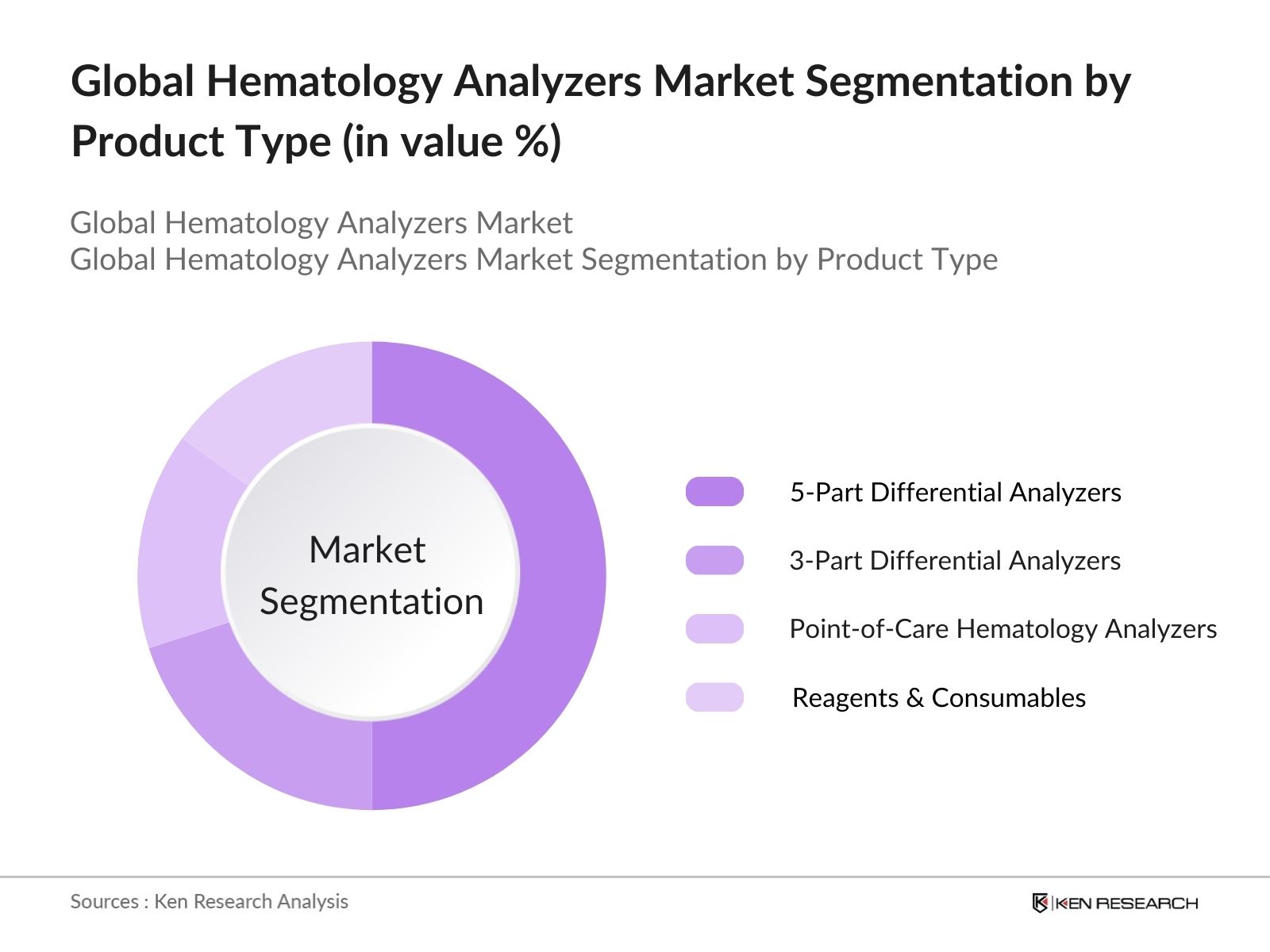
- By Product Type The hematology analyzers market is segmented into 3-Part Differential Analyzers, 5-Part Differential Analyzers, Point-of-Care Hematology Analyzers, and Reagents & Consumables. The 5-Part Differential Analyzers hold the dominant share in the product type segmentation. These analyzers offer a more detailed analysis of white blood cells, making them highly preferred for complex diagnostic procedures. Their ability to provide comprehensive insights into blood cell differentiation ensures that they remain in high demand among hospitals and laboratories.
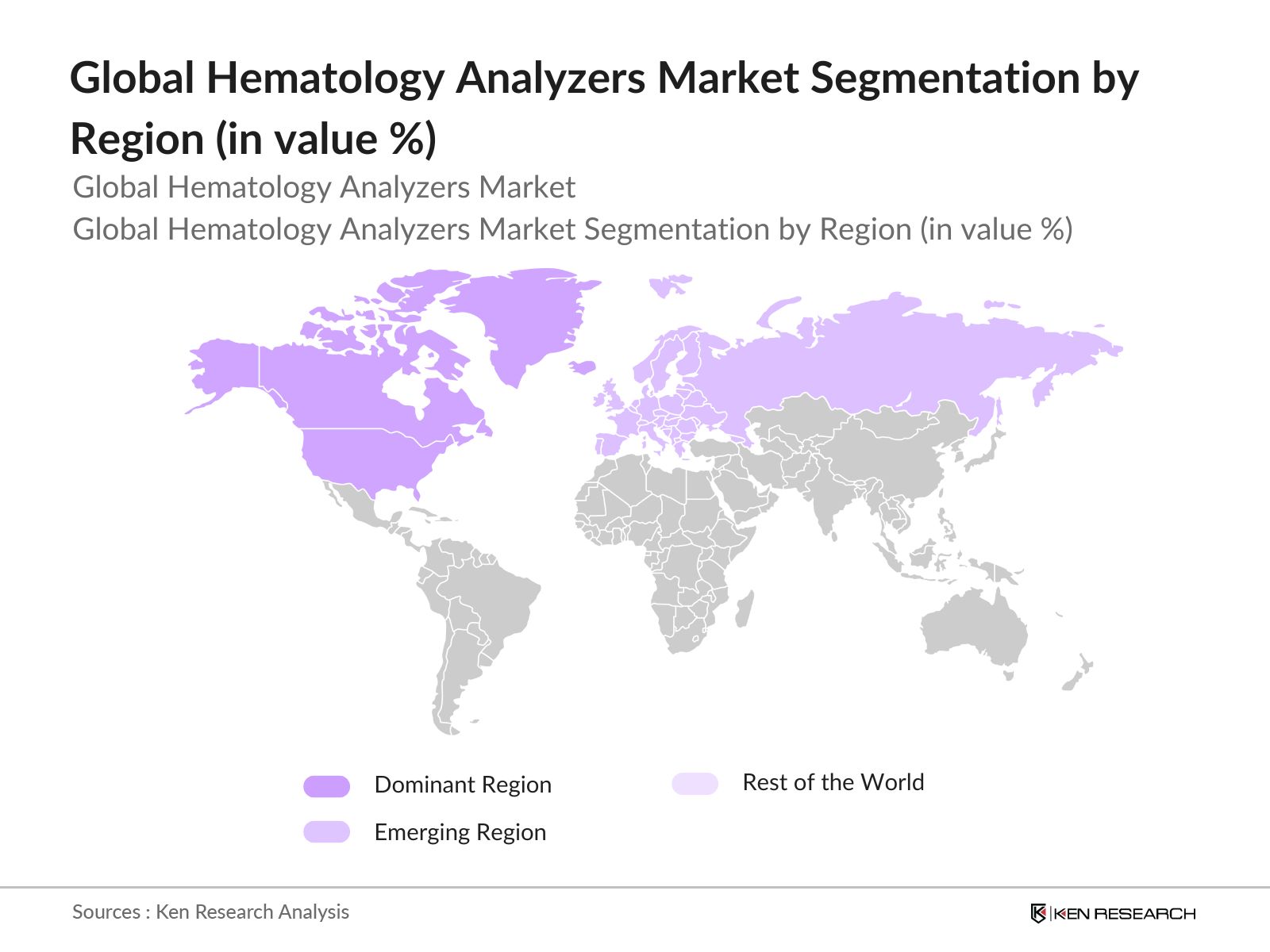
- By Region Geographically, the market is segmented into North America, Europe, Asia Pacific, Latin America, and the Middle East & Africa. North America remains the leader in this market due to its advanced healthcare infrastructure and the presence of major industry players. The continuous investments in healthcare technologies and the increasing focus on blood disease diagnostics drive this region's dominance.
- By Application The market is also segmented by application into Clinical Testing Laboratories, Hospitals, Diagnostic Centers, and Research Institutes. Hospitals dominate the application segment due to the high influx of patients requiring routine and specialized diagnostic services. Their established infrastructure and continuous need for diagnostic accuracy make hematology analyzers indispensable in hospital settings.
Global Hematology Analyzers Market Competitive Landscape
The Global Hematology Analyzers market is competitive, with a few major players dominating the market. These companies are recognized for their extensive R&D investments, technological innovations, and strong distribution channels. They play a pivotal role in shaping the industry by offering a wide array of hematology analyzers and associated consumables.
|
Company |
Established Year |
Headquarters |
R&D Investment |
Key Products |
Global Reach |
Strategic Alliances |
Market Expansion Initiatives |
Product Innovation |
Revenue (2023) |
|
Sysmex Corporation |
1968 |
Japan |
|||||||
|
Beckman Coulter Inc. (Danaher Corp) |
1935 |
United States |
|||||||
|
Abbott Laboratories |
1888 |
United States |
|||||||
|
Siemens Healthineers |
1847 |
Germany |
|||||||
|
Horiba Ltd. |
1945 |
Japan |
Global Hematology Analyzers Industry Analysis
Growth Drivers
- Rising Prevalence of Blood Disorders: The global rise in blood-related disorders, such as anemia, leukemia, and sickle cell disease, is significantly increasing the demand for hematology analyzers. According to the World Health Organization (WHO), over 2 billion people worldwide suffer from anemia, a condition often diagnosed and monitored using hematology analyzers. Additionally, the incidence of leukemia, a type of blood cancer, is on the rise globally, with over 437,000 new cases reported annually as per WHO. The increasing global healthcare burden for blood disorders justifies the growing need for advanced diagnostic solutions such as hematology analyzers .
- Growing Demand for Automated Hematology Systems: Automation in hematology systems is gaining traction due to its ability to deliver quick, accurate, and consistent results. In 2023, healthcare institutions globally are increasingly adopting these systems to improve workflow efficiency and reduce manual labor, especially in high-volume diagnostic labs. The shift towards automated systems is more pronounced in countries with well-developed healthcare systems, such as the U.S., where over 80% of diagnostic labs employ automated hematology analyzers. This trend is supported by rising government investments in healthcare automation.
- Technological Advancements in Hematology Analyzers: Hematology analyzers have evolved with technological advancements, including the integration of flow cytometry and artificial intelligence. These technologies allow for multiparameter analysis, enabling more precise diagnostic results. In 2024, the introduction of fully automated hematology analyzers capable of processing over 120 samples per hour is reducing the need for manual input. The development of analyzers capable of differentiating between 24 parameters simultaneously is a notable milestone. Global healthcare systems, especially in developed regions like North America and Europe, have been the primary adopters of these advanced systems .
Market Restraints
- Lack of Skilled Technicians: The shortage of trained healthcare professionals proficient in operating advanced hematology analyzers is another challenge. In 2023, the WHO reported that over 18 million additional healthcare workers are needed globally to meet current demand, especially in diagnostics. In low- and middle-income countries, where access to advanced diagnostic technology is growing, there is a stark mismatch between available equipment and skilled operators, limiting the effective use of hematology analyzers .
- Stringent Regulatory Guidelines: Stringent regulatory frameworks governing the use and certification of diagnostic equipment can slow down the adoption of new hematology analyzers. For instance, in the U.S., the FDAs extensive approval process for diagnostic devices can take several years, impacting market entry for new technologies. Similarly, the European CE marking requirements involve rigorous safety and efficacy assessments, making it challenging for manufacturers to bring new systems to market quickly.
Global Hematology Analyzers Market Future Outlook
The global hematology analyzers market is expected to witness significant growth over the next few years, driven by the continuous demand for advanced diagnostic tools, increasing prevalence of blood-related disorders, and ongoing technological innovations in the field. Furthermore, the integration of artificial intelligence (AI) and automation within hematology analyzers will likely contribute to better diagnostic accuracy and improved healthcare outcomes, fueling market expansion.
Market Opportunities
- Expansion in Emerging Markets: Emerging markets such as India, Brazil, and China present a significant growth opportunity for hematology analyzers, driven by government healthcare reforms and increased investment in diagnostic infrastructure. For example, the Indian government has invested $5 billion in 2023 to upgrade public hospitals and diagnostic labs, facilitating the adoption of advanced diagnostic equipment. The expansion of healthcare coverage in these regions, including universal healthcare initiatives in Latin America, is creating demand for hematology systems .
- Demand for Portable Hematology Analyzers: There is an increasing demand for portable hematology analyzers, particularly in remote or underdeveloped regions with limited access to healthcare infrastructure. Portable devices, which typically cost between $5,000 and $20,000, are more accessible to smaller clinics and field healthcare providers. In 2024, the World Bank highlighted the deployment of portable diagnostic tools as a key strategy to improve healthcare access in rural Africa and Southeast Asia, where healthcare infrastructure is limited .
Scope of the Report
|
By Product Type |
- 3-Part Differential Analyzers |
|
- 5-Part Differential Analyzers |
|
|
- Point-of-Care Hematology Analyzers |
|
|
- Reagents & Consumables |
|
|
By Application |
- Clinical Testing Laboratories |
|
- Hospitals |
|
|
- Diagnostic Centers |
|
|
- Research Institutes |
|
|
By End User |
- Hospitals |
|
- Diagnostic Laboratories |
|
|
- Research Institutes |
|
|
- Blood Banks |
|
|
By Modality |
- Standalone Analyzers |
|
- Benchtop Analyzers |
|
|
- Handheld Analyzers |
|
|
By Region |
- North America |
|
- Europe |
|
|
- Asia Pacific |
|
|
- Latin America |
|
|
- Middle East & Africa |
Products
Key Target Audience
Hematology Diagnostic Centers
Hospitals and Healthcare Facilities
Research Institutes
Blood Banks and Transfusion Centers
Pharmaceutical and Biotechnology Companies
Government and Regulatory Bodies (FDA, CE, WHO)
Medical Device Distributors
Investor and Venture Capitalist Firms
Companies
Players Mentioned in the Report:
Sysmex Corporation
Beckman Coulter Inc. (Danaher Corporation)
Abbott Laboratories
Siemens Healthineers
Horiba Ltd.
Roche Diagnostics
Bio-Rad Laboratories
Mindray Medical International Ltd.
Nihon Kohden Corporation
Diatron Medical Instruments
Drew Scientific Inc.
Boule Diagnostics AB
Heska Corporation
Erba Diagnostics Mannheim GmbH
Ortho Clinical Diagnostics
Table of Contents
1. Global Hematology Analyzers Market Overview
1.1. Definition and Scope
1.2. Market Taxonomy
1.3. Market Growth Rate
1.4. Market Segmentation Overview
2. Global Hematology Analyzers Market Size (In USD Bn)
2.1. Historical Market Size
2.2. Year-On-Year Growth Analysis
2.3. Key Market Developments and Milestones
3. Global Hematology Analyzers Market Analysis
3.1. Growth Drivers
3.1.1. Rising Prevalence of Blood Disorders
3.1.2. Growing Demand for Automated Hematology Systems
3.1.3. Technological Advancements in Hematology Analyzers
3.1.4. Increasing Government Initiatives in Healthcare
3.2. Market Challenges
3.2.1. High Equipment Costs
3.2.2. Lack of Skilled Technicians
3.2.3. Stringent Regulatory Guidelines
3.3. Opportunities
3.3.1. Expansion in Emerging Markets
3.3.2. Demand for Portable Hematology Analyzers
3.3.3. Integration of AI and Big Data in Diagnostics
3.4. Trends
3.4.1. Shift Towards Point-of-Care Diagnostics
3.4.2. Increased Use of Reagent-Free Hematology Systems
3.4.3. Development of Multiparameter Hematology Analyzers
3.5. Government Regulation
3.5.1. Regulatory Standards for Diagnostic Equipment
3.5.2. FDA and CE Mark Certifications
3.5.3. Global Healthcare Initiatives and Grants
3.6. SWOT Analysis
3.7. Stakeholder Ecosystem
3.8. Porters Five Forces Analysis
3.9. Competition Ecosystem
4. Global Hematology Analyzers Market Segmentation
4.1. By Product Type (In Value %)
4.1.1. 3-Part Differential Analyzers
4.1.2. 5-Part Differential Analyzers
4.1.3. Point-of-Care Hematology Analyzers
4.1.4. Reagents & Consumables
4.2. By Application (In Value %)
4.2.1. Clinical Testing Laboratories
4.2.2. Hospitals
4.2.3. Diagnostic Centers
4.2.4. Research Institutes
4.3. By End User (In Value %)
4.3.1. Hospitals
4.3.2. Diagnostic Laboratories
4.3.3. Research Institutes
4.3.4. Blood Banks
4.4. By Modality (In Value %)
4.4.1. Standalone Analyzers
4.4.2. Benchtop Analyzers
4.4.3. Handheld Analyzers
4.5. By Region (In Value %)
4.5.1. North America
4.5.2. Europe
4.5.3. Asia Pacific
4.5.4. Latin America
4.5.5. Middle East & Africa
5. Global Hematology Analyzers Market Competitive Analysis
5.1. Detailed Profiles of Major Companies
5.1.1. Sysmex Corporation
5.1.2. Beckman Coulter Inc. (Danaher Corporation)
5.1.3. Abbott Laboratories
5.1.4. Siemens Healthineers
5.1.5. Horiba Ltd.
5.1.6. Bio-Rad Laboratories
5.1.7. Roche Diagnostics
5.1.8. Mindray Medical International Ltd.
5.1.9. Nihon Kohden Corporation
5.1.10. Diatron Medical Instruments
5.1.11. Drew Scientific Inc.
5.1.12. Boule Diagnostics AB
5.1.13. Heska Corporation
5.1.14. Erba Diagnostics Mannheim GmbH
5.1.15. Ortho Clinical Diagnostics
5.2. Cross Comparison Parameters (Revenue, R&D Investments, Product Portfolio, Global Reach, Strategic Alliances, Headquarters Location, No. of Employees, Key Acquisitions)
5.3. Market Share Analysis
5.4. Strategic Initiatives
5.5. Mergers and Acquisitions
5.6. Investment Analysis
5.7. Venture Capital Funding
5.8. Government Grants
5.9. Private Equity Investments
6. Global Hematology Analyzers Market Regulatory Framework
6.1. International Standards (ISO, CLSI)
6.2. Compliance Requirements (FDA, CE Mark)
6.3. Certification Processes (Product Quality Standards)
7. Global Hematology Analyzers Future Market Size (In USD Bn)
7.1. Future Market Size Projections
7.2. Key Factors Driving Future Market Growth
8. Global Hematology Analyzers Future Market Segmentation
8.1. By Product Type (In Value %)
8.2. By Application (In Value %)
8.3. By End User (In Value %)
8.4. By Modality (In Value %)
8.5. By Region (In Value %)
9. Global Hematology Analyzers Market Analysts Recommendations
9.1. TAM/SAM/SOM Analysis
9.2. Customer Cohort Analysis
9.3. Marketing Initiatives
9.4. White Space Opportunity Analysis
Disclaimer
Contact Us
Research Methodology
Step 1: Identification of Key Variables
The initial stage focuses on constructing a comprehensive map of all key stakeholders within the Global Hematology Analyzers Market. This step involves extensive desk research using both secondary and proprietary databases, which help gather industry-level information. The main goal is to identify critical variables that influence the market.
Step 2: Market Analysis and Construction
The next step is the compilation and analysis of historical data related to the market. This includes examining penetration rates, market density, and revenue generation. Service quality statistics are also evaluated to ensure the reliability of data estimates.
Step 3: Hypothesis Validation and Expert Consultation
Market hypotheses are developed and validated through consultations with industry experts via phone interviews. These consultations provide practical insights from stakeholders, which are used to refine the market data and analysis.
Step 4: Research Synthesis and Final Output
In the final stage, primary research is conducted directly with hematology analyzer manufacturers to gain in-depth insights into product segmentation, sales performance, and customer behavior. These insights are synthesized with the bottom-up approach to ensure accuracy.
Frequently Asked Questions
1. How big is the Global Hematology Analyzers Market?
The global hematology analyzers market is valued at USD 6 billion, driven by advancements in diagnostic technology and an increase in blood-related disorders such as leukemia and anemia.
2. What are the key growth drivers of the Global Hematology Analyzers Market?
Key growth drivers include the rising prevalence of blood disorders, increasing demand for automated diagnostic systems, and continuous innovations in analyzer technology.
3. Who are the major players in the Global Hematology Analyzers Market?
Major players include Sysmex Corporation, Beckman Coulter Inc., Abbott Laboratories, Siemens Healthineers, and Horiba Ltd. These companies dominate due to their strong R&D investments and extensive product portfolios.
4. What are the challenges faced by the Global Hematology Analyzers Market?
Challenges include high equipment costs, stringent regulatory standards, and the need for skilled technicians to operate advanced diagnostic devices.
Why Buy From Us?

What makes us stand out is that our consultants follows Robust, Refine and Result (RRR) methodology. i.e. Robust for clear definitions, approaches and sanity checking, Refine for differentiating respondents facts and opinions and Result for presenting data with story

We have set a benchmark in the industry by offering our clients with syndicated and customized market research reports featuring coverage of entire market as well as meticulous research and analyst insights.

While we don't replace traditional research, we flip the method upside down. Our dual approach of Top Bottom & Bottom Top ensures quality deliverable by not just verifying company fundamentals but also looking at the sector and macroeconomic factors.

With one step in the future, our research team constantly tries to show you the bigger picture. We help with some of the tough questions you may encounter along the way: How is the industry positioned? Best marketing channel? KPI's of competitors? By aligning every element, we help maximize success.

Our report gives you instant access to the answers and sources that other companies might choose to hide. We elaborate each steps of research methodology we have used and showcase you the sample size to earn your trust.

If you need any support, we are here! We pride ourselves on universe strength, data quality, and quick, friendly, and professional service.