















Global Hemp Clothing Market Outlook to 2030
Region:Global
Author(s):Sanjeev
Product Code:KROD4516
October 2024
84
About the Report
Global Hemp Clothing Market Overview
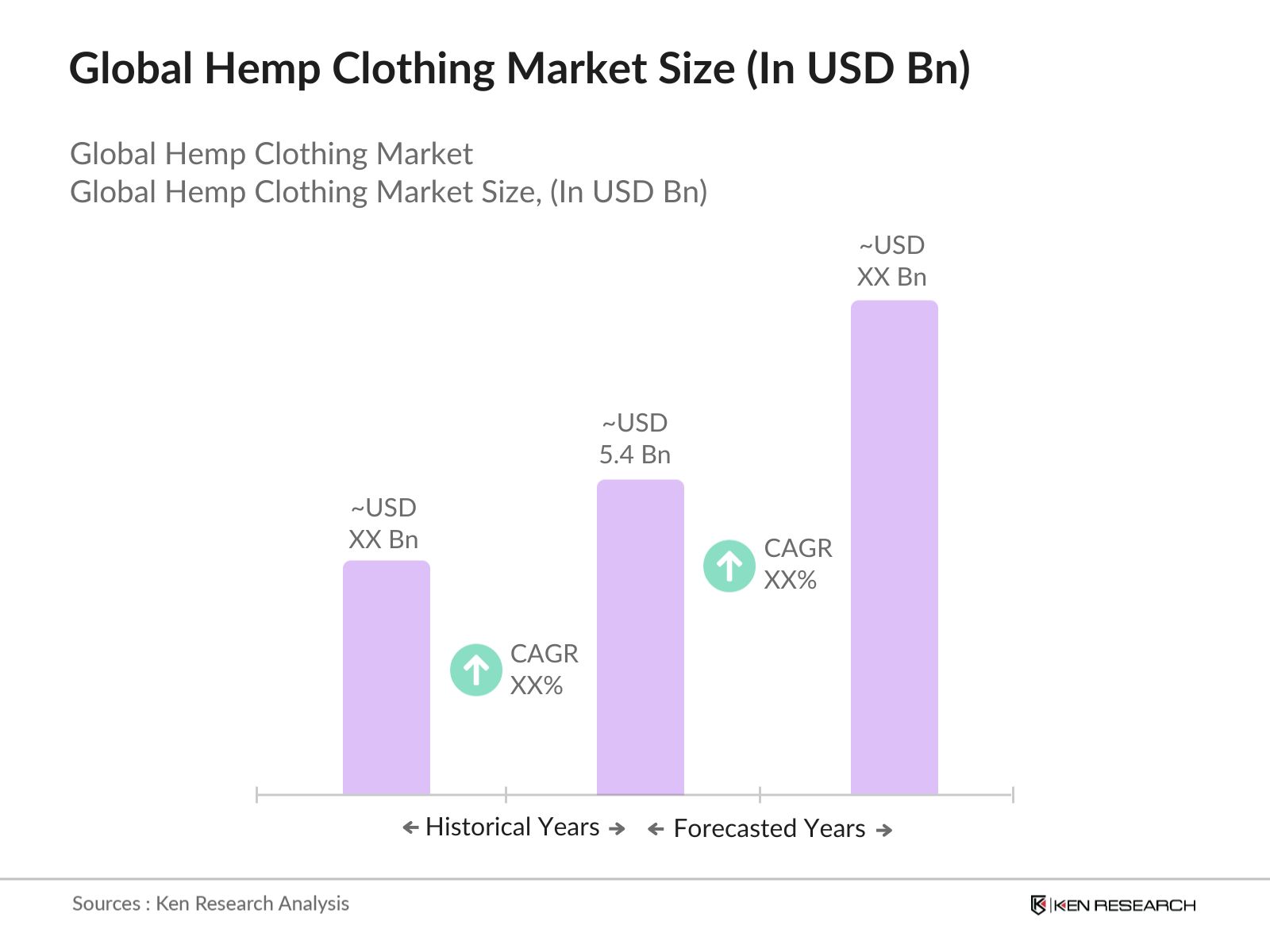
- The global hemp clothing market is valued at USD 5.4 billion, driven by rising consumer demand for sustainable and eco-friendly clothing options. Hemp, as a natural fiber, is being increasingly adopted due to its environmental benefits such as lower water usage, minimal pesticide needs, and biodegradability. Major brands are integrating hemp into their product lines, responding to the growing consumer shift toward sustainable fashion. This trend has spurred the growth of the market, driven by eco-conscious consumers and sustainable fashion initiatives.
- Countries like the United States, Canada, and China are dominating the hemp clothing market due to well-established hemp cultivation infrastructure and government support for organic textile production. In the U.S., for instance, the 2018 Farm Bill legalized the cultivation of industrial hemp, boosting the country's hemp clothing industry. China has a long history of hemp cultivation and textile production, which places it in a dominant position. The availability of raw materials and skilled labor in these regions has further fueled the growth of the market.
- Government bodies and international organizations are promoting organic textile certifications like the Global Organic Textile Standard (GOTS) and OEKO-TEX. These certifications are essential for hemp textile manufacturers to gain consumer trust and meet international trade requirements.
Global Hemp Clothing Market Segmentation
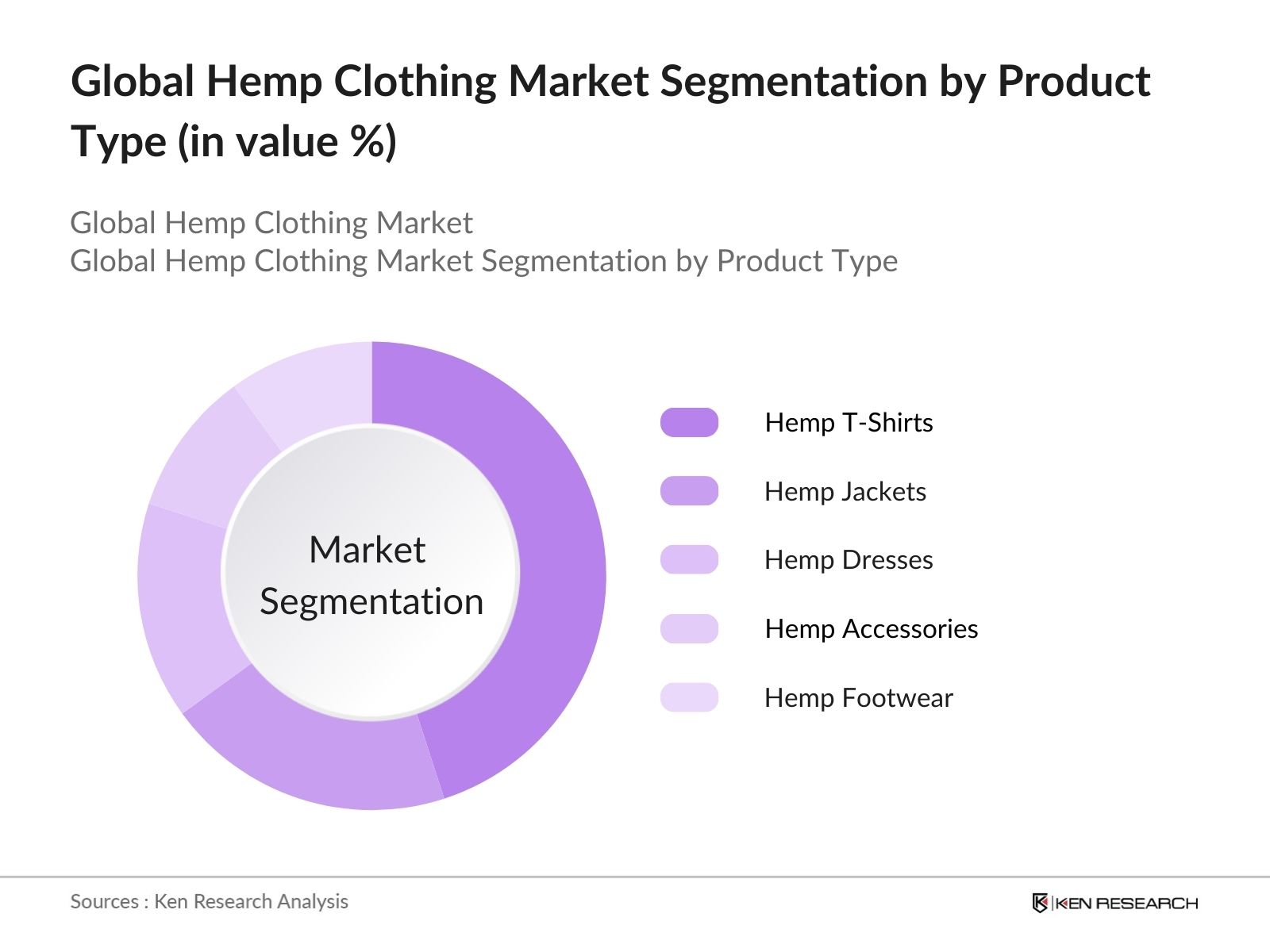
- By Product Type: The market is segmented by product type into t-shirts, dresses, jackets, accessories, and footwear. Among these, hemp t-shirts are dominating the market share due to their widespread acceptance and popularity among eco-conscious consumers. Brands such as Patagonia and Levis have been pushing hemp t-shirts into the mainstream market. Hemp t-shirts are favored for their durability, softness, and breathability, making them ideal for casual wear. The growing demand for sustainable everyday fashion further drives the dominance of hemp t-shirts.
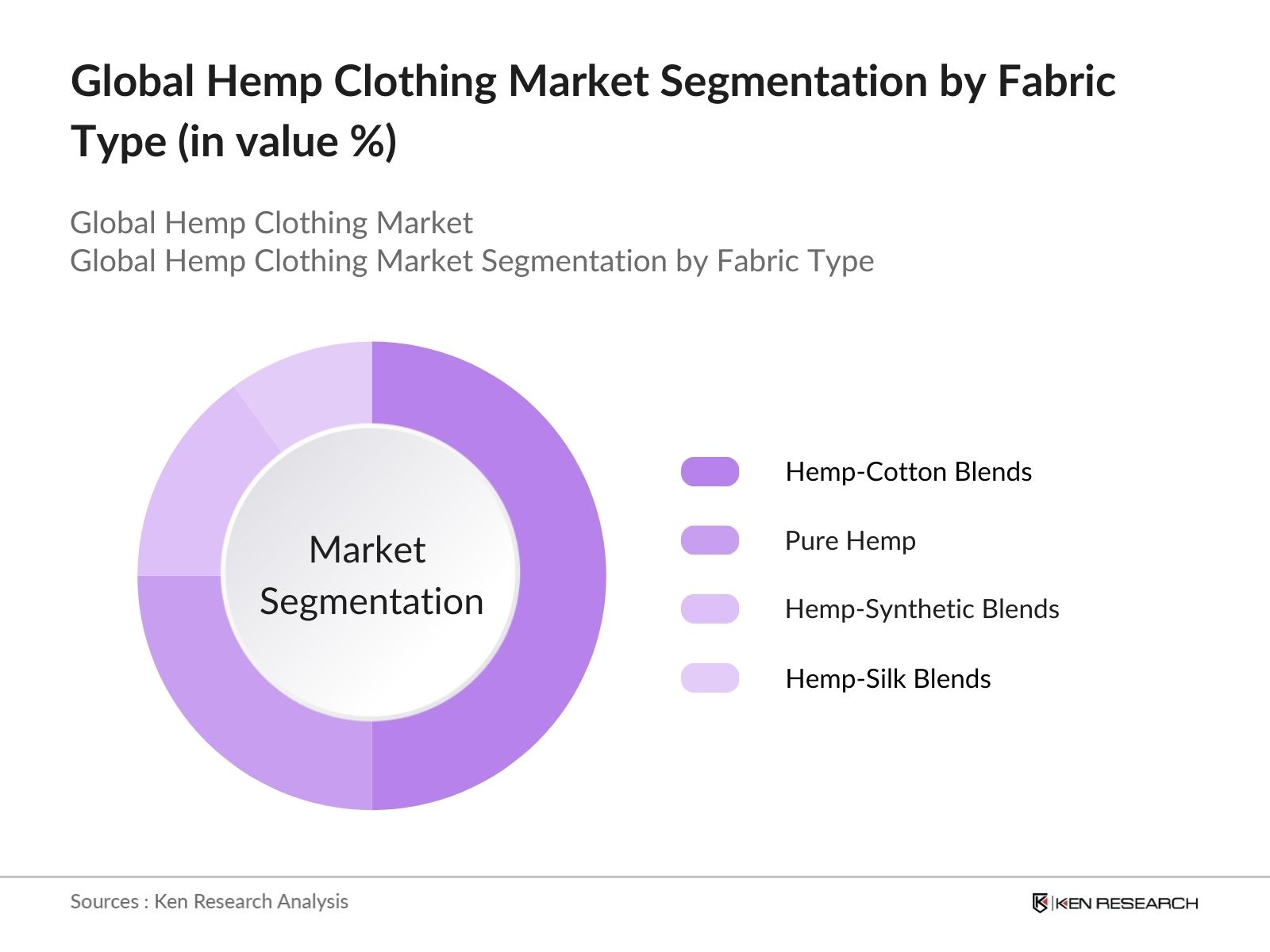
- By Fabric Type: The market is segmented by fabric type into pure hemp, hemp-cotton blends, hemp-synthetic blends, and hemp-silk blends. Hemp-cotton blends dominate the market due to their versatile properties. This blend combines the durability of hemp with the softness of cotton, offering a fabric that is comfortable and suitable for both casual and formal wear. Brands prefer this blend for its cost-efficiency and wide acceptance among consumers, making it a preferred choice in sustainable fashion collections.
Global Hemp Clothing Market Competitive Landscape
The global hemp clothing market is consolidated, with a few major players leading the market. These companies dominate due to their strong brand reputation, extensive distribution networks, and early adoption of sustainable practices. Leading brands are investing in hemp processing technologies and expanding their product lines to meet the growing demand for sustainable textiles. The competitive landscape is further strengthened by partnerships between brands and eco-fashion initiatives.
|
Company Name |
Establishment Year |
Headquarters |
Sustainability Initiatives |
Revenue (USD Mn) |
No. of Employees |
|
Patagonia |
1973 |
Ventura, California |
|||
|
Levi Strauss & Co. |
1853 |
San Francisco, USA |
|||
|
Jungmaven |
2005 |
Los Angeles, USA |
|||
|
Thought Clothing |
1995 |
London, UK |
|||
|
Pact Apparel |
2009 |
Boulder, Colorado |
Global Hemp Clothing Industry Analysis
Growth Drivers
- Rise in Eco-conscious Consumerism (Sustainability Focus): The surge in eco-conscious consumerism is one of the primary drivers of growth in the global hemp clothing market. Consumers increasingly prefer sustainable alternatives to conventional fabrics like cotton and synthetic materials. A report from the World Economic Forum highlights that 73% of global consumers are now willing to pay more for eco-friendly products, driving demand for hemp-based clothing, which is biodegradable, requires less water, and uses minimal pesticides compared to traditional cotton.
- Government Policies Promoting Organic Textiles: Governments across the globe are implementing policies that support organic and sustainable textiles. The European Unions Green Deal and the U.S. Department of Agricultures Organic Certification are examples of government-backed initiatives promoting the cultivation of organic crops like hemp. These policies provide subsidies and incentives for farmers to cultivate hemp, which supports the growing demand for sustainable textiles.
- Increasing Demand for Sustainable Fashion: Sustainable fashion is gaining traction among consumers who prioritize environmentally responsible brands. According to a 2023 survey by McKinsey, over 60% of fashion consumers in the U.S. and Europe are considering sustainability as a critical factor in their purchase decisions. Hemp, being one of the most sustainable fibers, is benefiting from this trend as fashion brands are integrating hemp-based fabrics into their collections.
Market Challenges
- High Costs of Hemp Processing (Cost Structure): One of the significant challenges in the hemp clothing market is the high cost associated with processing hemp fibers. Hemp requires specialized machinery and processing techniques, which are often more expensive than conventional textile manufacturing. Reports from the European Industrial Hemp Association indicate that the costs of decortication and fiber extraction for hemp are higher compared to cotton, affecting the scalability and profitability for manufacturers.
- Regulatory Variability Across Countries (Regulatory Constraints): Hemp cultivation and textile manufacturing face regulatory inconsistencies globally. For instance, while the U.S. legalized industrial hemp under the 2018 Farm Bill, other countries like Japan and South Korea have stricter controls over hemp cultivation due to its association with cannabis. This regulatory variability hinders international trade and limits market expansion.
Global Hemp Clothing Market Future Outlook
Over the next five years, the global hemp clothing market is expected to show significant growth driven by increased consumer awareness regarding sustainability, advancements in hemp textile processing technology, and supportive government regulations. Hemp's environmental benefits, such as lower water usage and natural pest resistance, will continue to attract eco-conscious consumers. Additionally, the rise of slow fashion and circular economy principles will further fuel the market, encouraging more brands to adopt hemp in their product lines.
Market Opportunities
- Innovation in Hemp Blends and Textile Processing (Product Innovation): Advancements in textile technology present opportunities for innovation in hemp blends. By combining hemp with other sustainable fibers like organic cotton or Tencel, manufacturers can create softer and more versatile fabrics that appeal to a broader range of consumers. These innovations also help overcome some of the texture challenges traditionally associated with hemp fabrics.
- Expanding Demand in Emerging Markets (Regional Growth): Emerging markets such as India and Brazil are showing increasing demand for sustainable textiles, including hemp-based clothing. According to the World Bank, rising disposable incomes and a growing awareness of sustainability in these regions are driving demand for eco-friendly fashion, creating substantial opportunities for market expansion.
Scope of the Report
|
By Product Type |
Hemp T-Shirts Hemp Jackets Hemp Dresses Hemp Accessories Hemp Footwear |
|
By Fabric Type |
Pure Hemp Hemp-Cotton Blends Hemp-Synthetic Blends Hemp-Silk Blends |
|
By End-User |
Men Women Children |
|
By Distribution Channel |
Online Retail Offline Retail Specialty Stores Department Stores |
|
By Region |
North East West South |
Products
Key Target Audience
Hemp Clothing Manufacturers
Fashion Retailers (Specialty Stores)
Organic Textile Producers
Eco-conscious Consumer Groups
Banks and Financial Institutes
Government and Regulatory Bodies (USDA, European Commission)
Investment and Venture Capitalist Firms
Textile Exporters and Importers
Environmental Advocacy Groups
Companies
Global Hemp Clothing Market Major Players
Patagonia
Levi Strauss & Co.
Jungmaven
Thought Clothing
Pact Apparel
Toad&Co
Tentree
Hempys
Rawganique
Bohempia
Hemp Tailor
Hoodlamb
Vital Hemp
Eileen Fisher
Nomads Clothing
Table of Contents
1. Global Hemp Clothing Market Overview
1.1. Definition and Scope
1.2. Market Taxonomy
1.3. Market Growth Rate
1.4. Market Segmentation Overview
2. Global Hemp Clothing Market Size (In USD Bn)
2.1. Historical Market Size
2.2. Year-On-Year Growth Analysis
2.3. Key Market Developments and Milestones
3. Global Hemp Clothing Market Analysis
3.1. Growth Drivers
3.1.1. Rise in Eco-conscious Consumerism (Sustainability Focus)
3.1.2. Government Policies Promoting Organic Textiles (Government Support)
3.1.3. Increasing Demand for Sustainable Fashion (Consumer Trends)
3.1.4. Shifts in Textile Manufacturing Towards Eco-friendly Processes (Industry Transition)
3.2. Market Challenges
3.2.1. High Costs of Hemp Processing (Cost Structure)
3.2.2. Regulatory Variability Across Countries (Regulatory Constraints)
3.2.3. Limited Supply Chain Infrastructure for Hemp (Logistical Hurdles)
3.2.4. Lack of Consumer Awareness About Hemp Fabric (Awareness Gap)
3.3. Opportunities
3.3.1. Innovation in Hemp Blends and Textile Processing (Product Innovation)
3.3.2. Expanding Demand in Emerging Markets (Regional Growth)
3.3.3. Collaborations with Sustainable Fashion Brands (Partnerships)
3.3.4. Adoption of Circular Economy Principles (Sustainability Initiatives)
3.4. Trends
3.4.1. Hemp as a Key Component in the Slow Fashion Movement (Industry Trends)
3.4.2. Growing Popularity of Vegan and Cruelty-free Clothing (Ethical Fashion)
3.4.3. Rise of Hemp Athleisure and Casual Wear (Fashion Trends)
3.4.4. Increased Investment in Hemp-based Textile Technology (Technological Advancements)
3.5. Government Regulation
3.5.1. Organic Textile Certifications (Certification Standards)
3.5.2. Hemp Production and Textile Manufacturing Laws (Regulatory Guidelines)
3.5.3. Tariffs and Trade Policies Impacting Hemp Textile Imports/Exports (Trade Policies)
3.6. SWOT Analysis
3.7. Stakeholder Ecosystem
3.7.1. Suppliers
3.7.2. Manufacturers
3.7.3. Distributors
3.7.4. Retailers
3.7.5. End-Consumers
3.8. Porters Five Forces Analysis
3.9. Competition Ecosystem
4. Global Hemp Clothing Market Segmentation
4.1. By Product Type (In Value %)
4.1.1. Hemp T-Shirts
4.1.2. Hemp Jackets
4.1.3. Hemp Dresses
4.1.4. Hemp Accessories (Bags, Hats, etc.)
4.1.5. Hemp Footwear
4.2. By Fabric Type (In Value %)
4.2.1. Pure Hemp
4.2.2. Hemp-Cotton Blends
4.2.3. Hemp-Synthetic Blends
4.2.4. Hemp-Silk Blends
4.3. By End-User (In Value %)
4.3.1. Men
4.3.2. Women
4.3.3. Children
4.4. By Distribution Channel (In Value %)
4.4.1. Online Retail
4.4.2. Offline Retail
4.4.3. Specialty Stores
4.4.4. Department Stores
4.5. By Region (In Value %)
4.5.1. North
4.5.2. East
4.5.3. West
4.5.4. South
5. Global Hemp Clothing Market Competitive Analysis
5.1 Detailed Profiles of Major Companies
5.1.1. Patagonia
5.1.2. Levi Strauss & Co.
5.1.3. Jungmaven
5.1.4. Hempys
5.1.5. Thought Clothing
5.1.6. Toad&Co
5.1.7. Eileen Fisher
5.1.8. Pact Apparel
5.1.9. Tentree
5.1.10. Nomads Clothing
5.1.11. Rawganique
5.1.12. Bohempia
5.1.13. Hoodlamb
5.1.14. Hemp Tailor
5.1.15. Vital Hemp
5.2 Cross Comparison Parameters (Revenue, No. of Employees, Headquarters, Inception Year, Sustainability Initiatives, Product Range, Online Presence, Manufacturing Capabilities)
5.3. Market Share Analysis
5.4. Strategic Initiatives
5.5. Mergers and Acquisitions
5.6. Investment Analysis
5.7. Venture Capital Funding
5.8. Government Grants
5.9. Private Equity Investments
6. Global Hemp Clothing Market Regulatory Framework
6.1. Environmental Standards
6.2. Compliance Requirements
6.3. Certification Processes
7. Global Hemp Clothing Future Market Size (In USD Bn)
7.1. Future Market Size Projections
7.2. Key Factors Driving Future Market Growth
8. Global Hemp Clothing Future Market Segmentation
8.1. By Product Type (In Value %)
8.2. By Fabric Type (In Value %)
8.3. By End-User (In Value %)
8.4. By Distribution Channel (In Value %)
8.5. By Region (In Value %)
9. Global Hemp Clothing Market Analysts' Recommendations
9.1. TAM/SAM/SOM Analysis
9.2. Customer Cohort Analysis
9.3. Marketing Initiatives
9.4. White Space Opportunity Analysis
Research Methodology
Step 1: Identification of Key Variables
The first step involves mapping the ecosystem of the global hemp clothing market by identifying all key stakeholders. This includes analyzing supply chain participants, government agencies, and consumer trends through desk research and industry publications. Critical variables, such as production capacity, regulatory impact, and raw material availability, are identified and analyzed.
Step 2: Market Analysis and Construction
This phase focuses on compiling historical data related to the hemp clothing market, including product segments, consumer demand, and production trends. Analysis of market penetration rates and a review of industry reports are performed to gauge the growth trajectory and future opportunities.
Step 3: Hypothesis Validation and Expert Consultation
Market hypotheses are developed based on historical data and trends, and they are validated through direct consultations with industry experts. This step involves interviews with hemp clothing manufacturers, distributors, and retailers to gain insights into operational strategies and challenges.
Step 4: Research Synthesis and Final Output
The final step involves synthesizing all collected data and insights into a cohesive market report. Detailed insights from both qualitative and quantitative research are integrated to present an accurate view of the global hemp clothing market, with projections for future growth and potential challenges.
Frequently Asked Questions
01. How big is the global hemp clothing market?
The global hemp clothing market is valued at USD 5.4 billion, driven by growing consumer interest in sustainable fashion and increased production of organic textiles.
02. What are the challenges in the global hemp clothing market?
Challenges in the global hemp clothing market include high production costs, limited supply chain infrastructure, and varying regulations across different countries, which complicate international trade.
03. Who are the major players in the global hemp clothing market?
Major players in the global hemp clothing market include Patagonia, Levi Strauss & Co., Thought Clothing, Jungmaven, and Pact Apparel, who dominate due to their strong sustainability focus and established brand reputation.
04. What are the growth drivers of the global hemp clothing market?
The global hemp clothing market is driven by increased consumer awareness regarding sustainability, government support for organic textiles, and innovations in hemp textile processing that reduce production costs.
05. Which regions dominate the global hemp clothing market?
North America and Europe dominate the global hemp clothing market due to their advanced hemp cultivation infrastructure, supportive regulations, and growing consumer demand for eco-friendly fashion solutions.
Why Buy From Us?

What makes us stand out is that our consultants follows Robust, Refine and Result (RRR) methodology. i.e. Robust for clear definitions, approaches and sanity checking, Refine for differentiating respondents facts and opinions and Result for presenting data with story

We have set a benchmark in the industry by offering our clients with syndicated and customized market research reports featuring coverage of entire market as well as meticulous research and analyst insights.

While we don't replace traditional research, we flip the method upside down. Our dual approach of Top Bottom & Bottom Top ensures quality deliverable by not just verifying company fundamentals but also looking at the sector and macroeconomic factors.

With one step in the future, our research team constantly tries to show you the bigger picture. We help with some of the tough questions you may encounter along the way: How is the industry positioned? Best marketing channel? KPI's of competitors? By aligning every element, we help maximize success.

Our report gives you instant access to the answers and sources that other companies might choose to hide. We elaborate each steps of research methodology we have used and showcase you the sample size to earn your trust.

If you need any support, we are here! We pride ourselves on universe strength, data quality, and quick, friendly, and professional service.