
Global HighDensity Interconnect (HDI) Market Outlook 2030
Region:Global
Author(s):Shivani Mehra
Product Code:KROD8154
Region:Global
Author(s):Shivani Mehra
Product Code:KROD8154
November 2024
96
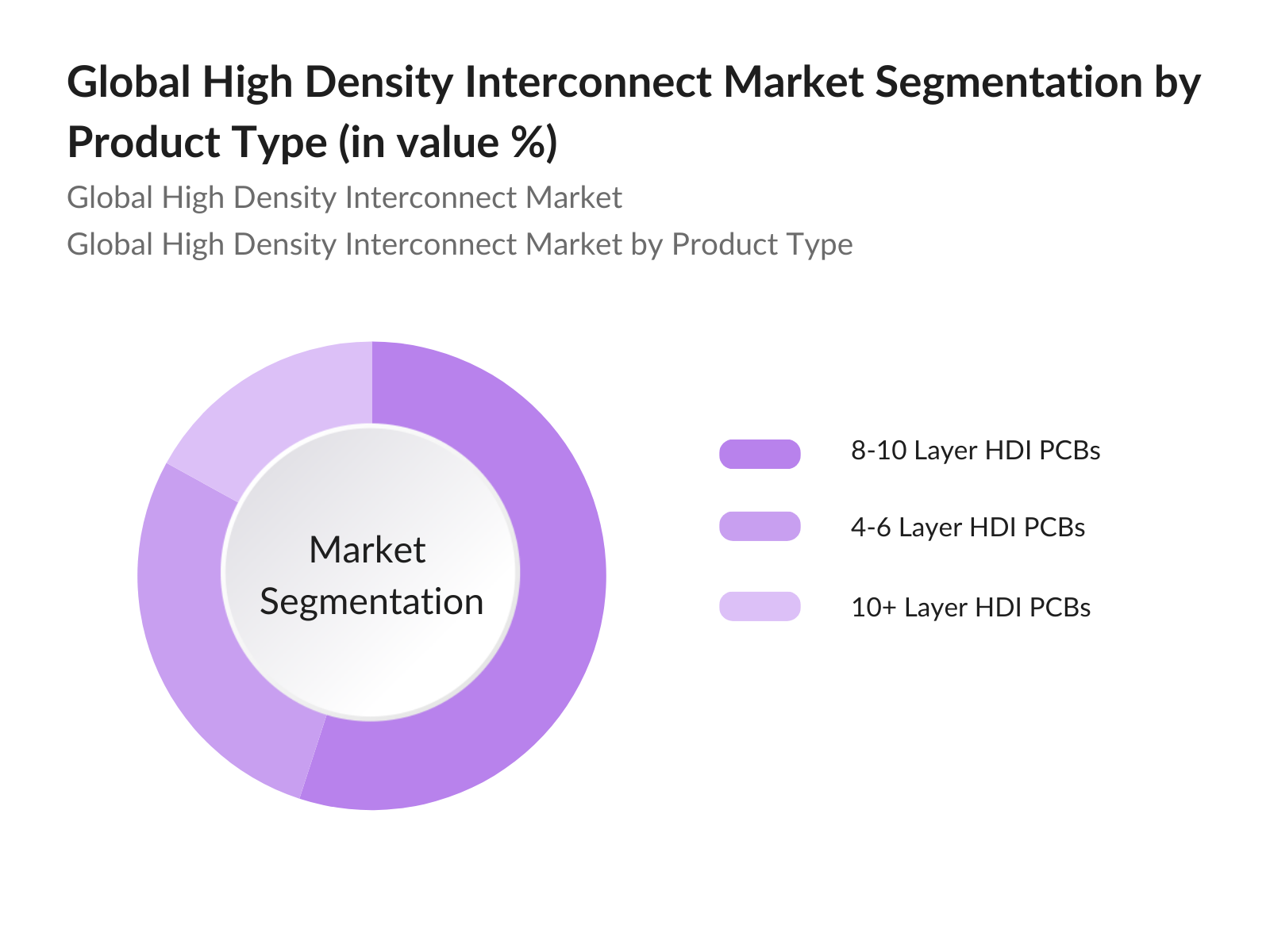
By Product Type: The HDI market is segmented by product type into 4-6 Layer HDI PCBs, 8-10 Layer HDI PCBs, and 10+ Layer HDI PCBs. Recently, 8-10 Layer HDI PCBs hold a dominant market share within this segmentation due to their widespread use in smartphones, tablets, and wearable devices. These PCBs offer the ideal balance of performance, miniaturization, and cost-effectiveness for consumer electronics. With the rapid expansion of 5G networks and IoT infrastructure, demand for 8-10 layer HDI PCBs continues to grow at a rapid pace.
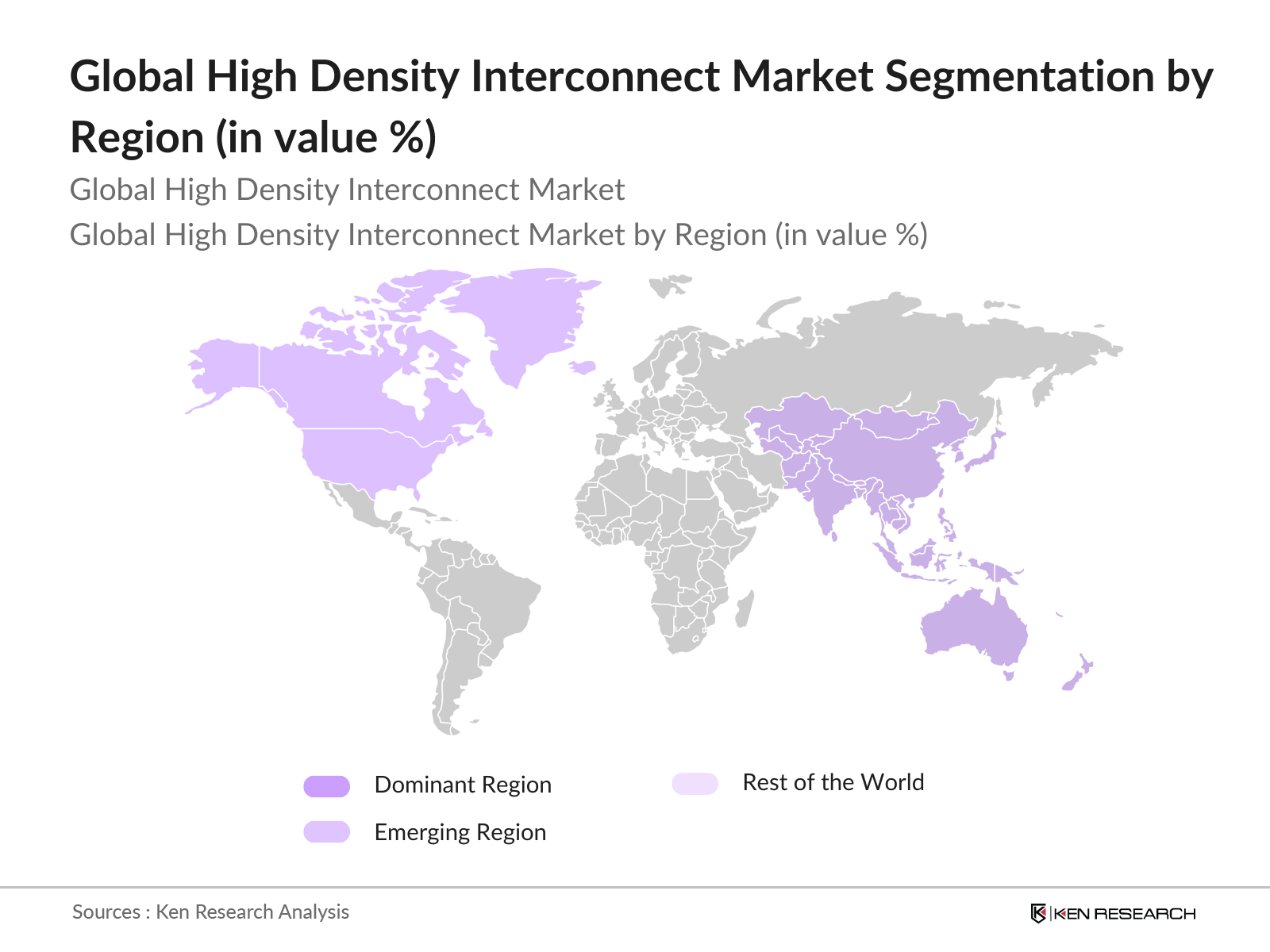
By Region: The HDI market is geographically segmented into North America, Europe, Asia Pacific, Latin America, and the Middle East & Africa. Asia Pacific, particularly China and South Korea, holds the largest market share. The region's dominance is driven by its strong electronics manufacturing base, low production costs, and high demand for consumer electronics. North America follows, driven by its focus on automotive electronics and advanced telecommunications technology.
The global HDI market is dominated by both global and regional players who possess strong manufacturing capabilities, innovative product portfolios, and wide geographical reach. Companies like TTM Technologies and Unimicron Technology Corp. are key players due to their expertise in producing high-layer HDI PCBs for various industries. The consolidation in the industry is notable, with large companies holding significant influence in market dynamics.
Global High Density Interconnect Market Competitive Landscape
|
Company |
Establishment Year |
Headquarters |
Market Specific Parameters |
|
TTM Technologies |
1978 |
USA |
Revenue, Number of HDI Plants, R&D Expenditure, Technological Advancements, Patents, Strategic Partnerships |
|
Unimicron Technology Corp |
1990 |
Taiwan |
Global Sales, Manufacturing Capacity, Innovation Pipeline, Market Expansion Strategies, Alliances, R&D Investments |
|
AT&S Austria Technologie |
1987 |
Austria |
Market Presence, Product Range, Technological Leadership, Geographical Reach, M&A Activities, Client Portfolio |
|
Fujikura Ltd. |
1910 |
Japan |
Product Innovation, PCB Design Capabilities, Production Capacity, Market Share, Environmental Initiatives, Customer Base |
|
Samsung Electro-Mechanics |
1973 |
South Korea |
Manufacturing Facilities, New Technology Development, Global Distribution, HDI Production Scale, Strategic Alliances, Quality Certifications |
Market Growth Drivers
Market Challenges:
Over the next five years, the Global High Density Interconnect (HDI) market is expected to show significant growth driven by continuous innovation in consumer electronics, advancements in telecommunications infrastructure, and the widespread adoption of 5G technology. Automotive electronics, in particular, will contribute to the expansion of HDI applications as autonomous vehicles and electric cars increasingly require sophisticated PCBs. Additionally, the demand for wearable technology and IoT devices will play a crucial role in shaping the market's future trajectory.
Market Opportunities:
|
By Product Type |
4-6 Layer HDI PCBs 8-10 Layer HDI PCBs 10+ Layer HDI PCBs |
|
By Application |
Automotive Electronics Consumer Electronics Medical Devices Telecommunications Aerospace and Defense |
|
By Manufacturing Method |
Sequential Lamination Modified Semi-Additive Process (mSAP) Any-Layer HDI |
|
By End-User |
OEMs (Original Equipment Manufacturers) PCB Assembly Companies EMS (Electronics Manufacturing Services) Providers |
|
By Region |
North America Europe Asia Pacific Latin America Middle East & Africa |
1.1. Definition and Scope
1.2. Market Taxonomy (Single Layer, Multi-Layer, High-Density Flexible PCBs)
1.3. Market Growth Rate
1.4. Market Segmentation Overview
2.1. Historical Market Size
2.2. Year-On-Year Growth Analysis
2.3. Key Market Developments and Milestones (5G Network Proliferation, IoT Expansion, Autonomous Vehicle Integration)
3.1. Growth Drivers (Miniaturization of Electronic Devices, Demand in Automotive, Wearable Technology Advancements)
3.2. Market Challenges (Complex Manufacturing Process, High Initial Setup Costs, Lack of Skilled Workforce)
3.3. Opportunities (Growing Adoption in Medical Devices, Rising Use in Aerospace, 3D Printing Innovations in PCB Manufacturing)
3.4. Trends (Increasing Use of Laser Drilling, Adoption of Ultra-Thin Substrates, Integration with Advanced Packaging Technologies)
3.5. Government Regulations (Electronics Manufacturing Standards, Import/Export Controls on PCB Components, Environmental Compliance)
3.6. SWOT Analysis
3.7. Stakeholder Ecosystem (PCB Manufacturers, Component Suppliers, End-User Industries)
3.8. Porters Five Forces (Threat of New Entrants, Bargaining Power of Suppliers, Industry Rivalry)
3.9. Competition Ecosystem
4.1. By Product Type (In Value %)
4.1.1. 4-6 Layer HDI PCBs
4.1.2. 8-10 Layer HDI PCBs
4.1.3. 10+ Layer HDI PCBs
4.2. By Application (In Value %)
4.2.1. Automotive Electronics
4.2.2. Consumer Electronics
4.2.3. Medical Devices
4.2.4. Telecommunications
4.2.5. Aerospace and Defense
4.3. By Manufacturing Method (In Value %)
4.3.1. Sequential Lamination
4.3.2. Modified Semi-Additive Process (mSAP)
4.3.3. Any-Layer HDI
4.4. By End-User Industry (In Value %)
4.4.1. OEMs (Original Equipment Manufacturers)
4.4.2. PCB Assembly Companies
4.4.3. EMS (Electronics Manufacturing Services) Providers
4.5. By Region (In Value %)
4.5.1. North America
4.5.2. Europe
4.5.3. Asia Pacific
4.5.4. Latin America
4.5.5. Middle East & Africa
5.1. Detailed Profiles of Major Companies
5.1.1. TTM Technologies
5.1.2. Unimicron Technology Corp
5.1.3. AT&S Austria Technologie & Systemtechnik AG
5.1.4. Compeq Manufacturing Co., Ltd.
5.1.5. Fujikura Ltd.
5.1.6. Samsung Electro-Mechanics
5.1.7. Zhen Ding Technology
5.1.8. Tripod Technology Corporation
5.1.9. Ibiden Co., Ltd.
5.1.10. Daeduck Electronics Co., Ltd.
5.1.11. Meiko Electronics Co., Ltd.
5.1.12. Wus Printed Circuit Co., Ltd.
5.1.13. NCAB Group
5.1.14. Nan Ya PCB Corporation
5.1.15. Shennan Circuits Co., Ltd.
5.2. Cross Comparison Parameters (Revenue, Number of HDI Manufacturing Plants, R&D Expenditure, Market Share, Headquarters, Manufacturing Capacity, Technological Advancements, Strategic Partnerships)
5.3. Market Share Analysis
5.4. Strategic Initiatives (Partnerships, Collaborations, Technological Innovations)
5.5. Mergers and Acquisitions
5.6. Investment Analysis (Venture Capital Investments, Corporate Investments)
5.7. Private Equity Funding
5.8. Government Grants and Subsidies
6.1. Compliance with Environmental Standards (RoHS, WEEE)
6.2. International Trade Regulations (Import/Export Duties, Tariffs on Electronics Components)
6.3. Certifications (ISO 9001, IPC-6012 HDI Standard)
7.1. Future Market Size Projections
7.2. Key Factors Driving Future Market Growth (Autonomous Vehicles, 5G Network Expansion, Smart Devices)
8.1. By Product Type (In Value %)
8.2. By Application (In Value %)
8.3. By Manufacturing Method (In Value %)
8.4. By End-User Industry (In Value %)
8.5. By Region (In Value %)
9.1. TAM/SAM/SOM Analysis
9.2. Customer Cohort Analysis
9.3. Marketing Initiatives
9.4. White Space Opportunity Analysis
The research process begins with identifying critical variables influencing the Global High Density Interconnect (HDI) Market. This involves mapping out stakeholders, product categories, and technology developments through comprehensive desk research using proprietary and secondary databases.
In this step, we analyze historical data and performance trends across the HDI market, covering areas like production scale, market demand, and supply chain dynamics. This helps in constructing an accurate market model.
Key hypotheses are developed based on initial market findings and validated through interviews with industry experts from HDI manufacturing companies, ensuring data reliability.
Finally, we engage directly with leading HDI manufacturers to verify insights on market trends, customer preferences, and technical innovations, providing a comprehensive understanding of market dynamics.
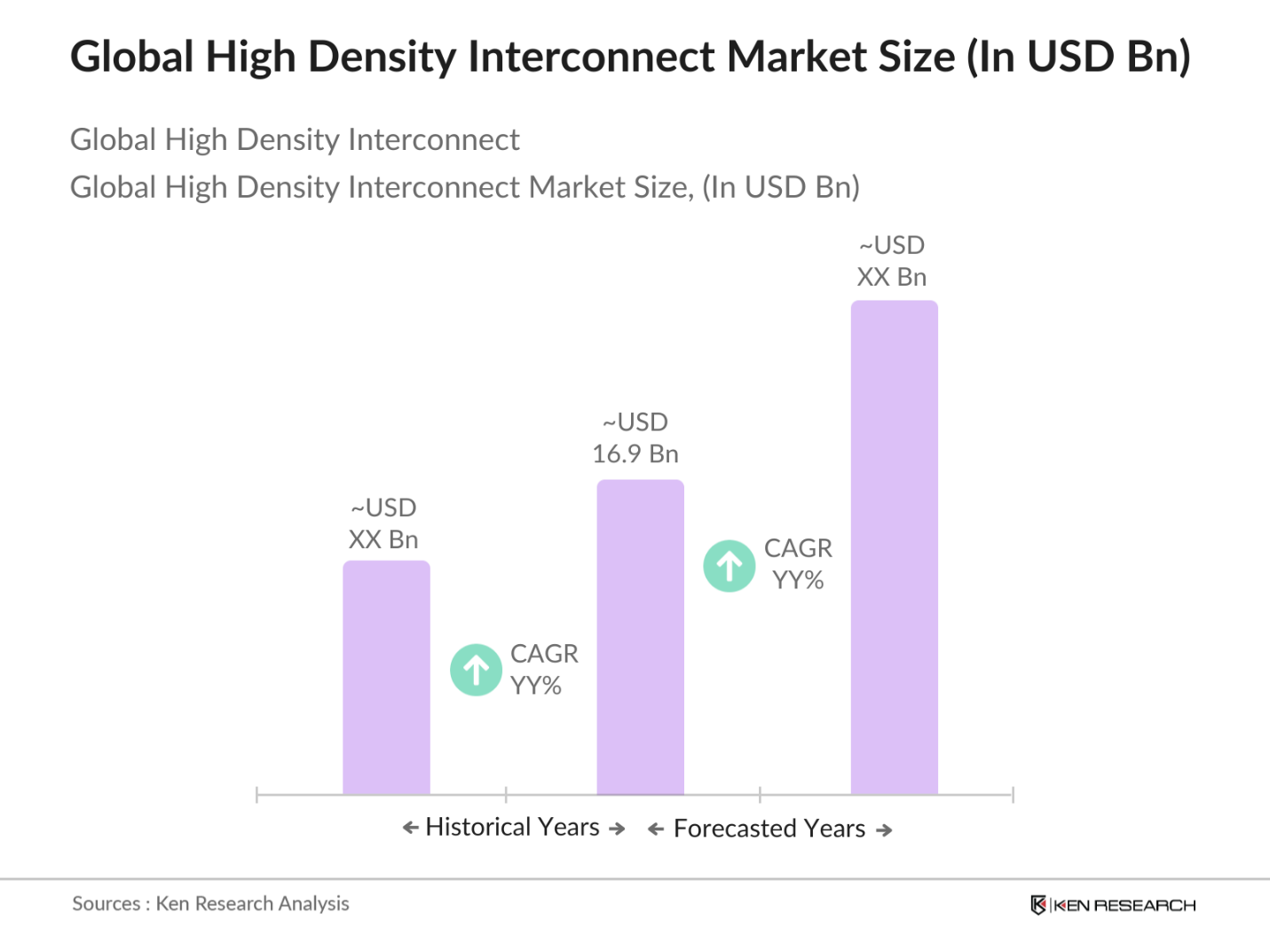
The global HDI market is valued at USD 16.9 billion based on recent industry analysis, driven by advancements in telecommunications, consumer electronics, and automotive technology.
Challenges in the HDI market include the complex manufacturing process, high costs of production, and the need for skilled workforce, particularly in high-layer HDI PCB manufacturing.
Key players include TTM Technologies, Unimicron Technology Corp, AT&S Austria Technologie, Fujikura Ltd., and Samsung Electro-Mechanics, among others. These companies dominate due to their technological advancements and extensive market presence.
Growth drivers include the increasing demand for miniaturized electronic devices, rising adoption of 5G technology, and the growing need for high-performance PCBs in the automotive and telecommunications sectors.

What makes us stand out is that our consultants follows Robust, Refine and Result (RRR) methodology. i.e. Robust for clear definitions, approaches and sanity checking, Refine for differentiating respondents facts and opinions and Result for presenting data with story

We have set a benchmark in the industry by offering our clients with syndicated and customized market research reports featuring coverage of entire market as well as meticulous research and analyst insights.

While we don't replace traditional research, we flip the method upside down. Our dual approach of Top Bottom & Bottom Top ensures quality deliverable by not just verifying company fundamentals but also looking at the sector and macroeconomic factors.

With one step in the future, our research team constantly tries to show you the bigger picture. We help with some of the tough questions you may encounter along the way: How is the industry positioned? Best marketing channel? KPI's of competitors? By aligning every element, we help maximize success.

Our report gives you instant access to the answers and sources that other companies might choose to hide. We elaborate each steps of research methodology we have used and showcase you the sample size to earn your trust.

If you need any support, we are here! We pride ourselves on universe strength, data quality, and quick, friendly, and professional service.