
Global Hot Sauce Market Outlook 2030
Region:Global
Author(s):Shivani Mehra
Product Code:KROD4472
Region:Global
Author(s):Shivani Mehra
Product Code:KROD4472
December 2024
99
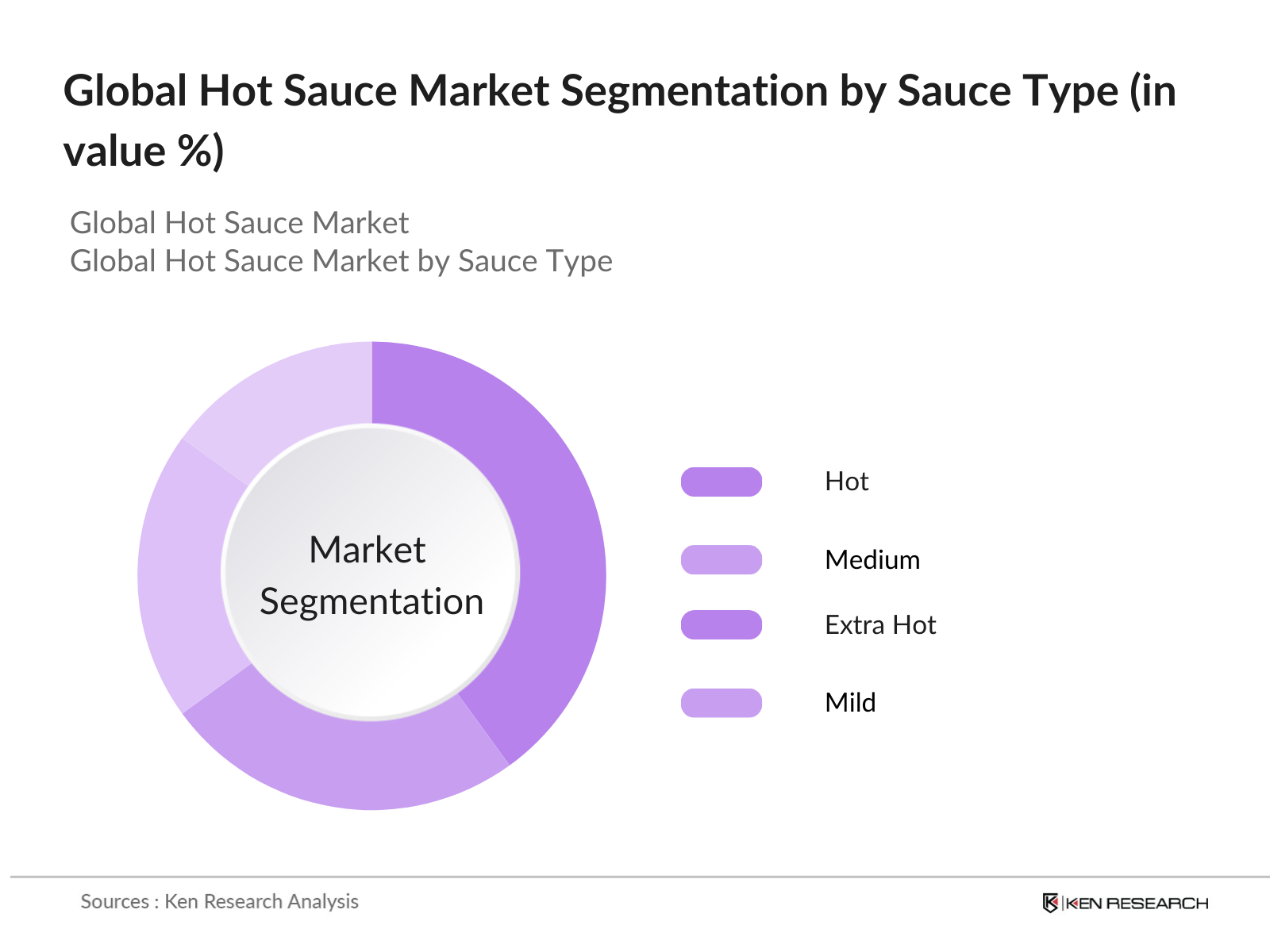
By Sauce: The global hot sauce market is segmented by sauce type into mild, medium, hot, and extra hot. Hot sauces dominate the market share due to their wide appeal across multiple cuisines. Consumers are drawn to the versatility of hot sauces, which can be used in a variety of dishes ranging from fast food to gourmet meals. Popular brands like Tabasco and Frank's RedHot have made significant contributions to the dominance of this segment through strategic marketing and strong brand loyalty.
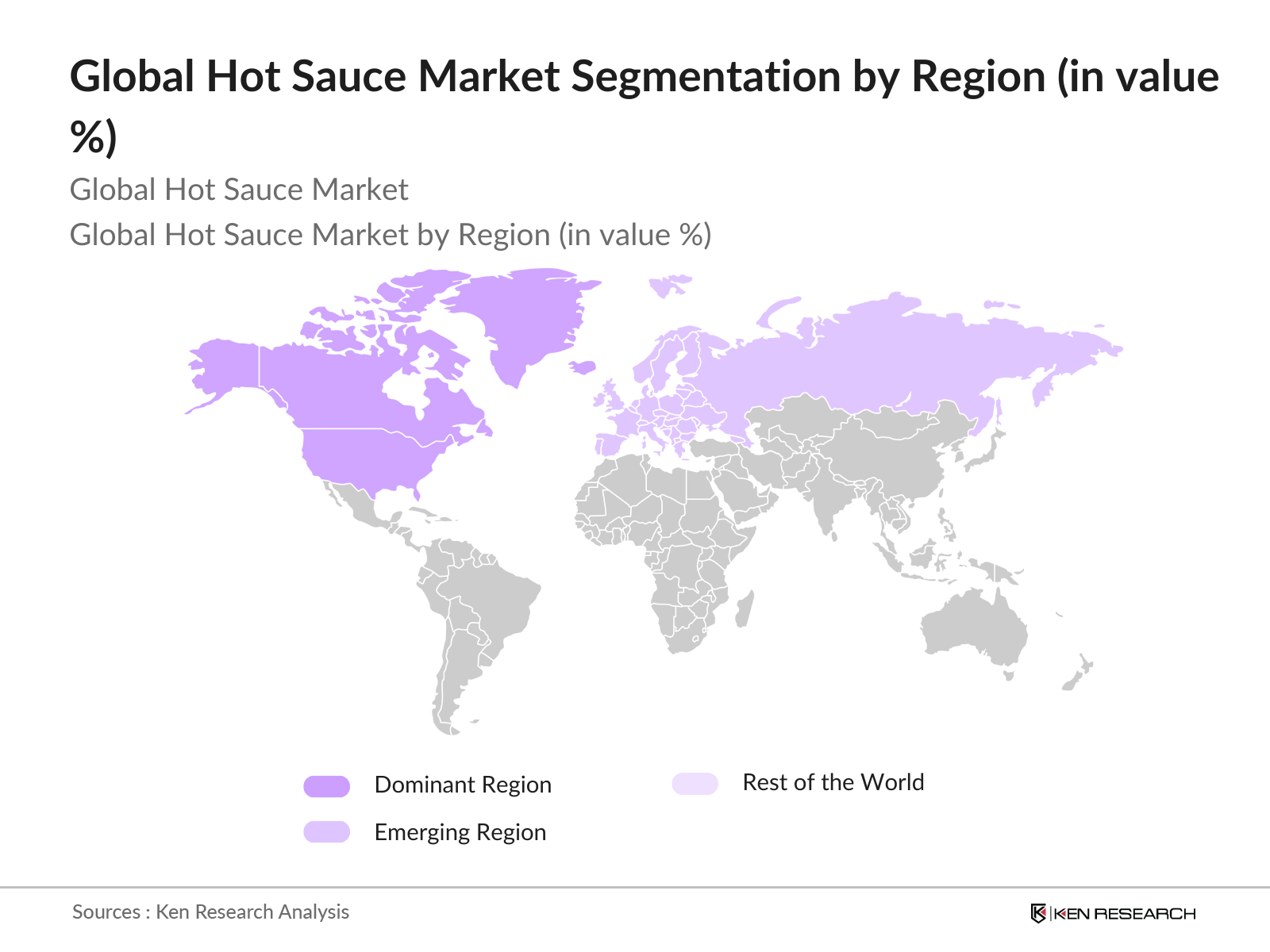
By Region: The global hot sauce market is also segmented by region into North America, Europe, Asia Pacific, Latin America, and the Middle East & Africa. North America remains the leading region, driven by high consumption rates and well-established brands in the U.S. The region's focus on convenience food and condiments has resulted in significant growth for the hot sauce industry. Latin America's prominence stems from countries like Mexico, where hot sauce is deeply ingrained in the cultural food landscape.
The global hot sauce market is dominated by several key players who have cemented their positions through strategic product launches, acquisitions, and marketing initiatives. Major brands such as McIlhenny (Tabasco) and Huy Fong Foods (Sriracha) are examples of long-standing market leaders. These companies continue to innovate by introducing new flavors and packaging to cater to changing consumer preferences.
|
Company |
Establishment Year |
Headquarters |
Product Range |
Revenue (USD Bn) |
Global Presence |
Key Product |
Number of Employees |
Recent Innovations |
Distribution Channels |
|
McIlhenny Company |
1868 |
Avery Island, LA, USA |
|||||||
|
Huy Fong Foods |
1980 |
Irwindale, CA, USA |
|||||||
|
The Kraft Heinz Co. |
2015 (merger) |
Chicago, IL, USA |
|||||||
|
Franks RedHot |
1920 |
Springfield, MO, USA |
|||||||
|
Baumer Foods |
1923 |
Metairie, LA, USA |
Over the next several years, the global hot sauce market is poised to grow further, driven by increasing consumer demand for spicy and exotic flavors, along with rising health consciousness. The trend toward clean-label products and the rise of e-commerce as a dominant sales channel will also contribute to the markets expansion. Additionally, brands are expected to innovate with organic, vegan, and gluten-free variants to cater to health-conscious consumers and expand their consumer base.
|
By Sauce Type |
Mild Medium Hot Extra Hot |
|
By Ingredient Type |
Peppers Vinegar Spices and Herbs Others (Garlic, Sugar, etc.) |
|
By Distribution Channel |
Supermarkets and Hypermarkets Convenience Stores Online Retailers Food Service Channels |
|
By Packaging Type |
Glass Bottles Plastic Bottles Sachets and Pouches |
|
By Region |
North America Europe Asia Pacific Latin America Middle East and Africa |
1.1. Definition and Scope
1.2. Market Taxonomy
1.3. Market Growth Rate
1.4. Market Segmentation Overview
2.1. Historical Market Size
2.2. Year-On-Year Growth Analysis
2.3. Key Market Developments and Milestones
3.1. Growth Drivers (Culinary Trends, Cultural Influence, Rising Demand for Spicy Foods)
3.1.1. Growing Popularity of International Cuisines
3.1.2. Rising Trend of Home Cooking
3.1.3. Health Benefits Associated with Chili Consumption
3.1.4. Expanding Vegan and Plant-Based Diet Preferences
3.2. Market Challenges (Supply Chain Disruptions, Price Volatility of Raw Ingredients)
3.2.1. Climate Sensitivity Impacting Pepper Harvests
3.2.2. Fluctuating Packaging Costs
3.2.3. Regulatory Compliance in International Markets
3.3. Opportunities (Innovative Product Development, E-commerce Expansion)
3.3.1. Introduction of Organic and Clean-Label Hot Sauces
3.3.2. Increased Online Direct-to-Consumer Sales
3.3.3. Strategic Collaborations with Food Service Providers
3.4. Trends (Premiumization of Products, Rise of Limited-Edition Flavors)
3.4.1. Craft and Artisanal Hot Sauce Brands
3.4.2. Hot Sauce in Packaged Meal Kits
3.4.3. Growing Popularity of Subscription Boxes
3.5. Government Regulations (Food Safety, Labeling, Export Policies)
3.5.1. Food Safety Modernization Act (FSMA)
3.5.2. Labeling Requirements for Heat Intensity
3.5.3. Tariff Policies on Spices and Condiments
3.6. SWOT Analysis
3.7. Stakeholder Ecosystem (Raw Material Suppliers, Manufacturers, Distributors, Retailers)
3.8. Porters Five Forces
3.9. Competition Ecosystem
4.1. By Type of Sauce (In Value %)
4.1.1. Mild
4.1.2. Medium
4.1.3. Hot
4.1.4. Extra Hot
4.2. By Ingredient Type (In Value %)
4.2.1. Peppers
4.2.2. Vinegar
4.2.3. Spices and Herbs
4.2.4. Others (Garlic, Sugar, etc.)
4.3. By Distribution Channel (In Value %)
4.3.1. Supermarkets and Hypermarkets
4.3.2. Convenience Stores
4.3.3. Online Retailers
4.3.4. Food Service Channels
4.4. By Packaging Type (In Value %)
4.4.1. Glass Bottles
4.4.2. Plastic Bottles
4.4.3. Sachets and Pouches
4.5. By Region (In Value %)
4.5.1. North America
4.5.2. Europe
4.5.3. Asia Pacific
4.5.4. Latin America
4.5.5. Middle East and Africa
5.1. Detailed Profiles of Major Companies
5.1.1. McIlhenny Company
5.1.2. The Kraft Heinz Company
5.1.3. McCormick & Company
5.1.4. Huy Fong Foods
5.1.5. Baumer Foods
5.1.6. TW Garner Food Co.
5.1.7. Daves Gourmet Inc.
5.1.8. Trappeys Hot Sauce
5.1.9. B&G Foods
5.1.10. Louisiana Hot Sauce Co.
5.1.11. El Yucateco
5.1.12. Cholula Food Company
5.1.13. Texas Pete
5.1.14. Tabasco
5.1.15. Frank's RedHot
5.2. Cross Comparison Parameters (Revenue, Headquarters, Employees, Production Capacity, Product Portfolio, Recent Product Launches, Distribution Network, Global Presence)
5.3. Market Share Analysis
5.4. Strategic Initiatives
5.5. Mergers and Acquisitions
5.6. Investment Analysis
5.7. Venture Capital Funding
5.8. Government Grants
5.9. Private Equity Investments
6.1. Health and Safety Regulations
6.2. Food Labeling Compliance
6.3. Export and Import Policies
7.1. Future Market Size Projections
7.2. Key Factors Driving Future Market Growth
8.1. By Type of Sauce (In Value %)
8.2. By Ingredient Type (In Value %)
8.3. By Distribution Channel (In Value %)
8.4. By Packaging Type (In Value %)
8.5. By Region (In Value %)
9.1. TAM/SAM/SOM Analysis
9.2. Customer Cohort Analysis
9.3. Marketing Initiatives
9.4. White Space Opportunity Analysis
Disclaimer Contact UsThe initial phase involves identifying key variables influencing the global hot sauce market, such as ingredient pricing, consumer preferences, and regional market penetration. Extensive desk research and proprietary databases are employed to map these factors.
In this phase, we compile historical data from multiple years, focusing on market penetration, product innovation, and sales trends. We analyze these variables to create a comprehensive picture of the global market.
Hypotheses regarding market growth drivers and challenges are validated through direct interviews and surveys with key industry stakeholders, including hot sauce manufacturers and distributors.
Finally, we consolidate all data gathered through primary and secondary research into a comprehensive report. Cross-referencing with manufacturers and foodservice providers ensures accuracy.
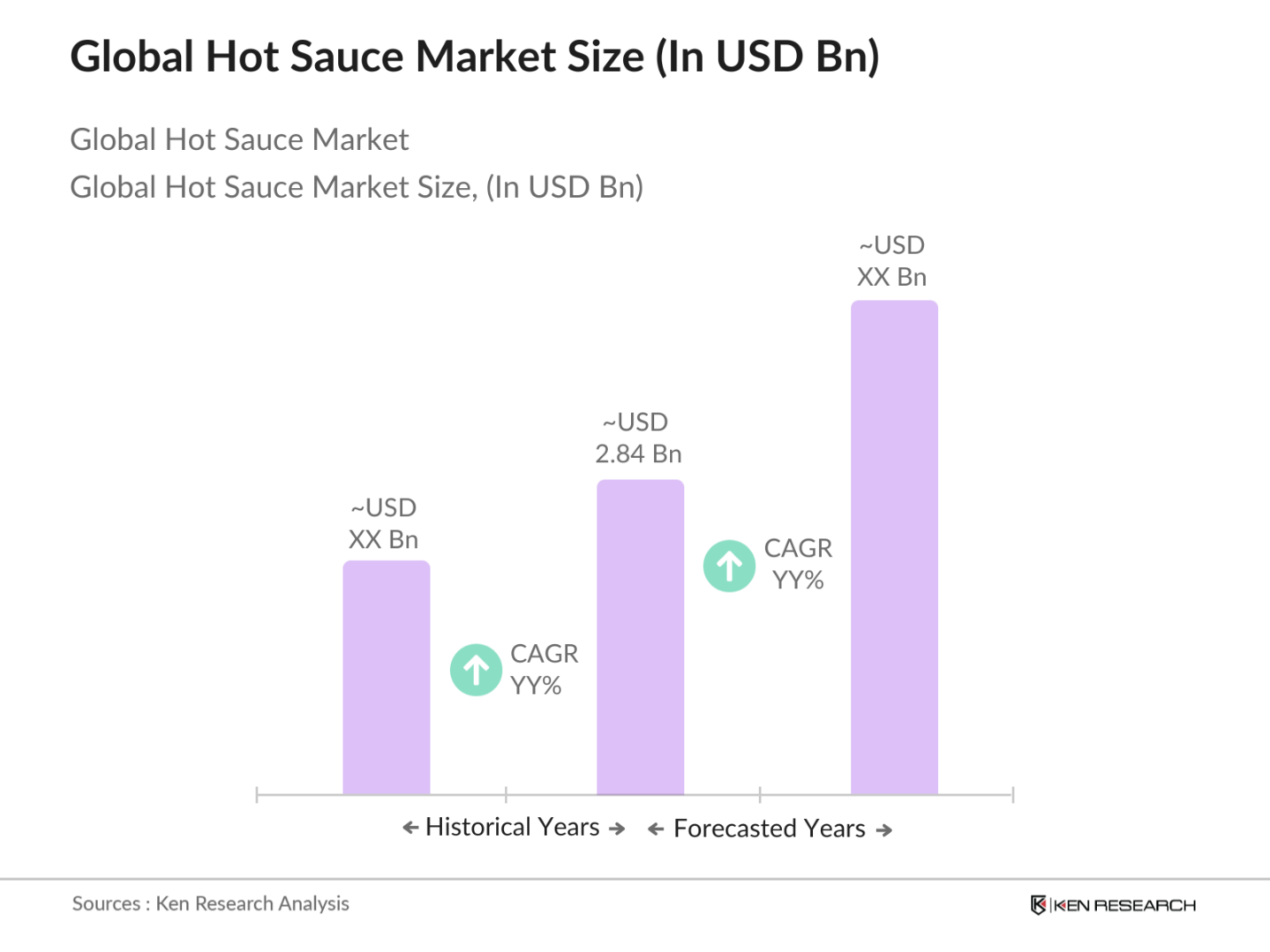
The global hot sauce market, valued at USD 2.84 billion, is driven by consumer demand for spicy flavors, convenience foods, and increased global consumption of ethnic cuisines.
Key challenges include fluctuating raw material prices, supply chain disruptions, and regulatory hurdles associated with food safety and labeling compliance in international markets.
Major players include McIlhenny Company, Huy Fong Foods, The Kraft Heinz Company, Franks RedHot, and Baumer Foods. These companies dominate due to strong brand loyalty and extensive global distribution networks.
The market is propelled by the increasing popularity of spicy foods, the expanding global foodservice industry, and the rise in demand for clean-label, organic products.

What makes us stand out is that our consultants follows Robust, Refine and Result (RRR) methodology. i.e. Robust for clear definitions, approaches and sanity checking, Refine for differentiating respondents facts and opinions and Result for presenting data with story

We have set a benchmark in the industry by offering our clients with syndicated and customized market research reports featuring coverage of entire market as well as meticulous research and analyst insights.

While we don't replace traditional research, we flip the method upside down. Our dual approach of Top Bottom & Bottom Top ensures quality deliverable by not just verifying company fundamentals but also looking at the sector and macroeconomic factors.

With one step in the future, our research team constantly tries to show you the bigger picture. We help with some of the tough questions you may encounter along the way: How is the industry positioned? Best marketing channel? KPI's of competitors? By aligning every element, we help maximize success.

Our report gives you instant access to the answers and sources that other companies might choose to hide. We elaborate each steps of research methodology we have used and showcase you the sample size to earn your trust.

If you need any support, we are here! We pride ourselves on universe strength, data quality, and quick, friendly, and professional service.