















Global Hoverboard Market Outlook to 2030
Region:Global
Author(s):Naman Rohilla
Product Code:KROD10760
December 2024
85
About the Report
Global Hoverboard Market Overview
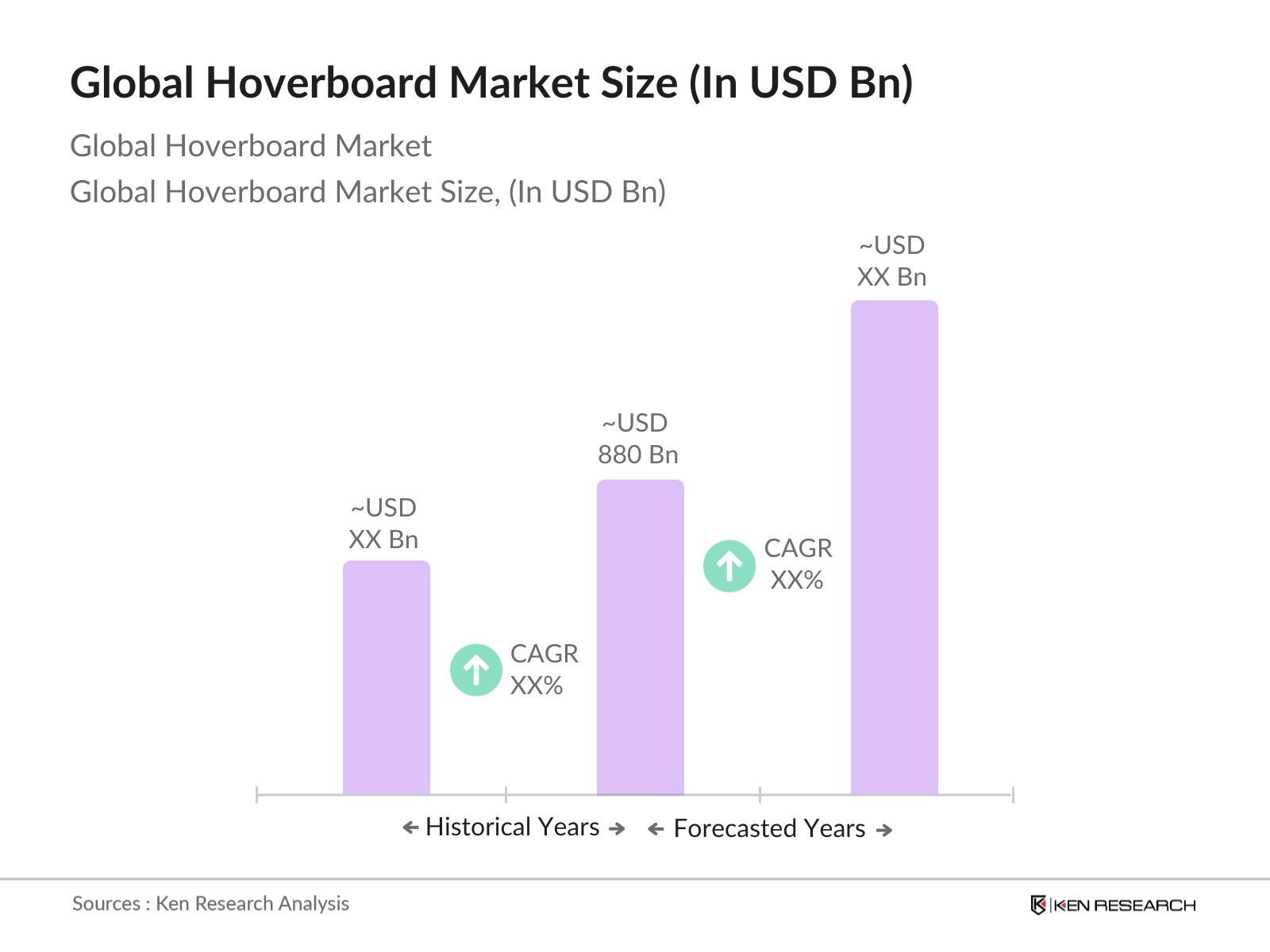
- The global hoverboard market is valued at USD 880 billion. This expansion is primarily driven by the increasing consumer preference for eco-friendly personal transportation solutions, technological advancements enhancing product safety and performance, and the rising popularity of hoverboards among various age groups for recreational and personal mobility purposes.
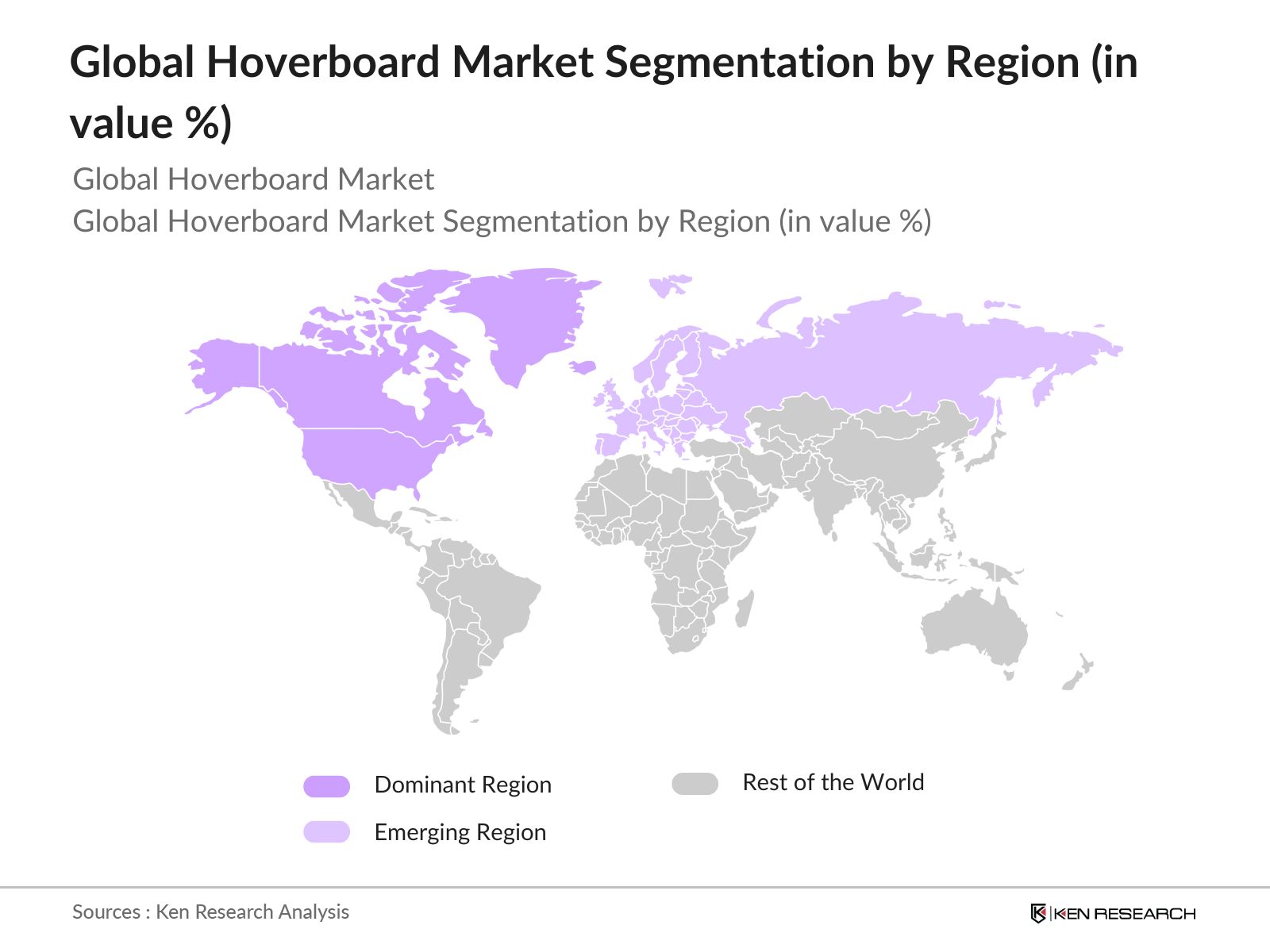
- Dominant regions in the hoverboard market include North America, Europe, and Asia-Pacific. North America leads due to high disposable incomes, a strong inclination towards innovative personal transportation, and a well-established retail infrastructure. Europe follows closely, with countries like Germany and the UK exhibiting demand driven by environmental consciousness and urban mobility trends. Asia-Pacific, particularly China, is a major manufacturing hub, contributing to the market's growth through both production and consumption.
- Government regulations concerning safety standards for hoverboards are becoming increasingly stringent. In 2022, the CPSC implemented updated safety guidelines for hoverboards, requiring all models sold in the U.S. to undergo rigorous testing for fire hazards and electrical safety. As a result, manufacturers are compelled to enhance their design and production processes to comply with these regulations, driving innovation in safety features. Adhering to safety certifications not only ensures consumer protection but also fosters greater market acceptance of hoverboards, leading to potential growth opportunities as compliance becomes a selling point for brands.
Global Hoverboard Market Segmentation
- By Product Type: The hoverboard market is segmented into single-wheeled and double-wheeled devices. Double-wheeled hoverboards dominate the market share, attributed to their enhanced stability and ease of use, making them particularly popular among beginners and younger users. The balanced design and user-friendly features contribute to their widespread adoption.

- By Wheel Size: Hoverboards are available in various wheel sizes, including 6.5-inch, 8-inch, and 10-inch models. The 6.5-inch wheel size holds the largest market share, favored for its portability and suitability for smooth surfaces, aligning with urban commuting needs. Its compact design appeals to users seeking convenience and ease of transport.
- By Region: The global hoverboard market is distributed across North America, Europe, Asia-Pacific, Latin America, and the Middle East & Africa. North America leads the market share, driven by high disposable incomes, a strong inclination towards innovative personal transportation, and a well-established retail infrastructure. Europe follows closely, with countries like Germany and the UK exhibiting demand driven by environmental consciousness and urban mobility trends. Asia-Pacific, particularly China, is a major manufacturing hub, contributing to the market's growth through both production and consumption.
Global Hoverboard Market Competitive Landscape
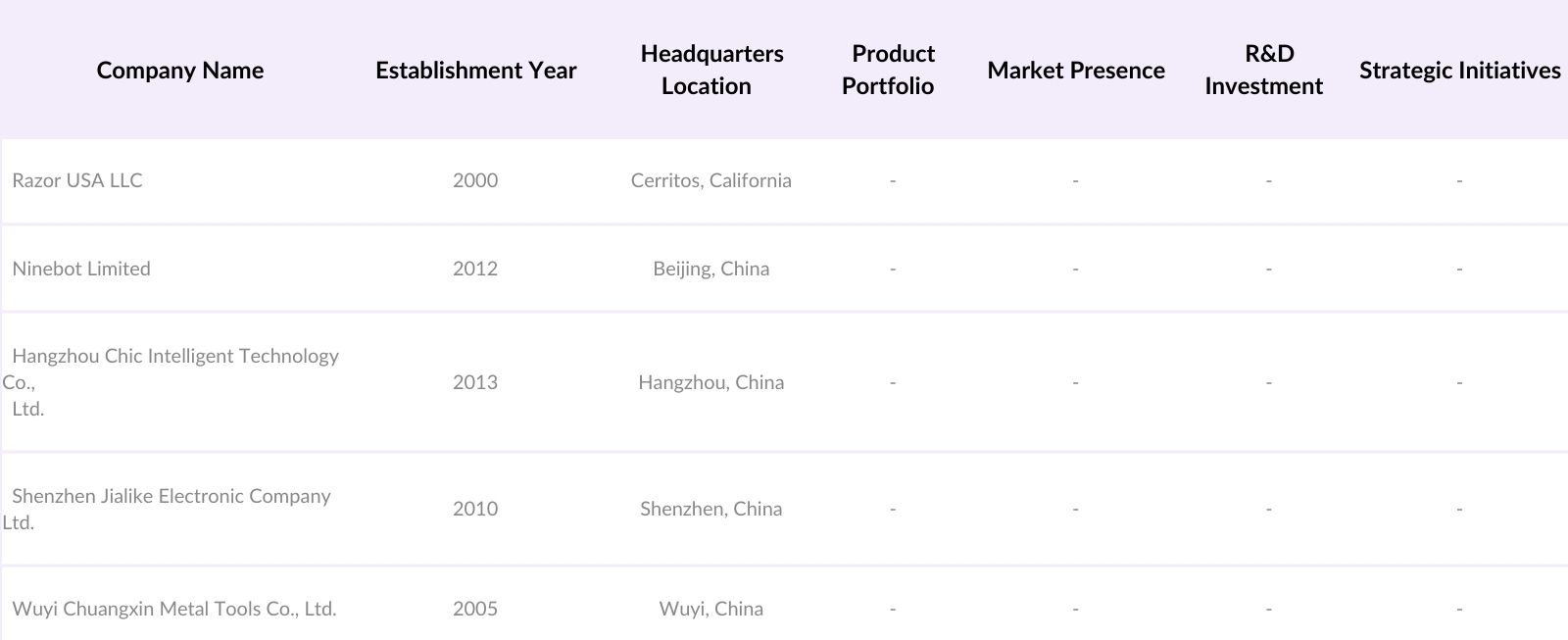
The hoverboard market is characterized by the presence of several key players, including:
Global Hoverboard Market Analysis
Market Growth Drivers
- Urbanization and Local Commute Requirements: Urbanization continues to accelerate globally, with the World Bank estimating that 56% of the world's population resided in urban areas as of 2022, projected to increase to 68% by 2050. This urban migration fuels the need for efficient local commuting solutions, such as hoverboards, which provide a compact, eco-friendly alternative to traditional transport. With urban areas struggling with traffic congestion, hoverboards offer a viable solution for short-distance travel, allowing individuals to bypass traffic and reduce commute times. As urban centers expand, hoverboards are likely to gain popularity as a preferred mode of transportation for short, urban commutes.
- Demand for Green Mobility: The demand for green mobility solutions is at an all-time high as global awareness regarding climate change rises. In 2022, the International Energy Agency (IEA) reported that electric vehicles (EVs) accounted for 10% of new car sales, up from 4% in 2020. This growing trend reflects a broader shift towards sustainable transportation methods, which include hoverboards, viewed as environmentally friendly alternatives. With cities increasingly adopting green policies and regulations, hoverboards present an attractive option for eco-conscious consumers looking to minimize their carbon footprint. The push for renewable energy sources and sustainable urban mobility will continue to bolster demand for hoverboards.
- Rising Popularity Among Youth and Children: The hoverboard market has seen a notable increase in popularity among younger demographics, with data indicating that 40% of hoverboard buyers in 2022 were between the ages of 18 and 34. This trend is supported by increasing engagement with technology and personal mobility devices among youth, driven by a desire for innovative recreational activities. Additionally, reports suggest that toy and recreational vehicle sales among children and adolescents have risen, with sales in the global toy market reaching $100 billion in 2022. As hoverboards become synonymous with modern recreation, their appeal to younger consumers is expected to strengthen.
Market Challenges
- Safety Concerns Compared to Other Commuting Options: Safety concerns remain a significant barrier to the widespread adoption of hoverboards. According to the U.S. Consumer Product Safety Commission (CPSC), there were approximately 100 emergency room visits per month in the U.S. related to hoverboard injuries in 2022, highlighting the risks associated with their use. Moreover, hoverboards often do not meet the same safety standards as other vehicles, which can deter potential buyers. As safety continues to be a paramount concern, manufacturers will need to address these issues through enhanced design and compliance with regulatory safety standards to boost consumer confidence in hoverboard usage.
- Not Reliable for Long-Distance Travels: Hoverboards are primarily designed for short-distance travel, limiting their practicality for longer commutes. Data from the National Highway Traffic Safety Administration (NHTSA) indicates that the average commuting distance for U.S. workers was approximately 16.8 miles in 2022, which far exceeds the typical range of hoverboards, often limited to 10-15 miles on a single charge. This inherent limitation reduces their appeal as a primary commuting option for individuals who require longer travel distances. Addressing this gap in functionality will be crucial for manufacturers looking to enhance the market viability of hoverboards for more diverse commuting needs.
Global Hoverboard Market Future Outlook
Over the next five years, the global hoverboard market is expected to show growth driven by continuous technological advancements, increasing consumer demand for eco-friendly transportation solutions, and expanding applications in recreational and personal mobility sectors. The market is anticipated to witness innovations in battery technology, safety features, and design enhancements, further propelling its adoption across various demographics.
Market Opportunities
- Rising Investments in Improving Product Safety: Substantial investments are being directed towards improving the safety of hoverboards, which presents a major opportunity for market growth. In 2022, the U.S. government announced an initiative to provide $10 million in grants to support the development of safety technologies in personal electric vehicles, including hoverboards. As manufacturers respond to regulatory pressures and consumer demands for safer products, innovations such as advanced braking systems, improved stability controls, and fire-resistant materials are expected to emerge. These enhancements not only bolster safety but also position hoverboards as a more attractive option for cautious consumers, potentially expanding the market.
- Strong Dealership and Supplier Network: The hoverboard market is bolstered by a robust network of dealers and suppliers that facilitate widespread distribution. As of 2022, there were over 1,500 retail locations across the U.S. specifically catering to electric mobility devices, providing essential access to consumers. The strength of this network allows manufacturers to reach a broader audience and cater to diverse customer needs effectively. Additionally, as the demand for personal mobility devices increases, existing dealerships are likely to expand their product offerings, providing significant growth opportunities for hoverboard manufacturers to capitalize on this growing market presence.
Scope of the Report
|
Segment |
Sub-Segments |
|
Product Type |
Single Wheeled |
|
Wheel Size |
6.5 Inch |
|
Application |
Recreational Activities |
|
Battery Type |
Lithium-Ion |
|
Region |
North America |
Products
Key Target Audience
Investors and venture capital firms
Government and regulatory bodies (e.g., U.S. Consumer Product Safety Commission, European Commission)
Retailers and distributors
Manufacturers and suppliers
Logistics and supply chain companies
Technology developers and innovators
Environmental organizations
Urban planners and transportation agencies
Companies
Players Mentioned in the Report
Razor USA LLC
Ninebot Limited
Hangzhou Chic Intelligent Technology Co., Ltd.
Shenzhen Jialike Electronic Company Ltd.
Wuyi Chuangxin Metal Tools Co., Ltd.
TOMOLOO Technology Industrial Co., Ltd.
Segway-Ninebot
Airwheel Technology Holding (USA) Co., Ltd.
Shenzhen Rooder Technology Co., Ltd.
Inventist, Inc.
Table of Contents
1. Global Hoverboard Market Overview
1.1. Definition and Scope
1.2. Market Taxonomy
1.3. Market Growth Rate
1.4. Market Segmentation Overview
2. Global Hoverboard Market Size (In USD Billion)
2.1. Historical Market Size
2.2. Year-On-Year Growth Analysis
2.3. Key Market Developments and Milestones
3. Global Hoverboard Market Analysis
3.1. Growth Drivers
3.1.1. Urbanization and Local Commute Requirements
3.1.2. Demand for Green Mobility
3.1.3. Rising Popularity Among Youth and Children
3.1.4. Declining Battery Prices
3.2. Market Challenges
3.2.1. Safety Concerns Compared to Other Commuting Options
3.2.2. Not Reliable for Long-Distance Travels
3.3. Opportunities
3.3.1. Rising Investments in Improving Product Safety
3.3.2. Strong Dealership and Supplier Network
3.4. Trends
3.4.1. Technological Advancements in Battery Efficiency
3.4.2. Integration with Smart Technologies
3.4.3. Expansion into Emerging Markets
3.5. Government Regulations
3.5.1. Safety Standards and Certifications
3.5.2. Environmental Policies Promoting Electric Vehicles
3.5.3. Import and Export Regulations
3.6. SWOT Analysis
3.7. Stakeholder Ecosystem
3.8. Porters Five Forces Analysis
3.9. Competitive Landscape
4. Global Hoverboard Market Segmentation
4.1. By Product Type (In Value %)
4.1.1. Single Wheeled
4.1.2. Double Wheeled
4.2. By Wheel Size (In Value %)
4.2.1. 6.5 Inch
4.2.2. 8 Inch
4.2.3. 10 Inch
4.3. By Application (In Value %)
4.3.1. Recreational Activities
4.3.2. Business Purposes
4.3.3. Personal Mobility
4.3.4. Others
4.4. By Battery Type (In Value %)
4.4.1. Lithium-Ion
4.4.2. Lead-Acid
4.4.3. Others
4.5. By Region (In Value %)
4.5.1. North America
4.5.2. Europe
4.5.3. Asia-Pacific
4.5.4. Latin America
4.5.5. Middle East & Africa
5. Global Hoverboard Market Competitive Analysis
5.1. Detailed Profiles of Major Companies
5.1.1. Razor USA LLC
5.1.2. Ninebot Limited
5.1.3. Hangzhou Chic Intelligent Technology Co., Ltd.
5.1.4. Shenzhen Jialike Electronic Company Ltd.
5.1.5. Wuyi Chuangxin Metal Tools Co., Ltd.
5.1.6. Shenzhen Rooder Technology Co., Ltd.
5.1.7. Inventist, Inc.
5.1.8. Zhejiang Topso Technology Co., Ltd.
5.1.9. Fosjoas Technology Co., Ltd.
5.1.10. Airwheel Technology Holding (USA) Co., Ltd.
5.1.11. Shenzhen Uwheel Technology Co., Ltd.
5.1.12. Hoverboard Express, LLC
5.1.13. Shenzhen Freefeet Technology Co., Ltd.
5.1.14. The White Chair Limited
5.1.15. Phunkee Tree, Inc.
5.2. Cross Comparison Parameters (Number of Employees, Headquarters, Inception Year, Revenue, Product Portfolio, Market Presence, R&D Investment, Strategic Initiatives)
5.3. Market Share Analysis
5.4. Strategic Initiatives
5.5. Mergers and Acquisitions
5.6. Investment Analysis
5.6.1. Venture Capital Funding
5.6.2. Government Grants
5.6.3. Private Equity Investments
6. Global Hoverboard Market Regulatory Framework
6.1. Safety Standards and Certifications
6.2. Compliance Requirements
6.3. Certification Processes
7. Global Hoverboard Market Future Size (In USD Billion)
7.1. Future Market Size Projections
7.2. Key Factors Driving Future Market Growth
8. Global Hoverboard Market Future Segmentation
8.1. By Product Type (In Value %)
8.2. By Wheel Size (In Value %)
8.3. By Application (In Value %)
8.4. By Battery Type (In Value %)
8.5. By Region (In Value %)
9. Global Hoverboard Market Analysts Recommendations
9.1. Total Addressable Market (TAM), Serviceable Available Market (SAM), Serviceable Obtainable Market (SOM) Analysis
9.2. Customer Cohort Analysis
9.3. Marketing Initiatives
9.4. White Space Opportunity Analysis
Disclaimer Contact UsResearch Methodology
Step 1: Identification of Key Variables
The initial phase involves constructing an ecosystem map encompassing all major stakeholders within the global hoverboard market. This step is underpinned by extensive desk research, utilizing a combination of secondary and proprietary databases to gather comprehensive industry-level information. The primary objective is to identify and define the critical variables that influence market dynamics.
Step 2: Market Analysis and Construction
In this phase, we will compile and analyze historical data pertaining to the global hoverboard market. This includes assessing market penetration, the ratio of marketplaces to service providers, and the resultant revenue generation. Furthermore, an evaluation of service quality statistics will be conducted to ensure the reliability and accuracy of the revenue estimates.
Step 3: Hypothesis Validation and Expert Consultation
Market hypotheses will be developed and subsequently validated through computer-assisted telephone interviews (CATIs) with industry experts representing a diverse array of companies. These consultations will provide valuable operational and financial insights directly from industry practitioners, which will be instrumental in refining and corroborating the market data.
Step 4: Research Synthesis and Final Output
The final phase involves direct engagement with multiple hoverboard manufacturers to acquire detailed insights into product segments, sales performance, consumer preferences, and other pertinent factors. This interaction will serve to verify and complement the statistics derived from the bottom-up approach, thereby ensuring a comprehensive, accurate, and validated analysis of the global hoverboard market.
Frequently Asked Questions
1. How big is the Global Hoverboard Market?
The global hoverboard market is valued at USD 880 billion, with growth driven by increasing consumer preferences for eco-friendly personal transportation solutions and technological advancements enhancing product performance.
2. What are the challenges in the Global Hoverboard Market?
Challenges include safety concerns regarding product reliability, regulatory compliance across different regions, and competition from alternative transportation methods that could hinder market growth.
3. Who are the major players in the Global Hoverboard Market?
Key players in the market include Razor USA LLC, Ninebot Limited, Hangzhou Chic Intelligent Technology Co., Ltd., and Shenzhen Jialike Electronic Company Ltd. Their strong brand presence and innovative product offerings drive their dominance.
4. What are the growth drivers of the Global Hoverboard Market?
The market is propelled by factors such as the growing trend of urban mobility solutions, increasing consumer demand for eco-friendly alternatives, and advancements in hoverboard technology that enhance safety and usability.
Why Buy From Us?

What makes us stand out is that our consultants follows Robust, Refine and Result (RRR) methodology. i.e. Robust for clear definitions, approaches and sanity checking, Refine for differentiating respondents facts and opinions and Result for presenting data with story

We have set a benchmark in the industry by offering our clients with syndicated and customized market research reports featuring coverage of entire market as well as meticulous research and analyst insights.

While we don't replace traditional research, we flip the method upside down. Our dual approach of Top Bottom & Bottom Top ensures quality deliverable by not just verifying company fundamentals but also looking at the sector and macroeconomic factors.

With one step in the future, our research team constantly tries to show you the bigger picture. We help with some of the tough questions you may encounter along the way: How is the industry positioned? Best marketing channel? KPI's of competitors? By aligning every element, we help maximize success.

Our report gives you instant access to the answers and sources that other companies might choose to hide. We elaborate each steps of research methodology we have used and showcase you the sample size to earn your trust.

If you need any support, we are here! We pride ourselves on universe strength, data quality, and quick, friendly, and professional service.