
Global HVDC Converter Station Market Outlook to 2030
Region:Global
Author(s):Shivani Mehra
Product Code:KROD10316
December 2024
84
About the Report
Global HVAC Control Systems Market Overview
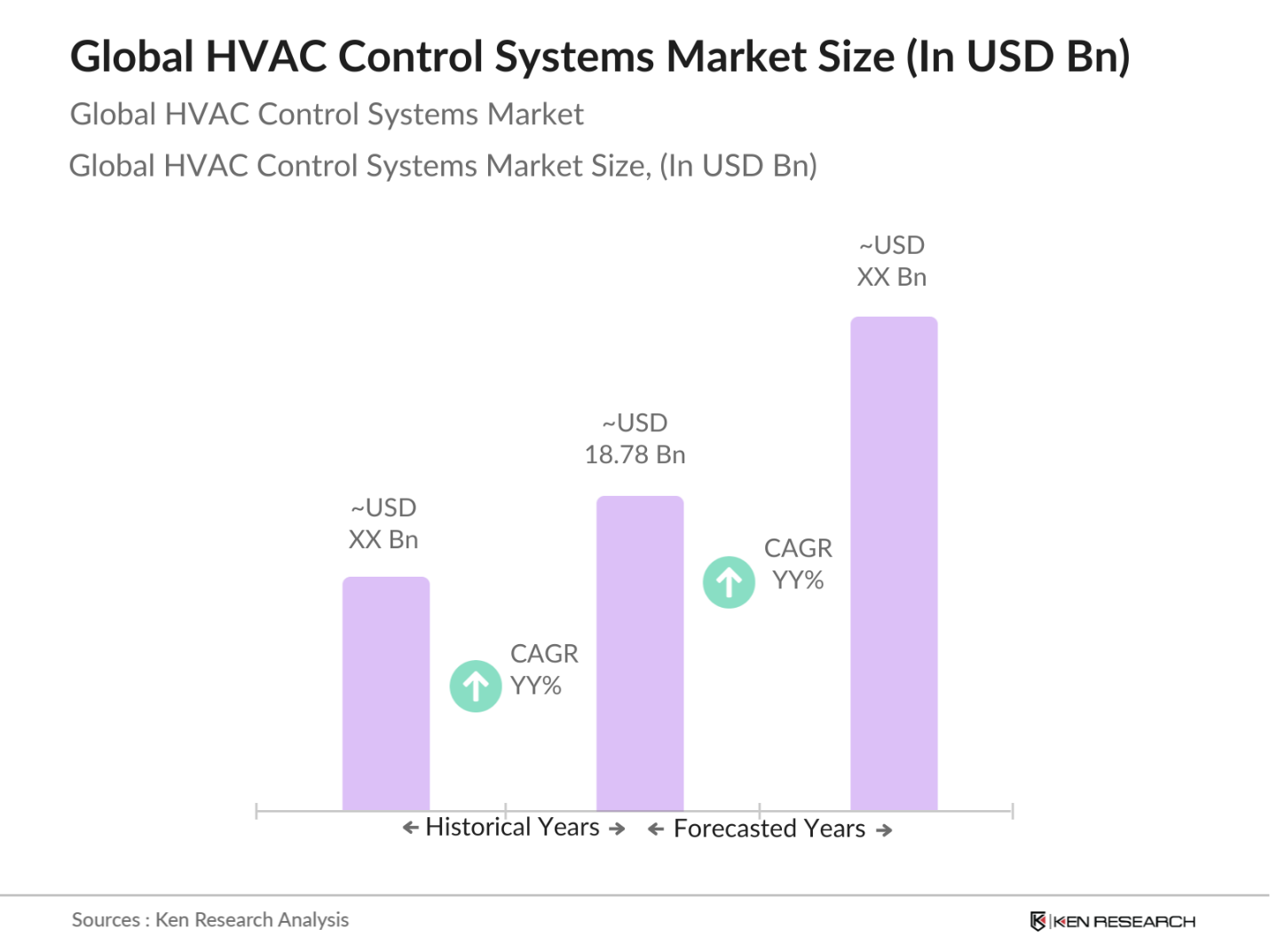
- The Global HVAC Control Systems market reached a valuation of approximately USD 18.78 billion, driven primarily by the need for energy-efficient solutions and advancements in IoT-based smart technology. Increasing urbanization and infrastructure development, particularly in commercial and residential sectors, are also major growth drivers. Rising awareness around energy efficiency and carbon footprint reduction has encouraged adoption among end-users across industries, thus creating substantial demand for HVAC control systems. Rapid innovations in automation and AI have allowed these systems to become increasingly adaptive, further propelling market growth.
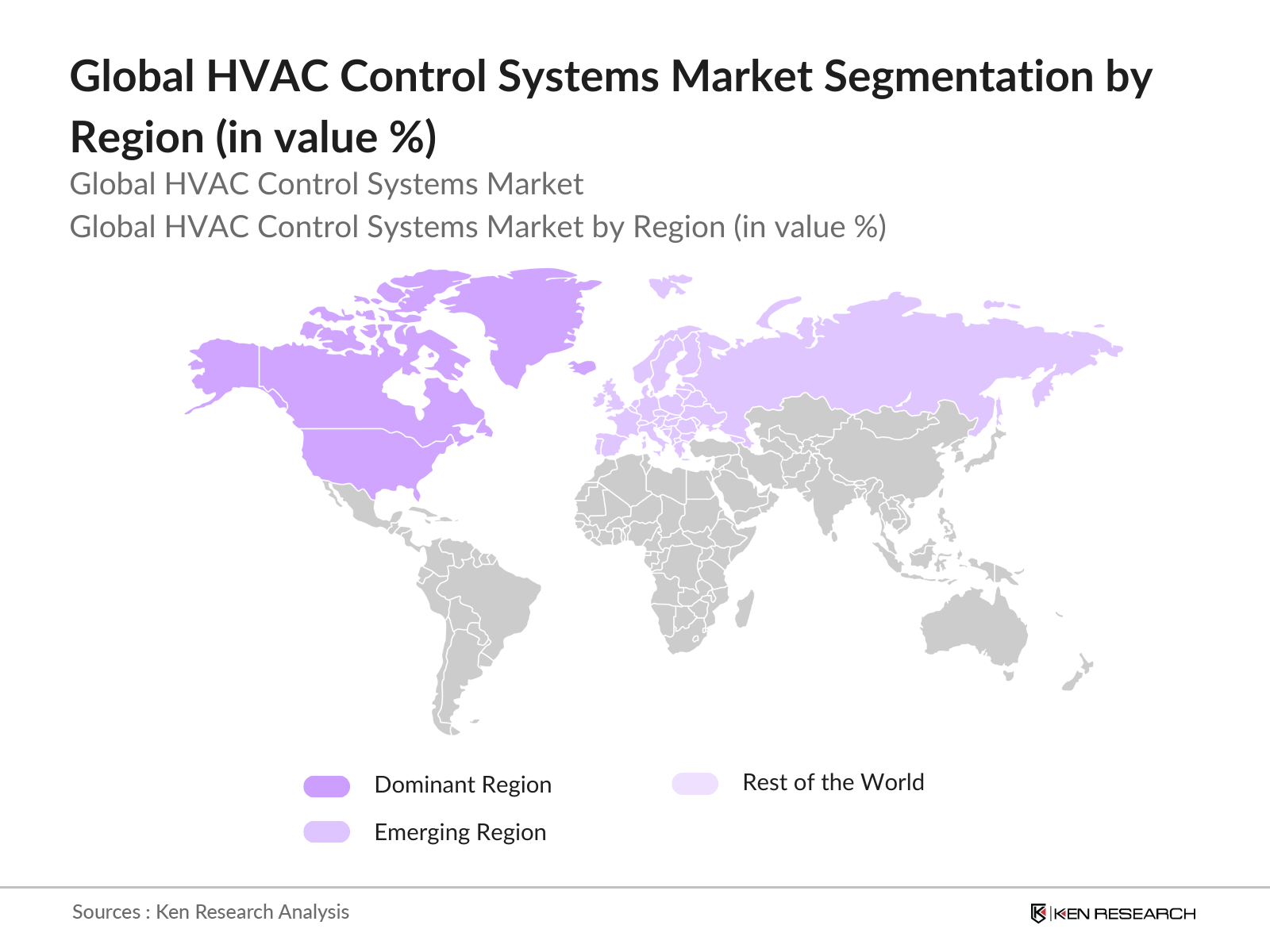
- Key regions such as North America and Europe have been dominant in the HVAC control systems market, with the U.S. and Germany leading due to their strong focus on technological innovation and stringent energy efficiency regulations. These regions benefit from advanced infrastructure and heightened demand for sustainable solutions, fostering a robust market for advanced HVAC control systems. Additionally, Asia-Pacific is emerging as a lucrative market owing to its expanding urban areas and increased investment in smart building infrastructure.
- Global energy efficiency standards require HVAC systems to meet minimum performance metrics. The International Energy Agency reports that approximately X tons of CO2 emissions could be reduced if these standards are universally adopted in the commercial sector in 2023. This regulatory framework pressures manufacturers to innovate energy-efficient solutions, shaping the global HVAC control systems market.
Global HVAC Control Systems Market Segmentation
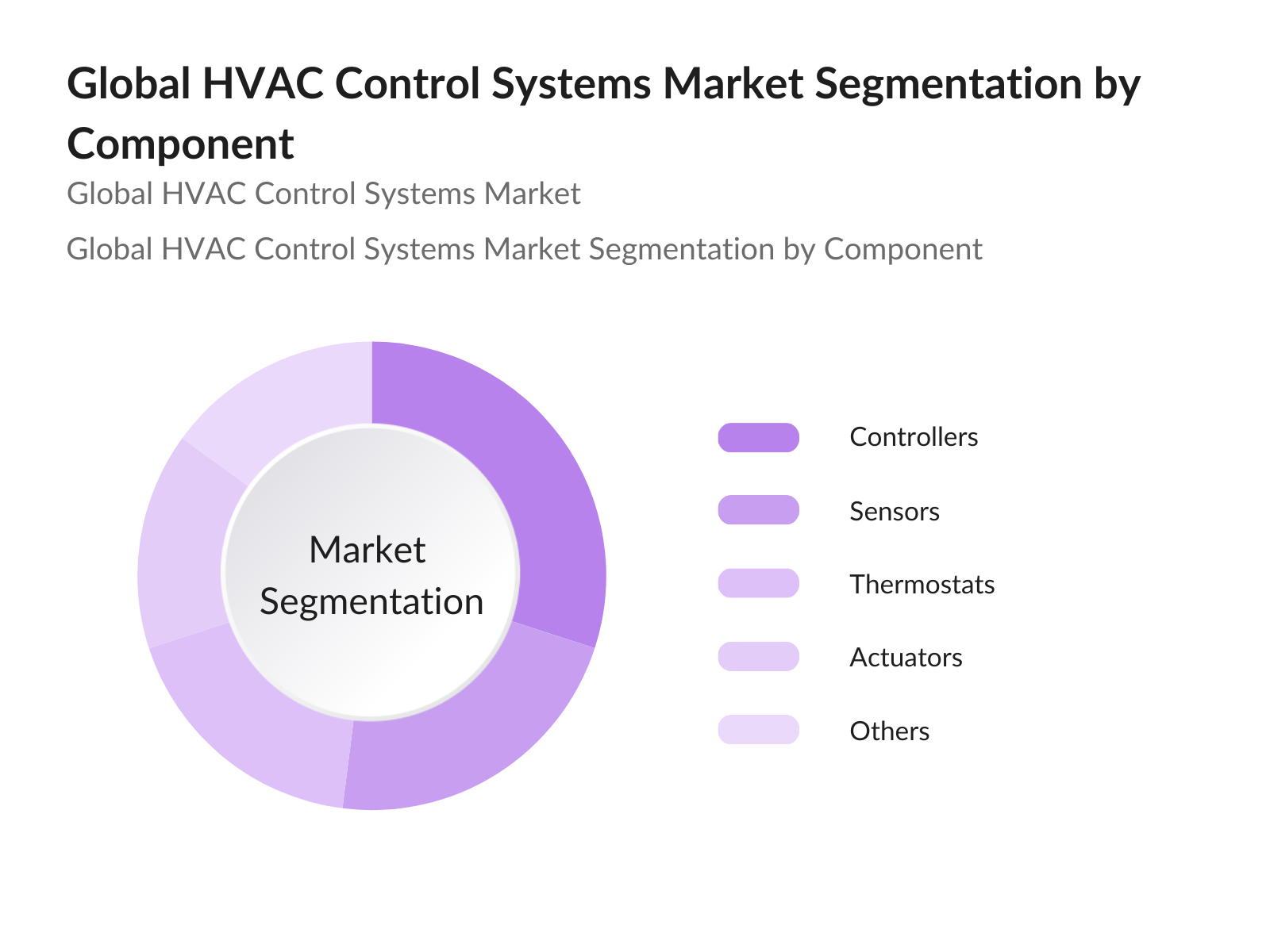
By Component: The Global HVAC Control Systems market is segmented by component into sensors, controllers, thermostats, actuators, and others. Controllers hold a dominant market share due to their central role in managing HVAC systems. These components serve as the brain of HVAC systems, adjusting temperatures and regulating airflow according to the specified settings. The rising preference for intelligent controllers, which can be integrated with smart home devices and are responsive to user preferences, has cemented their position as the leading segment in this category.
By Region: The HVAC Control Systems market is divided by region into North America, Europe, Asia-Pacific, Latin America, and the Middle East & Africa. North America dominates the regional landscape due to its advanced infrastructure and widespread adoption of energy-efficient technologies. Government mandates and subsidies further drive the adoption of HVAC control systems across residential and commercial properties. The region's emphasis on reducing energy costs and lowering carbon footprints is a crucial factor behind the demand for efficient and technologically advanced HVAC systems.
Global HVAC Control Systems Market Competitive Landscape
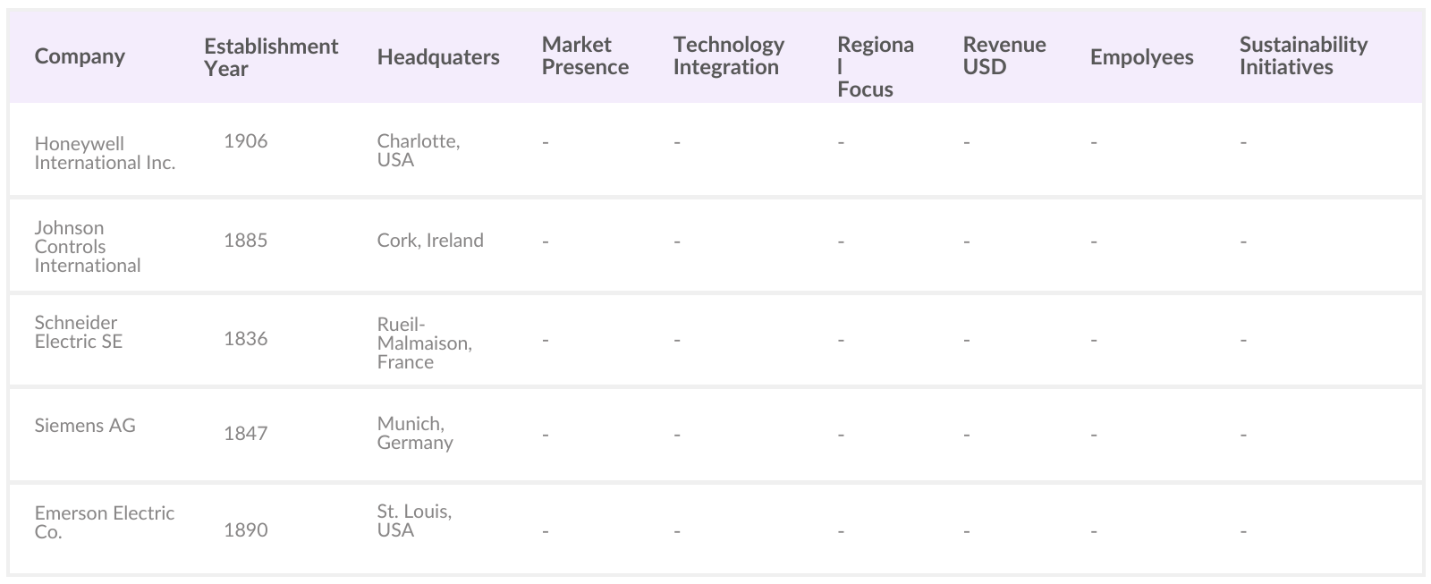
The Global HVAC Control Systems market is characterized by the presence of both global and regional players. Key companies maintain competitive advantage through technological advancements, strategic partnerships, and product innovation. For instance, leading brands have integrated IoT capabilities to enhance their HVAC control offerings, gaining a competitive edge in the market.
Global HVAC Control Systems Market Analysis
Market Growth Drivers
- Energy Efficiency Regulations: Governments worldwide are introducing stringent energy efficiency regulations to reduce carbon emissions and promote sustainability. For instance, the European Union's Energy Efficiency Directive mandates energy savings targets that impact HVAC systems significantly by encouraging manufacturers to improve energy use in buildings. In 2023, buildings contribute approximately X million tons of CO2 emissions globally, with HVAC systems being responsible for X tons. Adoption of HVAC systems that comply with energy-saving standards is projected to drive the market as nations, including the U.S. and countries in Asia, strengthen regulatory measures.
- Demand for Smart Buildings: The growing trend of smart buildings is boosting demand for advanced HVAC control systems. In 2023, the number of smart buildings globally is estimated to be around X million, primarily driven by urbanization and demand for energy-efficient infrastructure. These buildings increasingly rely on integrated systems that provide seamless control over HVAC, lighting, and security. Countries like Japan and South Korea, known for their tech-forward construction industry, lead in implementing smart building practices that utilize HVAC control systems optimized for energy efficiency and automation.
- Technological Advancements (IoT and AI Integration): The integration of IoT and AI in HVAC control systems enables real-time monitoring and data analytics, optimizing energy usage. Currently, over X billion IoT devices are connected globally, with the industrial and building automation sectors comprising a significant percentage of these connections. This trend is reinforced by AI applications that allow predictive maintenance and remote monitoring, making HVAC control systems essential for minimizing energy wastage and reducing operational costs in buildings across developed and emerging economies alike.
Market Challenges:
- High Implementation Costs: The advanced technology involved in HVAC control systems, such as IoT sensors, cloud-based controls, and energy-efficient designs, leads to high initial costs, which is a significant barrier for widespread adoption. In 2023, the average cost of implementing a smart HVAC system for commercial buildings is estimated at around USD 8,000 to USD 20,000 per unit, depending on the building size and customization needs. Small businesses and facilities with budget constraints often find these costs prohibitive, especially in emerging economies where per capita income levels remain relatively low. This high cost of implementation restricts market growth, especially in regions with limited financial support or subsidies for sustainable technologies.
- Data Privacy and Security Concerns: With the rise of IoT-enabled HVAC control systems, data privacy and cybersecurity have become crucial concerns. In 2023, a substantial number of businesses using IoT in their building management systems report concerns about data breaches, particularly in sectors handling sensitive information like healthcare and finance. The increase in cyber threats targeting building automation systems makes organizations hesitant to adopt advanced HVAC controls due to potential security vulnerabilities. Additionally, governments and regulatory bodies are tightening data protection requirements, adding complexity and cost to compliance, which affects the adoption rates of IoT-integrated HVAC solutions.
Global HVAC Control Systems Market Future Outlook
Over the next five years, the HVAC control systems market is expected to experience significant growth due to increasing global demand for energy-efficient solutions, advancements in IoT technology, and evolving regulatory standards for energy management. As more industries prioritize sustainability and operational efficiency, HVAC control systems will play an essential role in meeting these goals. Additionally, the expansion of smart cities and green building initiatives globally will foster the demand for advanced HVAC control systems that seamlessly integrate with other building automation technologies.
Market Opportunities:
- Rising Adoption in Emerging Economies: Emerging economies in Southeast Asia and Africa are witnessing a rising adoption of HVAC systems due to increasing urbanization and infrastructure projects. As of 2024, countries like Indonesia and Nigeria show a growth in new urban dwellings by approximately X units, with HVAC systems becoming a standard installation [source link]. This trend provides an opportunity for HVAC control system manufacturers to expand in these regions, supported by governmental investments in modern infrastructure.
- Integration with Building Automation Systems: There is a growing trend toward integrating HVAC systems with building automation systems (BAS), allowing centralized control of various building functions. As of 2024, over X million buildings globally have adopted BAS, with an increasing number integrating HVAC for enhanced energy management [source link]. This integration optimizes energy use and improves occupant comfort, driving the adoption of advanced HVAC control systems in the global market.
Scope of the Report
|
By Component |
Sensors Controllers Thermostats Actuators Others |
|
By System Type |
Temperature Control Systems Ventilation Control Systems Humidity Control Systems Integrated Control Systems |
|
By Implementation Type |
New Installations Retrofit Installations |
|
By End-User Industry |
Commercial Residential Industrial Institutional |
|
By Region |
North America Europe Asia-Pacific Latin America Middle East & Africa |
Products
Key Target Audience
Investments and Venture Capitalist Firms
Government and Regulatory Bodies (U.S. Department of Energy, European Union Energy Commission)
Smart Building Solution Providers
HVAC Equipment Manufacturers
Real Estate and Construction Companies
Industrial and Commercial Facility Managers
Utilities and Energy Service Companies
Technology Providers (IoT, AI, and Cloud Computing Solutions)
Companies
Players Mention in the Report
Honeywell International Inc.
Johnson Controls International
Schneider Electric SE
Siemens AG
Emerson Electric Co.
United Technologies Corporation
Daikin Industries Ltd.
LG Electronics Inc.
Lennox International Inc.
Mitsubishi Electric Corporation
ABB Ltd.
Ingersoll Rand Inc.
Samsung Electronics Co., Ltd.
Bosch Thermotechnology Corp.
Delta Controls
Table of Contents
1. Global HVAC Control Systems Market Overview
1.1 Definition and Scope
1.2 Market Taxonomy
1.3 Market Dynamics Overview
1.4 Market Segmentation Overview
2. Global HVAC Control Systems Market Size (In USD Bn)
2.1 Historical Market Size
2.2 Current Market Size
2.3 Year-On-Year Growth Analysis
2.4 Key Market Developments and Milestones
3. Global HVAC Control Systems Market Analysis
3.1 Growth Drivers
3.1.1 Energy Efficiency Regulations
3.1.2 Demand for Smart Buildings
3.1.3 Technological Advancements (e.g., IoT and AI Integration)
3.1.4 Urbanization and Infrastructure Development
3.2 Market Challenges
3.2.1 High Implementation Costs
3.2.2 System Compatibility Issues
3.2.3 Data Privacy Concerns
3.3 Opportunities
3.3.1 Rising Adoption in Emerging Economies
3.3.2 Integration with Building Automation Systems
3.3.3 Government Initiatives and Subsidies
3.4 Trends
3.4.1 Growth in Demand for Wireless Control Systems
3.4.2 Increasing Adoption of Cloud-Based Solutions
3.4.3 Integration with Renewable Energy Sources
3.5 Government Regulation
3.5.1 Energy Efficiency Standards
3.5.2 Carbon Emission Reduction Policies
3.5.3 Green Building Initiatives
3.6 SWOT Analysis
3.7 Stakeholder Ecosystem
3.8 Porters Five Forces
3.9 Competition Ecosystem
4. Global HVAC Control Systems Market Segmentation
4.1 By Component (In Value %)
4.1.1 Sensors
4.1.2 Controllers
4.1.3 Thermostats
4.1.4 Actuators
4.1.5 Others
4.2 By System Type (In Value %)
4.2.1 Temperature Control Systems
4.2.2 Ventilation Control Systems
4.2.3 Humidity Control Systems
4.2.4 Integrated Control Systems
4.3 By Implementation Type (In Value %)
4.3.1 New Installations
4.3.2 Retrofit Installations
4.4 By End-User Industry (In Value %)
4.4.1 Commercial
4.4.2 Residential
4.4.3 Industrial
4.4.4 Institutional
4.5 By Region (In Value %)
4.5.1 North America
4.5.2 Europe
4.5.3 Asia-Pacific
4.5.4 Latin America
4.5.5 Middle East & Africa
5. Global HVAC Control Systems Market Competitive Analysis
5.1 Detailed Profiles of Major Companies
5.1.1 Honeywell International Inc.
5.1.2 Johnson Controls International PLC
5.1.3 Schneider Electric SE
5.1.4 Siemens AG
5.1.5 United Technologies Corporation
5.1.6 Emerson Electric Co.
5.1.7 Daikin Industries Ltd.
5.1.8 LG Electronics Inc.
Lennox International Inc.
5.1.9 Mitsubishi Electric Corporation
5.1.10 ABB Ltd.
5.1.11 Ingersoll Rand Inc.
5.1.12 Samsung Electronics Co., Ltd.
5.1.13 Bosch Thermotechnology Corp.
5.1.14 Delta Controls
5.2 Cross Comparison Parameters
5.3 Number of Employees
5.4 Headquarters Location
5.5 Revenue
5.6 Market Share
5.7 Product Portfolio
5.8 Regional Presence
5.9 R&D Investment
5.10 Strategic Partnerships
5.11 Market Share Analysis
5.12 Strategic Initiatives
5.13 Mergers and Acquisitions
5.14 Investment Analysis
5.15 Venture Capital Funding
5.16 Private Equity Investments
6. Global HVAC Control Systems Market Regulatory Framework
6.1 International Energy Efficiency Standards
6.2 Industry-Specific Compliance Requirements
6.3 Certification and Testing Procedures
7. Global HVAC Control Systems Future Market Size (In USD Bn)
7.1 Future Market Size Projections
7.2 Key Factors Influencing Future Market Growth
8. Global HVAC Control Systems Future Market Segmentation
8.1 By Component (In Value %)
8.2 By System Type (In Value %)
8.3 By Implementation Type (In Value %)
8.4 By End-User Industry (In Value %)
8.5 By Region (In Value %)
9. Global HVAC Control Systems Market Analysts Recommendations
9.1 TAM/SAM/SOM Analysis
9.2 Customer Cohort Analysis
9.3 Marketing Initiatives
9.4 White Space Opportunity Analysis
Disclaimer
Contact Us
Research Methodology
Step 1: Identification of Key Variables
The research begins with the mapping of key stakeholders within the HVAC control systems market. Extensive desk research is conducted using proprietary databases to understand market dynamics and identify critical variables influencing market growth.
Step 2: Market Analysis and Construction
In this phase, historical data is compiled and analyzed to assess the growth patterns of the HVAC control systems market. Market penetration rates and revenue generation trends are scrutinized to ensure data reliability.
Step 3: Hypothesis Validation and Expert Consultation
Hypotheses are developed based on the initial analysis and validated through telephonic interviews with industry experts from leading companies. These consultations offer practical insights, enabling refined estimates and enhancing the accuracy of the data.
Step 4: Research Synthesis and Final Output
In the final stage, primary data is cross-verified with insights from HVAC control system manufacturers and distributors to create a well-rounded, comprehensive analysis of the market. This validated data serves as the foundation for accurate forecasts and insights.
Frequently Asked Questions
01. How big is the Global HVAC Control Systems Market?
The Global HVAC Control Systems market was valued at approximately USD 18.78 billion, driven by increasing demand for energy-efficient solutions and smart technologies in commercial and residential sectors.
02. What are the key drivers of the Global HVAC Control Systems Market?
Key drivers include growing urbanization, infrastructure development, regulatory standards for energy efficiency, and advancements in IoT-based technology that allow for intelligent control systems.
03. Who are the major players in the Global HVAC Control Systems Market?
Major players include Honeywell International, Johnson Controls International, Schneider Electric, Siemens, and Emerson Electric, each distinguished by its extensive product portfolio, R&D investments, and global market presence.
04. What challenges are faced by the Global HVAC Control Systems Market?
Challenges include high initial costs, integration difficulties with older systems, and concerns regarding data privacy in IoT-enabled systems. These factors may limit market expansion in certain regions.
Why Buy From Us?

What makes us stand out is that our consultants follows Robust, Refine and Result (RRR) methodology. i.e. Robust for clear definitions, approaches and sanity checking, Refine for differentiating respondents facts and opinions and Result for presenting data with story

We have set a benchmark in the industry by offering our clients with syndicated and customized market research reports featuring coverage of entire market as well as meticulous research and analyst insights.

While we don't replace traditional research, we flip the method upside down. Our dual approach of Top Bottom & Bottom Top ensures quality deliverable by not just verifying company fundamentals but also looking at the sector and macroeconomic factors.

With one step in the future, our research team constantly tries to show you the bigger picture. We help with some of the tough questions you may encounter along the way: How is the industry positioned? Best marketing channel? KPI's of competitors? By aligning every element, we help maximize success.

Our report gives you instant access to the answers and sources that other companies might choose to hide. We elaborate each steps of research methodology we have used and showcase you the sample size to earn your trust.

If you need any support, we are here! We pride ourselves on universe strength, data quality, and quick, friendly, and professional service.