















Global Hydrogen Combustion Engine Market Outlook to 2030
Region:Global
Author(s):Naman Rohilla
Product Code:KROD4966
December 2024
88
About the Report
Global Hydrogen Combustion Engine Market Overview
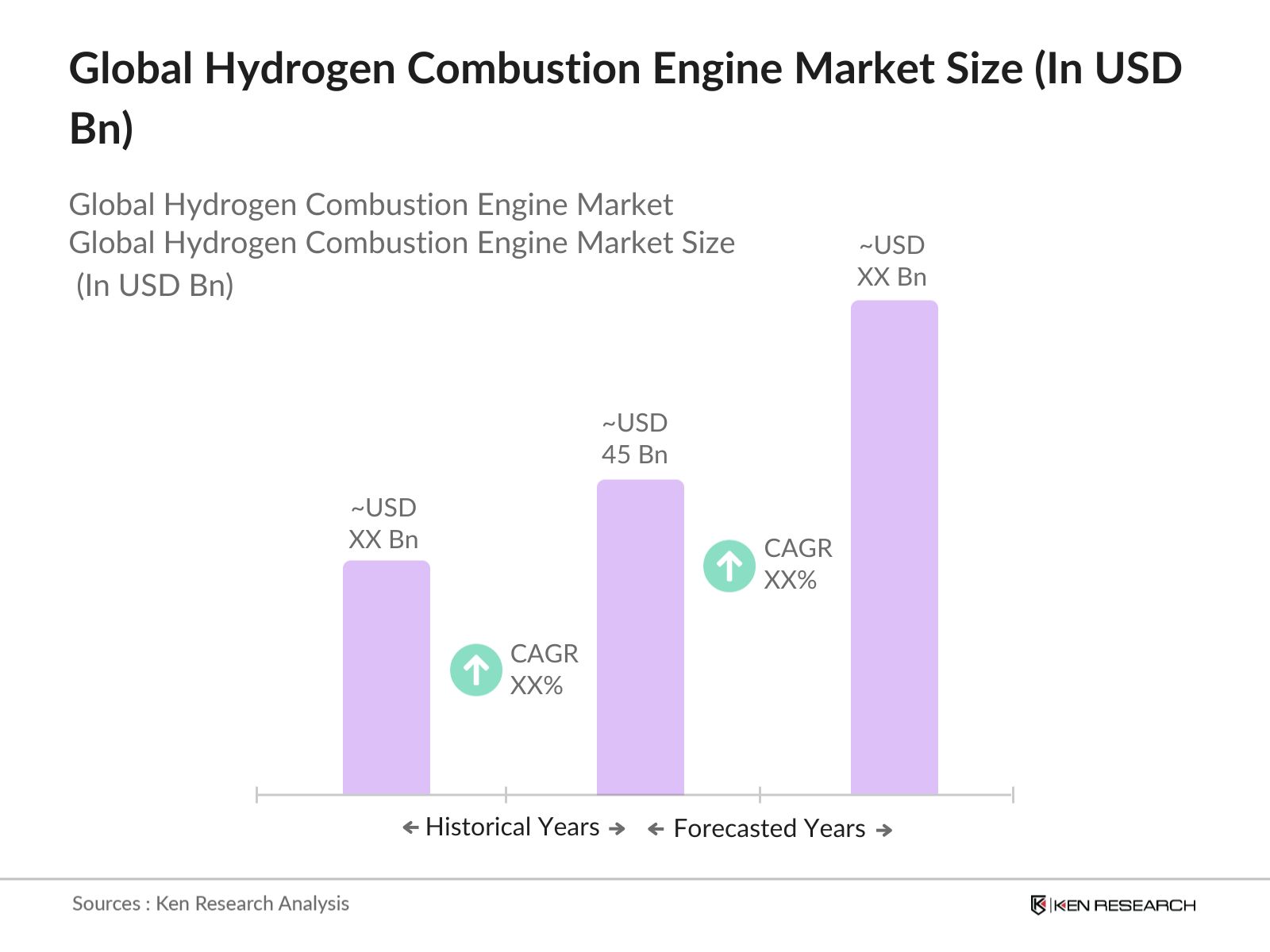
- The Global Hydrogen Combustion Engine Market was valued at USD 45 billion, based on a five-year historical analysis. This market is driven by the increasing focus on carbon-neutral transportation solutions and the need to meet global emissions targets. Governments worldwide are pushing for hydrogen fuel as a cleaner alternative, accelerating investments in hydrogen infrastructure and hydrogen engine development. Furthermore, leading automakers and energy companies are working to develop scalable hydrogen combustion engine solutions for both light-duty and heavy-duty vehicles, which significantly contributes to the market's growth.
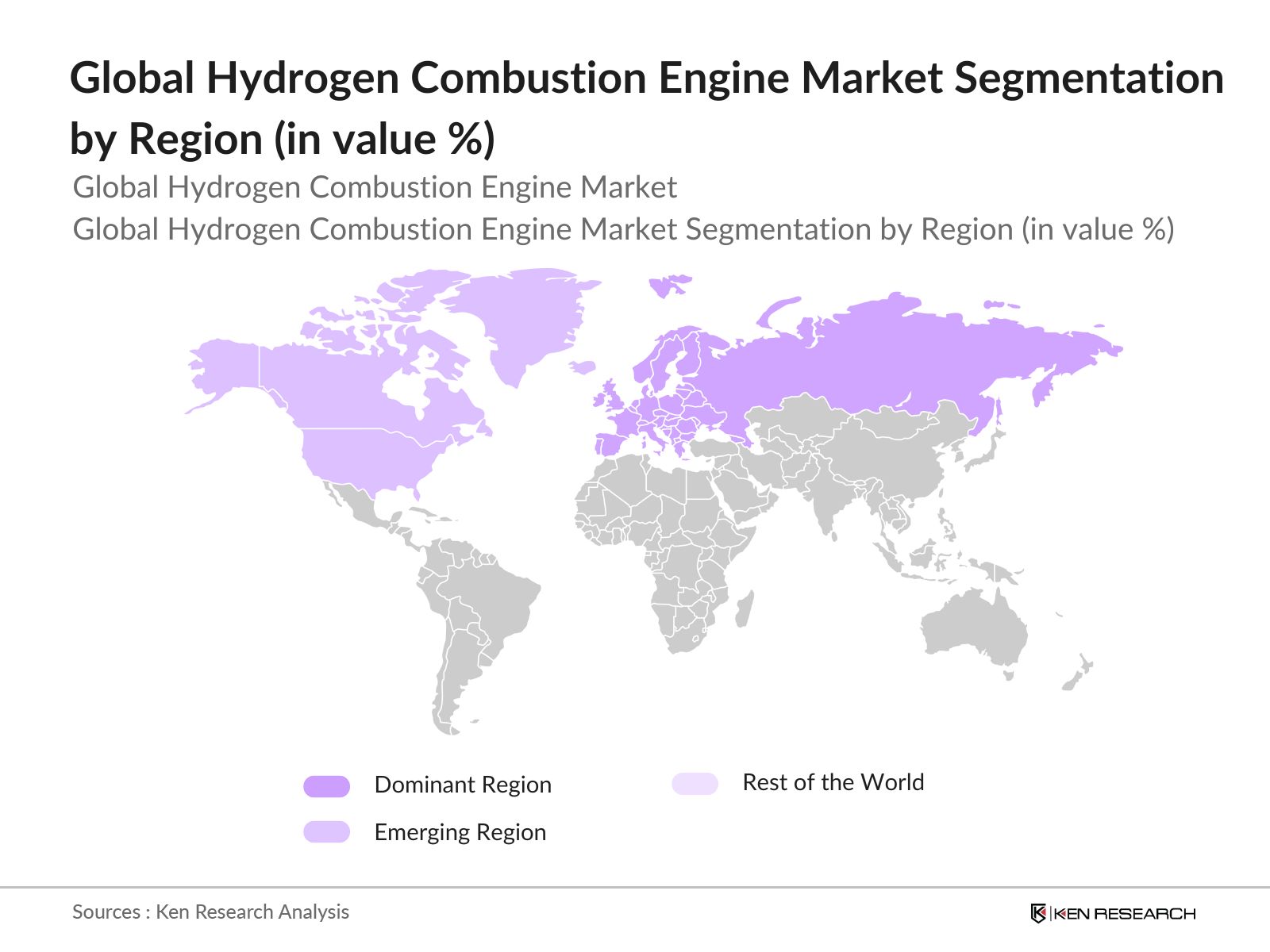
- Countries such as Germany, Japan, and South Korea dominate the hydrogen combustion engine market due to their early adoption of hydrogen technology, strong government policies supporting hydrogen-based transportation, and well-established automotive industries. These nations have a robust hydrogen production capacity, strategic infrastructure, and a focus on reducing fossil fuel dependence, allowing them to lead the market in innovation and implementation.
- Governments are implementing clean energy policies that directly support the hydrogen combustion engine market. In 2023, the European Unions Green Deal allocated 1.8 trillion towards decarbonization efforts, with hydrogen playing a key role. Similarly, the U.S. Inflation Reduction Act of 2022 earmarked $369 billion for clean energy projects, including hydrogen infrastructure development. These policies aim to reduce carbon emissions by 50% by 2030, bolstering the growth of hydrogen combustion engines as a viable alternative to fossil fuels.
Global Hydrogen Combustion Engine Market Segmentation
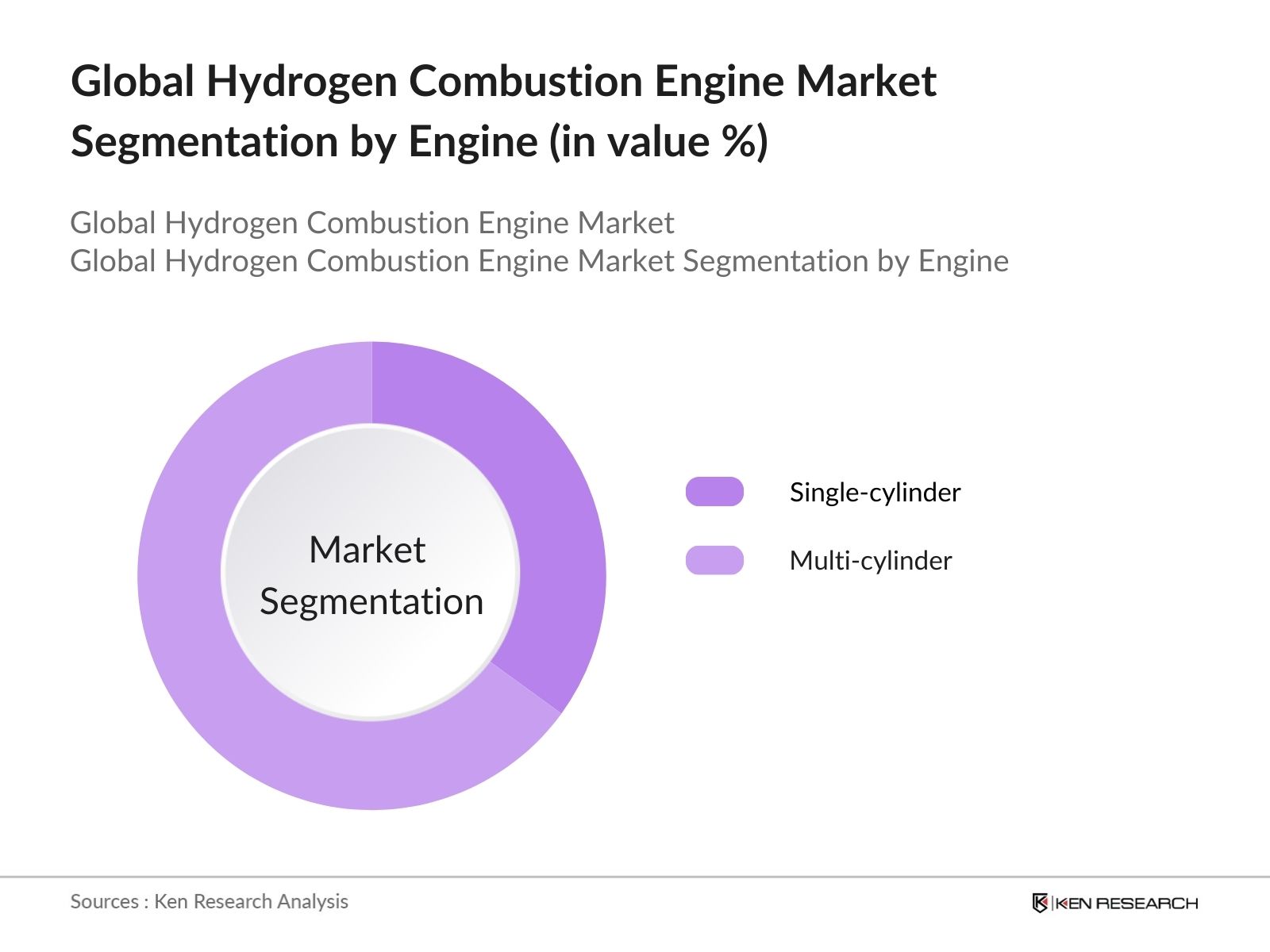
By Engine Type: The Global Hydrogen Combustion Engine Market is segmented by engine type into single-cylinder and multi-cylinder engines. Multi-cylinder engines hold the dominant market share in 2023 due to their capability to offer greater power and efficiency. These engines are being increasingly adopted in commercial and industrial applications, especially in the heavy-duty vehicle sector where higher power output is essential for performance.
By Application: The market is further segmented by application into passenger vehicles, commercial vehicles, and industrial equipment. Commercial vehicles, particularly in logistics and transportation, dominate the market share due to the growing demand for alternative fuel solutions that reduce carbon emissions without sacrificing vehicle performance. The ability of hydrogen engines to offer longer driving ranges compared to battery-electric vehicles (BEVs) makes them preferable for long-haul applications.
By Region: The regional segmentation includes North America, Europe, Asia-Pacific, Middle East & Africa, and Latin America. Europe is the leading region in the hydrogen combustion engine market due to its stringent emission regulations and proactive investments in hydrogen fuel infrastructure. The European Union's green policies and partnerships between governments and private enterprises to develop hydrogen-powered solutions have driven the region's dominance in 2023.
Global Hydrogen Combustion Engine Market Competitive Landscape
The Global Hydrogen Combustion Engine Market is characterized by a few key players with strong technological and market presence. These companies focus on strategic partnerships, R&D investments, and expanding hydrogen infrastructure to maintain their competitive edge.
|
Company Name |
Establishment Year |
Headquarters |
No. of Employees |
Hydrogen Technology |
Revenue (USD bn) |
Global Footprint |
Hydrogen Supply Chain Integration |
Hydrogen Engine Product Portfolio |
Strategic Alliances |
|
Cummins Inc. |
1919 |
USA |
- |
- |
- |
- |
- |
- |
- |
|
Toyota Motor Corporation |
1937 |
Japan |
- |
- |
- |
- |
- |
- |
- |
|
Hyundai Motor Company |
1967 |
South Korea |
- |
- |
- |
- |
- |
- |
- |
|
Bosch Mobility Solutions |
1886 |
Germany |
- |
- |
- |
- |
- |
- |
- |
|
MAN Energy Solutions |
1758 |
Germany |
- |
- |
- |
- |
- |
- |
- |
Global Hydrogen Combustion Engine Market Analysis
Global Hydrogen Combustion Engine Market Growth Drivers
- Transition to Zero-Emission Vehicles: The transition to zero-emission vehicles (ZEVs) is a significant driver for the hydrogen combustion engine market, as countries worldwide push for reducing vehicular emissions. In 2024, over 30 countries, including Japan, Germany, and the UK, have implemented strict policies to phase out internal combustion engines (ICEs) by 2035. For example, Japan is targeting 1 million fuel cell vehicles (FCVs) by 2030, reflecting the growing emphasis on hydrogen as a clean fuel alternative. The International Energy Agency (IEA) reported that 7 million hydrogen-powered vehicles could be in circulation by 2050, driven by robust government policies.
- Hydrogen Fuel Infrastructure Development: Countries are actively investing in hydrogen fuel infrastructure, a critical component of the hydrogen combustion engine market. For instance, Japan, the global leader in hydrogen infrastructure, has 160 hydrogen refuelling stations as of 2023, with plans to expand this to 320 by 2025. Similarly, the European Union allocated 3 billion in 2022 towards the development of hydrogen refuelling networks. This infrastructure development supports the growth of hydrogen combustion engines, as refuelling availability is a prerequisite for widespread adoption.
- Rising Global Focus on Decarbonization: The global decarbonization push has heightened the demand for hydrogen combustion engines as they offer a clean alternative to fossil fuel-based vehicles. The IEA reports that hydrogen could meet 18% of the world's total energy demand by 2050, making it pivotal in achieving net-zero carbon emissions. Nations like South Korea and the European Union have set ambitious hydrogen production targets, aiming for 10 million tons of green hydrogen production by 2030. This drive towards clean energy solutions will likely bolster the hydrogen combustion engine market.
Global Hydrogen Combustion Engine Market Challenges
- High Hydrogen Production Costs: Despite technological advancements, the cost of hydrogen production remains high. Green hydrogen, produced via electrolysis, costs between $4 to $6 per kilogram as of 2024, compared to gasolines average price of $1.20 per litre. This price disparity limits hydrogen's competitiveness against traditional fossil fuels. Governments are investing in research and development to lower these costs, with the U.S. Department of Energy (DOE) aiming to reduce green hydrogen production costs to $1 per kilogram by 2030. However, the current high costs are a significant barrier to market growth.
- Limited Refuelling Infrastructure: The scarcity of hydrogen refuelling stations globally is a critical challenge for the adoption of hydrogen combustion engines. In 2024, there are only 820 hydrogen refuelling stations worldwide, with 50% of them located in Asia. Europe has 228 stations, while North America has just 80. This limited refuelling network hinders the feasibility of hydrogen-powered vehicles, especially in countries with vast rural areas. The high infrastructure costs, ranging between $1 million to $2 million per station, further slowdown the expansion efforts.
Global Hydrogen Combustion Engine Market Future Outlook
The Global Hydrogen Combustion Engine Market is poised for significant growth over the next five years, driven by the global push towards decarbonization and advancements in hydrogen fuel technology. Governments and industries are increasingly focusing on hydrogen as a viable fuel for both light and heavy-duty vehicles. Moreover, developments in green hydrogen production and storage technology are expected to reduce costs and increase the adoption of hydrogen-powered vehicles.
Global Hydrogen Combustion Engine Market Opportunities
- Integration with Renewable Energy Sources: The integration of hydrogen combustion engines with renewable energy sources presents a lucrative opportunity. In 2024, renewable energy sources account for 30% of the global electricity generation, with wind and solar power driving green hydrogen production. For instance, Australia is developing a $10 billion hydrogen hub powered entirely by renewable energy, projected to produce over 1 million tons of hydrogen annually by 2030. This integration allows for the production of green hydrogen, reducing the reliance on fossil fuels and enhancing the market potential for hydrogen combustion engines.
- Strategic Partnerships and Collaborations: Strategic collaborations between hydrogen suppliers and automotive manufacturers are driving market expansion. In 2023, Toyota, Hyundai, and Honda formed alliances with hydrogen producers like Air Liquide and Shell to develop scalable hydrogen fuelling solutions. These partnerships aim to build a robust hydrogen supply chain and reduce production costs. The European Clean Hydrogen Alliance, which includes over 200 industry stakeholders, plans to install 1000 hydrogen refuelling stations by 2030. Such collaborations strengthen the ecosystem, enabling faster adoption of hydrogen combustion engines in both passenger and commercial vehicles.
Scope of the Report
|
By Engine Type |
Single-cylinder Multi-cylinder |
|
By Application |
Passenger Vehicles Commercial Vehicles Industrial Equipment |
|
By Fuel Source |
Green Hydrogen Blue Hydrogen Grey Hydrogen |
|
By End-User Industry |
Automotive Aerospace Marine Power Generation |
|
By Region |
North America Europe Asia-Pacific Middle East & Africa Latin America |
Products
Key Target Audience
Automotive Manufacturers
Hydrogen Fuel Suppliers
Banks and Financial Institutions
Energy Companies
Government and Regulatory Bodies (e.g., EU, U.S. Department of Energy)
Hydrogen Infrastructure Developers
Heavy-Duty Vehicle Manufacturers
Investor and Venture Capitalist Firms
Industrial Equipment Manufacturers
Companies
Global Hydrogen Combustion Engine Market Major Players
Cummins Inc.
Toyota Motor Corporation
Hyundai Motor Company
Bosch Mobility Solutions
MAN Energy Solutions
General Motors
Kawasaki Heavy Industries Ltd.
Westport Fuel Systems
MAHLE Powertrain
AVL List GmbH
Ballard Power Systems
Nikola Corporation
Plug Power Inc.
Ceres Power
Doosan Fuel Cell
Table of Contents
1. Global Hydrogen Combustion Engine Market Overview
1.1. Definition and Scope
1.2. Market Taxonomy
1.3. Market Growth Rate
1.4. Market Segmentation Overview
2. Global Hydrogen Combustion Engine Market Size (In USD Bn)
2.1. Historical Market Size
2.2. Year-On-Year Growth Analysis
2.3. Key Market Developments and Milestones
3. Global Hydrogen Combustion Engine Market Analysis
3.1. Growth Drivers
3.1.1. Transition to Zero-Emission Vehicles
3.1.2. Hydrogen Fuel Infrastructure Development
3.1.3. Government Subsidies and Regulations (e.g., Zero Emission Targets, Carbon Neutrality)
3.1.4. Rising Global Focus on Decarbonization
3.2. Market Challenges
3.2.1. High Hydrogen Production Costs
3.2.2. Limited Refuelling Infrastructure
3.2.3. Competition from Battery Electric Vehicles (BEVs)
3.2.4. Safety Concerns Regarding Hydrogen Storage
3.3. Opportunities
3.3.1. Integration with Renewable Energy Sources
3.3.2. Strategic Partnerships and Collaborations (Hydrogen Suppliers and Automotive Manufacturers)
3.3.3. Expansion into Heavy-Duty and Industrial Applications (e.g., trucks, ships)
3.4. Trends
3.4.1. Adoption of Fuel Cell Technology
3.4.2. Development of Hybrid Hydrogen Engines
3.4.3. Increased Investment in Green Hydrogen Production
3.5. Government Regulation
3.5.1. Clean Energy Policies and Initiatives
3.5.2. Tax Incentives and Grants for Hydrogen Infrastructure Development
3.5.3. Regulatory Framework for Hydrogen Storage and Transportation
3.5.4. International Hydrogen Strategy and Trade Agreements
3.6. SWOT Analysis
3.7. Stakeholder Ecosystem (OEMs, Fuel Suppliers, Technology Providers)
3.8. Porters Five Forces
3.9. Competition Ecosystem
4. Global Hydrogen Combustion Engine Market Segmentation
4.1. By Engine Type (In Value %)
4.1.1. Single-cylinder Engines
4.1.2. Multi-cylinder Engines
4.2. By Application (In Value %)
4.2.1. Passenger Vehicles
4.2.2. Commercial Vehicles
4.2.3. Industrial Equipment
4.3. By Fuel Source (In Value %)
4.3.1. Green Hydrogen
4.3.2. Blue Hydrogen
4.3.3. Grey Hydrogen
4.4. By End-User Industry (In Value %)
4.4.1. Automotive
4.4.2. Aerospace
4.4.3. Marine
4.4.4. Power Generation
4.5. By Region (In Value %)
4.5.1. North America
4.5.2. Europe
4.5.3. Asia-Pacific
4.5.4. Middle East & Africa
4.5.5. Latin America
5. Global Hydrogen Combustion Engine Market Competitive Analysis
5.1 Detailed Profiles of Major Companies
5.1.1. Cummins Inc.
5.1.2. Toyota Motor Corporation
5.1.3. Hyundai Motor Company
5.1.4. MAN Energy Solutions
5.1.5. Kawasaki Heavy Industries Ltd.
5.1.6. General Motors
5.1.7. Bosch Mobility Solutions
5.1.8. Westport Fuel Systems
5.1.9. MAHLE Powertrain
5.1.10. AVL List GmbH
5.1.11. Ceres Power
5.1.12. Ballard Power Systems
5.1.13. Nikola Corporation
5.1.14. Plug Power Inc.
5.1.15. Doosan Fuel Cell
5.2 Cross Comparison Parameters (Revenue, Global Footprint, Technological Advancements, Strategic Partnerships)
5.3 Market Share Analysis
5.4 Strategic Initiatives
5.5 Mergers and Acquisitions
5.6 Investment Analysis
5.7 Venture Capital Funding
5.8 Government Grants and Subsidies
6. Global Hydrogen Combustion Engine Market Regulatory Framework
6.1 Environmental Standards
6.2 Compliance Requirements for Hydrogen Storage and Combustion
6.3 Certification Processes for Hydrogen Combustion Engines
7. Global Hydrogen Combustion Engine Future Market Size (In USD Bn)
7.1 Future Market Size Projections
7.2 Key Factors Driving Future Market Growth
8. Global Hydrogen Combustion Engine Future Market Segmentation
8.1 By Engine Type (In Value %)
8.2 By Application (In Value %)
8.3 By Fuel Source (In Value %)
8.4 By End-User Industry (In Value %)
8.5 By Region (In Value %)
9. Global Hydrogen Combustion Engine Market Analysts' Recommendations
9.1 TAM/SAM/SOM Analysis
9.2 Innovation and Technology Recommendations
9.3 Marketing Initiatives
9.4 White Space Opportunity Analysis
Research Methodology
Step 1: Identification of Key Variables
The first step in our research involved mapping the key stakeholders within the hydrogen combustion engine market. Using proprietary databases and secondary sources, we identified the critical variables influencing market trends, including hydrogen production costs, refuelling infrastructure, and regulatory frameworks.
Step 2: Market Analysis and Construction
We analyzed historical data on hydrogen combustion engines, focusing on market penetration, technological advancements, and infrastructure development. Additionally, we gathered data on the production and supply chain dynamics of hydrogen fuel to assess the market's growth potential.
Step 3: Hypothesis Validation and Expert Consultation
Our market hypotheses were validated through consultations with industry experts, including professionals from leading hydrogen fuel and engine companies. These interviews provided insights into current challenges, technological breakthroughs, and market expansion strategies.
Step 4: Research Synthesis and Final Output
The final phase involved combining bottom-up and top-down approaches to synthesize the data into a comprehensive analysis. We ensured that all statistics were verified by direct industry participants, ensuring accuracy in our market estimates.
Frequently Asked Questions
01. How big is the Global Hydrogen Combustion Engine Market?
The global hydrogen combustion engine market is valued at USD 45 billion, driven by increasing demand for carbon-neutral solutions in the transportation and industrial sectors.
02. What are the challenges in the Global Hydrogen Combustion Engine Market?
Challenges in the global hydrogen combustion engine market include high hydrogen production costs, limited refuelling infrastructure, and competition from battery electric vehicles (BEVs), which may slow market adoption.
03. Who are the major players in the Global Hydrogen Combustion Engine Market?
Major players in the global hydrogen combustion engine market include Cummins Inc., Toyota Motor Corporation, Hyundai Motor Company, Bosch Mobility Solutions, and MAN Energy Solutions, all of which dominate due to their advanced technology and global reach.
04. What are the growth drivers of the Global Hydrogen Combustion Engine Market?
The global hydrogen combustion engine market is driven by increasing global emphasis on reducing carbon emissions, government incentives, and investments in hydrogen fuel infrastructure, particularly in regions like Europe and Asia-Pacific.
Why Buy From Us?

What makes us stand out is that our consultants follows Robust, Refine and Result (RRR) methodology. i.e. Robust for clear definitions, approaches and sanity checking, Refine for differentiating respondents facts and opinions and Result for presenting data with story

We have set a benchmark in the industry by offering our clients with syndicated and customized market research reports featuring coverage of entire market as well as meticulous research and analyst insights.

While we don't replace traditional research, we flip the method upside down. Our dual approach of Top Bottom & Bottom Top ensures quality deliverable by not just verifying company fundamentals but also looking at the sector and macroeconomic factors.

With one step in the future, our research team constantly tries to show you the bigger picture. We help with some of the tough questions you may encounter along the way: How is the industry positioned? Best marketing channel? KPI's of competitors? By aligning every element, we help maximize success.

Our report gives you instant access to the answers and sources that other companies might choose to hide. We elaborate each steps of research methodology we have used and showcase you the sample size to earn your trust.

If you need any support, we are here! We pride ourselves on universe strength, data quality, and quick, friendly, and professional service.