
Global Ice Hockey Equipment Market Outlook to 2030
Region:Global
Author(s):Vijay Kumar
Product Code:KROD7083
Region:Global
Author(s):Vijay Kumar
Product Code:KROD7083
November 2024
83
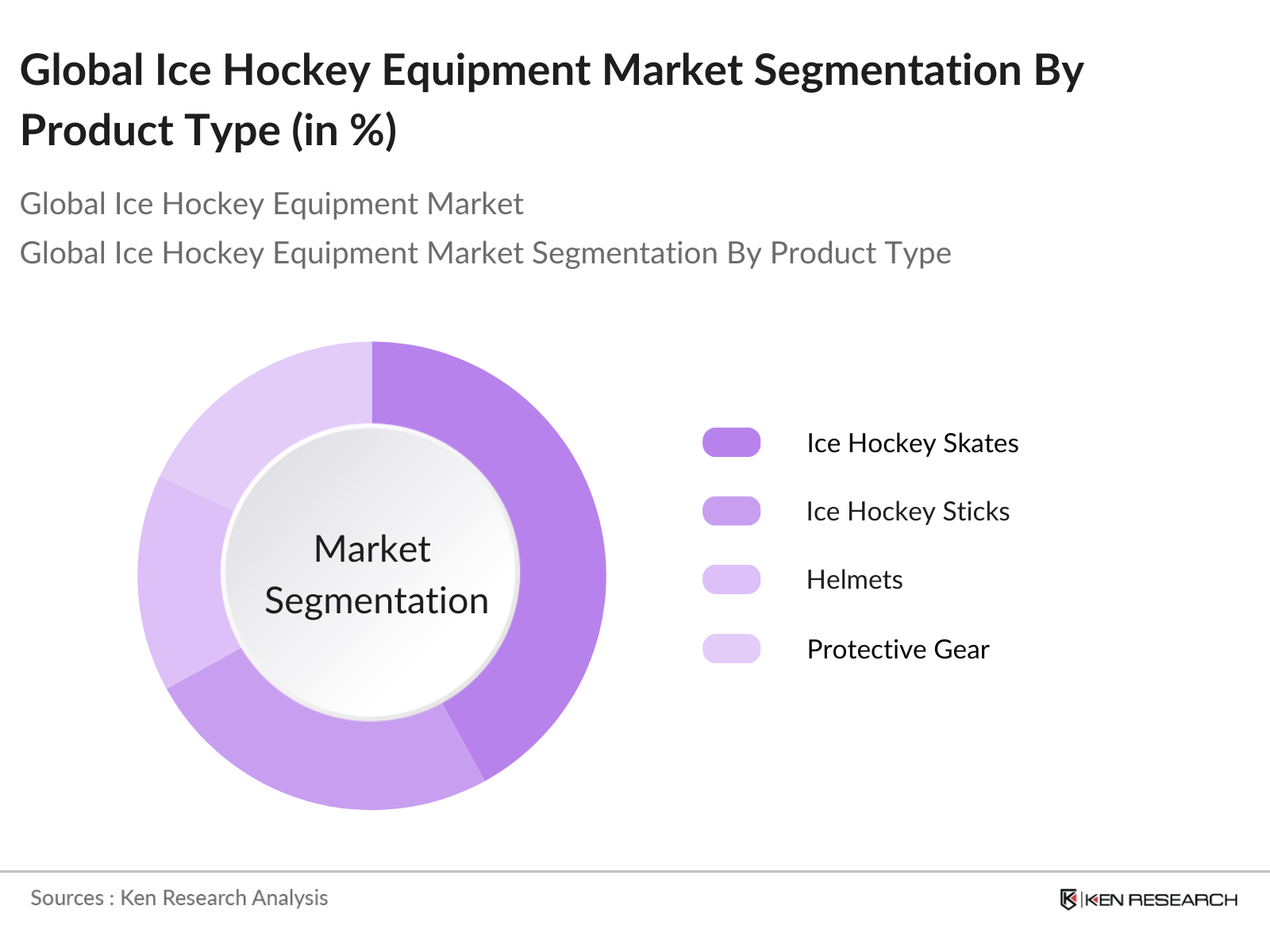
By Product Type: The global ice hockey equipment market is segmented by product type into ice hockey sticks, ice hockey skates, helmets, protective gear, and apparel. Among these, ice hockey skates hold the largest market share, accounting for 34% of the total market in 2023. This dominance is attributed to the critical role that skates play in player performance and the continuous innovations in skate design, such as better blade technology and enhanced ankle support, which attract both professional and amateur players.
By Application: The market is also segmented by application into professional players, amateur players, and youth players. Professional players dominate the application segment, holding 40% of the market share in 2023. This is driven by the higher frequency of equipment replacement among professional athletes, who prioritize performance and safety, as well as sponsorship deals with leading equipment manufacturers. Additionally, the visibility of professional players encourages amateur and youth players to purchase similar, high-quality gear.
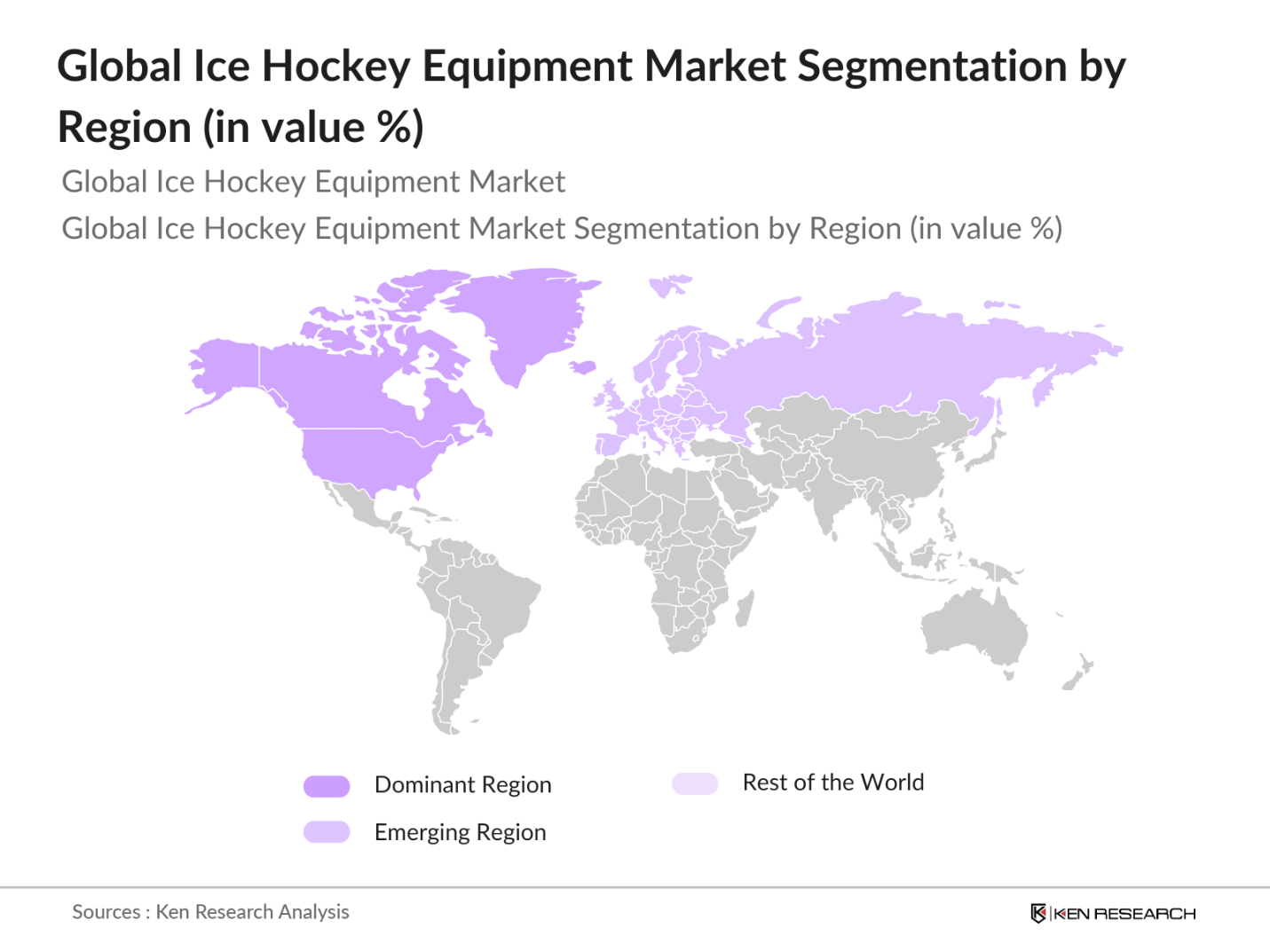
By Region: Regionally, the market is segmented into North America, Europe, Asia Pacific, and the Rest of the World. North America leads the market with a 55% share in 2023, thanks to the well-established hockey leagues like the NHL and a strong presence of key manufacturers. Europe holds a significant 30% share, with countries like Sweden and Finland being strong contributors. Asia Pacific is emerging as a potential growth region, though it currently holds a smaller share due to lower levels of participation compared to North America and Europe.
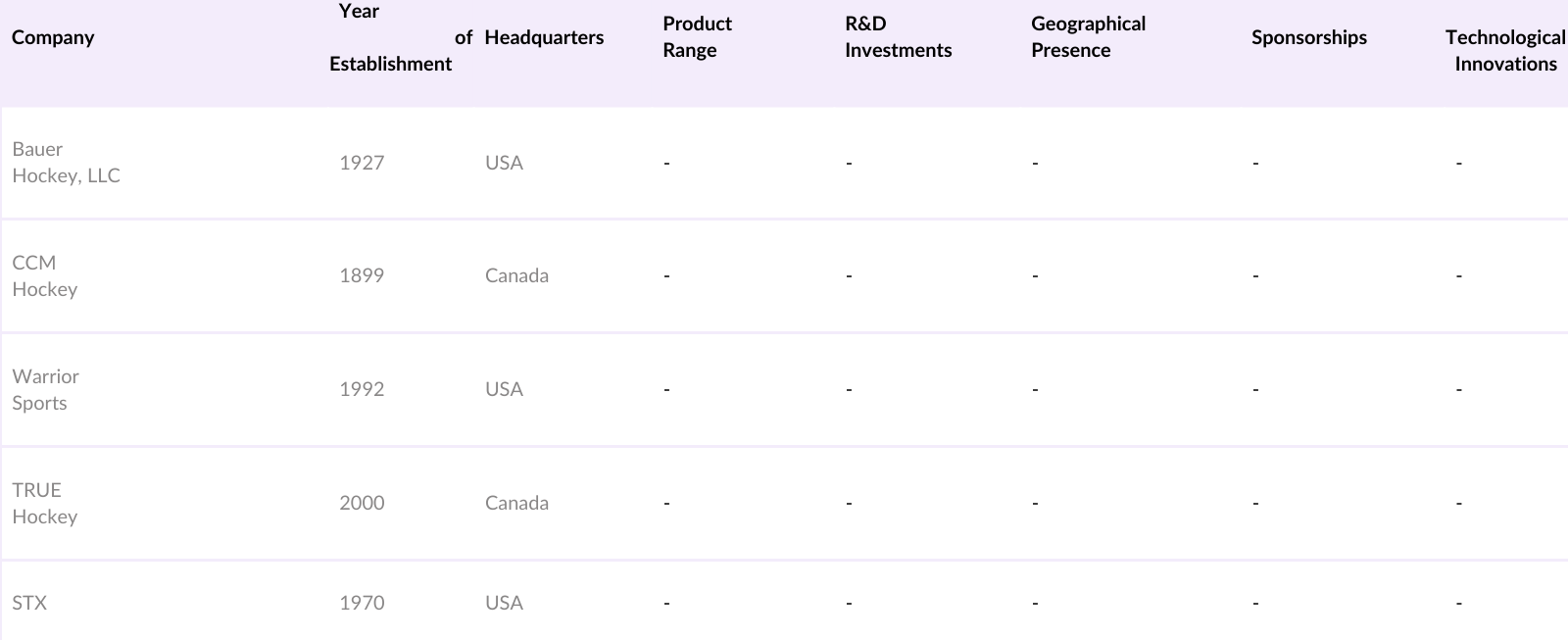
The global ice hockey equipment market is highly consolidated, with a few major players dominating the landscape. Companies such as Bauer Hockey, CCM, and Warrior Sports lead the market due to their extensive product offerings and strong brand presence. These companies invest heavily in R&D to develop innovative products that cater to the needs of professional players, as well as sponsorship deals with high-profile leagues like the NHL, which strengthens their market dominance.
Over the next five years, the global ice hockey equipment market is expected to see robust growth, driven by the continuous development of advanced protective gear, expanding participation in emerging markets, and growing interest in youth and womens hockey. Major players are expected to invest in innovative technologies that enhance player performance and safety, further pushing market demand.
|
By Product Type |
Ice Hockey Sticks Ice Hockey Skates Helmets Protective Gear Apparel |
|
By Application |
Professional Players Amateur Players Youth Players |
|
By Distribution Channel |
Specialty Stores E-commerce Platforms Sporting Goods Retailers |
|
By End-User |
Male Players Female Players Junior Players |
|
By Region |
North America Europe Asia Pacific Rest of the World |
1.1. Definition and Scope
1.2. Market Taxonomy
1.3. Market Growth Rate
1.4. Market Segmentation Overview
2.1. Historical Market Size
2.2. Year-On-Year Growth Analysis
2.3. Key Market Developments and Milestones
3.1. Growth Drivers
3.1.1. Rising Popularity of Ice Hockey (Participation Rates)
3.1.2. Technological Advancements in Equipment (Material Innovation)
3.1.3. Increased Global Sports Events (Tournament Participation)
3.1.4. Government and Federation Support (Funding and Sponsorship)
3.2. Market Challenges
3.2.1. High Cost of Equipment
3.2.2. Seasonal Nature of Ice Hockey (Limited Playing Regions)
3.2.3. Competitive Market Saturation
3.3. Opportunities
3.3.1. Expansion into Emerging Markets (Geographic Expansion)
3.3.2. Growth of Womens Ice Hockey (Gender-Specific Equipment Demand)
3.3.3. Customization and Personalization Trends in Equipment
3.4. Trends
3.4.1. Rise in Eco-Friendly Equipment Materials
3.4.2. Advanced Safety Gear (Concussion Prevention Technologies)
3.4.3. E-commerce and Direct-to-Consumer Sales Channels
3.5. Government Regulations
3.5.1. Safety Standards for Protective Gear (Regulatory Compliance)
3.5.2. Import/Export Tariffs on Ice Hockey Equipment
3.5.3. Subsidies and Grants for Sports Development
3.6. SWOT Analysis
3.7. Stakeholder Ecosystem (Manufacturers, Distributors, Retailers, Associations)
3.8. Porters Five Forces Analysis
3.9. Competitive Ecosystem (Market Share by Key Players)
4.1. By Product Type (In Value %)
4.1.1. Ice Hockey Sticks
4.1.2. Ice Hockey Skates
4.1.3. Ice Hockey Helmets
4.1.4. Protective Gear (Shoulder Pads, Elbow Pads, Gloves, Shin Guards)
4.1.5. Ice Hockey Apparel
4.2. By Application (In Value %)
4.2.1. Professional Players
4.2.2. Amateur Players
4.2.3. Youth Players
4.3. By Distribution Channel (In Value %)
4.3.1. Specialty Stores
4.3.2. E-commerce Platforms
4.3.3. Sporting Goods Retailers
4.4. By End-User (In Value %)
4.4.1. Male Players
4.4.2. Female Players
4.4.3. Junior Players
4.5. By Region (In Value %)
4.5.1. North America
4.5.2. Europe
4.5.3. Asia Pacific
4.5.4. Rest of the World
5.1. Detailed Profiles of Major Companies
5.1.1. Bauer Hockey, LLC
5.1.2. CCM Hockey
5.1.3. Warrior Sports
5.1.4. TRUE Hockey
5.1.5. STX
5.1.6. Sherwood Hockey
5.1.7. Easton Hockey
5.1.8. Franklin Sports
5.1.9. Grit Inc.
5.1.10. Reebok-CCM
5.1.11. Vaughn Custom Sports
5.1.12. Graf Skates AG
5.1.13. Mission Hockey
5.1.14. Tackla Pro
5.1.15. Koho
5.2. Cross Comparison Parameters (Revenue, Market Share, Product Portfolio, Geographical Presence, R&D Investments, Strategic Partnerships, Number of Employees, Product Innovation)
5.3. Market Share Analysis
5.4. Strategic Initiatives (New Product Launches, Collaborations, Mergers & Acquisitions)
5.5. Investment Analysis (Venture Capital, Private Equity)
5.6. Government Grants and Subsidies
5.7. Key Patents and Intellectual Property Rights
6.1. Product Certification Standards (Material Composition, Safety Requirements)
6.2. Environmental Regulations (Eco-Friendly Materials and Sustainability)
6.3. Trade Regulations (Import and Export Policies)
7.1. Future Market Size Projections
7.2. Key Factors Driving Future Market Growth
8.1. By Product Type (In Value %)
8.2. By Application (In Value %)
8.3. By Distribution Channel (In Value %)
8.4. By End-User (In Value %)
8.5. By Region (In Value %)
9.1. TAM/SAM/SOM Analysis
9.2. Customer Cohort Analysis
9.3. Marketing Strategies for Player-Specific Equipment
9.4. White Space Opportunity Analysis
The first step in the research process involved identifying the key variables impacting the global ice hockey equipment market. Through desk research, secondary sources such as industry reports, and proprietary databases, we created an ecosystem map of the market and its stakeholders.
We gathered historical data on market penetration and sales from previous years, assessing factors such as player participation rates and demand for specific product types. Revenue estimates were cross-verified using multiple sources, ensuring the accuracy of the projections.
Through interviews with industry experts, we validated our market hypotheses, gaining insights into player preferences, equipment innovations, and market challenges. These interviews provided valuable feedback, which was used to refine the overall market analysis.
The final step involved synthesizing the research and producing a comprehensive analysis of the market, which was verified by consulting directly with equipment manufacturers and other key stakeholders. This ensured that the report was comprehensive, reliable, and actionable.
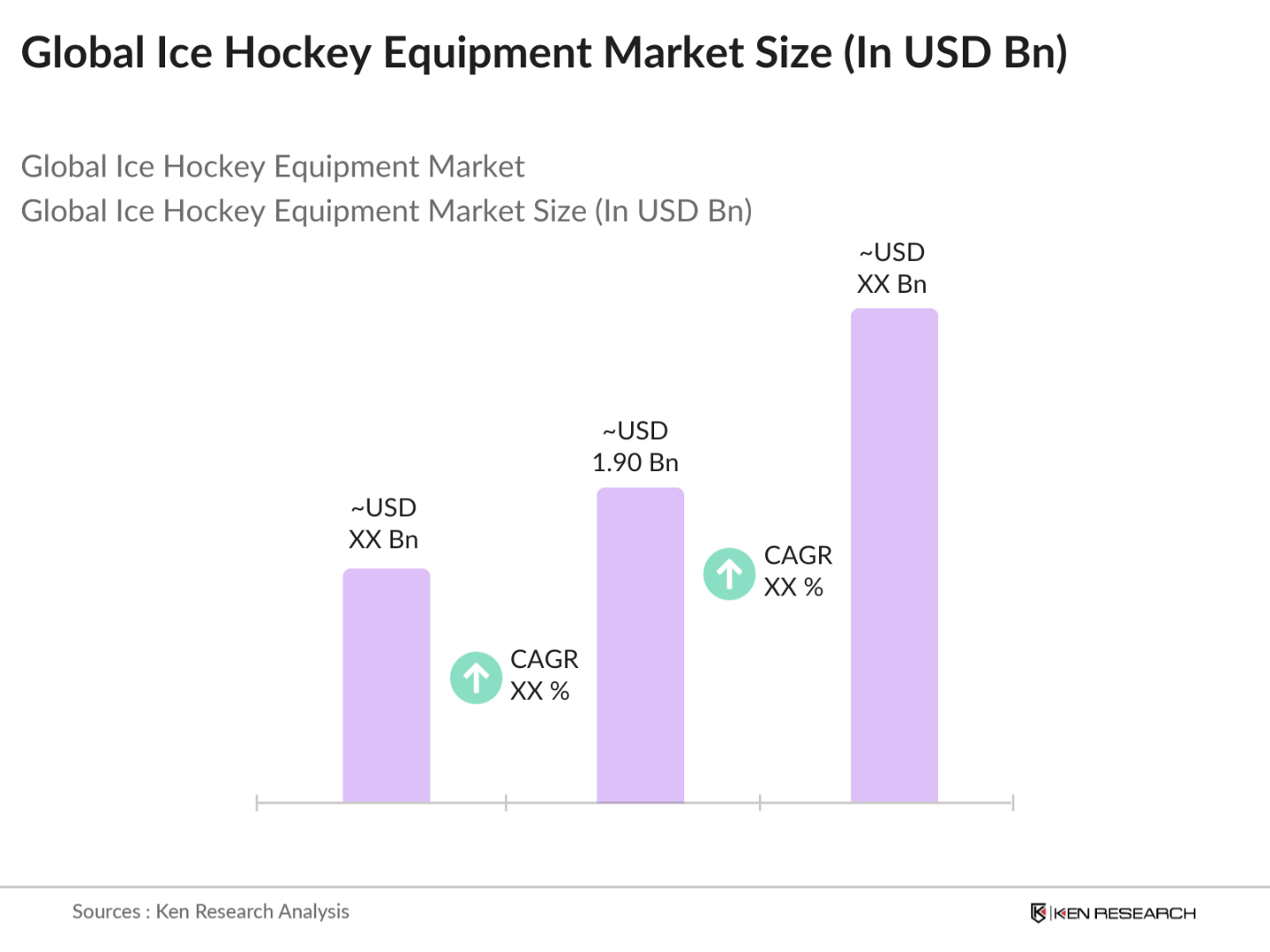
The global ice hockey equipment market is valued at USD 1.90 billion, based on a five-year historical analysis. This market is primarily driven by rising participation in ice hockey across North America and Europe, along with continuous innovations in equipment design, particularly in protective gear and skates.
Challenges in the market include high equipment costs, competitive market saturation, and limited geographic scope for ice hockey, which restricts growth opportunities in certain regions.
Key players include Bauer Hockey, CCM, Warrior Sports, TRUE Hockey, and STX, who dominate the market through strong brand presence, innovation, and strategic partnerships with professional leagues.
The market is propelled by increased demand for lightweight and advanced protective gear, rising player participation rates, and the expansion of youth and womens hockey leagues globally.

What makes us stand out is that our consultants follows Robust, Refine and Result (RRR) methodology. i.e. Robust for clear definitions, approaches and sanity checking, Refine for differentiating respondents facts and opinions and Result for presenting data with story

We have set a benchmark in the industry by offering our clients with syndicated and customized market research reports featuring coverage of entire market as well as meticulous research and analyst insights.

While we don't replace traditional research, we flip the method upside down. Our dual approach of Top Bottom & Bottom Top ensures quality deliverable by not just verifying company fundamentals but also looking at the sector and macroeconomic factors.

With one step in the future, our research team constantly tries to show you the bigger picture. We help with some of the tough questions you may encounter along the way: How is the industry positioned? Best marketing channel? KPI's of competitors? By aligning every element, we help maximize success.

Our report gives you instant access to the answers and sources that other companies might choose to hide. We elaborate each steps of research methodology we have used and showcase you the sample size to earn your trust.

If you need any support, we are here! We pride ourselves on universe strength, data quality, and quick, friendly, and professional service.